Category: Advocacy

  • Happy International Women’s Day 2021

    Happy International Women’s Day 2021

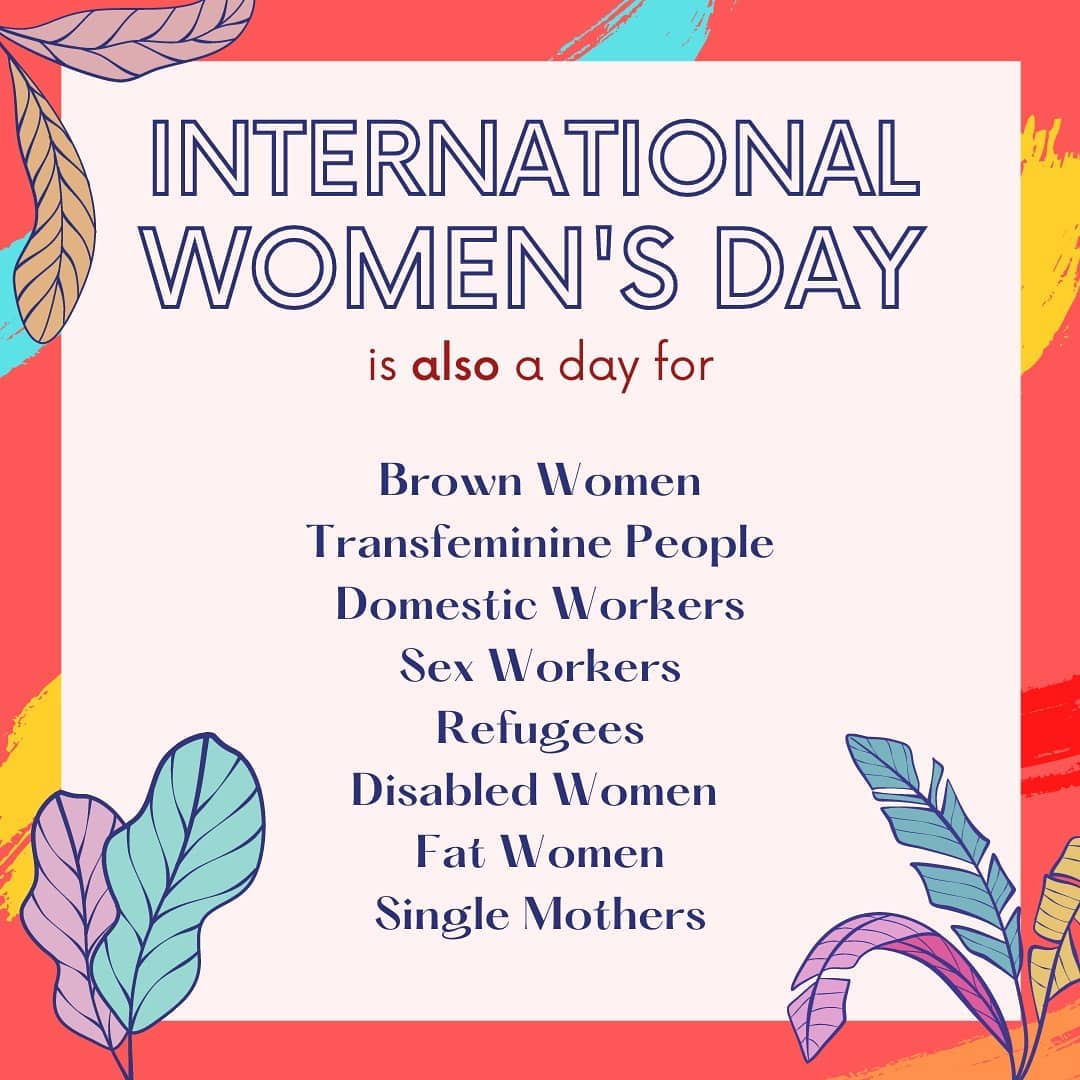
    International Women’s Day means committing to intersectionality and radical inclusion. This means advocating for the rights of those on the margins, honouring our feminist history, and caring deeply for each other.

    I am not free while any woman is unfree, even when her shackles are very different from my own.

    – Audre Lorde

  • Wearing the Hijab at Work

    Wearing the Hijab at Work

    The Tripartite Alliance for Fair & Progressive Employment Practices (‘TAFEP’) is currently investigating an incident in which a hijab-wearing woman (‘hijabi’) working as a promoter at Tangs was asked to remove her hijab. Tangs had initially taken the position that this was a case of miscommunication regarding the company’s dress code and grooming standards to the sub-contractor. However, this incident is bigger than a simple issue of communicating guidelines and is part of a larger pattern of discrimination and exclusion that hijabis often have to endure in the job market.

    Hijabis often face barriers when applying or interviewing for jobs and have anecdotally reported that they are sometimes passed over for opportunities because of their headgear. Even when they are offered jobs, the hijab is subjected to added scrutiny and judgement over whether it is considered “professional” attire. This has material impact on hijabis when they are denied jobs because of their appearance, feel obliged to defend their choice of clothing or lifestyle, or have to expend more energy to overcome implicit biases of their colleagues or employers.

    It is also worth interrogating why the instinct was to assume that the hijab is seen as “unprofessional” or even subject to be scrutinised in this first place. What are the assumptions about the hijab and those who wear it that need to be questioned and unlearned? Are hijab-wearing women any less educated, committed or capable than their counterparts?

    Employers or policymakers who offer explanations that the hijab and other religious garments cannot be allowed because Singapore is a secular country signal that personal religious garments pose a threat to our secularism in some way. These justifications frame the hijab as a political issue rather than a personal religious choice and serve as a basis to validate policies which unfairly discriminate against hijabis.

    Policies which discriminate against any minority groups, and Muslim women in particular, extend beyond the harm caused to the individual in question and has the effect of further entrenching the marginalisation of these groups. The reality is that many Muslim women, when faced with this dilemma, elect not to take up opportunities or choose to leave their jobs rather than to give up on what they see as a crucial part of their religious obligations. Creating space for Muslim women to wear the hijab at work would encourage greater participation in the workforce and in society, without forcing them to choose between practicing their religion and earning a livelihood.

    We are encouraged that TAFEP is seriously investigating this incident and urge other women to seek support if they face instances of discrimination at the workplace because of their religious beliefs. If you are facing or are aware of any such discrimination, you may make a complaint to TAFEP, or consult AWARE’s Workplace Harassment and Discrimination Advisory.

    Hijabi women should be allowed to practice their faith without being discriminated against. Until we have comprehensive anti-discrimination laws in the workplace, it is up to us to look out for each other and call these instances out when we see them.

    —
    Edit: Tangs has recently issued statement that it now intends to allow all front-line staff to wear religious headgear. We encourage all companies to similarly review and revise any policies which unfairly discriminate against Muslim women or any other minorities.

  • Dealing with Racial Stress

    Dealing with Racial Stress

    You stressed?

    Stress is not necessarily a negative emotion. Everyone has gone through stressful situations and experiences at some point in their lives. A limited amount of stress can even help us build the necessary urgency and resilience to accomplish tasks and learn to deal with challenges in life. However, this is assuming that the stress is short in duration and we know that an end is in sight.

    Racial stress

    Racial stress refers to the distressing emotional, psychological and physical impact of racist experiences. Think of it as a gradual “wear and tear” of our being. Unlike the limited, healthy form of stress, racial stress is often chronic and feels like there is no end in sight, since it is a product of the deep-seated, structural problem of racism.

    This is why telling minorities to simply “get over it” and be “resilient” when they experience racism misses the point. Racial stress is vastly different from the limited form of personal stress that everyone experiences.

    Effects of racial stress

    • Anxiety
    • Depression
    • Self-blame
    • Isolation
    • Frustration
    • Helplessness
    • Self-Doubt
    • Avoidance
    • Self-Blame
    • Disengaging
    • Substance use
    • Sleep disturbances
    • Muscle tension
    • Dietary disturbance
    • Digestive disturbance
    • Heart disease
    • Hypertension
    • Respiratory complications

    [T]his stress leads to poorer mental and physical health. But this is not only because stress breaks the body down. It is also because stress pushes people to cope in unhealthy ways. . . But discrimination is not just any form of stress. It is a type of stress that disproportionately affects minorities.

    Here we see how racism works in a cycle to damage health. People at a social disadvantage are more likely to experience stress from racism. And they are less likely to have the resources to extinguish this stress, because they are at a social disadvantage.

    – How Racism Is Bad for Our Bodies, Jason Silverstein for The Atlantic

    Living as a racial minority can be exhausting. Growing up you may have kept wondering if the problem was you: Was I too sensitive? Maybe that person didn’t mean to be racist. Maybe I just didn’t get that job because I was not qualified, not because of my race. Maybe my personal success can prove to them that not all ____ are _____ !⁣
    ⁣
    It takes time for us to learn that racism is not a problem located in us or our communities, but how we are subjected to unfair and damaging stereotypes. It can take us longer still to learn how living under a capitalist system can deepen our suffering as the present economic system may disadvantage certain minority communities. ⁣
    ⁣
    The cumulation of processing these personal experiences and the fatigue of observing how discussions about race are played out in public can cause intense feelings of helplessness, anger, and sadness. Racial stress cannot and should not be thought of as simply stress, but something with deeper and more profound impact on an individual. The worst thing is, minorities have done nothing to deserve this emotional and psychological burden that they have to endure. ⁣
    ⁣
    Racial stress is the product of racism. Someone who holds other intersecting identities such as gender, sexuality, and class can be further exposed to racial stress and less protected from its impact. ⁣
    ⁣
    It is a public health issue, but is often treated as an apolitical matter of better managing personal stress. Racism is not going to end tomorrow, and structures that perpetuate inequality will not be toppled in a day, so here are some steps we can take till then.

    1. Support and community: Seek or build a community of people who are supportive and share your experiences and feelings. This can help reduce feelings of isolation and release stress. You are not alone in experiencing the exhaustion of racism. Talk to friends, family, or even mentors and connect to existing affirming spaces that discuss racism and help make sense of its complexities. Some local spaces are @minorityvoices, @othertongues, @hearmesg, @notoksg, @yourheadlah and more! 
    2. Empowering ourselves: We can equip ourselves with knowledge and learn how to challenge racism in our everyday lives. Pushing back against disempowerment and getting involved in social action can take many forms, whether it’s documenting incidences of racism, taking time to look at policies, create mental health workshops, or write fiery speeches. You can take time to see what fits you best! Learning to healthily channel our frustration and valid rage can help reduce our sense of helplessness and provide an image of possibility to others.
    3. Practice self-care: Minorities have to spend extra energy to process racial stress or respond to their aggressors. Self-care isn’t just about spas and taking time to decompress, although grounding activities are very useful too! Practice self-care by paying attention to your emotional processes and making sure you don’t overstretch yourself. You don’t have to sacrifice yourself for “the cause”. Taking care of your mental, emotional, and physical health is revolutionary in the face of a racist system which denies you a full life.

    We may not be able to end racism in a day, a year, or even within a decade, but as we walk together towards a more equitable and compassionate society, we can take care and affirm each other. Here’s our affirmation for our fellow minorities:

    Your feelings are valid, you are not alone, and racial capitalism is not as powerful as our collective spirit of love, care and resistance!

    Sources:

    • University of Illinois Urbana-Champaign
    • University of California Santa Cruz
    • The Atlantic
    • And countless of personal experiences by minorities uncaptured by formal studies but are no less valid and real.

  • Joint Statement by Muslim Women Groups to OKLETSGO

    Joint Statement by Muslim Women Groups to OKLETSGO

    [Content warning: Mentions of misogyny, sexual harassment, exploitation of sexual assault survivors, and online intimidation]

    We strongly condemn the misogynist and sexist comments consistently made on-air by Dzar Ismail, Dyn Norahim, and Raja Razie, the three hosts of the OKLETSGO podcast on Spotify. They minimise their crude and offensive language, sexual harassment on-air and exploitative content as “push[ing] boundaries” and “not meant to be taken seriously”. Yet in our work, we see the tangible harmful impact that such words and ideologies have on women.

    We live in a patriarchal society that consistently dehumanises and sexualises women in direct and indirect forms. The hosts illustrate this by the way they treat women’s bodies as sexual objects with overtly lewd comments. When outraged women speak out, OKLETSGO supporters partake in ‘bro’ culture by rallying in their defense and making threats of doxxing and rape. With 100,000 listeners, most of their supporters keep silent in complicity.

    We are alarmed at not only the hosts’ crude and offensive comments on air, but also by the sheer numbers of men (and some women) who make criminal threats of intimidation to the women who have spoken up against them.

    The hosts of OKLETSGO claim to encourage an “open-minded approach” and “sharing of experiences” by individuals from marginalised positions. However, taboo or difficult subjects must be approached and facilitated with care and responsibility. Unfortunately, we see the hosts evade calls to reassess their behaviour, language and methods. Their insincere apology is drowned by their unrepentant resharing of their fans’ support and approval on social media.

    We are appalled that the hosts deny responsibility for the harmful impact of their content to the larger community. However, since they stated that they are willing to unlearn and relearn, we demand their accountability. We call on them to:

    1. Release their plan with clearly defined actionable items to unlearn their ways,
    2. Attend Gender Sensitivity training by The T Project Singapore,
    3. Attend Sexual Assault First Responder training by Sexual Assault Care Centre (SACC),
    4. Make regular donations to SACC, and
    5. Remove podcasts with offensive sexist, racist, transphobic content from their Spotify list (e.g. Transgender, Sex Worker, Activist; SG Nasi Lemak; Perfect Wife, Keinginan Suami, Selamat Tinggal, and more.)

    At the same time, we call on their sponsors and collaborators to withdraw future support and partnership with OKLETSGO until they have taken the above steps to change.

    Culture is fluid and can change. Misogyny is not unique to or inherent in our community. There has been and there will always be resistance towards oppressive and patriarchal aspects of culture from groups like us in the form of books, literature, art and much more. We may not see immediate change, but we all play a part in creating a society where we respect each other and we hold each other accountable for the impacts of our behaviour.

    A joint statement by Beyond the Hijab, Crit Talk, and Penawar.

  • Cara-cara  ringkas untuk berbual dengan wanita

    Cara-cara ringkas untuk berbual dengan wanita

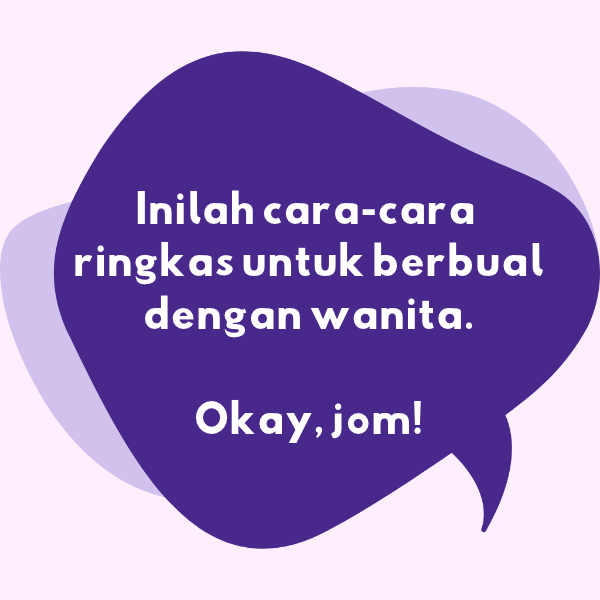
    Pada milenia ini, adakah anda dapati sukar berbicara dengan seorang wanita dengan sopan dan berhemah? Adakah sukar untuk anda memandang wanita sebagai manusia yang bermaruah tinggi dan bukan sebagai objek seks? Biar kami kongsi cara-cara berkomunikasi dengan kaum wanita tanpa mengambil kira paras dan bentuk tubuhnya.

    Masih terlalu ramai kaum wanita mengalami diskriminasi dan keganasan seksual. Kita seharusnya menghormati wanita dengan kata-kata yang membangun, positif, dan meningkatkan martabat dan kedudukan mereka, bukan menghina dan merendahkan martabat mereka. Kata-kata yang memusnahkan nilai diri kaum wanita membawa kesan yang mendalam terhadap emosi dan keyakinan diri mereka.

    Budaya seksisme yang telah wujud berkurun lamanya tidak harus dibiarkan berterusan. Wanita bukan objek yang boleh dipersendakan. Wanita adalah tunggak masyarakat dan keluarga. Jika runtuh kekuatan kaum wanita, maka runtuhlah masyarakat.

    Ada pelbagai topik yang lebih kompleks yang boleh dibincangkan tanpa menghina kaum wanita. Bagaimanakah masyarakat Singapura akan maju kalau kita masih berpegang teguh kepada stereotip seksis dan mengaibkan sesetengah kaum kita?

    #okletsrespect

  • How do I talk to & about women respectfully?

    How do I talk to & about women respectfully?

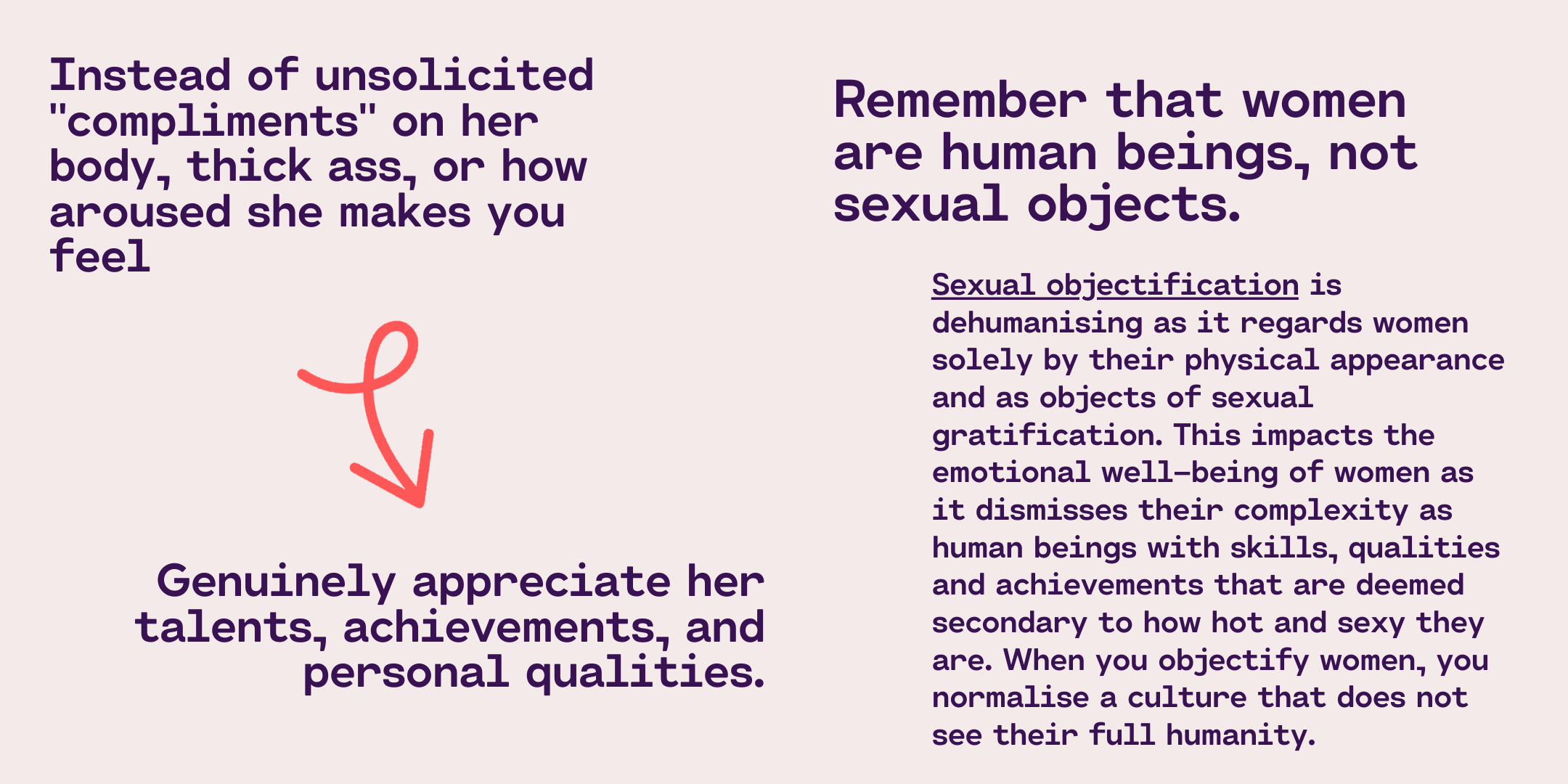
    Do you find it hard to speak to women respectfully in 2020? Are you unsure of how to regard women as normal human beings worthy of basic respect and dignity? Here’s a short step by step guide just for you!⁣
    ⁣
    The way the hosts of OKLETSGO podcast speaks about women is wrong. Period.⁣
    ⁣
    There is no excuse for making lewd observations about a woman’s breasts, publicly musing your sexual fantasies for complete strangers or referring to women as “fresh” or “stale” meat. Women are more than sexual objects. Women are complex, messy, brilliant people who think and care about issues deeply, have their own fears and desires, and have raised an entire community. ⁣
    ⁣
    But the problem is bigger than what grown men are saying on a podcast – it’s the fact that tens of thousands of people listen to the podcast and many don’t see anything wrong with what is said or are prepared to let constant misogyny slide for the sake of entertainment. It’s the fact that many are still falling over themselves to justify degrading, humiliating descriptions of women, and that we are allowing such behaviour towards women in our homes, amongst friends and wider communities. ⁣
    ⁣
    Misogyny is not harmless, but normalises a culture of continued dehumanisation and violence against women. Women have to work harder in order to succeed in a world that that still diminishes, underestimates, and disrespects them. In the Covid-19 period, domestic abuse alone has risen by 40%. ⁣
    ⁣
    We’ve got a problem. And fixing it will take more than outrage over one incident. This incident is merely a symptom of a wider problem of gender discrimination and violence. It’s going to take courage from all of us to take hard look at ourselves, our systems, policies, workplaces, communities, and make a real commitment to changing.⁣ ⁣

    As always, we’ll be working to uplift and centre the voices of women in a way that is respectful. Beyond that, we’re also going to do more to give this community the tools and resources needed to have these difficult discussions. ⁣
    ⁣
    We’re hopeful that addressing difficult questions and taboo topics can be done in a way that dismantles, not perpetuates or normalises, existing oppressive systems. #okletsrespect

  • Racial Justice is our Spiritual Duty

    Racial Justice is our Spiritual Duty

    Anti-blackness is violence that affects Black people worldwide due to a violent history of slavery, colonialism, and continued state-sanctioned violence throughout the globe. The Black Lives Matter movement should not be seen in isolation from hundreds of years of racist violence of which the recent killing of George Floyd is a continuation. ⁣⁣
    ⁣⁣
    As Muslims we must commit to ensuring that we challenge anti-blackness within our community spaces, our families and friends, and wherever we may find ourselves. Take the time to understand why Black activists are pushing for abolition, why statues of slaveowners are being toppled and beheaded, and how a history of violent dispossession continues to affect Black people today.⁣⁣
    ⁣⁣
    As Muslims, it is our spiritual duty to be steadfast to the principles of social justice and deep compassion in Islam. It is not enough to be passive and fall onto the ease of toxic positivity, we must be active in doing the personal and communal work of eradicating violent systems in our lives. Allah has created diversity in humankind by design, so that we may appreciate each other’s differences and respect them, understanding that it doesn’t change the essential fact that we are all God’s beautiful creations. ⁣
    ⁣⁣
    All of us are equal before Allah. No human being should see themselves as superior to another whether by virtue of race, gender, sexuality, or other identity markers. To be racist or to excuse racism is to dishonour one of the most fundamental values in Islam of Taqwa. ⁣⁣Let’s work to abolish anti-blackness and all forms of racial prejudice in our communities.⁣

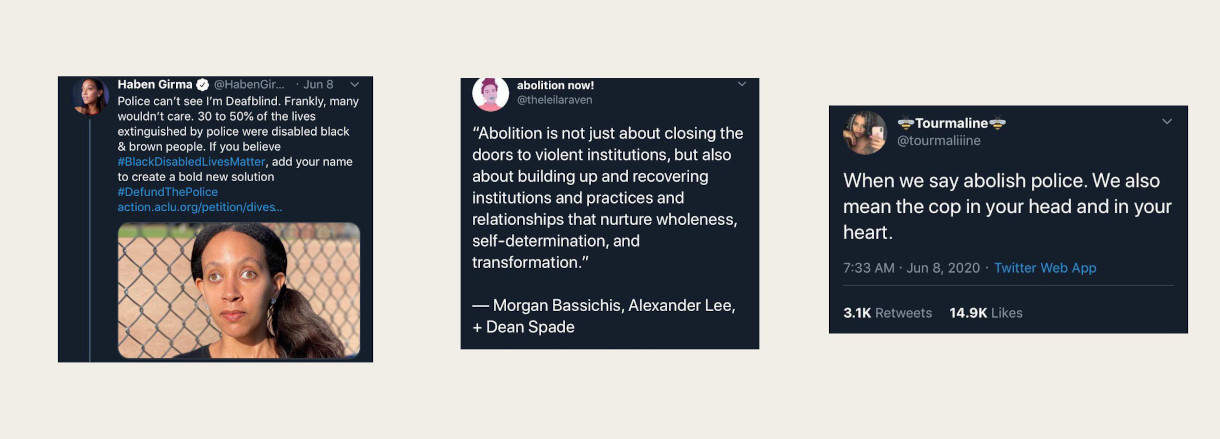
    We will continue sharing resources on our stories, and as you may know there is also a masterlist of resources on https://blacklivesmatters.carrd.co/. There are e-books “The End of Policing” and “Who Do You Serve, Who Do You Protect” that are currently free for download if you would like to understand the call for abolition.⁣
    ⁣
    #muslimsforblacklives #blacklivesmatter✊🏽✊🏾✊🏿

  • In solidarity with Sisters in Islam

    On 27 Aug 2019, the Kuala Lumpur High Court dismissed Sisters in Islam’s application challenging the Selangor Fatwa Committee’s edict that it was a deviant organisation.⁠
    ⁠
    We stand in solidarity with Sisters in Islam and their incredible work championing the rights of Muslim women in Malaysia. ⁠
    ⁠
    Their publication “Are Muslim men allowed to beat their wives” showed that Islam unequivocally condemns violence to wives and debunked myths surrounding domestic violence in the Muslim family. Their research have contributed to our understanding of a just and equal Islam, one that values equality and human dignity. SIS has worked tirelessly to support Muslim women in Malaysia in their fight for justice and we fully support SIS in their fight for justice. ⁠
    ⁠

  • Statement on Christchurch mosque shootings

    We are devastated by what has happened at Christchurch today, where Muslims died under the hands of a white supremacist terrorist.

    While we are lucky that Singapore is not a place where there is rampant white supremacy, today’s events are a chilling reminder that Islamophobic and other forms of hate rhetoric pointed against marginalized and precarious communities can and does have a deadly impact.

    Knowing that these deadly events have happened, and have happened more frequently these recent years can be incredibly distressing.

    Reach out to others in the community if you need to talk, and we urge non-Muslim friends to let their Muslim friends know they have their back in solidarity and care.

    We are praying for all the victims and their families in this difficult time. Inna lillahi wa inna illaihi rajiuun.

  • Feminists for A Binding Treaty on Transnational Corporations

    Beyond the Hijab joins over 350 feminist organizations and networks in calling for a binding treaty on transnational corporations. See the statement below. Sign onto the statement here: bit.ly/F4BTStatement

    We the undersigned feminists, women’s rights groups and civil society allies from all over the world call on governments to support the legally-binding instrument on transnational corporations and human rights. The negotiations at the United Nations is the very chance for Member States to demonstrate political will to put economic justice, environmental justice, gender justice and accountability to people above corporate interests.

    The time is now for UN Member States to finally fulfill their obligation to respect, promote and protect human rights and the environment, and put an end to corporate impunity.

    The scale and impact of corporate operations across the world is causing great harm to millions of people and the environment: from land-grabbing and displacements to the contamination of water and soil, to the loss of lives of women human rights defenders protecting their fundamental human rights, livelihoods, freedoms and territories. Thousands of trade and investment agreements safeguard corporate interests, without any respect for the free, prior and informed consent, consultation of affected communities, nor any corresponding regulatory framework to protect human rights and the environment from corporate abuse.

    We, women, girls and people of all gender, age, racial and ethnic identities experience rights violations, violence and discrimination by corporations. Patriarchy, racism and capitalism work together in oppressing women, particularly in the Global South and in marginalised communities:

    ● We produce most of the food in the world and yet are the most likely to suffer from extreme level of poverty, hunger, malnutrition, loss of land, water and livelihoods.

    ● We are employed in the most precarious working environments with least labour protection (e.g. informal sector & rural women workers), earn the lowest wages and shoulder the vast majority of the world’s unpaid care work.

    ● We experience massive violations of labour rights, attacks to our right to organise and freedom of association, and sexualised violence at work.

    ● We are most affected by land-grabbing, community displacements and massive extraction of natural resources, yet denied of access to land and excluded from decision-making, compensation and access to justice.

    ● We bear the brunt of militarised corporate activities, which enable multiple cases of rape by public and private security forces and attacks against women human rights defenders.

    ● We are most affected by all forms of tax injustice and the privatization of public services, often driven by trade and investment agreements and austerity policies imposed by international financial institutions.

    ● We are most significantly affected by climate change and extreme weather events fuelled by the fossil fuel industries and Global North countries. Women are more likely to be killed during disasters and face an increased risk of gender-based and sexual violence during disasters.

    ● We face threats, criminalisation, repressions, gender-based and sexual violence and even killings because of our work to resist corporate abuses in defense of human rights, fundamental freedoms and accountable democracy.

    We recognize that the current global economic system is built to prioritise profit over people’s lives and the environment. Transnational corporations in particular, are able to escape accountability because of legal loopholes that enable impunity at multiple levels, undermining democracy and the rule of law. The unprecedented level of power transnational corporations enjoy through trade and investment agreements’ investor-state dispute settlement (ISDS) clauses are particularly concerning. They grant one-sided power to corporations to nullify national laws and policies if they reduce ‘investors’ expected profits. States’ legitimate regulatory space to establish public social policies, protect human rights and hold corporations accountable is fundamentally undermined by growing corporate power, corporate capture and the power structures that further cements this.

    Transnational corporations exploit ideas of feminism and gender equality to improve their image in some countries, while systematically abusing women’s human rights in other parts of the world. We note with significant concern that women’s empowerment, once a radical feminist idea of transforming society, has been manipulated and reduced to individualistic focus on self-esteem, entrepreneurship, and consumerism.

    We reject these propaganda of “corporate feminism” and “corporate social responsibility”. An agenda limited to work-life balance, having more women in managerial positions or parental leaves fails to tackle the systemic corporate abuse against women. These neoliberal and corporate versions of feminism fundamentally reinforce the exploitative nature of women’s labour under capitalism, fail to challenge patriarchy and white supremacy, and advance the belief that women’s liberation can be achieved within the existing economic model.

    We insist that an instrumental approach to gender equality as a means to achieve economic growth, while ignoring corporate human rights abuses, will only further entrench gender discrimination, poverty, labour exploitation and result in growing inequalities between countries, the rich and the poor and between men and women.

    We know that business interests interfere with political decisions. Corporations today hold more economic power than many States. Their political influence and the corporate capture of decision-making threaten women’s human rights and gravely undermine decisions that should be made in the public interest, not for corporate profits.


    See the full list of signatories here: bit.ly/F4BTsigners