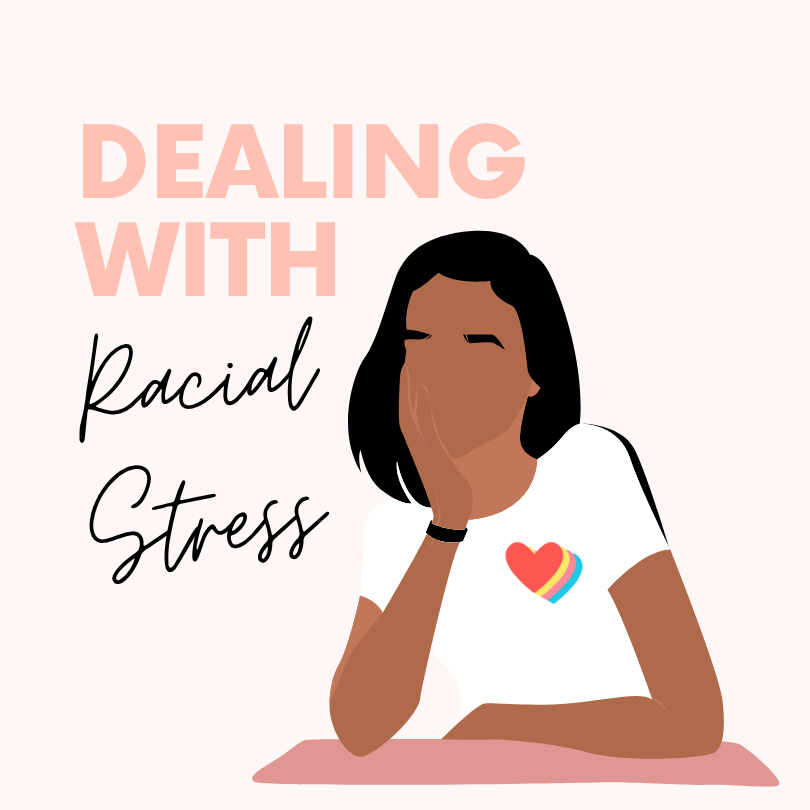
You stressed?
Stress is not necessarily a negative emotion. Everyone has gone through stressful situations and experiences at some point in their lives. A limited amount of stress can even help us build the necessary urgency and resilience to accomplish tasks and learn to deal with challenges in life. However, this is assuming that the stress is short in duration and we know that an end is in sight.
Racial stress
Racial stress refers to the distressing emotional, psychological and physical impact of racist experiences. Think of it as a gradual “wear and tear” of our being. Unlike the limited, healthy form of stress, racial stress is often chronic and feels like there is no end in sight, since it is a product of the deep-seated, structural problem of racism.
This is why telling minorities to simply “get over it” and be “resilient” when they experience racism misses the point. Racial stress is vastly different from the limited form of personal stress that everyone experiences.
Effects of racial stress
- Anxiety
- Depression
- Self-blame
- Isolation
- Frustration
- Helplessness
- Self-Doubt
- Avoidance
- Self-Blame
- Disengaging
- Substance use
- Sleep disturbances
- Muscle tension
- Dietary disturbance
- Digestive disturbance
- Heart disease
- Hypertension
- Respiratory complications
[T]his stress leads to poorer mental and physical health. But this is not only because stress breaks the body down. It is also because stress pushes people to cope in unhealthy ways. . . But discrimination is not just any form of stress. It is a type of stress that disproportionately affects minorities.
Here we see how racism works in a cycle to damage health. People at a social disadvantage are more likely to experience stress from racism. And they are less likely to have the resources to extinguish this stress, because they are at a social disadvantage.
– How Racism Is Bad for Our Bodies, Jason Silverstein for The Atlantic
Living as a racial minority can be exhausting. Growing up you may have kept wondering if the problem was you: Was I too sensitive? Maybe that person didn’t mean to be racist. Maybe I just didn’t get that job because I was not qualified, not because of my race. Maybe my personal success can prove to them that not all ____ are _____ !
It takes time for us to learn that racism is not a problem located in us or our communities, but how we are subjected to unfair and damaging stereotypes. It can take us longer still to learn how living under a capitalist system can deepen our suffering as the present economic system may disadvantage certain minority communities.
The cumulation of processing these personal experiences and the fatigue of observing how discussions about race are played out in public can cause intense feelings of helplessness, anger, and sadness. Racial stress cannot and should not be thought of as simply stress, but something with deeper and more profound impact on an individual. The worst thing is, minorities have done nothing to deserve this emotional and psychological burden that they have to endure.
Racial stress is the product of racism. Someone who holds other intersecting identities such as gender, sexuality, and class can be further exposed to racial stress and less protected from its impact.
It is a public health issue, but is often treated as an apolitical matter of better managing personal stress. Racism is not going to end tomorrow, and structures that perpetuate inequality will not be toppled in a day, so here are some steps we can take till then.
- Support and community: Seek or build a community of people who are supportive and share your experiences and feelings. This can help reduce feelings of isolation and release stress. You are not alone in experiencing the exhaustion of racism. Talk to friends, family, or even mentors and connect to existing affirming spaces that discuss racism and help make sense of its complexities. Some local spaces are @minorityvoices, @othertongues, @hearmesg, @notoksg, @yourheadlah and more!
- Empowering ourselves: We can equip ourselves with knowledge and learn how to challenge racism in our everyday lives. Pushing back against disempowerment and getting involved in social action can take many forms, whether it’s documenting incidences of racism, taking time to look at policies, create mental health workshops, or write fiery speeches. You can take time to see what fits you best! Learning to healthily channel our frustration and valid rage can help reduce our sense of helplessness and provide an image of possibility to others.
- Practice self-care: Minorities have to spend extra energy to process racial stress or respond to their aggressors. Self-care isn’t just about spas and taking time to decompress, although grounding activities are very useful too! Practice self-care by paying attention to your emotional processes and making sure you don’t overstretch yourself. You don’t have to sacrifice yourself for “the cause”. Taking care of your mental, emotional, and physical health is revolutionary in the face of a racist system which denies you a full life.
We may not be able to end racism in a day, a year, or even within a decade, but as we walk together towards a more equitable and compassionate society, we can take care and affirm each other. Here’s our affirmation for our fellow minorities:
Your feelings are valid, you are not alone, and racial capitalism is not as powerful as our collective spirit of love, care and resistance!
Sources:
- University of Illinois Urbana-Champaign
- University of California Santa Cruz
- The Atlantic
- And countless of personal experiences by minorities uncaptured by formal studies but are no less valid and real.