Category: Editor’s Letter

  • Editor’s Letter: Marriage

    Editor’s Letter: Marriage

    by Diana Rahim
    _

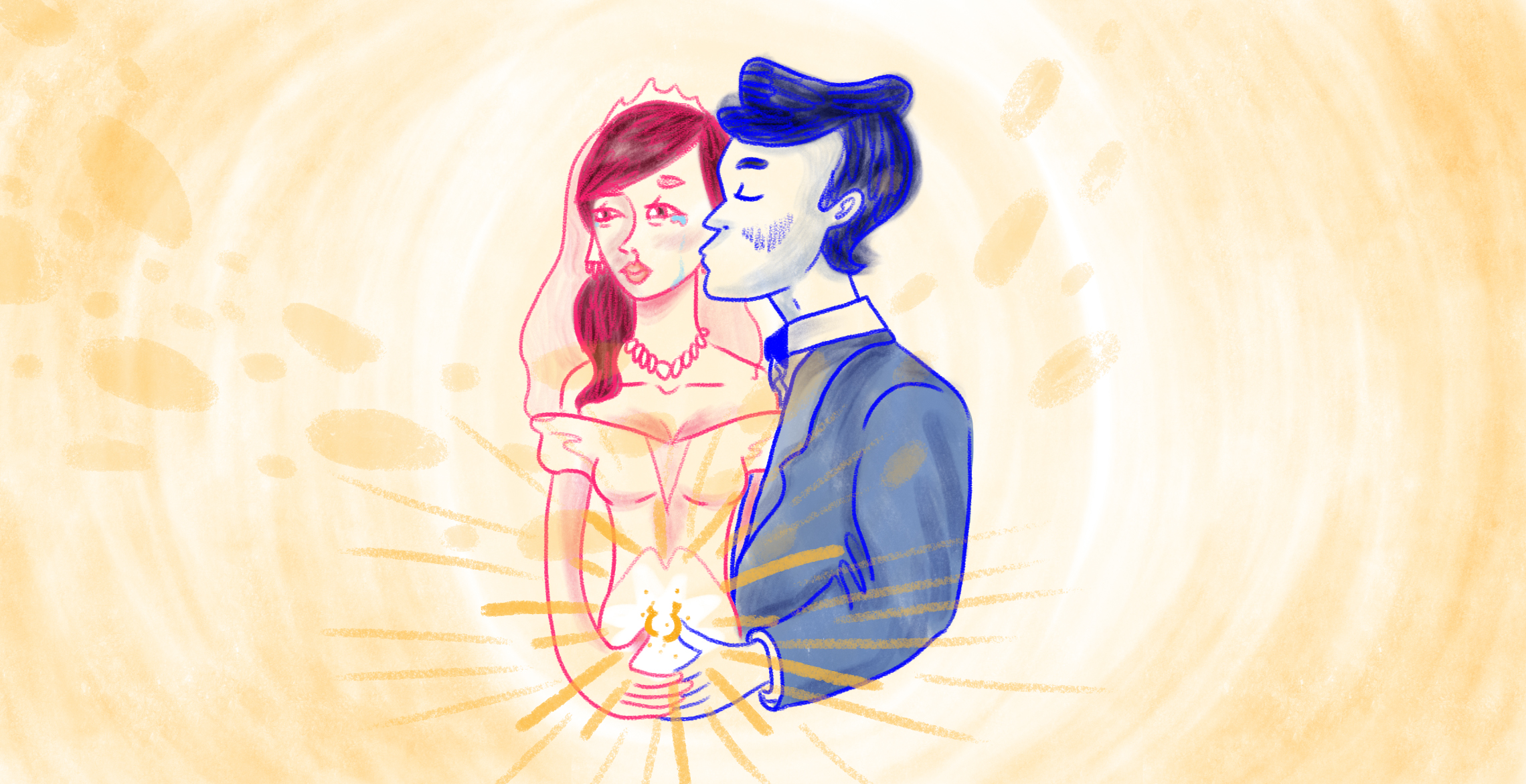
    My mum loves to point out the actor Khairudin Saharom every time he appears on TV. Each time she’ll not-so-subtly say something like “Isn’t he handsome? And he’s smart too, you know…” She even found his Instagram account and suggested that I follow him and leave a comment on a picture of his cats; the first step that will eventually lead to a burgeoning romance. Usually I jokingly reply that if she finds him such a catch, she can marry him herself. It’s hilarious, it’s irritating, and to me, it represents how one of the biggest concerns out there for a mother is that her daughter get married.

    The propaganda targeted at young girls to aspire to marriage has failed to work on me. Marriage, to me, is not necessarily romantic. It is unrealistically idealised especially to young girls and women. Two people who love each other committing to a life together? Of course that can be wonderful. But the institution of marriage itself, tied to the state and its resources, riddled with legalities that leave women vulnerable to abuses, and all the difficulties tied to it? Not so much. Make no mistake, heterosexual marriages are still far from egalitarian.

    In fact, the heterosexual marriage has always been such a contested topic precisely because it is the site where many women directly face gendered violence and discontent. Early feminists have even described it as a kind of “legal prostitution”; an economic transaction where the sexual access to her body is exchanged for financial stability. These days, women are thankfully more empowered to seek financial independence, which provides them with more options for a stable life other than marrying a man and limits the possibility of financial control and abuse.

    *

    It’s time to demystify the cult of marriage – the fact is that statistically, single women are more likely to be happier than married women. Married women tend to be unhappier than their partners, and are more likely to be the ones who initiate divorce. And honestly, is it surprising? The problem, of course, is not marriage per se. The problems were already there, it’s just that marriage can exacerbate the problem.

    Consider the Popular Malay Drama. In these toxic popular dramas, women with superhuman patience endure crass, controlling, unkind men, and then end up being married to them, presumably to endure that behaviour for life. The stories may change, but the dynamic remains the same. The woman is expected to be subordinate, patient, and suffer forbearance even as the husband exhibits the emotional maturity of a troubled child. This is what women are told are the virtues of an honourable wife. I can only hope that not too many women internalise this call to withstand emotional and even physical abuse for the sake of “love.” Why is this romanticised?

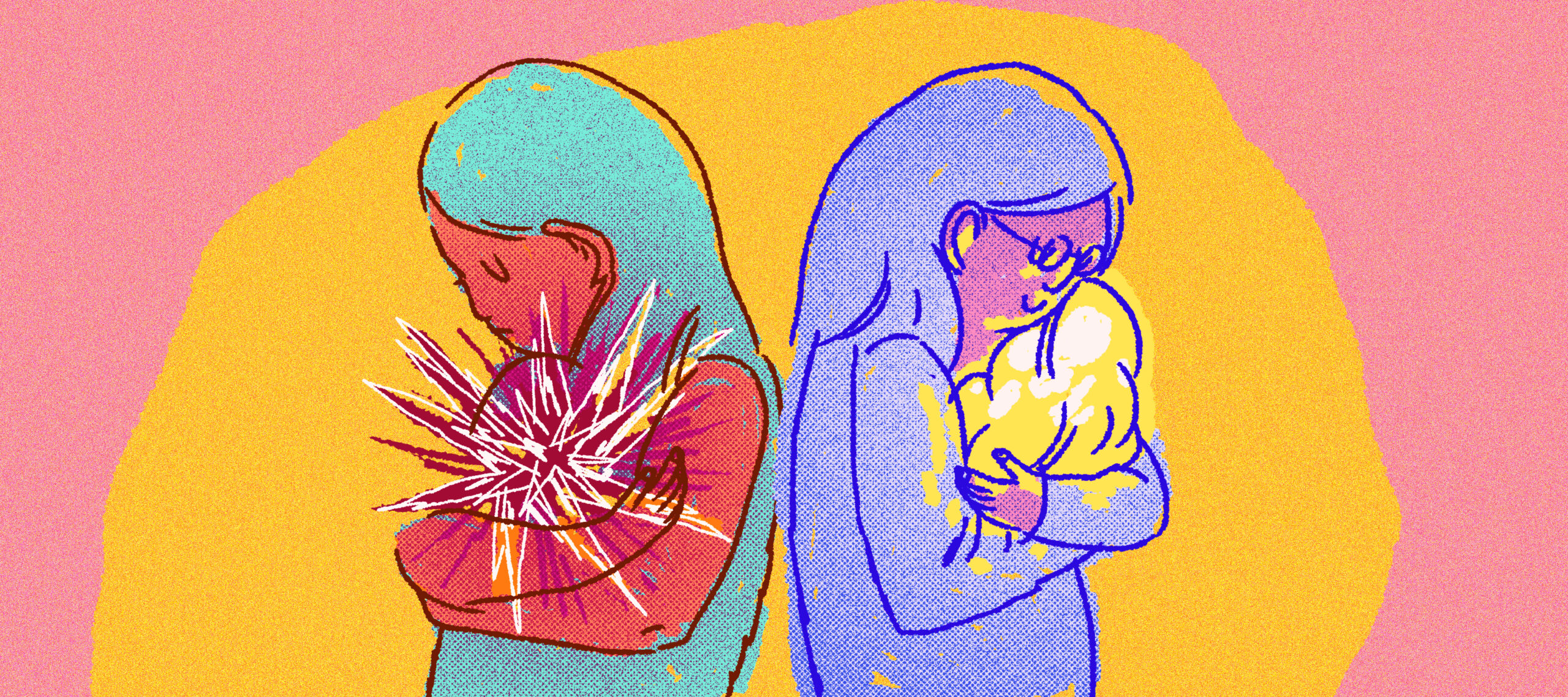
    What these dramas do reveal, however, aside from the ideal qualities a woman should have if she is to be marriageable, is the fact that women shoulder the bulk of emotional labour in a marriage. Women also shoulder most of the undervalued, unpaid work of maintaining a house, therefore working more hours than their partners, and are more likely to make personal and career-related sacrifices for the family.

    I need to think no further than of my own mother, who while she was pregnant with me worked as a nurse, went home to continue working on the chores, and even after I was born continued to shoulder the bulk of the household labours. The support she received from my father was minimal, and she was so exhausted and weakened that when she was pregnant with my sister, she realised that she had to quit her job in order to cope. This left her financially dependent on my father.

    If I were to look around, I do not see many encouraging, loving marriages. Yet our female relatives in dissatisfying marriages often have no issue encouraging us to get married.. there is something sad about it. Of course, I understand that they would want us to have a better marriage than they ever did. It’s probably why they would often bring a list of qualities we ought to value in a partner (“the love of God” being one of the most highly prized). Sometimes I wonder if they list qualities lacking in their own husbands.

    *

    I feel that it is important too to bring up the topic of marital rape.

    One of the most fervent criticisms of marriage is the vulnerability women face in the bedroom. Marital rape is often dismissed, or even excused under the belief that it is a wife’s “duty” to have sex with her husband. Such harmful beliefs risk breeding a sense of entitlement in men and a complete disregard for the sexual rights of the wife.

    As of now, marital rape is not a chargeable offence in Singapore, and many women do not bring it up. How often does this crime (which isn’t acknowledged legally as a crime) occur? In an article by Melissa Zhu detailing marital rape in Singapore, a counselling supervisor estimated that he sees “an average of five married couples a year where one partner had forced sexual intercourse on the other.” No legal intervention was done or thought possible in all of these cases.

    The issue of marital rape is one of the many ways in which the institution of marriage reveals the disproportionate amount of power and leeway that is given to the husband for gendered violence and abuses. It reveals how society has failed women when something as criminal as rape is not even considered a crime and rarely punished.

    The problem is, I suppose, that marriage is never simply about love. It has only been about love in recent modernity. For much of history, so many marriages were loveless, were based on political or familial convenience, and occurred while the female was still a child. Both of my grandmothers were child brides, as many women of their generation were. Even today, in countries where there are laws that make child marriages illegal, 7.5 million girls are married illegally below the minimum age. For so long, marriage was simply another way that women’s autonomy and sexuality were controlled.

    Change is not going to happen so soon, and they’re certainly not going to happen without some serious contestations of ideas. It will take some serious work to fully shake off the serious problems attached to the institution of marriage.

    Maybe I sound too critical, maybe marriage is about love; if fortifying love is what we truly care about, then I welcome the conversations we should have about how we can have a more respectful, loving relationship where both parties feel valued, and supported. Conversations on how we can ensure that abuses are not tolerated. Marriage courses would teach mutual respect and dignity within the context of a marriage and not perpetuate harmful beliefs on the “duties” of women. There would be some serious discussions on why polygamy is still allowed in Singapore despite the fact that it is a set back for women’s rights, and are barely done for noble reasons. (In a study by Sisters in Islam, 70% of men admitted they did it due to sexual attraction and 87% of children in polygamous marriages report negative and emotional psychological impact due to the experience.)

    Look at any truly loving and respectful couple and you can see how a marriage is not necessarily a problem. Not if your partner is a kind person who won’t subject you to abuses. The problem is if the protections are not there and leave you vulnerable if your partner turns out to be pretty terrible. The problem is if we have yet to unlearn harmful social, gendered conditioning that gets in the way of a truly fulfilling experience of love.

    I mentioned earlier that it’s time to demystify the cult of marriage. But when I say this I don’t mean to say that marriage is ipso facto terrible. That would be missing the point. It’s more about the larger problem revolving around the control of girls and women, the obsession over their sexuality, the great apathy to their gendered violence and discrimination that marriage can particularly exacerbate. The wool needs to be pulled from our eyes so that we don’t fall for the popular, unrealistic, and idealised narratives of marriage as a noble, wonderful goal to aspire to that will bring us happiness when the reality is so different.

    Continuing to perpetuate false expectations and idealised narratives on marriage, and refusing to have difficult conversations about its problems, will only leave more women unprepared for the challenges that may arise. It will deprive them of the knowledge of steps they can take should they face any serious issues. And to be honest, they are still a lot of serious issues tied to the institution of marriage. So let’s talk, and hopefully, this will let us see clearer. Bring your husband along too.
     

  • Editor’s Letter: Filial Piety

    Editor’s Letter: Filial Piety

    by Diana Rahim

    Thinking about the topic of filial piety and all that it connotes, my mind had gone immediately to a poem by Kahlil Gibran called “On Children.” It was one of those unforgettable poems that struck an essential point of contention in parent-children relationships, the rawest nerve. The one that told parents that their children are not theirs to own and control; that their children are not really theirs at all. It was one of those poems that expressed this point tenderly, as good poetry often can: They are the sons and daughters of Life’s longing for itself. / They come through you but not from you, / And though they are with you yet they belong not to you.”

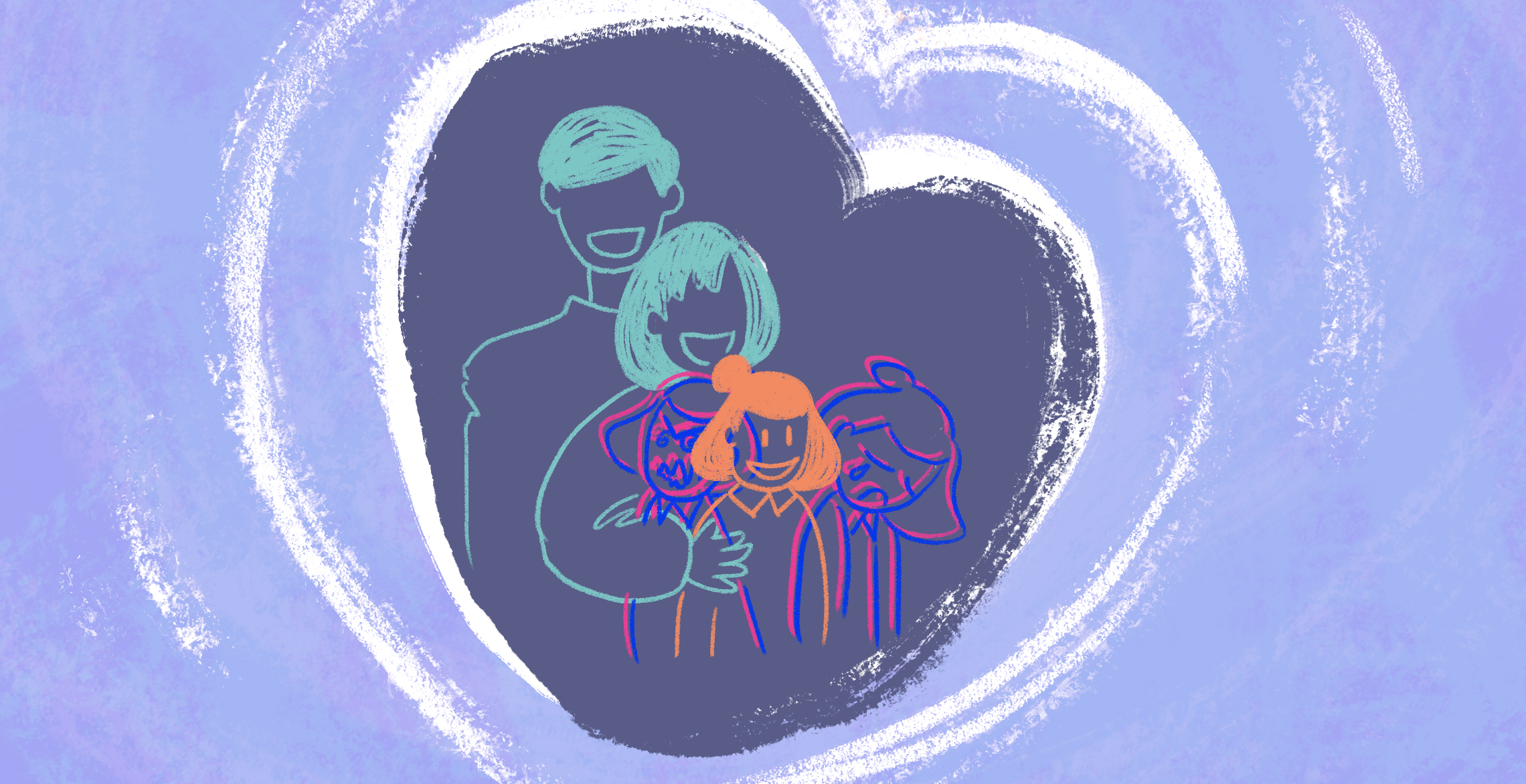
    Filial Piety is a familiar concept in Asian societies. We grew up acknowledging it as a value valourized in our communities, bearing noble connotations popularly conceived to be rooted in love and respect for one’s parents, and thankfulness for the difficulties and sacrifices that comes with parenthood. On the other hand, it also perpetuates itself through a rhetoric of guilt, prides an almost uncritical deference to one’s parents, and enforces a hierarchical order based on power relations — features that might not take too kindly in family dynamics that are less than ideal.

    The problem of filial piety is not so much that the idea of loving and respecting one’s parents is bad – of course this can be a good thing. And listening to your parents is especially a good idea as a young child for basic reasons of survival and safety. When your parent tells you not to touch the hot pan, or to cross the road when the red man is lit, it’s really not wise to be a rebel. But of course life will present you with far more complicated situations. Reality is not so simple, and when it comes to a concept that ipso facto defers to parents an almost reverential stature, where you are taught to respect them simply because of their status of being a parent, it doesn’t take too much thinking to realise that this is not something that can handle the complications that are natural to human relationships.

    The concept of filial piety is an idealization of the parental role. The idealization of anything is often already a trigger for trouble. For a start, idealization is a kind of reductionism. One that upholds itself through too simple an exaplanation or understanding of what the experience of parenting, and the expectations required of children should be.

    When the parents you have are not the kind of parents that ought to be idealised; if they are abusive or unhealthily controlling; if they have brought you emotional and psychic pain, how do you then cope with the concurrent message drilled by the expectation of filial piety that you have to defer to their authority, and that they are people you ought to respect, and love? If they were any other person, these might not be people you would respect at all. The discussion on how the language of love can be used to enforce certain problematic ideas and ideals in my last letter may be of value here.

    The submissions that came in for our call-out are almost heartbreaking in the way the writers try to negotiate this crisis. So much must have been done in their minds to try to reconcile the pain caused by their fathers, along with the expectation to forgive such transgressions, and on top of that, even to continue to respect and love them.

    I would argue that the concept of filial piety, though it may appear to come from a place that valourises love between child and parent, is in fact a concept that inhibits a more true and loving relationship. It is entirely normal for parents to be human and blunder. They will most certainly hurt their children, as our own experiences with our parents have shown us. This doesn’t necessarily make them bad, but an inability to work on those wrongs, to continue to hurt their child because they are unable to see the hurt caused by their actions, and their lack of incentive to be introspective about their own behaviours because a concept of deference confers them a kind of power to always be in the right, will only result in a more strained relationship. Being a parent is not an inherently so honourable a job that it can confer you almost uncritical power over another human being.

    The control that a parent has over a child is not benign. And perhaps the concept of filial piety is so strong because it goes hand in hand with socialization. It is part of a function of ideology. What kind of ideology this is is perhaps a whole other argument. But for a start, filial piety communicates an “acceptable” and “ideal” kind of relationship between child and parent – it communicates what is considered a “good” family unit. And as we know, the notion of “family values” is not apolitical. The family is often the site where ideology is transferred through socialization since they are the first point of contact for the children as they grow up. The ideal family unit is often emphasised through a country’s legislation, its messages, and the way it distributes its resources. Are we comfortable with this kind of ideology that prioritizes one form of family? Are we willing to look into why a certain kind of parent-child relationship is valourised?

    Concurrently, the way the family is ordered can sometimes give us a clue into how the state is then ordered, after all, it is the state that has a hand in enforcing and encouraging the kind of family unit that it prefers. So is it any surprise then that our own state is often accused of being paternalistic, as treating their citizens like children?

    In your dreams, what would the ideal parent-child relationship look like? Perhaps for many of you, your relationship with your parents may have been ideal, even through difficulties. This question is perhaps not quite a question you can relate to. But even then, try to think of what kind of relationship would be one that fosters genuine connection and respect, that does not burden either parents or children with expectations that struggle to commensurate with reality, and that can equip people with the ability to do the difficult emotional work of growing with each other as individuals, instead of reaching for an outdated, conservative concept that would immediately confer one party with respect and authority.

    __

    illustration by Ishibashi Chiharu

  • Editor’s Letter: Love & Relationships

    Editor’s Letter: Love & Relationships

    by Diana Rahim

    How does one even begin to talk about love? It’s almost unthinkable. It’s like asking one to talk about a topic as fraught and as nebulous as “consciousness.” I am not sure I am exaggerating. I struggled for a while about how to introduce this topic, how to write this letter. But I realised that perhaps this nebulous way of thinking about love is part of the problem in the first place. It is almost instinct to think and speak of love as something essential, as a value, or as something innate in us waiting to be expressed. That’s why discourses on love can often lead to lofty essays or a philosophical exposition. They are obsessed in trying to explain love as essence; as some intangible force within us.

    However love is perhaps better understood not as something that is already there, but something that we have to create out of nothing. Love as created ex-nihilo. Love as a doing, a verb, not a noun (or at least not just a noun). The same goes, I suppose, with every other positive value such as being “good” or “understanding”. It is not enough to make a self-declaration, to say “but I’m a good person!” or “I’m understanding” and that perennial favourite even by KKK members, “I’m not racist.” These positive values are not proven by self-declarations but by concrete actions. Our being in the world necessitates relationships with others, so personal declarations are never enough. How we engage and affect other people bear strong judgement on our character.

    When we think of love then, let’s try to think of it through concrete actions. When I think of love, I think of my mother bathing me as a child during my high fevers. I think of someone drying my hair. I think of a support group that is a safe space for people who have been through trauma. I think of acts of communal love and service. I think of the act of apologising, the ability to go beyond the defensiveness of the ego. I think of the ability to listen to each other in the experience of hurt. In all of these instances, we feel supported, heard, and cared for. We feel ourselves valued as human beings. So when we think of love, we should perhaps think about the concrete actions we can take, and exhibit consistently in our commitment to being loving.

    It seems simple, but it never really is, because love isn’t cultivated in a vacuum.

    So when I think of love, I also think of the very real world within which love has to be cultivated and sustained. A world that sometimes gets in the way, prohibits or controls the kind of relationships that are valued and devalued. A world that decides what gets to be legitimised and recognised as love. A world that pushes a politics of desirability to decide who appears to be more lovable, or deserving of love, than others. Most of the submissions for our upcoming series deal with these challenges — the ways in which the scripts of community, society and even the script we are told to follow as individuals, can inhibit the true, more genuine expressions of love in favour of something that the prevailing order finds more acceptable.

    We receive different scripts sometimes about how love is supposed to look like, and they are almost always never innocent. Look hard enough and you can see the ideology that underpins the script, the ideology that seeks to be perpetuated through your very experience of love. Perhaps it is compulsory heteronormativity. Perhaps it is the belief that interracial coupling is not as “normal.” Perhaps it is even the insistence that a marriage is the goal of a coupling. It is important that we problematise received scripts not just because they inhibit our experience of love, but because it distorts the way we see and understand love.

    And then there is also the question of who, exactly, are promoting these scripts. Is it our families? Our ethnic communities? Our religious communities? The society at large? What justification do they have for deciding the rules that govern the kind of relationships we are allowed to have? Of course our family, our communities, would always say that they come from a place of love, and the prohibitions are set for our own good. So what happens if we were to disobey or cross over the limits they have placed? Often times, the individual can find themselves alienated from the community, not belonging or fitting in quite as well, or in the worse case scenario, even casted out and rejected completely. Sara Ahmed, in The Cultural Politics of Emotion had discussed how this “acting in the name of love can work to enforce a particular ideal onto others by requiring that they live up to an ideal to enter the community.”

    It is actually really sinister how love, this powerful force that is so deeply, personally felt, can be manipulated as a tool of control. After all, what can be more affecting, more powerful, than this fundamental thing that humans yearn for and cherish so deeply? What can be more psychologically threatening to a person than to tell them that love will be withheld unless they behaved properly?

    *

    It is scary how difficult it can be to detect when love becomes toxic. When we find it so difficult to let go of a relationship we are holding on to (and I do not mean just romantic relationships, but all manner of relationships), because we are convinced that it is good for us, that it is where love resides. It can be so hard to let go of love when we are told that this terrible thing is what love is supposed to look like. (I can’t help but think about how child abuse can often be dismissed as simply an ‘Asian’ way of discipline, or that it is in fact an act of love. This is believed despite there being no research to prove the usefulness of spanking as a disciplinary technique, but plenty to show how it breeds issues of self-esteem, bad behaviour, increases risk of mental illness, and promotes anger in both child and parent, amongst other negative effects.)

    Love is not always innocent, it can also be a tool of manipulation used to conceal pain and power under the guise of care. It is why abuse and manipulation can often be accompanied by the language of love with phrases like “I was doing this because I love you” or “I was only trying to help and support you.” In each of these cases you are posited as the person that stands in your own way to being loved.

    Of course hidden behind this veiled, complicated play of power is the fact that the terms of the relationship, or what is constituted as love, is being disproportionately decided by one party. Power feels entitled to demand that you act in a certain way. It can reject any other form of love other than its own. You would think: if I behaved right, in the way they wanted, then I would receive love, then this relationship could be fulfilling.

    The way love can be used as a weapon, or the way the language of love is utilised, often ends up re-directing blame to the very people that are suffering. Not only that, it can even posit the ones who are abusive or hateful as the ones who are ‘loving.’

    Sara Ahmed had noted that hate groups often branded themselves as groups premised on love. White supremacy groups did not see themselves as hate groups, but groups that were guided by their love for the White race and the Aryan nation. They would even quote a biblical verse “Love thy neighbour of thy people,” following it up by saying “My people are white.” Think also of the rhetoric that vilify vulnerable communities such as migrant workers or refugees. Someone might justify their hateful views against them by saying that migrant workers or refugees can threaten the safety of our women, our children, and of course, that great big love of all loves in this age of nationalism, the nation.

    Through a discourse of love, even hate can be twisted into love. This is why love, its language and the dynamic of relationships, always have to be understood critically.

    So in your relationships, in the practice of your love, perhaps it would be a great help to be self-reflective and critical. Are you free? Are you given the option to be free? Do you give that option to the other party? Is anyone less able to set the terms of the relationship? Is the relationship genuinely giving you feelings of love, of being cared for? Or is it instead insisting that you are loved, while your actual feelings border more on anxiety, a lack of self-esteem, and a sense of rejection of your self?

    In a healthy relationship, power cannot be exercised at the disadvantage of anyone. You have to be an equal participant. This means that true love is not present without justice. There has to be freedom in the exercise of love. It is not something that should be coerced, demanded, or guilted out of you. This is true not just in our romantic or personal relationships, but also the relationships to the things that are important to us such as our families, our communities and our faith. That famous line in surah Al-baqara “there is no compulsion in religion,” is popular precisely because deep inside we know that love and relationships cannot be forced or imposed, at least not if it’s going to be genuine. Love can keep you in line, but it should not hold you back. It can give you constructive critique, but it should not tear you down or invalidate your very existence.

    Knowing this, the question we can ask moving forward is how do we ensure that there is a healthy expression of love in our personal and social lives? How do we make sure that the relationships fostered in our communities are not ones that are coercive, unreasonably demanding or even abusive? How can we learn to recognise when what presents itself as love is actually harmful and toxic? How do we develop the ability to leave toxic relationships? How do we create alternative systems of support and care for those who have been casted out? Essentially, at the heart of all these questions, is the question — how can we learn to love each other better?

    __

    illustration by Wan Xiang Lee

  • Editor’s Letter: Monolithic

    Editor’s Letter: Monolithic

    by Diana Rahim

    It is not surprising that the term ‘Monolithic’ can have negative connotations. It brings to mind an understanding that is reductive, and absolute. A sweeping, generalised way of perceiving a reality that is much more complex and nuanced.

    Not all Muslims are Arabs after all, or even from the same denomination, or necessarily share the same cultural practices. Not all women have the innate quality of being gentle or nurturing nor are men necessarily tough and pre-disposed to supposedly more ‘analytical’ thinking. Malays are not essentially lazy. Any kind of essentialism; any kind of belief that a person by virtue of belonging to a certain subgroup is innately anything is bound to be not only unscientific and untrue, but indicative of a serious lack of understanding. It could also be an indication of a refusal to understand, since present evidence is always available to debunk myopic, flimsy stereotypes.

    *

    The trouble with insisting on a singular, or monolithic, understanding or interpretation, is that it is almost always accompanied by an admonishment or even a hostility to diversity. We often hear it, for example, when some perceive the immense tradition and diversity of Islam in a simplistic and reductive way. They might call you a terrorist. They might call Islam a barbaric, patriarchal religion that endorses stoning and head-chopping. But of course we’re thinking, which Islam? The Islam of ISIS? The Islam revealed in patriarchal 7th century Arabia? The Islam that had gay and intersex custodians in Mecca? The Islam of the Nusantara (the Malay world)? The Islam of the Uyghurs?

    But Muslims too, despite being subjected to Islamophobia, can be guilty of believing, or demanding that Islam is a Monolithic tradition. A monolithic mode of understanding or belief in Islam can lead not only to a loss of diversity, but also cause damage for interfaith, and especially intra-faith relations.

    Since we’re on the topic then, let’s consider the issue of Monolithic perception when it comes to Islam. As a monotheistic religion, the centrality of the concept of Tawhid (oneness) may lead one to think that there can only be a single ‘true’ way. That in order for us to be as authentic as possible, it necessitates a ‘sameness’ or a single prescribed way of worshipping, or living, as a Muslim. This might explain why some Muslims even find themselves influenced by a creeping Arabisation, stemming from the perception that adopting the lifestyle, language or even the garb of a foreign community would make one closer to “true” Islamic practice. 

    Simply said, the urge may be strong to perceive and understand Islam as monolithic, leading one to shun everything that does not fit the narrow and restrictive view that is seen as the only legitimate way. But such a view simply cannot hold for a religious tradition spanning over 1400 years and 1.8 billion adherents. Any kind of obsession for a ‘purist’ form of ideology is a red flag for dogmatic thinking. It also leads to a disinterest in communities or people who do not practice the same way as you do, since they are not considered ‘legitimate’ and therefore not worth knowing. This may be as benign as ignorance, but even as hostile as outright rejection and demonisation.

    For example, if you are Sunni, which most Singaporean Muslims are, think of how much you actually know about your fellow Muslims from the Shi’a sect. What little Sunni Muslims know of the Shi’a sect is often from untrue stereotypes that insinuate, or directly accuse them of being ‘orang sesat’ (deviant). The image of Shi’ism is often crassly reduced, for example, to an image of a group self-flagellating themselves during ashura (a practice, which by the way, is condemned and outlawed by the highest Shi’a religious authorities).

    Rarely do Shi’a-hating Muslims get over the fear of difference, the fear of seeing a group that practices Islam in a way that seems so different (regardless of whether it is really so different), to actually find out and read a basic article that explains Shi’ism. But then, people rarely respond rationally to irrational fears that have, more often than not, been socially conditioned through the language and imagery employed by the dominant community. It would feel easier after all, if all Muslims were to follow the same path that you believe is the ‘right’ one.

    Recently, a letter called for MUIS to debunk Sunni-Shia fallacies, citing the fact that a fatwa supported by 500 Muslim scholars that accepts Shi’as within the fold of Islam. But if such a strong statement of the validity of Shi’ism is not enough, one wonders if the endorsement by a religious body is enough too. It may seem natural, in Singapore, to appeal to the authorities when it comes to a problem rooted in group differences. But perhaps it would be more powerful if we could envision another way. The option is always open to debunk those fallacies ourselves. To do the work on the ground of reaching out, sharing stories, information, and debunking stereotypes. Hopefully, that’s what we can do in our small way with the upcoming blog posts. And let’s keep the momentum when it comes to sharing marginalised voices, supporting them, and giving them visibility and space

    *

    There is this prevalent belief and almost instinctive conviction that peace is to be found in ‘unity’ or ‘sameness’. That a feel-good idea of ‘unity’ where conflict is not visible is the ideal situation we want in society. But these are just kinder, vague, and camouflaged ways of desiring for some kind of hegemony, and hegemony almost always comes with an abuse of power. In order to enforce the dominance of one social group, or one dominant framework instead of another, others are necessarily subdued, whether through coercion or through direct violence. In other words, Monolithism is enforced.

    There is a tendency towards a kind of universalistic ethics when it comes to our conception of peace. We can be so discomforted by diversity that we think that an imposed hegemonic order that breeds monolithic views is one that is preferable. But dominant consensus is not necessarily indicative of peace, especially if such a consensus was enforced instead of being arrived at together. Such an order, if it is peaceful for us, almost always means that it is harmful and painful for others. True peace is perhaps a situation where we are unafraid of disagreement.

    For this reason, if our understanding of something, whether it is religion, ideology, or a group of people, is monolithic, it is often a cue that our understanding has been the result of power dynamics. To insist that a group of people can be reduced to a single story or image is an act of dehumanisation, and it is often a group with power that has the ability to dehumanise. To recognise that we might be given an impoverished, reductive view is thus a cue for us to seek more truthful, nuanced answers that will restore humanity to our society and relationships with different communities.

    The reality of our world — our communities, our countries, our religion, our gender, the experience of being part of any sub-group or identity — are often complex things that are difficult to reduce to a single image, word, or even a sentence. No person who understands this would feel comfortable to be made representative of a whole community. Yet those who insist on monolithic understandings, ways of seeing, and being, often do that for whole groups of people, beliefs, and experiences. It is perhaps time to consider that peace is perhaps not to be found in pressure to conformity and sameness, but instead in the acceptance of the diversity that is natural to the human experience.

    Perhaps we are not pure white light, we are the full spectrum of colour. There’s beauty in that too.

    __

    illustration by Wan Xiang Lee

  • Editor’s Letter: Microaggressions

    Editor’s Letter: Microaggressions

    I can’t remember when was the last time I heard a racial or gendered slur or was told that the religion I grew up with is a cesspit full of terrorists. All of these things have happened, but somehow I was able to let them go and move on. I mean, whatever right? Can’t dwell forever. I can’t stick around and worry about comments from the ignorant. Got a life to live. Etc, etc. 

    The incidents that do linger however, are ones where the act is done with such casual ease that I am left confused as to what happened and how to respond. Till today I always remember a friend who told a racist joke about how a bench can support a family better than a Malay man could. I wish I could laugh (you might secretly find it funny, I get it), but I didn’t have enough distance. It hit too close to home. I thought of my father who  worked tirelessly to provide for the family. I resented that the reality of his struggle would be dissolved into such a disrespectful, demeaning racial caricature. I felt conflicted because I knew if I expressed anything other than a good-natured laugh or smile, I would be disturbing the peace. I would be a buzzkill.

    When obvious bigotry occurs, you know that you are entitled to your anger. You know that you are justified in feeling upset and calling the other person out. I think when you are assured that your anger or discomfort is valid, you are allowed to go through the whole process of feeling before being able to let go of the incident. But with microaggressions, that process is blocked, because you might struggle to validate your own anger/feeling of upset or call the person out. Simply letting it go becomes difficult.

    The subtle, prejudicial behaviours and remarks that are said casually under the guise of a joke, an offhanded comment, a behaviour that hints at rejection — are those the ones that really hurt us in the end?

    *

    First coined by Dr. Chester Pierce, the concept of microaggressions was thrown into mainstream discourse after the publication of an article by a research team headed by Dr. Derald Wing Sue studying racial microaggressions in the United States. Since then, the term has popularly been used to describe the everyday instances of subtle discrimination faced by historically marginalised groups. The term faces a lot of what the people who go through it do — invalidation. Microaggressions are seemingly harmless and is therefore expected to be graciously forgiven, ignored, or laughed off by its recipients. A lot people actually do, because pointing them out can lead to an awkward, or even hostile situations that would be too stressful to go through each time it happens.

    The difficulty with microaggressions is primarily the fact that they are not overt displays of discrimination, leaving you confused and undecided on whether to confront the perpetrator (not made easier with the risk of being called ‘oversensitive’). Was what they said actually offensive? Am I right to feel offended? These are questions worth asking, of course. There are, in the age of social media, moments when slights not worth serious intellectual consideration can spiral out of control. But even that strong retributive sense of anger did not come out of nowhere. It is an expression of an accumulation of heavily repressed frustrations.

    The inability to address and validate the incident for ourselves can be distressing especially since they can happen a lot. Some quick examples: A Malay person who does well academically is told that they are “not like other Malays”. A woman who wears the hijab is told she looks “conservative” and “unprofessional”. A Muslim boy who is asked to role-play a ‘terrorist’ during a class. These are all examples drawn from the experiences of my friends.

    *

    For skeptics of microaggressions, these incidents are trivial and one-off. They are not seen as incidents that are part of a larger problem. But microaggressions are manifestations, no matter how small, of an ultimately damaging value system that marginalises a community. That is why it can be difficult for us to brush it off though they seem negligible. For a moment, the minority’s difference is not only brought into attention, but it is casually degraded and ridiculed. The person’s difference, usually superficially accepted or tolerated in everyday life, is sharpened into a point and used to hurt them. When faced with this point you are expected to be gracious. To express even minor indignation is to risk hurting the other’s feelings, which makes you appear intolerant and difficult, even though they are the ones who sharpened your difference against you in the first place.

    Of course, people are not ill-intentioned a lot of the time. A joke is just a joke to someone who does not experience the marginalisation they are laughing about. We know very well they might be good people, but at the end of the day the impact of what has happened is something that stays regardless of intent. The prejudicial way of thinking is affirmed instead of challenged. And then we are told to let it go.

    We expect bigotry and discrimination to be obvious and overt. We expect its perpetrators to be blatantly cruel. But the truth is that we are all swimming in the sea of an unfair system that socially devalues marginalised groups. It has been part of our socialisation. We have all at one point or another said something ignorant or hurtful, a lot of times unaware that it was offensive. That’s okay! Nobody is expected to be perfect. But as decent people living together in a diverse society, it shouldn’t be so difficult to apologise and to understand why our actions or words are offensive, even if we might think it trivial.

    I think we are capable of entertaining the possibility of a more complicated world beyond narrow inherited prejudicial attitudes and stereotypes. We are capable of a more nuanced way of handling things instead of just going “it’s nothing” or “it’s not big deal” or “don’t be so sensitive”.

    *

    In a study published by Dr. Alvin Alvarez, it was found that ignoring everyday racism is more distressing for one’s mental health. In explaining the findings of his study, he said:

    “When people deny or trivialize racist encounters, they can actually make themselves feel worse, amplifying the distress caused by the incident. […] These are incidents that may seem innocent and small, but cumulatively they can have a powerful impact on an individual’s mental health,”

    If to keep silent, to brush it off, is the thing that brings us the most distress; if keeping silent or lacking affirmation is what makes microaggressions so tricky to deal with, then we have to affirm ourselves and each other. For this reason, I am proud of the people who are willing to share their stories with us this month. We will speak. We will express our discomfort, and our displeasure. We will do it because the reality of what happened is not up for debate. It happened! We deserve to have our pain acknowledged. Holding people accountable is the first step to challenging prejudicial attitudes instead of letting it get re-affirmed again and again.

    Microaggressions is not something as simple as hurt feelings. It is ultimately about the normalisation of oppressive beliefs and the perpetuation of discrimination.

    Why should prejudicial, stereotypical notions of the marginalised be something that is normalised? We deserve a better ‘normal’. We’re definitely capable of it, so perhaps let’s normalise speaking up. Let’s normalise a better, kinder way of engaging with each other. Let’s normalise better jokes too, because honestly? Those same old (racist, sexist, islamophobic, etc) jokes aren’t even that funny.

    -Diana Rahim

    (illustration by Lee Wan Xiang)

  • Questions Muslim Women Get Asked

    Questions Muslim Women Get Asked

    March is International Women’s month and to celebrate this we will be running a 5-part blog series on “Questions Muslim Women Get Asked”. Muslim women in Singapore face a barrage of questions and comments everyday from the people around them, especially from members of the community. This blog series will share the experiences and thoughts of women and how they manoeuvre and manage these invasions of their privacy.

    1. Social Media Intrusion: The Empathy Myth
    2. My Life is Not Mine – Intruding on Young Women’s Personal Lives
    3. The Why and Why Not of Being an Indian Muslim Woman
    4. Hello, I Do Not Have All the Answers
    5. A Veiled Question I Get Asked Often