Category: Blog Series

  • My Mother was Abused by my Father, but Everyone Around Allowed it to Happen

    My Mother was Abused by my Father, but Everyone Around Allowed it to Happen

    By Ayla Suraya
    __

    (Content Warning for Partner Violence and descriptions of abuse)

    My mother’s experience of Intimate Partner Violence (IPV) or domestic violence has definitely had an impact on me. Growing up, my mother would share problems that she should have confided in her spouse or a therapist and my parents’ marriage was the first model of relationship that I knew.

    I will write about her marriage from my perspective as her child. That being said, I will write under a pen name to protect the identities of those I write about, especially the victims and survivors of domestic violence.


    Spiritual abuse

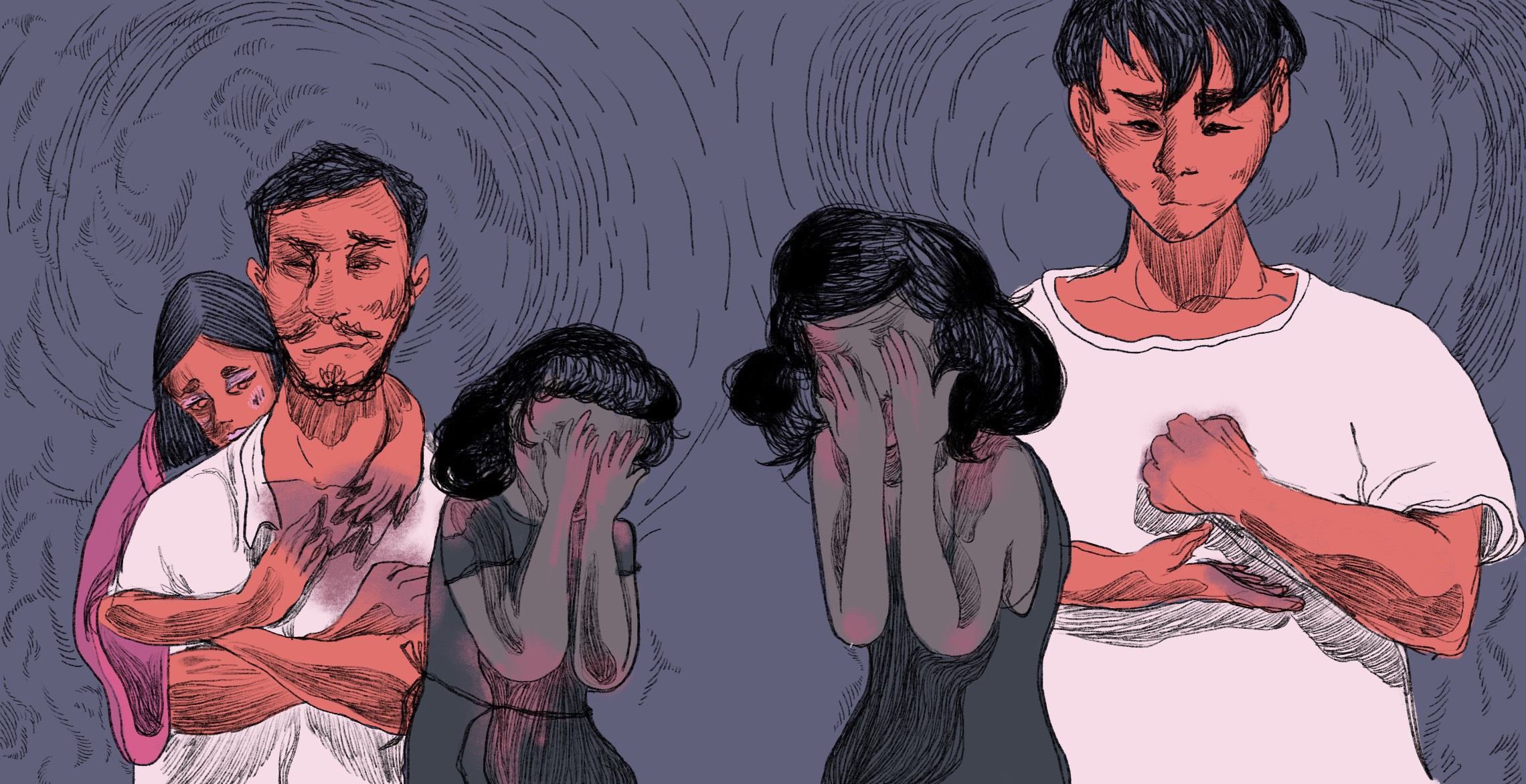
    When I was young, she shared an experience that I would identify as spiritual abuse. “Aku haramkan kau keluar dari rumah!” — my father forbade my mother from going out, even if it was to shop for groceries. Later, she felt her knees gave way. She truly believed his curse worked.

    She felt guilty for going against my father’s word and it doesn’t help that society has instilled fear and guilt in Muslim wives for “disobedience,” They are told to always listen to their husbands, even when it goes against their better judgement. If it that were true, it was unjust of God to let that happen to my mother. Why are experiences of violence against women merely a test? Why do we insist victims of violence will get their salvation in their hereafter, but not now?

    It is frustrating to me how society uses religion as a blanket excuse and tool to “comfort” victims. It isn’t comforting. You are on the abuser’s side when you disregard the violence.


    The miscarriage

    My mother had two miscarriages before she had me. My parents had been married for at least five years then. My father accused her of killing them so that he couldn’t have his first child. He claimed that she doesn’t care since she had two children from her previous marriage.

    She recounted her feelings of extreme guilt after the miscarriages. She saw the hospital nurses write “abortion” on the medical records. I explained to her that technically, the procedure to remove the dead fetus from the womb is abortion, but the cause of the fetus’ death is still miscarriage. It is still an accident. The stigma on abortion didn’t make it easier on my mother.

    Unrelated to the miscarriage, my mother visited the doctor after they got physical during an argument, more than 20 years ago. Her doctor advised her not to egg him on since traditionally, men have greater physical strength. Perhaps, her doctor meant well. However, he still victim-blamed my mother. His words have stuck to her when physical fights happen now with my brother and me. It further debilitates her from taking action. Medical professionals need better sensitivity training to deal with victims of violence if they haven’t already.


    The sex tape

    All of us got Personal Protection Orders (PPOs) a few years ago. My mother should’ve gotten it for all of us from the get-go. We found his sex tape when I was 15 – solid proof he was cheating on my mother.

    My mother barged into my room, panicking. We watched the sex tape together till bile rose in my throat. My mother apologised but she desperately needed a witness. There were no other adults in the house, except for her and my father, the cheater. I had a plan: download the video into my laptop and drop the evidence at Sharia court. She can finally divorce him. Perfect exit strategy!

    But my mother was scatterbrained. Guilt overcame her for snooping into his stuff. She couldn’t believe she found incriminating evidence.

    So, she didn’t follow my plan. She couldn’t think straight and my patience wore thin. My father was awakened by my outburst. He was drunk. They argued. He hurled a standing fan at her and missed. I was in my room with the doors locked. I jotted down what I heard. Everything happened so fast.

    Immediately, my mother called the police on him. She ratted him out for the sex tape, but the police were useless without a PPO. My father then blamed my mother for not “giving it” to him. He was at fault. He betrayed us all. Yet he had the audacity to play the victim card.

    The sex tape divorce plan never worked out. My mother figured requesting for a maintenance order was better. But my father haggled with the judge. He doesn’t have a criminal record. So, we didn’t get much.


    Systemic failures

    My father and our family were referred to PAVE for counselling. Our social worker went through the concept of the cycle of violence. She warned that though he may be in a ‘honeymoon phase’ (meaning: he calmed down), doesn’t mean the volcano is dormant and is not preparing for another eruption.

    She explained how abusers have a distorted sense of right and wrong. Ask them: why do you hit your wife? Why not go one step further and kill her? and you’d be surprised at how they’d react to such a question. These abusers reasoned it would be too much; I’m not that cruel. Abusers don’t always see themselves or their actions as abusive. They would justify how their abuse can still be “ethical”. That is exactly how my father is and how he justified his actions to the police. 

    The systemic support ended there. I don’t remember an active follow up to check in on whether he had truly changed. Perhaps there isn’t enough manpower to rehabilitate abusers. The system disappoints me again.


    Another marriage on rocks

    My sister admitted she filed for divorce to demonstrate to our mother that they can both liberate themselves from their toxic marriages. She was willing to go above and beyond to become a springboard for our mother’s divorce. She believed what was holding out mother back was her post-traumatic stress disorder (PTSD) from being divorced by her first husband, my sister’s father.

    But it isn’t easy to get our mother to move on. She is traumatized from being divorced without prior notice, being cheated on, and barely has any stable income as a homemaker.

    She is convinced that my younger brother and I will spiral downwards just like our older half-siblings should a divorce happen. She is only staying put for the “financial safety net,” because a few hundred dollars does make a difference in running a household and supporting us for our survival.

    My mother plans for a divorce once my younger brother and I are rich enough to get her a lawyer so that she doesn’t have to bear the humiliation of going to court a second time. She is still very traumatized by her first divorce.


    Abuse tactics

    My father threatened to hit me last year. I quickly shut him up by threatening to record his threats on video and hand it over to the police. He now knows that I won’t hesitate to take him down, so the abuse trickles down to my younger brother. I think my brother still has a soft spot for him. Perhaps he feels sorry for our father, because of how cold and hostile I am. My father gets my younger brother’s hopes up and promises to change, but he doesn’t.

    My brother slut-shames his mistresses when they argue. It feels as though he is still coddling our father. If he stops “delegating” the blame, our father will definitely get the message that he doesn’t buy into his nonsense anymore. Because then, he’d be forcing our father to take full responsibility for his choices.

    Because my mother was divorced, my father sees him marrying my mother as “selamatkan kau dari jadi janda” – saving her from the embarrassment of being a divorced widow. Therefore, he feels entitled to her and to degrade her.

    A pattern of abuse I noticed in my father is how he picks fights after midnight up till 6am. That’s when everyone is home and he can show off his “power”. In that time period, the neighbours can hear him play the victim: how he is supposedly disrespected as the man of the household. 

    My father is strategic in his abuse. I don’t believe that every instance of his abuse is done out of blind anger. He does stop to consider if something can be used against him.


    Teens D.E.A.D.

    I told my ustazah at 15 that I stopped believing in marriage. She asked why — Well, my father cheated on my mother. She said that it was no excuse to denounce the sanctity of marriage. She was someone I trusted and respected. For a while, I tried reconciling with the idea. But whether I was 15 or 22, I still feel the same way.


    Questions:

    Why is god on my father’s side? Why does my own community not care about their women being abused? Why don’t they support vulnerable women who want a way out?

    Why did my ustazah place a greater importance on the acceptance from the prophet in the hereafter more than my feelings of hurt and heartbreak? Why do religious leaders endorse spousal violence on state newspapers, not caring that they are putting our lives in danger?

    Why does the justice system make it so difficult and tedious for victims and their families to demand help? Why do they pretend to care but stab us in the back by allowing our abusers bail? With a PPO! Who were you to decide that wasn’t our best shot at a way out?

    Where were you when we cried out for help?


    The Impact

    My anger is justified. I don’t buy into the idea of abuse happens for a reason or people experience abuse because it will make them stronger and wiser. No. Abuse happens because abusers are messed up. It is unfortunate that some people experience abuse.

    I had a rough childhood. I had difficulty expressing myself. I skipped school because I felt like I couldn’t face the world. I felt my entire physical-self was transparent when people glanced at me as though they could see through my problems. Because I wasn’t fluent in English, I was viewed as unintelligent and adults found it easier to invalidate my experiences and feelings. None thought to help me get support to deal with whatever issues I had trouble communicating. That has contributed significantly to my self-esteem issues.

    After the ordeal, I packed our bags and dragged my brother with me to stay over our sister’s for a week. If my mother had to deal with my father on her own, so be it. I can only protect myself and my brother. I can do that much as a 15-year-old child.  

    It was refreshing to just focus on myself and one child sibling. My mother can deal with her adult feelings and issues on her own. I was so overdependent on my mother, emotionally, I would be lying if I said that I didn’t have any qualms or guilt about leaving home. It was liberating yet the most selfish thing I’ve done. We weren’t coming home till she deals with her humiliation of going to court and applied for our PPOs.

    That was also the period when my brother and I cried together and shared our fears. We contemplated what home meant to us. We bonded over shared history.

    One Raya, sometime after the PPO ordeal, I told my mother I have forgiven her for not protecting us. She seemed very confused. I became distraught that she didn’t want to admit she was also abusive, though passively. She sees herself as the victim in all situations. That confrontation was not something she had expected.  

    I held it together by focusing on school and did well for myself. But the year I sat for my O’ levels was the year I finally spiralled downwards. I stopped journaling. I stopped going to therapy in school. I stopped dealing with my feelings. I was tired.   

    Now, at 22 years old, I have a love-hate relationship with my mother. She thought that by staying put, she was protecting us. I thought she was being selfish and only wanted to protect herself. But the truth is, she wasn’t even protecting herself.

    Now that I volunteer for an NGO championing women’s rights, she gets quiet whenever I mention it. I think she feels somewhat attacked because it relates back to our experiences of domestic violence. It is very hard to bounce back from something like this.

    I don’t want to end this off on a depressing note. I don’t consider myself to be a victim anymore, but a survivor despite living under the same roof with my abusers. Certain factors have helped me survive and empower myself, such as education, financial safety nets from extended family, affiliations to certain organisations and the opportunities I receive.

    But also, I can’t guarantee that if you follow a certain path, for instance, that you can dig your way out of abuse. You can’t blame the victims for their experiences of abuse and their current state.

    Empowering victims means the justice system needs to put them first, and not their abusers. Religious communities need to stop using religion against victims. Don’t tell them to “jaga aib suami” and guilt trip them into staying, endangering their lives and the children. When abuse happens at home, it’s not just an individual’s problem. It’s everyone’s.

    __

    If you or someone you know is facing partner/domestic violence don’t hesitate to call the Women’s Helpline at 1800 777 5555 (Mon – Fri, 10am – 6pm, excluding PH). If you are facing any kind of sexual violence, call the Sexual Assault Care Centre (SACC) hotline at 6779 0282 (Mon – Fri, 10am – 6pm, excluding PH) or email sacc@aware.org.sg.

    Women’s Care Centre (WCC) Women’s Helpline
    – Phone: 1800 777 5555 (Mon – Fri, 10am – 6pm, excluding PH)
    – Text Chat and Call Back (by appointment only): Clients can book an appointment through their website before accessing this service.

    Some organizations you can turn to:
    Centre for Promoting Alternatives to Violence (PAVE)
    Blk 211 Ang Mo Kio Avenue 3, #01-1446
    Tel: 6555 0390
    Email: admin@pave.org.sg
    Website: http://www.pave.org.sg/

    TRANS Centre
    SAFE Programme (Stop Abuse in Families)
    Address: Blk 411 Bedok North Avenue 2,
    #01-106, Singapore 460411
    Telephone: 6449 0762
    Email: transbd@trans.org.sg
    Website: http://www.transcentre.org.sg/

    Syariah Court of Singapore
    Address: Family Link@ Lengkok Bahru,
    8 Lengkok Bahru #03-01,
    Singapore 159052
    Telephone: 63548371, Monday to Friday, 8:30 am – 5:30 pm
    Website: www.syariahcourt.gov.sg

    A PPO can be applied for at:

    Centre for Promoting Alternatives to Violence (PAVE)
    Blk 211 Ang Mo Kio Avenue 3, #01-1446
    Tel: 6555 0390

    TRANS SAFE Centre
    Blk 410 Bedok North Avenue 2, #01-58
    Tel: 6449 9088

    Care Corner Project StART
    Blk 7A Commonwealth Ave, 01-672
    Tel: 64761482

    _

    Ayla Suraya just graduated from school and she is unsure of what is next. When she is not talking to herself, she watches videos of cute korean cats and kids trying out different food.

    Illustration by Ishibashi Chiharu
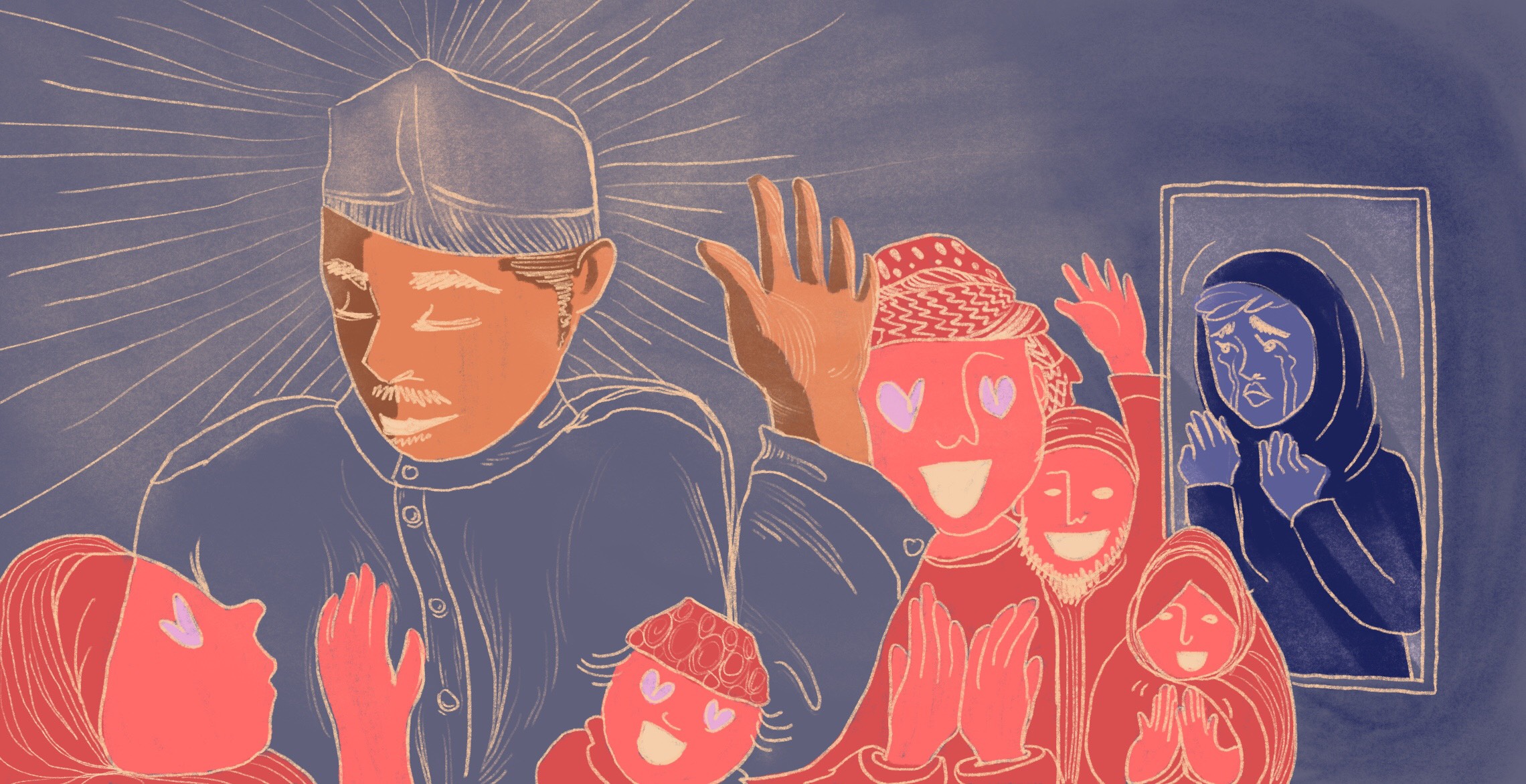
  • Domestic Abuse for People of Faith

    Domestic Abuse for People of Faith

    by Aliyyah Zubair
    __

    (Content Warning for Partner Violence and descriptions of abuse)

    An abusive marriage/situation sucks, no matter with who and how it happens. But as believers, there’s that added dimension of our faith and spirituality that can make things that little bit more tricky. I cannot count the number of times warning bells set off in my head and instead of seeking for professional help, I turned to the praying mat instead.

    I’m not saying it didn’t help. I’m very sure my prayers were answered in the way only God knows and provided great relief amidst the madness. I am so lucky my teacher detected the signs of abuse, otherwise, God knows how long I would have gone on deteriorating without realising it.

    Things Muslim Victims of Abuse Tell Themselves

    I fully understand how people, especially people of faith, might stay in abusive marriages. I, for one, kept telling myself “This world is temporary and even if I suffer for the next 70 years of my life, that is nothing compared to an ETERNITY with my Lord who loves me and will make it all worth it.”

    Or “God can change ANY situation. Supplication is the weapon of a believer.” So pray I did, harder and longer when things got bad. When I moved back in with my ex I told myself not to look out for signs that things were getting better or worse, because my ex could change in an instant, any instant, so I should continue praying and wait for that moment to come…..whenever it did.

    I placed that responsibility fully on God – You are the One capable of miracles. You are the One I’m depending on (#tawakkaldonewrong). I truly thought that it was a proof of the strength/weakness of MY faith in God, instead of putting the blame where it belonged: my abusive ex-husband and making sure he was doing good on his promises of reform.

    Another constant in my head was “marriage is half of faith” and that your spouse in this life was chosen by God. So many times I ‘comforted’ myself by saying that our marriage couldn’t have been a mistake. How could it be since God chose him for me? Surely no believer wants to question God’s Decisions. I want to hug all the women who are in such marriages and who (like I did for a time) believe that God chose that for them, that this life really is meant for suffering, that people can get away with anything while using religion to prop their flimsy masks, that they deserve what they’re getting. That’s the most heartbreaking of all.

    We all have sinned, and ask for God’s forgiveness constantly. I told myself that if what I’m going through is a way to purge myself of sins, then surely it’s a generous trade-off? I’d take punishment in this life any day, you know what I mean?

    But that’s not who God is, or what God intends. I don’t want to speak for Him obviously, but abuse has to be called out and really properly dealt with in our faith communities. I really did get lucky, but so many people out there are just silently accepting this and the society lets them believe that they deserve it.

    There’s a lot of reasons why victim-blaming is pervasive and abusers are defended but I’m not going to go into that. I will talk about why it’s so difficult for people of faith to talk about it or acknowledge it instead.

    Abusers Can Be Religious Too, It’s True

    My husband never missed his prayers. Every Ramadan since I knew him, he’d take leave from work for the last 10 days of Ramadan to increase his worship. I saw how he gave charity every single day. We had a box near the door to our home and he’d put in his change or other amounts every day before he left for work and we’d empty it when it was full and give it to a mosque or charity. He read the Qur’an well, attended Islamic events regularly and was basically, for most people, an outstanding Muslim.

    These were the very reasons I didn’t want to seek help. I honestly believed that his prayers, charity, devotion to God would cure him of his cruelty and abuse. Because I NEEDED to believe that MY prayers and MY charity and MY devotion to God would also have an effect on my spiritual heart.

    I understand when people don’t believe me if I told them he was an abuser. Because for the longest time, I couldn’t either.

    When things were bad, I didn’t tell anyone because “spouses are a garment for each other” and if I “covered the aib/shortcomings of your brother, God will cover your aib/shortcomings in the Hereafter”.

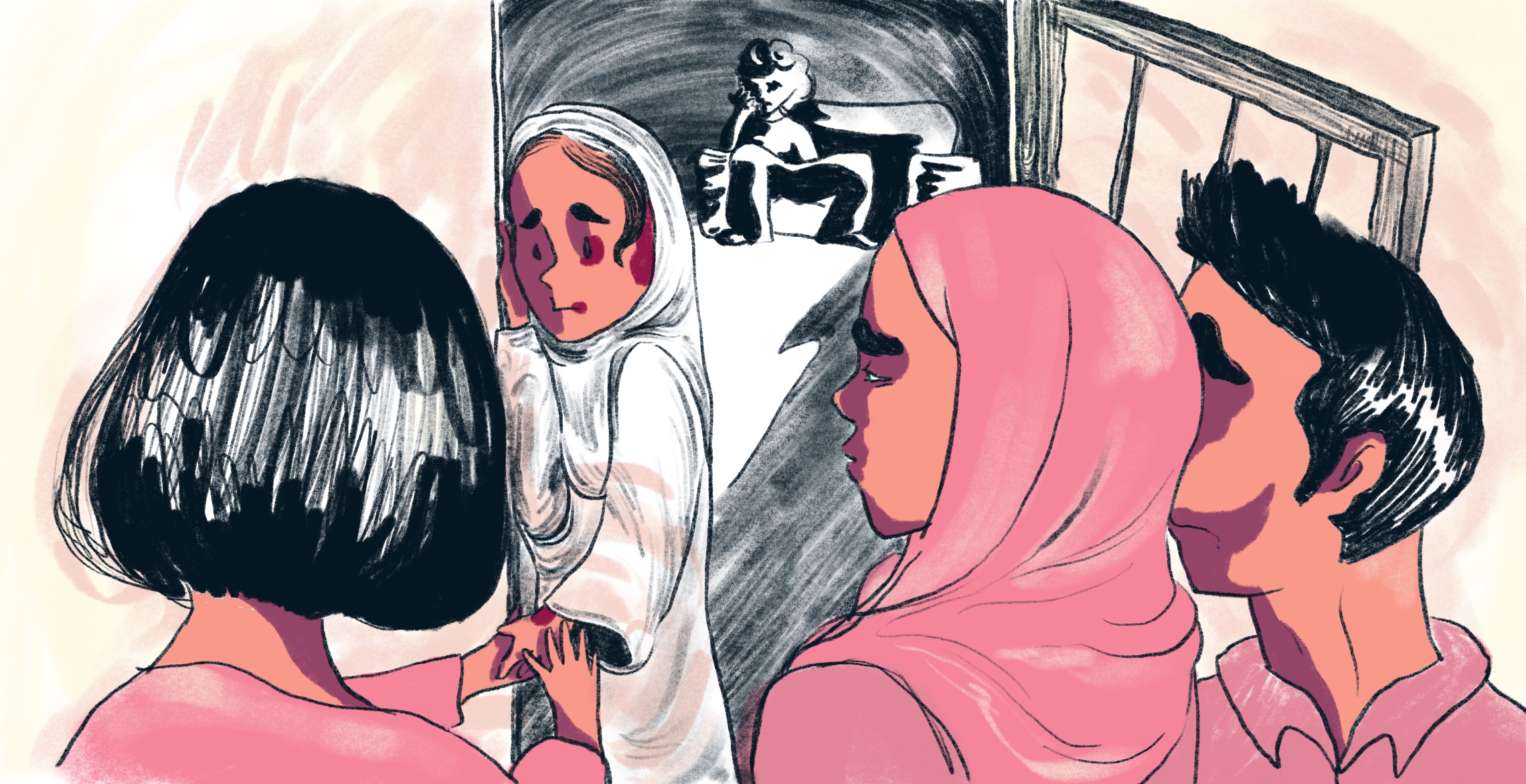
    There are layers upon layers of religious justification that a victim of abuse has to uncover. When word got out that I had moved out, he started spreading rumours that I was having an affair and asking for a divorce. Well-intentioned, pious old ladies I had known for years from our community whispered to me “God hates divorce. I love you and don’t want you to not get to smell Paradise.”

    I didn’t know where to even start. Should I tell her that within a few months of marriage, my ex-husband initiated sex when I was dead asleep and I woke up to a handwritten note by him saying “I hope the angels weren’t cursing you last night”? How does one even verbalize the kind of shock and horror I felt?

    Once, we were on holiday with my family and he wanted sex but I pleaded with him to either let me give him a handjob or wait for the next day because we had been out all day and I was tired, plus it was the middle of winter (2 degrees Celsius). I was unwell and really didn’t want to take a shower at 3am before fajr (plus we were staying at a family friend’s house and not at a hotel). His response: “Okay sure. But don’t blame me if I have wet dreams of all these beautiful white chicks.”

    I didn’t know it then but these were threats (once using angels to back him no less!) and it ensured that I never fell asleep before he did, never refused him sex even if I was tired or unwell thereafter.

    Emotional Abuse Is As Traumatic As Physical Abuse

    Many times, as fearful as I was, I really wanted him to hit me. It would be far easier to turn up at a police station or go to my parents with a bruise than to tell them he was a bully. Even though it got physical at the very end, for years, he never laid his hands on me.

    When I tried to get my in-laws to speak to him, they said “You know he’s always been difficult. We can’t talk to him because it will make things worse. You guys are married now and need to find a way to work things out.”

    I then approached my sister-in-law. She was intelligent, mature and always seemed to have a cool head. “If there was someone who could help me, it would be her,” I thought. There is no one way to talk about emotional abuse because it is a whole pattern of behaviours. Which one should I choose? I didn’t know but told her of several incidents of him cutting me emotionally or using subtle threats to get his way and she said, “Look, I know he’s difficult but those are nothing. Don’t be so dramatic.”

    When I finally spoke to a counsellor, she said mine was a textbook case of abuse. How is it so clear to one person and “nothing” to another? Because it’s so hard to pinpoint when there’s no blood and cuts to show for it.

    In case you wanted more real-life examples from my life,

    1. My ex constantly talked about how I deserved a better job. After a while, I decided to quit my job and find something better. He said “You should take 1-2 months off, you deserve the break.” Great! Which wife wouldn’t want to take a break from work and since my husband suggested it, even better! After I quit, he said it was nice having me home and he enjoyed our time together. Aww, that’s really sweet. He kept delaying me from taking another job, making excuses on the day of interviews so I would miss them. He was working shift hours then and said if I took an office-hour job, we’d spend less time together. Wanting to be a good wife who’s available to her husband, I tried to find jobs I could do from home. Notice how he never demanded I quit my job. He just kept repeating stuff and leading me to make decisions aligned with what he wanted, disguised as something “for my own good.”

    2. Gaslighting and manipulation are an abuser’s greatest weapons. They speak in opposites, confounding the victims and leaving us constantly trying to figure them out and do the right thing. I have always been skinny. I enjoy food as much as the next person but was blessed with a great metabolism. When we were married, he would sometimes praise my body. Other times he would say “You look like an Afghan prisoner of war.” Wanting to be desirable to my husband, I would eat more. When I was enjoying a meal, he’d say “Why are you eating so much? You eat like a fat man.” I never gained weight when I was married to him. In fact, I lost weight because I was stressed all the time.

    3. I, like most people, valued honest feedback from my nearest and dearest. “Believers are a mirror to each other” and I was pro-active about my self-development, especially spiritually. I would sometimes ask my husband how I could be a better person. I wanted so much to not just be good enough for him, but for God. Once, when I asked him this (we had been fighting quite a bit but this was during a ‘good’, calm period), he looked at me with a straight face and said, “You know this hadith? Prophet Muhammad said, “The signs of a hypocrite are three: when he speaks he lies, when he gives a promise he breaks it, and when he is trusted he is treacherous.” You know you are a munafiq right?” I had never been more broken in my life.

    I have so much more examples but we have a word count.

    Pro Tip: Don’t Blame the Victim

    When I first spoke out about my ex’s abuse, the most common reactions were:

    • “But what did you do that made him do it? Surely you must have done something.”
    • “Maybe you didn’t use the right words.”
    • “Maybe you should have waited till he was well-fed and well-rested before bringing up anything”
    • “But did you make du’a for him?”

    What did I do? I never provoked him to receive such treatment. And I sure as hell did not ask him to call me a munafiq when I asked for sincere advice. Even if I did do something that angered him, he has a choice on how to deal with that anger. He could do 1001 things that is NOT abuse.

    The second most painful, insulting thing that people said to me:

    • “I would never allow him to do/say that to me.”
    • “You never told him not to do/say that.”
    • “If it was me, I would have slapped him. You’re too soft. You didn’t draw boundaries.”

    I didn’t ask for the person I love to call me any of the degrading terms he used on me. One does not expect someone who loves you to say such things. When you receive it, you are in too much shock. After I had read about emotional and verbal abuse, I would reply with something like: “Don’t call me stupid. I’m not stupid.” Instead of apologizing and retracting as one would expect, he listed down the reasons why I was indeed stupid, only hurting me even more than if I had ignored it. It is not my fault that my ex is incapable of talking like normal adults.

    The most difficult thing about victim-blaming is that you’re only saying what victims are already thinking all the time. I constantly wondered what I could have done better, what words to use, what not to do to provoke him. I already believed I am stupid, ugly and lucky to have married my ex and am sinful to God. I already have a mental list ready on why this fight is my fault and why I was wrong to not have anticipated or stopped it.

    I know my weaknesses and my ex regularly reminds me of them under the guise of “needing to stay humble” and “not letting our ego rule us”.

    It took my counsellor telling me repeatedly it isn’t my fault before I would believe her. (And I still have days when I wonder “Maybe I wasn’t patient enough”, “Maybe I really am difficult to love”, “Maybe I really am stupid & ugly & lucky to have married him”.) And when outsiders echo my self-blame and doubts, you are only undoing her work, and it takes me another week or month to tell myself that abuse was his choice and not something I deserved.

    No one deserves to be abused, and I’m still telling myself that, 4 years since the divorce.

    _

    Aliyyah is a survivor of domestic violence who currently does peer support for other Muslim women experiencing abuse in their marriage, or those going through a divorce. She hopes to do a Masters in Counselling one day.

    Illustration by Ishibashi Chiharu
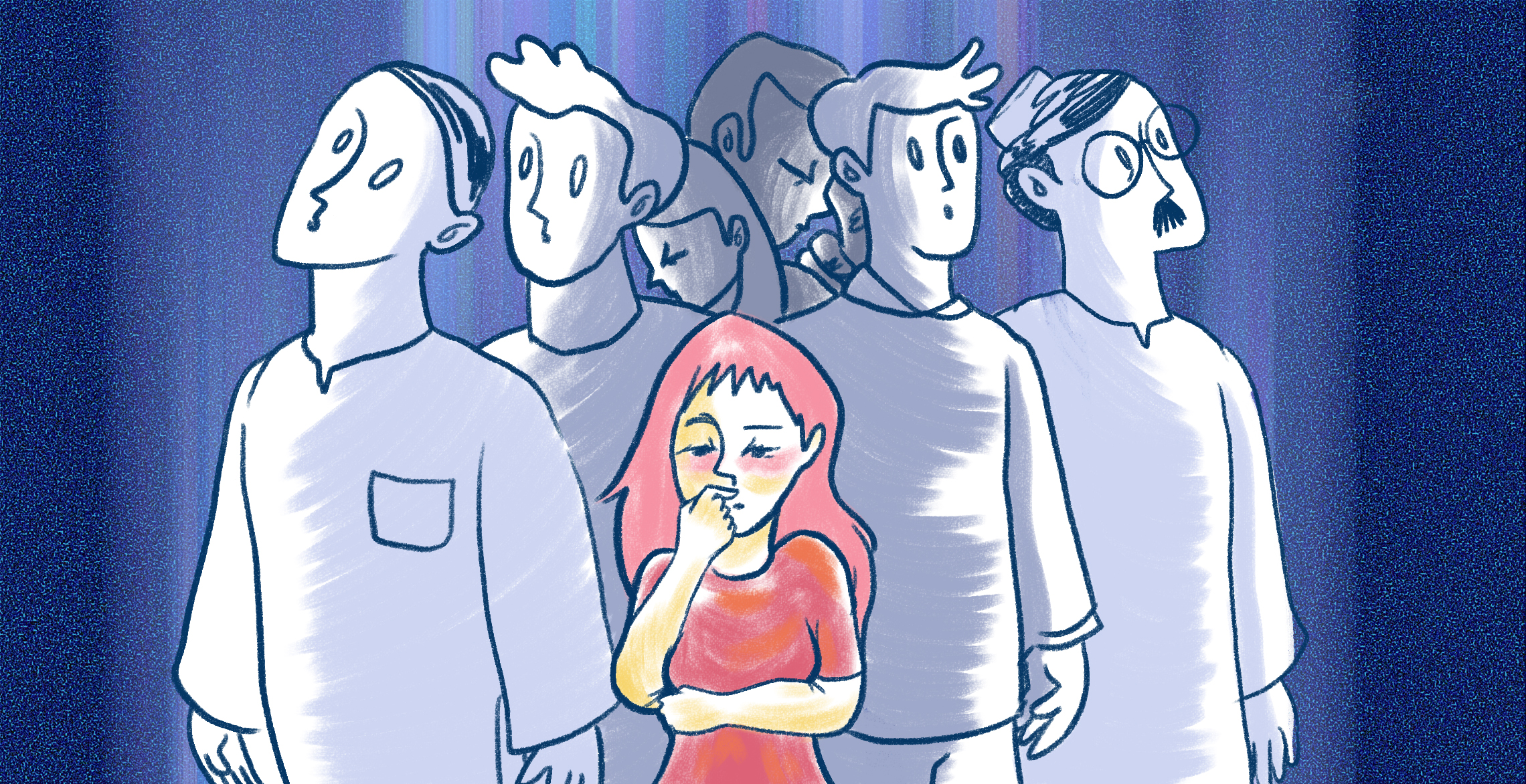
  • Life as a Child of Intimate Partner Violence

    Life as a Child of Intimate Partner Violence

    By Leila

    (Content Warning for Partner Violence and descriptions of abuse)

    When I scroll through social media and see friends dedicating a post to their parents celebrating their 25th or 30th wedding anniversary, I can’t help but wonder how that would feel like. Neither can I relate to girls saying they hope to end up married to someone who loves their mother as much as their father does.

    My childhood memories mainly consist of two things. Firstly, me growing up hoping that my mother gets a divorce from my father. And secondly, me knowing that I never want to end up married to a man like him.

    In fact, hidden somewhere in my closet is a copy of a half-filled divorce application that my mother never seemed to complete.

    The beginning of my childhood was not too bad, though I don’t remember much about it. I think I have unconsciously blocked some of the memories out, and what I do remember are less than pleasant. But I do remember things being relatively normal. I grew up working class and we couldn’t afford our own home until I started school. That changed when my father landed another job that paid him better, and our family went through upward mobility. We could afford short trips to Malaysia. We could afford to eat out.

    Things were looking better – or so I thought.

    He was always on his laptop and like any child, whenever he wasn’t around, I thought he was working. And so did my mother and brothers. And then came that fateful day. I came back home from school one day and my mother looked restless and helpless. I remember placing my backpack on the floor, and together with my eight-year-old brother asked her what was wrong. Even as a young girl, I knew it wasn’t something small – I had never seen my mother that upset.

    “Your father has a mistress!” my mother blurted out. Eleven-year-old me couldn’t fully grasp the idea of what a mistress was, but I could understand what was going on. I assumed my mother was at her wit’s end and emotionally unstable when she found out. She started to tell me everything. How my father forgot his phone when he left the house and how her intuition moved her to check his phone. It was then she found his text messages to a woman he met online. It didn’t make things better when we found out he had been financially supporting his mistress.

    It was no surprise that their marriage was on the rocks since the revelation. All I remembered after was the hours of shouting and fighting. Initially, my brothers and I would attempt to stop them from fighting but it would be of no use. My father was usually a silent man. He barely spoke much to anyone but when he raised his voice I would get scared. I could remember the terrified look on my mother’s face as he shouted at her. I saw him raising his hand but I ran away and hid in my room to avoid seeing what happened next. His temper would flare up at the smallest of things and my mother, unfortunately, had to take the brunt of it.

    I dreaded going home since then. I hated going home because the nights would be filled with the shouting from my parents – mostly my father and the crying of my mother. Once, I remembered the fight was so bad that my mother took my brothers and me to the airport in the middle of the night, where we stayed overnight. I remembered looking at the aeroplanes that were ready to take flight and wishing I could just jump on board one with my mother and brothers, and go far away from where my father was.

    It wasn’t just the affair that took a toll on my mother. There were no visible bruises that I could see on my mother’s body. But I knew that the abuse my father had inflicted was not always physical, but constant emotional and mental abuse. My mother, who was once bubbly and happy, was crying her eyes out every night as my dad would lash out and shout at her. He would call her names and ironically, call her a useless wife. She became quiet and withdrew herself from people. It was obvious she wasn’t happy and that broke my heart the most. Things became worse when she started falling ill and was hospitalised. I overheard her phone conversation with my aunt about my father being angry that she wasn’t able to fulfil his ‘sexual desires’ due to her failing health. Being forced to have intercourse with my father was taking a toll on her body as well.

    When I was slightly older, she would come to me and asked if I would be fine if she seeks a divorce. I would tell her over and over that her children would support her if that was what she wanted. By then, I barely spoke much to my father and for me, it didn’t matter anymore if he was around or not. She never went through with it, however, probably due to the fact that she was not financially stable and didn’t want us to grow up without a father around.

    Over time, while I empathised with my mother and what she was going through, I also guiltily started resenting my mother for staying with him. I could never understand her at that time. Wasn’t it clear that staying in the marriage was causing more harm to her children?

    Religion became a solace for her. I watched as my mother turned to religion for comfort. She began to seek comfort in the Quran, in religious classes and I had never seen her pray as much before. As I grew older, I realised how turning to religion as a coping mechanism could also get problematic. Religious preachers would preach about how wives would end up in hell for not being ‘good’ wives. Sure, there were one or two occasions when the preacher would ‘advise’ husbands not to beat their wives, but most of the preaching would revolve around being a good wife, and how a wife would never end up in heaven if her husband was not happy with her. There was a lot of religious manipulation and guilt enforced on the woman, a lot of narration preached blamed women for failed marriages, yet very few gave support for those trying to escape abusive marriages.

    It was painful to watch as my mother internalise this, probably trying to find a solution to her problems without realising how much damage such ideologies was causing her. She was praying her problems away – and it seemed as if her prayers were answered when my father ‘realised his mistakes’ and turned to religion himself and started to repent, but that was only the start of more emotional and mental abuse.

    My father started to be home more often. I saw him praying more and my mother seemed to be happy that her husband was changing. I, on the other hand, was not as convinced. I was, and still, don’t know what was the turning point for him and my brothers and I were expected to live normally. There was no talk about what happened over the few years as if nothing happened at all.

    Saturday mornings consisted of our parents dragging us to the mosque for sermons. This only lasted for a while before it stopped. And while I was happy not to have to wake up early in the morning to hear religious lectures, I noticed my father growing to be more conservative. He began to exert control over my mother and me. The most obvious that made me notice the change in his behaviour was when he began forbidding my mother from wearing any colour but black. My mother was donned often in black abayas with a long hijab, even during festive occasions such as Hari Raya. I could only imagine how she felt, watching her sister dressed in colourful baju kurungs while she was trapped in the demands of her husband. This only stopped two years ago when I started working and buying her colourful baju kurungs with my own money.

    While his coercive and controlling behaviour might have mellowed since then, it was obvious the years of such abuse had taken its toll on everyone in the family. My father and I don’t talk as much, he’s still very conservative in his thinking and together with the years of resentment of his actions that I have kept inside, we get into fights more often than have a civil conversation.

    But what was obvious was how it affected my personal relationships. I feared to be in relationships and when I did get into them, it was never healthy. My first relationship was with someone four years older. We were in public when he first slapped me. And just like my father, he was manipulative as well as mentally and emotionally abusive. It didn’t take me long to get out of the relationship, but it made me realise as much as I knew I didn’t want to end up with a man like my father, never having confronted what had happened growing up, I was struggling to understand what a healthy relationship was like. I often felt like I had to put on a front when it came to dating. I could never be honest with the guys I’ve met. My last relationship was with someone who came from an affluent and prestigious family, I could never be honest with my experience growing up with my own family, and that was unhealthy on its own. In fact, my relationship with him was in a way unhealthy in some aspects—I was blamed for moving on despite being broken up with. Luckily by then, I knew it was unhealthy and I decided to cut ties for the sake of my mental well-being.

    Being a child of intimate partner violence, I had to learn on my own what a healthy relationship should be like. I’m now in my mid-twenties and I can say that while I’m still learning, I am much more sure of what a relationship free of toxic behaviour should be like. While I am slowly accepting that my relationship with my father will never be mended, I can work on building happier and healthier relationships, whether platonically or romantically, with other people. I’m now able to check for toxic behaviours in other people and in myself as well.

    Healing will take time but until then, I am lucky to say that I have a strong support network of wonderful people I call friends.

    _

    Leila is pursuing her Masters degree in NUS and produces documentaries occasionally. A proud mum of three cats, she is also involved in intra-faith and women’s right spaces in her free time.

    Illustration by Ishibashi Chiharu
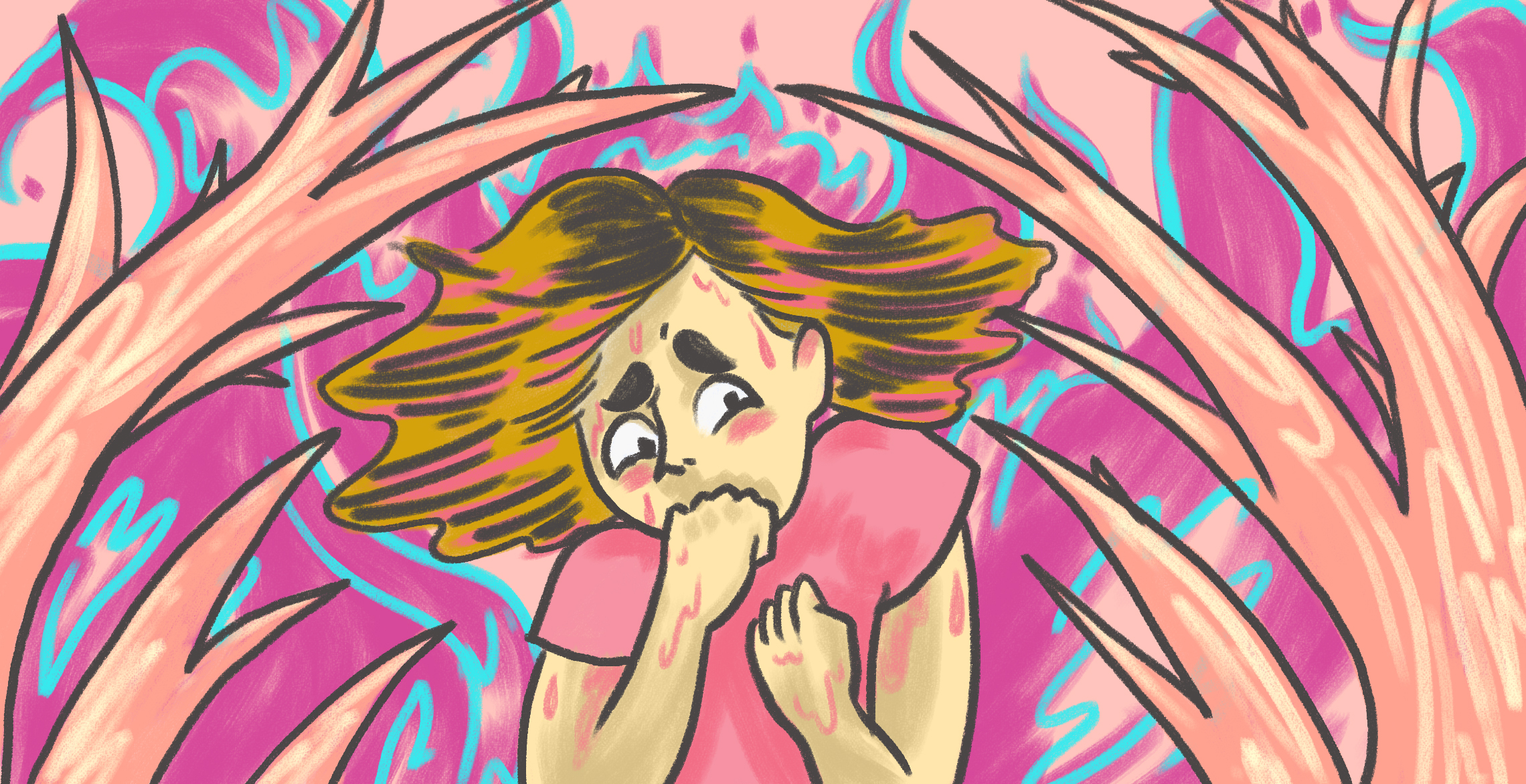
  • “No Mother Would Leave Her Own Children Unless It Was past Every Point of Desperation.”

    “No Mother Would Leave Her Own Children Unless It Was past Every Point of Desperation.”

    by Sue
    _

    (content warning: partner violence & marital rape)

    When people think of domestic abuse, they usually think of its most explicit manifestations. It’s physical. It’s loud. There’s glass breaking, slaps landing, and eyes turning blue from a bruise. It is, in a word, dramatic. The kind we see in TV dramas, movies, and depictions of domestic abuse in most media forms.

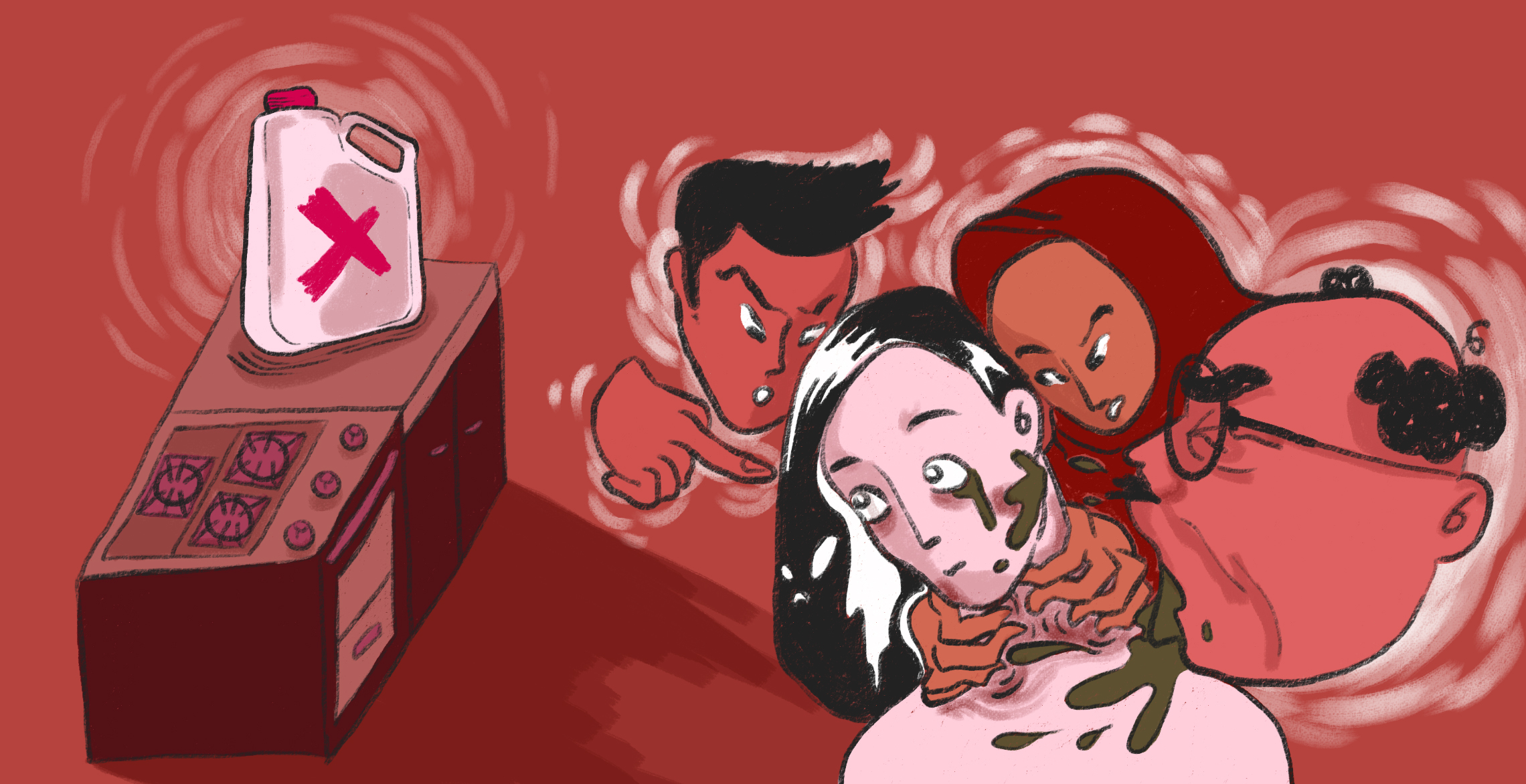
    But for my grandaunt, domestic abuse was the sight and smell of kerosene, the disappearance of jewellery, the violence of words, and, the excruciating turning of each day. It was being so desperate that she left her own children in the dead of night.

    My grandaunt is past 50 years old now, but she was young once, and was young during a time when to be unmarried in your mid-twenties was considered a mark of shame. Her mother, my great-grandmother, was worried when her daughter was still unmarried though she was approaching 30 years old. She thus match-made her daughter with the friend of a neighbour’s son (yes, take a minute to figure that out) from a previous kampung. Perhaps the fact that nobody even really knew this man should have been the first red flag, but it wasn’t.

    They met a couple of times and they were quickly engaged. The first red flag occurred during the engagement: He specifically asked my aunt for gold jewellery as part of the betrothal gifts. Something within her was (rightfully) uncomfortable with a man who felt no qualms asking for precious items while they were just little more than strangers and still unmarried. She was so uncomfortable, in fact, that she did not want to proceed with the engagement. But my great-grandmother, still compliant to the pressures of societal shame, felt embarrassed to stop proceedings– to “putus tunang.” So the first red flag was buried, and they proceeded with the marriage.

    My grandaunt was a simple person. She needed time to learn anything new, and she had always been close to her mother. She was unprepared to live so abruptly as a wife and a daughter-in-law with a completely new family. She had been sheltered and doted on as the youngest daughter of my great-grandmother for a long time. Her father died when she was 6 months old and she grew up without a man in the house. Now suddenly she was placed in a household where she was a wife and the presence of men demanded that she behave according to strict gendered expectations. She was out of her depth. She was clueless.

    For one, she did not know how to cook at all. The in-laws felt that they had been cheated. They had not known this fact about her, assuming that the food cooked during the engagement was by her, when it was in fact cooked by my great-grandmother. They were unhappy when they saw her whiling hours away in front of the television. One would say that perhaps my grandaunt should have known better than to have behaved “inappropriately” in her new home, but regardless of her behaviour, she did not deserve what would happen during those years of marriage.

    Unhappy with her and feeling “cheated” that they had gotten her as a new family member, she began to endure emotional abuse. From both her husband and her in-laws, my grandaunt began to weather daily insults that were meant to hack away at her self-esteem. She was seen as unintelligent, useless, and she was reminded of it. They would make snide remarks about her, or make cruel jokes and laugh at her expense. She was called stupid, crazy, useless. She began to feel excruciating anxiety living in that house and having to please her husband and his family.

    The irony of insulting her was that her husband was not even close to a perfect man himself. At the time, he had two jobs: a full-time job as well as driving a taxi part-time. Yet, he was still riddled with debts due to loans he had taken with loan sharks. Nobody knows why he had those loans. At one point he and his family forced my grandaunt to put her name as a guarantor on the form, holding her hand to force her to sign it. We don’t know what that form was for but she suspected that it was from loan sharks, thereby putting her at great risk. He began taking her jewellery, pawning them in order to get money.

    Bereft of her valuable items, he then began borrowing money from my great-grandmother. My great-grandmother, pained by the distress her daughter was going through, always gave in to giving her son-in-law the money. She was not rich at all, she was in fact, quite poor. But it was her hope that in giving him what he wanted, he and his family might begin to treat her daughter better. But of course, abusive people do not function that way. They feel little difficulty in taking without giving while making you feel guilty at the same time. They feel entitled to whatever they demand of you. Even while they are subjecting you to degrading treatment and giving little love, they would somehow manipulate your sense of guilt, lack of self-esteem or any vulnerability, to convince you that you are at fault. My great-grandmother lost thousands to her son-in-law, and she never got those thousands of dollars back. My grandaunt continued to be abused.

    Every day was torturous for my grandaunt in that household. Her eyes would water, her heart was never at peace, and she would frequently talk to herself. She was constantly having imaginary conversations where she was able to express fully what she could never express in real life to the cruel people, foremostly her husband, who had broken her to a point of near powerlessness. Once, in retelling her trauma, she mentioned how she had looked at a bottle of kerosene and seriously considered drinking it to end her life.

    My grandaunt had two children with her husband, but the presence of children did little to soften the heart of her husband or her in-laws. In their view, she was viewed as an inadequate mother. They had not considered that their persistent abuse of her had contributed to her instability. In an especially cruel moment, she recounted how after the requisite amount of period had passed, before the pantang had finished, he wanted to have sex. She did not want to, but he went ahead. Today we would have no qualms calling that marital rape, especially when it happened during a moment when the body is trying to heal after the great physical trauma of childbirth.

    The night she left, she waited for the family to be asleep. She left the house in the dead of night in her nightgown, carrying nothing with her. She flagged a taxi and told the driver that she had no money, but would give him her ring as payment for the fare. She arrived at her mother’s home in her nightgown, her hair crazed, and her hands empty. Nobody gets to that point without having suffered tremendously. I don’t believe any mother would leave her own children unless it was past every point of desperation.

    She was encouraged by her family to file a police report, so she did. With the statement that was recorded at the police station about the abuse that she went through, she was able to file for divorce. Thankfully, the Shariah court was understanding of her distress. Though her husband (like many abusers and manipulators) claimed to love her and tried to employ loving language to justify not wanting to divorce her, the Shariah court persistently asked him to explain further when all evidence was against him. With the help of a good lawyer, she was able to get him to pronounce the talak (a repudiation from the man that automatically results in divorce) and get a divorce.

    When she stood in court to speak, she said how she honestly did not care about losing all her gold. She could have given away all her gold if it meant helping her husband. She did not mind being poorer in her possessions if it had meant that she was in a loving relationship and had a happy family. But instead, she received emotional torture from him and his family. That was what hurt her most.

    My grandaunt had been emotionally and psychologically depleted by the marriage. She did not win custody of her children, who remained with her ex-husband and his family. Growing up, I would sometimes see her sitting on the couch, and her two children would be sitting on the next couch, their body language awkward. This sight grew rarer as time passed, until it stopped happening at all. It is likely that they have only really known their mother as someone unstable when they were younger, and in their older age, as an estranged woman. They would have received their own stories from their father and his family about their mother. They might think that she did not care about them, knowing only that she had left them one night while they were asleep.

    One of the final parts of abuse is the narrative that is held up after the person escapes. Having lost control over the person over whom they have exercised power, controlling the narrative of what happened is the last piece of power the abuser gets to have. It is unfair and painful, and sadly, you would often do better to not retaliate. The passing of time and people’s own experience of your being is what will decide their impression of you in the end.

    My grandaunt spent long painful years in her marriage, but thankfully she managed to leave. Thankfully, she had a home she could escape to. Thankfully she had a support system who helped her lodge a report and take it to court. Thankfully the Shariah court was able to help mete out justice and she was able to have that closure. One can only begin to imagine how trapped and torturous the situation would be for a person who does not have anywhere to run to or anybody who would believe her. This is why the response to domestic abuse cases, not just from institutions but from the victim’s personal networks, are so important

    My grandaunt’s life has not been the same since. She never re-married, and she no longer sees her children. In an alternate reality, she might have drunk that kerosene to end her life, or perhaps the taxi driver would not agree to drive her, or the legal systems in place might not have supported her. Such a possibility is chilling to even imagine, but it certainly is a reality for some women even at this moment. Or perhaps in an alternate reality, her being unmarried would not have been so shameful as to have had her married off to a man who would eventually bring her so much emotional torture. We depend on so much in this life, both in terms of the people in our personal lives, and the systems in place that we trust to help us when we are vulnerable.

    My grandaunt would never want another woman to go through what she did, and to be able to leave such a situation as she was able to. I hope in sharing in her story, people would be more empathetic of the struggle of those who go through emotional and psychological abuse, which can be so damaging, though it may not seem as “dramatic” as physical abuse. It is just as real, and the pain just as lasting.

    __

    Sue is now past her mid-twenties and passionate about issues of gender justice and equality. She believes that Islam is inherently egalitarian and hopes those interpretations would one day prevail.

    Illustration by Ishibashi Chiharu
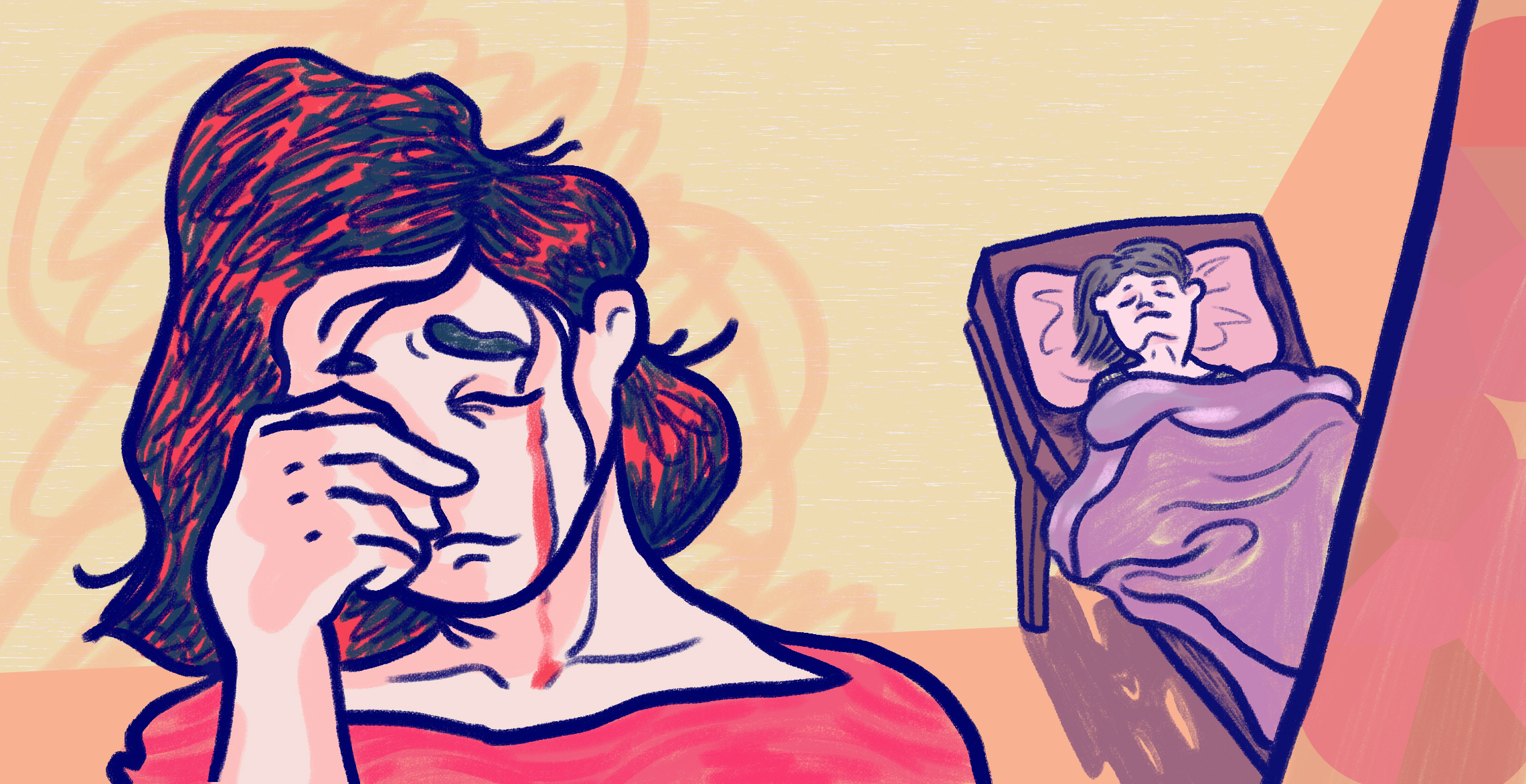
  • Editor’s Letter: Intimate Partner Violence (IPV) & Domestic Abuse

    Editor’s Letter: Intimate Partner Violence (IPV) & Domestic Abuse

    by Diana Rahim
    _

    (Content Warning for Partner Violence and descriptions of abuse)

    Reading the submissions for the call-out on Intimate Partner Violence (IPV) has been the most affecting experience for me so far in editing Beyond The Hijab. The stories shared are heartbreaking, not just because of what these women have experienced, but how their suffering was treated by those around them. These are women who have seen or experienced partner violence and had to contend with the added trauma of being dismissed, of seeking help and not receiving it, and at times even being disappointed by legal institutions and the police.

    It really goes to show how the problem of IPV is one that extends beyond the individual. It is not just the abuser who is guilty and implicated. It is also the people around the victim, the society they are in, and the institutions that were supposed to help them that are guilty and implicated as well. These external factors have a part to play in how the victim’s suffering is perceived, whether it’s taken seriously, if they feel safe speaking up, and if they manage to get the help they need.

    It is often difficult to even admit that you are in an abusive situation in the first place, and victim-blaming only adds to the suffering. Love should never feel full of fear, humiliation, and pain. Abuse can come in more than just its physical form, but also in the form of emotional and psychological abuse, financial abuse, spiritual abuse, sexual abuse (currently there marital rape immunity in Singapore law), verbal abuse, isolation and intimidation, amongst others.

    This article provides a breakdown of the different types of abuse and how to detect them. This graph by Project Sakinah gives a visual aid to understanding the cycle of abuse and this exhaustive list of signs will provide you with an understanding of what domestic violence looks like.

    It is also important that we learn how to adequately respond to victims of domestic abuse as well, take the time to read this article breaking down how you can support and listen to them. These 12 steps are also incredibly helpful to keep in mind in case you know a loved one has an abusive partner.

    *

    The Problem of Perception

    There’s an older female relative that comes immediately to my mind when I think of domestic abuse. She has been through so much, too much, in her marriage. The last I saw her during Raya visiting, she was characteristically herself: loud, energetic, and opinionated.

    My female relative’s vocal, opinionated nature was something her husband often could not withstand, and my mother often told me that he would beat her when she expressed disagreement. He would beat her in public. He would even beat her in front of her own mother. Those decades ago, people were often reluctant to interfere even when they saw abuse happening in broad daylight. They viewed it as a personal matter. Her mother did not say anything because she felt she could not interfere with her son-in-law’s authority. She did not report to the police because it was tacitly understood that when it comes to family matters, the police were unhelpful or reluctant to intervene.

    Once, after being physically punched, she went to the shariah court with a bruised eye to file a complaint. She was hoping they could talk to her husband. It did not happen and nothing changed. She is now 70 years old, and still married to the man. He has since taken on another wife.

    There are several things to note in the experience of this female relative of mine. Firstly, if one were to hear her story, one might be surprised to see that she is not a “perfect victim”—one who is visibly battered, traumatised, and fragile. She was loud. She spoke back. The truth is a lot of victims of abuse do not fit under the narrow conceptualisation of the “perfect victim.” Any person can be vulnerable to partner violence. We are, after all, talking about an intimate partnership.

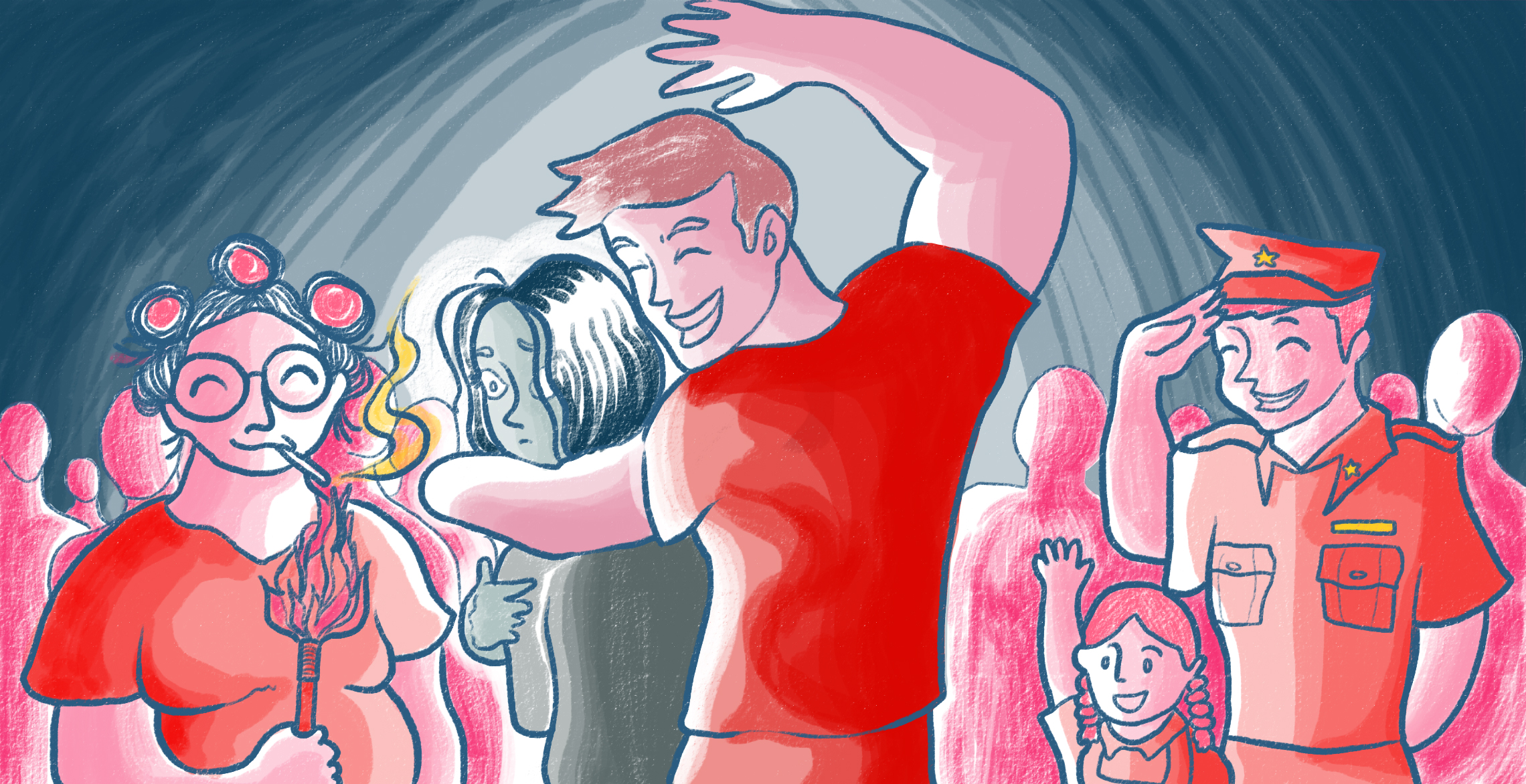
    There is often the trouble of perception in the problem of partner violence. Not only do victims sometimes not appear as “real victims” but abusers sometimes do not clearly seem like abusers. In the submissions, the women sometimes talk about how their abusers were seen as exemplary to the other people in their lives. They did good deeds and were kind in other situations. Perhaps it is a problem of how we are unable to view humans as complex beings who can sometimes still do terrible things in private even if they perform what they know are socially-respected behaviours in public.

    This problem of perception is a serious thing because it is what often leaves the victim with the trauma of being suspected and even disbelieved. It gives abusers the benefit of doubt. Remember that just as anybody can be vulnerable to partner violence, abusers do not come in a single profile too.

    Secondly, victims of IPV or domestic abuse often suffer in silence, but with her, the violence was visible to those around her. Her mother saw her get beaten. Members of the public saw her get beaten. She went to the shariah court. At each of these points, someone could have intervened, but most did not. And even institutions that were in place that we would assume could help, were not trusted. The police are notorious with victims of assault and abuse for not taking their pain seriously, and for being reluctant to interfere.

    One might say that institutional changes are needed, and certainly, they help. Back when she first married for many years of her marriage, the family violence bill in 1995 (which was rejected by the parliament) and the amendments to the women’s charter which took effect in May 1997 had yet to take place. The bill and the amendments were both the efforts of Nominated Member of Parliament at the time, Dr Kanwaljit Soin. Before these amendments took place, it was incredibly difficult for abuse victims to turn to legal institutions to make a case.

    I personally think it would have been great if the bill was passed. The bill suggested wider powers to the police to arrest abusers and follow up with responsibilities to the victim such as securing medical attention, safe accommodation, and helping to retrieve her belongings from her home. The bill, however, was debated with a measure of fear by a state that is besotted with “family values.” Narayanan Ganapathy had noted in his book Policing Marital Violence in Singapore (Brill, 2008):

    “It is not in the interest of a patriarchal and paternalistic State to effect wide-sweeping structural changes that may contribute to a rewriting of gendered power relations that exist in contemporary Singapore society. While the State, through the organisation of the police and the criminal justice system, must and be prepared to offer protection to victims of violence—the majority of whom are women—the State’s primary concern is to safeguard the institution of the family that would reflect and normalise women’s subordinate status within the hetero-patriarchal family. Even ‘radical’ initiatives such as the ‘facilitated complaint and referral system’ is essentially designed to relocate both the offender and the victim to the family after undergoing a period of rehabilitative counselling.
    […]
    Reforms introduced in such a political climate remain tokenistic and divisive, without addressing the fundamental bases of gendered social relations of power that generate violence towards women in the first place, and the rank-and-file police’s contribution to the exclusion of marital violence from the ranks of ‘real crimes’”

    Today, the first step a victim can take is to file a Personal Protection Order (PPO) against the abuser. Without the PPO, a lot of the cases would remain categorised as a family dispute, which leaves no possibility of legal intervention.

    Institutional changes help, but whether it is practiced on the ground can be a different story. If there is no parallel improvement and advocacy for a change in the way women are regarded and treated, change can only be painfully slow. Narayanan Ganapathy had noted in his book, in fact, that the institutional changes do not match with how police officers react to domestic abuse cases on the ground. The fundamental issue of how women’s pain is regarded, of her subordinate status in society, remains unchallenged. As long as this remains unchallenged, domestic abuse will still be considered as not a “real crime” by police officers. If the prevalent idea on marriage is not challenged, then the manipulative rhetoric for women to try their best not to “break up” the family will also remain unchallenged.

    *

    An Islamic antidote to abuse

    In looking at the problem of IPV, we need to see the ideological bed upon which the violence rests. For Muslim women in Singapore, it is not just the cultural and ideological mores of Singaporean society that has to be taken into account, but also religious culture.

    Salma Elkadi Abugideiri, a therapist and founding board member of a domestic violence national organization for the Muslim community called Peaceful Families Project shared in an interview that a lot of domestic violence is backed by “traditional customs that you may find in some parts of the Muslim world that have no connection to the Qur’an.”

    He goes on to say abuse has been denounced in the Qur’an many times, but somehow the topic remains taboo and rarely touched upon by imams in their sermons. He also noted that:

    “Culturally, it can be shameful for a woman to leave her family, to live by herself or to initiate a divorce . . . Whereas from the religious perspective, the shame is on the person who is oppressive and divorce is not a sin—it’s actually a peaceful alternative to a marriage that’s not working, even if it’s not abusive. That’s something that a lot of Muslim women don’t know.”

    Muslim women might face spiritual dilemmas when they go through domestic violence and are thinking of how to react or leave the situation. There is often guilt associated with divorce and religious communities might stigmatise a woman who initiates one.

    Spiritual abuse is also an added dimension they may experience from men who might justify their behaviour and intimidate their wives, believing that their superiority is supported by the religion. One of the coming submissions for this series will detail how the writer’s father, who had cheated on his wife, somehow still managed to maintain his sense of superiority and exercised control through spiritual abuse.

    Spiritual abuse in Muslim communities in the context of a marriage is sadly often backed by the belief that the man as the leader of the household has the authority to enforce his own will on his wife. The wife may feel guilt in “transgressing” or “disobeying” her husband even though by all objective standards he is the one transgressing morally. In the submissions, I’ve noticed how the abusers weaponized Islam to their own advantage, utilising it as a tool to guilt their wives in order to get what they want.

    There are many verses in the Qur’an that call for marriage to be an equal, peaceful, loving partnership. Men and women are regarded as equal in eyes of Allah (Qur’an 49:13), that men are to tend to the needs of women without controlling, abusing, or hurting them (Qur’an 4:34) and that any verbal abuse is not tolerated (Qur’an 49:11). Yet somehow the abusers’ behaviour did not take any of these scriptures into account while they quoted other verses while abusing their wives, or used spirituality to control them. There’s a famous Christian saying that comes to mind — even the devil quoted scripture.

    Perhaps the most violent thing I found is how abusers even weaponise religion to justify marital rape. In almost all the submissions received for this call-out, the victims had experienced marital rape. This sexual violence is routinely dismissed not just by the harmful idea that the husband is entitled to sex by virtue of being a husband, regardless of the wife’s desire, but also by the fact our law currently does not view it as a criminal offence due to a partial immunity for marital rape. This immunity is currently being reviewed.

    The problem, personally, to me, is not in the religion. If a person is not abusive, they would not find ways to justify abuse through hadiths or cherry-picked verses in the first place. Ideas of male superiority in the context of a marriage, or of having to “obey” a husband are propagated without properly talking about how such a blanket rule makes women vulnerable in abusive situations, must actively be denounced by community leaders consistently. For some, hearing their suffering validated by institutions they trust means everything. It can be what gives them the confidence to know that if they decide to take action, they will be believed and supported. It must be discussed openly and it must be discussed without making women feel guilty or ashamed of their situation.

    So much of partner violence is perpetuated not just by individual actions, but by all the ideological, social, cultural, and institutional factors that still require challenging and work. Most victims of partner violence are women, and this fact attests to the fact that as long as a society is still guided under the harms of patriarchy, where women are still regarded as subordinate both by individuals and by systems, women will continue to suffer even in the most intimate situations. Having concurrent identities such as being Muslim also make the experience particularly different requiring different solutions.

    The world as it is now is certainly not perfect, and I don’t want to spend too much time despairing. We can do a lot to support victims of abuse even if they have been failed by others. It is important that we listen to them, and that they are able to speak their stories and to be able to inspire others who are currently suffering that there is a way out and that there is a future beyond the current trauma. I am very thankful for the writers who have contributed stories for this call-out, and I hope that whatever we learn in this series of posts will help at least one person, and push others to take partner violence more seriously.

    __

    If you or someone you know is facing partner/domestic violence don’t hesitate to call the Women’s Helpline at 1800 777 5555 (Mon – Fri, 10am – 6pm, excluding PH). If you are facing any kind of sexual violence, call the Sexual Assault Care Centre (SACC) hotline at 6779 0282 (Mon – Fri, 10am – 6pm, excluding PH) or email sacc@aware.org.sg.

    Women’s Care Centre (WCC) Women’s Helpline
    – Phone: 1800 777 5555 (Mon – Fri, 10am – 6pm, excluding PH)
    – Text Chat and Call Back (by appointment only): Clients can book an appointment through their website before accessing this service.

    Some organizations you can turn to:
    Centre for Promoting Alternatives to Violence (PAVE)
    Blk 211 Ang Mo Kio Avenue 3, #01-1446
    Tel: 6555 0390
    Email: admin@pave.org.sg
    Website: http://www.pave.org.sg/

    TRANS Centre
    SAFE Programme (Stop Abuse in Families)
    Address: Blk 411 Bedok North Avenue 2,
    #01-106, Singapore 460411
    Telephone: 6449 0762
    Email: transbd@trans.org.sg
    Website: http://www.transcentre.org.sg/

    Syariah Court of Singapore
    Address: Family Link@ Lengkok Bahru,
    8 Lengkok Bahru #03-01,
    Singapore 159052
    Telephone: 63548371, Monday to Friday, 8:30 am – 5:30 pm
    Website: www.syariahcourt.gov.sg

    A PPO can be applied for at:

    Centre for Promoting Alternatives to Violence (PAVE)
    Blk 211 Ang Mo Kio Avenue 3, #01-1446
    Tel: 6555 0390

    TRANS SAFE Centre
    Blk 410 Bedok North Avenue 2, #01-58
    Tel: 6449 9088

    Care Corner Project StART
    Blk 7A Commonwealth Ave, 01-672
    Tel: 64761482

    _

    Illustration by Ishibashi Chiharu
  • Dua Kalimah Syahadah

    Dua Kalimah Syahadah

    by Irie
    _

    i have been crying about dying
    and not-dying, all at the same time,
    keenly aware my consciousness will not be liberated:
    left to float in space. left to float in the void.
    left to float on and on, long after this mortal body
    and the mortal body after that and the mortal body after that
    and ten thousand mortal bodies after that
    i am condemned to existence.
    Allah sits on his throne, and laughs.

    I want to ask, who created You? how did You begin to exist?
    was there silence
    and then a sonic boom? i am trying to imagine these things, a sequence
    of events i will probably never be able to comprehend,
    and possibly this all might be sacrilegious,
    but all teachers i have ever had have taught
    me to go to the root of the problem.


    so why are there no answers? why are questions forbidden?
    why is Allah a dude? like, come on, divinity is male?
    they duct-tape my mouth then duct-tape me to the corner
    of the madrasah classroom. out of sight out of mind out of
    any hope for salvation, and I think about how no one prayed for the devil.
    who does he get to turn to, then? who do we get to turn to?
    I ask my friends who wear the tudung, how do you choose to sin?
    what do you tell yourselves, when you take the tudung off
    and kneel for another?
    I want to sincerely love god but I also want to sin
    and why are those things not allowed?
    am I a good Muslim if I’m only a good person?
    am I a good person if I’m a good Muslim? can I be a good person
    and not be a good Muslim?

    why am I trying so hard? if I say bismillah before I down some soju
    does that count? what threshold of depression is acceptable
    before I can rely on vices to cope? which is the bigger sin,
    suicide or fucking? this dunya is too short and the afterlife and
    how I will burn for all of this is too long, I know, but I just want to cease.
    if You won’t even let me stop being conscious, can I please
    just do that myself? blur out the edges a little, and not think
    about how even if I do kill myself I am just confining myself to
    a non-corporeal existence I am still fucking alive I am still fucking
    conscious I am still fucking depressed-

    if I do get to syurga, how does that work? do You take the bad chemicals away?
    do I start producing dopamine? or serotonin? or is the happiness that I am promised
    there
    all an illusion? I’m not sure I want to go to heaven if that’s the case.
    I just- I just want to understand, but no one else does.
    the ustaz keeps silent. the ustazah smiles and squirms and suggests
    that some things cannot be known. my dad for all his
    religious radio channels on the way to work will only tell me
    that if I pray I am safe. but what if I am not safe? who gets to be safe?
    who the hell are You to decide for any of us?
    like okay sure, You created us, whatever, I didn’t ask for it.
    what about like, Oprah? she does so much charity and doesn’t pray
    five times a day. how’s that fair? she’s going to hell? how about my friends
    who left Islam? or those who were never in it, but spend all their free time
    volunteering with children with autism and doing yoga and
    searching for enlightenment in ways that don’t consist of
    dua kalima syahadah?

    Allah sits on his throne, and laughs.
    I am condemned to existence,
    have been condemned since ten thousand mortal bodies ago.
    so I cry about dying, and not-dying, all at the same time:
    my consciousness will not be liberated.

    *

    As hostile as this piece seems, religion has been a double-edged sword for me. It did offer me the guidance, the solace I needed, when I was much younger and struggling with depression alone: but it has also been refined as a tool of abuse as I got older.  

    What I found, kneeling on my prayer mat, was nothing like what other people said or practiced or used against me. And when I was finally driven to drink, because my other vices were no longer enough to keep me sane, I couldn’t understand how this could be understood as sin. Anything that kept sobriety away from me, anything that made sure I didn’t have to be depressed or numb or suicidal, was a mercy, was the only mercy. My parents’ words about alcohol no longer made sense, as did many things, because nothing was black-and-white like the religion they had painted for me. This made so many things difficult, and continues to do so. But I like to think that as much as I suffer and shun God at times, Allah knows best, and will bring me mercy in whatever way. So “Allah sits on his throne, and laughs” even as I paint him cruelly.

    _

    Teh cino advocate, intersectional feminist, and burgeoning poet; Irie has a lot of questions she tries to explore in the work they do. They believe in creation as resistance, and hope to one day achieve an understanding of the world, whether through Allah or not.

    Illustration by Ishibashi Chiharu
  • Fear of the Afterlife & Panic Attacks

    Fear of the Afterlife & Panic Attacks

    By Naj
    __

    I always feared the afterlife.

    So when I experienced my first onset of hard-hitting panic attacks, I thought that I was going to die and be thrown into that world I feared the most.

    My first panic attack struck when I was 16. I was spacing out in Malay class when I caught a brief glimpse of what looked like a white figure at the side of the classroom. Before I knew it, I experienced a painful throb in my heart. It felt like my heart was producing one final beat before ceasing to beat completely. In came the heart palpitations, the breathlessness, and that sense of impending doom which made me think I was encountering a heart attack, and inevitably, death. The thought made me spiral into a full blown panic attack.  

    I spent the rest of the day trying to calm myself down, but my heart continued palpitating, my hands and my feet were cold, and I couldn’t breathe properly. On the way back from school that day, I received a phone call from my mum. My maternal atuk (grandfather) just passed away.

    I was summoned to nenek’s (grandmother’s) house right after. Most of my close relatives were already gathered, and I approached atuk who laid on the bed, life robbed from him. I can’t believe he passed away so suddenly. Everywhere, people were crying, people were reciting the surah yasin, and people were praying that God wouldn’t take away their lives prematurely. As the topic of mortality plagued the air, I wondered: was I next?

    My family slept at nenek’s house that night and my panic attacks did not stop. As I laid on the mattress, I was wondering if the malaikat maut (angel of death) was lurking around, waiting to take my life next. I was fairly certain he was. I wondered if the malaikat was actually the white figure I saw during Malay class. I finally managed to fall asleep, only to dream that the malaikat maut taking away my life. I couldn’t sleep afterwards.

    The next day I watched as atuk was lowered into his grave. I didn’t wish that he’d rest in peace. I wished that he would be free from the siksaan kubor (punishments of the grave). While everyone left, I was reluctant to step away. Apparently, after the last person took seven steps away from the grave, the siksaan kubor would commence.

    I remembered what we were taught in religious class. The first thing that would happen when you were lowered in the grave, was that the two malaikats, Mungkar and Nakir, would flank you on either sides. They would then question you: “who is your God?”; “who is your prophet?” It sounds simple, except you wouldn’t be able to answer those questions yourself verbally. Only your body would be able to do the answering for you. Whether you were able to answer them or not was reliant on the amount of prayers you did in your life. If you couldn’t answer, a variety of punishments would commence. Some include being engulfed in fire, being wrapped in metallic chains causing one to bleed, and having a rock dropped upon you, crushing your skull. These punishments would continue on until the day of reckoning or judgment day.

    Judgment day (which was the stage before heaven and hell) had its own set of punishments, and the list is truly extensive. They mostly involve people being resurrected in less than favorable forms, such as having fire in the pits of the stomach, having your head in the place of your genitals, among others. All of this precedes going to hell.

    The afterlife is truly sadistic and punitive. This made it tough for me to get out of my rut. For the days that followed, I had recurrent insomnia and anxiety. I tried to tell my parents everything that was going on but they were dismissive – my mum told me to “stop saying such nonsensical things” while my dad told me “these were the whispers of Syaitan.” When I told my mum I really feared for my life, she finally relented to having me checked.

    After the doctor checked my heart rate and blood pressure, he sighed and said “there’s nothing wrong with you.” I was relieved but it was followed by him saying “If you’re going to come here again, I’ll have to send you to the psychiatrist.” While he was dismissive, I was relieved to know there was nothing wrong with me. My mum however, took the doctor’s dismissiveness badly. She was angry that she had me checked for nothing. She told me “not to complain anymore and that I should stop thinking the worst.” After that, I began adopting a dismissive attitude towards my illness. While I got slightly better after the doctor’s affirmation, the problems were simmering underneath.  

    A few months after, my dad talked about a relative of his who passed away from heart failure. That was when my mum began reading up on it and spun a cautionary tale about how it happens even without prior warning, and that it can happen to anyone at any age. Hearing this was unbearable for me and I shut myself off in my room to be away from it. I couldn’t listen to any reminder of death, especially if it was related to a heart condition. That day, my anxiety began skyrocketing again.

    While being dismissive towards my anxiety worked for a few months, this time, it didn’t. This time I felt I was going out of control. However, when my parents invited me to solat jemaah (pray together) with them, I was finally able to center my mind on something else besides my anxiety. The mindless and meditative nature of prayer somehow eased my mind. At that point of time, everything clicked. Was this it? Was I meant to find solace in prayer? Was this the whole point of me getting a panic attack? Did God give me an anxiety problem to teach me to become more religious? I thought yes, it must be. And I was euphoric upon this realization.

    Doing prayer was just the antidote I needed for my anxiety. It feels good to pray. You feel you’re securing more points for the afterlife, and it gives you the assurance that you will be safe there. I felt good knowing I was doing all the much needed preparations to die. In this way, dying wouldn’t be so bad. If I were to die, I would die with my mind at ease, knowing I was sufficiently prepared for the afterlife.

    From then on, I became religious. I didn’t miss a single prayer and for once, I had no qualms wearing the hijab, something which I’ve absolutely hated for the longest time. I really felt God’s mercy, and I reveled in his love. This illness was actually the loving push he gave to steer me on the righteous path. And I was very thankful.

    My dad saw an improvement in my piety and he was really happy to see this change. He told me he was relieved that his efforts bore fruit – at least one of his children was pious for once. He told me that he was happy that I “dah tak tinggalkan solat” (no longer missed my prayers) unlike my brother. My dad hoped that my brother would soon see the light. I would just laugh uncomfortably.

    A few years later, when my paternal grandma was nearing her last breath, my dad was distraught. He was not only grieving the loss of a mother who had grown distant from him but he was worried about what her afterlife would entail. Because she hadn’t been praying, he really worried about whether she would be safe in the afterlife. He began performing prayers on her behalf. It was a sweet gesture which was not exactly altruistic. In the past, my dad would often remind my bedridden grandma to be closer to the religion and God. My grandma would ignore him, all she wanted in that state was to be given love and not a timely reminder about her own death. On a separate day, my dad told my mum he was afraid that he was going to be accountable for my grandma’s irreligiosity in the afterlife. My mum gave him hell for that.

    I was fairly certain then that part of my anxiety came from my father. The religion he was taught instilled fear in the minds of everyone. In their minds, God was a punitive being. If you contract any sort of illness, it is God’s way of telling you that you need to change your ways. If you miss one prayer session, you would be subjected to a 1,000 years in hell. If you didn’t contribute to Zakat, you’d be resurrected on the day of judgment with your stomach full of snakes. My dad knew every punishment for every sin like the back of his hand.

    I realized how pervasive the problem was when I went to my grandma’s tahlil, and the main prayer was something along of the lines of “O god, please do not let us die in an irreligious state”, “O god, please protect us from hellfire”, “O god, please free us from the punishments in the afterlife”. These weren’t the usual mindless recitations, as some people would tear up and wail when they said these things. They truly meant it.

    Because of this I began wondering how many others shared the same anxieties I had regarding death. Like me, most people turn to religion as a sort of shield to grant them safety in the afterlife. And many were performing rituals not out of love for the faith but out of fear for the afterlife and the punitive God. I never understood the appeal of religiosity and rituals until only then. And I still find this whole notion strange.

    It doesn’t help anyone. It doesn’t allow you to have a healthy understanding of death. It doesn’t allow you to have a healthy understanding of religion. It also doesn’t allow you to have a healthy mind. Nor a healthy body.

    And as for me, my mental illness story didn’t end in a happily ever after once I found religion again. Religion didn’t heal my mental illness. It was for a short while, a placebo for it, but more importantly, the cause for my illness.

    Recently, I read an article about religious trauma syndrome (RTS) and I realized that it aligned with my experiences. RTS is a result experiencing an authoritarian mode of religion—one which instills fear to deter you from doing “sinful” things. You are always in danger of sinning and eternal punishment. It has the ability to impair your cognitive ability by seeding self-doubt and it even causes severe emotional distress for others. Sufferers of RTS are usually indoctrinated with these beliefs in childhood. And because the phobia indoctrination in childhood is so powerful, the fear of the afterlife may last a lifetime.

    The thing with RTS is that it is often misunderstood, and many therapists cannot identify or understand it unless they went through an authoritarian mode of religion themselves. I remember talking to my counsellor about my fear of the afterlife and how it caused my anxiety. For the first time, he didn’t have a solution. He then proceeded to make me do awareness exercises.

    I was later referred to a psychiatrist who diagnosed me as having a panic disorder, characterized by my frequent panic attacks and my fear of dying. My physiological symptoms ceased after my psychologist told me that panic attacks do not lead to heart attacks and that people don’t die from an anxiety problem. However, what therapy wasn’t able to do was solve the root of my anxiety and allay the fears I had of the afterlife.

    Due to this, my fear of the afterlife will always be here to stay.

    _

    Naj is a 25 year-old who doesn’t know what she wants to do in life. She struggles between wanting to be a writer, illustrator or pastry chef. She previously had a stint at writing for a TV drama but now she’s jobless.

    Illustration by Ishibashi Chiharu

  • ‘Siapa nak jaga mak?’ A Narrative on The Mental Health Toll of Caregiving

    ‘Siapa nak jaga mak?’ A Narrative on The Mental Health Toll of Caregiving

    by Raudah Abdul Rashid
    __

    ‘Siapa nak jaga mak?’

    When Mak fell down again at night and had to be rushed to the hospital. I stayed overnight to take care of Mak and to make sure she was comfortable. No one asked me to. It was implied that I, as the only daughter should take care of Mak. It was common sense for anyone. It was the natural order of things for everyone else.      


    ‘Siapa nak jaga mak?’

    The doctor said Mak has dementia. Dementia? How could that be? Mak has always been a strong woman. She raised all 7 of us when Bapak passed away. She worked odd jobs cleaning people’s homes so we could get a decent level of schooling.

    On top of her dementia, mak also has other conditions. She has diabetes and high blood pressure. I, too, have diabetes and high blood pressure.


    ‘Siapa nak jaga mak?’  

    Everyone who comes over to visit brings food, fruits and gives money. Everyone asks how Mak is doing. No one ever asks me how I’m doing.

    I’m exhausted. I need a break. I need to be away from Mak.  I want to go back to work.
    I want to be with my friends at work.

    I want to have my life back. 


    ‘Siapa nak jaga mak?’

    Caring for Mak is exhausting. People think caring for an old person is easy.  They think most old people just sit there. They do not see the amount of time it takes to get her to bathe or to get her to eat. Taking care of my mother is more than a full-time job.  

    Furthermore, Mak has dementia. She forgets.  She forgets whether she has eaten and accuses me of starving her. She forgets that she has bathed and tells people I do not take care of her. She forgets that she has not taken her medication and accuses me of trying to kill her faster by over-medicating her. She tells everyone who comes to visit that I do not take care of her.

    Some people understand that it is the dementia, but most don’t. They go around telling stories. I know, I can see it in their eyes when they look at me. When they come over to ‘check’ on her, they make snide remarks and look at me from the corner of their eyes.

    I know the look.     


    ‘Siapa nak jaga mak?’  

    The people who come to check on mother tell me that I can get help to take care of her. They share the different schemes and services available for persons with dementia. They tell me about a day care centre that she can attend.

    They do not understand. I do not want other people to take care of her. I need to take care of mak. I have to take care of mak.

    It is my duty.


    ‘Siapa nak jaga mak?’

    What will people say if I place mak in a day care centre?

    What kind of anak perempuan (daughter) would I be if I cannot take care of my own mother; my mother who had seven children and was able to raise them single-handedly?

    During a religious class I attended when I was young, I remember the ustaz saying that ‘syurga di bawah tapak kaki ibu’. It means that your mother is the key to your entrance to Jannah. Who doesn’t want to go to Jannah?    


    ‘Siapa nak jaga mak?’  

    It is a role that is imposed on me.

    A role that is assumed on me.

    A role amongst all the other roles that are assumed and imposed on me.


    ‘Siapa nak jaga mak?’

    At the expense of myself. At the expense of my life.

    No one prepares you for caregiving. It is assumed that you would know how to care. Did your mother not care for you? Does anyone teach you how to care for an elderly?

    How do I ask for help?


    ‘Siapa nak jaga mak?’

    No one tells you this but caregiving is a lonely journey. It’s only me and Mak. Every day, all day.

    I can feel myself losing it.


    ‘Siapa nak jaga mak?’

    I need help. I’m drowning. I don’t know how to do this anymore.

    I can feel myself spiralling downwards.

    If I don’t seek help soon, I might hurt myself.

    I might hurt Mak.


    ‘Siapa nak jaga mak?’

    Mas dah tak boleh jaga mak lagi

    Bukan Mas tak nak, Mas tak boleh lagi

    Mas nak jadi gila jaga Mak.

    (I can’t take care of you anymore Mak

    It’s not that I don’t want to. I can’t.

    I’m going crazy Mak.)


    ‘Siapa nak jaga mak?’


    *

    This story is about Masturah, a single daughter who quits her fulltime job to provide care for her mother with deteriorating physical health and also dementia. The role of the caregiving is often unseen and unaccounted for. Caregiving can be a very lonely journey and is an assumed role that is undisputedly taken by the daughters in the household.

    The story details how the strain of caregiving eventually affects Masturah’s mental health with her presenting with mental strain and helplessness. Trainings and support services available may not reach out to all, especially in the Muslim community where caregiving is seen as a blessing and not a role that is taken on. The caregiver may not seek help and external care services may be shunned due to the belief that caregiving is a ‘family matter.’ The strain and loneliness of caregiving might lead to deterioration in the caregiver’s mental and emotional state. May we learn to take better care of each other and especially ourselves. May we show love and kindness to those noble souls who care for others.

    __

    Raudah is a plus-size Indian-Muslim single woman who mostly wears black or dark-coloured hijabs because she gets food stains on them. Dreams of garnering an army of social workers to change the world and advocate for social justice and equity for all.  

    Illustration by Ishibashi Chiharu

  • When the Lost get Found

    When the Lost get Found

    by A

    When I was 11, I remember coming up to my mother one day and telling her that something was wrong with me. To this day, I can still recall the exact words I said: “I think I’m missing a few wires in my brain.”

    Growing up, I was a very eccentric child. I did and said things that parents and kids alike would find incredibly strange. In fact, many people have asked my mother why she allowed me to behave the way I did. My mother was a firm believer of letting a child grow into their own person and honestly, because of the way I was brought up I am very comfortable with all my quirks and peculiarities. However, that isn’t to say that I didn’t have moments where I didn’t struggle as a kid. Due to my eccentricity, I was more often than not outcasted, bullied, or teased, and that definitely took a toll on my self-confidence.

    Later on, I discovered that I was naturally-gifted. I excelled in practically everything I did academically. It was in that moment when I realised I had something going and I could actually use it as the foundation for something more concrete. So that’s what I did, I spent the majority of my childhood constructing a persona for myself. It was more of a calculated dance, really, because everything depended on the situation I was in and the people I was surrounded with. I would then play up different parts of my personality to garner the attention of those around me. It sounds really weird now, but back then my self-worth came from the praises of grown-ups and jealousy of friends. I thrived off of that.

    For a while, everything was fine up until I turned 11 when I began to experience bouts of extreme sadness for no reason whatsoever. As any reasonable 11 year old did, I turned to the ever reliable Google for the answer to my woes. However, I was met with nothing but pages and pages of articles claiming that the only logical explanation for that kind of extreme sadness is God’s wrath and displeasure. Mind you, these weren’t just Islamic articles but rather something common across all faiths.

    To be very honest with you, my heart instantly shattered into a million pieces when my eyes scanned the screen. Almost overnight, I made hijrah and tried to become a completely different person. I stopped listening to music, only ever consumed Islamic media and wore longer, loose clothing in the hopes that God would somehow forgive me for my sins. Of course this didn’t work, and as time went by the sadness got worse; it was beginning to engulf me in its eternal darkness and it felt like no matter how hard I screamed or cried in prayer, God just didn’t hear me.

    When I turned 13, that was when everything changed. By this point of time, I had given up on the whole ‘pray the sad away’ thing. I was fully aware, thanks to a different corner of the internet, that I probably had depression which explained the agony that plagued me daily. However, a new person was going to enter the picture and this person would be the catalyst to what I now call a friend: bipolar disorder. I’m not going to go into details but I will tell you this–the amount of pain I have suffered under that person is indescribable. I remember praying for death every single day before I left for school because I couldn’t bear the thought of seeing them again. Anyway, their interference in my life set off an unforgettable chain of events.

    In total, I have attempted suicide about 4 times now. The first time I did so was in the month of Ramadhan when I was 13. I remember being on my period then and it was around 8 or 9 pm when I decided I wanted to die. My entire family had gone out for Tarawih prayers at the mosque as we live nearby one but because I was on my period I was left behind. I remember clearly having the debate in my head of “do I really want to die or do I just want to make the pain end?” I even tried calling the suicide hotline as well as some friends to try and talk me out of it.

    My best friend (bless her heart) picked up the phone and listened to me through my tears. At the end of it all she apologised because she wasn’t well-equipped to deal with a situation like this and told me to please ask for help from the proper channels. Instead of listening to her like I should have, I chose to follow through with my plan because I felt like I had nothing to live for. My period, to me represented my relationship with God being severed; like God didn’t want anything more to do with me and when my best friend “turned me away” I took that as a sign that I was not wanted anymore. When I woke up the next morning nauseous but very much alive, I was devastated. I had one job and I still couldn’t do it right. I felt like the most pathetic person alive.

    Not too long after that incident, I developed severe social anxiety. It was almost impossible for me to leave the house without having a panic attack because I was afraid people would find out about the depression I had been hiding all this while. At this point, my family was sure something was wrong with me but I wouldn’t say a word regarding the matter. In fact, during this period I only communicated by shaking or nodding my head. I did not make eye contact at all for 2 whole months. It was only after confiding to a close family friend that I finally got the help I so desperately needed.

    Navigating Singapore’s healthcare system is not easy and neither is it cheap, believe me I have seen the bills. It took me a year to finally see a psychiatrist and even then, it was because my mother begged the head nurse at the polyclinic to cut corners for us because my condition was worsening by the day. I consider myself incredibly lucky to be able to afford and have access to medication and therapy because without them, I absolutely wouldn’t be able to function like the person I am today. I am aware that medication and therapy may not be everybody’s cup of tea but if you are given the opportunity, give them a try; it may actually work. If it doesn’t there are lots of other therapies that you can try, try to find what suits you.

    For me personally, religion has played an incredibly huge role in my recovery. Religion is what gives me hope, it’s what motivates me to get out of bed every day and I think the main reason for that is because I grew up in a madrasah environment surrounded by Quranic verses and various Prophetic sayings. Ever since I was young, I’ve always found comfort and refuge in the Quran. Instead of singing us lullabies to get us to sleep, my mother would put in a Quran CD into our radio and let us listen to that all night long. As a result, I’ve grown attached to the Quran and see it as an inanimate companion. Now that I am much older, my desire to know and understand the Quran as well as its contents have served to show me that there is more to life than my illness.

    When I was 16, I remember that Ramadhan was the most torturous of all the months because it served to remind me of my first suicide attempt. Contrary to popular belief, suicidal people aren’t proud of their actions. What they do is purely to make the pain stop plain and simple. They don’t do it for attention nor do they do it to garner the sympathy of others, because let’s be honest–our society is anything but sympathetic towards us. On top of that, I was also facing the stress of O levels and all of this did nothing but turn me into an emotional wreck. Throughout the entire month, I was crying constantly.

    When I wasn’t crying I was having panic attacks. You can ask my family if you don’t believe me. I would try my hardest to fast because I still wanted to carry out my duties as a servant of God, but there were days where I just couldn’t get out of bed for Sahur. I would follow my family to the mosque every night for Tarawih prayers and without fail, I would always cry my little heart out in prostration. Even reading the Quran which I loved to do so dearly became a challenge for me as I would just burst into tears randomly. Despite all of this, I was the most suicidal I’ve ever been, which explained why my family made me follow them every night to the mosque for they didn’t want another repeat attempt. I fought tooth and nail just to hang onto my religion and ibadah because they were the only things I had left.

    Something I discovered during that treacherous time was this gem in Surah Maryam verse 23: (And the pains of childbirth drove her to the trunk of a palm tree. She said, “Oh, I wish I had died before this and was in oblivion, forgotten.”) This is the first time in the entire Quran where suicide is mentioned in a positive light. Now, if you can’t see the positive light yet hang on, let me now point you to the verse following it: (But he called her from below her, “Do not grieve; your Lord has provided beneath you a stream”). Take a moment to think about the fact that one of the greatest women to walk the Earth—Maryam—felt suicidal after giving birth to her son. A prophet at that. When I first read that verse, I sobbed like there was no tomorrow because it felt like God was talking to me directly and that He validated my pain, anger and sorrow. My illness is real and I am not a bad Muslim for being mentally ill. Then the verse following it, was a reminder that at the end there was a reward for those who are patient with the adversities they are afflicted with.

    I know that I’m still young and I have a long way to go before I can go around telling people that I’ve tamed the beast within me, but I hope that my experience can help other people especially those who are younger and still trying to come to terms with their diagnosis. In fact, I actually have a lot of hopes with this piece but at the very least I hope your takeaway is that mental illness is a very complex issue and cannot be pin-pointed to just one factor but rather, is a result of multiple factors.

    Much love to all the readers and my well-wishes to the dreamers.
    _

    A is an ever curious 17 year old student living with rapid cycling bipolar disorder. Her zealousness in life and love for all things pink are the first things people see; but peel that back and you will find creativity and empathy hidden inside. Her only wish is to better the world, one way or another.

    Illustration by Ishibashi Chiharu

  • What NOT to Say to a Muslim Struggling with Their Mental Health

    What NOT to Say to a Muslim Struggling with Their Mental Health

    by Nurul Afiqah
    __

    It’s ironic how difficult it can be to find comfort among religious people when religion itself is supposed to be a source of comfort. Mentally ill people seeking support from among their friends and family in the Muslim community are often met with ignorance wrapped in well-meaning, faith-inspired advice.

    I reached out to my Twitter followers with the question,

    “What are some unhelpful things Muslims have said to you regarding your mental illness.”

    The responses I received are arranged into themes. I have tried to explain why these responses are unhelpful.


    1. Minimising the problem

    “You know, people in Palestine and other Muslim countries have it worse than you. If you think your problems are bad, remember that others are having it worse.”

    “If you were a little more grateful for what you’ve been blessed with, you wouldn’t be so sad.”

    When a problem is deeply affecting a person, insisting that that problem is small can be very invalidating. Just because you, or someone you know, was able to cope well with a similar problem doesn’t mean that everyone else will be able to. Personal truths are not universal truths. Accept that people’s life experiences will vary greatly.

    Writing off mental illness as a problem of ingratitude is also unhelpful. Mentally ill people are often grateful for the various blessings in their lives. They still feel depressed or anxious despite this gratitude. It is important to note that gratitude boosts mental wellness in a neurotypical person but often may not have the same effect for a mentally ill person.

    Moreover, many mentally ill people feel guilty for being mentally ill. Calling a mentally ill person ungrateful only strengthens their guilt. Avoid guilt-tripping as it sets back their recovery process.


    2. Implying causal relationship between mental health and religiousity

    “You’re depressed because you aren’t close to God. Only in God will you find peace.”

    “You are depressed/have anxiety because you don’t pray. If you pray, insya’Allah your situation will be better.”

    “Cleanse yourself with wudhu.”

    “This is what happens when you don’t pray 5 times a day.”

    “You should read the Quran to deal with all mental illness.”

    “You are too caught up with the world’s affairs.”

    If mental wellness was directly proportional with religiosity then no religious person would struggle with their mental health. However, the reality is that many religious people struggle too. Similar to how religiosity does not protect one from physical illnesses, it does not protect you from mental illness.

    Correlating mental wellness with religiosity is also a kind of victim-blaming. It is as if the mentally ill person is to blame for their own mental illness. Rest assured, nobody wants more for the mental illness to be well-managed than the person struggling with it themselves. Often, existing coping mechanisms have already been exhausted and they have already sought all the help accessible to them. Their mental illness persists because mental illness is complex. No single coping mechanism is sufficient to manage a complex illness. Simply increasing one’s prayer will not help.


    3. Attacking existing support network of mentally ill people

    “You have this and that mental disorder because you don’t associate yourself with the right people thus it affects your mindset (negativity).”

    Encourage the healthy relationships that a mentally ill person has. Mentally ill people are prone to socially isolating themselves when their mental health is low, even from people close to them. Suggesting that a mentally ill person should distance themselves from their existing healthy support systems is detrimental to their recovery. Do not take a person’s mental illness as an opportunity to express disapproval of healthy relationships that you personally dislike.


    4. Insistence that there is a greater purpose/meaning to the suffering of the mentally ill

    “You’re being tested.”

    “God knows you are strong enough to face this.”

    To insist that someone is strong when they feel vulnerable can feel very invalidating. When someone is allowing themselves to express their vulnerability, grant them the safety to do so. Do not impose ideas of strength unto them.


    5. Equating mental illness with supernatural disturbance

    “Your body is infested with jinns!”

    “You don’t pray and read the Quran and now jinn have disturbed you.”

    “Depression is just shaitaan.”

    As mental illness is invisible, it is tempting to attribute it to the Unseen world of jinns and shaitaan. This is not only untrue but unhelpful. A supernatural problem might require a supernatural solution. However, mental illness is a complex problem influenced by many factors of the Seen world. As such, many methods in managing mental illness lie in the Seen world. Self-care, seeking professional help, and strengthening social support systems. These are just a few of many reliable options in the Seen world that mentally ill people can seek to help manage their illness. A person who truly cares about the recovery of their mentally ill friend or family would help them access these Seen world options first.

    (Though mental illness is not caused by jinn disturbance, I feel the need to address the tendency for Muslims to correlate jinn disturbance with religious deficiency. It is a concept mentally ill Muslims often have to contend with. Jinn disturbance is not due to a lack of religiosity. Many of our Prophets have been disturbed by jinn. Implying that mentally ill Muslims are simply disturbed by jinn because they are not religious enough often hurts their relationship with God and may serve to distance them from God instead of bringing them closer to God.)


    6. Demonising people with suicidal thoughts

    “Don’t you know suicide is haram.”

    “If you feel like you want to die it means your iman is weak. You should never feel that way.”

    “How can you say that? You will go to Hell.”

    People who are suicidal have reached the point where they are desperate to end their suffering. Due to the stigma surrounding mental illness it takes a lot of courage and trust for someone to open up about having suicidal thoughts. The last thing they want is to be shut down and made to feel heretical for having suicidal thoughts that are beyond their control. Being demonized for having suicidal thoughts can also make one feel alienated from God.


    7. Discouraging mentally ill person from seeking treatment

    “Taking antidepressants can cause problems in the future when you have kids.”

    “Allah never said to go to the doctor for things like this.”

    There is nothing in the Quran that discourages treatment for illness, be it mental or physical illness. Additionally, God the Most Merciful exhorts us to relieve others of their suffering. Seeing a psychiatrist, counsellor and taking medications can be a great help in managing mental illness. We as Muslims should encourage the mentally ill to seek treatment, not discourage them.

    (Literature linking fertility issues with antidepressant usage remains sparse. It is unclear as to whether reduced fertility in women taking antidepressants is due the effects of the antidepressants themselves or due to the underlying depression.)

    In conclusion, anyone with a body can become physically ill. Similarly, anyone with a mind can struggle with their mental health. Let’s do better for the mentally ill in our community by creating more safe spaces for them that allow them to feel validated and supported in their experiences.

    I would like to thank @anywalien @communstani @elly_ana_ @failedsakura @Fatihah_24 @richteacookie @River_Niles @xemnenas and several others, who would rather remain anonymous, for responding to my Twitter question. This article would not have been possible without their valuable input.

    __

    Nurul Afiqah is passionate about social justice issues, in particular, local interfaith and inter-racial issues. She is strongly introverted and enjoys Kpop and duck content in her spare time.


    Illustration by Ishibashi Chiharu