Category: Blog Series

  • So Tired

    So Tired

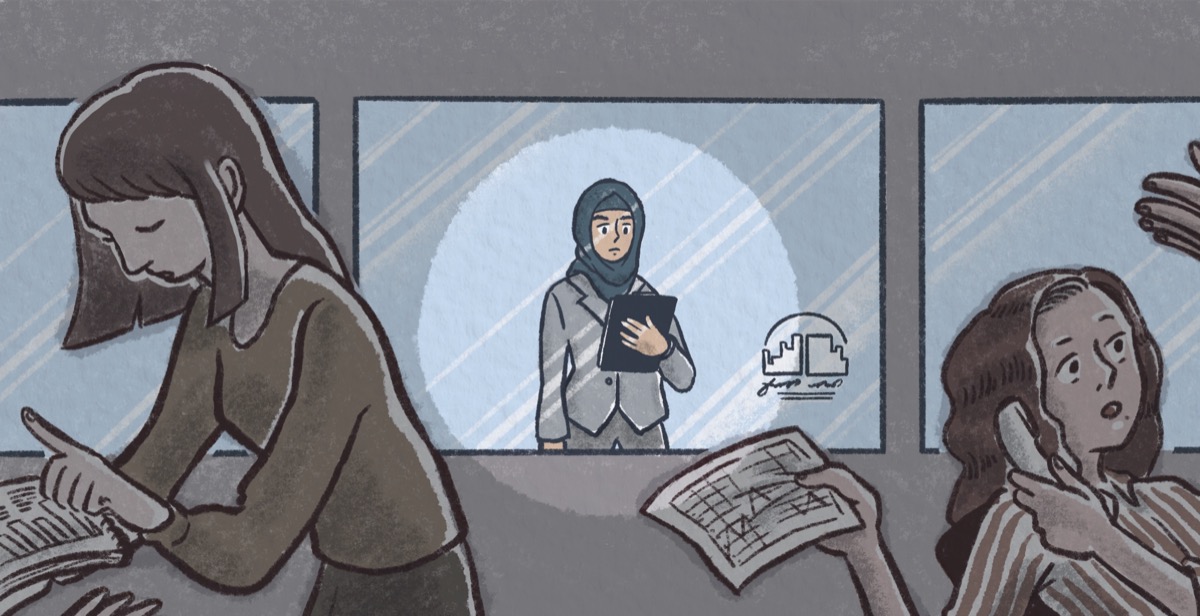
    By Jade (as told to Filzah)

    __

    The conversation was in Malay and English. The conversation has been edited for readability and length. 


    F: Hi Jade, thank you for agreeing to speak to me. Our theme for this blog series is on income inequality. So let’s start with your work history first lah. When you did you start working?

    J: 15 years old, at a book printing factory, just to support my sibling. I went to Sec 1, but only half-way. Because I have to stop school first, my mother not around, my father cannot afford to care of us, so I have to take care of my siblings. 

    I liked my time at the book factory. I know how to handle the machine. If the book becomes stuck, everything I know how to do. Just don’t get your hand caught only lah. If get caught, finish. For overtime, I always raise my hand. OT is another 2 hours lah, to complete a full 12 hours of work. 

    I was working, working, and working. My mother never come home, my father working, so he also never come home. Poor thing my younger siblings. So I was thinking, am I obsessed with money or my family? I should be more obsessed about my family, right?

    But if I don’t work overtime, I will get marked. If you don’t work overtime, that means you don’t show that you are a good worker, they will give you a red mark. It would mean you are lazy and that you are not serious—immediately, bye bye. This is the same case in oil factories, computer factories… all the supervisors will get angry if you don’t OT. If supervisor ask if you want to OT, you must always raise your hand. In a week, at least 3 days you need to raise your hand. Also, if you come in late, they will dock $2 to $5 off your pay, if I’m not mistaken. Break time also have to be fast, come in late will also be very bad. 

    F: So from the age of 15, you started working at the factory. Then you continue working lah? Never stop?

    J: Yes. If I stop working also, I will immediately find a new job. 

    F: No rest?

    J: No. 15-16 years old, I find work that is 2-3 days a week, paid in cash money. When I was 17, I work as a cleaner. My salary is $750 only, cleaner at a primary school. Then I went into prison for public nuisance. After I come out, I work at the hospital as a hospital assistant. I’m the youngest ah. Everyone else are aunties, I’m the youngest. 

    F: Last time when you work, can you have savings?

    J: Last time cannot because even though prices were cheaper than now, my pay also cheap. Last time I work as cleaner, I bring home $750. My father owe a lot of money, my mother like to go in and out of prison, so I have to pay water bill, conservancy fees, the flat. I have siblings to feed. At work, when I’m hungry, the other cleaner aunty will treat me.

    Home – $100
    Water bill – $100
    Conservancy fees – $50
    Groceries – $300
    Give to mom – $200

    TOTAL: $750

    Last I work was in 2014, as a cleaner. $1,100. My husband also a cleaner, bring home $1,400.

    F: Your husband gets more?

    J: Yes

    F: Even though it’s the same hours?

    J: Same hours, because both of us work at the condo, same work. Because it’s the same right, a cleaner’s work. But he brings home $1,400, I bring home $1,100. The difference is that men carry the dustbin, but women don’t.

    F: Why can’t women carry the dustbin?

    J: Cos it’s heavy. The green dustbin. 

    F: But if women cannot carry the dustbin, they can do other things?

    J: Since I’ve been working here, it has always been like this.

    F: Do you think it should be equal? Equal pay?

    J: Of course. When we come home from work, we must cook some more, even more tired. If equal pay, it’ll be better. The cleaner aunty who works underneath this block gets $800, work from 8am to 12pm. The uncle cleaner gets $950. It’s just because of the dustbin. I asked for higher pay before. But they say wait lah, how many years, how many months. My husband also tried to ask as well. 

    F: So did he get a pay raise?

    J: $50. The government said that for cleaners, every year will increase pay. Where got? It is based on the company. Big company, see lah, who can increase or not. But if small company, like my husband’s one, you want to ask? Wait long long lah. 

    Just now I got a call for a job interview for food packing. I ask for part-time. I don’t care if it’s food or groceries packing, 3-4 days work, I don’t care so much lah. At least can cover milk, pampers, travel fare. My kids have a lot of appointments, I told them honestly during the interview. But they say, sorry we only have full-time. How will I send my kids to school, appointments, and cook? Everything is so chaotic. For women, finding work is very hard. Because I have a lot of appointments. Very stressful. 

    F: Why do you think it’s harder for women to find work?

    J: Because women need to take care of the children, their schooling, suddenly the child falls sick and appointments lah, mostly. Tomorrow I got two appointments already, 2-3pm. For my two kids, speech therapy. Each kid takes 45 minutes to 1 hour for the development check-up. They have slow development. Got a lot of doctor’s memo.

    This year my daughter had some difficulty. Every year she pass, but this year her Math and Science grades fell to 28 and 22. Oh my god! I exploded, so angry! I buy assessment book, watch her study. I don’t know what is wrong lah. She is also under speech therapy. Teacher complain and complain, but I tell the teacher: How? What to do? The father is not educated, the mother is okay-okay only. I just try my best, give her tuition from my sister and brother. But sometimes, I feel very weak also lah, because myself as a mother, I’m also not smart. It’s sad lah. 

    F: The last time you worked was in 2014. Why did you stop working?

    J: Because I became pregnant. I work until 6 months. Actually, I didn’t want to stop working. I thought I wanted to work until 8 months, then after that rest for a while, then go back to work. But cannot, my boss don’t allow, because pregnant. He scared wait got anything happen. 

    F: No maternity leave?

    J: There’s no such thing. I also wanted to know if there was a procedure if I became pregnant, if got maternity leave or not. They say you pregnant, we need to terminate you. Didn’t give maternity leave. Last time with my first child, I worked until almost give birth, still ok. But that was in factory, people didn’t see, my stomach still small. Like that lah. Have to do secretly. 

    F: Then during the 2 years you work there, did they give you a pay raise?

    J: No. They say is already enough for you to get like this. I bring home $1,100. They say my work is simple, one building only. 

    F: Condo?

    J: Yes. Only my husband get pay raise. Increase $50 lah, like I say just now. 

    F: That one must ask? If don’t ask, don’t get?

    J: Don’t get. Then the next time when my husband wanted to ask, he got admitted to hospital, got heart problem. I asked his boss for a light job for him. People with heart problem, don’t give them heavy work lah. I pity him also. That’s the only work he knows. But they don’t take him, giving an excuse that he got heart problem. Just say that you don’t want him anymore.

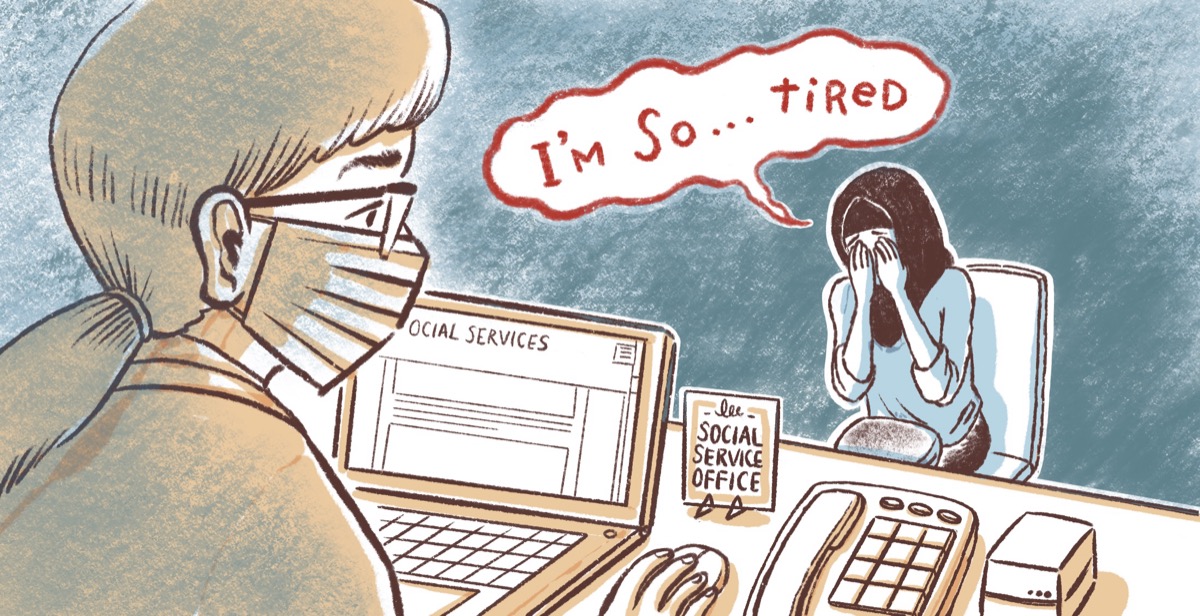
    That’s why I want to take a course, to help him. I was thinking he should just be a stay home dad. Because he is sick right, better just stay at home. But to the SSO, he still can work, so go and work. 

    F: Oh SSO say he still can work? How old is he?

    J: 60 years old this year. 

    F: Not retired?

    J: There is no retirement, unless our CPF have a lot of money or our savings is a lot. You see my father, 74 years old, just come out of the hospital for eye surgery, but he still want to work. 

    My husband work as cleaner, no education, get this kind of pay, then when we ask for help, the organisation say you are stable. Pay is $1,400. They think $1,400 is like $14,000. That’s the problem with this government. When they want to help, they always check that you have CPF or not, stable job or not. If you have stable job, they say you are financially stable, difficult for them to help you. 

    F: SSO didn’t help?

    J: SSO officer give $100. I want to cry! When change to a different officer, ok. Get $300, thank God. Then after that, back to the same officer, $100. I don’t know where to report, a lot of people don’t like that officer. So frustrated. I want to scold, I want to curse, but cannot, because I am asking for help. 

    They include the financial help that I get from other organisation as well. It’s unfair, seriously, they made me cry, shit.

    The problem is that they count everything but they don’t count how nowadays the expenses in Singapore are increasing. Only if got offer/promotion then I go and buy. Although, sometimes even when things are on offer it is still the same. Now you see, the price of fish and vegetables are going up due to COVID. Kids’ biscuits and snacks also go up.

    I cried. The SSO still didn’t help, I ask all the social workers, my FSC still say “Cannot lah this time for you”. Ok lah, I just keep quiet. I was in a bad mood, so frustrated and lost, you know. Until I had to visit my psychiatrist recently. 

    “What are you going to do… I’m helping, I give you a lot of memos. But this ComCare, why they cannot help you? This is the first time I hear like this.”

    “I don’t know what to do, doctor. I’m stressed. What should I do? I already tell them that my husband salary like this.”

    They don’t know that we here are suffering on a daily basis. We have to be positive but sometimes these organisations… all these organisations need to change, asking for help is so hard.

    F: You want to go to MP to ask about what?

    J: Ask about assistance and ComCare. I have complained about the SSO officer before. I said I would like to complain about this officer. I don’t know why she always give me $100, $200, I don’t understand. I already give 6-7 memos. Every time they ask me for the memos, I have to photocopy again and pay money again because have to photocopy at the shop. 

    F: What is the average income in Singapore?

    J: Oh, I think must be $2,000. Because now MOE say we can only help families with household income not more than $2,000-something. 

    F: Do you think we should have a minimum salary?

    J: Yes. How much we have to spend on each kid, our salary is not enough, seriously. 

    But the government is clever. I scared that if we want our salary to be $2,000 for cleaners, wait there is no more financial help. 

    For HDB, if our pay goes higher than $1,500, we need to pay rental fees between $350-$450. Now my rental is $61. Last time, I had a neighbour, a makcik. When her child started work, immediately their rental increased to $450. Because exceed $1,500. They just wanted to start a stable life, but they suffer because each month they need to pay cash $450. 

    That’s why a lot of people work odd job. If our pay increase, HDB will increase the rent. 

    F: How much do you think you need for your family?

    J: Let’s say our pay is $3,500. I think $3,500 is enough for my family, enough lah if I start working. But the problem is even for $3,500, we have to pay water bill, conservancy fees, expenses for 4 children, student care for 4 children, rainbow centre, doctor’s appointment some more. $3,000 gone already. Then what about future expenses. My kids don’t need to use handphone yet, but when they need to use handphone, then how? Now everything is online. 

    Will be enough lah, if HDB doesn’t increase the rental. We can save if HDB doesn’t increase the rental. This is the problem. Very hard to save. Give people who just started working some time to stabilise their family first.

    Last time my father work, $800. Then my sister started working, $1,200. The rent increased to $350 and they were asked to purchase a flat. Oh my god! That old man is already 70 years old, how to buy a flat? He was so angry! He stopped working. So the rental went back, now $61. 

    Difficult ah. I don’t know lah. I’m so tired of crying already. So tired. 

    ___

    Jade is a mother to 4 young children. She hopes to be able to work as a caregiver one day. 

    Filzah is a team member of Beyond the Hijab.

    Illustration by Elisa Tanaka
  • How The Poor Stay Poor

    How The Poor Stay Poor

    By Chahaya co-written with Mei.
    __

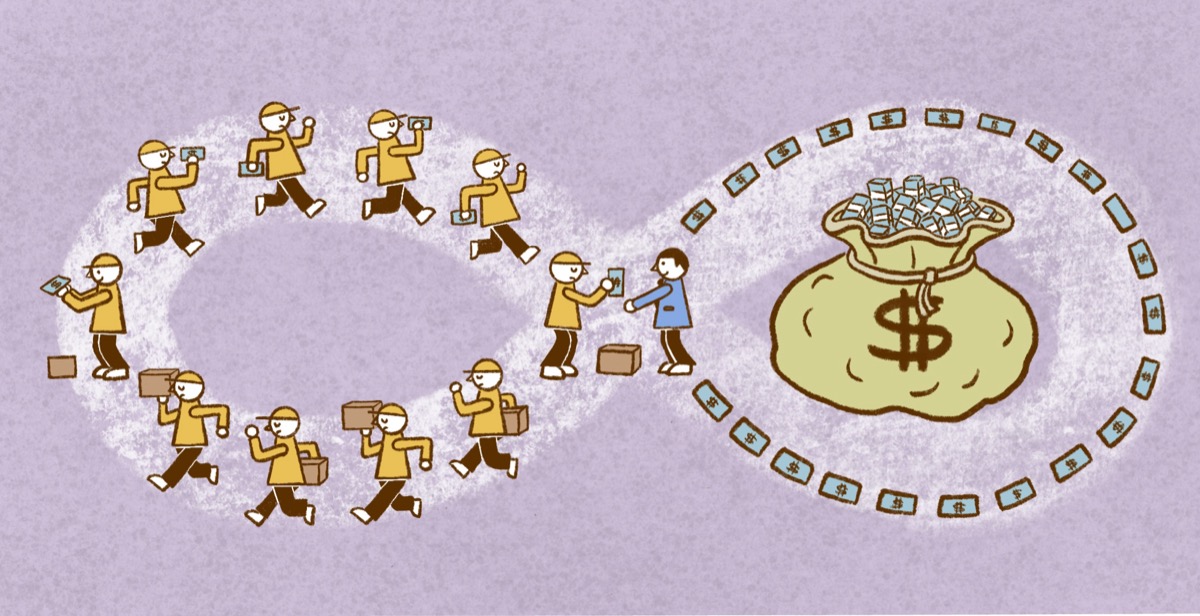
    In 2018, I met Chahaya through a mutual friend. Chahaya has always lived in financial precarity and the pandemic made things worse. Her husband had his hours cut and her children had to shift to online learning, which increased her electricity bills. Her family was thrown into debt again, unable to maintain their monthly payments for the renovation loan they took to fix their dilapidated flat. 

    The following is a compilation of email and face-to-face conversations touching on income inequality in Singapore we had over a month. 

    How were your family and friends affected by COVID-19? 

    The pandemic affected our overtime pay, which the bulk of our income comes from. After CPF deductions, we have to clock in extra hours to bring home a decent amount. Most times, we barely last till the next paycheck. The overtime pay was higher during the Circuit Breaker, but that was temporary.

    Could you talk a little about your work? Are you able to save from your salary?

    I have not been working full-time because of COVID. Engaging a babysitter is expensive, so I take care of my children. I work as a self-employed delivery attendant, which is irregular and unstable. I am unable to save a penny.

    Note: On top of working as a delivery attendant, Chahaya is also the caregiver for her ailing mother-in-law and father. 

    How much are babysitters? Private babysitters or student care centers?

    Home-based babysitters cost between $350-$500 per child. Student care fees cost between $200 – $400, monthly, per child. Although student care offers subsidies, the prices do not include the activities organized. Based on my previous experience, I still had to pay for activities such as enrichment classes or outings. There are also surcharges for school holidays whenever my children need to be at the center. All these costs accumulate and became a financial burden for me. 

    Do you know of available schemes that help you, and do they help?

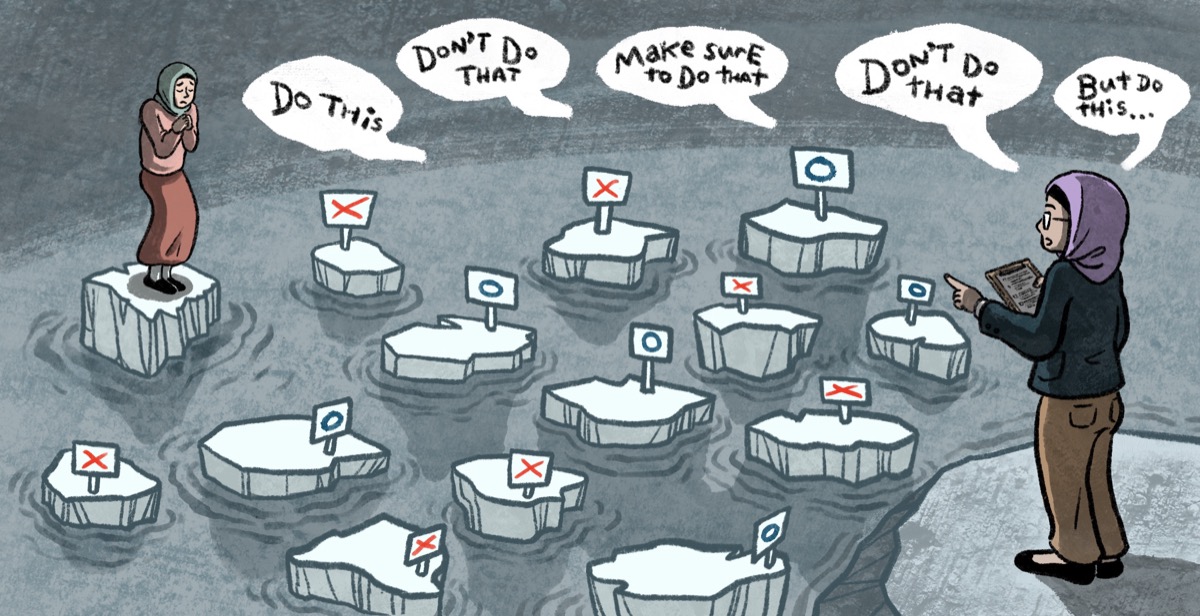
    It helps temporarily but not in easing the daily necessities or monthly commitments. With the increase in utility, housing loans, and school materials, the amount is occasionally insufficient. I know of many schemes available and sought assistance from social welfare organizations and compare. To keep up with these assistance schemes, we have to keep reproducing documents related to reviews which sometimes are not helpful. It takes a lot of time to produce documents, submit applications, appeals and wait for the approval. Getting financial aid from the government is a tedious process. Sometimes, after all the effort, you get rejected with no further explanation. This is appalling and frustrating because they encourage you to reapply or appeal. 

    But it’s not only the tedious paperwork, you have to brave through the judgmental officers. Once, I overheard an officer make a passing remark, “Oh! Malay again?” Other times, when I explained how I was a single mother with no family support and unable to maintain a full-time job, they said “Wah! Malay only know how to make babies but don’t know how to work one ah!” and “why you Malays don’t know how to control one (having babies and such)?” I was totally ashamed and devastated at how they did not see my humanity. I blamed myself a lot and lost trust in government provided social aid. 

    Sometimes, I feel the process macam minta sedekah. They make you feel like you have to beg for help. This must sound ungrateful, isn’t it? But this is the truth. Do we need to be beggars just because we’re financially challenged? It’s not surprising that so many turn to crimes and loan sharks just to stay alive. Once, I was in such a desperate situation and could not get the help I needed, I resorted to shoplift for milk and diapers. In the conversation with the IO, it was a worrying trend to have parents being detained for the same reason. I was released on bail and with humanity by the Court.

    When I stayed in a transitional home by AWWA, I was asked why I turned down canned food rations given to me. My answer was: Are poor people supposed to only consume unhealthy canned food? Are we not deserving of fresh groceries which can be cheaper and healthier? What will happen to our children’s growth and health when they’re only consuming canned food? They couldn’t answer my questions because NGOs depend on donors, and I wonder if donors think of our wellbeing?

    How long, on average, is the wait time between application and approval?

    Average is 6 weeks, can be longer, and repetitive document submissions.

    It must be very anxiety-inducing and overwhelming to navigate the administrative process. Do you have anyone helping you or are you expected to do it yourself?

    I do all the administrative work myself. The work includes running to banks to get statements, CPF printouts, etc. 

    Note: Anyone who has ever had to wait for institutional approval for financial aid, travel, or work visas, know how anxiety-inducing the wait can be. On top of that, the language is often convoluted and confusing to understand, making the process even more daunting and exhausting than it already is.

    What are your concerns when job hunting? 

    Language. Currently, for the jobs I’m looking at, the trend mostly requires proficiency in Mandarin. Other skills and experience acquired from past work are not usually recognized unless we own certificates or have paper qualifications. 

    What obstacles did you meet while job hunting?

    Based on my job hunting experience, mothers faced the most challenges in securing a decent job. My commitment to work is questioned right from the beginning of the interview. The first thing some interviewers ask is how many kids I have and then they proceed to question my ability to commit or manage my time. But the biggest challenge is securing a job with a suitable location and working hours. Sometimes, I would secure a job, but the place and working hours are not compatible, considering I have children to care for. As a mother, I will have to plan ahead for child care arrangements. For example, what will happen if the child is sick or unable to go to child care? Who will take care of the children? Do I need to take leave? Can I take leave?

    But it’s not only at interviews. At the workplace, co-workers would ask me ridiculous questions like why Malays don’t want to practice birth control as though we purposely make babies, beg for financial assistance and live our life without working hard. When we are working 2-3 jobs to survive! Some employers also truly believe that Malays are lazy and troublemakers. Why would we do our best and work our hardest for employers like that? 

    What do you think of skills upgrading? 

    Skills upgrading is good, but I wonder how far these can help me get a suitable and stable job. My concern is how much skills upgrading certificates can help someone without the standard, accepted educational qualifications to secure employment. If I want to sign up for a course based on interests and obtain the required skills, I will need to pay high fees to enroll. 

    Although there are schemes that provide subsidies, I do not have the extra cash to pay the remainder of the cost. I saw most skills required me a top-up a few hundred dollars while the cheaper ones are mostly basic skills, which I would already have. That’s why it’s challenging for me to find relevant and affordable courses to upskill.

    How has your income increased over the past few years? 

    Not much of an increase. We still need to engage in extra jobs to afford other necessities. Our primary source of income is my husband’s full-time job. He brings home $1700-$1800 after overtime pay. 

    What are your thoughts on income inequality in Singapore? How does it make you feel?

    I’ve talked about inequality with my old social worker (I’m thankful for her patience in fighting this battle with me for 5 solid years). While many will say that we are fortunate to be born and bred in Singapore, few know of or acknowledge the poor. Singapore is good at hiding the existence of the poor. Not those living in slums – but those living in fear of settling monthly bills and getting cheap quality food every day. 

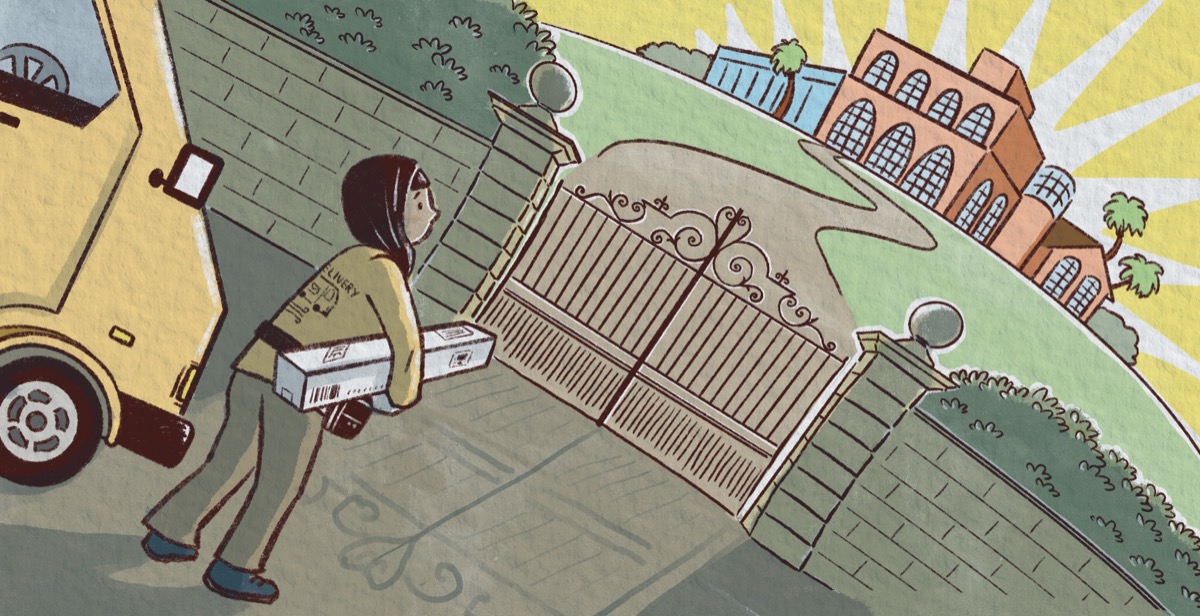
    My husband and I drive through landed properties to deliver items. So I see these multimillion-dollar houses and think to myself, where on earth do they accumulate so much wealth?! And wonder where the money come from… legal or illegal? Haha! I sometimes wonder what they gain from living a lavish lifestyle. Do they face the same stress as the poor? Like racing against time to get enough money to pay the bills and do they really enjoy the wealth without fear of losing it?

    How do I feel? Sometimes disgusted. I know there are humble rich people who contribute back to society. But, to me, buying million-dollar properties from other rich people is just investing amongst the rich, whereas charity organizations, social welfare, and NGOs have to find donors to fundraise for the needy and lower income communities. 

    As someone who was homeless before, wouldn’t it be better to contribute that money to build homes for the homeless? When my family and I were homeless, I approached MPs and relevant organizations to appeal to get housing. We were turned down almost immediately because we didn’t have the right documents, no CPF or marriage/divorce cert (unmarried, single mother). There was also no empathy from the judgmental officers, and I had to experience many humiliating situations. 

    Working in delivery and logistics, I encounter a lot of rich people. When delivering orders to their homes, some will demand to have their items brought into their homes even though that’s not our job. If we refuse, they will write in a complaint affecting our salary and our ability to get a raise. They find fault even if the reason is so minor. Once, my husband was suspended because he was not wearing the vest provided by the luxury brand. He felt deceived because the client seemed satisfied with his service and showed a positive attitude. 

    Hardworking workers work more than 10 hours a day and earn a meagre salary, but employers enjoy the profit. When in fact, workers risk a lot to help boost their business. Many employers delay salary pay-out, and this affects us. We need to keep up with bills and buy food. Late payment of bills will have penalties and incur interest. Will these rich people help? Definitely not. The rich will keep benefitting from investing in the rich. While the poor stay poor and have to keep working until the end of time.

    Income inequality is an injustice that can never end. The victims will always be the poor. 

    What kind of future do you imagine for your children? 

    My dream for my children is simple – live their life modestly. Wherever or whatever they wish to pursue, I would only want the best for them. I don’t want to set any high expectations. Life is already stressful; it will be worse in the future. 

    __

    Chahaya is a mother of five. Inspired to write her story and views on financial and social issues faced by many women like her, Chahaya hopes to share her experience and help others. Chahaya is also a participating member of Daughters of Tomorrow, seeking new learning platforms and opportunities to upgrade herself.

    Mei dreams of a world where no work is undervalued, and no one is exploited.

    Illustration by Elisa Tanaka
  • Whose Money Is It Anyway?

    Whose Money Is It Anyway?

    by Zubaida Ali

    __

    “You know you are getting all this for free right?”, said a medical social worker whose job was to assess and dispense government funds to Rahimah, her client.

    Never mind that Rahimah is wheelchair bound, suffers from organ failure, needs an external stoma bag in place of a kidney and is due for several surgeries just to stay alive. The implication is that since Rahimah is on the receiving end of state welfare, she shouldn’t have any preferences or make any requests. 

    We expect the weak, vulnerable and those in high-need, to have only feelings of gratitude for the help rendered, and that they are stripped of the basic right to choose, something we all take for granted every day. It is all so Dickension , calling to mind that one scene in Oliver Twist where dared to ask for more porridge, and the Superintendent yelled in his booming voice , “What! We clothed you and fed you and gave you a roof over your head, and you still dare to ask for seconds?” 

    We as a society tend to look approvingly at the amount of social service agencies in Singapore, staffed by thousands of social workers and government employees, disbursing millions of dollars in funds to those who need it. This can be the sick, frail elderly, people with disabilities, and families that have fallen on hard times and need time to get back on their feet. But how is this service rendered? Do we ever think the recipient of this help deserves to leave the social service office or Family Service Centre with their dignity and heart intact?

    What is our obligation to help those who cannot cope with the demanding challenges of being economically productive and even if they are, do not seem to be earning enough to support their families?

    It is our understanding that the funds allocated to help the community belongs to the people, to alleviate suffering and poverty. We appoint gatekeepers like social workers and social service officers to be good custodians of the funds but also allow those who need those funds through the door. We expect that they be treated with dignity and respect, the same as any other citizen, rich or poor. 

    My friend, Marie, reported to her social worker that she has earned $400 working part-time at a children’s enrichment center, after months of looking for work. When potential employers learnt that she was a single mother of several young children, the job interview whether by phone or in person will abruptly come to an end. Instead of congratulating Marie for trying to get back on track to support her family, the social worker immediately went to work to cut her financial assistance by $400. When I was in social service, my colleagues and I always advocated to social service workers to not be so quick to terminate or cut back on financial assistance, when someone finds employment. Starting a new job will always come with extra costs such as transport costs, lunch with colleagues and takeaway meals or snacks for the children, as mum has to rush home after work. Giving a period where she gains stability and confidence, will be helpful for the whole family going through this period of adjustment. In fact, sometimes, women fail during these first few months of balancing work, family responsibilities and even feelings of guilt and inadequacy that they quit their jobs so as not to disappoint their co-workers or family. 

    Sarah, a bright and articulate woman in her 30s has been to every job fair and taken as many courses and workshops that her Skillsfuture funding allows her to. Her dream is to work in admin, working in a nice office surrounded by office colleagues who welcomes her sunny and helpful disposition. After countless job interviews she is convinced that the job market does not want her due to her darker skin tone, and the fact that she does not speak Mandarin. She has a deep desire to contribute to the work force but are there any employers willing to give her the opportunity? Recently she went for a job interview at a government agency and was told she got the job. She was elated and told her children and friends of the good news. However, after a few weeks of hand wringing waiting, was told that the job scope has changed and the offer is withdrawn. She cried bitter tears, at yet another disappointment. 

    We talk of patience and resilience to women such as Marie, that the right opportunity will come along. One employer will see how special she is, and her anguish will be over. I say these comforting words, yet at the same time knowing that it is an uphill battle for someone who looks like Marie, and her caregiving challenges. 

    I wish things could be different. That instead of one-off Corporate Social Responsibility (CSR) events and feel good HR programmes, employers do extend a helping hand to the people who normally will not make the cut in their recruitment practice. That they recognize a workforce that has diversity of people of many backgrounds and income stratas, will make for a rich and interesting group dynamic. That such genuine company initiatives will be able to create depth of understanding and a lively working environment of leaning and learning from one another. 

    We have seen such forward-thinking employers, who reach out and seem to want to embrace the culture of inclusion and acceptance. We hope to see more, not only at the hiring stage but also at a deeper level, where a working culture of openness, fun, colourful and richness is present. 

    But to reach that level, one has to give someone like Marie a fighting chance to get through the door.

    __

    Zubaida Ali is a community worker and an activist on social issues concerning the rights of women and children. She occasionally writes on relevant issues pertaining to the Muslim community.

    Illustration by Elisa Tanaka
  • Editor’s Letter: Income Inequality

    Editor’s Letter: Income Inequality

    by Diana Rahim
    _

    When I started thinking about this letter,  I was still processing the announcement by Trade and Industry Minister Gan Kim Yong that food prices are expected to rise due to a rise in energy prices, supply chain bottlenecks and labour shortages. There has also been an increase in bus and train fares in Singapore for the first time in two years, a rise in rental costs, and an increase in electricity and gas tariffs. Now, Singaporeans are also told of a planned increase in the Goods and Services Tax (GST).

    Essentially, we have seen an increase in the price of food, rent, transportation, utilities at the same time there is a rise in retrenchment, a rise in the unemployment rate, a reported increase in food insecurity and demand for food aid and an overall greater experience of precarity amongst the low-income, who are hardest hit by the pandemic and its effects.

    Unfortunately, this isn’t a phenomenon secluded to Singapore. There has also been a global rise in food prices and we also know that the ultra-rich has gotten even richer. About a year ago, it was reported that the wealth of billionaires rose by $10.2 trillion during the pandemic. An article about the billionaire boom last year stated that nearly 700 individuals were made billionaires. Most damning though was this:

    As the virus spread, central banks injected US$9 trillion into economies worldwide, aiming to keep the world economy afloat. Much of that stimulus has gone into financial markets, and from there into the net worth of the ultra-rich. The total wealth of billionaires worldwide rose by US$5 trillion to US$13 trillion in 12 months, the most dramatic surge ever registered on the annual billionaire list compiled by Forbes magazine.

    Reading this, I thought: let there never again be the claim that the poor are over-dependent on welfare when the rich are raking in money meant to keep countries afloat, money that they don’t even need. In truth, the world is run, bent, and being destroyed to feed the wallets and egos of the rich. The poor are often judged and stigmatised for needing financial help, when in actual fact, most are not being paid the true value of the work they do and it is the rich that game the system to their advantage, through exploitation and wage theft.

    Even when the crisis hits individuals from every stratum, it is undoubtedly the poor who suffer the most profound losses and difficulties. Their incomes cuts are far higher, especially if they work in customer-facing industries, where there is no option to “work from home”. A report by Beyond Social Services found that the median household income of families they assisted dropped by 69% from $1,600 before the Covid-19 pandemic to $500 after.

    While we can share numbers and data to prove the existence of income inequality, it should not be forgotten that it is something that is materially, emotionally and psychologically felt. It means immense psychological stress day after day that keeps one’s mental state perpetually distressed. It means a lack of nutritious and adequate food that leads to health issues and a difficult relationship with food. It means that one’s self-esteem takes a battering, in the struggle to provide for one’s children the quality of life all parents wish for their children. It means a vulnerability to an array of negative coping mechanisms in order to bear the the pain and indignities of life.

    In the submissions of this series, we see infuriating and frustrating examples of how people must suffer dehumanising treatment and waste precious time and energy just to access the help that they so badly need. Financially vulnerable and exploited communities, what we call the ‘low-income’ community, are people who have been sacrificed in a system that requires a population to be underpaid and overexploited. They are then put through gruelling experiences and means-testing to access the funds they need to live a decent life. Financial and material struggle in Singapore is by no means rare, especially when we consider the fact that (as of 2020) around 52,000 Singaporeans earn less than S$1,300 a month.

    Workers go through a strange kind of affirmation in Singapore, and I suppose this is true for many other countries. They are offered gestures of support in the form of claps and cheers at sundown. They are publicly admired for their grit, endurance, and determination to make a living and support their families. But the moment they speak about their exploitation, or organise against employment abuses, this support seems to wither. Economically exploited workers seem to only be admired if they quietly endure their exploitation.

    To me, true concern and resistance against economic injustice means supporting workers when they advocate for their labour rights and resist against what keeps them exploited. I think of the bus uncles who bravely decided to file a lawsuit against their company for alleged unfair work practices such as long working hours and unpaid overtime. I think of the delivery riders who filled up a Meet-The-people session to express their frustration and anger when an e-scooter ban impacted their work overnight. I think of migrant workers who speak about the shameful conditions of their dormitories, unfair work practices and the dehumanisation they face in Singapore. I think of nurses sharing about the unforgiving conditions they are enduring as hospitals strain in the pandemic. I think of the people who contributed their experiences in this series, shedding light in the difficult navigation around bureaucracy and judgement as they simply want to access a more dignified life. Instead of talking about how these efforts are signs of ungratefulness, disobedience or excessive, maybe we should listen and support them. After all, the ones who knows best about the failures of a system are the ones who have been failed by it. In expressing their experiences, difficulties, and resisting against their exploitation, they stand for not just themselves but for all of us.

    As our country and many others around the globe are striving towards normalcy, the crisis of economic inequality that COVID-19 has revealed and deepened has remained. If you are able and willing to consider contributing to the following mutual aid efforts and organisations working to keep people fed and afloat:

    Migrant Mutual Aid
    East Side Mutual Aid
    Beyond Social Services
    Willing Hearts
    Food From the Heart
    Engineering Good


    __

    Illustration by Elisa Tanaka
  • Apa salahku?: Unpacking Narratives around Domestic Violence in the Malay-Muslim Community (Part 2)

    Apa salahku?: Unpacking Narratives around Domestic Violence in the Malay-Muslim Community (Part 2)

    by NH Rahman
    __

    This article is part 2 of a 2-part series that critically examines how the problem of domestic violence within the Malay/Muslim population is imagined. Read part 1 and if interested, the Full thesis including full citation list.

    Content Warning: This post discusses domestic violence and institutional understandings and responses to domestic violence. This includes mentions of victim-blaming, retraumatisation and procedures utilised by social services and the criminal justice system.


    How we think we can solve a problem tells us a lot about what we think a problem is. In the same vein, examining policy ‘solutions’ to domestic violence (DV) can be helpful, prying open what we’ve collectively imagined the problem of DV in Singapore is, particularly for within the Malay/Muslim population in Singapore. 

    I used an analytical method called WPR (What’s the problem represented to be?) approach to dive into an analysis of policy texts and solutions we hear commonly espoused to ‘solve’ or ‘prevent’ DV. I will use the term ‘problematisations’ here, which are basically the ways that a problem has been understood—though of course, it is not necessarily what the problem actually is. From there, we can also explore the silences within these problematisations of DV, and see where they fall short in factoring in the political, social and economic realities of the Malay/Muslim population.

    “Counselling for anger/conflict management”

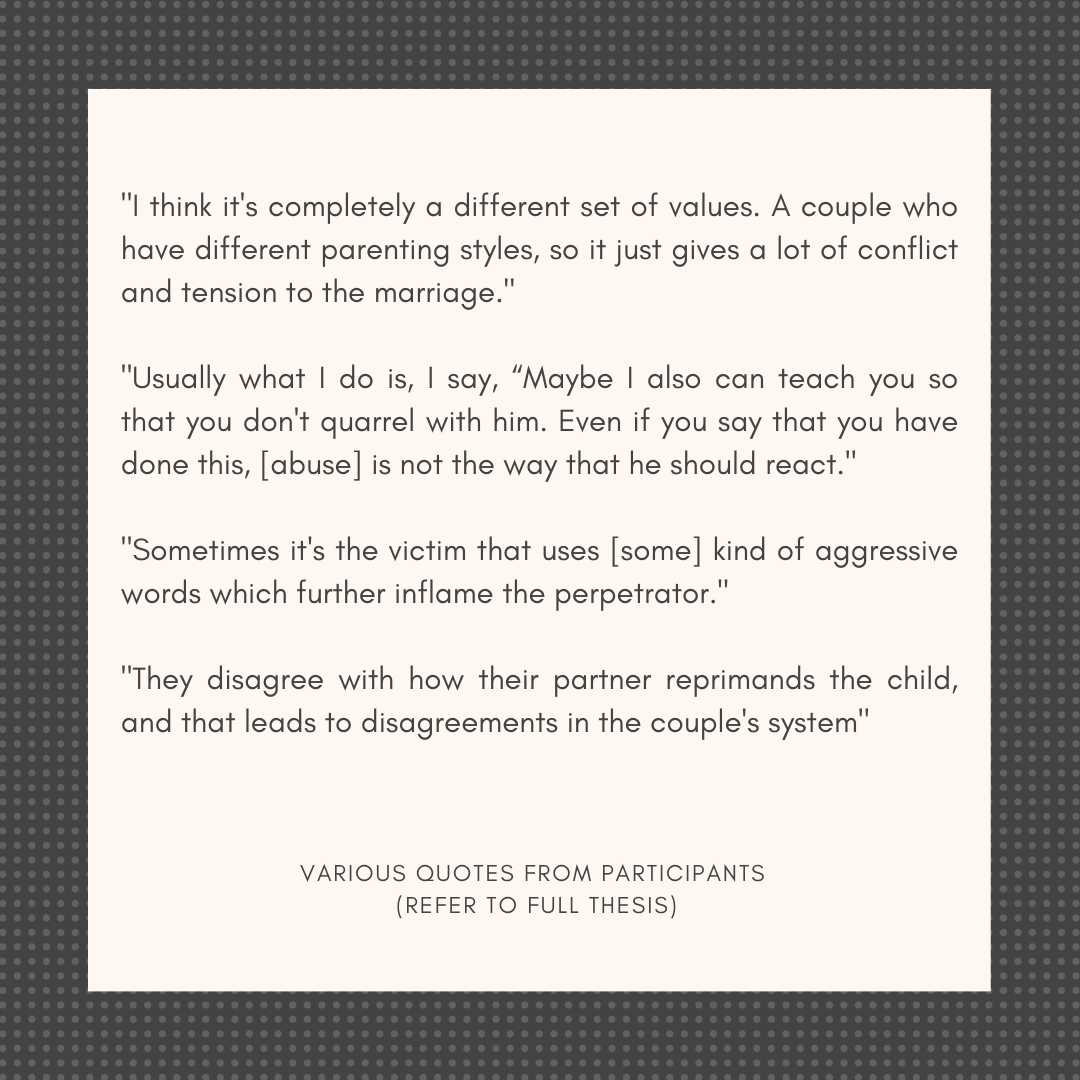
    Family, couple’s and individual counselling is regularly offered as a policy solution to addressing DV. Some of my interview participants spoke about counselling as a solution that works to emotionally regulate men who abuse and as a remedy that can potentially stop abusive behaviours, while others spoke about the restorative effect of counselling for marriages. 

    A few participants discussed how men’s abusive tendencies could come from ‘anger management’ issues, lack of psychoeducation on men’s roles as husbands, and men not knowing that DV is not a good solution to their problems or ‘conflicts’. Similarly, outreach efforts by MSF to “detect signs” of DV discussed the “importance of…the ability of individuals to manage conflict”.

    I believe anger and conflict management as a solution to end or stop DV problematises individual psychopathological issues within DV. As a natural continuation of this problematisation, DV then ends up being reduced in our collective understanding. It is wrongly or reductively represented as, perhaps, a problem of male anger, of conflicting parenting styles, of family conflicts and tension, of couples’ quarrelling and disagreements, of poor communication, financial insecurity, or even the result of retaliation from women experiencing DV.  

    While these examples could also be excused as a matter of conversation style or simplicity in participants’ choice of words, if taken at face value, these problematisations inadvertently flatten the power imbalance in abuse. They also paradoxically presuppose how DV is a problem of lack of control or power over one’s emotions, rather than the deliberate use of often patriarchal power and control over others. 

    In the MSF video campaign, Break the Silence (BTS) (2016), DV can be seen—through marks and bruises on the body—or heard—through pained screaming, angry yelling, verbal harassment or otherwise vocal forms of resistance and expression.  

    This is an unsurprising yet unfortunate outcome in our discourse around DV, given how policy documents, including social service websites, do little to name patriarchal power and control as a major root of DV. When these forces are not extensively or visibly addressed or identified, patriarchal violence is then also presented simply as learnt behaviour that individual men pick up. When policy solutions represent DV as something abusers do to address a problem, they may inadvertently place the blame on those experiencing DV, by assuming that an issue that causes a violent or controlling response is something people who are abused can ‘solve’ one way or another.

    Furthermore, what this ends up doing is neutralising the power imbalances in gender roles which do not resort to violent and controlling behaviour. The subservience of women, girls and children that does not correlate directly with DV is made unproblematic, or inevitable, as a result of the silence. It represents DV as a problem that individual, ‘angry’ men use to exert power and control (an imagination we need to recognise is subject to racist stereotypes of brown or Muslim men as well), and in the absence of acknowledging patriarchal power relations in our systems of organisation, assumes patriarchy as otherwise a benevolent force.

    “Raising awareness” 

    [youtube https://www.youtube.com/watch?v=ZiH5zXPvdPk&w=560&h=315] 

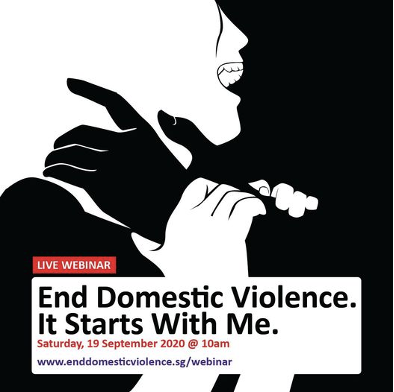
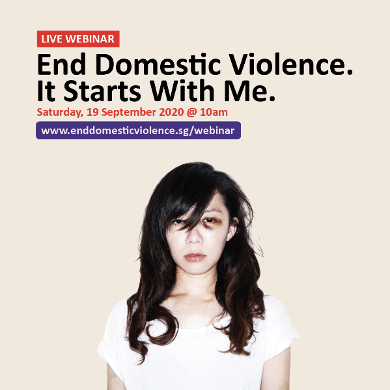
    End Domestic Violence, a more recent anti-violence campaign, addresses how non-physical and non-verbal forms of DV are equally crucial to address (official website is currently down). However, representations used in ads for the campaign still prioritise representing the physical aspects of DV. 

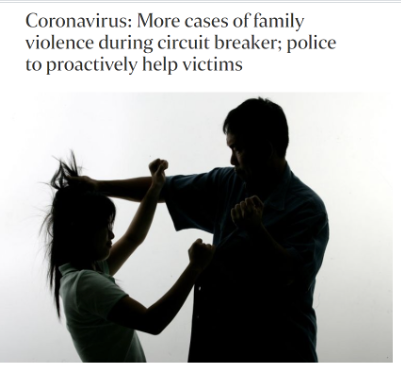
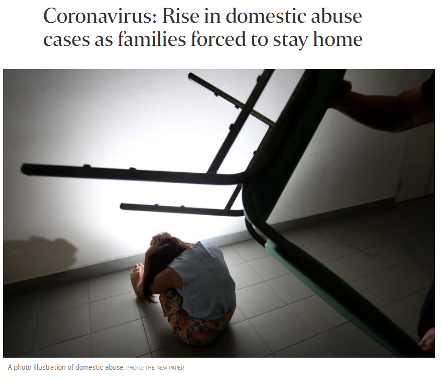
    Beyond these campaigns the spotlight on physical violence is often seen in the headlines, images and illustrations of mainstream media reports on DV.

    MSF’s educational resources and social service websites such as PAVE’s briefly mention the non-physical and non-verbal aspects of DV, but much of the representation privileges support information for those whose experiences centre on physical violence: get a medical examination, apply for PPO and go to a crisis shelter, with “counselling” being the typical exception. This is consistent with how shelter policies admit mostly women who have gone through physical violence, and the difficulty of PPO applications for psychological or emotional abuse. The language of DV as ‘incidents’ is often used, imagining violence as emotional eruptions that can be tangibly pinned down as events.

    These problematisations ignore the elements of power and control, the relational pattern of DV, and even the psychological or emotional aspects of DV, which are harder to single out. Coercive control, which does not necessarily have to “resort” to physical abuse or verbal denigration, is then left unproblematic. There is also overwhelming silence about the ideological forces that uphold DV, particularly patriarchal violence. 

    Moreover, the Break the Silence video series represent victims of violence as overwhelmingly silent or passive, as people who do not seek help, and thus need to be empowered enough to reach out. This imagination mutes the ways that women do resist: using personal strategies such as prayer, seeking support from friends and religious leaders, going through laborious processes with social services and the legal remedies, and attempting to be financially secure.  

    With this collective representation of DV, the problem then becomes focused on “an individual level of analysis”, viewing DV “as a problem that resides within individuals” (Salazar and Cook, 2002, p. 418). Ultimately the pattern of how DV operates as a social and structural problem, and the landscape that it happens in, is erased.

    “Equipping bystanders” through public education

    In the Break the Silence campaign, bystander intervention is, quite literally, the final scene in narratives about DV. Videos end dramatically with people interrupting violence, and we are left to assume that the intervention went successfully to end the violence once and for all. 

    The process of the intervention, the considerations that women make, and the way State systems are able to support women are unquestioned. These representations portray DV as something that will continue unless bystanders interrupt it (placing the responsibility on romanticised ideas of ‘community’), and will immediately halt or de-escalate when there is bystander involvement (which reveals a belief that all interventions are good interventions).

    Similar to Break the Silence’s campaign angle, much of End Domestic Violence’s focus is on the actions that those experiencing DV can do to minimise the impact of violence in their homes, and bystanders can do to support them. 

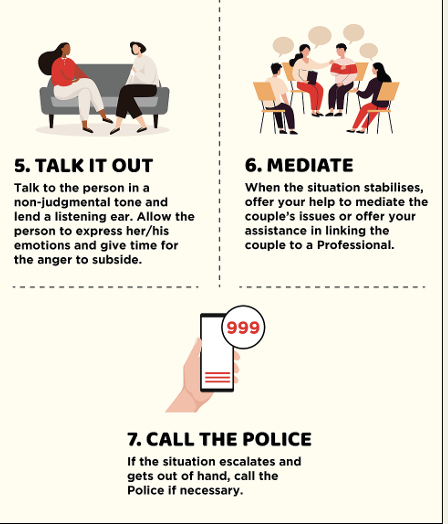
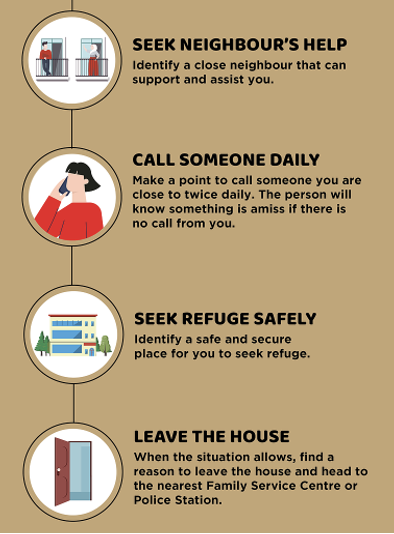
    Although more nuanced than Break the Silence, the representation still emerges in simple lists of superficial dos and don’ts, revolving once again around noticing physical and verbal signs. The solutions are similarly limited to “calling the police”, listening and empathising, and accompanying people to the police or family service centre.

    What these approaches do is assume that bystanders already have the information, skills, principles and ethical values required to end DV. But mediation efforts veer towards maintaining the status quo, typically for the purposes of restoration or reconciliation. Given the dominant discourse and policies that support patriarchal, nuclear families, is it reasonable to expect communities, particularly under-resourced and politically weakened communities, to mediate a couple’s ‘issues’ without reproducing values that cause further harm to women? It is also dangerous to view physical intervention as a catch-all solution that will always lead to de-escalation, especially considering how women have reported that family intervention can cause abuse to, in fact, escalate.

    Amidst all this, there is silence in the way the State and services continue to enact indirect violence and oppression on families as they attempt to wean themselves out of abusive relationships. It is however painfully consistent with the State’s principle of family—and sometimes community—as the first line of social protection, rather than the State, and the privatisation of the problem and solutions of DV. This way, the State maintains its role as advisory, with an end-goal of keeping the patriarchal family unit together.

    Religious and cultural counter-education

    Over the years, substantive effort has been put into countering common misinterpretations of religious texts that seemingly justify DV, including through targeted campaigning and asatizah training initiatives. Often, including in my interviews, misinterpretations of religious texts is identified as one “source” of patriarchal violence against women, presupposing that religious values (however distorted) in and of themselves may be what causes men to use violence. 

    The privileging of the role of Malay-Muslim “culture” or religion is also seen represented in training programmes organised by government institutions. One NCSS training titled “Understanding and Working with Malay-Muslim Clients” works to focus on the “multi-faceted nature of Malay-Muslim culture, in allowing social work practitioners to attain in-depth awareness and understanding when working with Malay-Muslim clients”. 

    Based on the policy text alone, the problem representations demonstrate at least two assumptions: that differences with working with Malay/Muslim clients are largely cultural and religious (rather than in relation to other intersections such as socioeconomic oppression and marginality through ongoing coloniality that the Malay population face) and that religious, rather than structural, reframing is necessary for “change” to arise.

    This has the effect of essentialising culture and religion, and risks over-privileging cultural reasonings to social and political problems that emerge as a result of historical and oppressive forces that are far greater than the individual Malay/Muslim ‘client’.

    Thus, it is reasonable to see how culture and religion appear to be reduced to a set of attitudes, beliefs, misconceptions and dispositions that individual ‘perpetrators’, ‘victims’ and the ‘society’ hold, unlinked to the State structural conditions. This also works to represent wayward religious and cultural values within an ethnically minoritised population as major causes of DV, adding to a caricature of the Malay/Muslim “Other”.

    “Legal and criminal justice remedies”

    Common problematisations of DV assumes that its solutions lie in the shape and borders of the legal system: DV is presupposed as something that will be remedied or reduced according to whether laws change, and whether individuals are aware of their rights to police reports, PPOs and Magistrate’s complaints.

    Take the speech made in September 2020 by Minister for Law K. Shanmugam, where he announced the process of a White Paper on gender equality. The speech uses the language of “mindset change” and education, but there was also a description of violence being a violation of “fundamental values”. While this appears to be a promising expansion of the State’s problematisation of DV, there is little self-reflexivity involved: ‘fundamental values’ is described as something that must be instilled, with State leadership, instead of something the State needs to inject into their own structures. 

    In his problematisation, expanding the role of the criminal justice system—through stiffer laws and harsher penalties—is a given. It represents the State’s punishments as proportionate to the amount of harm caused by DV, imagining that penalties can actually end DV.

    Unfortunately, the silence in this problematisation is in the role of the State in enacting further structural violence on vulnerable families (e.g. through economic consequences on weakened, minoritised communities) and the emotional and material costs of seeking support from a legal system. 

    Criminal justice remedies sit uncomfortably given the reality of ethnic minority oppression within its system. There is no denying the intersection of class and race, and my interviews show how it operates within abusive households too.

    In DV cases, State violence and re-victimisation occur also through victim-blaming officers and professional first-responders, inadequate support from social services, lack of holistic, long-term support for those experiencing DV, the economic oppression that Malay and ethnic minority families struggle against, and the material effects on their wellbeing, health and livelihoods. Reliance on these remedies bolsters the racism, patriarchy and homophobia coursing through criminal justice systems, and promotes an individualistic approach to ending DV. As a result, we are left grasping at straws when trying to imagine community accountability strategies that transform social and community support systems.

    Conclusion

    Despite State campaigns and statements that on the surface articulate the belief that family violence is “not a private matter”, Singapore’s social policy solutions are still privatised. The State is positioned as a solution, with rational, advisory powers to fix DV, and distinctly separate from the problem itself. Our social policies represent DV within the Malay/Muslim population as a result of collective or cultural deficiency. 

    This is in spite of how representations of DV by participants and in first-hand accounts, instead, show that the problem is an echo of wider structural violence—the rippling effects of colonisation, authoritarianism, patriarchy and neoliberal capitalism. The tragic poetry of this can be observed in the details:

    Malay/Muslim women’s freedom of religion and faith practices are limited by men who coercively control them, and wield conservative interpretations of religious texts—an echo of how the State relies on patriarchal leadership and a paternalistic approach to govern the ‘othered’ Muslim population. 

    Malay/Muslim women’s freedom of movement is curbed by those abusing them, while the government’s social policies, social sector and criminal justice system supervise and police their only options for safety. 

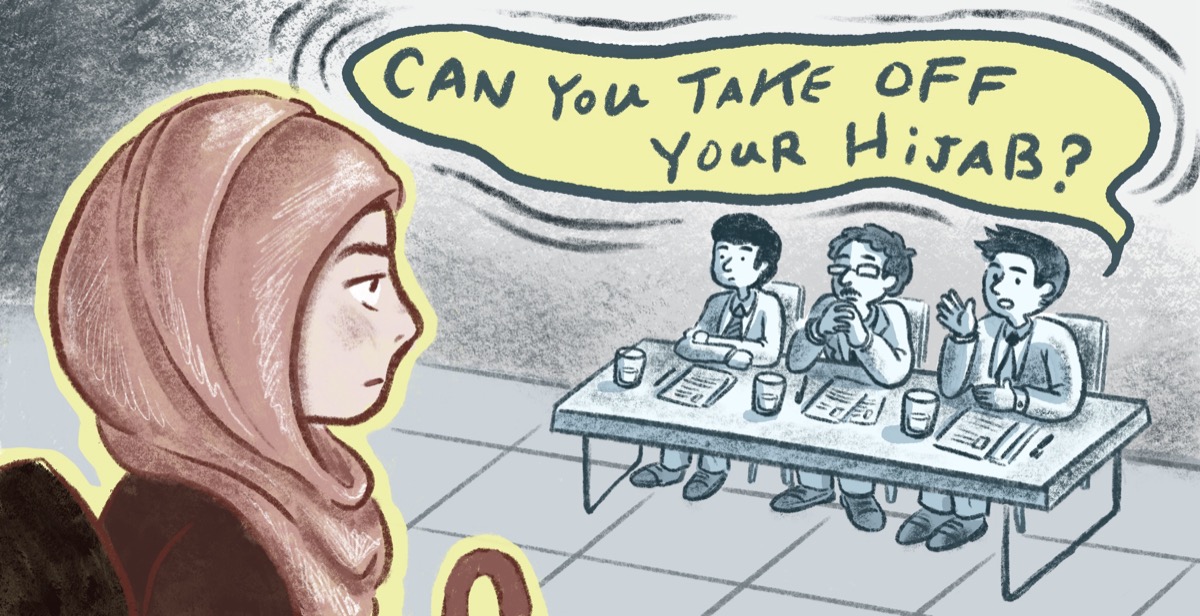
    Women face violations in their autonomy in private and public spheres for instance, through clothing regulations: by men who determine what they wear, and a government that has justified prohibitions of the tudung in many job sectors. 

    Women articulate DV as violence that results from “disobeying” their husbands, espoused by religious leaders, while the State similarly legitimises “nushuz” in law, sanctions violence through messages within pre-marriage courses, doles out carceral punishments and regularly uses corporal violence against its own transgressors. 

    Devastatingly, our current system leaves in its wake an Indigenous population that bears the weight of a turbulent relationship with the State. Malay/Muslim women experiencing DV continue to seek trust and connection and resistance within their own politically weakened community, represented by a conservative leadership.

    Instead of simply creating DV policies and programmes, we must radically re-imagine and change the structures in our society, including how the “domestic violence industry” (Koyama, 2006) of NGOs and social services has co-created current problematisations of DV. 

    Ultimately, we need vigorous interrogation of taken-for-granted solutions to domestic violence, and to reimagine what long-term eradication and recovery can look like. Policy workers, politicians and advocates alike need to always reflexively ask themselves “what is the problem represented to be?” in any policy proposal, so that abused women are never taught to absorb the effects of their current lack of inquiry by, instead, asking themselves, “Apa salahku?” – what’s the problem with me?

    The solution to DV lies in the decolonisation efforts that can dismantle the violence of colonial structures. To end DV, the Singapore State has to critically confront its history and present, by recognising how it inherits mechanisms of control and stratification that the former colonial government employed, which has resulted in the marginalisation of the Indigenous Malay population.

    [Full thesis with a complete reference list can be found here]

    __

    Nabilah is a researcher, writer, and artist based in Te Whanganui-a-Tara (Wellington). Currently, she is doing research on how Asian migrants participate in Treaty of Waitangi justice efforts and movements in Aotearoa New Zealand. She makes art at nebula.art89.

    Illustration by Elisa Tanaka

  • Apa salahku?: Unpacking Narratives around Domestic Violence in the Malay-Muslim Community (Part 1)

    Apa salahku?: Unpacking Narratives around Domestic Violence in the Malay-Muslim Community (Part 1)

    by NH Rahman
    __

    This article is part 1 of a 2-part series that critically examines how the problem of domestic violence within the Malay/Muslim population is imagined. Please read part 2 when it is released! [Part 1 of 2]

    Content Warning: This post discusses domestic violence and institutional understandings and responses to domestic violence. This includes mentions of victim-blaming, retraumatisation and procedures utilised by social services and the criminal justice system.


    Almost a decade ago, I handed my mother brochures for an anti-violence campaign I was involved in. “Mama, tengok (look), these are the workshops I’ve been helping to run. Nak ikut (Want to join in)?”. She glanced at it. Perhaps the word ‘empowering individuals’ was on the brochure, perhaps it was how I sold the message. Either way, her response was, “Kenapa? Apa salah ngan Mama? (Why? What’s the problem with me?)”.

    I remember being struck by this, but its gravity did not hit me fully until much later. Her reaction makes sense. The solution you are continually offered shapes the limits of how you imagine the problem. 

    Conventional studies accept policies as neutral, rational solutions to social problems. But policies – everything from community campaigns to laws – have the power to influence and shape definitions, frameworks and representations. If the solution to end domestic violence (DV) is empowerment, the problem suggested is  that you are too disempowered. You are framed as the problem.

    This is part one of a two-part series summarising my study on DV policies in Singapore. I used an approach called ”What’s the problem represented to be?” to explore how the problem of DV within the Malay/Muslim population has been imagined (and its limitations). I interviewed professionals who work with families going through DV, and, later, analysed policy texts. Throughout, I argue that Malay/Muslim women’s experiences of DV are shaped not simplistically by what has been imagined as the problem (often assumed to be violence related almost solely to “cultural” or religious beliefs, practices, customs or laws). Instead, I argue that it is manipulated by capitalist, patriarchal, authoritarian and colonial governance that violates and restricts safety and health, through housing, welfare and social service policies that, together, uniquely affect the Indigenous population. 

    Examining the environmental and historical context

    Domestic violence cannot be fully understood without looking at the greater environment it sits within. We need to consider not only Malay/Muslims’ racial, religious and economic positions in Singapore, but also the Singapore State’s governance. More significantly (and often ignored in the discussion of DV), we need to recognise Malay indigeneity, the intergenerational repercussions of historical colonisation and the ongoing colonialism that continues to shape our experiences in the country.

    Having said that, there are many who consider colonialism a thing of the past, something Singapore left behind when we became an independent republic. But while colonisation can be seen as an event or a period (like the period of British colonisation that Singapore went through), colonialism in contrast, has been defined as a process or a movement that endures “beyond the life-span of the colonial situation”. The impact of both colonisation and colonialism on Indigenous populations’ social, political and health outcomes have been well-documented internationally. Indigenous peoples had—and in many cases continue to have—their land dispossessed and their traditional social, welfare, healthcare and political structures eroded. Colonisation expanded capitalist systems and Indigenous populations in many colonised states were economically disenfranchised and forced into low-waged labour. 

    As Indigenous people of Singapore, Malays were similarly affected by colonisation, which brought to our shores a racial pecking order that relegated Malays to the bottom rungs of economic growth. The racist myth of the inferior or “lazy” native persists in modern Singapore’s political discourse, eugenicist policies, and cultural memory, tracing its genealogy back to a colonial depiction of Malays. But coloniality is not just about the endurance of stereotypical beliefs, or even belief systems. It cements its dominating power in structures and institutions, such as our legal, healthcare and social organisation systems. Today, it maintains Malay marginality in economic, political and educational realms, manifesting in poorer health outcomes and driven by policies such as the Ethnic Integration Programme, that minoritise Malays, and splinter and reduce their electoral force (Rahim, 1998). 

    How can we understand the links between colonialism and experiences of domestic violence? There are many ways to approach this complex relationship and many Indigenous researchers have offered us maps to trace the connections. For instance, it is often said that for women to leave violent relationships, there has to be environmental or material conditions that make leaving a possibility. We often hear of how women who experience violence in the home do not have strong social systems to support them, and to help remove themselves, whether temporarily or permanently, from violent situations. But colonialism changed these conditions for Indigenous people dramatically. Researchers have argued that, by weakening Indigenous peoples’ relationships with their land, neighbours, and families, colonialism caused a loss of autonomy and disrupted the ability to practice self-determination, thus disintegrating the systems of accountability necessary to end DV. 

    I wrote my study in Aotearoa New Zealand, a settler colony where the British Crown continues to dominate, with devastating consequences on the Indigenous Māori population. One Māori researcher (Cavino, 2017) wrote about intergenerational sexual violence and whānau (Indigenous extended family), exploring how the process of colonisation in Aotearoa New Zealand had changed Māori traditional systems of organisation and, thus, social control. The whānau was transformed “from a public collectivity of inter-related family members raising children and caring for the elderly in concert—to a private family: a mother, a father, and children contained within four walls”. In other words, the erosion of traditional family structures into private, nuclear families also disintegrated traditional ways of accountability and recovery. To summarise, I quote directly from her paper where she succinctly and powerfully described this relationship between colonialism and DV:

    While there are obvious differences between Singapore and Aotearoa that should not be flattened, there are also many connections. Although my study’s framework did not allow for a detailed examination of DV experiences, it began with the recognition that coloniality is very much present in Singapore’s governance, and that, in turn, creates assumptions about what the problem of and solutions to DV are within the Malay/Muslim community.  

    My findings

    I interviewed people who worked with DV survivors because I wanted to learn about how they understood the “problem of DV”. Their representations of DV were then mapped against the environmental context DV sits within, which I laid out above. Below are the major themes that were identified in my analysis.

    Patriarchal violence, religious authoritarianism and the State


    In all my interviews, participants named how gender roles are fundamental to women’s experiences of DV. DV was discussed in terms of expectations of women’s subservience, a male head of household, and as a gendered phenomenon. Discussions on obedience to the male head of household sometimes use the legal term ‘nushuz’ (Administration of Muslim Law Act). 

    But in Singapore, deference to (male) authority is not limited to the household. The State, too, upholds elitist and hierarchical social structures, using the refrain of pragmatism, meritocracy, and traditional ‘Asian values’ to defend patriarchal authoritarianism (E. Tan, 2008). An everyday example can be seen in Singapore’s “head of household” policy concept. We also see this in draconian legislation, which has been used to crush dissent and political criticism (Jaipragas, 2019), and the continued use of corporal punishment, which disproportionately affect minorities and legitimises State violence. 

    In my interviews, one participant shared how egalitarian interpretations of Islamic text (where gender justice is concerned, this may include ideas like Islamic feminism), face resistance from the community because there is widespread acceptance of traditional gender roles. But we also need to explore this lack of acceptance within the context of the State’s restrictive laws and policies surrounding race and religion, which act as a “coercive instrument” that “castrate(s)…alternatives in civil society” (K. Tan, 2017, p.68). The presence of MUIS, a largely conservative statutory board which relies on predominantly male leadership (Jamil, 2016), may also act as a barrier in the expansion of religious discourse into more progressive arenas. It is not unreasonable to see the trickle effects of coercive State control resulting in the inability for progressive religious ideas to gain traction and thus, both directly and indirectly endorsing religious and patriarchal authoritarianism.

    Housing and income in a patriarchal and capitalist economy 

    Economic and housing insecurity are major barriers to safety for women facing DV. With Malay/Muslim couples being overrepresented in divorce statistics in Singapore, the population may be disproportionately affected by economic and housing policies (“Marital Status, Marriages and Divorces”, 2020). Single parents face rampant housing discrimination and there are no known housing or financial assistance policies that specifically support those experiencing DV. 

    Neoliberal policies, which centre self-reliant individuals, sometimes with families as the “first line of support” (Jagdish, 2018a) is at work here, valuing “individual initiative, enterprise and responsibility” (Ishkanian, 2014, p.334), and encouraging individuals to be self-sufficient. In other words, even though the State’s social services are touted as a major intervening and preventative instrument in the eradication of DV, State support and housing, in reality, only comes in as a last resort.

    Moreover, the role of EIP (“Ethnic Integration Policy”, n.d.) must be recognised for what it is: an imposition of racial quotas on ethnically minoritised population to maintain a Chinese majority.  Ethnic minorities have fewer opportunities than the Chinese population to have their application for housing in their preferred estate accepted (“Written Answer”, 2021). EIP also has a ripple effect on the day-to-day lives of ethnic minorities (Lim, 2021).

    Text

Description automatically generated

    The choice of women to stay in abusive marriages becomes a reasonable strategy in a society where safety, housing, livelihood, and overall welfare are not public goods, but relies on private capital from nuclear patriarchal families.  

    Resistance 

    Friends, family & religious community

    Participants discussed women’s social support systems which are inadequately equipped to support them. I am reminded of the links Indigenous scholars have made between colonisation, fractured communities and weaker systems of accountability. Poor social support does not simply happen because of stigma surrounding “broken marriages”, but also material constraints. Under-resourced, weakened, materially poorer, ethnically minoritised communities are more deeply and directly affected by divorce. It is not unreasonable to recognise family and friends’ unhelpful advice for women to work through abusive relationships as a response, whether overtly or subconsciously, to material constraints that are a result of neoliberal policies. 

    Moreover, women who reach out to religious leaders are often given unsupportive advice, prioritizing ‘patience’ and ‘endurance’. Some participants felt that public education by MUIS has not been adequate, that it does not trickle down to asatizah’s teachings/advice, and that MUIS should take on a more decisive role in challenging patriarchal family structures. However, we need to first acknowledge that MUIS itself functions within a patriarchal and authoritarian State. An expansion of MUIS’ powers would simply mean an expansion of the paternalistic reaches of the State.

    Police, PPOs and criminal justice system 

    In my interviews, participants discussed the lack of powers and sensitivity that the police have in terms of DV intervention, and the limitations of a Personal Protection Order (PPO). However, any push to rely on a stronger, supposedly more empathetic or progressive system of police, prosecutors, courts and punishments – a.k.a. “carceral feminism” – assumes that violence is a problem of individuals’ behaviour, and that the problem to fix is within those individuals (Kim, 2019; Sweet, 2016). It ignores the systemic nature of DV, and silences the State as a perpetrator of violence. Furthermore, criminal justice punishments disproportionately impact ethnically minoritised groups (Ganapathy & Lian, 2016) and this demands a more complex undertaking of the problem with policing. 

    Yet, despite these realities, few participants spoke about barriers or discrimination Malay/Muslim women face when making police reports, accessing PPOs and criminal justice remedies. One said, “I’ve never seen outright discrimination because someone is from the Muslim community.” But “discrimination” cannot only be simplistically recognised as overtly unfair or unequal treatment against particular groups. To recognise systemic discrimination, one has to be conscious of the existing and historical social stratification of society. Malay/Muslims are “Othered” in ways that are normalised, as well, including through the legitimisation of discrimination against Muslim workers who wear the tudung, the framing of it as an issue of Muslims who do not make an effort to “compromise and integrate themselves” (J. Tan, 2014), and the narratives of the ‘disloyal’ and potentially dangerous Malay/Muslim citizen in nationalist discourse (W.M. Tan, 2020). This “Othering” changes the shape of both policing, and the ability to see the police as a source of support or help. 

    Social services & shelters

    Text

Description automatically generated

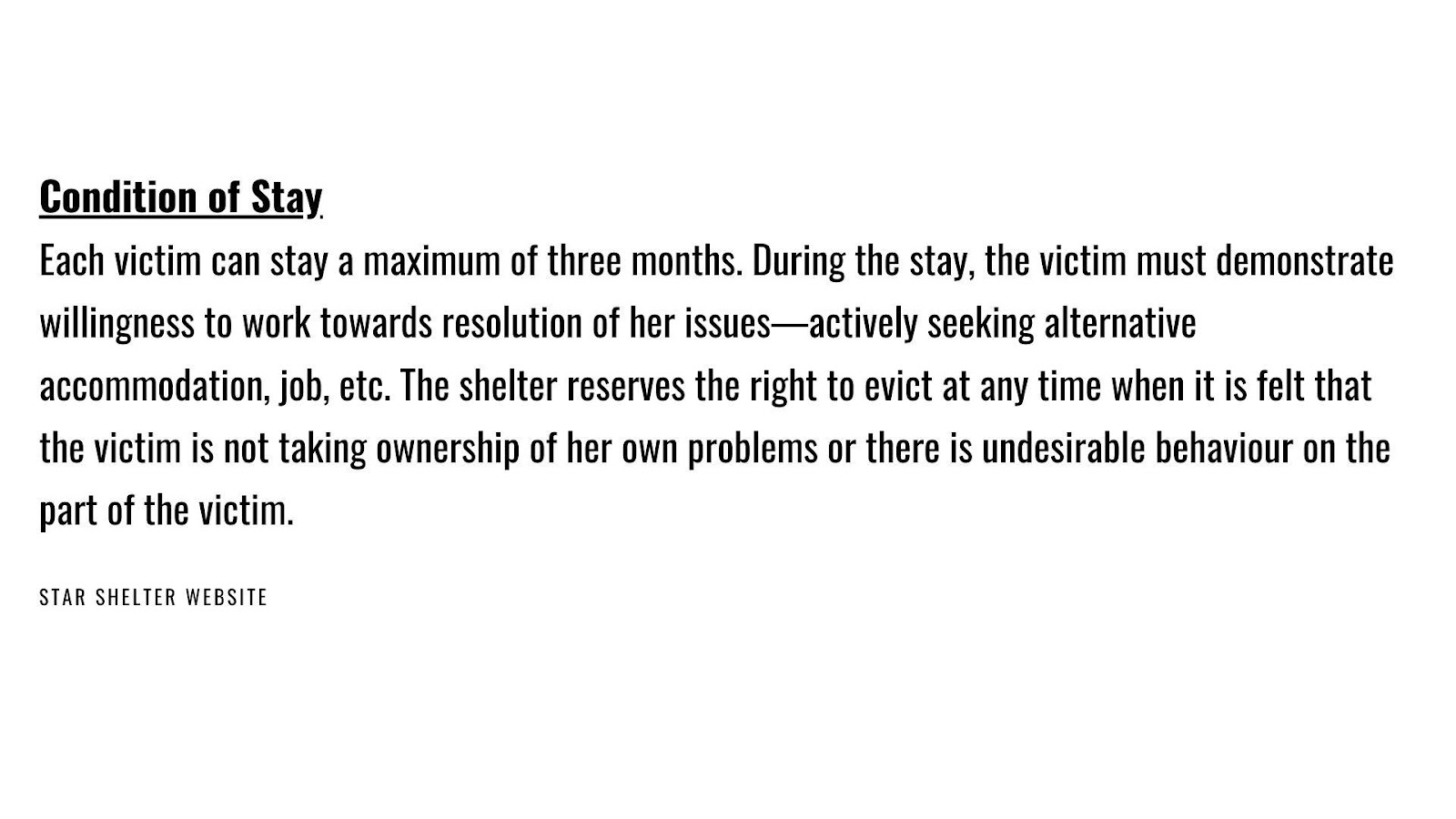
    Women more often than not have to have been physically harmed recently before crisis shelters become an option, given that admission policies do not account for experiences of coercive control. Crisis shelters function only to support women who are not “at risk” of physical or mental illnesses, and excludes disabled people, showing a shocking lack of care for the impact that violence has on women’s bodies and lives. 

    One participant spoke about how some women may fear institutionalisation, based on a case where a DV victim was once, in her youth, institutionalised through a juvenile home. This is consistent with research which criticises shelter systems for being modelled after prison systems: women are monitored, policed and isolated, mimicking abusive patterns of control that further remove women from their communities.

    Graphical user interface, text, application, letter

Description automatically generated

    (Star Shelter, 2020)

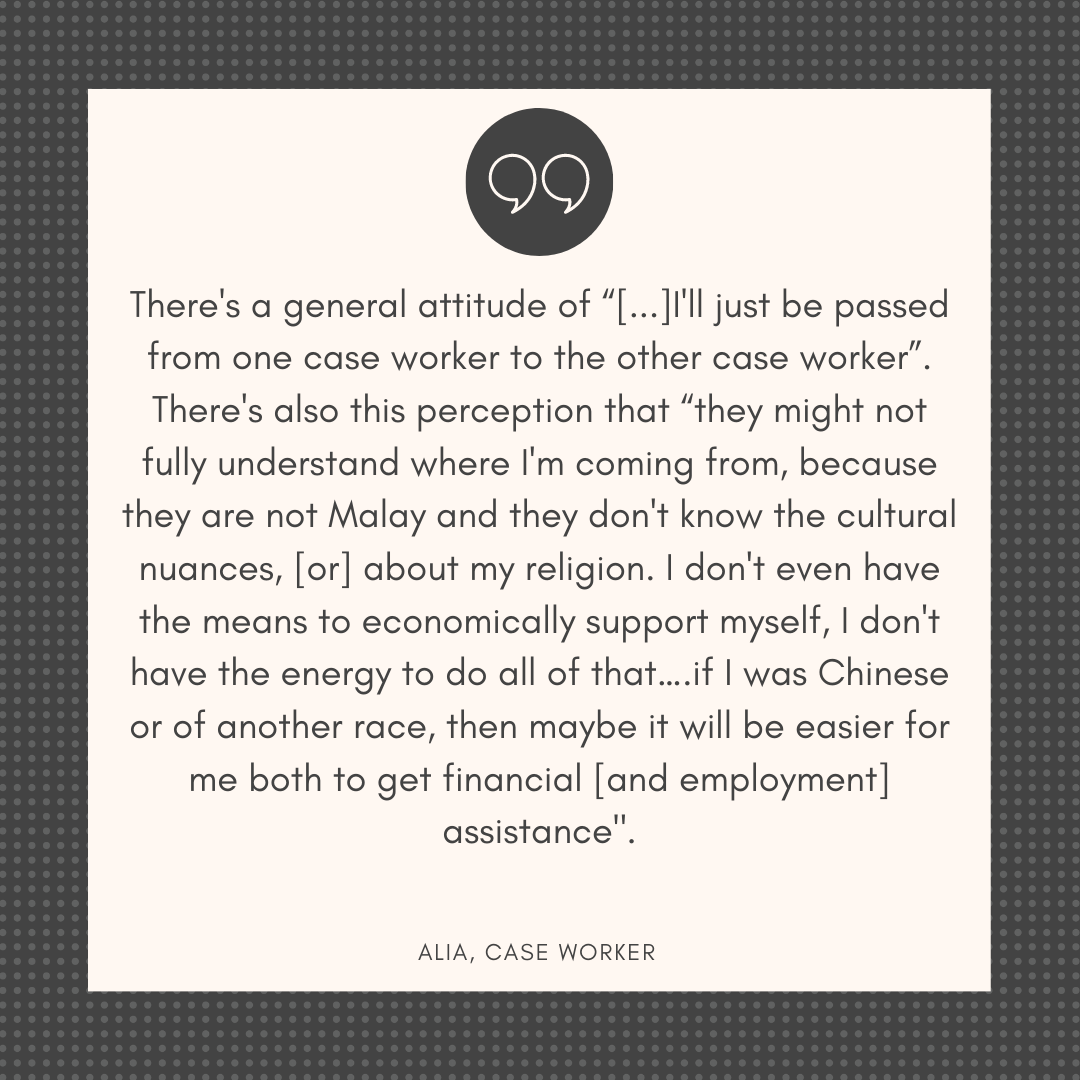
    Keeping women safe from violent relationships should not rely on social and organisational methods of monitoring and controlling women’s lives, as it reproduces paternalistic forces of subjugation. Participants also spoke directly about the struggles that Muslim women face in the social service system as religious and racial minorities. 

    Text

Description automatically generated

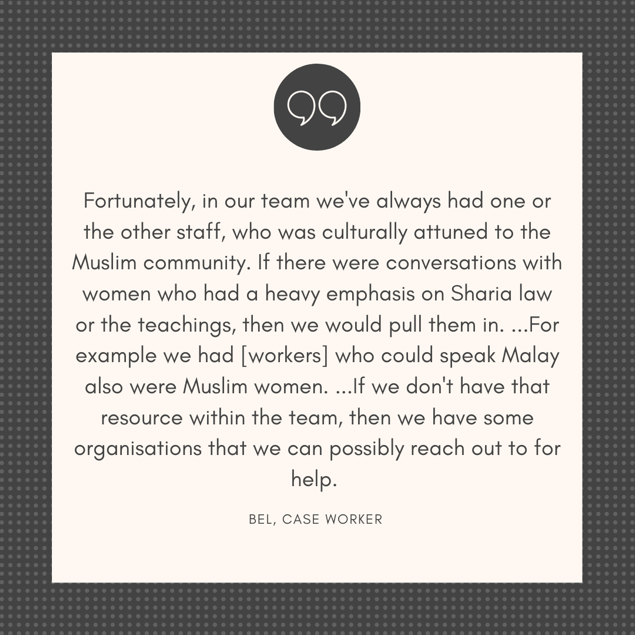
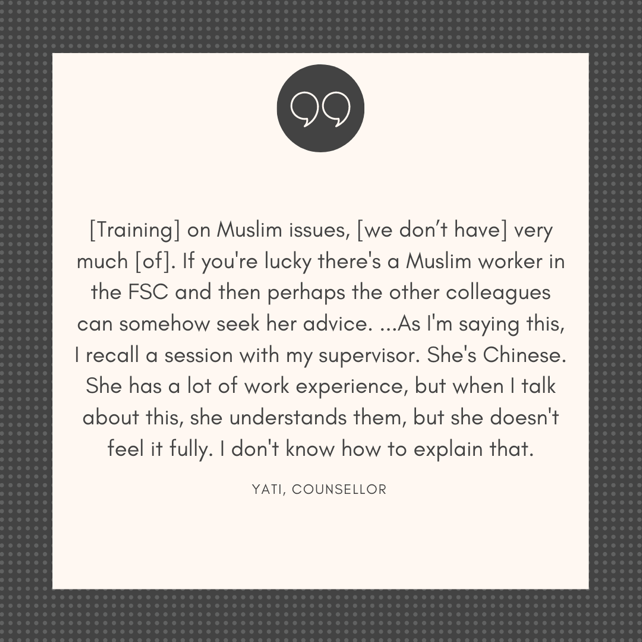
    Yet very few participants who work in service settings shared any relevant “cultural competence” training they have received. Most had to rely on their own immersion into the culture or religion. Knowledge of culture and Muslim personal law are “othered” to minority workers, rather than something inherently woven into working with DV survivors. 

    Text

Description automatically generated
    Text, letter

Description automatically generated

    When something is assumed to be “unique” to the Malay/Muslim population, it tends to be contextualised within spiritual abuse, Islamic law or conservative Quranic interpretations. Not enough is discussed about the Malay/Muslim population’s unique social, political and economic marginality. The imagined “sameness” of violent experiences across all ethnic/religious demographics flattens Malay/Muslim women’s realities. This has a damaging effect on the options women are given and in the trust that minoritised groups have of social services. Rather than demanding that women be accountable to institutions that monitor their behaviour, we have to ask: how are our social services accountable to minoritised communities?

    *

    The patriarchal and authoritarian State paternalistically governs the options for women going through DV, seen through neoliberal housing, welfare and social service policies. Women are presented with two broad options: either work through abusive relationships through State mediation or leave violent relationships but face structural and material consequences. This has a particularly damaging effect on Malay/Muslims whose social, economic and political outcomes are negatively shaped by colonisation and continued colonialism. In the second part of this series, I turn to policy texts, to interrogate how the State has imagined the problem of DV, based on what it offers up as “solutions”.

    [Full thesis with a complete reference list can be found here]

    __


    Nabilah is a researcher, writer, and artist based in Te Whanganui-a-Tara (Wellington). Currently, she is doing research on how Asian migrants participate in Treaty of Waitangi justice efforts and movements in Aotearoa New Zealand. She makes art at nebula.art89.


    Illustration by Elisa Tanaka

  • The Traumatic Process of Seeking Justice for Victims of Sexual Violence

    The Traumatic Process of Seeking Justice for Victims of Sexual Violence

    CW: Sexual Assault

    by Nur
    __

    Trigger warning: Rape, sexual assault, sexual offences, victim-blaming

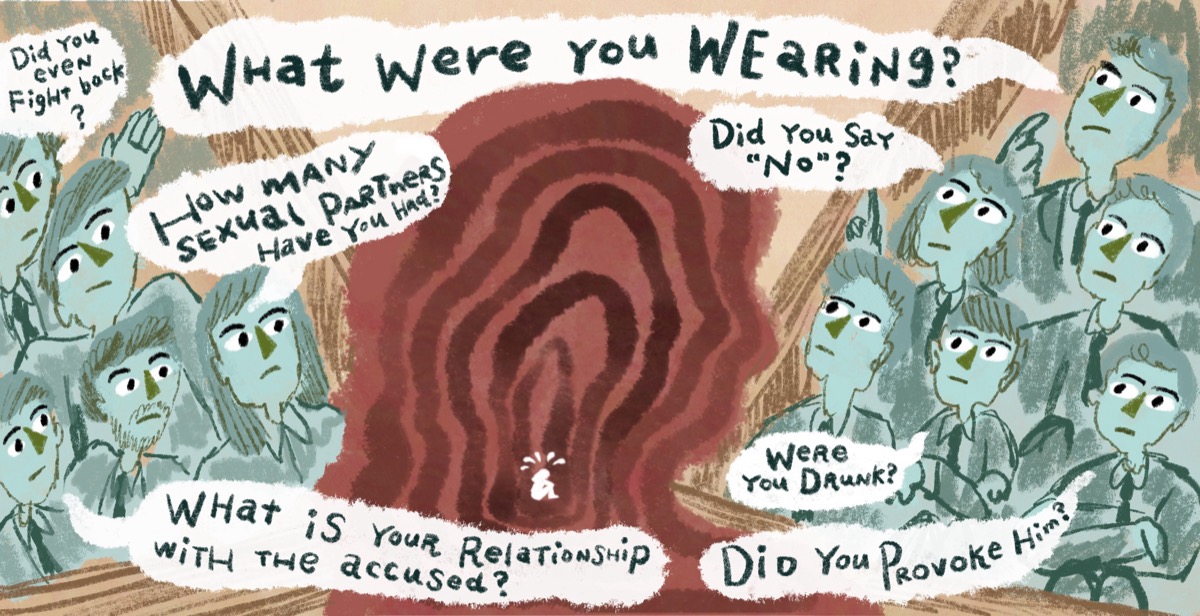
    In 2016, the Brock Turner case in California was one of the first instances that made me reflect on how the criminal justice system fails victims in cases of violence against women. In that case, the perpetrator who had sexually assaulted an unconscious woman, was a 19-year-old first-time offender and Stanford University swimmer. He was only sentenced to 6 months of prison but only ended up serving 3 due to good behaviour. This happened before I entered law school. The outcome of the case felt wrong but I had no understanding of the law at the time and I figured such an outcome would not arise in Singapore. 

    Between 2019-2020, Singapore saw a spate of cases where the public perceived the sentences meted out to young male offenders to be too light. In a case where a perpetrator filmed a student showering in the NUS hostel, he was only given a 12-month police conditional warning and suspended from school for one semester. In another case, a second-year dental student, who had climbed into his ex-girlfriend’s home and strangled her, was sentenced to a short detention order for 12 days, a day reporting order for five months with counselling, and an order to complete 80 hours of community service over a year. The judge noted that while probation was not appropriate in this case, the perpetrator received community-based sentences due to his “relative youth, his rehabilitative prospects and his lack of (previous convictions)”. Meanwhile, victim care in both cases were said to be inadequate. In the latter case, the victim suffered severe psychological trauma.

    These cases illustrate how the justice system is more preoccupied with the rehabilitative prospects and future lives of perpetrators, rather than the rehabilitation and care of victims. This is only one of many ways the system has failed.

    By this time, I had a better understanding of the law, the balancing exercises that judges had to undertake, and precedent cases which set out outcomes for certain types of cases. But, this did not make me feel any less indignant about the outcome for victims. 

    While our courts are fair and the judges deliver justice based on our laws, there is a systemic problem in place. Our laws and the approach on victim care needed to be reviewed and improved upon. This was done when Minister K. Shanmugam announced stricter penalties for certain sexual offences, and less weight to be placed on accused persons’ ‘academic potential’. In response to a question about trauma literacy within the criminal justice system by MP Nadia Samdin, Minister Shanmugam mentioned that the Ministry of Law is considering allowing the use of video interviews in lieu of examination in chief, to avoid victims having to go through the trauma of recounting their ordeal. 

    However, what we must understand is trauma is not just felt when recounting one’s ordeal at trial. Victims often experience retraumatisation during medical examinations, when being questioned by the police, and while giving evidence in court. While some victims choose to report and try to put the perpetrator behind bars, other victims choose to put the incident behind them and heal because of how difficult the criminal justice process is. 

    To add insult to injury, society often disbelieves victims, gaslights, and victim-blames. This victim-blaming arises partly due to the way victims are treated by the criminal justice system, and the criminal justice system continues to treat victims in a certain manner due to society’s culture of victim-blaming. It is a cycle of retraumatisation by society and the systems designed to ‘protect’ victims. 

    Between 2017-2019, there were 6,988 reports of sexual assault, including rape, sexual assault by penetration, outrage of modesty, and sexual offences involving children and vulnerable victims. Of all the reports made, 1,368 cases resulted in prosecutions, with 931 convictions to date. According to AWARE’s Sexual Assault Care Centre (SACC), only three in 10 clients who reached out for help in 2016 made police reports. 

    Apart from seeing light sentences being meted out to perpetrators while victims are left to deal with their trauma throughout the process, such low numbers of prosecution and convictions also make victims think twice about whether it would be “worth it” to come forward and report. Victims often feel shame as they ponder how they could have prevented this; they feel fear as they consider how reporting may affect their lives; and they feel worry for the perpetrator’s family if he is caught (especially in cases where the victim knows the perpetrator).

    The number of prosecutions of sexual offences is less than 20% and this is often due to the lack of evidence in cases of sexual offences or violent crimes against women. In cases of sexual assault, the police have said that most victims who report, only do so after 72 hours. Since victims can only go to the hospital to get a medical examination after lodging a police report, most DNA evidence would have been compromised or lost by then. Moreover, sexual offence cases are often “he said-she said” cases as they take place when victims are alone and there are no witnesses present. These factors also explain why conviction rates are even lower.

    In Singapore, in cases where the only evidence available is the victim’s testimony, the standard of proof that has to be met is “unusually convincing testimony”1. When assessing in totality whether the Prosecution has proven its case beyond a reasonable doubt, the court will evaluate the internal strength of the Prosecution’s case AND its comparative strength to the Defence’s case. This means the court will have to determine whether a witness’s or complainant’s testimony is to be preferred over the accused’s evidence.  

    While it is understood that such a high standard is a deterrent against false reporting and to ensure justice for falsely accused persons, it is no surprise that this has led to difficulty in prosecuting some cases and getting convictions. Victims are put in a position where they have to recollect every single detail they can to bolster their case, have their credibility called into question, and prove their word is somehow worth more than their perpetrators’. 

    During police questioning and cross-examination by the defence in court, victims are often asked questions that are aimed at poking holes in their story or to discredit them in some way. This is part of ensuring that the accused is not being falsely accused and that the victim is able to prove her version of events beyond a reasonable doubt. However, when police officers and defence lawyers ask about the clothes victims were wearing during the incident, their sobriety, their past sexual history and other supposedly “mitigating” factors that may ‘explain’ the accused’s behaviour, this is victim-blaming. Having to go through such a difficult process of having their behaviour called into question, while recounting their traumatic ordeal, often discourages victims from reporting. Anecdotal evidence of such incidents of police questioning has been shared on social media by various survivors and such instances of cross-examination can be found in reported cases. 

    In a decision where the judge placed some weight on the behaviour of the victim to reach its decision to acquit, AWARE pointed out that there was a lack of understanding in terms of the behaviour of complainants in cases of sexual assault. While it is not doubted that the court had done its job and considered various factors to come to its decision, its assessment of the victim’s behaviour was flawed. In the context of behaviour exhibited by sexual assault survivors, generally some victims do freeze, are unable to give consistent testimony due to the trauma they have faced, and may decide to delay reporting the incident due to a multitude of reasons. 

    Having said all of that, in 2017, our lawmakers did propose changes to the Criminal Procedure Code and Evidence Act to better protect victims. For instance, the sexual history of victims can only be raised with permission by the court. Investigators will also be given the power to take statements through video recording so victims do not have to repeat themselves multiple times. The same can be done for testimony in court.

    Nonetheless, on top of such protections, we also need to train our police officers, lawyers, and judges, to ask the right questions in the right manner, and to better understand trauma and behavior of survivors in cases of sexual offences. 

    People do not understand that an acquittal or refusal to prosecute or charge, due to lack of evidence, does not necessarily mean the perpetrator did not commit the act. People do not understand that the questions asked during cross-examination in an effort to discredit the victim, does not make the victim a liar. People do not understand that while our Singapore courts and judges are fair and competent in serving justice based on the laws of the land, it is still possible for us to cause injustice to victims. 

    There is still much to be done through our justice system and as a society. The way forward would be to find ways to support victims through the criminal justice system and to provide better care for victims post-trial. Most importantly, on a societal level, we must learn to believe victims, encourage victims to make their own choices to heal, and understand the complexities of the justice system and how it affects victims.  

    __

    Nur is the co-founder of Lepak Conversations

    Illustration by Elisa Tanaka

    __

    1Public Prosecutor v GCK [2020] SGCA 2 at [143]-[149]

  • Why I Believe Prison Abolition is A Muslim Issue

    Why I Believe Prison Abolition is A Muslim Issue

    Ruth Wilson Gilmore, a Black woman prison scholar who laid the rich groundwork for abolitionist politics, has defined racism as “the state-sanctioned or extralegal production and exploitation of group-differentiated vulnerability to premature death”. This implies that minoritised people, people of colour or people from minority ethnic background get exposed to earlier deaths because of racist structural systems within the state and society. For example, children of minority backgrounds in poor neighbourhoods are prone to respiratory illnesses such as asthma amongst others, due to environmental racism leading to their neighbourhoods having higher levels of pollution. These poor neighbourhoods inhabited by poor minorities are highly likely to have insufficient infrastructural inspection and upkeep. Poor people of colour face more health risks because of institutionalised racism.

    So now, what does it mean when we speak of ‘abolition’ or someone who holds ‘abolitionist politics’? Abolition implies getting rid of the capitalist, oppressive structures. It’s the total and utter dismantling of these violent structures, and that includes prisons. Prison, more than anything, is a racialised space where human rights and humanity are suspended. To have a racialised space is to also have a form of containment that subordinates racial minorities, and the ways said minorities cope and resist with spatial containment.

    As an abolitionist Muslim, I believe that anti-oppression and abolition are deeply intertwined in the struggles for justice. Abolition implies that human lives are not disposable or negligible: We humanise, contextualise, and look with compassion and mercy as per Islamic teachings, to our loved ones who had committed harm in the past and we should try to extend the same to strangers. Muslims, especially Black Muslims, are sentenced longer than any other faith groups. Most of these crimes are not even “violent” crimes. More so in light of the current pandemic, incarcerated people are five times more likely to get infected with Covid-19 simply because they’re locked up.

    In the context of Singapore, Malays and Indians are disproportionately overrepresented in prisons, where they are less likely to achieve reintegration as compared to their Chinese counterparts.  Any stabilising factors that they might have salvaged, and the factors that caused their crimes – unemployment, poverty, homelessness, addiction, and other external influencing factors – are made worse by prison, not better. An issue that gets heavily slept on is how formerly incarcerated people are being released from prisons into failing and unstable support systems. 

    We’ve witnessed how policing and carceral ideas so deeply infect our bodies, minds and actions to the extent we even have a community policing strategy. Carcerality, or carceral logics entail punitive orientations, and the ways our ideas and thinking are influenced by practices of imprisonment and policing. Playing god on who deserves mercy from the inhumane prison system necessitates the idea that some people deserve to remain caged—this animates a carceral logic that is far removed from what Islam has taught us concerning justice. When you treat people’s freedom as a subject matter to be debated, you not only accept the legitimacy of a heavily violent and flawed system, but you also justify the dehumanisation inherent within it. Abolition is not simply an eradication of violence the carceral state wields on, nor is it also just an absence of the carceral systems, but the presence of systems that aid people to not even resort to crime in the first place. 

    By now, I’m sure the sceptics would ask, “But WHERE do the murderers and rapists go?!”. One thing for sure, they won’t go where they currently go: into the police, the military, FBI, CIA, etc. Most mass murderers and those who have committed or are still committing extreme violence are not the ones who are locked up right now. There is also this massive assumption that rapists are people in prison, right? Well, no. In the UK, the conviction rate for rape cases is 3.3%. In the US, it’s 18.8%. In Singapore, it isn’t any better either. About 13.3% of rape cases led to conviction here. Rape cases were even reportedly up by approximately 75% since the past few years. And as we know, rape is something that’s massively underreported considering the re-traumatisation survivors have to go through when they report to the police. Not only that, the dynamics within relationships are also a factor as most cases of sexual violence happen between people who know one another.  When we consider the existing system we’re in and the current way it’s been structured, violators who occupy positions of power are more likely to get away with it. We’ve seen that happening with Trump, the current president Joe Biden, and many other politicians, police officers, celebrities, and many more.

    Reconstruction is vital to prison abolition, and where basic needs and justice are concerned, the needs of the individual have to be balanced with longer systemic change. Reconstruction calls for transformative changes, and it’s not just about changing one thing, but everything. This could include creating strong communities through investments in resources such as mental health facilities, schools, after school programs, career centres, amongst many others. It seeks to replace ideas of disposability of people to build a world that prioritises care, mercy, compassion, deep community relationships – which are fundamentally Islamic principles.

    Mercy and humanity are so central to Islam that so many times in prayers and when we recite the Qur’an, we’d mention that Allah is الرحيم (Al-Rahim – the Most Merciful). Aside from that, the Qur’an even tells us to pay zakat in order to free people – it profoundly focuses on restorative justice rather than punitive. This concept of mercy is an act that Jews, Muslims, Christians, and believers in other traditions can deeply resonate with. The concept of accountability or muḥāsabah (محاسبة  – retrospection, accounting, reckoning) is one of the core and important issues in Islam. Furthermore, in Surah Ar-Ra’ad 13:11, we are told that “Allah will not change the condition of a people until they change what is in themselves”. Apart from having to deeply reckon with our own behaviour and be accountable for the harm we may have enacted upon others where we have been careless in our actions, words and agreements, we are also responsible for other human beings and creations, and not only that – we are accountable for them too where we have acted unjustly towards them.

    From neglectful policy and action, to deprivation of basic necessities which include proper medical treatment and medication for incarcerated people, to literal violence and torture enacted by prison guards, the purpose of the prison system is social discipline and punitive retribution. To put simply, punitive punishment does not reap any tangible benefit to society at all. In fact, subjecting people to torture and violence violates a socio-religious sensibility in Islam.  

    Prison abolition is about a societal shift in what justice looks like for us, especially for the harmed and victims – it’s about abolishing the environmental conditions that made that harm even possible in the first place. Through this, it seeks to create a new world where there will be less victims because you’re tackling and addressing the root of the harm. It’s about community healing, accountability, redressing of trauma and harm, where approaches are victim-centred and trauma-sensitive, and not responding to violence with state-sanctioned violence. To quote Ruth Wilson Gilmore, “Abolition is about abolishing the conditions under which prison became the solution to problems, rather than abolishing the buildings we call prisons”. The only way this culture of how we talk about transformative justice shifts, is if we all shift. And that takes recognising that punitive punishment under a current paradigm of capitalist individualism, isn’t actually working.

    In Surah Al-Ma’idah 5:8, the Qur’an states, “Be just, for that is closest to piety, and beware of God”. Hence, we also need to ask ourselves: Are we just in our homes? Are we just in our politics? Are we just in our economics? We shouldn’t be reliant on racist, supremacist and capitalist notions of justice as presented by violent structures of the colonial state. It is also quite impossible for anyone to maintain a carceral system that doesn’t also produce death by design. We so desperately need to nurture transformative justice within our Muslim communities and beyond, rather than retributive or punitive measures of justice in prisons. 

    __

    Ryaihanny Sahrom is a legal professional and a freelance writer with a passion in human rights for marginalised genders.

    Illustration by Elisa Tanaka
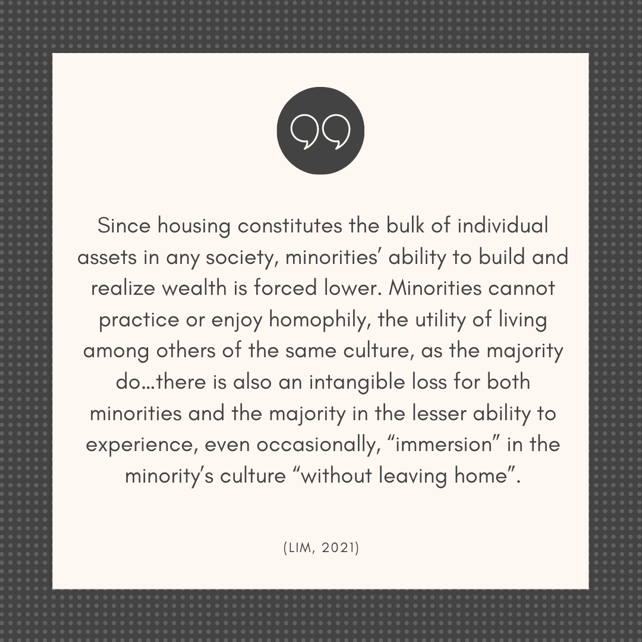
  • The Time I Fought for Justice and The Hijab

    The Time I Fought for Justice and The Hijab

    by Anisah Kader

    I have always heard or read stories about Muslim women and the discrimination they faced
    with their hijab on. In fact, all these stories I have read about were from other countries. I
    never thought, right here, in Singapore, I would actually experience such discrimination, but I
    did. It was an unforgettable moment that would change my life.

    I always wanted to step foot into the social service sector as my passion lies in counselling, advocacy and social work. I had even quit my full-time nursing job to pursue my passion and I was honestly so excited about it. However, after 3 interviews, I realized a common concern: my hijab. In all 3 interviews, they asked: “Can you remove your hijab?”.

    “But why?”. I was so confused. What did my hijab have to do with the role? All I wanted to be was a role model for at-risk youths. Why do I have to remove my hijab?

    The thing that baffled me most was how casual the tone was whenever they asked me to
    remove the hijab, as if they did not realise how insensitive their request was to me. One of the interviewers even proceeded to ask, “but you don’t wear it when you were a nurse right?”. Again, what has this got to do with the job I am trying to apply for?

    This whole experience honestly broke me. I felt very demoralised and even had thoughts of removing my hijab. I spoke about this to my sister and friends and they all told me to let it go. To walk away from the organization.

    I tried to but I could not just sit still anymore. I did not want to remove my hijab, not without a valid reason (for e.g., infection control in healthcare settings). So, I mustered up the courage and wrote an email to these organisations explaining nicely the significance of the hijab to a Muslim woman and how it is inappropriate and culturally insensitive to ask her to remove the hijab for a role that does not require one to do so. I went on to state that such a request is simply unacceptable in this day and age and it is important to educate ourselves culturally.

    It then also hit me that if this was being asked to me, is this also being asked of other Muslim
    females who don the hijab? I wanted to find out.

    I took this over to my then public Instagram account and even shared my story to Minority Voices and this really helped to gain the public’s attention. However, I remembered how heavy it made me feel inside when other girls started sending me in DMs sharing their own experiences of discrimination and how it is happening in various sectors as well—schools, public sectors, etc. I had to do more. We cannot be silenced anymore. Therefore, I did my research and reached out to TAFEP for help. I gathered necessary hotlines and work attire standards as stated by MOM and shared them on my Instagram and to these girls personally as well so that they may take necessary action. However, most of these girls shared that they did not want to make this an issue because of the fear of losing their job.

    Therefore, I continued to push TAFEP to make a bigger change and I wrote in to MSF to inform them on the such dress code standards as well. To cut things short, 2 of the organizations have now officially changed their dress codes and have allowed Muslim females to don the hijab to work. The other organization has refused to take further action.

    Honestly, pushing for this matter is so important to me because no one deserves to be denied a job opportunity just because of their religion or what they wear on their head. This whole experience has also made me stand up for what is important, and it has allowed me to use my voice and, allow me to speak out for the ‘voiceless’. I genuinely hope the society will take more efforts in educating themselves on the importance of multicultural awareness and sensitivity. I hope for a society where Muslim women do not have to feel fear or feel ashamed of their hijab. I hope we can all learn from one another and respect all cultures equally.

    Today, I am still fighting for this as much as I can. Even though, I am no longer active online,
    I do my best by educating the people around me first, educating the Youths I currently work
    with and I hope to suggest talks (importance of multicultural respect) in my own organization
    as well.

    At the end of the day, I am not giving up just yet. I want to spread awareness as much as I
    can and I hope this platform with help with that as well! Because you see, the work does not stop here. It will never stop. It is a continuous battle, but it is a battle one cannot fight alone in. I need you – yes you, the one who’s reading this.

    I am grateful for the changes that will take place with regards to donning the hijab in the work places. I am grateful for the Government – that they are now giving importance to it. However, what happens after that is where the actual work takes place. 

    Implementing a change in dress code may be done but the key lesson here is, to understand the significance of the hijab. What does the hijab mean to Muslims? Are you aware of that? If you had answered no, then let us close this gap today.

    The hijab does not only mean a religious practice. It means modesty, respect, a personal journey the female Muslim chooses to go on. It could also mean many different things to various women – but, regardless of what it means, it is something that has to be regarded. It is not something you can tell a woman to remove. The hijab is a part of her identity and you need to understand that. 

    When you have understood the significance of the hijab, then you have chosen to be culturally sensitive. You have chosen to be culturally aware and you have chosen to stay informed. This is what I seek of you. I’m not asking you to read up on the history of how the hijab was first introduced to women, but I am here kindly asking that you speak to someone about your uncertainty of it. 

    If you lack information on it, please ask. Do not ever be afraid to ask and if you really cannot find someone in your circle to do so, please reach out to me. I will be more than happy to answer your questions ☺

    But moving forward, let’s start somewhere. Let us be respectfully curious, let us work towards gaining knowledge and staying informed and most importantly, let us practice kindness and empathy to the ones who may need it the most. 

    Also, as I close this piece, I want to say a final thing—the hijab should never act as a factor to identify someone’s capabilities. The Hijab is a part of one’s identity, it is more than just a dress code. Please do not reduce its significance to anything lower than that. 

    I will continue to stay firm, be strong and work my way up with my Hijab on and I urge all of my ‘Hijabis’ to do the same too. We got this, ladies! 

    __

    Anisah is 28, an introvert, and a counselling graduate.

    Illustration by Elisa Tanaka
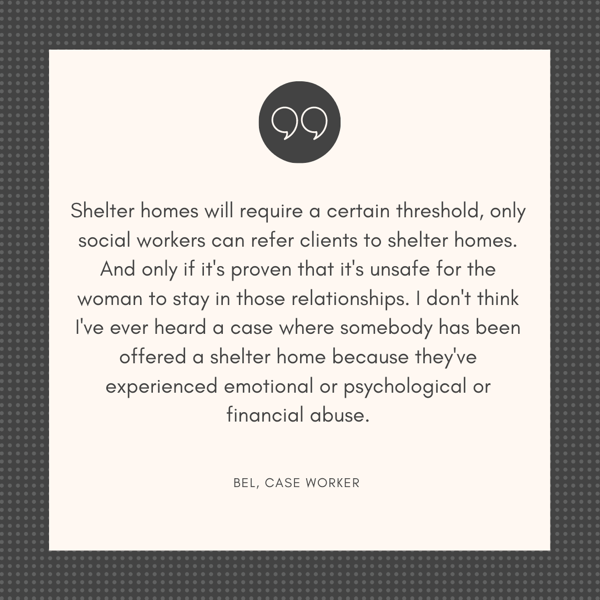
  • What Is Right?: My Journey Towards Justice

    What Is Right?: My Journey Towards Justice

    by ‘A

    __

    “… اِعۡدِلُوۡا هُوَ اَقۡرَبُ لِلتَّقۡوٰى …”

    “… Act justly – that is nearer to God-consciousness…”

    – Surah Al-Maaidah – Verse 8.

    I have always been a believer in standing up for what is right and upholding justice because I believe that it is a responsibility. I believe that I am heavily influenced by my faith and my religious upbringing. ‘’Adaalah’ – Justice. ‘Haq’ – Truth. ‘Ma’ruuf’ – Right. The Qur’an and ahadith are filled with verses on a Muslim’s responsibility to uphold justice and stand up for what is right, and my parents and teachers would always talk about the gravity of having responsibilities and carrying them out properly. “Kita semua bertanggung-jawab dan akan disoal pada Hari Kiamat nanti.” – We will all be held responsible and we will be questioned on the Day of Judgement.

    The very thought of being held accountable is both thrilling and scary. Thrilling because God knows that I am capable of fulfilling these big responsibilities because He created me to have that capacity. It’s a feeling that God trusts me, which is a feeling of empowerment that can move me to tears. But at the same time, it’s scary because what if I don’t do my best? How will I answer Him? How can I stand before God and say “I didn’t do my best.” even with everything He’s given me? Oh God, I cannot even imagine being so ungrateful and disrespectful.

    It’s also the idea of being a member of a larger community. It’s knowing that whatever I do, or don’t do, will have an impact on the lives and wellbeing of other people. When I stand up for the rights of other people, there’s a chance that they might get better lives. Even if it’s slim, there is still a chance, so I’ll take it. When people say my one voice won’t change anything, I think of Mulan’s emperor saying: a single grain of rice can tip the scale. If I speak out, things may or may not change. But when we don’t fight for the rights of others, it is almost definite that change will never take place and I do not want to be complicit in enabling a system that causes pain and difficulty for other people. That is not Islamic, and that is not something I can live with.

     ” إِنَّ ٱلۡإِنسَٰنَ لَفِي خُسۡرٍ. إِلَّا ٱلَّذِينَ ءَامَنُواْ وَعَمِلُواْ ٱلصَّٰلِحَٰتِ وَتَوَاصَوۡاْ بِٱلۡحَقِّ وَتَوَاصَوۡاْ بِٱلصَّبۡرِ “

    “Indeed, mankind is in loss. Except for those who have believed and done righteous deeds and advised each other to truth and advised each other to patience.”
    – Surah Al-Asr – Verse 2 & 3.

    Being a middle-low class, Malay/Indian Muslim woman in Singapore would open anybody’s eyes to the many forms of injustice that still exists. There’s so much to work on. And I want to do it all. But to what lengths would I go to in the pursuit of a fairer society? I find myself asking this often. What am I willing to risk to even speak against a system that is much bigger than myself? I find other people asking me this too.

    Anyone who knows me to any degree would probably say that I’m vocal. Some may even agree with you if you called me a troublemaker or a person who likes to look for problems. I actively engage myself in Malay/Muslim circles and the issues that we face. But doing this has subjected me to some of the worst attacks and threats I’ve received in my life, be it on the internet or in real life. I once spoke about the possibility of racial profiling in our country, and somebody I didn’t know messaged me privately, threatening to report me to the authorities and employers while hurling insults at me. 

    I also spoke about the anti-blackness and racism the larger Malay community has against South Asians and I received streams of personal attacks, calling me fat, stupid, illogical, divisive and so on. One person even uploaded pictures of me on their Twitter account that was dedicated specifically to fat and slut-shaming women. I’ve spoken about issues that exist in Muslim communities, and people of higher influence and authority decided that I needed to know my place as a person of low rank in the hierarchy. As a result, they used their authority to penalise me for ‘unrelated reasons’.

    But I still can’t stop myself. When I feel like something needs to be said, I cannot stop myself from speaking. As I reflect, I wonder if this is an ego problem that I have, or if I am truly coming from a place of wanting positive change. Am I just a person who thrives on drama and negativity or do I genuinely want to do what is right? Maybe it’s all of these combined? Who’s to say that all these feelings or reasons are mutually exclusive? I’m still figuring it out. My most recent opinion is that I want to be more strategic (maybe even selective) about what I talk about and how I speak about it so that I don’t burn out. I don’t have to win all fights when I’m trying to win the bigger war. 

     ” مَنْ رَأَى مِنْكُمْ مُنْكَرًا فَلْيُغَيِّرْهُ بِيَدِهِ، فَإِنْ لَمْ يَسْتَطِعْ فَبِلِسَانِهِ، فَإِنْ لَمْ يَسْتَطِعْ فَبِقَلْبِهِ، وَذَلِكَ أَضْعَفُ الْإِيمَانِ “

    “Whosoever of you sees an evil, let him change it with his hand; and if he is not able to do so, then [let him change it] with his tongue; and if he is not able to do so, then with his heart — and that is the weakest of faith.”

    Imam Nawawi’s compilation of 40 Hadiths – Reported by Muslim.

    “Do you want to join the End Sunat Perempuan group?” someone asked me. I immediately said: “I don’t think so, but I’ll think about it.” And boy, were thoughts being thunk. Initially, I thought about how advocating against Female Circumcision during a pandemic sounds a bit distasteful. Shouldn’t we focus on other issues that are more important? I just left my job because people started to report my social media account to my organisation, do I really want to draw that kind of attention to myself and potentially affect my livelihood again? How will the Muslim community take this? I had to ask myself so many questions. 

    But at the end of it, I always arrived at the same questions: “Do I think Female Circumcision is wrong?” Yes. Undoubtedly. When I found out that I was cut as a child because society didn’t want me to be promiscuous, I felt rage. When I found out that there were alternative views by prominent scholars in Islam, I felt betrayed that I was fed myths. “Do I want to put an end to female genital cutting?” Yes.

    And then, I started to find more answers. There are so many issues in the world, and even if we solve the ones that are ‘more important’, other ‘more important’ issues will come up. And issues arent mutually exclusive; I can (and I am) working on more than just ending FGC in my time. I work to end unemployment, I work to help the elderly, I work to support women, I work to support queer Muslims, I work for mainstream Muslim rights, I work to end Islamophobia and racism. I do talk about ‘more important’ issues. In any case, if we have this mentality of ‘more’ or ‘less’ important, the ones deemed less important will be swept under the rug almost indefinitely because it will never be important enough to anyone. And the only issues that are not important enough to us are issues that do not affect us personally. Not realising that I am unaffected by this issue would be not realising my privilege, and not speaking about an issue just because it doesn’t affect me would be selfish, and an abuse of my privilege. That wouldn’t be right. I am not here to be self-serving.

    No matter what I talk about, there will always be someone who will disagree. No matter what I talk about, eyes are already on me whether I like it or not. Will it affect my livelihood? The income that I earn or the people I mix with? Maybe. But if I’m not allowed to have my own voice and opinions with my friends and relatives,  then they probably aren’t very good company. If they cannot give me the benefit of the doubt to assume that I am trying to do what is right and immediately assume that I’m doing what I do out of bad faith, naivety and lack of education, then I’m not sure that I’m the problem. 

    How will the Muslim community take this? Probably not well. But what do I expect? I don’t doubt that my community did this out of good faith. They genuinely think/thought that FGC is medically beneficial and religiously necessary and they just did what they were taught was right. Now, I am telling them that something they’ve believed to be good all this time is not and that they have done something undesirable to their children. This is a tough pill for anyone to swallow and I have to understand that this will not be an easy transition. I have to respect their feelings and give the community the space to process what we are fighting against too. I’m sure that those who want to do what’s right will at least give us a chance and hear us out.

    I decided. I want to join the End FGC group.

     ” يٰۤـاَيُّهَا الَّذِيۡنَ اٰمَنُوۡا كُوۡنُوۡا قَوَّامِيۡنَ بِالۡقِسۡطِ شُهَدَآءَ لِلّٰهِ وَلَوۡ عَلٰٓى اَنۡفُسِكُمۡ اَوِ الۡوَالِدَيۡنِ وَالۡاَقۡرَبِيۡنَ​ ؕ اِنۡ يَّكُنۡ غَنِيًّا اَوۡ فَقِيۡرًا فَاللّٰهُ اَوۡلٰى بِهِمَا​ فَلَا تَتَّبِعُوا الۡهَوٰٓى اَنۡ تَعۡدِلُوۡا ​ۚ وَاِنۡ تَلۡوٗۤا اَوۡ تُعۡرِضُوۡا فَاِنَّ اللّٰهَ كَانَ بِمَا تَعۡمَلُوۡنَ خَبِيۡرًا‏ “

    “O believers! Stand firm for justice as witnesses for Allah even if it is against yourselves, your parents, or close relatives. Be they rich or poor, Allah is best to ensure their interests. So do not let your desires cause you to deviate ˹from justice˺. If you distort the testimony or refuse to give it, then ˹know that˺ Allah is certainly All-Aware of what you do.”

    Surah An-Nisaa – Verse 135

    Predictably, we had bad days. At one point in time, a large part of the community started attacking us. “Kafir”, “Sesat”, “Pandai-pandai”, “Problem-makers”, “Naive”- so many heavy terms were thrown around so lightly. It was personally difficult for me because I had relatives talking about me and I foresee that they will bring it up during family gatherings in the future. I had a family member speak about me on her very public platform, exposing my identity, without my consent. I had someone who I considered a friend, indirectly speaking about us on their podcast that had so many followers even though we have offered to speak with them about this issue on their platform way before it blew up. It was quite hurtful, and I foresee that this will happen again sometime soon. 

    But the work continues. The End FGC group continues to churn out Social Media posts to promote critical thinking. We come on different podcasts and have discussions about this with various government leaders, officials. medical professionals, asatizah and the community. We successfully conducted 3 webinars: A panel of parents who decided not to cut their daughters, a workshop for FGC survivors and a panel with Asatizah. The panel with the Asatizah was especially touching for me. We had 400 sign-ups and the asatizahs filled me with a sense of hope. It reassured me that I’m not what all these people are calling us, that I’m not baseless in my beliefs.

    In the pursuit of justice, especially when what we advocate for goes against the norm we have been raised with, many people will belittle our faith in God and our practice of Islam. And sometimes, that gets internalised, and it affects my relationship with God. But I always find myself being reassured that I do have a basis for my beliefs and that Allah will always be aware of what I do, why I do it and what my beliefs are. He will for sure know that I’m trying my best to do right by Him, and that is enough for me. Nobody gets to speak on behalf of God in my personal relationship with Him.

    I’m incredibly grateful to have been chosen to partake in this cause for justice. I recently looked back at a piece I published in a book as a teenager about FGC. 

    “So I take strength in the fact that I am now more informed. I will continue to search and equip myself with knowledge and wisdom, so that one day I can do my part in ensuring other girls won’t get treated the way I was, God willing.”

    Hey, 18 year-old me. God Willed.

    __

    ‘A is a part of the End FGC SG working group and wants to have a part in bringing back critical thinking, intellectual discussions and compassion in the Muslim community. She hopes that in this process, one day, Sunnat Perempuan can be permanently stopped as well.

    Illustration by Ishibashi Chiharu