Category: Blog Series

  • Navigating Asexuality as a Muslim Woman

    Navigating Asexuality as a Muslim Woman

    by Ayda

    _

    I thought I was a good Muslim for not wanting to look at shirtless guys. I’d mostly look at my feet at the beach or cringe whenever a male lead exposed his abs in a drama. My friends would call a guy “hot” and I’d nod but internally, I couldn’t care less. I thought I was practicing hijab but these acts didn’t have anything to do with being a good Muslim. I didn’t look at men that way (and still don’t) because I am asexual.

    The first time I came across this term was during my early polytechnic days. It didn’t click in the beginning that I was ace but something inside me stirred. I felt it in my gut. A year passed and I became more comfortable with the term. I was able to tell my friends that I was “leaning” towards asexuality. And now, I’m confident enough to share that I am asexual to people I’ve just met. However, I still hear the same responses as I did years ago.

    “How do you know?”

    “You won’t know until you try.”

    “Maybe you just haven’t met the right guy yet.”

    As an asexual, I’ve heard these statements far too often. I’ve grown to expect it. This was why I avoided divulging this information. I was unsure of whether the person I was talking to would be able to understand me or at least try to. It was easier to keep mum about this. There is nothing to judge if there was nothing said.

    I’ve made one too many statements that have been deemed controversial.

    Once, I was explaining to my close friend about my sexuality and what it meant to me. I told her that I wouldn’t mind being a second wife. If I had an emotional and romantic connection to a man, I could marry him. He could have emotional, romantic and sexual connections with another woman. As long as he accepted me for who I am, I wouldn’t mind. Her face was appalled. She questioned why I would subject myself to that kind of treatment. She told me I deserved better than that. However, it didn’t feel like mistreatment. It made sense to me.

    Even though I knew who I was, my asexuality continued to confound others, even my closest friends. Last year, I found out about female genitalia cutting (FGC). I was unaware of its prevalence in the Singapore Muslim community. Both my sister and I did not know that we went through until I asked my mother about it. I shared it with my non-Muslim friend and her response was not what I expected. She asked me whether this was the reason why I was asexual. I was taken aback. She thought there had to be a reason for my asexuality and linked it to an unnecessary cultural tradition. 

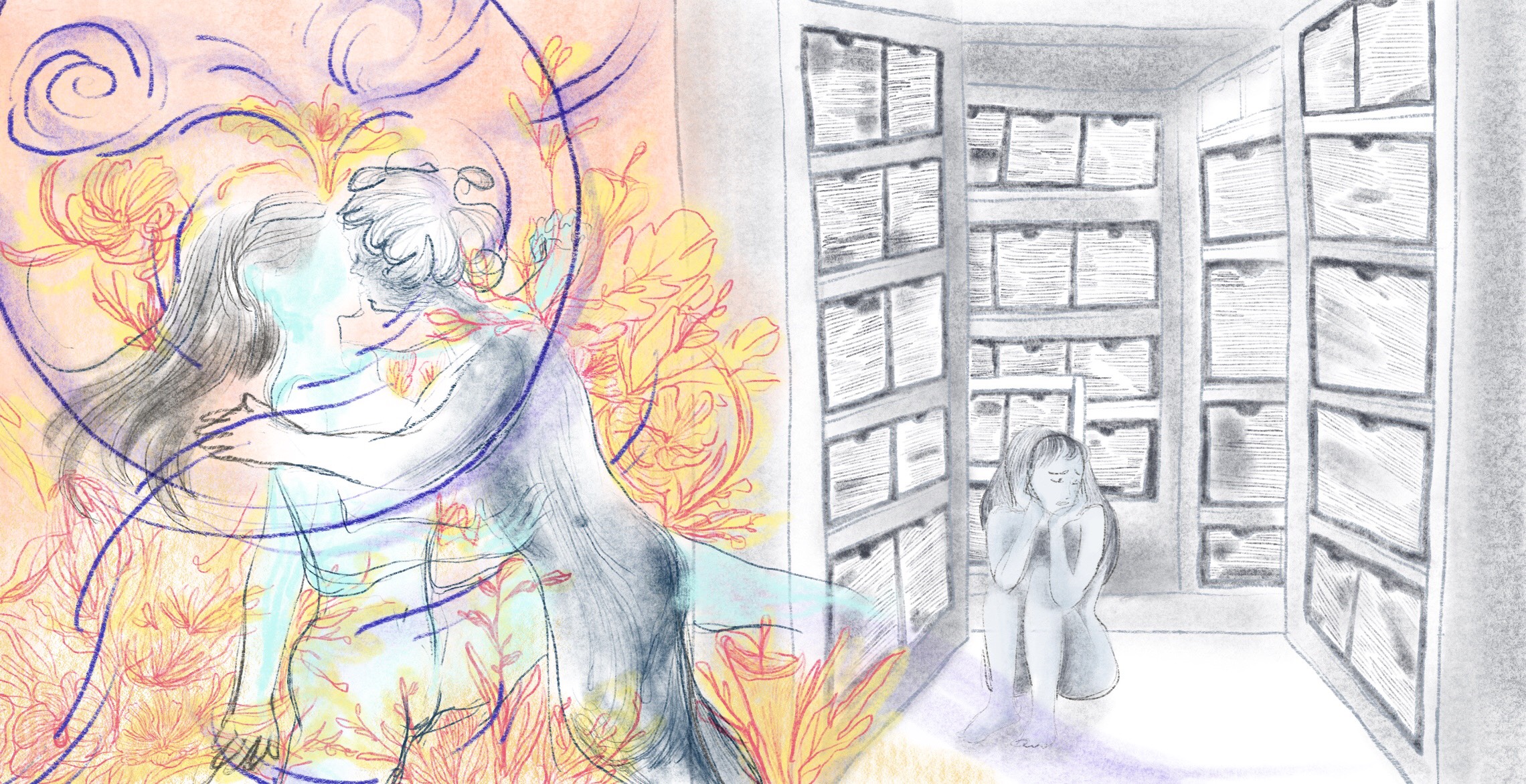
    For me, emotional and sexual connections are two different things. The latter, I don’t even experience. However, as another friend explained to me, this was not the case for everyone else. For others, it was difficult to separate emotional and sexual connections. It was intertwined and the lines convolved. It seemed that everyone else drew their emotions in abstract swirls while I drew mine in small neat boxes. I didn’t see it as a problem until I started to feel trapped in them.

    I had my own view of how relationships worked. However, it seemed nearly impossible to find someone who felt the same way. I was going to be alone and I had to accept that. I did but I also fell prey to self-sabotage.

    I glared at the people I was interested in instead of giving a friendly smile. I insulted people until their fancy turned into aversion. I pushed people away when my heart yearned to pull them closer. I didn’t want to be rejected because of my asexuality so in my mind, I had to reject them first. I reasoned that it was “better” for them. They should be with someone “better” and “better” meant not complicated, not asexual, not me. I convinced myself that this was necessary.

    However, a part of me was also afraid; afraid that I might be forced into doing something I didn’t want to do. One night at a club, a man approached me and asked to dance with him. I didn’t want to but he was persistent. Eventually, I agreed and that was my first mistake. After a few minutes of uncomfortable dancing, he asked for a kiss. I didn’t want to but he asked until I agreed. His lips were on top of mine but my lips refused to open and I pulled away. He was livid. He couldn’t fathom why I agreed to dance with him but was reluctant to kiss him. He believed I had played him. My apologies flew over his head as he continued to berate me. Afterwards, in the toilet, tears wanted to fall but I held them in. I felt guilty for leading him on and angry that I felt guilty. I had a right to say no. But among the guilt and anger, I felt repulsion the strongest. It was because of that vomit-inducing kiss.

    This was a sign. I couldn’t give people what they wanted and I didn’t want to be forced into doing something I might regret. It was a reminder. There is pressure for girls to please boys and for wives to be readily available to their husbands. Some people even believe it is one of the duties of a Muslim wife. A duty I would never want to be forced to do.

    I knew it was better to be alone. It didn’t matter that I wanted a life partner. It didn’t matter that I wanted to stare into the eyes of someone I loved, to cherish and support them, and to build a life with them. I’ve built a life of my own already and it was one of solitude.

    I tried to brainwash myself that I was content with living this way but it was a lie. I felt it my gut and my gut feelings are never wrong. I don’t believe I need a partner to be happy but I love love. It’s who I am. My stomach does tiny flips when I see people in healthy, loving relationships. I love the way they radiate. I love the unabashed loyalty and honesty they have. I love partners who support each other as they strive for their dreams. They make sure their partners feel loved every step of the way. I wanted to be that person for someone. And I started to hope that I could find a man like that for myself one day or so I thought…

    Self-discovery is a life-long journey. I thought I knew myself but a revelation strikes when you least expect it. One night, I had a dream that I was intimate with a woman. We weren’t having sex. In my dream, she wanted to but I declined.

    I woke up and thought “Huh, even in my dream, I’m ace.”

    But I realised something else, I was bi too. I was a bi-romantic ace.

    A part of me thought that I’ve definitely solidified my place in hell. However, I’ve grown from the child that had these lessons ingrained into her. I don’t believe homosexuality is unnatural. My dream didn’t feel wrong. I felt that I was me. It helped me realised that I do want a romantic relationship and it could be a person of any gender.

    Many things have changed since I first started identifying as asexual. I’m not as sex-averse as I used to be. I am still single and still don’t like at looking at shirtless men. However, I don’t hide behind lies such as “I’m not looking for a relationship,” or “I want to focus on school.” I’m more sure of myself to say that I identify as a bi-romantic ace. I may face judgment but I’m more willing to clarify the doubts that people may have.

    Some days, I do still feel alone but I’ve come to understand and love myself. And if I can do that, one day, maybe someone else will too. I don’t have a gut feeling about this but I do hope I’m right.

    __

    Ayda recently started her tertiary education but is having trouble navigating her university life. When she’s not attempting to study, she fills her time with her three loves: volunteering, theatre and scriptwriting.

    Illustration by Ishibashi Chiharu
  • My Journey With Sexuality: Part 2

    My Journey With Sexuality: Part 2

    by ASMY

    __

    Dear reader,

    The definition of sexuality, like sexuality itself, lies on a spectrum. There are many different understandings of what Sexuality is and I would love to share my journey of exploring my sexuality based on two of the many definitions. I am by no means a great writer, but I do believe that simply by seeing and reading the experiences of others, we are able to form our own opinions and come to terms with our reality. By seeing that other people are going through something similar to what we do, we feel a certain form of closure, almost as if through the simple act of sharing, we feel validated. I hope that you read this with an open heart and that in a way or two you get to benefit from my stories! Enjoy!

    Second Definition

    Sexuality: A person’s sexual orientation or preference.

    I should have known of my bisexuality from long ago. I was 7, just enrolled in Primary 1. We sat in rows of three. My best friend sat beside me. And beside her was a really hot girl. (Let’s call her V) Well, she was attractive to me. Every time I made eye contact with her or if she walked past, I would be smitten. This crush continued until I was 18.

    We were in the same class for 8 years, 2 years separated into different classes, and back together for another 2 years. I tried to relate to her. She was a quiet girl who hung out with the cool kids. She was smart, watched American TV shows on FOX, and her dad worked for the airlines as a flight attendant or pilot or something. Me? I was mediocre and watched Singapore Idol on Channel 5 and my dad fixed cables for a living. Not that I wasn’t proud of his hard work, but financially, socially, in every other aspect, we were worlds apart. She was everything I wanted to be and adored. So I tried convincing myself that it was adoration and not a crush. Still not convinced.

    The next sign that I was also into women was probably when I was 8 and my small fingers tapped on the heavy keys of the keyboard: “Ashley Tisdale Naked”. Yeah. BIG sign. But well, like I mentioned in Journey – Part 1, I was raised extremely religious. So I was also extremely homophobic up til about Secondary 2. I used slurs and EVERYTHING. That was when I started opening up my mind to the diversity of the world. Being part of a strictly Malay-Muslim Community at home and in school and not being able to join camps or tuition because of financial strains kept my mind closed. But in Secondary 2 something happened that changed my life and my understanding of my Sexuality.

    Cory Monteith, the main actor of GLEE by Fox passed away due to a drug overdose. My crush, V, as I have mentioned, loved American TV shows. She loved Glee and she loved Cory even more. Being a reserved person, she never showed much of her emotions besides being happy and normal. But that day, she cried. I wanted so desperately to make her feel better but I wasn’t exactly her friend. I never had anything much to talk to her about. So I decided to watch Glee.

    Watching Glee opened my mind. I was exposed to LGBTQ+ identities and issues such as poverty, teen pregnancy, and racism. I was suddenly exposed to a different world that wasn’t all that different — I was exposed to MY world. There was a lady trio – three cheerleaders called the Unholy Trinity who danced to “Say a little prayer” in the second episode. I said ALL the prayers. There was a character named Santana Lopez (EXTREMELY hot) who was gay, but she couldn’t come out for a long time. I cried watching her. I cried so much because not only did I like her, but I WAS her. I love girls too. I love girls as much as, if not more, than I liked boys. But the difference between us is that she could be with the woman she loved, but I couldn’t. Not in a million years.

    Everyday. Every single day, I pray that the love of my life wouldn’t be a woman.

    I cry at the thought of not being able to marry the woman I love because I love God too.

    I don’t want to transgress.

    But, I am very thankful for V. Simply by existing, she has unconsciously and indirectly made me understand and come to terms with my identity as a bisexual Muslim woman. It wasn’t an easy journey, but now I don’t hide my sexuality from anyone (besides my parents and a few other exceptions). I came out to my classmates and my teacher in class. My Teacher, unsurprisingly, was the most uninformed of us all. She asked me what it meant to be bisexual. She asked me if it meant I like boys and girls “half-half”. I told her I like both in no particular ratio. She couldn’t understand that. She also approached me when another student in her class had girl crushes and asked me if she should be concerned. I told her it is literally none of her business if her student was gay or not and that that isn’t what having a Girl Crush means. She also told me she doesn’t mind the LGBTQ+ community but they shouldn’t try to preach their lifestyle to her. I couldn’t tell her off, because I would have been kicked out of school.

    I remember a talk we had in school. Our teachers, who were from religious backgrounds and, to my knowledge, had little experience with the “outside world” conducted a forum for graduating classes on how to maintain their spirituality and religion without compromise once we stepped out of the Madrasah community. They talked about normal things like relationships, covering Aurah, and being cautious around the opposite gender. Nothing new. But then one student raised her hand and asked: “My best friend told me she likes girls. How do I tell her that it is haraam and she can go to hell because of it?” The panel basically said: “I am unfamiliar with this topic.” Of course you are.

    Now, I never doubt the level of knowledge my teachers have about Islam. They went to university, they have studied Islam their whole lives. I really respect their spirituality and level of knowledge in that field. What I cannot tolerate, however, is how they are very uninformed of every other thing. How they are so absorbed in their tiny worlds filled with people like them and only them. So I raise up my hand and said: “I am familiar and I would like to answer, should the panel be okay with it.” They gave me permission. I took a deep breath. This is the most vocal I’ve been about my beliefs and it would be in front of the very people who have educated me to think otherwise.

    “Your friend told you that she likes girls. How do you tell her she’s going to hell for feelings she can’t control? You don’t. You are in no position to judge her and where she will be placed in the future. Your job as a friend is to help her be a better Muslim and that entails you not judging her. She is still your friend and she is no different than the person you knew five minutes before she came out. She trusted you enough to tell you and it is your job to keep it a secret and to respect her because her sexuality is none of your business.”

    The room fell quiet. Nobody said anything. Not the teachers, not the students. Noone. I guess it was too soon. I wasn’t expecting a round of applause, but silence is definitely better than being interrogated further. But all that proved to be meaningful because all of a sudden I had juniors come to me to tell me that they were secretly gay or bisexual and they started sharing their troubles with me! Again, I am no therapist or professional, but I am incredibly grateful that people trust me enough to want to share the experiences with me, and if I am ever able to make any safe spaces for anyone, I would be incredibly honoured.

    Safe spaces are really important. It helps alleviate the burdens on your shoulders and it gives you the affirmation that you are not alone. Treading the path of being an LGBTQ+ Muslim will never be easy. I personally don’t think the journey will ever end. Having to choose between my Bisexual identity and my Muslim Identity is by far one of the hardest things I have had to deal with thus far, and I am still dealing with it. Here’s some unsolicited advice if you’re going through a similarly rough time:

    1. Open your mind. The world is filled with diversity and there are so many people like you. Listen to others — their happiness and their struggles — and hear all that the world has to say. Through listening to people and their experiences, you may be able to clear your mind and settle on your own concrete beliefs. 
    2. Find safe spaces. No one can tell you what to do about your sexuality or what you should believe in. THAT you have to decide for yourself. But having safe spaces and people to talk to will unravel your mind and help you throughout your thought process. 
    3. Learn. Do your research and find some really concrete ideologies that you stand by. As long as it makes sense and it doesn’t harm you or anyone else, you can be who you want to be. 
    4. Know that you don’t have to choose. You can be a Muslim. You can be Bisexual or Gay or whatever. I’m telling you that that is possible because that is what I am. A Bisexual Muslim Woman. What you have to choose is your identity. Figure out your individuality. Think about what makes you, you. That’s all that matters.

    Right now I am in a state where I believe that I can be bisexual and have bisexual feelings, but I can’t act on them until credible scholars tell me that it is okay. I have done my research and this is what I stand for now. But I will never stop anyone from loving who they want to love. I won’t preach my ideologies (unless I’m asked to) because I know that if someone chooses to do something in life, it is because they have thought about it carefully and that is their happiness and I will celebrate it. But this is just what I think. You don’t have to agree. Nobody has to. People should form their own beliefs and learn to respect others. And that’s all there is to it.

    I am incredibly proud of my journey towards figuring out my sexuality. I choose to believe that by understanding myself I have helped others and if I manage to make at least one person feel ever so slightly better, then, I too shall be happy.

    I am a religious, sexually aware, Bisexual Muslim woman.

    I love God and I love him through loving myself enough to love who I want to love.

    _

    ASMY is a young lady who is trying her very best to figure out her life’s calling and place in the universe.

    Illustration by Ishibashi Chiharu
  • My Journey With Sexuality: Part 1

    My Journey With Sexuality: Part 1

    by ASMY
    __

    Dear reader,

    The definition of sexuality, like sexuality itself, lies on a spectrum. There are many different understandings of what Sexuality is and I would love to share my journey of exploring my sexuality based on two of the many definitions. I am by no means a great writer, but I do believe that simply by seeing and reading the experiences of others, we are able to form our own opinions and come to terms with our reality. By seeing that other people are going through something similar to what we do, we feel a certain form of closure, almost as if through the simple act of sharing, we feel validated. I hope that you read this with an open heart and that in a way or two you get to benefit from my stories! Enjoy!

    First Definition

    Sexuality: The capacity for Sexual Feelings.

    I was sexually awakened at a very young age. My awakening at a very young age often scared me. I grew up in a very religious household, went to a full-time religious all-girls’ institution, and even taught in a weekend Islamic School. Hell, I’m even writing this in a mosque. I remember knowing about sexual intimacy at the age of 6. How young! There were some days I would lie naked on the bed and imagine men coming into the room through the window to have sex and I’d say “next”. I also remember being 8 years old and typing “Naked” into the old YouTube search engine. It was WILD.

    I have no idea how I came to be so aware of my sexuality at such a young age. But one thing that was for sure is that I was not proud. Just as much as I was aware of my sexual awareness, I was aware that my thoughts were shameful in the eyes of our Malay-Muslim community.

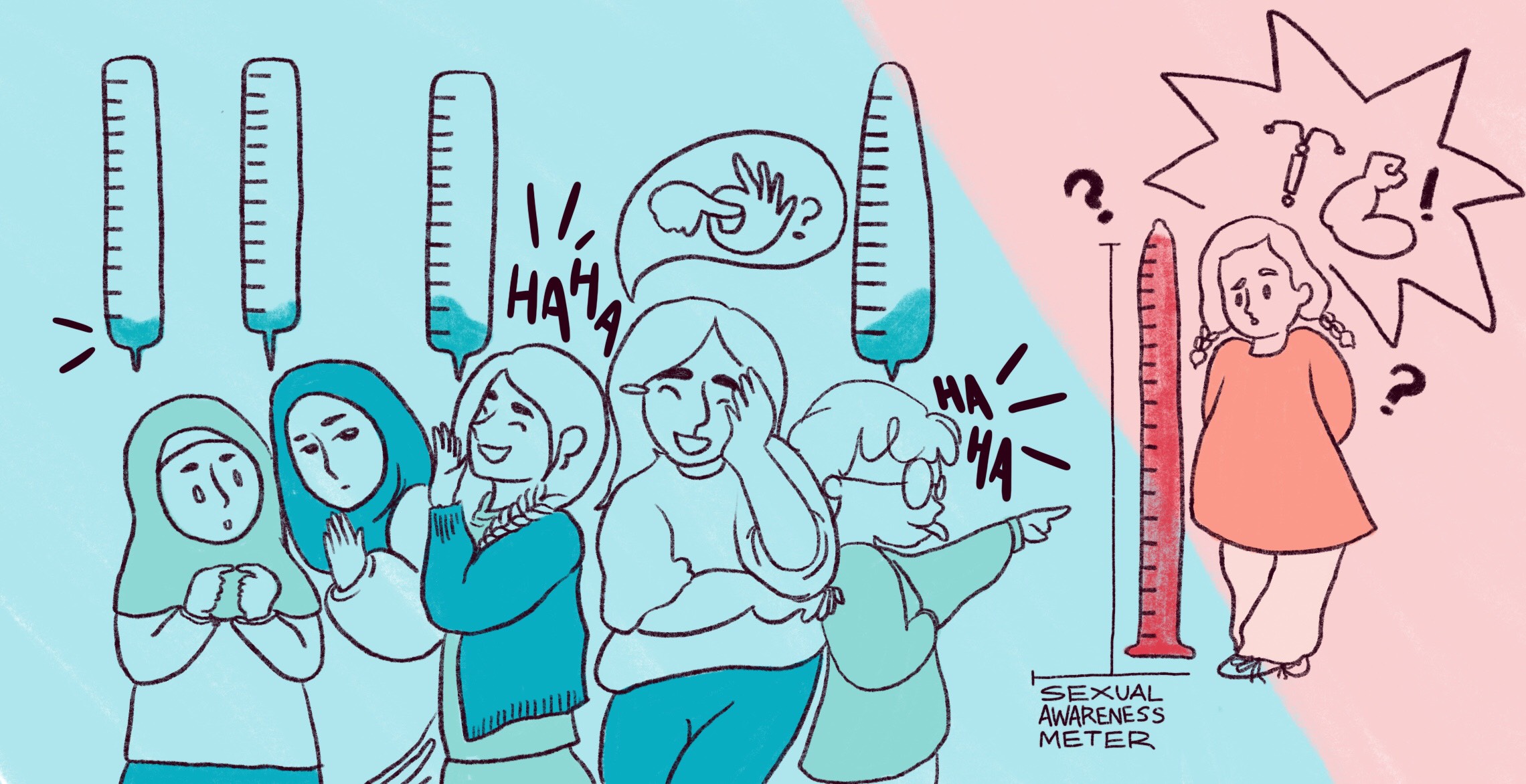
    Because I had early exposure to the concept of sex, I would be the girl in class who would openly talk about it, sometimes in a joking way and other times for education’s sake, while all my friends became flustered and embarrassed. When we were studying the basics of reproduction back in Primary 6, my friends would ask me about things they didn’t understand. I would be the one to teach them, but I would also be the one whom they sneered at for having a “dirty mind”.

    In the community I was in, people did not know how to differentiate between sex education and having sexual feelings. It did not matter that growing teens ought to understand about safe sex and contraceptives. No, what mattered was that as young Muslim girls, we must be pure, polite and moral. Sex is never pure but vile and sinful. Abstinence was far more superior than education. And because of that, until now, I have friends who are still oblivious about sex. Once, in Pre-University, a classmate even came to me to ask about sex. She was not aware that people had to have sex to have children. She thought that they just laid in bed and the sperm swims into the woman’s vagina via the bed. 17. Has she never seen a textbook? God.

    Another friend recently asked our group of good friends about how we deal with being turned on and horny before marriage. I still don’t know the correct answer, which upsets me, as it reveals the fact that there has never been a safe space for us to openly discuss our sexuality as young Muslim women. We were taught that the solution to ‘horniness’ was marriage, but that’s obviously wrong. And the truth remains that up til now, a lot of Muslim youths don’t know how to channel our pre-marriage sexual feelings without feeling sinful.

    Although I was aware that the school needed more people who were willing to discuss sex in a non-lustful and normalised light, growing up, I still felt so ashamed that I knew so much. Sometimes, although very rarely, I still do. The words of my friends and family really got to me. I hated myself for so long and beat myself up about wanting sex. Every time I watched porn I would hate myself so much. Every time I felt even slightly aroused I’d curse myself. I tried so much to abstain but that only made me fall deeper into this rabbit hole of pornography. That was the only way I knew how to control my desires without blatantly transgressing. But that made me develop porn addiction that was so bad that I would break school rules to go to the toilet to watch porn in the middle of class. I developed porn addiction that I had to overcome alone.

    I am very thankful that I am in a place of control now, and I’m proud to say that I did it! It took a lot of reflection and forgiveness for myself but I made it. Here are a few tips for those who may be facing similar problems:

    1. Remember that it is completely OKAY to want sex. It IS human nature. It is NOT sinful.
    2. Learn and do your research. There are many opinions about porn and masturbation in the Islamic point of view which is far different than the norm. Come to an informed conclusion about what is okay for you and slowly work towards that. Rationalise with yourself and help yourself understand the lines that you have drawn.
    3. Forgive yourself. Sometimes we mess up. Sometimes we relapse. It happens. Don’t be so hard on yourself.
    4. SEEK HELP. If there is one thing I regret doing, its not getting help earlier on. I was surrounded by people who did not want to understand me and who shunned people like me, so I really needed people to talk to who can help me understand my problems. There are many Sex positive centres out there and all we have to do is search. If not, get online, find support groups there. You are not alone.

    Now, I am incredibly proud of my knowledge and my journey. Because I was shunned in the past, I forced myself to be educated instead of conforming to dangerous norms. And because I decided to educate myself, I have created a safe space for my juniors to come and ask me about sex and sexuality should they ever need to. I am by no means a therapist or a sex ed teacher and I still have so much to learn, but I am a Young Muslim Woman with High Sex Drive and Knowledge. I have my own story and I am able to comfort and encourage those around me who have questions to not be ashamed for wanting to know more about the basic human need.

    More importantly, I have come to terms with my sexuality and sexual awareness.

    I am no longer ashamed.

    __

    ASMY is a young lady who is trying her very best to figure out her life’s calling and place in the universe.

    Illustration by Ishibashi Chiharu
  • Zinaphobia: Our Love-Hate Relationship With Sex

    Zinaphobia: Our Love-Hate Relationship With Sex

    By Nurul Fadiah Johari

    _

    We live in a society that loves and hates sex at the same time. We love, desire and want to possess it, and yet, we loathe, fear and reject it all the same. And we would do what it takes to assuage our own insecurities towards it, especially through the mechanisms of religious and cultural norms.

    Growing up in a predominantly Malay-Muslim society, I was taught from an early age that, as women, we should desexualize ourselves as much as possible. We are not supposed to look sexy in any way, and as much as we can, to control our sexual feelings. In other words, just kill off any semblance of sexuality from the get-go.

    Young girls are taught that their body is a source of sin and that if they are not covered in proper Islamic attire, their fathers will be held accountable in the Hereafter. At the same time, we are somehow supposed to please our husbands sexually once we are married. As a woman, our self-worth is ultimately tied closely to our sexuality—how well we guard it before marriage and then how well we use it in marriage.

    Women in my community are told many things in order to desexualise ourselves, and yet to sexualise ourselves within marriage. Once, a teacher told us women to not dress sexily at the workplace, because if a man were to fantasize about us, we would have to bear his sins.

    And if our husbands were to think about finding a second wife, we are supposed to try harder to please him. In religious classes, having to shave one’s pubic hair is emphasised, the point being to please one’s husband. Our dignity is thus measured by our husband’s pleasure. A woman’s desirability is to be earned, while the husband merely gives.

    When I was younger, I was taught by an ustazah [1] that women are supposed to cover their feet with socks, because men can tell by looking at their feet if they are virgins or not. I am still curious as to how men can tell the status of my “virginity” (simply understood as vaginal penetration by a penis) by looking at my feet, and why that mattered so much.

    Clearly, it still does matter. After all, a woman is devalued once she loses her virginity. She is a used product. A divorcee, or janda, in the Malay community, is still viewed with suspicion and sometimes contempt. Only recently, my aunt lamented to my mum about her misfortune of having a future daughter-in-law who is a divorcee. It does not matter that she may be a good partner to my cousin; all that matters is her status as a divorced or previously married woman. I don’t know which is worse—the fact that she is divorced or that she was previously married to another man. In my observation, a divorcee is not as valued as a previously unmarried woman when it comes to entering marriage. It may seem to some that her being divorced means being a failure at marriage, while being previously married to someone else simply meant that she is not a blushing virgin anymore. Either way, it is just an unsavoury position for a woman to be in.

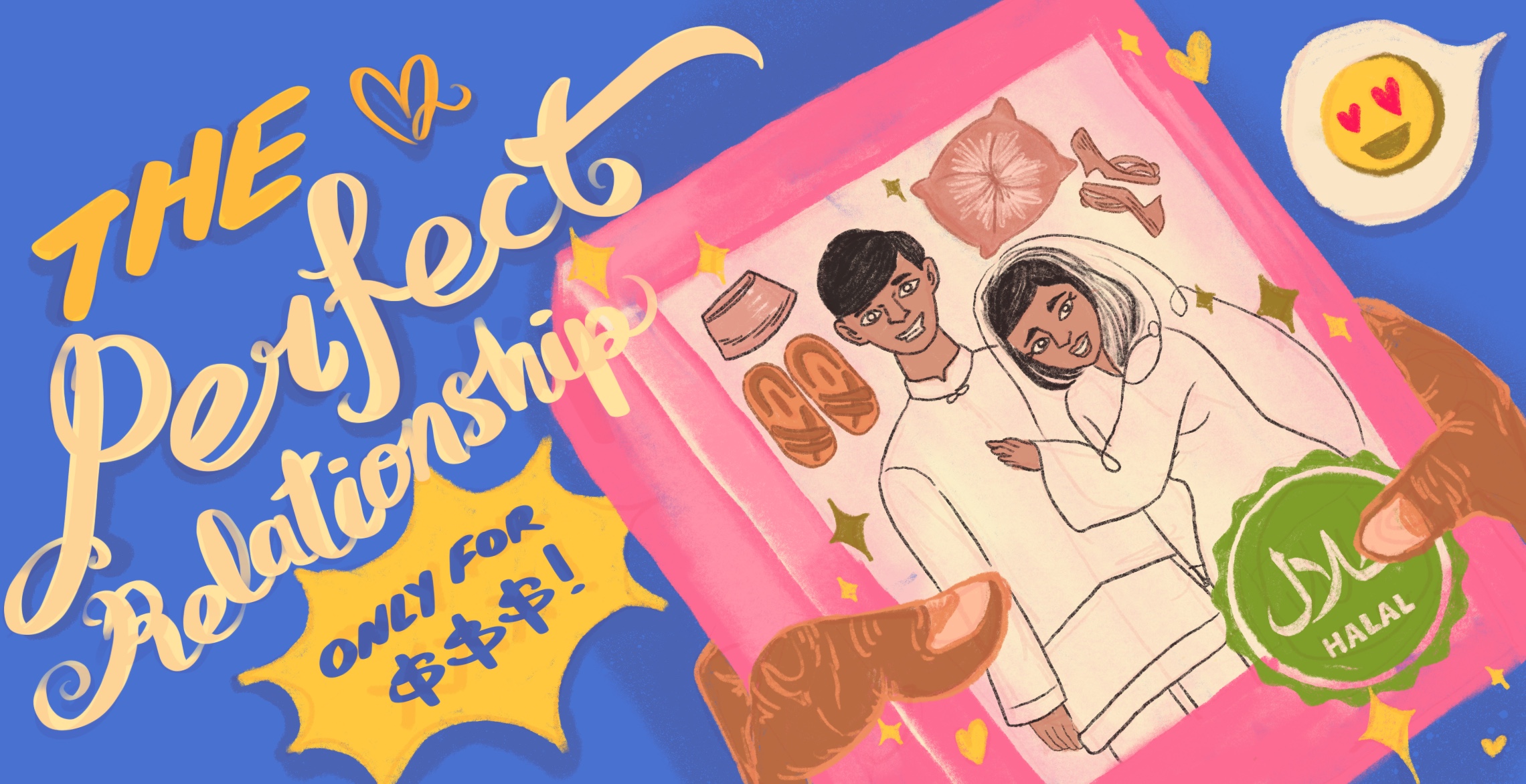
    This fear of sex outside the legitimate boundaries of marriage means that marriage is deemed as the solution and justifier for all sexual desires. How often do we hear today of people saying “Dah halal!” to newlyweds, thereby alluding to the halal (permissible) status of their relationships? As though any form and expression of love that arises prior to the solemnisation is less legitimate and therefore less valuable.

    Pre-marital romantic relationships are sometimes even touted as “haram” (forbidden) relationships. And suddenly, everything becomes okay at the point when the groom accepts the bride’s hand in marriage. The same goes for people who claim that the main aim of marriage is to legalise their relationship, and by relationship, it means sex. Sex becomes the sole purpose of marriage, and so by that, marriage is equated to sex. The binding marriage contract thus grants people sexual access to their partners, so that they would not have to feel guilty for wanting to release their sexual desires.

    I remember discussing with some friends during my teens about what we would do on our wedding nights, the kinds of games we would play with our husbands. It is a form of a naïve anticipation of sex that is conditioned by a society that represses sex. The wedding night itself is viewed with so much anticipation because of the excitement about having sex, that it probably ends up quite a disappointment for many people. Perhaps, what we need to think about is not the mere act of sex per se, but the act of building love and trust, which is then expressed in various ways. Sex is just one way of expressing that love.

    Thus, as an extension to this fear of sex outside of marriage, we have developed an unhealthy obsession with marriage. Our obsession with marriage is primarily rooted in our repression of sex. We seem to love marriage, especially weddings, even more than love itself.

    Of course, this means that marriage and wedding planner agencies can capitalise on our unhealthy obsession with marriage. It certainly has become a multi-million dollar industry here. People are willing to scrimp and save, simply to buy into this romance of extravagant weddings. To me, one can say that you get married once, but the financial burden of a lavish wedding and other costs lasts a long time. It may even cost one’s marriage. I have heard of stories of people getting into fights and even divorcing their spouses due to financial constraints, starting from debts incurred from the wedding.

    What is more worrisome, however, is when the fear of sex outside of marriage and the myopic solution of marriage is used to endorse young or early marriages. It is common to see in social media how some groups of Muslims, in response to the prevalence of young Malays having romantic relationships prior to marriage, come out with slogans such as “Bercinta selepas nikah”[2] and “Say no to couple”.

    In trying to deal with issues of sexual promiscuity and its ensuing problems amongst Malay youths, these groups, instead of talking honestly about sexual and marital responsibilities in the modern context, choose to idealise the idea of the marriage institution and romanticise the notion of “love after marriage”.

    Some also glorify the idea of young marriages, as though this would easily solve the problems related to sexuality amongst Malay youths. The idea is simplistic in that it assumes that marriage, just simply because it legitimises sexual relations, would be the ideal solution to sexual promiscuity.

    In seeking to preserve an idealised notion of Islamic marriage as a reaction against sexual promiscuity, these groups promote marriage rather than trying to analyse and understand the reasons for teenage sexuality and premarital relations. So instead of promoting comprehensive sexual education with an emphasis on mutual consent, trust and respect, we end up leaving youths unprepared to live with the responsibilities of marriage and parenthood.

    At the heart of it, marriage is used as a tool to control and police sexuality in our community. We repress our sexual desires, and in the process become obsessed with sex. Many religious classes are used as a free access to sexual discussions—where people ask the Ustaz questions on the permissibility of swallowing their husband’s semen and so on. This merely reflects a pubertal understanding of marriage, sex and intimacy. We have not moved on from this. We still fantasise about sex like teenagers and therefore romanticise love and relationships like lovelorn youths. So we rely on and succumb to legalistic and authoritarian confines of marriage in order to cope with our inability to live with our sexuality.

    We need to move toward a more mature understanding of love and sex. And for that to happen, we need to challenge head on the taboos and fear surrounding sex. As Muslim women, the first step is to take ownership of our bodies, from the very core of how we dress, present and conduct ourselves in society. All talk of self-love and care comes to nought if we do not love our physicality and sexuality.

    We need to move away from the idea of living to please men, and this starts with the idea of pleasing an anthropomorphic and masculinised God. We need to make that radical break, and we need it now, more than ever. Only when we stop fearing our own body and its capacity can we then stop fearing and policing sex.

    *The term “zinaphobia”, or the fear of sex outside of marriage, was used in this article by Julia Suryakusuma in The Jakarta Post, “’Zinaphobia’, homophobia and the ‘bukan-bukan’ state”, 7 September 2016.

    [1] Female religious teacher

    [2] Fall in love after marriage

    This piece was first published in Growing Up Perempuan (2018)
    __

    Fadiah co-runs Penawar, a support group for women/non- males raised in the Muslim community, dealing with negative experiences from patriarchal interpretations of religion. She has also written for local publications such as Perempuan: Muslim Women in Singapore Speak Out (2016), Growing Up Perempuan (2018) and Budi Kritik (2018).

    Illustration by Ishibashi Chiharu
  • Editor’s Letter: Sexuality

    Editor’s Letter: Sexuality

    Cover Your Eyes!

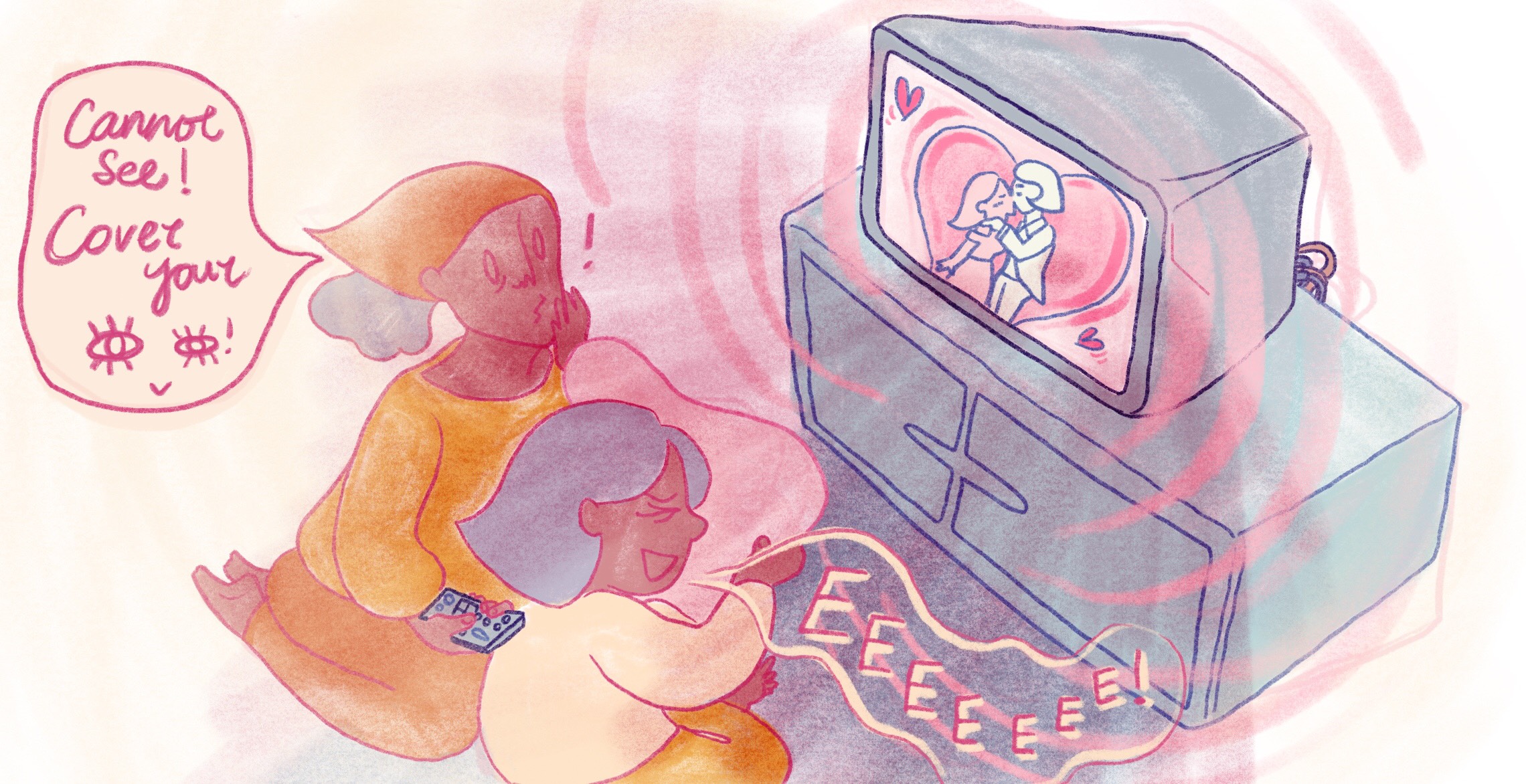
    I watched Titanic for the first time at home with my parents. Jack and Rose are running, a respectable bourgeois lady and working-class man, away from the assistant of her insufferable, arrogant fiance. Rose with her tight ginger curls free from the usual chignon with her wild glittering eyes. Leonardo still baby-faced with 90s dreamboat hair. They run along narrow corridors, knocking over silverware. Rose’s virginal white dress somehow remains pristine after they run through the fire room. They run into a room, then into a car. What happens next, after their giggles quieten and their faces neared, would be preceded by mother’s shrill directive: “don’t look, cover your eyes!”

    Being an obedient child, I never looked. I never peeked, not even once. I genuinely associated intimacy with sin and even a feeling of disgust for a long time. Those moments felt painfully awkward and it didn’t help that I never got an explanation or discussion about sex or sexuality from my parents, nor from schools, as far as I remember.

    The sex education class I had in secondary school was focused on abstinence and I remember the girls being made to watch a video of a fetus being sucked out by vacuum during an abortion. It was, to us, another perturbing thing overzealous adults wanted to show us. Afterwards, we went back to our world,  saturated with gossip about couples, whispers about notorious toilets and spaces people were seen kissing, and mean-spirited bitching about the school “slut,” (unsurprisingly, the boys she was with escaped moral condemnation).

    All of this was, of course, symptomatic and consequential of the larger refusal to properly acknowledge and explain the reality of sex and sexuality. As if in not looking at scenes of kissing couples, the reality of intimacy would cease to exist in the child’s mind. As if simply stating the imperative to turn away from sexual desire would automatically result in obedience and a reduction in teen pregnancy.

    Growing up, especially during the period of teenhood, shame is abundant: in how our changing bodies are perceived, how our feelings of attraction and desire begin to confuse us, and all the complications of growing into our individual selves.

    It shouldn’t be taboo to talk about sexuality, our changing bodies, and the development of sexual desire and attraction. They are, after all, completely natural. Yet for so many, these changes were seen as much a marker of growth as they are the beginning of heightening anxiety. Especially for teen girls, our parents would begin to fuss and obsess over the presentation of our bodies, sexual precociousness, and the company we keep, especially of the opposite sex. The overbearing dark cloud of sex before marriage was a threat that loomed, defining so much of how we were to behave. This cultural and social surveillance of female bodies leads predictably to a deep feeling of shame when it comes to our own bodies and sexuality.

    This is quite ironic since the religion is very much “sex-positive” and encouraging of healthy sexual relationships. The Islamic tradition, sunnah, and hadiths are full of advice and stories around the importance and joys of sexual relations between married couples and how it is an important facet of an intimate relationship which strengthens the bond of a couple. Muslim scholar Al-Ghazali calls it a blessing from God and in a hadith, our prophet Muhammad s.a.w. is reported to say that God rewards Muslims for “sexual play.”

    Yet why is there this discrepancy between the sexual frankness in the religion, and the intense, anxious suppression on the discussion of sex and sexuality within Muslim communities?

    Perhaps what is sad is how many have to peel away layers of shame to even begin to healthily associate sex and sexuality as something that can be joyous, fun, and full of love. For so long this aspect of the human experience has been swathed and chocked with shame, guilt, and a swirl of toxic mystery, that it can be a journey to see its reality.

    Sex Education

    Imagine what happens to the mind, what the mind does, when it doesn’t have the limits of reality to control its wanderings. What nebulous, misguided images of sex and sexuality it festers when you’ve only heard the sounds, caught snatches of images, and listened to the experiences of others. What kind of distorted image would be pieced together from these fragments?

    What happens to a woman when she is demanded to be innocent, even sexually naïve for most of her life up until she is married? One can only imagine the difference in power between partners when one is conditioned to be less sexually knowledgeable than the other. How anxiety-inducing that first sexual experience of hers will be, and how vulnerable she might be to instances of sexual abuse!

    Sex education, one that is thorough, accurate, and not filled with messages of guilt and shame, is important. It’s important so that prevailing myths around sex and sexuality can be addressed and young adults are educated on their sexual rights, take necessary safety precautions, and limit the dangers they may face.

    For example, it’s often said that a woman’s first penetrative intercourse will result in bleeding due to the rupture of the hymen. However, this belief is grossly inaccurate and perpetuates the erroneous belief that your first time is necessarily painful (which then leaves little responsibility to the partner to be mindful of their partner’s readiness and comfort during sex). This article provides a helpful, easy-to-understand primer on the question of whether the first time should hurt.

    Of course, sex education is a contentious topic, one that has been a site of struggle between “conservative” and “progressive” camps since it involves the values and opinions we hold regarding female sexual autonomy.

    The facts, however, regardless of opinion, is clear. Young adults are going to have sex, regardless of the messages pumped into their minds about how sinful it is. The only thing that can be controlled is how we respond, and whether we provide them with the information they need should they do it.

    If abortion and teen pregnancy is a fear, then abstinence-only sex education has the opposite intended effect, since it has been proven to result in the highest rates of abortions and teen pregnancies. What works is if they are given accurate information about safe methods of contraception, how to access it, and how to take precautions from STIs (Sexually Transmitted Infection).

    Consent and Healthy Relationships

    The other issue, far more nuanced than the obvious, stark topic of sex and desire, is consent and healthy relationships.

    I would like to share the following quote from a post by HEART Women & Girls about how consent is fard (religious obligation):

    It is narrated from the Prophet (SAW: peace and blessings be upon him) that: “Do not engage in sexual intercourse with your wife like hens; rather, firstly engage in foreplay with your wife and flirt with her and then make love to her” [Alliyatul Muttaqīn] and narrated from Imām °Alī (AS): “Whoever wants to get close to his wife must not be hasty, because women before engaging in the act of love making must be engaged in foreplay so that they are ready for making love to.”

    Sexual activity and intimacy without consent violates its sacredness revealed by God. This is also marital rape. Across all types of relationships and interactions, consent is fard.

    Beyond the quick and dirty information about sex, more sensitive conversations around consent, coercion, and emotionally healthy relationships are important so that people will be able to identify when they are in abusive relationships, and where they can go should they need to seek help.

    When there is a lack of comprehensive, evidence-based sex education, young people would naturally seek other avenues. Consider the fact that in the digital age, many youths turn to porn, and that porn has become the unofficial source of sex education. (As an aside about the link between repression and porn, think about the fact that six Muslim-majority countries are in the top 10 global consumers of porn).

    Porn is also abundant with images of unhealthy, unrealistic depictions of sex, with frequent images of coercive, even violent sex, where women are often depicted in submissive roles. This leads to higher instances of unrealistic expectations, high-risk behaviours, and a higher risk of being a victim of sexual aggression. Of course, there are instances within the porn industry to provide healthier depictions of sex, but they are not the dominant image that is seen in the flood of images and videos available.

    It is important that there is a counter-point to such images, and that accurate, sensitive information is accessible to young adults will naturally be curious due to their burgeoning sexuality.

    A Mother and Her Baby: Both Children

    Not too long ago, an incident in our neighbouring country made me grieve for the kind of loneliness, shame, and emotional turmoil that the topic of sexuality often brings to young girls. On the 14th of October, an 18-year-old girl died in a toilet during childbirth in Ipoh Her baby was found dead too, in the toilet bowl. For six hours, she kept telling her mother that she was constipated.

    I keep wondering about depths of shame and fear she must have had from having a child out of wedlock. How deeply lonely she must have felt throughout her pregnancy, and especially during the last moments of her life. She died alone in a toilet because going through the intense pain of childbirth alone was more tolerable than facing the shame of having a baby outside of marriage. Up till the end, to come out and admit it was too scary for her.

    To imagine her weight of repression and psychological oppression was intensely sad. Regardless of what one might feel about the rightness or wrongness of what she did, the result surely ought not to be her own death, along with her baby’s.

    The safety of our children, the limit to abuses, and ensuring that our intimate and sexual relationships are as healthy as possible, should be prioritised. It can be, as we have seen in this fatal case, a matter of life and death.

    __

    Illustration by Ishibashi Chiharu
  • Mercy To All Creations: The Muslim LGBT’s dilemma in Religious Spaces

    Mercy To All Creations: The Muslim LGBT’s dilemma in Religious Spaces

    by Zuby Eusofe

    _

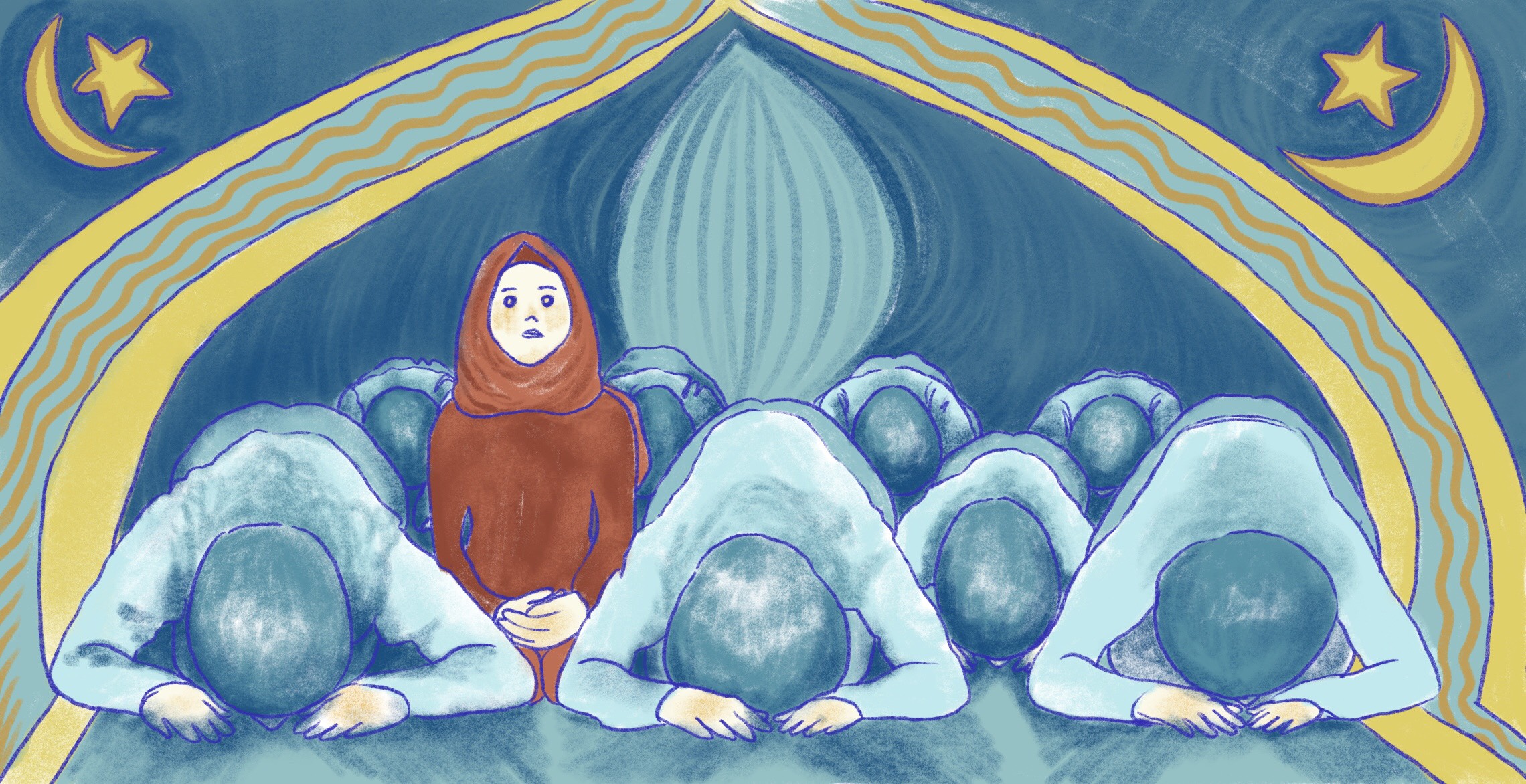
    As Muslims, when it comes to religious spaces, the best place is the mosque. A sacred place where every Muslim goes to be one with Allah. A place of seeking peace and calm in a serene environment where you can go into the holistic vortex of communication with Allah.

    But not for LGBT Muslims like me.

    It’s different, even weird, for us to be in a mosque when many people will look at us as if we’re aliens. Firstly, our physical appearance usually shuns us away from the ‘normal’ muslim community.  Secondly, there is too much ‘dakwah policing’ from those who are not even selected nor elected by any mosque committee and their eyes are glued on you as if you’re a criminal that has committed the greatest sin upon Allah’s eyes.

    One of my friends, for example, was chased away because of her butch appearance. She was chased away while trying to put on the prayer garment (telekung). One makcik came towards her, looked at her from head to toe, and gave a sneering remark: “Kamu ni bukan perempuan tulen, tak leh sembahyang kat sini.”  (You are not a “real” woman, so you can’t pray here.)

    My friend’s intention to be in a mosque to find solace with Allah was halted by this makcik, who thinks that what she did will gain her reward in Jannah (Paradise).

    It’s sad but true. This incident is just one of many others that I can tell you about the dilemma and obstacles we, as Muslims from the LGBT community, are facing daily.

    Due to this, some of us will even go to the extent of leaving Islam because some Muslim people within the sphere are convinced that what they did is not wrong.

    During the days when I was closeted and in my hijab, I remember there was a woman in a mosque who specifically policed ladies who just came back from the office and were wearing corporate clothing in short skirts. She would just say bluntly in an authoritative manner: “Ok, if you ladies are coming here, please have the decency to bring along a sarong before entering the mosque, or else don’t come and do your prayer here.”

    Seriously, why do these makciks or pakciks (aunties and uncles) think they have the ‘rule of thumb’ on telling people what to wear and when not to pray within the mosque?

    Since when did Allah need these kind of people to protect Allah from seeing indecency?

    Allah sees us from the beginning of our soul to the day we died, and that is as naked as Allah has seen us as human beings – Allah’s creation.

    [On the authority of Abu Hamzah Anas bin Malik (may Allah be pleased with him) – the servant of the Messenger of Allah (peace and blessings of Allah be upon him) – that the Prophet Muhammad (peace and blessings of Allah be upon him) said :

    “None of you will believe until you love for your brother what you love for yourself.”

    Related by Bukhari & Muslim]

    This hadith is strongly correlated with the Golden Rule which is “do as to others what you want to yourself.”

    Would these makciks and pakciks want that to happen to them, being hostile and aggressive towards others whom they may assume to lack Islamic knowledge just because they didn’t dress up the way other mosque-goers do?

    Where is the love and kindness that are seemingly obligatory for Muslims to show to everyone, regardless of race, culture, religion, or creed? As mentioned in Quran:

    “We have not sent you except as a mercy to the worlds.” – Surah Al-Anbiya 21:107

    And our Prophet Muhammad (may peace and blessing be upon him) reiterated in the hadiths:

    Those who are merciful will be shown mercy by the Most Merciful. Be merciful to those on the earth and the One above the heavens will have mercy upon you.

    Source: Sunan At-Tirmidhi 1924, Grade: Sahih

    In the word Mercy according to the Islamic context, it derives from two words: Ar-Rahman (Most Gracious-Merciful) and Ar-Rahim (Most Compassion).

    It is the most common name occurring in the Quran. Rahman and Rahim both derive from the root Rahmat, which refers to tenderness and benevolence.

    Thus, this shows that for Muslims, it is important to treat everyone with kindness and tenderness, and this will not happen if the individual does not have the feeling of compassion and love for one another.

    Going back to the issue of religious spaces for LGBT muslims here in Singapore, I can simply state that it is difficult for us to be in the mosque and commune in religious congregations with other Muslims as their ‘fear’ leads to discrimination towards LGBT muslims. They have the privilege to be with the rest of the Muslim community who are already a minority in this country. Us LGBT muslims do not have that privilege. We are the minority within the minorities.

    We are being alienated and accused as an apostate (due to our gender marker) unless the higher Muslim authority are willing to give us that religious space for us to be in oneness with Allah in peace, and to be part of the congregation without prejudice and discrimination from other Muslims.

    I remember the moment I did my umrah (pilgrimage to Mecca). It was around 3 am in the wee hours of the morning. I was wearing a morroccan taub (Morroccan Long Garment for Men) and I also wore my hijab. I was mocked by a young Arab man.  He tried to pull down my hijab and said that my attire did not represent a true Muslimah dressing. At that point of time, I was not comfortable wearing the telekung (the prayer gown worn by muslims women). I was more comfortable with wearing something that is masculine but loose.  I believe that regardless of the attire I am wearing, if I a covered myself decently, it is enough for me and no one has the right to judge or discriminate me whatsoever. My decency belongs to Allah and Allah alone.

    And only Allah that I seek mercy and repentance…

    Rahmatan lil’alamin (Mercy to all creations)

    _

    Zuby Eusofe is a LGBT Muslims activist and the founder of The Healing Circle.
    She and her inspiring team hope that one day, LGBT Muslims will be accepted within the community without prejudice and discrimination from other Muslims.

    She is also a writer and a blogger.  She has written two stories for Perempuan and Growing Up Perempuan.

    Illustration by Ishibashi Chiharu
  • Not Muslim Enough

    Not Muslim Enough

    by Marina Rosli
    _

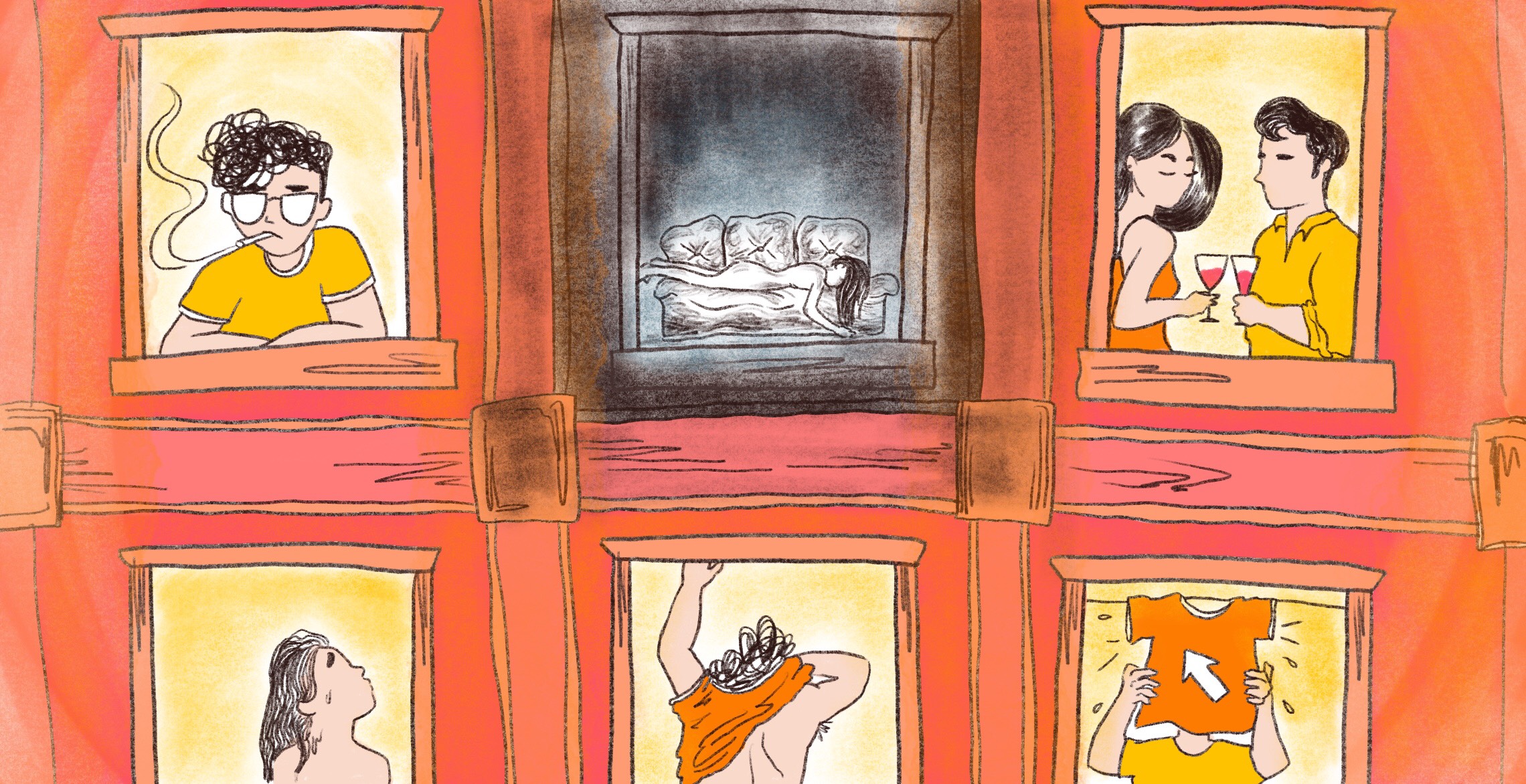
    For most of my life, Islam felt like conditional love: I had no right to call myself a Muslim (nor would others call me one) because I hardly prayed, am not too concerned about halal food, constantly challenged longstanding interpretations of the religion and questioned the existence and validity of certain beliefs and rituals.

    Raised in a pious, religious household, I grew up following the rituals to a tee. I spent my youth following a creed that I thought was essential to my self-worth, humanity and spirit; but I never felt good enough to be considered a Muslim. Furthermore, society also always seemed to reinforce this feeling of inadequacy, where our prayers are never proper enough for God, where we will never pray enough, nor will we ever be as humble as the prophets.

    As I grew older, a sense of uneasiness and conflict grew. I constantly felt punished for doing things I enjoyed that were not harmful or hurtful to me or anyone. I felt as if religious people never seemed to care about women or they “care” too much by wanting to control and have power over us. It slowly got increasingly harder to commit to praying every day. It was not only the tediousness of the rituals but also the contradictions I felt about what I knew the religion to be, and the values I held.

    I slowly began to distance myself from the faith. It began as me believing that I will go back and regain my old life as a dedicated Muslim someday. However, I soon realized that I was not someone who was invested in the rituals any longer albeit, I still stayed steadfast to my faith.

    I took a more rational approach to my spirituality and faith. I no longer associated any of my mishaps or misfortunes to my lack of rituals. I was no longer ruled by the fear of balak tuhan (God’s punishment). I was finally making decisions and being accountable to my own self. It was liberating! I was free to enjoy a glass of wine with my friends, without the guilt. I was free to go out in clothes that I thought made me look good, without the guilt. I was free to live my authentic life, without any guilt. Although I did not practice all the traditional rituals, I still identified as a Muslim. I fasted every Ramadhan, went for terawih prayers without fail and did my prayers when I felt like it. I balanced the life of sin with some of the rituals I was taught and expected to perform.

    Not Muslim enough for him

    That was until I met Adil. He seemed progressive, his circle of friends equally so. However, as our relationship progressed, he obsessed about my lack of ritualistic practice. He was convinced my lack of wont to pray made me a ‘deviant’ Muslim and ultimately an immoral person.

    Not only he, but also his friends, and family slowly coerced me to work on my “religiosity”. It began with the constant shame couched through encouraging tones of advice, and the passive-aggressive remarks when I did not publicly announce I was going to pray. My choices often drew eye rolls, sighs of disappointment and the condescending line “what is 5 minutes of your time”.

    Yes, 5 minutes of my day is nothing. However, the imposition of the task, the patronizing tone, the coercion framed as advice – that is not just “nothing”. These are acts that chip away and slowly disempowers a person’s spirit. I was made to believe that I was not a good Muslim, good friend, good girlfriend and a good person. And I believed it.

    Not Muslim enough for the pulpit

    Eventually, I succumbed. The burden of having to accept their judgment with a smile (pretending that I appreciated their dakwah) was too much to shoulder, so I did my prayers (to pray that the control would stop).

    Whenever we went out, I was careful to dress “appropriately”, because we would often pray together at the mosque. Mosques in Singapore have never felt safe to me; I constantly worried that I would get chided, scolded and humiliated because I was not dressed ‘modestly’. People at the mosque have chided me publicly for wearing torn jeans, a dress, or for the wind blowing through my hair. Once, at Masjid Sultan, thinking my long sleeves and jeans were modest enough, I decided to enter the house of God. Instead, I was stopped and publicly humiliated by their entrance guard. I was told to cover up before entering because my knees were showing through the fashionably and well-placed tears on my jeans… The accumulation of stressful experiences has resulted in me staying away from the house of God.

    Not Muslim enough for the community

    To placate Adil and also to prove to him and his peers that I was taking steps to ‘improve myself as a Muslim’, I decided to sign up for a religious class. It was a weekly nightmare. The ustaz would insinuate or point out that I was not wearing the hijab every other week. If not me, he would talk about how women who wore the turbans or any fashionable style of hijab were wrong. He would make intensely misogynistic and controversial remarks and no one would bat an eyelid. The older women in the class would accuse me of wanting to attract men’s attention for what I wore. It was always an accusation that I made these men commit sins, without personal accountability demanded from these perverts. I eventually left the class for the sake of my mental health.

    Some of Adil’s peers were not helpful in calling him out for his spiritual abuse nor did they recognize how mentally, emotionally and psychologically toxic he was. They repeatedly convinced him that I was “not good enough” for him or kept silent throughout my ordeal. These claims were based on the facts that I was not a ritualistic Muslim. Their assumptions on my character were not based on my values, ethics, or beliefs, rather on what I did or did not do as a “Muslim”. No one saw the imposition of religiosity as spiritual abuse, because to them, being ritualistic was a positive thing that will bring me to heaven – even though they made my life a living hell.

    It was an isolating, dehumanizing experience because the community I called myself a part of did not want me. Self-identifying as Muslim, acting on all the Islamic values and virtues (like kindness, compassion, challenging injustices) was not enough. I had to behave in accordance to their perception of a Muslim, which meant following all the suffocating rules. It felt like Islam had no place for me. But I trudged on and tried to work towards being a ‘good’ Muslim.

    ***

    Things became clearer when I found out Adil was cheating on me with someone who prayed five times a day, never questioned the rituals and religion, and was also cheating on her partner of 8 years. Ha, the hypocrisy of these outwardly religious people! I was shattered not because I was betrayed by the person I thought I loved, but that I had sacrificed a large part of myself to be seen as a ‘good Muslim’ and lost a large part of who I was in the process.

    In order to heal, I decided to leave my community and fly halfway across the world. I suspended my beliefs, slowly unlearnt the doctrine and dogmatic structures of what I thought was my religion, and left the faith and community behind. I did not want to be associated with a community that pretends to love me but beats me into submission to conform.

    It was when I was in Toronto that I decided to pray at an open mosque, El-Tawhid Juma Circle. As much as the self-righteous religious Muslims had betrayed, disowned, and consistently reminded me that I was not one of them, I still needed to heal spiritually. I wanted to reconcile the steadfast spiritual abuse I had endured and not hate my faith. I did not feel it was healthy to hate something that I saw was an integral part of my identity.

    The mosque I chose to pray in prides itself as a gender equal, LGBTQ affirming place of healing and learning. It was in this space where I saw people prioritize interpretations of faith over acts of faith. I felt safe – spiritually and physically. I also found others who were escaping the same spiritual brutalities and coercion that I had gone through. And it dawned on me that I have finally found the types of Muslims I want to be with. They were inclusive, compassionate, did not enforce their understanding of Islam onto others and did not care if I was “Muslim enough” or not.

    I finally felt accepted, validated and included.

    Perhaps it was because of the isolation, abandonment, shame, enforcement, coercion in those few months that I started to think of Islam differently. My prolonged period of agnosticism turned into a holy act of re-learning my faith and what role I wished for it to play in my life.

    With this new perspective comes my own understanding that faith is what you make of it, and everybody has the right to practice it in their own personal ways. My faith transcends rituals. It is a personal act between God and me. Ultimately, my faith is not fragile. The different ways others practice their faith will threaten my own personal beliefs. In some ways, I have never felt more Muslim than I do now. My relationship with God is not one centred on fear and rituals, but on a healthy and spiritual understanding.

    I grew up unaware that I had a say in the management of my own religious affairs. However, I am not an anomaly. Many Muslims grow up instructed to live and understand religion and their relationship with God in terms of fear and blind obedience. Unfortunately, it has resulted in an unhealthy perspective of Islam. It has allowed believers to see the religion as a monolith and ultimately cultivated an obsession to perform the ‘purest’ form of Islam. Rituals, which were meant to be personal and an opportunity for self-reflection, devolved into a transaction – an activity you perform to get the points to enter heaven. This monolithic, myopic and narrow understanding of how Islam must be practiced has emboldened people to discriminate and discipline anyone who went beyond the constructed boundary of a ‘good’ Muslim. While those of us who lie beyond that boundary are labelled as ‘illegitimate’.

    The exhortation of a single, valid, Islam has reduced the magnanimous nature of the religion and the diversity of its people. It has given believers an arrogant self-satisfaction that one is unlike the other, and the right to demonize others for not falling into the dominant image of what a good Muslim is.

    Religious spaces are meant to be sacred and safe. Religious communities are meant to be loving, kind and accepting. If the heart of Islamic teachings are based on compassion, peace and love, then they cannot coexist with abuse or hatred. If we were to pride ourselves as a community of peace, then we cannot condone spiritual coercion, discrimination, rejection or the deliberate exclusion of some of our people on the basis that they are “not Muslim enough”.

    _

    Marina Rosli currently works in academia and has found some peace in her life. She is a mother to 1 cat.

    Illustration by Ishibashi Chiharu

  • If Every Nook and Cranny Could Speak

    If Every Nook and Cranny Could Speak

    by Shaf Ghani

    The Prophet (peace be upon him) said, “The whole earth is a masjid (mosque). Except for the graveyards and the washrooms.”

    Never have I thought that this would spur real-life creativity and innovation. To be able to pray anywhere except graveyards and washrooms. The possibilities seem to be endless. Is it really so?

    Then how come there is this compelling need to hide the prayer space? Have you prayed? Is the deed done? Yes, I have. Near the fire extinguisher, at the last level. To be part of the minority race and religion in a country which recognizes the Islamic faith and its practices but still a worshipper of God can feel like a wrong piece of jigsaw puzzle. My name is Nook and my best friend, Cranny, have seen so many worshippers make themselves home for 10 minutes at a time. We have witnessed the quick as lightning prayer and heard the anxious mumbling or the re-doing of prayer over and over again. Sometimes a worshipper would knock his head on the fire extinguisher and we do not know if we should laugh or cry.

    Nook and Cranny, both of us are a democracy. We accept anyone not just the Muslim worshippers but others like the texters, those in need of respite and the smokers. Sometimes they are the same people. But often the people who come to pray get annoyed of the latter because of all the cigarette butts they leave behind. Nonetheless, there is not much of a choice. One day I heard a young tudung-clad executive exclaim that it is not that she does not want to pray in the office but the boss might think that she is not doing her job. Or that other Malays might wonder: how come she has so much time to pray? Or god forbid, what if people think that she is trying to show she is religious. So here with us, she feels that it is the best place to pray. It is a little dusty sometimes because the cleaning auntie does not come up all the way upstairs but they would bring their own colourful praying mats so it is alright. It becomes our duty to provide refuge and sanctity for the five to ten minutes that these people need.

    My friend, Cranny has seen a teenage girl restart her prayers at least four times because Katy Perry was playing over the speakers. She thought where there was not so much prying eyes near the mall staircase, she can pray in peace. Turns out there was the other battle for attention. In the name of God the most Beneficient, the most Merciful. Do you ever feel like a plastic bag? Drifting Through the wind. All Praise to the Lord of the Worlds. Where her prayers laced with song lyrics, it was a dubs mash she could not handle. She did finish her prayers eventually but did not always feel too good about it. Maybe it is good that you do not feel too good about doing good deeds. The things we tell ourselves. So you see, there is only so much that Cranny and I can do.

    Cranny and I both do not think that these people hoped to be catered for or tended to, like certain bumiputras in Malaysia we know of. But we hear the inner thoughts (or sometimes rather loud mutterings) of these secret worshippers that they wish they had an easier time. Sometimes, the management is thoughtful. They introduce a plastic divider or put curtains to mark or segregate a praying space. It becomes slightly better though some contorting skills have to be put into practice. Sometimes the prayers become too rushed because one always has to think of the other person waiting in line to pray. In some sense, it becomes like using the public toilet. Maybe it will not be beneficial to build prayer spaces in all malls or public areas considering the small percentage of Muslims against the larger community. Or there is the reason of already having grand and beautiful mosques, so why do we need more prayer spaces in public areas?  For every person who regards the church and state to be separate, there is another who truly wish that their love for God need not seem so forbidden.

    Women worshippers have it bad. They can still already be in a mosque but not find space for themselves. Take Friday prayers for example. Everybody knows that it is the day men go for prayers and they dutifully do, dressed to the nines no less. But what about the womenfolk who want to celebrate the end of the week, or some may even call the Eid, or celebration of the Islamic end of the week. Many a time we see male gazes, darting at the sole woman worshipper who has come to bask in the words of God. And so these same males will occupy the said women’s section, leaving the women no choice but to be shoved into a corner or go home. There is much understanding about the compulsory nature of men and Friday prayers but what about these women who have come to seek solace. Female worshippers come to neighbourhood mosques on Friday afternoons only to end up being displaced and driven back to where people think they should be. Yes, the best place for a woman to pray is at home and the mosque should also welcome her if she wants to go. In the eyes of God, aren’t men and women equal guests?

    The prayer place of the woman is at home, really it is. Because there is nowhere else to go. No, a person cannot pray anywhere he or she wants to. Such a democratizing religion might not always manifest in its practice. So as a bulwark of peace, we, Nook and Cranny, will always be ready to accept the man and woman who craves peace which a legal space cannot provide. We are no man’s land. Like in an airspace. Blurred boundaries. Self-made rules. For the secret five to ten minutes, the worshipper is granted asylum.

    _

    Shaf Ghani writes short stories and poems. She started writing in exercise books at the age of eleven. They were stories about a colossal, metallic mansion with about a hundred rooms and stories about ants. More of her works can be found on shafikassanctum.wordpress.com.

    Illustration by Ishibashi Chiharu

  • Editor’s Letter: Religious Spaces

    Editor’s Letter: Religious Spaces

    by Diana Rahim
    _

    When I was an undergraduate, I don’t think I missed a prayer if I could help it. My university had a prayer room for its students. All you had to do was to bring your card to an office tucked obscurely in the basement of a building and requested them to allow you access to that room.

    Each time I had time to pray, I would walk to that prayer room located at the North Spine. I had no complaints. It was a good space with carpeted floors, a rack of prayer garments, and a small shelf of books. It was an upgrade from praying at the top floor’s staircase landing back in junior college.

    Then one day, while I was praying, I heard two girls talking loudly from the back of the room. Loud conversations have happened before, and they’re not that big a deal to me. What was more uncomfortable was the content of their conversation. In the safety of that prayer space, they were gossiping about a girl they felt was inadequate in her faith because she did not wear the hijab. They were judging her piousness in hostile tones. I tried to bring my mind back to my prayer but I knew it would be awkward when I take off my prayer garments. I was dreading the hostility they might have for me. The moment came. I took off my prayer garments and walked back to hang it. I retrieved my bag and left the room, which was far more silent and conducive for prayer now that the girls were no longer talking. They realised I did not wear a hijab and probably heard their conversation the whole time.

    After my initial feelings of upset passed, I told myself that it was probably just the both of them. I told myself most of the women I’ve come across probably do not feel that way. I told myself that because I didn’t want to assume the worst. Still, that feeling that I was not truly welcome has made me feel uncomfortable since. After a few more incidents, including at mosques, I prefer to pray alone at home where I can perform my ibadah without anxiety.

    I don’t think my experiences are that bad but I do think they reveal the kind of environment that exists today that can drive people away from religious spaces because they have been made to feel unwelcome. When people are driven away from such religious spaces, they are driven away from their own communities. It is a deliberate act of exclusion. It is an exclusion sometimes actively carried out by people who feel like they have the authority to deny people access to the house of God.

    What is notable about the experience I just shared is the fact that they felt safe gossiping while someone was still in the room. It revealed their assumptions about what kind of person would be in that space, or rather, who would not. They did not expect that someone who did not wear the hijab would even be in that prayer room. Remember an earlier submission to this blog by a Shi’a Muslim? She too shared about how she heard Muslims around her gossip about Shi’a muslims because they simply automatically assumed that everyone around was Sunni.

    It reveals the fact that spaces like these are easier to navigate and exist if who you are, how you look like, does not resist against the dominant image that good, reliable Muslims are expected to have.

    And of course, this is a conversation we have been having for a long time! I remember when I was younger an Ustaz shared with students how mosque-goers would sometimes refuse to stand beside bangladeshi migrant workers during Friday prayers, deliberately, and blatantly avoiding them. It made him upset, and he led by example by making sure to welcome them with a hug, talk to them, and pray beside them. The fact is that our mosques are not free from bigotry simply because it is a holy place. Humans are fallible. And when they come into the space, sometimes they bring their racism, their sexism, and other discriminatory biases with them. And sadly, those who are not within the status quo are made to feel it.

    We live in a world where certain individuals are given more space than others. When space is made more comfortable and more accessible to certain types of people, exclusion exists. It means that for those from a different sect, citizenship status, socioeconomic status, gender identity, etc, it is harder to access the same spaces. The restrictions, pressures, and lack of encouragement they face means that they have to work harder, bear more microaggressions, and little indignities just to occupy the same space. These spaces are not as open to them, and may even feel hostile, which in turn limits their participation.

    If you want to know if the religious space is truly inclusive, and truly reflects the ideals and principles of the religion it was built for, then who you should be looking at and talking to are the ones who are not included.

    In theory, for example, the mosque as a religious space is meant for all Muslims. It’s where they go to perform acts of ibadah (worship), and connect with their community. In reality, however, many women have expressed that they do not feel that it is a space equally made for them. This pertains not just to physical space, where women are often relegated to areas that are not as spacious or convenient as their male counterparts, but in terms of whether they have any say at all in the community, and whether their needs and concerns are addressed or even asked for.

    In 2013, Hind Makki kickstarted a global conversation in the Muslim community with her project Side Entrance. The project basically collects images of female prayer spaces in mosques all over the world. Some are comfortable, some are alright, and some are downright disappointing. In any case, the difference between male and female prayer spaces is undeniable. Accompanying these pictures, women shared their stories of sadness, frustration and difficulties when simply wanting to be in a mosque. In speaking about her project, hind Makki shared:

    “The main point (of Side Entrance) for me is that the spaces that women occupy in a mosque is actually reflective of the values that the community believes that they add,”

    In other words, whether someone is included in a space reveals the degree of respect that we have for them. It reveals whether we value their inclusion, their being, and whether we acknowledge that they can contribute something valuable to the community.

    I remember feeling really happy when I found out that the Waria community in Indonesia have managed to set up their own mosque. Finally they can have their own holy space where they can pray without being harassed, and where they know they belong. They can perform their ibadah and strengthen their relationship to their faith and to God. But in my heart, I find it sad that marginalized communities have to go through the difficulty of finding the resources to set up their own mosques just so they can have what so many Muslims take for granted. It’s sad that they have been prevented from simply being in a mosque, and that people were willing to prevent another human being from performing their ibadah, and made the environment hostile for another person. For me, it is unthinkable to get between someone and God when a connection between the two is about to be made. I don’t think God would appreciate us pushing away one of their creations from worship and connection.

    It’s important to mention that when we talk about “religious spaces,” it does not simply pertain to the physical space of the mosque or even the Muslim community. It’s also about whether there is space in dominant, mainstream religious narratives and culture for the presence, importance, and appreciation of those who are basically not just Muslim men. Is there space for them in positions of authority, in cultural spaces, in the family? Is their history told alongside the history of “great men”? Are religious interpretations done with them in mind too?

    And of course, it’s important to think about what kind of spaces are available when it is made available. For example, a benevolent sexism and the idealisation of Victorian ideals of femininity is often used to soothe and assure women that they have a special place in the culture. But this sends the message that only a certain type of woman is valued. It makes access conditional, far more conditional for some than it is for others. This is against the tradition in Islam where women are accorded equal dignity.

    The spaces we keep as a community says a lot about us. Who are included in our spaces, and perhaps more importantly who are not included, can reveal our actual values in practice, versus what we may insist our values to be.

    In the future, I truly hope that every Muslim who seeks to deepen their connection to their maker, to visit the house of God, and to participate in their religious communities can do so without any anxiety or feelings of inadequacy. I hope they can do so without feeling like they are unwanted.

    For the present, I hope that those who have felt rejection from Muslims can know that it is not rejection by God. That even if the communities may not, or even do not want to make space for them, that this cannot take away the connection they have to their maker.

    The beauty of Islam, to me, is in the fact that it was to be a non-hierarchical religion. That every person is equal before God, even if on earth they are not seen as equal to other human beings. After all, in the Qur’an, in Surah Qaf, we are given the beautiful reminder: We are closer to him than [his] jugular vein.

    And that is a closeness that nobody can take away from you.

    Illustration by Ishibashi Chiharu

  • A Story of How She Died

    A Story of How She Died

    by Raudah Abdul Rashid
    _

    [content warning for partner abuse and violence]

    Her name was *Siti Ainun.

    This is a story of how she died.

    Siti was a 20-year old woman who learnt from a young age to be independent, to rely on herself. As a quiet child growing up amongst siblings and step-siblings, Siti longed for her own space to be herself. Growing up in rental housing was harsh for any child. Her mother did little parenting and had no time for her or any of the children. She did not know her biological father or any of the step-fathers who come and leave after a few years.

    No one stayed yet everyone stayed.

    The family resided in the rental housing from the time Siti was born till the age of 14 when she ran away from home.

    No one looked for Siti.

    Not her mother, not her siblings or step-siblings, not her school teachers. No one.

    Siti worked odd jobs and stayed over at friends’ homes most of the time.

    At the age of 17, she met someone, Noorman. Noorman was older, kind and understanding. He listened to her and paid attention when she talks.   

    Over time, the couple drifted apart.

    In August 2016, Noorman landed in prison for petty theft.

    Siti, now aged 20, was looking to settle down with a man who can provide. She longed for a place to call home.

    In 2016, she meet Zulkifri. Zulkifri was everything Siti had hoped for. He had a house of his own, albeit also a rental unit but it was bigger and he was also saving money for a BTO flat. He had a steady job. He had a good grasp of religion and was willing to overlook her past and her mistakes. Zulkifri also took care of his mother, who doted on Siti like a mother should.

    Siti was in love. For the first time, she felt loved, she felt like she belonged and that someone cared for her. Zulkifri would often guide her in religious matters and told her to pray to overcome her sins.

    Siti loved him and wanted to please him. She wanted to make him happy always.

    But she never seemed to be able to please Zulkifri. He was always angry and raised his hand at her. She was always making mistakes and forgetting things. She made Zulkifri angry, a lot.

    Zulkifri hits her. Siti was sure he didn’t mean to as she herself was clumsy and stupid. She deserved to be hit and slapped and punched and kicked.       

    On the day of her death, Zulkifri had continuously hit Siti with a belt and clothes hangers over a period of two hours. After the continuous beating, Siti started convulsing before eventually succumbing to the injuries.

    Zulkifri then placed a white towel over Siti’s body and head. He placed a Quran on top of her. Zulkifri and his mother then left Singapore and left Siti’s body in the flat to decompose.     

    On 23 August 2017, Zulkifri was charged to two years and 3 months imprisonment for voluntarily causing hurt. As the decomposition was too severe, the cause of death of *Siti Ainun could not be determined.

    There was no missing person report for *Siti Ainun. No Facebook appeals to find her.    

    Her name was Nur Syirin Hamzah.

    This was how she lived.

    —–

    [*Parts of this story is fictional. However, the parts on Syirin’s death were reported in the news retrieved online: https://www.todayonline.com/singapore/woman-dies-after-savage%20beating-man-jailed-two-years ]

    My first reaction upon reading this story was utter shock and disbelief. Nur Syirin Hamzah was a victim of gender violence, social class and religious ignorance. What further fuelled the shock and disbelief was the short sentence given to the perpetrator of the violence.  

    The violence and rage directed towards Nur Syirin was tremendous. The fact that she seemingly held on to Zulkifri during the beatings made me wonder about her understanding and world view of interpersonal relationships; her world view of love and her understanding of how she viewed herself as part of society.       

    I often times wondered about the mother of Zulkifri. She stood by and allowed the abuse to happen. Perhaps, she herself has been a victim of abuse. Perhaps she herself was being abused and victimised by Zulkifri’s temper and anger; a trait he perhaps learnt from his father or from male ‘role models’ in his life or the lack of them. I wondered about Zulkifri too. He was previously convicted for causing hurt by dangerous weapons or means, housebreaking and sexual offences. I wonder if he himself was a victim of circumstances.    

    I was shocked at the lack of media and public interest on the story. There was no outright rage and fury or appeals made for Nur Syirin Hamzah. In an era of social networks and connectivity, no one looked for her.  There was no missing persons report on Nur Syirin Hamzah. I longed to see a picture of Nur Syirin Hamzah. I prowled through facebook pages, online searches to get more information on what her life was like. Till date, there has not been a photo of Nur Syirin in any news media. The media portrayed her death as minimalistic; as if her death did not matter, as if her life did not matter; a faceless victim of gendered violence.   

    Violence towards others is not an innate trait that passes through generations; it is a learned behaviour comprising of multiple factors such as poor emotion regulation, poor communication, temperament and other factors. These factors coupled with social inequality, poor religious understanding on the role of women made Nur Syirin Hamzah another faceless victim in gendered-based violence.       

    __

    Raudah is a plus-size Indian-Muslim single woman who mostly wears black or dark-coloured hijabs because she gets food stains on them. Dreams of garnering an army of social workers to change the world and advocate for social justice and equity for all.  

    Illustration by Ishibashi Chiharu