Category: Blog Series

  • What Happens When Your Body Is Not Your Own

    What Happens When Your Body Is Not Your Own

    by Aria

    My body is not my own. Growing up in a Malay Muslim household, it took me a while before I realized that my body was not my own. Since young, my body has been policed by everyone around me; my self-worth reduced to my physical appearance as though I had nothing else to offer. That’s not true – as much as I am reminded of my intelligence (a trait identified by my kindergarten teacher who told my mother: “Wow, your daughter is different. She’s gifted.”), I am also reminded of my fair skin and my beautiful hair. And, how I have it so much better than other Malay girls.

    “Don’t you know that your skin is fairer? You’re so lucky.” Am I? What does that mean? I have always been troubled by this question. When I was young, I thought the lightness of skin excluded me from being Malay. I could not identify with my Malay friends, their skin shades darker than mine. Nor could I identify myself with my Chinese friends because simply, I knew that I was Malay. And I didn’t want to be anything else. Yet, I was neither here nor there but somehow, this supposedly better skin tone that I had was desirable. I remember watching my cousins and my friends turn to skin lightening lotions and creams, telling themselves that they would look better with fairer skin. While on the other hand, I found myself running around in the hot sun, playing soccer and just burning, just so that I could feel more Malay. I remembered how thrilled I was when my skin finally got darker, only to come home and hear that, “Kenapa your skin so dark? Tak lawa.” It still haunts me how I wanted to be recognized for being active and happy and not burning in the hot sun (because of melanin), only to be reduced once again to the aesthetic value of my physical appearance. Am I not worth more than that?

    And the thing is, I never really noticed when my skin tone changes. Living in my body, I was mostly occupied with how happy I was, how I was doing the things that I wanted to do and trying to strive to be better. Yet, everyone around me seems to be fixated on my physical appearance. When I was eight, my friend’s mother came up to me to tell me that I was beautiful. It was sweet, it really was. But, then, she began to push me to spend more time with her son – something that I continuously resisted. And it also made me question why she said that to me, and not everyone else. Were my other friends not worth her comment? What made it different? When I asked the adults, they said that I was just different – a child born out of Chinese and Malay blood. Naturally, you are prettier, they said. Now that I am older, their comment just reeks of exoticism, of colourism – that the stranger someone looks, the more desirable they are. The slimmer and fairer someone looks, the more desirable they are. It is what it is – bullshit, and it always has been.

    But now, that I am older, I found myself going through other forms of prejudices. I went through several depressive episodes, my weight increasing and decreasing depending on my happiness. When my family lost three important people in our lives, my weight was at its highest. And so were my academic results, surprisingly. So, people congratulated me on my academic success but they also commented on how big I got. I remember this particular uncle who made the effort to comment on my weight every time we met. It doesn’t matter that I was successful in my academic pursuits; he only commented on how big I am. I hate to think how hard he must have been staring to see that I gained weight, how fixated he must be to think that his comment was of importance. It hurt me. It did. Because once again, I never truly noticed. I was overwhelmed by responsibilities and grief, and my body weight was the last thing on my mind. And suddenly, it was the first.

    So, it began. I found myself researching on diets. I found myself recognizing the new way my skin folds because of the excess fat. I found myself fixated on the roundness of my face, the fullness of my thighs, the flabbiness of my arms – and all because of him. I turned to diet pills and ate them, not caring that they were not health-approved and that I got them from a carnival. I became embarrassed of my body, hiding them behind baggy clothes and shielding my face whenever a camera turns on me. I became someone I did not recognize – a large girl – and it was difficult, especially when I would turn to my friends and tell them that they were beautiful as they are. And yet, I hated every inch of myself.

    I eventually lost the weight when I got happy. No amount of diet pills could remove the weight, not when I was still clinging onto my grief and depression, not when I was still turning to food to distract myself from my problems. But, I lost the weight and the uncle stopped commenting. Instead, everyone is praising my new weight, praising the fact that I was returning back to my usual physical appearance – normal weight, fair, myself. Yet, I am still angry. I am still angry that my physical appearance is holding any importance in my conversations with others, that my other successes can be blinded by weight gain or the current shade of my skin, or my hair, or other inconsequential things that are not determined by me. I am angry that this is not only directed to me, but to every other girl or guy around me – that our physical appearance is just as important as who we are.

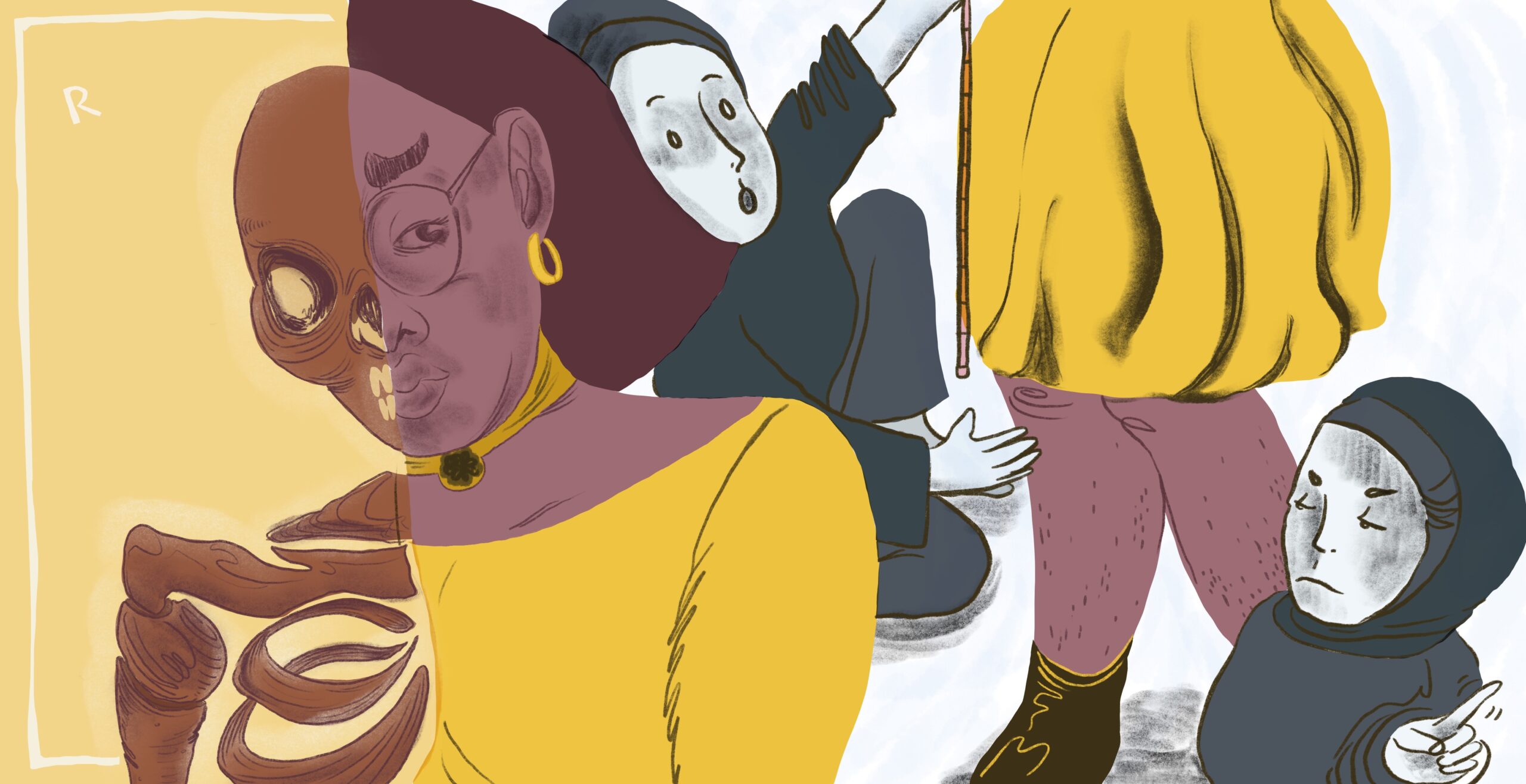
    It has never been important to me but it has become important through comments and unsolicited advice from the older members of my family. What I wear is deemed important, that the shortness of my school skirts is the reflection of my upbringing, that the lack of hijab on my head is the reflection of my lack of faith – once again, numerous physical representations that do not and should not define who I am inside. My philosophy is that the only ones who matter are the ones I love, and these individuals should know me enough to know that my physical appearance does not reflect my faith and my character. And that I have always been more and beyond my physical appearance. 

    This is the body that I have been chosen to live in. As much as I am grateful, I wish that it had never been the defining reason behind actions that I have chosen to do. I wish I was strong enough to live beyond the comments, to know that my self-value is more than them. But as much as I wish for all those things, the pressure from public comments, media and people that I know have heavily influenced me to gauge my self-worth based on my physical appearance. And every day, I am fighting against that influence. 

    I know: I am more than my body – more than my skin color, my weight, my features and everything else, and so is every other woman. We have our intelligence, our independence, our spiritual faith; we have so much more to us that is uncontainable by our physical appearance. And yet, we are still being policed and contained, our bodies reduced as the key to who we must be – but I believe that we can fight it. I play my part in advocating for that now, in reminding my friends that they are more than their temporary physical selves, as well as reminding myself of that fact. I will continue to live authentically, unbothered by my physical appearance and the comments that it might bring – because bodies change and that’s just a natural thing that happens, and in doing so, I hope that slowly but surely, we will change the societal preoccupation with our bodies. 

    We are all beautiful; that’s how it has always been. 

    _

    Aria believes in the empowerment of women and other marginalized groups. She has written essays on social inequality and other feminist issues in university and has a very strong passion for advocating for equal human rights. Apart from that, she feels at home in the world of screenwriting and watching philosophical films with her old cat.

    Illustration by Ishibashi Chiharu
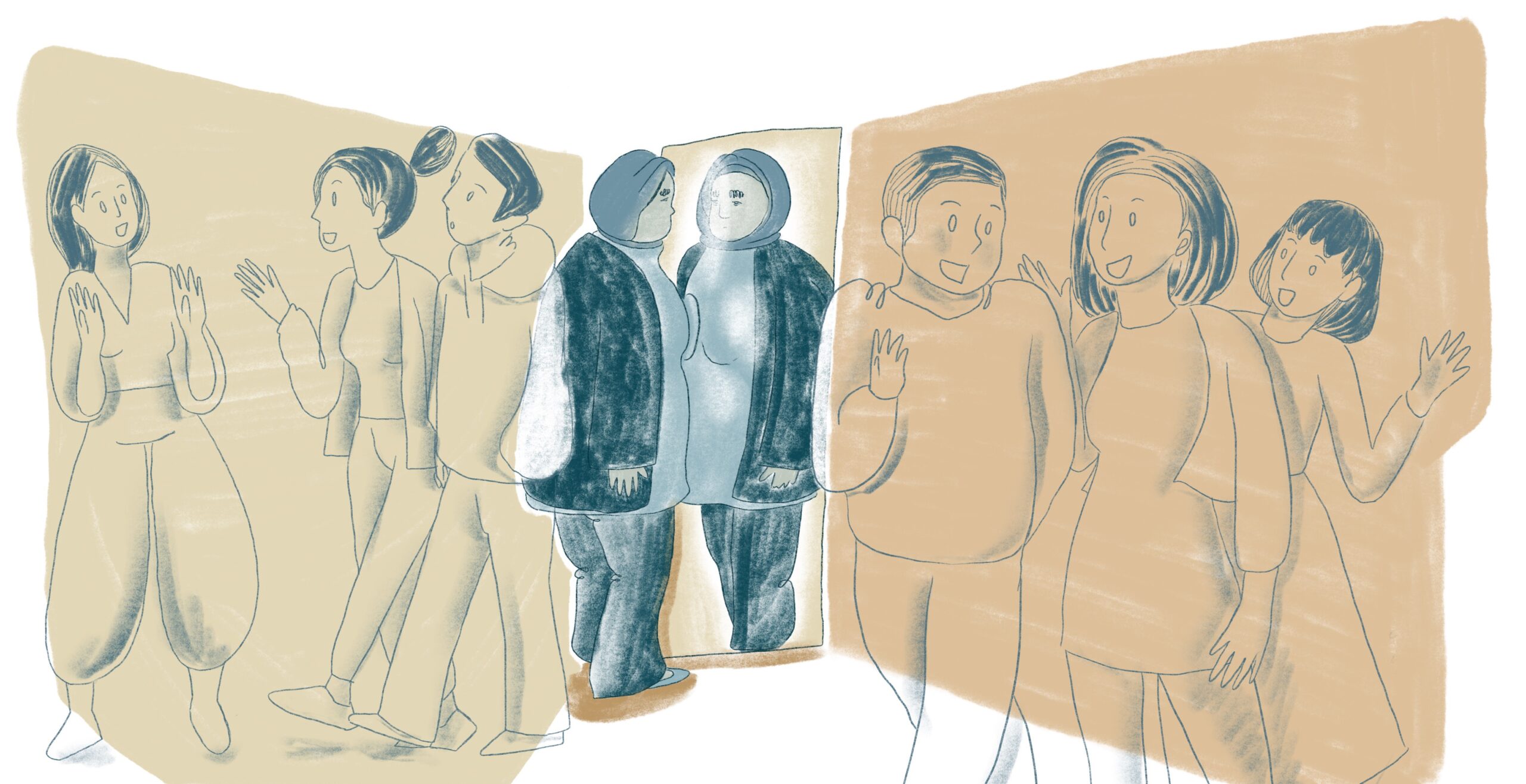
  • Of Boobs and Babat: A Story About My Body

    Of Boobs and Babat: A Story About My Body

    by Raudah

    __

    As a plus-size woman, body image is an inner demon that I have fought, lost and have a love-hate relationship with over the years. Heck, sometimes we have brunch on weekends. 

    I dislike my body. Everything is too much; my feet are too big and I am not able to buy cute shoes. My boobs are too big and jiggle when I walk. I have more than one chin. My thighs are too big and I have lost one too many favourite pants due to this. My mid-section makes people sitting in the reserved seat do a double take. On bad days, I even hate the two moles on my chin (I named them ‘cindy’ and ‘fatimah’).    

    As a Muslim woman who dons the hijab, I am unsure of the impact that societal pressures of body image is supposed to have on me. On one hand, I feel immune from the body image concerns that are forced upon women due to my non-conformance to it but yet as a woman I am also part of the narrative. 

    Has my poor body image become a mirror in my self-image? Perhaps. I am well known for being invisible; it’s my superpower. In meetings, I am not seen and people do not make eye contact with me. Individuals whom I have never met before tell me I look familiar when they have never met me before. I am a copy-paste; I am just another fat brown woman like the many others alongside me. 

    It started at a young age when I was constantly mistaken for the older child because of my bigger frame and round stature. 

    “oh, ni anak number dua, badan besar eh”

    (“oh, this is the second child, big-sized eh”)

    Statements as such were casually passed with looks from the adults especially the aunties. I never did connect the dots until much later in life. It took me many years to finally comprehend the ‘look’. The look was one of sympathy; sympathy because a fat girl does not get the best in life. Being fat makes her less desirable as a woman and as a prospective wife. Fat girls do not win in life.  

    Throughout my formal schooling, I was a lifetime member of the Trim-and-Fit (TAF) club. From primary school all the way to Pre-University level.

    “Eh you know TAF club backwards is what?”

    “F-A-T!!”

    Bless you physical education teachers for your creativity.

    I recall attendance for TAF club was compulsory; should one miss a session of TAF club; their name would be called out during morning assembly. Not only are you punished for being fat, you are also punished if you do not acknowledge that you are fat.  

    In secondary school, I became very aware that my breasts were bigger than they were supposed to be. Girls and boys would talk about them. The girls would mock them and ask me where I custom tailor my bras. Boys would stare at my breasts. This confused me greatly as I thought of breasts as just lumps of fat; just like what camels have. It was not helpful that they would speak about my body in a language that they assumed I did not understand. It was only in secondary two when I was standing outside Malay class when I was spotted. 

    “Eh siak ah, dia paham melayu siak”

    (“Eh siak, she understands Malay siak”)

    In pre-university level, I proudly took on the title of Vice-President of Fitness Club, a designation given to me based on the fact that I was the second biggest person in the club. The fitness club was a co-curricular activity club for the ‘badan besar’ people in the school. It was a daily activity club that required the members to expel a certain amount of calories before we could be released for a recess break.  

    I had associated big with bad and small with good. As a girl; as a woman, the smaller you are, the better and more desirable you become. I had been warned with cautionary tales that fat girls do not end up with husbands or that boys do not like fat girls. Tales were spun about a fat girl whose could not find love or lost out on love to a slimmer smaller girl. Fat women were participation prizes in a male competition when slimness is the ultimate prize. 

    I have my phases of ‘I’m-going-to-get-slim-and-people-will-discover-my-true-potential’ phase. In my head, it would be my Cinderella moment; as the layers of fat peel off and out emerges a slim Raudah with only one chin. In this fairy tale, I would be noticed; waiters will see me and serve me first, people would give way to me and I would finally get attention from non-senile men.  

    To date, I do get statements urging me that I would be more desirable if I lost weight. This makes me more rebellious as if I do want to get desirable, I would do it on my own terms and not because you asked me to.   

    I am a lot more comfortable with my body. At work, the big boob-ed ladies would exchange information on where to buy good bras and any upcoming bra sales. We would compare boob sizes. We have intense heated debates based on whose boobs are bigger [Ok, not all the big boob-ed ladies participate in the debates, mostly me and a couple others…. Ok and these debates and conversations are initiated by me]. 

    “Asalkan tetek lebih besar daripada perut”)

    (As long as your boobs protrude more than your tummy)

    However, I would be lying if I say I am 100% comfortable with my body. I do have bad body days when I reprimand myself for staying on being fat. Perhaps it is not too late to get slim and be noticed. I would binge download fitness app that would set off alarms reminding me of my weight goals. After a few days, I would delete the apps and decide to cut sugar and white rice from my diet. Another few days later, I would resume eating white rice as the hawker centre near my office does not have a wide selection of halal food. I personally prefer wanton noodles, kway teow, and yong tau foo but it is difficult to find halal food stores that sell anything other than nasi padang. 

    “Everyday makan nasi padang, badan pun besar macam padang”

    (“Every eat nasi padang (field), body also become big like field”)

    My body image journey was a tumultuous one and I doubt it will end anytime soon. Just earlier this week, I waited patiently for 45mins for my Hershey ice-creams at MacDonald’s. I have also made attempts to inculcate my body insecurity into part of my sassiness.  

    P: You walk fast for someone who doesn’t look like she can walk fast.

    Me: You mean fat?

    P: No, I didn’t say that. I just said you don’t look like you can walk fast.

    Me: * walks faster*

    At my age now, I feel that I have lost out in the genetic race of beauty, looks and body. The younger girls also seem to be more versed in the act of looking good. Taking the train to work every weekday morning and seeing the Shenton girls with their high heels and immaculate dressing and make-up; I legitly wonder how they walk in those stiletto heels. Most importantly, I hope that they wear stiletto heels not because it is expected of them but because they want to. I hope they did not have aunties who looked at them with sympathy and told them they need to look and dress in a certain way to ‘win’ in this world.  

    __

    Raudah is a plus-size Indian Muslim woman single woman who mostly wears black of dark-coloured hijabs because she gets food stains on them. Dreams of garnering an army of social workers to change the world and advocate for social justice and equity for all.

    Illustration by Ishibashi Chiharu
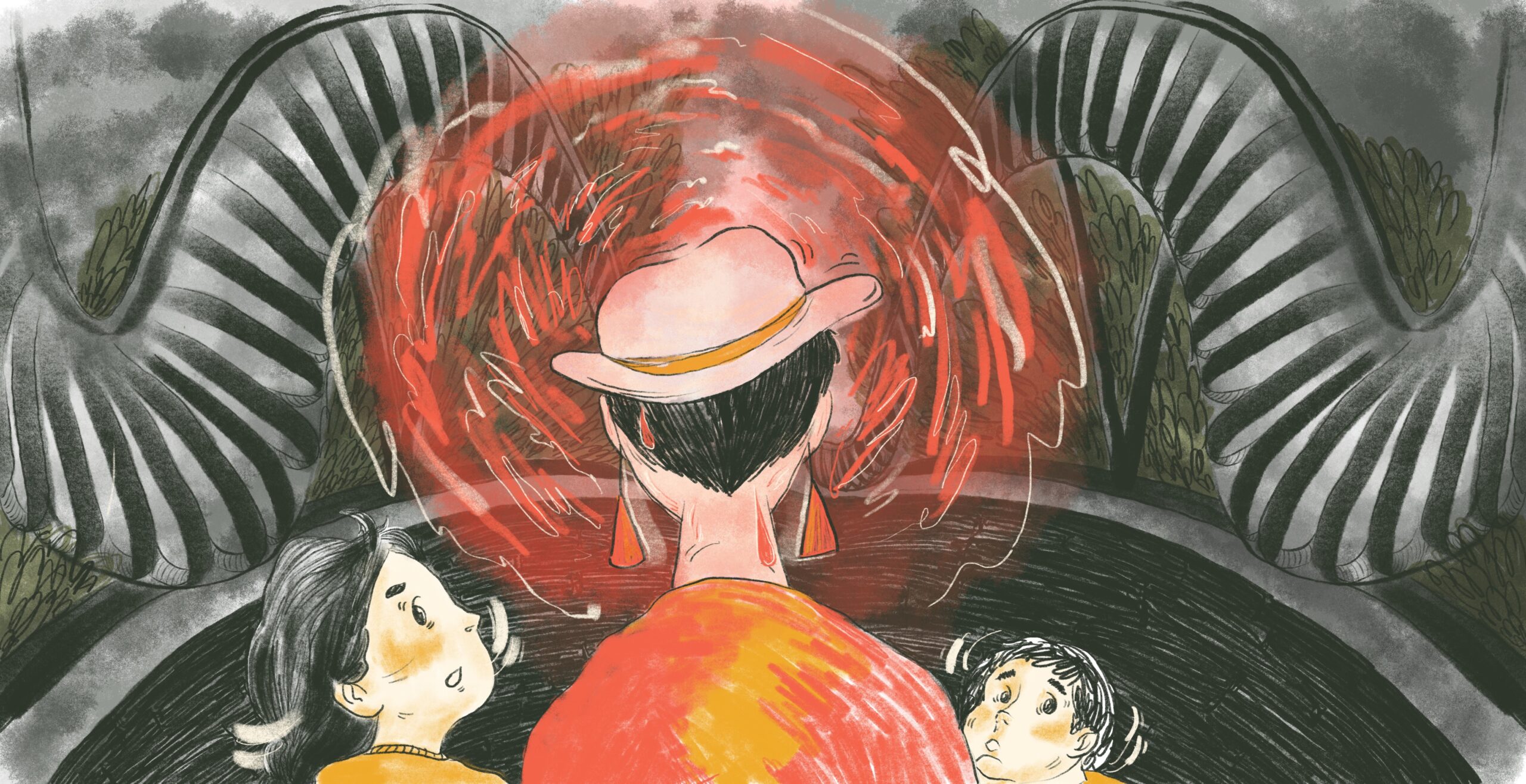
     

  • Editor’s Letter: Body Image

    Editor’s Letter: Body Image

    This editor’s letter is guest-written by Nurul Huda Rashid

    _

    Pertumbuhan tubuhku / Seeds & the Soil  

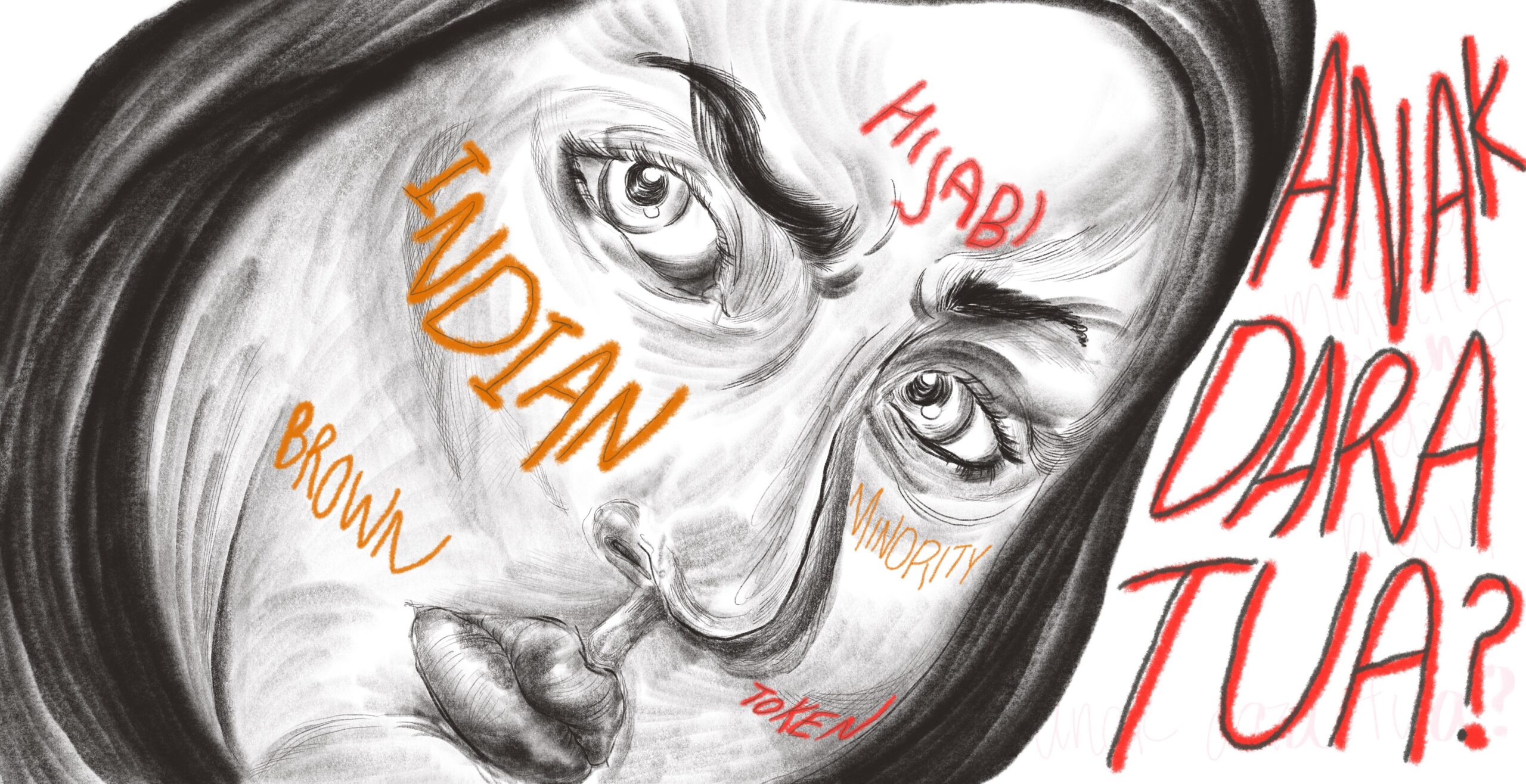
    I was in primary school when I was made aware of the darkness of my skin. Its hairiness was identified as ‘gorilla’ and  I was told that I could never be as beautiful as a ‘Malay’ girl. The ‘Indian’ in my “race” had contributed to my bodily grotesque; something I repeatedly tried to shave off but to no avail. I quickly learnt that traits on my body, mapped against my “race” positioned me not just as a ‘minority’, but a ‘double minority’ and that this would lead into a lifetime of justifications for those who insist on seeing through difference.

    It continued into secondary school when they asked why the corners of my lips were pigmented and not pink, when I was told to pull up my socks to hide the hair on my legs, and that boys would never fancy me because I was fat. I grew up very much aware of what it meant to not fulfil prerequisites of being ‘beautiful’, and that it had everything to do with how I looked. This was something other girls planted onto me, tagging my body, my skin, with words shoved into their own minds, for they too were being measured through such language of “beauty”. We all were. Semua. 

    When I reached puberty, I was told to cover up, to don the hijab because I was now a woman, although, nobody bothered to explain to me what being a woman meant, except that now, all my sins would be counted. Every wrong deed I did would be punishable and eventually lead me to neraka jahanam (hell): because somehow, women’s bodies would be held accountable for the actions of men. I was now made a visible Muslimah, a walking form made to embody my religion, unaware of what I was to contain. In that one night, in those drips of blood trailing down my thighs, I was made to believe that it would miraculously sprout awake my womanhood. But it did not, and it felt like a betrayal. 

    I remember looking to my mom, my aunties, realizing that they too did not have the answers. We were all reformed into ‘woman’ through the narrative of ‘religion’, uttered through tongues of society. They dictated us into roles of anak dara (virgin), wife, mother, but did not bother to delve further into what this meant in Islam: both out of convenience, but also ignorance of those times.

    I remember growing up in the 90s and following my mom to her kelas agama (religious classes) where men repeated the roles and duties of the wife to her husband. But what about the roles and duties of the husband to the wife? I would often question this, but was always met with silence. Looking back now, I realize how we were and still are measured through our bodily transformations, which would determine the display of culture and religiosity, the potential to bear child, and the assumed nature of motherhood. This is not something unique to my community. The body female is overly-determined by biology to the point that if she/they are not able nor willing to perform those allocated roles, shame, exile, and sin is sown into her/their name and being.

    Mandul or infertility was another word I learnt very early on in my days as was anak dara, and it frightened me. For it was another possibility of my body’s betrayal. That it would not take me through the rites of passage into womanhood; that in not being able to embody and perform these roles, I would be incomplete.

    My body moves in this world through your classifications 

    Dan aku benci  

    *

    Sewangi-wangi Bunga / The Body Symbolic 

    Anak dara: virginal, ripe, ready. But actually meaning: hymen, blood, menstruating, vagina, sex. And alongside these: honour and shame. These labels swirl around me every day, awaiting some encounter that would send them tightening upon my skin, scraping away any evidence of me, for I was merely reduced to a symbol.

    I recall an instance during my weekend madrasah classes when the ustazahs would gather us to prepare for zuhr prayers. I was having my period that day, and that meant not having to perform prayers. There were a number of us who couldn’t pray and this meant that we could stay in class as everyone gathered in the prayer hall. That day, there were too many of us in the classroom; the ustazah grew suspicious. We were made to line up, to head to the toilet, to be checked. We were told to go into the cubicles, swab ourselves using tissue paper to show proof of our menstrual blood: to prove that we were not lying, that we were not just using our periods as an excuse to not pray.

    I was traumatized. I had always been told to hide and throw away all evidence of my menstrual blood, but here was a woman who demanded proof of it, so that she could determine whether or not I was sinning. I stood in the cubicle, questioning what right this authoritative figure, a religious woman, who was not my mother, had to seeing a part of me. That day, my blood became a sin, a vestige of shame presented on the tissue paper I handed over. That day, I learnt that my body, my menstruation was not mine. And it would take years of growing and self-love to reclaim her. 

    The phrase anak dara is also one that older Malay men like to use when addressing younger women. There have been too many a times when my taxi ride is soured because the driver, an older Malay man would address me as anak dara. 

    Nak pergi mana anak dara ni?
    O you sweet young thing, where are you going? 

    It is hard to really translate anak dara into a single term for it embodies all the above-mentioned qualities of womanhood. When a woman uses it, it sparks judgment and insinuations about marriage and when I would bear children. But when salivated through the tongues of strange men, it becomes a vile, lecherous phrase that instils both anger and danger, two words cast alongside each other, as instances of vulnerability are also when we are most triggered and driven into rage. There have been times when I would immediately exit the taxi when greeted as such, but in my younger days, it meant having to sit through the danger brought upon me by that man’s articulation of my body, and although, there was no physical harm done, it was an infestation that was emotionally scarring. 

    In these days of being in my 30s, women no longer speak to me as anak dara, but would instead whisper, anak dara tua (old maid) to mark resignation of any endeavour in getting me married, for my body has passed its prime. I am also purposefully vicious against older Malay men in their utterance of that phrase to me because it reveals more about their lack of shame than it does mine. And it is time that both men and women learn how they speak about our bodies: how they use the supposed ‘language of religion’ as means of honouring or shaming us, and how value is not rooted in bodily forms and traits that adopt homogenous ideals and displays of ‘beauty’ or productivity. Enough of:
     
    She is beautiful, you are not. But she is not as smart as you.
    She doesn’t wear a hijab, I do. I am the more religious one. 

    You don’t use the hijab, it means that you don’t pray.
    They have a nice body, mine is too fat, bulges everywhere. I will never be beautiful.
    When are you going to bear children? Don’t waste time!
    Your lipstick is too bright, macam perempuan jahat (like a nasty woman). 

    You are pretty, but sadly, you’re too dark.
    It would have been easier to marry you off, had you not studied so much.
    Anak dara belum kahwin? Macam mana ni? (Not married, how like that?)
    She took off her hijab, what a hypocrite! Tak takut dosa! (Not afraid of sin!)

    Enough. I am tired. We are tired.

    *

    Bernafas sekali lagi / Me, We: Powering through New Vernacular

    My experiences as a child, a young woman, made viciously aware of her body through demarcations of “race”, beauty, womanhood, difference, is one that many of us, unfortunately, go through. I believe that it has shaped many of my preoccupations as an adult: that I will always feel enraged when persons are attacked because of perceived difference in their bodies, their identities; that my presence in a room filled with a majority group will always ready my defence/offense shields, initiated when needed; and that I will always find a way to shed light on how issues of intersectionalities resonate in almost every instance. I also recall my experiences growing up as a Muslim girl because it made me realize how severely lacking Islamic education was at that time. Sure, there were classes about Islamic history and law, but there has been a lack of Islamic education with regards to aspects of gender and sexuality in our society. I hope that this is changing, that young girls, women, as well as young boys and men, are being introduced to stories and rights of women in Islam. That in reference to hijab, the veil, it was also directed towards men: that they would also govern their bodies, their behaviour and gaze with respect to women. All these are central to how we can hopefully re-narrate an understanding of our bodies, our identities through the religion, that is not one just coded within power structures of organizations and family through the utterance of sins, but more so, through compassion for the self, and those around us. 

    In this age of new vernacular, I was also introduced to myself as a ‘minority’ person, a ‘minority’ body, a ‘double minority’. That I am not just ‘Indian’, but also a ‘brown woman’, a term borrowed from feminist and subaltern movements across the world. Thus, when I think and write in reference to myself as a brown woman, as a ‘minority’, I tend to use a collective ‘we’, gathering from a community of womxn who is no longer imagined, but very much real. And our realness is not something we will allow to be spoken about through stereotypes or tropes, words attributed to our bodies, our being-ness. It is a collective that we are constantly working on to correct, not just for your education, but more importantly, for ourselves, so that we may gather from a larger and more inclusive breathing of bodies, of selves. 

    We, as brown and minority womxn, have always been reminded of our otherness. It stems from that perspective of difference that filters and assigns us as residual bodies, existing to labour through your stereotypes, which not only reside within everyday society but also within the digital virtual space of the Internet. This is something we witnessed during the brown-face ad a few months back, which revealed a lot about the mind-set of those in our society have about our bodies, how they perceive their representation of us. And this representation is one that highly permeates into the digital world, where our bodies become visual-digital, created and configured alongside tags and narratives that build up a depository of editorials, reports, campaigns that end up discriminating or further polarizing us: that one display of bodily identity is better than the other. They speak of their representation of us like it is a good thing. But we know that it comes with its own baggage that we, as brown womxn, are made to shoulder. It pits us against each other, having to use it as means of questioning degrees of whose ‘Islam-ness’, whose ability to speak a ‘better language’, which versions of bodies better fit categories of ‘CMIO’, ‘Hijabi’, ‘Muslimah’, etc. etc. etc. tak habis habis. 

    We are thus no longer content with words and approaches of ‘representation’ for the sake of your ‘diversity’. We are not your token minority other. Our bodies are not to be used a part of your line-up to display inclusivity, because that is all we are to you: bodies on display, digital data for your online campaigns and hashtags; yet another hijabi lady, whom you would have on your posters to celebrate National Day, but forbid as part of uniformed occupations. Are our bodies to be made representative of unity, or fragmentation of your ‘multiracial’ policies and cultural imagination? Make up your minds. 

    I am, therefore, highly critical of platforms that seek to use us for their displays of ‘representation’, ‘diversity’, ‘plurality’, ‘togetherness’, ‘multiculturalism’, etc. especially if we are invited to fit their checklist of other. I also believe that we have to constantly do the work, for ourselves, in how we gather and who we include, based not on bodily difference, but through offerings of empathetic solidarity towards each other’s’ experiences. Because, in truth, one person will never be able to fully understand how one body experiences their world, for society (and even, we, as the community) uses different yardsticks of measure for each of us, offers different words to describe us, and have incomplete infrastructures to fully facilitate us all. There is thus much energy and labour needed to overcome these structures, to decolonize tongues and minds even from parochial ideas of ‘culture’. We need to grow our own we community, with new utterance that will displace ideologies of difference, for expressions of inclusive nurturing. For every body. 

    _

    Nurul Huda Rashid is a researcher, photographer, and is currently pursuing her PhD in Cultural Studies at NUS. Her research interests focus on images, narratives, visual and sentient bodies, feminisms, and the intersections between them. In her practice, she is keen on exploring methods and strategies of knowledge production through acts of archiving and annotation of both text and visuals. She has exhibited and mentored in programs with Objectifs and The Substation. Nurul loves smelling old books and building on her collection of books and plant babies.

    Illustration by Ishibashi Chiharu
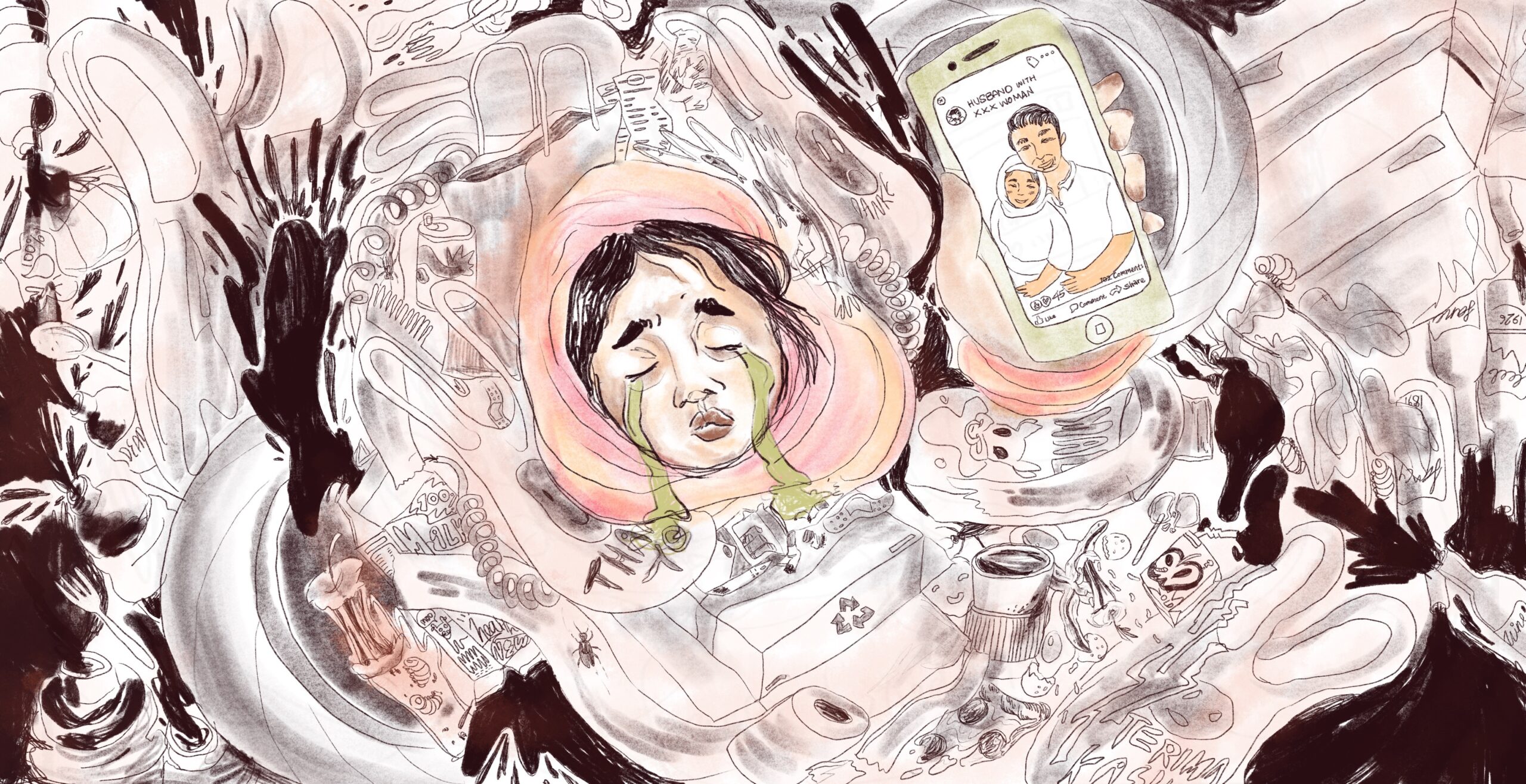
  • The Journey of a Single, Unwed Mother

    The Journey of a Single, Unwed Mother

    by Rahayu Natalya

    _

    Being a single unwed mother is a challenge on its own. Being a single unwed mother in our country and in the community is a harder challenge altogether. 

    My journey has not been an easy one. It’s been a roller coaster ride from the moment I found out I was pregnant with my daughter. I tried to hide the fact that I was pregnant for as long as I could. When word got out, I felt like I was being ambushed all at once by family, society and even friends. It goes to show you that in life, you will know who are the people that will stand by you through it all, be it good or bad.

    I had an empathetic employer that was very sincere and understanding of my situation. It was a ray of sunshine that I needed throughout the hard high-risk pregnancy. My partner at the time was not so empathetic. He was abusive mentally, physically and emotionally.

    I still pushed on, I still found courage and strength to stand by my decision to have my child. My family was not much different from my partner. The trauma was unbearable but I still found strength from the hate and courage from the torture that I had to endure. 

    At 5 months pregnant, I found myself single, jobless and homeless. My partner decided that he didn’t want to be in a relationship with me or the unborn child. So he left right when my pregnancy got critical. I had to move out of the apartment and had to swallow my pride and begged an aunt that I always looked up at as a mother for help. She agreed to take me in but under her rules, her judgments, and her wrath. 

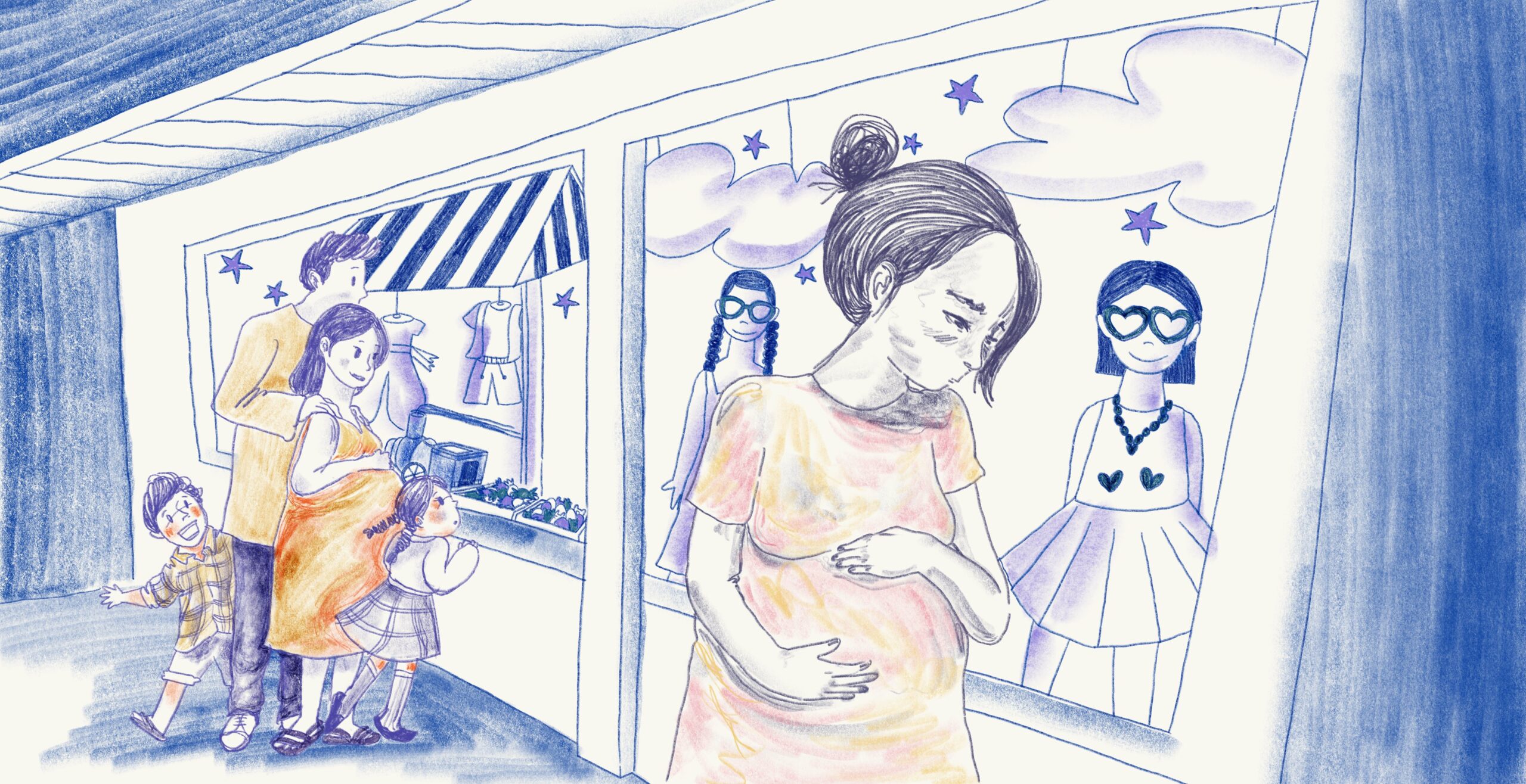
    Nights became a very lonely time for me. Laying on a piece of comforter on the hard, cold tiled floor was a punishment for me being “dirty”. A sinner. Sleep was the hardest thing but I forced myself every night to just close my eyes, cry in silence and drift away. Days were better, I would go out in the morning, to my medical appointments just to wander around the malls, window-shopping for my unborn princess, wishing that I could afford so much more for her arrival.

    Weeks go by and my health got worst. My kidneys were failing and by now, I was severely swollen from water retention. 

    I was strongly advised to be admitted to the hospital because the doctors were afraid of pre-eclampsia. I finally did admit myself a few days after with a carry-on luggage and teddy bear. 42 days in the hospital, I was known as a permanent residence. A joke between the Nurses and I. Every day it was bad news: about my deteriorating health, my unborn child’s life, and other unknown issues. Every night I would sneak out of bed, go in the bathroom to take a long hot shower and cry. I made sure I muffled the sounds of my cries… It was just easier to face the world with a happy mask. 

    The happiest that I’ve been through my unstable and hard pregnancy was when I was in the hospital. I wake up in the morning eagerly waiting to hear my daughter’s heartbeat. That was the fuel I needed to face whatever I had to that day with strength and courage. The saddest part of my stay was on the weekends. Families get together for visits, the food, the laughter and the excitements that everyone had on the arrival of the new bundle of joy or the anticipation of a new member of the family. For me, I was alone, no visitors, no home-cooked food and no laughter. My very compassionate doctor came to me on a Friday morning and asked if I would like her to approve a “home leave” for me during the weekends. I get to go out for a couple of hours during the weekend to just roam around and get away for a bit. I, of course, jumped at the opportunity. 

    Sometimes, my baby’s dad would come to get me and take me out to Bugis and just sit and have coffee. Sometimes I would just be on my own. But mostly, I was alone. As always, alone to think and deal with the unknown. 

    As a single high-risk pregnant woman with no family support or acknowledgement, I had to think about the pros and cons of the birth of my child. As per my doctors, I might not make it or she, my unborn child would not make it. So I did all I could to prepare for the bad and the good. 

    As I didn’t have a place to stay or bring my child back to, I was desperate to find housing. I requested for home leave on certain days so that I can go seek help with HDB, MPs and SSO. It was not an easy feat. I was denied and rejected numerous times. But that didn’t deter me from being more aggressive and to speak louder to be heard. SSO did step in to help with finances and they did write a letter of recommendations for housing to HDB. I begged doctors, organisations and medical social workers to please write to HDB so that I could get a rental, something to bring my baby home to when she is born. It took a lot of strength, endurance and determination to even get my foot in the door to be heard. 

    But in the end, they still needed my child to be born for them to even approve my request. 

    Another issue that I had to deal with was if I did not make it and my daughter did. Where would she go? Who would take her? Who would want her or willing to raise her with love? I tried to get her dad to sit down and have a discussion but he just laughed and brush it off. My medical social worker got me in touch with an adoption agency. I was not only planning her birth, where to live if we survived but also planning the worst outcome. People say “Hope for the best and prepare for the worst”. That’s what I did. It was a heartbreaking, emotional and draining process. All this and she is not even born yet. 

    My Daughter was born on March 29th. At 33 weeks and only 1.74kg. Seeing her and holding her in my arms made me deliriously happy, sad and so scared all at once. 

    The issue of not having a place to bring her home to, not having much money to provide her necessities and both of our health condition scares the living life out of me. Holding her in my arms gave me strength. You never know what strength is until u have reached rock bottom and there is no way out other than up. 

    I pushed, I begged, I cried and I made sure I was heard. We finally got approved for housing and slowly her dad came around and started giving us money for maintenance. 

    Even though I am doing all that I can and to the best of my ability to make a dollar stretch, to overcome the stigma of “unwed mothers”, to be heard, to fight for our rights in this society, we are still pretty much frowned upon. But I get up every morning and I do what I need to do to raise my daughter to stand tall, to be strong and to love. Because only love can change hate. Only with love can we overcome any obstacles that may lay before us. 

    __

    Rahayu is single, unwed, with a beautiful baby girl.

    Illustration by Ishibashi Chiharu
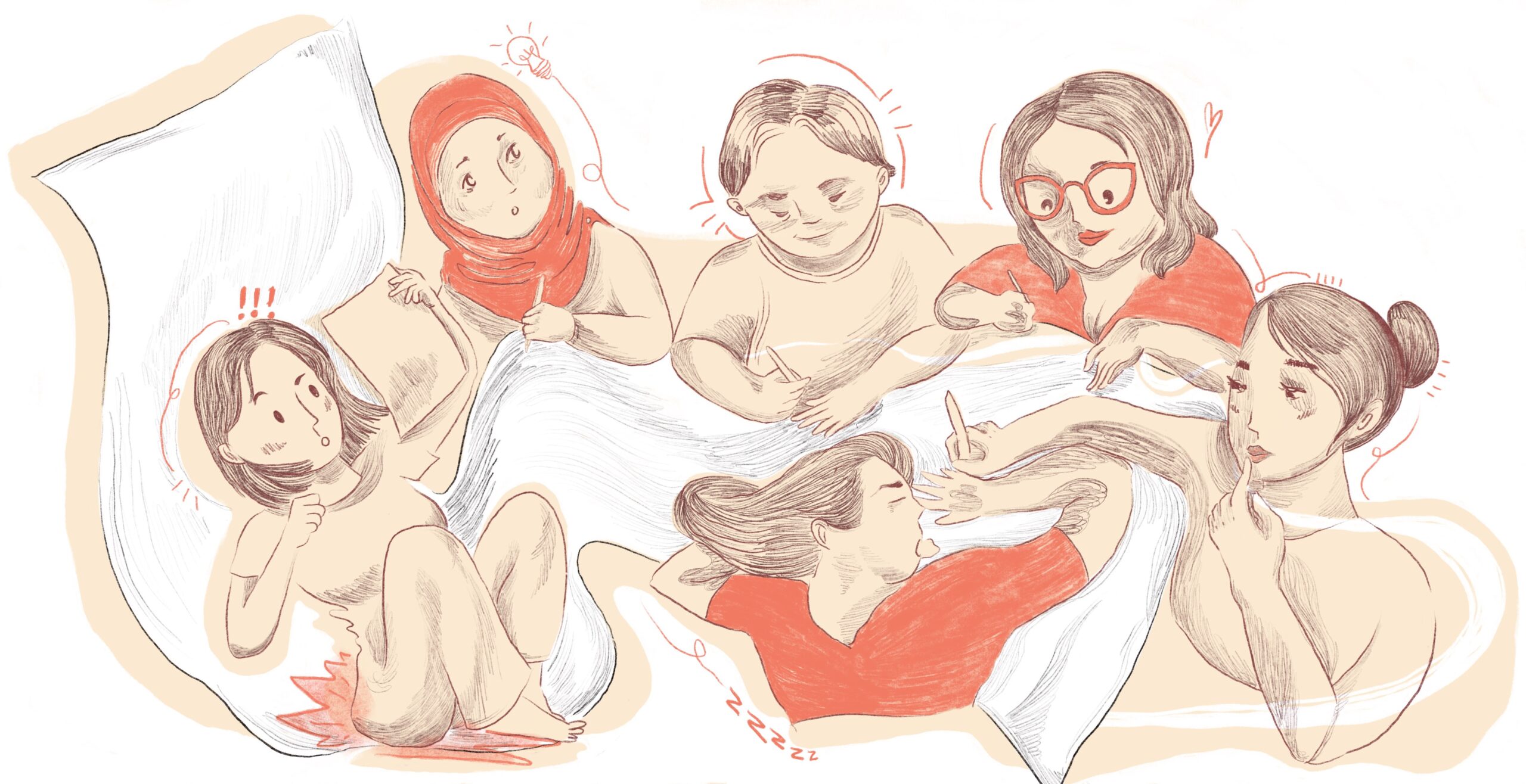
  • The persistence of loneliness

    The persistence of loneliness

    by Sasnidar

    _

    Everyone is born in this world has a story or journey of their own. This piece may have similarities to your own or maybe it is a knowledge that some of you might never know exists.

    *

    It hurts. it really does hurt her. It tires her down. Consistently being the punching bag of an angry mom who does not have her own sense of satisfaction and who is not able to have a peaceful life.

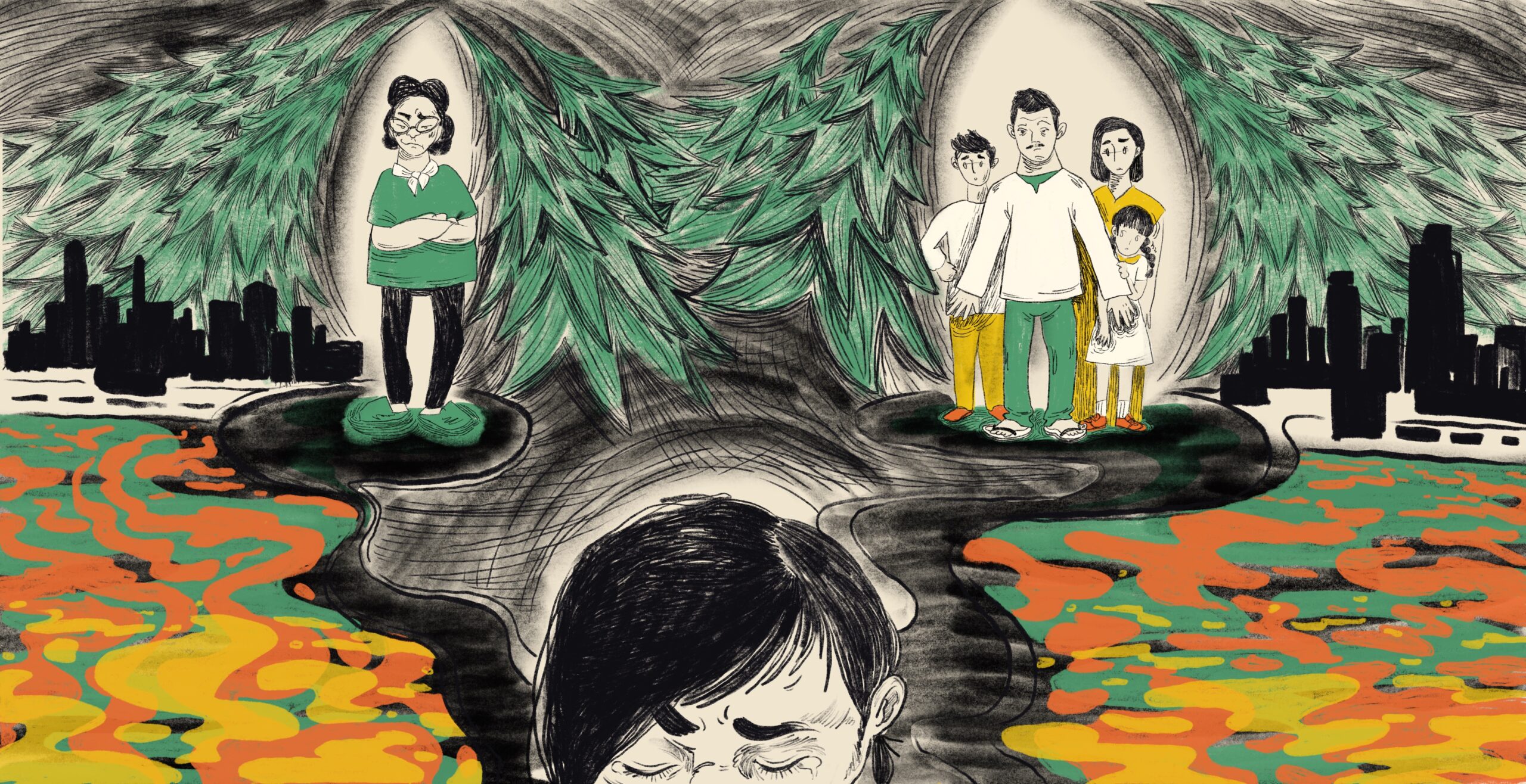
    Remembering everything said from a mother to her own flesh and blood. Blaming all the arguments that occur on the daughter. Telling her she was never good enough for the family and does not belong to the family because she has a dark complexion and was never good in her studies. She grows up living in a house where she is the punching bag, and the constant demand to please her mom is intensely pressuring.

    She did not know that the failure of her parents’ marriage has made her think about what makes a good marriage. She had thought that if being married means always having arguments, and if to have children is to bash them, then it’s really scary.

    Even as a working adult the shadow of her mom is always near, making her feel that everything that is done is done to please her. Every cent earned has to be accounted for and there is a constant feeling of guilt because being a Muslim daughter means always obliging and respecting the one that gave birth to you.

    She started to think that the only way out from being bashed and having to cater to her mother’s wants and needs is to get to know the opposite sex, even though she knows of her limitations in terms of confidence and appearance.

    *

    It only started when she was working at Cisco. A uniformed-working environment with shift work and an environment with different kinds of personalities. Knowing guys there was like walking into closet—just pick and choose. If it matches, boom it’s yours, if not move on to the other one! Hahaha.

    He was a part-time cleaner at night at Cisco but by day his full-time job was as a technician in a factory. She saw him a few times while he was doing his part-time cleaning job but never once had a conversation with him nor really ever noticed him. She got to know him through a friend whose boyfriend was his friend. When she was out with them, he had no choice but to take her on his motorcycle. In fact, he did not find her attractive because of her darker complexion.

    The 8 years of knowing him were full of ups and downs, but at last the big day was nearby. Two and a half years of engagement preparation was made and every paycheck was used to pay for the upcoming event. Even that was done to please her mother.

    Every pay she received monthly, her mother demands $500 even though her pay after CPF deduction was less than $2000. She was working in sales by then, and could only purchase the expensive gifts for the engagement’s exchanging of gift ceremony from the company staff sales and when she received her bonus.

    She remembered she had purchased a Charles Jordan pair of watches but her mom just rejected it and said to purchase “proper exchange gifts”. She changed the gift to a pair Omega watch that cost a total of $2000 after staff discount.

    *

    The whole purpose of wanting a grand wedding was to please the family, and it already felt like a disaster. But I felt I had to go forward with it because of the love we had for each other at that time. I thought that it was a way out and was told that it was a mature age for me to settle down in a marriage. Furthermore, the daily outings was seen as appropriate in the eyes of society and my relatives. After all, it was a really long relationship I had.

    During the soleminization, I had mixed feelings and even felt like I wanted to run away. Even my make-up artist could see that I had mixed feelings. But I thought to myself that I should just go with it. Whatever is going to happen, just do it.

    It was a wonderful first few years of marriage with the arrival of a baby boy and there was even a little change in my mom because her first-born grandson looks good. She was always praised for how cute and handsome her grandson was by relatives and friends, and it made her the proudest grandmother.

    The marriage was still fruitful with the arrival of the second-born after a gap of five years. By this time I was a full-time mom and occasionally got a contract job with hopes of lightening the burden of the hubby. Being told that my mom was too tired to take care of the grandchildren meant the end of a paying job and taking on the job of a housewife.

    *

    Once a full-time housewife, two kids then became four and eventually the household money given to the wife dropped from $800 to $500 because she was told that there was the credit card that would be used for the children and the household, but never for the wife to spend on herself unless with the approval of Mr hubby.

    More time was spent on the kids than with Mr hubby because he was busy working so that the household won’t be darkened (electricity won’t get cut off from not paying the electricity bills) and phone bills can get paid.

    His hard work and dedication for the family is appreciated, and once in a while, they are even able to go on an overseas trip. The sad thing, though, is that there was not much communication between the hubby and the wife. Their conversations were only ever about the children, neighbours, and relatives but nothing about their relationship. They seem to drift further and further apart.

    When there was a shortage of money, asking him for extra money would always be a hassle. He would give it eventually, but the relentless, heavy puffing of cigarettes would come after. Mr hubby was also responsible for his mother (she is deceased now), his married sister who has a working husband, and a disabled sister. He has seven other siblings but he felt that it was his priority to be responsible for them, and so that is where some of his income will go. It’s not that his wife doesn’t agree, but the childrens’ and wife’s needs were not his priority.

    As years past, the children have grown up. The crying of children and attention needed by them has decreased. Even Mr hubby has a new hobby of riding his bicycle with friends. Spending more money on the bicycle and spending more time cycling is now a routine for him. Work and cycling. The wife was again the least of his priorities.  The only priority was to “serve” him every Thursday night and that too felt like a routine with no sincerity. It felt like a “must do” instead of pleasure.

    Mr hubby’s messages every day for almost 18 years has always said the same thing: “today am doing OT”. (Note: OT = overtime) There were no other messages unless the children wanted to eat something else or buy outside food.

    At one time, there was a feeling that there was a need to do something since there seemed to be a great distance between the couple. The wife suggested going for a really nice date but was told off that it was not a necessary thing to do.

    “Why are you following your friends’ need to go for dates. We have been married for almost quite some time, you should know that there is always love.”

    Really? That’s it. She was told going to the market and doing laundry together is a good enough date. Once in awhile it is ok but that is not a real date! Mr hubby is at one corner and Mrs wifey is at another corner, where is the love??

    Since she had always felt alone, Mrs wifey decided she might as well be alone. She decided to file for divorce and walked out of the marriage.

    A Muslim lady that asks for a divorce is condemned by everyone. She was called a slut and bitch by her own mom and was asked to go out of the house since she asked for the divorce.

    She was able to stay in the daughter’s room for almost a few months after the divorce. Leaving the children behind was sad, but she never felt guilty because she knew she had done a lot for the children for almost 18 years. She attended to their every need in schools, tuition and religious classes. She cooked, cleaned and even cycled up and down during fasting month for them. It’s up to every individual to judge.

    *

    After the divorce, being alone was never easy because she was not surrounded by the light of her life: her children. The perseverance of wanting to be alone has made her see a lot and made her think about how others perceive an individual person. It is difficult staying with strangers at the place where she is renting because they all have their own stories and nightmares that they are trying to erase.

    Even though she is all alone, her children are always on her mind. She is always thinking about their welfare and how they are coping, especially during fasting month and waking up for the morning “breakfast”. It had always been her duty in the past to wake up as early as 3am just to cook fresh food for the family.

    Sometimes, when she is feeling so lonely, she will try to sing to ease her mind so she won’t feel so alone. She may seem to be having the time of her life, but she’s struggling on her own. Trying scrap the loneliness is really not easy.

    *

    If this sounds like crap to all out there, then let it be crap. Like I said every human life story is told differently. Even if a love marriage occurs, if one is left to fend for one’s self, if one is always left seeking and hoping, then it was never meant to last forever.

    _

    Sasnidar is 47 and loves singing, cycling and swimming

    Illustration by Ishibashi Chiharu
  • Behind Closed Doors

    Behind Closed Doors

    by Sutera Merah

    _

    [Content warning for descriptions of domestic violence]

    _

    “Alice, Can you help me cross the road, please? I don’t know how to do it with the girls.” It was a call of help to my counsellor. 

    I was at the crossroads of my life and literally standing at the intersection of small roads near the Henderson Waves Bridge. I felt hopeless and angry with myself. Why can’t I even cross the road safely with my girls? What type of mother am I? I have never done that before! I never had the chance to be a mother to my two girls.

    Ajele was 7 and Niell was 4 at that time and their upturned faces look puzzled as they turned to look at my panicked face and the speeding traffic. 

    As a mother, I have never had the chance take them for walks or to push the Britax and MacLaren pram or prepare their milk in the expensive Dr Brown baby bottles from the Baby espresso milk dispenser. As a working mother, everything was paid for by me but motherhood was something I never got to experience.

    February 2015 was the start of a new chapter of my life. That was the day when I walked out of my expensively renovated matrimonial home with my two girls. We had nothing but the clothes that we were wearing. It was the most difficult decision I had to make at that time but I remember thinking it is now or never.

    I have always been there physically for my daughters. The only time I had to leave my kids were for same-day business trips to Jakarta which I normally did once or twice a month. Every time before I left the house to catch the first-morning flight, I will try to kiss the girls while they were sleeping but their father will get angry and I have to obey him to avoid any unnecessary rage. I will try to call them after my meeting before heading to the airport to catch the last flight back to Singapore but their father will ignore my calls and when I reached home at the wee hours of the night and missing them so much, all I could do was look at them from a distance and go to sleep. I am not allowed to have any emotional or physical contact with them like a mother usually does.

    He gets angry very easily. I felt like I was in a competitive race in our own marriage. He had to be the champion in everything and he controls everything. My only responsibility was to go to work and bring back the money so that he can spend it for the kids or have expensive meals with his friends and boast about how much he had spent on the house renovation, how expensive the girls’ school fees and stuff were, how much money he spent on his hobby and the things he bought online. 

    Anytime he didn’t get his way, I will be punished and beaten up. Every conversation with him will end up with bashing, verbal and sometimes leading to physical abuse. I had scars on my forehead, cuts on my lips and near my eyebrows. Today I have scars and pain physically and emotionally. One particular bad incident was being kicked hard on my back because I refused to have sex with him. I still suffer from backache and cannot sit or stand still too long because of the pain. 

    I was called fat and ugly throughout most of the 12 years of marriage. I do not remember a moment of happiness at all. I was beaten even while pregnant with my eldest daughter, Ajele. It was with a 1.5-litre bottle filled with mineral water at my workplace. He took it and hit my head hard with it, I was eight months pregnant then. His rage was uncontrollable and I was constantly afraid of him.

    *

    “Mommy, the milk doesn’t taste the same like how daddy makes it…” Ajele will cry out. I did not even know how many scoops of milk powder should go into the cheap milk bottle that I bought after we left home.

    I did not even know how to cook their brown rice and iron their school uniform the way he did it. There were many things about taking care of my children that I did not know.

    I wish I had the strength to stand up to my husband and do it all but I just walked out from my abusive husband and everything was new to me. 

    My heart broke so often as I asked the difficult questions. Did I make the right decision? Who am I to decide what is right and what is wrong? Do I have the right to take away the children from their father who had been taking care of them since they were born? Do they deserve this separation? Will they blame me for doing this? Why must I take away their privileges…their clothes, books, toys and their father, grandfather and grandmother who stayed a few blocks away from us? It was an exhausting mental conflict of emotions that I had to face then.

    Shit!! Guilt!! I don’t like it! Even recounting these memories are inviting triggers of my traumatic experiences. I could feel my mind and body going through a turmoil of emotions and physical sensations.

    Marriage was hell from the start but I chose to be in it because I felt that I was expected to stay. Once you are married you are deemed to be in it for life.

    I was always planning to run away safely even before the girls were born, but I was worried about what society would think of me. How will my friends and clients think? How will my religion judge me? I am a Muslim and Allah does not like divorce. No one will believe my story because I never told anyone before. The only one who knew was my late brother and I am sure he and my late dad will not let this abuse happen if they were around.

    I am a bad Muslim!! I was so worried about everyone’s thoughts except my own.

                       Shit! Another trigger moment as my mind went back to that time.

    And I tried to make things right….

    “I will give you a year to change and make things better. I will try to be a better wife and mother too… If not I will leave!!!”

    It wasn’t a threat at all. I was calm and tactful so as not to cause any sparks of violence.

    “Fuck you!! Trust me you will never leave this marriage, you takut (scared) with the title Mak Janda (divorcee). Your family, especially your sister, will be so malu (ashamed), your so high-class image is so important to your family. You will never do that or you will see me cutting the children into halves!! I won’t give you what you want. Never!!”

    At that time, me, my family, my society, my people, my religion believe that as a Muslim, I should not initiate a divorce. Instead, I should learn how to cope and be patient, no matter how tough the situation is. I am supposed to stay in this abusive marriage and learn to survive. I must learn to be a better wife so that he will be a better man and will not be violent.

    The next day after I left the marriage, my father in law came to my workplace and told me that I should stay in the marriage. As a Muslim wife, it was wrong to walk out.

    “…dosa besar seorang isteri keluar rumah tanpa izin suami…”

    (“…it’s a big sin for a wife to leave the home without the husband’s permission…”)

    Really? You want to talk to me about rights? My rights as a Muslim woman?

    What about him? His responsibility as a husband? A Muslim Husband?

    Does he have the right to hit his wife and daughter? Does Islam allow that?

    And what about my father in law? 

    Does he know of his responsibility towards his grandchildren, if not towards me?

    My father in law is a good man who practices everything based on being a good Muslim. He is at the mosque every day volunteering his time and people will go to him for advice but unfortunately, his son was a rebel and hates being a Muslim and does not practise at all. And yet, he uses religion against me! He would always say that as a  Muslim woman, I should do this and not this…As a Muslim woman, I will go to hell for everything I do against him.

    Why do you use religion to attack me? 

    I feel sad at how my society often uses religion to back up their unreasonable statements or bring someone down as if my children and I are actually asking to be abused. 

    Religion is the reason for everything. When you go through a tough time it is not just because you are not religious enough.

    “Tu la, kau tak sembahyang, pasal tu semua ni jadi kat kau, kau tengok cik so and so, rezeki tak putus putus…” my older aunts will say.

    (“That’s why la… you don’t pray, that’s why all of this happened to you, you look at aunt so and so, her fortune has never ceased,”)

    Damn It !!

    Why??

    Why must you use faith as a reason for everything?

    What about my friends of other faith traditions? They are happy that their God did not punish them. 

    Allah must be punishing your daughter who lost a baby and another daughter that had emergency surgery because of unexplained pain. Is that Allah’s punishment? But they pray five times a day and wear the hijab and recite the Quran. They are so religious but why are they having difficult moments too?

    I might not wear the hijab but I read the Quran and understand the fundamentals of being a Muslim. My Dad taught me how to be a better person, not because of religion, but as a human being and from a cultural perspective I am expected to be well-mannered.

    My dad prayed and is a religious man but he never restricted us becoming friends with people of different faith traditions. In fact, I was given other religious books on my 18th birthday to read and understand other religions. Because he had given me a strong foundation of being a Muslim, I am not shaken by other religions. I have a better understanding of my friends with different faiths than a lot of people I know.

    *

    Festive occasions like Hari Raya became the most difficult time for a homeless single mom like me. For two years I was not allowed to announce to the visitors who came to my sister’s home that I was going through a divorce and that I am staying with my mother and her at the house. I had to cover up the shame that I brought to the family and went along with the sham. On one occasion my girls and I were asked to stay away from her house and only returned after her guests had already left.

    “Kak, my friends all don’t know that you are separated, if they know, my whole office will gossip…” was her excuse. 

    It happened on a weekday night and my kids normally go to bed by 7pm. But because they think that me coming out from an abusive marriage is embarrassing to them, it was more important that the kids and I have to stay up at the library until it closes. It was one of the lowest points of my life.

    I would have thought that my family would be proud of me for walking out of that abusive marriage. The truth dawned on me then. It doesn’t matter what the reasons are for you to leave a marriage. It is embarrassing for them.

    I always feel that I did the right thing for me and my children by walking out of the marriage, even if I truly saw how our society judges us.

    “Kalau kita dulu dulu, mana nak cerai berai, kita sabar aje sampai ke tua .. Budak budak sekarang salah sikit aje nak cerai.. tak kuat iman!”

    (“In the past, we wouldn’t just get a divorce, we would be patient till our old age… Kids these days, just a little problem and they want to get a divorce.. their faith is not strong!”

    That came from my late dad’s best friend when he came to visit my mom and I was there. Give me a break! At this point, I am already so furious with this society for judging and bad mouthing me, even in front of me.

    The trauma that my children and I went through for the last 4 years was enough for us. What we need is more support and understanding and not any more judgements and punishment.

    The stigma that has been formed by people around us, from the social service sector that thinks that we are lazy and bad for the society, to a legal system based on laws that put single mothers at a disadvantage. Even while working at a major company with no one to help me with childcare, was a huge struggle. I could not share with my employer my problems and eventually quit. 

    It took me years but eventually, I met and got in touch with organisations and people who could help. I started opening up to the right people and learnt how to ask for help. My children and I rebuilt our lives. I am glad that my path now leads to a different journey. 

    I am thankful that I went on to cross that road and opened another door where I could see that there is another world that I could create for myself. 

    A door that opens up to a beautiful view of positive and supportive friends and allies. It is still difficult but the future looks bright from where I stand.

    _

    Sutera Merah loves life to the fullest

    Illustration by Ishibashi Chiharu
  • The Unfair Divorce of a Filial Wife

    The Unfair Divorce of a Filial Wife

    by Noor Redha

    __

    Exhausted. Tired. 

    Tired of everything. Tired of fighting all the time with you. 

    Speechless is all I can say.

    Fear.

    Hopeless and heartbroken all in one.  Tears keep rolling down my cheeks whenever I think about it. 

    I keep asking myself, why me? Why does it have to turn out this way? Why do you have to do this to me? Was everything I did for you enough that you have to let go of me and let me suffer? How could you be so heartless Mr husband when you took my dignity and throw it away? 

    Why do I have to go through so much at this age when I just wanted to start my new journey of life? Maybe this is retribution for whatever sins I’ve made in life. 

    So many questions play out in my mind till this day but still, I can’t get all the answers to my questions. 

    Dating a Muslim man was never my dream because I had the belief that they are never filial and responsible. They selectively follow Muslim law by saying that they are allowed polygamy and easily divorce their wives as and when they like, but what about the wife? They can’t do anything to protect themselves even when they are a filial and good wife. Is it fair?

    When I met my current husband, who was my first Muslim boyfriend then, I was grateful and happy that this might be it! At that point in time, I was all alone and recovering from a bad downfall. I was seeking the attention and love of my parents. Due to my history with my family four years ago, I’ve been separated from my parents and started to live alone. I miss them so badly and was yearning for their presence when he appeared in my life. He was like an angel that Allah had sent to me and I believed it happened for a reason. He brought me to meet his parents after a few days of being coupled. He taught me what is love through his parents as his parents were caring and loving towards me compared to my own parents.

    Knowing I’m renting a place alone, his dad was worried and sympathetic. He suggested that I move in and stay with them instead. It was a hard decision to make as I didn’t want to hurt their feelings. I was thinking constantly about what others might think or say, knowing that a Muslim woman was staying together with someone who was not her mahram. It is considered sinful and against Muslim law. Thus, his father demanded that we get married and not prolong the relationship. Because of this, I feel that he was obliged to marry me when he was not ready and prepared to accept me as his wife. 

    “Saya sayangkan Noor dan saya akan jaga dia sampai saya mati.” I love Noor and I will take care of her till the day I die. I still remember those words, his promise to my dad the first time they met to tell him that we are getting married so as to get his blessings. I was happy and grateful that someone will take care of me after so many things that have happened in my life but I didn’t know that it will end this way. Where did those promises go to? 

    His attitude suddenly changed four months into our marriage. We got into fight after fight due to our financial instability. He gave me nafkah for two months in the marriage, but he would later ask me for the money back. He always asked me for money. He didn’t fulfill his responsibility as a husband but instead blamed me. The fights started when I texted him in the middle of the night and I found out that he didn’t save my number as sayang like back when we were dating. He just let my number be unknown. I was so angry and sad at that point of time that I flared up. Perhaps it was due to the long suppression of patience in bearing his attitude.

    After a few months, Allah sent someone to show me the “real” him through Facebook. My world crashed down when I got to know that he had an affair with a woman in Indonesia. I just couldn’t believe my eyes after seeing the evidence. I felt like it’s the end of my world. What did I do wrong to him? Where did it go wrong? I did my responsibility as a wife such as doing the house chores even though I was sick at that point in time. I didn’t cook for him and his family as I didn’t know how to cook but I did help out and learn how to cook from my in-laws. The reason that I’m being divorced is that I’m an “unreasonable and violent wife” just because of my past. I just don’t understand his term of me being unreasonable.  

    I accepted his flaws and the heartbroken deeds that he has done to me but instead he simply dumped me as if I’m just like garbage. Shouldn’t I be the one who asked for the divorce?

    “Buat apa Noor nak dengan dia lagi. Tinggalkan dia aje.” Why do you still want him, Noor. Just leave him. My father in law told me one day when I was very sick at home. Even his father can’t bear to see the pain and suffering that I’m going through because of this irresponsible son of his. Where did his sense go? Where is the humanity and the caring man I once known? Why should I leave him when I didn’t do anything wrong to him?  

    The feeling of being alone again is very scary and painful but what can I do to change that reality? Women are always wrong in society’s eyes. Even though they have sacrificed so much for the family, they are not appreciated. Men, on the other hand, can easily marry and throw away their woman as and when they like. I wonder how the Syariah system looks at cases like mine where my husband is manipulative, playing the innocent victim while casting me as the bad one. 

    Shouldn’t he give me the second chance to rebuild this relationship like I gave him a chance to repent from his ways? Shouldn’t he be grateful for having me as his wife who is not materialistic and didn’t asked for much from him? All I wanted is just a simple and happy life. Why can’t he provide that? 

    Only Allah knows and has the answers to all to my questions. For now, let time heal this broken heart.

    _

    Noor loves to write, reading novels and travelling.

    Illustration by Ishibashi Chiharu

  • Editor’s Letter: Divorce & Single Motherhood

    Editor’s Letter: Divorce & Single Motherhood

    [This editor’s letter is guest-written by Zubee Ali, the wonderful coordinator and collaborator of our recent writing workshop 🙂 ]

    by Zubee Ali

    _

    “I feel like I have no voice!” Natasha*, a young single mother with a four-year-old shared after her harrowing experience in court trying to claim regular maintenance from her ex. The experience left her shaken and disappointed with the outcome. She is worried that her daughter will grow up hating her for the difficulties they will face. 

    As a single mother, she is trying to ensure that her family receives regular support from her ex to pay all the bills, but in her case, the system is not supportive of her appeal. In other words, she lost. Outcomes like these are not unheard of. Although Singapore is well known for its progressive legal system and policies are in place to help ex-wives claim maintenance, the reality may not be so. Systemic issues and judgements that are not favourable to single mothers do occur. In this case, she was told by the judge that she should not be coming to court so often as this might cause her ex to lose his job and then where will she be? After the court session is over, her ex smirked and laughed as he walked away in victory.

    You do not get to hear stories like these until you stop to ask about the experiences of single mothers and the journey they have to go through.

    Beyond The Hijab and Daughters Of Tomorrow collaborated on a writing project on The Experiences Of Single Mothers for Mothers’ Day 2019. The motivation to start a single mothers’ writing workshop is to give the women a safe space to process the emotional dimensions and events that led to the breakdown of their marriages and how they coped in the aftermath. 

    We hope that this workshop will not only be cathartic but can lead to further growth and a deeper understanding of their experience. By writing their stories, the authors wanted to help readers understand that the choices they made were created out of complex and interwoven issues. These issues could range from societal expectations, family needs, and sometimes even for safety and survival. Whether they made the choice themselves or because their partner decided to leave; the stigma, marginalisation and “how people see and talk” about them is bound to happen. They will, through no choice of their own, fall into the grey area of “ibu tunggal” or “single mother” and face the judgement and sometimes condescension of people they meet.

    The one single myth to dispel about single mothers is that all of them are poor, disempowered human beings in need of help from the public. This may or may not be the case. 

    Just like any other demographic group, diversity exists within the group. Women who are married could still have the same social problems and economic issues as single mothers as well. Some single mothers co-parent with their ex-spouses while others do it alone. Some are financially stable while others struggle to maintain jobs and pay their bills. Seeing single parents with its myriad of similarities and differences is to see them beyond just the label or stereotype. 

    My friend Khatijah* chose not to tell anyone at her workplace that she is divorced, just pretending that her family is “intact” to maintain a sense of normalcy and dignity. She did this until the day she died of a stroke, and not one of her colleagues knew she was hiding this dark secret for almost twenty years. Another friend also kept her divorced status a secret for fear that her adult children will be thought of as less favourable, and could not get married. 

    I remember during the first three years after my divorce I could not identify with the label of being a single mother or feel comfortable telling anyone about it. I carried the heavy weight of failure on my shoulders alone. I felt that I, and I alone, have destroyed my marriage and brought shame and disgrace to my family and community. 

    Other women shared the same story. They could not look at other people in the eye, and many went into depression and isolation. Many lost jobs and opportunities because of the shame and sense of failure. I now see that this contributed to the spiraling downfall of single mothers. The psychosocial impact of a divorce, the emotional upheaval that comes with separation and loss, and society’s poor opinion of divorcees impact women negatively. It is not the act of divorce that leads to the economic and impoverished state of single-parent families (if it happens) but the lack of support and opportunities to enable single parents to cope with the pain of loss and “fall from grace”. The difficulties they face that range from managing their families and finances, and the over exhaustion of caregiving responsibilities, usually caused by an acrimonious relationship with an ex-husband or shuttling children back and forth, should not be dismissed or minimised. 

    It was only many decades later that I could surmise that single mothers or divorced women should not carry this blame alone. Our Malay community celebrates marital unions and to a family’s sense of achievement, seeing their child step into adulthood by getting married or “naik pelamin” is a proud milestone. One minute they are celebrated as “raja sehari” or “royalty for a day” and the next minute they are shunned and marginalised when their marriages fail. 

    When a young adult reaches their 20s, the questions and expectations surrounding marriage began. We are a society that thrives on a culture of marrying young and in most cases, unprepared, without stopping to ask, is this practice harmful to the community. Weddings, whether held at void decks or in more fancy places, are communal affairs, celebrated with music, rituals and feasts, a source of enjoyment and celebration with guest lists of thousands. Whereas divorces are silent, unspoken and hushed up, and adult children (usually the women) return home cloaked in shame to live with their parents, with their baggage full of stories of abuse, infidelity and financial lack instead of bliss and happiness. 

    Thousands of children are forced to go through the trauma and disruption of unhappy marriages. They are raised by women who are dazed and hurt by the emotional trauma of the experience but trying their best to provide a stable home and life for them. Women have to go to court and the legal aid bureau (if they cannot afford a lawyer) often to seek help to fight for custody of their children, claim maintenance and seek school placements for their kids as they move houses. They have to tell their stories of shame at social workers’ desks to ask for financial support, find a place to live and if there is abuse, seek protection and justice. In many cases of mental or physical abuse, the women left the marital home with the children thus leaving the man who refuses to leave. The process of regaining the marital home or settling housing issues could take years of going “up and down the court house” or “naik turun mahkamah” for the single mum and children. 

    Often, they have to deal with multiple agencies and systems, spending precious time waiting and attending court sessions, counselling, mediation, making lengthy applications and the process often repeats itself. Having and keeping a permanent job while all this is going on, is hard, and will be the first to go. It is important and timely that the community knows more about these real-life stories.

    The call to participate in the writing workshop by Beyond The Hijab started in March 2019 and drew six participants, ranging in age from the 20s to 50s and number of kids from one to four. Although the writing workshop was meant to help them with the technical aspects of writing like how to craft a good story etc., it was inevitable that pain and laughter were the tools used to tell the stories. There were some self-care measures like stepping away, literally, if the emotions get too overwhelming or just holding the space as memories and tears spill onto paper and our soul sister needs time to come back to the present. 

    After a period of two months where we met regularly, we were a little bit surprised that the stories flowed easily and smoothly. Turns out it was there all along. As the programme coordinator, I was amazed by the quality of writing, the earnestness in wanting to tell a good story and the commitment needed in time and effort to produce this series. 

    By putting out their stories for you to read, they risk inviting your judgement, biases, but also maybe for some of you, awareness and understanding as well. For many of you, the stories will resonate, either as single mothers yourselves or children of such families. If that is the case, these six writers will tell you that it is worth it to share and talk about your experience. There is nothing to be ashamed of.

    _

    *Names in the post have been changed for confidentiality.
    _

    Zubee Ali is a single mom of 4 children from 29 to 22 years old and grandmother of a 5-month-old. She works in Women Support and Development at Daughters Of Tomorrow, a community-based organisation that helps underprivileged women to be job ready.

    Illustration by Ishibashi Chiharu


  • RECAP: Writing Workshop for Single Mothers and Divorcees

    RECAP: Writing Workshop for Single Mothers and Divorcees

    By Sarah Namazie

    _

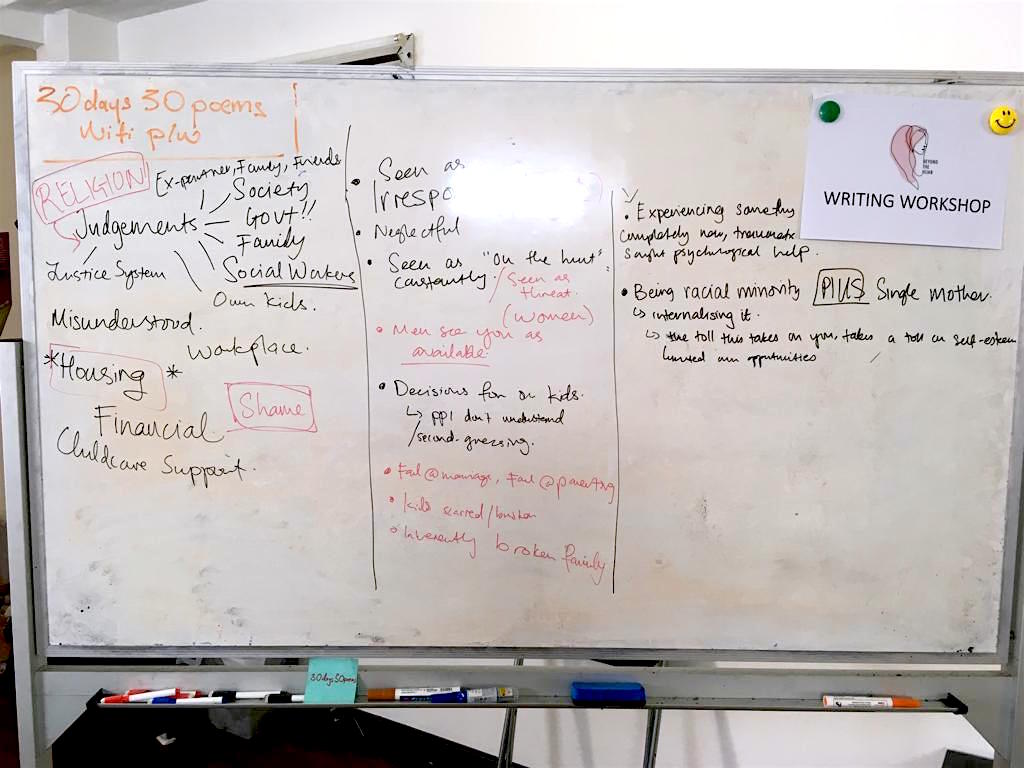
    On the 2nd of March 2019, Beyond the Hijab held a writing workshop for an upcoming blog series specifically written by divorcees, many of whom were also single mothers.

    The session started with enthusiasm and laughter from the workshop participants as they went around introducing themselves and what they would like to take away from writing and sharing their story. Answers ranged from learning how to write and the benefits of it, such as seeking to understand their experiences better, for this to be therapeutic, to share and relate to others and to articulate ideas properly etc.

    Diana Rahim, the editor of Beyond the Hijab, then asked participants to share their experiences as single mothers. They talked about the problems and issues they faced such as judgment from family, social workers, ex-partners and their families, the justice system and even their religion — all of which they had a lot to say about.

    Once it was established that there was an abundant possibility of topics, they were asked to find their personal formative experience or a prominent issue they had faced to serve as a starting point for their writing. It was easier for some than others, with there being some being more experienced in writing than others. Regardless, there were plenty of engaging ideas circulating in the room and each participant brought a new experience to the table.

    The importance of getting their story out was emphasized heavily. With their experiences of facing a double prejudice – being a racial minority and a single-Muslim mother, they are often defined by their circumstances. One of the participants mentioned that “as a Muslim woman, you don’t ask for a divorce,” reflecting the internal struggle and rigid expectations of a married Muslim woman. Another participant mentioned that she sometimes wondered if she was “enough for her child” as a single parent. One of them questioned why a single-parent family is stigmatised as an inherently broken family. Amidst the difficulty of sharing their raw and honest personal experiences, however, there also came rich support and encouragement from the group.

    Evidently, there are unique conditions and issues faced by single mothers. Hopefully, this blog series will be successful in bringing awareness to the realities of these women. The session concluded on a good note, with all attendees agreeing to hold a second session where they could delve into writing properly.

    Look out for the stories written by these writers set to come out soon!


  • Teaching ‘feel-good’ Islam: Toxic Positivity & Silencing the Oppressed

    Teaching ‘feel-good’ Islam: Toxic Positivity & Silencing the Oppressed

    by Mysara Aljaru

    _

    An ‘Islamic’ Toxic Positivity

    “You just need faith in Allah, you are where He wants you to be.”

    These were words I frequently heard growing up, especially from religious teachers in weekend madrasahs I used to attend as a child. It seemed reassuring at that time. Why wouldn’t it be, right? It calmed uneasy feelings I had for a short while, thinking that all I had to do was to be kind and patient regardless of what life throws at me because God is always there and will always be there. As I was taught, what better way to prove your faith than to leave it all to the Almighty?

    But as I grew older, I began to feel more frustrated. Whether it was my weekend madrasah classes or in secular schools, I couldn’t remember being taught any form of emotional intelligence or how to deal with the despair rooted in experiences of injustice. As a minority Muslim woman, what does Islam teach us when it comes to dealing with racism, sexism, Islamophobia or abuse? How do we deal with emotions that stem from these injustices? In the classroom, we are not taught to think critically about the root causes of our unhappiness. We are not taught to question.

    With a lack of resources and a lack of knowledge on how to teach emotional intelligence in the mainstream and Islamic education system, society has come up with another way to cope with overwhelming thoughts and feelings: the culture of toxic positivity.

    In such circles, toxic positivity is also used to silence oppression.

    As a minority Muslim woman, my identity has made me even more aware of injustices in society, aside from those I personally experience. While it was easy for me to reject superficial positive thinking from countercultures like the neo-hippies that are more self-indulgent, toxic positivity in the Muslim community that often silence injustices was harder to fight off. We are often hushed, taught to be silent and to never, ever question the teacher.

    In the Muslim community, trauma is hardly addressed. Religious leaders and Muslim social media influencers who use spirituality as a form of escapism without seriously addressing trauma, encourage a more “Islamic” version of toxic positivity. One is encouraged to think positively of God, believe that there’s a silver lining to everything and to pray away the pain. But the pain never really goes away and will eventually manifest itself in other ways.

    Take, for example, when cases of domestic abuse are addressed in religious circles. Women are often told to have faith in God, to put their trust in the religion, and in some cases, that they will be rewarded for their patience in putting up with an abusive husband. Some narratives I have heard from the community even tell the victim that they are the ‘chosen one’ by God for going through this ‘test’. This toxic positivity approach takes away the need to hold the perpetrator accountable for any form of abuse.

    None of these suggestions addresses the trauma caused by an abusive husband. Even when trauma is addressed, religion is immediately taken as a solution without taking into consideration the welfare of the victim. This becomes a problem if religion itself has been used as a tool by the abuser to abuse, guilt, and oppress the victim. Toxic positivity also becomes more prevalent when the perpetrator holds some sort of religious authority. The abuse of the perpetrator is silenced, more so if he is male, and is especially silenced by other religious figures. Additionally, children who grow up in violent households risk being stuck in a vicious cycle if they do not receive proper support.

    Toxic positivity in religion can also be used to justify violence against the vulnerable, where one is told that certain verses in the Quran are there ‘for a reason’ and we should have faith in the religion without studying it with any form of context or in a critical manner.

    Just two years ago, Ustaz Zaid Isahak wrote in a column for the local Malay newspaper that it is permissible for a husband to hit his wife if she “unreasonably” disobeys him, and even gave guidelines on “beating” the wife. There were rebuttals from other religious teachers such as Ustaz Irwan Hadi, who mentioned that the term “wadhribuuhunna“, used in the verse, “must not be understood literally as a license to ‘hit’, hurt or abuse your spouse, be it verbally, physically or emotionally”.

    While the rebuttal was published fast, it is disturbing that some religious teachers still see violence as a way to solve a domestic conflict. It is also disturbing that we have normalised the idea of having a guideline on hitting women. Furthermore, a lot of narratives on handling domestic conflict still revolves around the idea of the “problematic” or “stubborn” wife.

    Instead of addressing the issues openly and ensuring the safety of other believers and worshippers (as Islam would teach), the victim and the society are encouraged to think positively. One is told to not just think positively of God, but also of the perpetrator. One can hear the word ‘husnuzon’, (which means to think positively and not make assumptions) being uttered continuously as a form of silence towards any protest of the abuse and acts by the perpetrator.

    The perpetrator’s past ‘good deeds’ are instead resurfaced and the case silenced. There is no justice for the victim, for the abused and marginalised, despite the importance of being just in Islam:

    “God commands justice and fair dealing…” (Quran 16:90)

    _

    Bringing Social Justice Back to Islam

    Toxic positivity taught in Islamic schools and encouraged by Muslim influencers on social media also erases an important part of the religion: social justice. Teaching someone to place complete faith in the religion and God without any form of action not only silences oppression but also erases the essential aspect of striving for justice in Islam.

    Our society still grapples with the idea of having faith in God and fighting for social justice at the same time. We don’t know how to avoid staying silent towards oppressors, whether it’s state oppression or oppression happening within the community itself. While Islam has a history of teaching and encouraging the ending of social injustice, society has unfortunately shifted far away from that focus when its practice is reduced only to its rituals.

    This can be traced to how we teach religion in schools and in the home, where it is heavily focused on rituals: how many times we pray, when we fast, or how often we read the Quran. The message of empathy and humanity is lost as we silence the cry of those who need our help. We are quick to diagnose religion as the solution to issues such as drugs and poverty, without looking at the lived realities of the community. The education system encourages us to accept what is taught without questioning while the constant policing by society produces a Muslim society with a mass-man mentality.

    I remember one day at my weekend madrasah, the Ustaz brought up the topic of teenage pregnancy during class. His immediate suggestion in ‘tackling’ the issue was to get the pair married. I raised my hand and questioned him about the importance of getting them married immediately when many of these teenagers had urgent socio-economic realities that were being ignored. I also raised my concerns about creating a vicious cycle by forcing teenagers to get married, to which he responded:

    “I’m thinking in an Islamic point of view, you’re thinking in a secular point of view.”

    Many of us who grew up in conservative household and communities knew what it meant. Secular was a code word for not Islamic. My views of wanting a secure future for the teenagers and their child without forced marriage when they were not ready, was somehow seen as not Islamic. After class, some of my classmates told me they did not agree with him, but none of them spoke up.

    This toxic positivity, assuming that we don’t need to take an active response in critiquing ideologies comes through when the community is thrown with alternative ideas that they may not be comfortable with. While we are told to give a benefit of the doubt to people who may hold toxic ideologies, any other form of ideas that goes against the mainstream view is immediately dismissed.

    A person who shares their bad experiences in Islamic circles such as in a madrasah or in mosques (which is not isolated but just not talked about) would be immediately shunned. Some of my friends and I have faced online harassment by a man who simply did not agree with the work we have done. Toxic positivity creates a monolith of ideas as it usually just defends only a specific thought and destroys any potential safe space the community needs to understand diversity, while at the same time not realising it is unacceptable and disturbing for a grown man to harass women online “in the name of Islam”.

    As another example, passive thinking can be seen especially in Ramadhan, where we’re taught that one reason we fast is to put ourselves in the shoes of those living in poverty. We see an increase in commendable acts of charity; everyone wants to donate cash or food items to the needy. But nobody thinks about or wants to question the system that perpetuates poverty. Very few question the structural barriers that prevent the poor from getting the help they need and deserve.

    Acts of charity, while important, is useless if we do not challenge the status quo. We, unfortunately, do not use this month to really understand the root cause of inequality and to fight the system that causes it. A feel-good Islam also sees people in the community happily sharing their charity acts on social media, while taking away attention from the important issue that needs to be discussed. Such acts allow them to see themselves as saviours to the poor, with no form of reflection on the structures that need to be changed. The poor are treated as “life lessons” on how we should “appreciate what we have”.

    Once a year, we’ll see an article or commentary about food wastage in Ramadhan, but hardly any critique linking it to an increasing capitalistic middle-class Islam that encourages consumerist behaviour. Their idea of social justice is passive, one that doesn’t encourage any form of action or critical thinking.

    However, when they do fight for social justice and speak out against oppression, it becomes selective. They define humanity based on someone’s faith, gender, class and sexuality. Anyone who does not fall into their limited checklist is immediately deemed as deviant and thus, not deserving of any form of kindness, humanity and sometimes they’re not even seen as human.

    You see the community raging as they decry the oppression of Muslims in Palestine and Myanmar but are either silent or are in support of Brunei’s law of stoning the LGBT community. Any form of human rights are only for specific groups of people like themselves, yet they will cry oppression while being completely fine with another marginalised community being oppressed.

    An Islamic based justice response should be one that is critical. It should be just and ensure the safety of the victim and marginalised. The well being of the victim and marginalised should not be ignored at the self-interest of the abuser, nor should the plight of the marginalised only be used as a ‘life lesson’. Faith in Allah means not doing injustice or restricting humanity from someone, regardless of who they are. Social justice in Islam goes beyond protecting the sanctity of the religion, especially since God does not require or need our protection. God needs us to protect the vulnerable and not to weaponise religion to protect perpetrators of abuse and oppression, regardless of the power they hold. Justice in Islam permits no favouritism.

    We need to be more critical of the patriarchal interpretation of Islam that is often used as a tool of abuse and we should not lead passive lives when it comes to fighting abuse and oppression. We must fight against injustices and abuses in our community, for God does not favour the unjust.

    _

    Mysara Aljaru is a former documentary producer who is currently pursuing her Masters in Malay Studies at NUS. Her interest includes representation of minorities in media, decolonising environmentalism and intersectional feminism. She has facilitated with Penawar, a support group for women/non-males raised in the Muslim community, dealing with negative experiences from patriarchal interpretations of religion.

    Illustration by Ishibashi Chiharu