Category: Blog Series

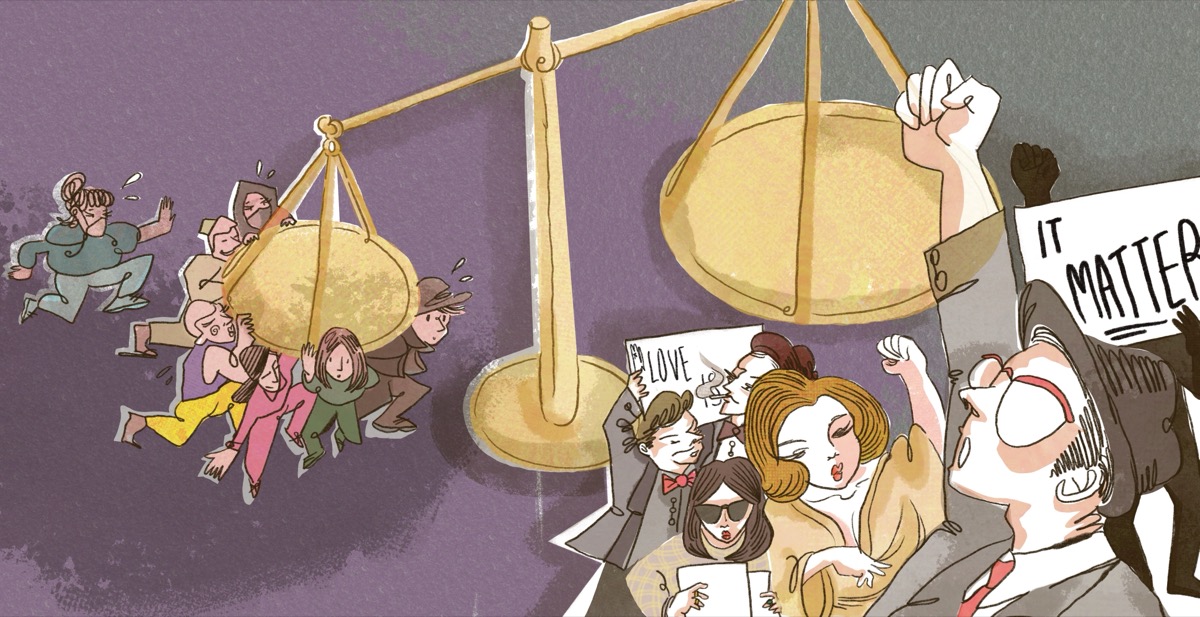
  • Editor’s Letter: Justice

    Editor’s Letter: Justice

    It is without a doubt that justice is one of the most foundational aspects of Islam. When I think of Islam, I think of the fact that it is a religion that was revealed to our Prophet Muhammed (peace be upon him), someone who fought resolutely throughout his life against tribal injustice and steadily worked to introduce reforms to improve the material conditions of women. 

    In the Qur’an, the words qist and adl give us an understanding of what justice means within the context of Islam. Qisṭ refers primarily to its application within the socio-economic domain, whereas ‘adl refers to an essential quality of fairness, equality, and divine justice that can be emulated and practiced in our interactions and behaviours. The Qur’an thus offers an understanding of justice that is directed towards society as well as the self and others, one that is systemic and societal as well as personal.

    This duality makes perfect sense to me: in order to change and improve society, it is important that we also work to improve ourselves, and even as we work on changing our own behaviours, it is important that we do not close our eyes to the injustices of our society and the world around us. In fact, often times when we look closely enough to the suffering and injustices that we face, we see that it is linked to the suffering of others. We do not struggle in a vacuum or in isolation. We struggle under the same system that benefits from us being isolated and passive, accepting of our lot.

    Throughout his life, the prophet exhibited this duality. He not only embodied justice through his fairness, kindness and just behaviours even to his enemies, but he also stood resolutely against injustice in his own community. He was not a passive bystander by any means and actively participated in speaking up to power and standing for the oppressed. His approach was also significant since he moved away from punitive methods of settling conflict and harm in favour of consultation and reform. This reformist and non-punitive approach to justice is reflected in a submission to our series by Ryaihanny Sahrom about why Prison Abolition is a Muslim Issue.

    I have constantly sought comfort in remembering the Prophet’s (PBUH) behaviour. He was a person who had to struggle his whole life within a society that had a predatory, capitalist economic system. In its place, he had instituted within Islam a more socialist ethos of wealth redistribution and the belief that the well-being of all was a collective responsibility. When it came to the condition of women, even his own sahabah were at times resistant to the reforms that he wanted to enforce, indicating just how radical his vision was and how fierce his commitment was to justice. He was constantly moving against the tide of opinion and behaviours and practices that society was uncomfortable in addressing and questioning. It is not an easy task. Similarly, I am inspired by the pieces by ‘A and Anisah in their commitment to speaking up about female genital cutting in the community as well as the “hijab issue” respectively. ‘A’s vulnerability in sharing the mean-spirited comments that she has received due to the passion she has in challenging harmful practices moved me deeply. Here is a young woman who has chosen to speak up, even at personal cost, and I am moved too to know that she has found an accepting community who can support and do this work with her.

    I take comfort too in the following verses in Surah Al-Nisa:

    O you who believe! Stand firmly for justice, as witnesses to God, even as against yourselves, or your parents, or your kin, and whether it be (against) rich or poor; for God can best protect both. Follow not the lust (of your hearts), lest ye swerve, and if ye distort (justice) or decline to do justice, verily God is well acquainted with all that ye do.
    – Surah Al Nisa’ (4), Aayah 135

    I see in this the call for a commitment and dedication to justice so pure and devoted to the universal value of a human life and their rights, that it is imperative to disregard hierarchy in any form—whether within the family, within socio-economic standing, or within society. It is a beautiful reflection of the concept of Tawheed, where all are equal before God. Hierarchy in itself, I believe, is vulnerable to perpetuation of injustice.

    I have learned from the Islamic conception of Justice that in order to live in this world, we must engage with our community and its political realities. My faith is not simply about a transactional relationship with God where I do good deeds with the sole desire to enter heaven. Instead, I see my faith as giving me guidance on how to live in a difficult and painful world, it gives me guidance on a path of struggle, of jihad, against the many injustices that are perpetrated against vulnerable communities.

    There’s been a strange thing I’ve been doing after my daily prayers. As I sit on the mat and supplicate, my usual requests for contentment, safety, and direction for myself and my loved ones have steadily been replaced by larger requests that are no longer individual in nature. To me, in a period of such intense suffering as this pandemic had brought, it felt insufficient and empty to request for only myself and my loved ones.

    When I was young the concept of prayer has always been about requesting for myself and for others, but these requests are always somewhat personal and largely individual in nature. There is of course strong encouragement to pray for others, but they were still largely individual requests—I pray that my grandmother will get better, I’ll pray for my friend’s recovery, I’ll pray for my family’s security, I’ll pray for late relatives. We don’t really ask for bigger things that are more structural in nature. Can I pray for universal healthcare? Can I pray for a world without fascist leaders? I have been doing that these days, even if it feels strange and impossible. Why be stingy in your requests the one who can make all things possible?

    It sounds strange, but I ask for the collapse of our current system that sacrifices the lives of the poor and marginalised, and pray for a world where all can have an opportunity to thrive. I pray for the end of the pandemic, that humanity survives climate crisis, and that we can bring forth a way of organising ourselves and our society that prioritises universal access to basic necessities and human rights.

    As we ride out a pandemic that has seen mostly the poor and marginalised bearing the brunt of political failures, where vaccines are hoarded by richer nations and lacking in poorer ones, where the disease of racism has resulted in attacks against South Asians in Singapore, I think it is as good a time as ever that we take a deep look into how committed we are to journey of justice. To survive this pandemic as a global family, to survive climate change, to survive the persistence of poverty, and bigotry in all its forms, I cannot imagine a journey more imperative than the journey towards justice.

    __

    Illustration by Ishibashi Chiharu

  • RECAP: Panel discussion with asatizah discussing female genital cutting

    RECAP: Panel discussion with asatizah discussing female genital cutting

    By Danesha Shah

    On 13 March 2021, I attended an online panel discussion with Ustazah Lina Salim and Ustaz Sheikh Md Farouq where they discussed the issue of Female Genital Cutting (FGC) within the Muslim community. They discussed from the perspective of Fiqh (Islamic Jurisprudence) and Islamic Bioethics respectively. It was organised by End FGC Singapore and supported by Beyond the Hijab. 

    The session began with a brief introduction by moderator Sya Taha on the four types of Female Genital Mutilation (FGM) as defined by the World Health Organisation (WHO). The practice, regardless of its different iterations, does not result in any health benefits for young girls and women. Approximately 75% of Muslim women have undergone FGC according to a survey done by End FGC Singapore in late 2020.

    Following that, Ustazah Lina explained the four instances in which circumcision is mentioned in hadiths and how it relates to the four official rulings of FGC under the four Mazhabs (schools of Islamic thought) of Islam. The four hadiths that were discussed during the session were Sahih al-Bukhari 6298, Riyad as-Salihin 1203, Sahih Muslim 526 and hadith no. 20994. According to some scholarly interpretations of these hadiths, under Mazhab Syafi’i, the practice is considered wajib or obligatory. However, as scholarly interpretations are not completely unanimous, some Mazhab Syafi’i scholars do regard it as sunnah instead.

    To conclude, she gave some advice on how to deal with differing opinions about FGC within the Muslim community. As more members of the community form their opinions about the practice, the advice she shared that I thought was the most pertinent was to stray away from “othering” those that have differing opinions as this results in further division within our community.

    Ustaz Farouq began his presentation on the Islamic Bioethical Deliberations on FGC. Islamic Bioethics is a concept which refers to the Islamic perspective on ethical or moral issues that result from advances in biology and medicine. As a result of recent medical advancements, FGC has been proven to have no health benefits hence the analysis from an Islamic Bioethical standpoint is key. 

    He went on to explain the positions of both proponents and oppositions of FGC. In his perspective, proponents of FGC center their opinions on that of scholars and jurists of the past. Meanwhile, while opponents of FGC mainly believe that it is a pre-Islamic custom without substantial religious grounding. They also believe in contemporary interpretations of the hadith that do not deem FGC as mandatory. All in all, they believe that modern scientific advancements calls for the rethinking of the practice in the Muslim community. He then proceeds to analyse the weaknesses in both arguments as proponents fail to address the concerns of dignity and gendered notions of morality for women that undergo FGC while oppositions avoid difficult narratives in the tradition of FGC in the Muslim community. He then stressed the importance of not treating the opinions of proponents and oppositions as mutually exclusive and that there is an opportunity to reform if these conversations begin at home. 

    To end off, when deliberating the practice of FGC, Ustaz Farouq urged that it should be firstly, a voluntary and informed decision by the individual who it will be performed on. Secondly, it should be guided by noble intentions and thirdly, for the holistic well-being of the child. 

    The webinar ended with a Q&A session during which one participant asked the two speakers on the issue of consent when FGC is done on girls under the age of 2. Ustaz Farouq noted that although parents do have responsibility over their children in Islam, they do not own them. Hence, parents should not have their children undergo FGC if they are unsure of the possible effects it may have on the child.

    In response to a question about following and trusting one’s ustaz/ah about FGC, Ustaz Farouq mentioned that although seeking guidance from religious authorities is critical, we should not blindly rely on them and instead, create spaces to talk about FGC. 

    As someone who has never heard a discussion of FGC from a religious perspective, the webinar was extremely enlightening as I continue learning more about FGC through this series of online conversations. As the Muslim community grows increasingly passionate about FGC, we should remain respectful and open to hearing opinions of others in our community so that we can work together to achieve reform.

    Follow End FGC SG on Instagram.

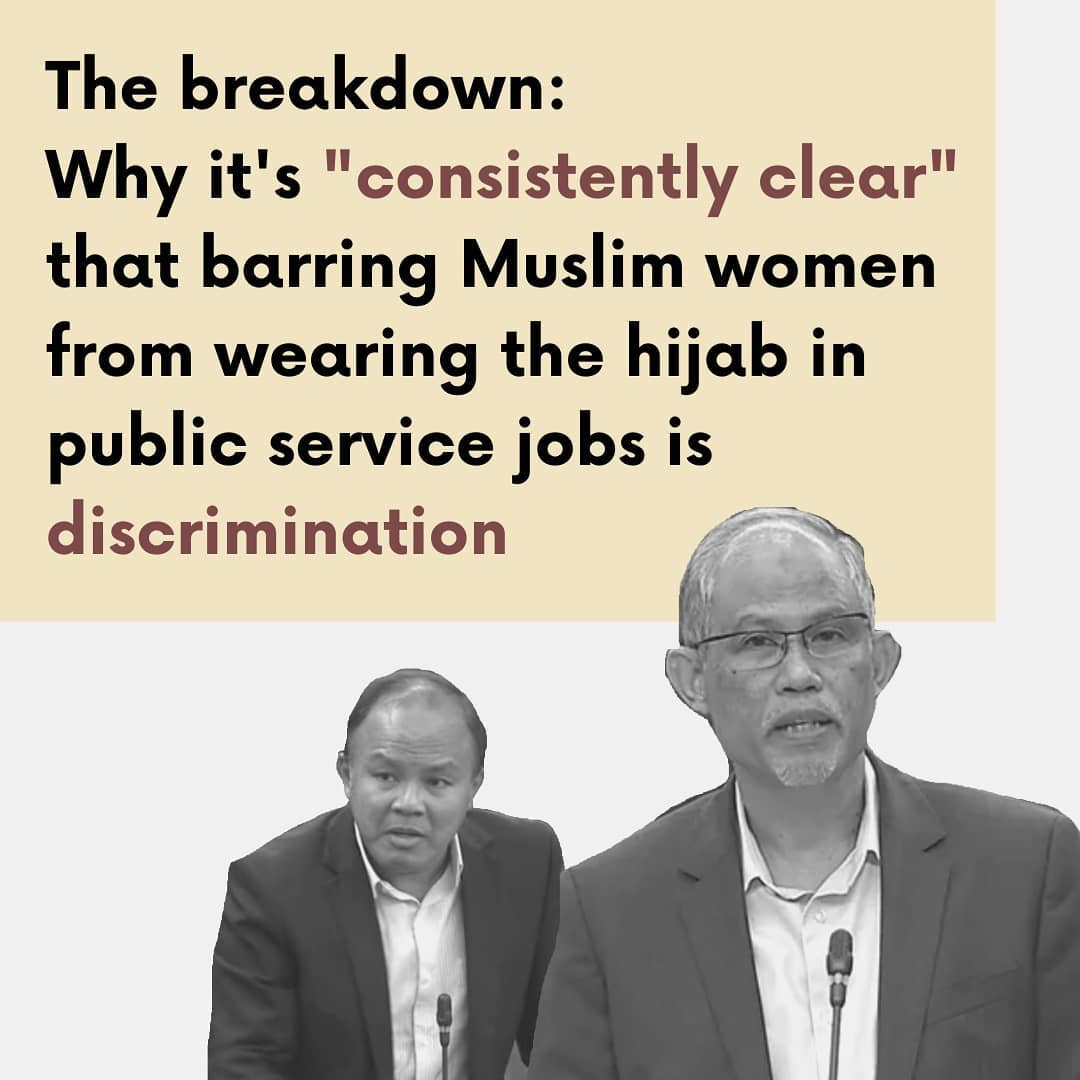
  • The breakdown: Why it’s “consistently clear” that barring Muslim women from wearing hijab in public service jobs is discrimination.

    The breakdown: Why it’s “consistently clear” that barring Muslim women from wearing hijab in public service jobs is discrimination.

    During parliament’s Budget Debate on 24 Feb, MP Faisal Manap raised the issue of current legislation which does not allow Muslim women to wear the hijab in certain public service jobs, such as nursing or law enforcement. Mr Manap argued that this rule has deterred many Muslim women from taking up such roles.

    On 8 March (International Women’s Day), Minister Masagos Zulkifli responded that uniform policies in the public services are meant to ensure that “service is rendered equally regardless of race or religion”.

    He continued: “Allowing tudungs will raise a very visible religious marker that identified every tudung-wearing female nurse or uniform officer as a Muslim…We don’t want patients to prefer or not prefer to be served by a Muslim nurse, nor do we want people to think that public security is being enforced by a Muslim or non-Muslim officer.

    Mr Masagos also labelled the issues as “complex” and “sensitive” and reiterated the PAP’s approach of “careful closed-door discussions”.

    He added that “public aggressive pressure” can only make compromise harder – possible in reference to many previous public campaigns and petitions asking for this rule to be reviewed.

    There are a few reasons why these statements are problematic and are continued attempts to defend an inherently discriminatory policy.

    1. Barring Muslim women from wearing the hijab is not a fix for workplace discrimination
    2. Characterising the issue as “sensitive” implies that opposition to the hijab ban is disruptive by default, shutting down attempts at open discussion about it
    3. Insisting on “closed-door discussions” with representatives excludes open consultation with Muslim women who wear the hijab and relegates their autonomy to others who may not fully represent their interests
    4. This policy is a form of gendered discrimination which disproportionately affects minority women (who already experience multiple forms of marginalisation)
    5. Discussing the hijab as a threat to secularism and the racilisation of public service frames the hijab as a political issue rather than a personal religious choice
    6. Characterising public pressure as “aggressive” and saying that it “only makes compromise harder” undermines citizens’ rights to campaign against and discuss policies they disagree with while framing advocacy as something which “harms minority communities”
    7. There is little to no evidence that hijab affects work practices in the healthcare sector. Muslim nurses wear the hijab while maintaining hygiene standards in Canada, the UK, Australia and many other countries. In Singapore, many Muslim public doctors wear the hijab and still fulfill their professional requirements. However, this rule somehow does not apply to nurses.

    Policies which discriminate against any minority groups, and Muslim women in particular, extend beyond the harm caused to any individual and has the effect of further entrenching the marginalisation of these groups. The reality is that many Muslim women, when faced with this dilemma, elect not to take up opportunities or choose to leave their jobs rather than to give up on what they see as a crucial part of their religious obligations. Creating space for Muslim women to wear the hijab at work would encourage greater participation in the workforce and in society, without for forcing them to choose between practicing their religion and earning a livelihood.

  • RECAP: Panel discussion with parents discussing female genital cutting

    By Danesha Shah

    On 29 January 2020, I attended an online panel discussion with three parents on the practice of Female Genital Cutting (FGC) within the Muslim community in Singapore which was organised by End FGC SG and supported by Beyond the Hijab. The three speakers were Sya, a mother of two, Nas, a father of one and Zubee, a mother of four, with Saza as the moderator. They shared their rationale for choosing not to have their daughters undergo FGC or “sunat perempuan” as it is referred to in the Malay/Muslim community. 

    FGC is a practice where young girls, typically under the age of 2, have their clitoral hood, clitoris or other genital tissue cut. Oftentimes, a small piece of skin is removed. Sometimes, the cut is symbolic. This practice is not a medical procedure that is taught in medical school. Instead, doctors learn it from their more senior counterparts. It is offered as a service in Muslim-owned private medical clinics and in the past, was more commonly done by midwives. 

    As a young Muslim woman who is largely ignorant of this custom, it was interesting to hear their journey towards educating themselves on the matter and eventually arriving to their decisions. One of the speakers, Sya, shared that it became a topic of discussion between her and her partner who was a non-Muslim at the time. This journey eventually led her to decide against circumcising not only her daughter, but her son too. One of her reasons was the lack of medical validity as circumcision is unnecessary to keep one’s genitals clean. She also cited the fact that sunat perempuan is only required in some understandings of the Syafii mazhab (school of thought). Above all, she emphasised the importance of bodily autonomy of her children. This sentiment was shared by the two other speakers who similarly echoed the importance of not controlling their children’s bodies by having them undergo circumcision as a child or an infant when they have yet to understand the ramifications of doing so. 

    The next speaker, Nas, shared how he first began learning about FGC through learning about the custom in African tribes and communities. Similar to Sya, he had a discussion with his partner, who in spite of being circumcised herself as a child, decided against circumcising their daughter. In addition to the importance of protecting his daughter’s bodily autonomy, another key consideration for him was that circumcision as a practice went against the natural anatomy of a human body and thus, should not be done unless it is medically necessary. 

    Meanwhile, the final speaker, Zubee, did circumcise her two sons but did not choose to do so for her two daughters. Her change of heart towards circumcision was sparked by her exchange trip to Jordan where she met Muslim women who themselves were not circumcised. This was when she realised that circumcision in the Muslim community in Singapore was more of a sociocultural practice rather than being purely religously motivated.

    During the Q&A segment, an attendee asked how they could come to terms with the hadiths that support female circumcision. Sya, Nas and Zubee shared how they viewed the practice as sunnah, not obligatory. These hadiths were also of weak credibility. Sya shared that hadiths can be seen as descriptions of the practice at specific times and places and that they do not have to be seen as a mandate of the practice. Another attendee asked how effective closed door dialogues will be in stopping or curbing FGC. Participants mentioned that the demand for FGC is primarily driven by parents. As such, dialogues will encourage discussion and continued interest in the topic, thereby supporting a change in public opinion. 

    All in all, I definitely felt that the sharing by both the participants and attendees were highly informative and helped me in my personal journey towards learning about FGC. Regardless of where you stand on this issue, it’s time for the Muslim community to confront our own preconceived notions and ignorance towards FGC. 


    Follow End FGC SG on Instagram.

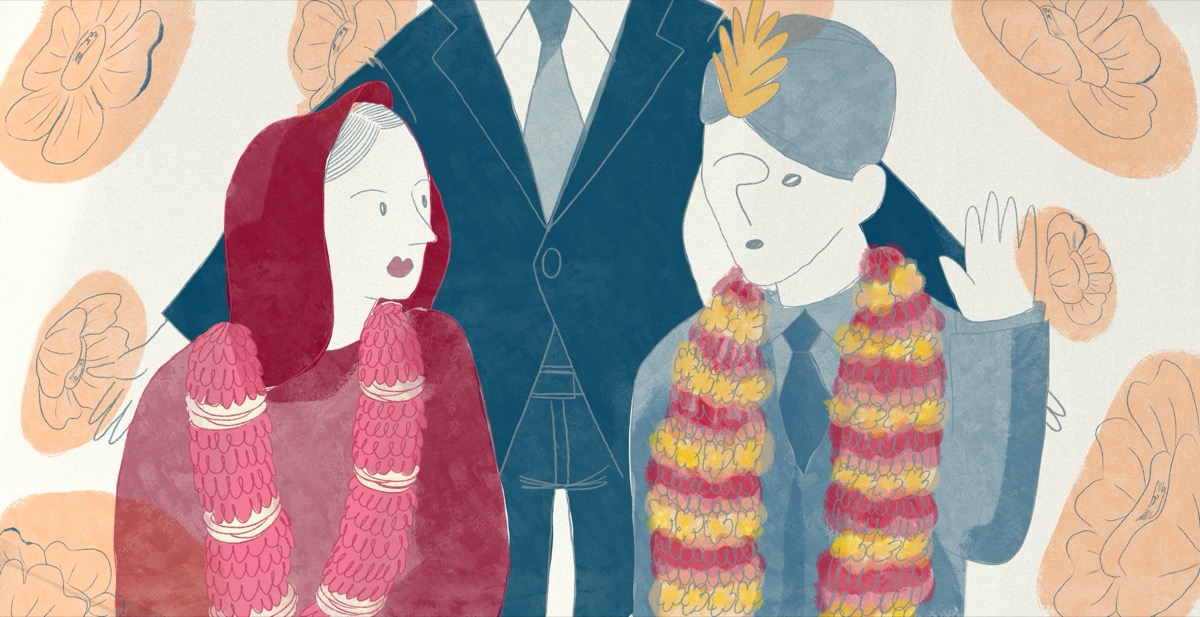
  • The Arranged Fairytale Wedding

    The Arranged Fairytale Wedding

    by Begum
    __

    What is the first thing that pops to your mind when you think of your wedding (if you do want to get married, of course)? Your significant other? Applying for BTO? The expenses? Strangely for me, none of those things come to my mind. What it actually reminds me is the scary process of matchmaking that would eventually be initiated by my family. 

    As an Indian Muslim, I was brought up the same way many other South Asian girls were brought up – realizing that we are pretty much screwed if we were ever caught with a boy before we get married. Romantic relationships, regardless of the race or religion is still heavily frowned upon among some families in my community, including mine. I was so sensitized to the idea of arranged marriages, it took me a long time to realise that this type of arranged marriages is actually not the norm anymore and that Indian Muslims are one of the very few communities that still actively follows this tradition. 

    My family still follows this tradition and they have made it clear that they would prefer me getting married through the arranged marriage (aka no boyfriends for me). Initially I had a lot of issues with this concept and it took me a few years to analyse this concept and finally, form my own perceptions of relationships. I also identified the flaws in some of the marriages around me, the main one being my parent’s relationship. Therefore, a lot of my thoughts and opinions in this article have been formed from my own observations. 

    Islamically, arranged marriage is allowed. However, the religion also encourages the prospective bride and groom to get to know each other and have a say on whether they like each other enough to get married. And this is exactly the step that many Indian Muslim families conveniently ignore. 

    Before the issues, let me break down the process of how this works. Let’s assume, the bride is a girl named Fathima and her parents are looking for a prospective groom for her. It starts with her parents engaging a professional matchmaker, or “broker” as how the Indian Muslim community call them. If the matchmaker has found any family that is interested in Fathima, they would visit her house where Fathima would be dressed to the nines so that the groom’s family would like her. If they find Fathima to their liking and fitting for their son, they would discuss further with her parents and the marriage is fixed. This would come as a shocker, but some brides and grooms do not even meet or talk to each other until the day of the wedding. 

    I know way too many couples who have not met or spoken to each other before they got married, including my parents. Many of these couples do have a happy marriage, I won’t deny that. However, there are many couples who could have avoided an unhappy and toxic relationship if they had gotten the chance to speak to each other. In a time where couples date for years before they get married, the least these parents could do is to let their daughter get to know her prospective groom and let her decide whether she would be happy with him. 

    Fortunately, many parents in the current generation are starting to understand the importance of getting their children’s consents and allowing them to get to know each other before proceeding any further. However, not everyone has the privilege of understanding parents and if you are one of them, I pray that your parents gain the understanding soon enough and allow you to marry whoever you want to. 

    My second and biggest issue, in fact, is how much arranged marriage has stifled Indian Muslim women’s growth. There is so much of misogyny and patriarchy that an Indian Muslim woman faces within her family and I definitely consider arranged marriage as one. This is especially true for our mothers. Previous generations prioritized their daughters’ marriages over their education, and it is something that still bewilders me. From the time a girl is born, the parents prepare their daughters to be an ideal wife and save up for their marriage and jewelries, instead of their education. After attaining a certain level of education, the girls would be asked to stop and then get married. Like I said previously, yes, some of them do have happy marriages. But what about those couples who are not compatible? 

    I grew up in an environment where my parents could not get along at all. There were more days of them being in an argument than days they were happy, or at least, holding a united front. I spent years questioning if they would have been happier if they did not have me and constantly being the middle person whenever they gave each other silent treatments (which would last for weeks). I also wonder, maybe, if they were given the chance to know each other before they got married, would they be even married? I don’t think so. 

    It saddens me that there are many women out there who are stuck in unhappy and toxic relationships because they are not financially independent and hence, have to rely on their husbands indefinitely. The current generation is changing for sure; they are becoming more open-minded and allowing their daughters more freedom, but I still believe that a girl has to work harder than her brothers to ensure she gets the extra education because of the misogyny in Indian Muslim families. 

    I feel it is also important to explain the extent Indian Muslim parents would go to get a groom for their daughter. If the parents do not find a suitable groom locally, some families have a habit of extending this search to finding grooms from their native village in India or Malaysia. They connect with their relatives in India to find prospective grooms for their daughters and if they do find one, the family usually heads to India to conduct the wedding. This concept is something that is still prevalent among certain families and something that still surprises me. Is it really necessary to go the lengths of finding a groom in a whole other country? Is it really worth all the process of applying for PR for the new groom? Would you really trust a man with your daughter who does not have the similar backgrounds? I really don’t know. This just shows how much emphasis families place when looking to get their daughters married.

    I do know one thing for sure. In a typical arranged marriage, the woman is definitely more vulnerable than the man and as a society, we must do better. If a marriage does not work out and the couple gets divorced, the women are more affected by this action than their ex-partners, in terms of how they are treated in the society and the chances of them getting remarried are also generally lower.

    I am not against arranged marriages, in fact, I have made peace with the fact that I would most probably get married through one. I also have friends within the community who are experiencing the same thing and honestly, we are okay with it because we have been prepared for this situation ever since we were kids. However, we just want our families to understand the need for us to get to know our prospective matches before choosing who we want to marry. We should not be persuading our parents to let us to get to know the prospective grooms, because it should be a given.

    Things are changing for the better, yes, but we must constantly ensure that the women are not shortchanged in a relationship. 

    Ensure she pursues the education she wants, allow her to get the job she has dreamt of ever since she was a child and become financially independent. Get her consent before proceeding with anything. Most importantly, realise she is a woman who knows herself the best and let her choose her life partner. Let her speak to the men and make the decision for herself. Prioritise her needs and wants before the expectations of the society.

    __

    Begum is a brown girl who makes way too many self-deprecating jokes, cries a little too easily and laughs too loudly. She is also always trying to be the best version of herself.

    Illustration by Ishibashi Chiharu
  • Confusing Rigidities in a Multi-Racial, Multi-Religious Nation

    Confusing Rigidities in a Multi-Racial, Multi-Religious Nation

    by Rukhshana Maufiqah

    __

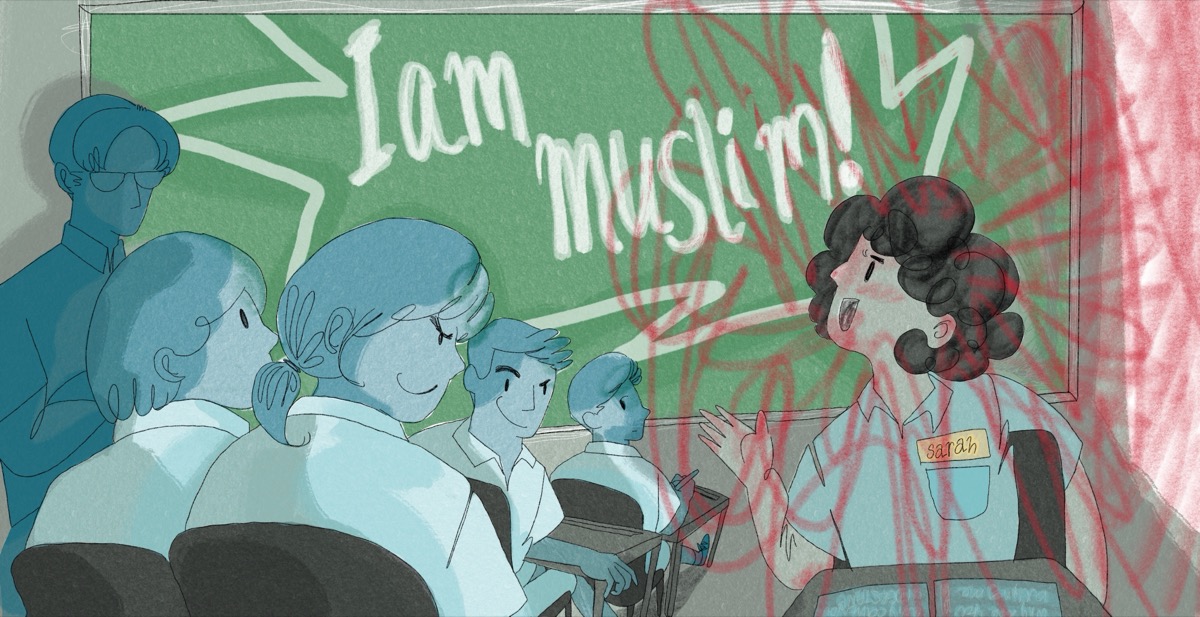
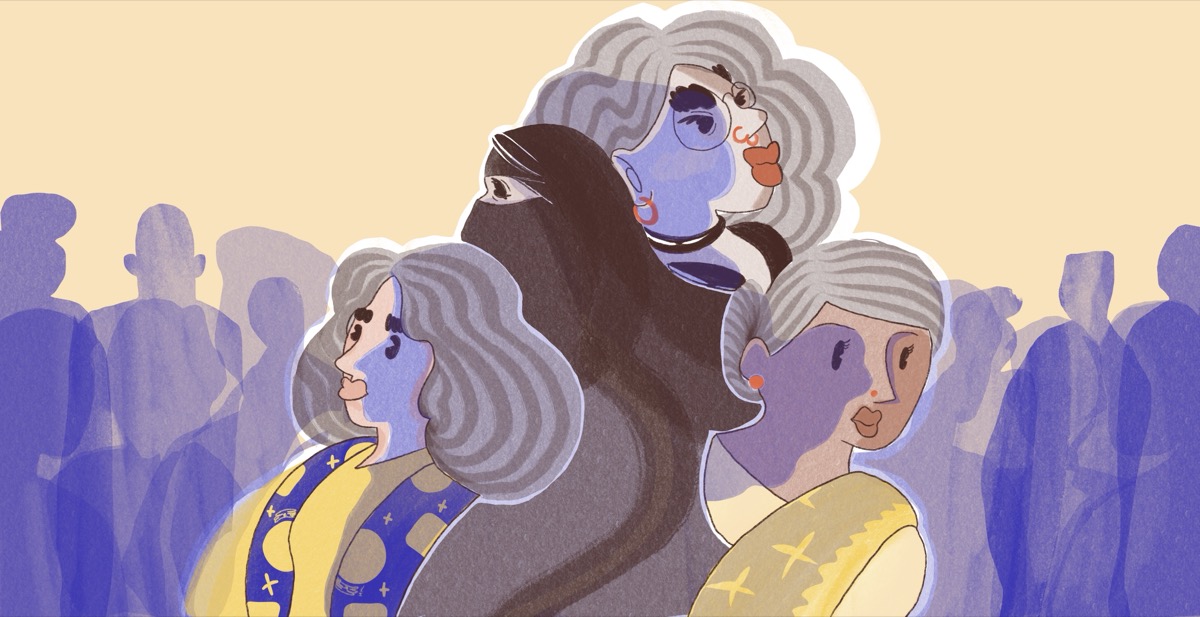
    As an Indian Muslim, Tamil-speaking 20-year-old, I have come to learn over the years that the locals here tend to mix race, religion and language together. They have this mindset that the Malays will speak Malay and that they are Muslims; Indians speak Tamil and that they are Hindus; Chinese speak Mandarin and that they are Buddhists. Many or I dare say almost everyone knows that it is definitely not true that the Chinese speak only Mandarin and they are only Buddhists. They have different dialects such as Hokkien or Cantonese. Furthermore, there are many Chinese Christians as well! However, sadly it does not apply the same way for us, the minorities. I made a speech when I was 16 years old in my Secondary school about this topic and I would like to re-iterate some points that I think that are very important to be spoken about.

    Firstly, your religion does not define your race and your race does not define the language you are speaking. This is very important for Singaporeans to grasp. Ever since primary school, many has been shocked to find out I am a Muslim when my mother tongue is Tamil. The first question I am always asked is “Oh are you half Malay, half Indian?” and I would reply, “No, I am just an Indian who is a Muslim.” Still being confused, the next question being asked would be “Does all your family members speak Tamil like you, too? There must be Malays for sure!” and I would reply, “Yes all of my family members speak Tamil like me and are Muslims and yes I do have non-Indian relatives as well but they are not all Malays.” This confuses them even more. Some may say, “Of course it would be difficult for children to understand this at a young age, I’m sure adults do!” Sorry to burst your bubble but they don’t as well.

    Secondly, I am a Muslim, who follows the religion, Islam. You don’t have to be a Malay to follow Islam. In fact, I am glad that more people have come to realise now that there are Chinese Muslims and many other Muslims from different ethnic groups now, but definitely not enough. It doesn’t matter what language you speak to follow a religion. Yes, often a race is linked to a specific language. However, not all the time and especially not for Indians.

    Now, I would like to get into the details of this term “Indian” that we Singaporeans use. I would like
    to clarify that Indian is not a language but a race; and importantly, Hindu is not a language but a
    religion. We do not speak Indian or Hindu that some do ask. We speak Tamil or Hindi or many other
    languages. Did you know that there are more than 19,500 languages or dialects spoken in India as
    mother tongues, according to the latest analysis of a census released?

    When I was younger, when my peers or even teachers asked me if such questions, I would just laugh it off and correct them. However, as I entered secondary school and especially JC, I realised how us minorities know so much about the majority ethnic groups but it is not reciprocated to us. That is when I realised how ignorant people can be. We take so much pride that we are a multi-racial and religious country, but how well do all of us know about the races or religions outside of our own? A question that has always been bugging me is, if all Singaporeans are treated equally, why do mostly only the minorities take the initiative to learn about the different races and religions of our neighbours but not them? Do not mistake me, I have many friends from the majority ethnic groups who are educated about others races and religions. You not knowing does not make you ignorant.

    We are all more than pleased to let you know about our races and religions. You choosing not to find out more from what you know and making your own assumption makes you ignorant. I have accepted after denying for very long that I tend to identify myself as a Muslim more and not Indian, just to escape the racist remarks of being an Indian. I have even let strangers think I am a Malay since I don the hijab and understand the Malay language. I have heard remarks from my friends such as “You are fair for an Indian, probably because you are Muslim” or “You are my only Indian friend, probably because you are not exactly like them”. I am so disappointed to say that I took pride in those remarks and did not see how racist those remarks were, just because it was meant as a compliment to me. I would like to apologise to my Indian friends for not sticking up for us. I have learnt from my past mistakes and have been using whatever opportunity I can get to educate people about this.

    Lastly, I would like to say, I am proud to be an Indian, proud to be a Muslim and of course, proud to
    be a Singaporean, as should any other South Asian Muslim be respectively for their race. However, it is time for us to take action and speak up about this matter which has been pushed aside as maybe a taboo subject for too long. In this unprecedented time, it has shown us how united as a nation we are and I am sure if we all play apart to spread awareness and knowledge, we can improve further as a multi-racial, multi-religious nation.

    __

    Rukhshana Maufiqah is a 2nd year student at SIM, University of London, studying BSc Business and Management. Volunteer at Indian Muslim Social Service Association(IMSSA)

    Illustration by Ishibashi Chiharu
  • Baha(r)sa

    Baha(r)sa

    Baharwaali ladki
    does not need to know where she stands from where she sits in a class
    learning a language in a tongue that isn’t hers

    although the only place where she belongs
    is Malay words in karangan with double ticks
    for Peribahasa
    and her favourite topic of death and its test
    which gets her the highest marks among the rest

    “Cikgu kenapa budak India boleh dapat markah tinggi?” 

    could it be that she can only talk about her loved ones dying 
    to one-up an exam?
    Come on, she’s trying
    but lying about knowing how dying is a trauma
    is lying about lying about what she knows is an Indian aura

    It’s a colloquial slang to be able to converse
    but when I talk its strange just a show of how diverse
    my mouth can bend and twist like in a show of a circus
    Peribahasa queen once risen
    but now in reverse
    a list of deeper meanings, something I traverse
    as I memorise and speak to teachers, greetings I rehearse

    berapa berat mata memandang,
    berat lagi bahu memikul

    shoulder hunched when I answer for oral, 
    I describe a picture one round, my head never shaking
    a task to make sure; I never stop talking
    outside I am told, why I don’t do its opposite
    “Yelah kan dah takde titik, sebabtu lah tak tau diam”

    Indian, who thought she was a part of the geng
    when I didn’t know the answer to why Keleng
    felt wrong to my core but no detailed retort
    for nicknames that have stuck
    Michael Jackson terbakar just out of luck

    dropped out of Urdu school from just learning too many
    languages that confused the rest
    on why my father would marry
    a Madarasi who was just not Desi,
    the origin mistaken but the insult readily given
    Amma is Mummy, waiting in a canteen for her daughters
    alone and friendless among women with expensive taste
    for chauffeuring husbands and gossip gluttons

    Perhaps I could’ve written about the separation we all feel,
    when forced into the almost impossible task
    of blending in to find where we belong
    in a crowd of people who knew nothing
    of how much of ourselves they’d taken from us,
    when they only gave us so little

    We only seem to be able to understand that
    much later, and sometimes too late.
    when the ones who’ve taunted can barely remember.

    *

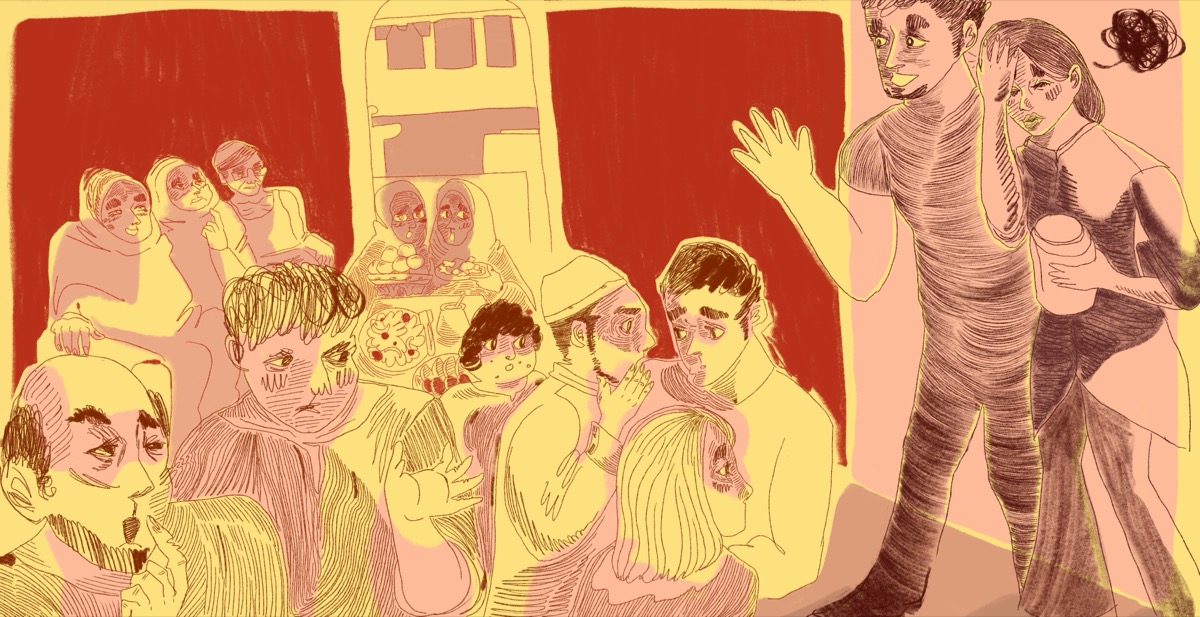
    I’ve always noticed the way race and religion have seemed more separate for some and synonymous for others. Being Malay and Muslim to me, in my experience, has been a commonly understood norm in society, where race and religion overlap. However, being Indian and Muslim is always perceived to be antonymous. One is the opposite of the other instead of sharing the same space. 

    Even till now, I notice the ease of which other Muslims who look the part, can do things while someone like myself, am restricted socially by odd looks or sometimes the inability of others to comprehend how an Indian can be Indian and Muslim. 

    I usually have to introduce myself as Indian to which later on – I will somehow interject with, “but I’m Muslim.” There are people who are aware of the spectrum of which race can belong with religion, but I guess, sometimes we’re not sure if that’s enough. I take being Muslim, as a metaphorical sphere where it’s clock radius allows me to move around a little within myself. Where I get to evolve with my identity without ever being questioned if I am Muslim enough just by the way I look or what I practice. Religion is subjective and yet for an Indian, it is a heavier task to prove how Muslim I am at times as compared to another who is presumably a Muslim just by appearance. This is accompanied by the common misunderstanding that a person needs a physical identifier to be Muslim, like a Hijab to show that an Indian can be Muslim, or the need to wear a Baju Kurung or Kebaya on Eid too. 

    My piece is called Bahar(sa) because Bahar in Urdu means outside, playing on the word Bahasa. An outsider speaking a language that is more associated to being Muslim than her appearance. I hadn’t intended for this piece to go to a sombre place where bullying seemed a huge part of my identity, more so than the space my race lived in. Yet somehow, the two always seemed connected, that what I’d experienced felt at times unreal and made up when they weren’t. I see people appreciating the things I’d been made fun of. 

    Long hair, the Bollywood dream, the tan skin, glitter from bangles and dupattas in the limelight. It’s odd because these aspects were seen opposite when worn by me, “too curly” hair, such “dark” skin, “village girl” with an “accent”. When I see the sudden spike in Indian outfits being worn for Malay weddings, it seems foreign to me – because I don’t see any similarities with what I identify as my race or culture. It seems like caricature at certain moments, because it feels like I’m a costume – worn for times when someone needs to look beautiful and taken off for when it is of no use. I’ve often times gone head to head with people, calling them out for their offhanded statements about transforming into an Indian for a while, or wearing a drape and identifying it with being Indian, or worse calling on one Indian friend to show they aren’t doing something unacceptable. 

    I find myself angry at times when I see the difference, in how things on me and what I own are more likeable, more wearable and embraced when the part of me that it represents, is not. 

    *baharwali ladki – outsider girl

    *karangan – composition

    *Peribahasa – Malay idioms

    *“cikgu kenapa budak india boleh dapat markah tinggi” – Teacher, how come a kid from India can get high marks?

    * berapa berat mata memandang, berat lagi bahu memikul – sesusah-susah orang yang melihat penderitaan seseorang itu tentulah tidak sama dengan penanggungan orang yang menderita itu sendiri – as difficult as it is to witness someone else’s pain, it is always harder for the one experiencing it

    * Yelah kan dah takde titik, sebabtu lah tak tau diam – Yes lah, now don’t have full stop, that’s why don’t know how to shut up.

    *geng – is slang for gang

    *Keleng – derogatory term for Indians

    *terbakar – burnt

    __

    Sarah Farheenshah Begum writes from the middle of a North-South Indian magnet. With her experiences of multiple conflicting and overlapping parts of what she sees and feels, she writes for herself, her past selves, and the way her future imagines itself, whether continuous or in pause.

    Illustration by Ishibashi Chiharu
  • Pride and Prejudice: Anecdotes from South Asian Women in Singapore

    Pride and Prejudice: Anecdotes from South Asian Women in Singapore

    Gathered by ‘Afifah Shameemah

    __

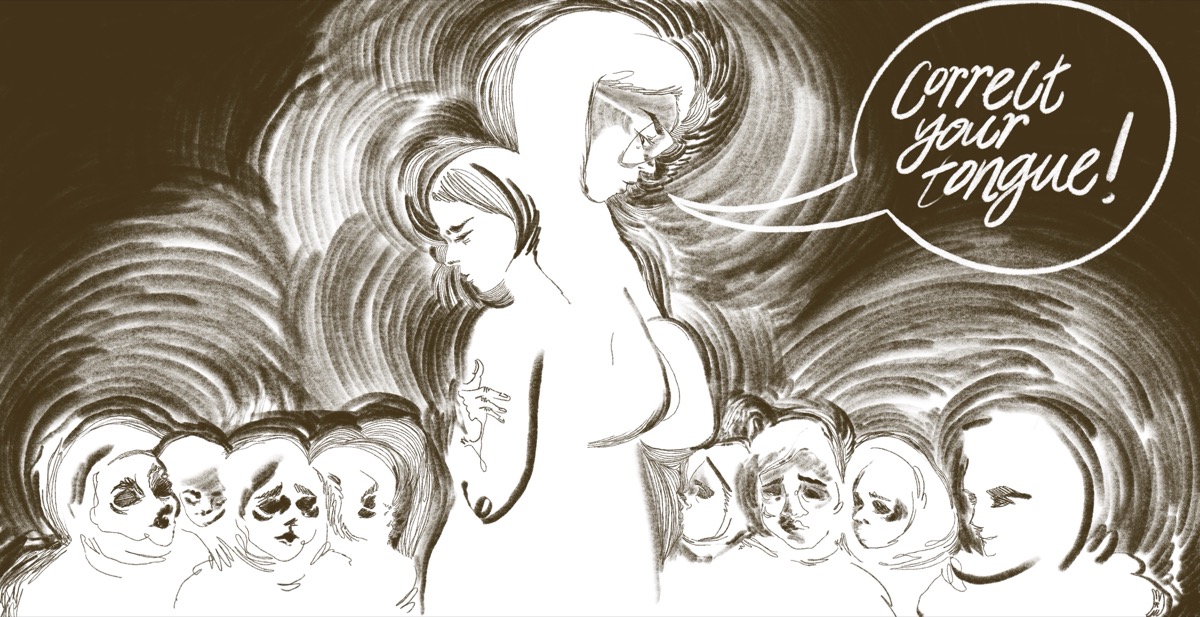
    These pieces are collections of candid responses from South Asian Muslim Women. These pieces were written to share some of the experiences of ladies in the community and to hopefully inspire some type of change. These pieces were written by South Asian women, for South Asian women. 

    This is for us, Brown Skin Girls.

    What is the most prominent memory you have of a racist/prejudiced encounter as a South Asian Muslim woman?

    MA. Indian.

    The most impactful incidents happened in childhood. Feeling ashamed that my mum was wearing the black abaya because it was seen as ‘off-the-boat’, poor, uneducated, standing out for wrong reasons. Another instance was Chinese classmates and teachers not understanding what indian muslim is. I had to explain throughout pri,sec, tertiary why I was Indian but not Hindu.

    MK. Pakistani.

    I was in class one day and as we were discussing where to go for our graduation trip and when India came up everyone started freaking out and saying they’re scared of going there. When I asked some of them why they said that they’re tons of rapists over there. Of course I think we ALL have encountered the occasional “south asian stinks” slurs and people around you have made fun of how south asians speak English like it’s funny!

    FM. Indian.

    I think a better question would be to ask how all of it had/has affected me. It doesn’t feel right to state just one when it’s obvious that so many of us minorities have faced racist/prejudiced encounters all our lives. 

    Personally, I can’t choose one because what affected me the most was the continuous, repetitive microaggression that I had faced from young. It was the upfront racism, when people would call me slurs and throw insults structured just for Indians, that eventually made me feel ashamed to be an Indian. My insecurities stemmed from all these encounters. I started to hate the physical attributes of me that people would associate/stereotype with being Indian. For a long period of time, I completely disassociated from my heritage as much as I could. It took me years just to step out of that sense of inferiority that focused on the negatives and to learn to embrace my culture.

    FZ. Sri Lankan.

    The first memory that pops into my mind is when I was in primary 3 and could hardly understand Malay. I had not done my malay homework on that day. Knowing very well that Malay was a new language to me, my Malay teacher chose to scold me in Malay instead of English and stopped every once in a while so that my friend beside me could translate what she was saying. Finally, she said that I could only sit down if I said “I love you ” to my friend in Tamil. I was so embarrassed and shy as I could feel everyone staring at me. It took me sometime to finally get the words out of me. That incident still scars me till today 

    On another occasion,  a girl came up to me in school and asked “So do you celebrate Deepavali?”

    When did you feel the most proud to be a South Asian Muslim woman?

    FM. Indian.

    I can’t think of an exact moment. It kind of was a journey. I grew up watching my relatives and family friends be so confident in their skin, comfortable with their ethnicity. I was always envious of that. 

    A year or two back, I realised there wasn’t much representation of South Asian Muslim women in mainstream media. I wanted to meet people like me who shared similar interests and passion. So I started searching and slowly found a whole community. These people whom some I’ve got to know are nothing short of inspiring and amazing. I’ve learnt so much about South Asian cultures through them and the more I was exposed to it, the more I wanted to be part of it. 

    It was inspiring seeing them be incredibly proud of their own heritage. Watching them be unapologetically vocal about the good and bad within our culture, witnessing this community start painful, but very much needed, discussions so as to bring about positive change. It all made me want to be a part of it. I was so proud to see them redefine all the stereotypes and negative encounters they had faced into something absolutely beautiful and positive.

    FZ. Sri Lankan.

    I was probably the most proud to be a south Asian Muslim woman when I’m in the presence of my family, and still am til today. To be honest, I never felt proud to be south Asian when I was in school. I always felt a little left out. Some teachers would purposely fake an indian accent (even though I wasn’t Indian) in front of the whole class when talking to me, and classmates would talk about me while being in my presence, thinking I didn’t understand a word they were saying. Being in such an environment made me feel embarrassed about my ethnicity.

    MA. Indian.

    I haven’t faced any outward stuff. More of intrinsic pride. I’m proud that my family has done well in SG considering that we had no help/relatives in singapore when we came. We have done very well with our limited resources and network. Me and my siblings are all doing well alhamdulillah:)

    MK. Pakistani.

    Ever since I realised that I was different from the people around me, and that was quite early on actually, and I’ve NEVER stopped being proud! I’ve always felt proud to have such amazing ancestors who had the courage to come all the way from Pakistan to Singapore, and did pretty significant things in their lives! For instance, my great grandfather was a detective and passed away while in office here, and I’ve always admired his bravery!

    Do you have anything you want to say to other South Asian Muslim women who might be struggling with their identity?

    FZ. Sri Lanka.

    Try as much as possible to educate those around you so that they can educate others and so on. Don’t ever feel that those of other ethnic groups are far more superior to you.

    FM. Indian.

    Your skin colour and ethnicity is part of you, but don’t forget there is more to you than just that. Don’t let anyone tell you who you can and cannot be. You are enough. Your identity is yours to create. Don’t conform and lose parts of yourself just to make the ignorant feel comfortable. In fact, take pride in making them squirm in their seats as they watch you reach your dreams and goals. 

    Our culture, heritage and traditions are breathtakingly beautiful. There is so much we can learn and benefit from once we learn to accept and embrace that part of our identity. Carry that identity with pride and give it life.

    MK. Pakistani.

    Embrace the beauty and diversity of our culture! Growing up, I used to, at times, feel SO out of place because there’s not many of us here, especially in the community I was from. I used to question why my friends don’t love qawwali like I do, why am I the only one who knows who Abida Parveen is, why am I the only one who wears salwar kameez, I was SO confused! I have felt unaccepted too, by people around me, because of this difference, and I used to get so upset over this. However, once I realise the beauty of being different, and the richness of our culture, I’ve embraced ME so fiercely and wholeheartedly! Give it time and eventually you’ll realise how blessed we are!

    It’s very important to surround yourself with people who not only accept you, but celebrate you for being ALL of you! You don’t have to be friends with people who are the same as you, who have the same background and culture as you do, in order to feel accepted and to feel motivated. You CAN be friends with people from all walks of life as long as they are people who uplift you!

    At the same time, it is essential that you have role models who share the same background as you are, someone who is relatable and approachable, who can not only understand, but empathise and give practical advice in situations when needed!

    MA. Indian.

    To not dismiss their roots in order to fit in. Having a long family history, two cultures and two countries is a gift. Integrating does not mean giving up unique parts of your background. I have family in India who aren’t educated. That doesn’t mean they’re any less than me. It was their rural setting and the fact that I got lucky to be brought to a developed country. We downplay our history and laugh it off so that it is more palatable for others. Be proud of where you’re from, and where you’re right now.

    ___

    ‘Afifah is an aspiring Social Worker who is passionate about Social Justice and holding up safe spaces to discuss anything and everything for anyone and everyone

    Illustration by Ishibashi Chiharu

  • Who Are You?

    Who Are You?

    by Soorma Bhopali

    __

    “What are you?” “What is your race?” These are questions that are thrown at me frequently, the latter of which was only asked recently at a small family get-together. I was stunned to be asked such a personal question in front of people I had just met that day. As a sensitive introvert, I took the question as a personal affront. Nevertheless, I took it in my stride and answered the offensive individual, all while the rest of the people who were gathered around looked at me with what I would like to believe was purely engrossed anticipation.

    I got asked the same question twice that evening. The same question that was asked in the earlier part of the gathering was by a newcomer to the family, who whispered to someone else, “What is her race?” As a newcomer, I understood her wanting to know more about me. The second individual who had asked me the same question was my husband’s relative, whom, despite the fact that my husband and I have been enjoying marital bliss for more than ten years, still had questions about my lineage. And it wasn’t just them. At family functions and gatherings on my husband’s side, there are whispers of (in a language foreign to me), “What is her race?” Although I do not blame them for their curiosity, such questions speak volume for the need of society (especially those from the older generation) to place individuals in pre-defined boxes based on the CMIO categories.

    Perhaps I should sweep my frustrations aside and start from the beginning. I am, dare I say, a blessedly unique individual of mixed heritage. I have Peranakan Chinese and Pakistani ancestry on my maternal side and Indian heritage on my paternal side. For the most part of my formative years, up until I was in my 30s, I grew up confused and having an identity crisis for never being able to fit in the CMIO mould in school and in Singapore. According to the typical Singaporean who would try their best to place me in a box, I am too fair to be Indian. Since I look Malay, I must also be one, and thus will be spoken to in Malay. Since I celebrate Hari Raya, I must be Malay and to quote the aunty who recently cut my hair verbatim, “If you are Muslim, you cannot be Indian, so you must be Malay lor.” Thank you for explaining to me who I am aunty.  Trying to explain my unique diverse heritage to a random local of the majority race group here has become such a cumbersome undertaking that I have resorted to simply saying I am Chindian. However, this response will invite more questions such as, “Oh, so you speak Chinese?” I had the exact conversation two weeks ago and when I replied in the negative, the conversation pretty much stopped there. It seems like no matter how much I try to explain my mixed ancestry, it only opens up a myriad of questions that are themselves so confusing that it is easy to just say, “I am Indian.”

    However, this is not entirely true. I do not feel purely Indian. At home, we do not converse in any traditional Indian language, unless we want to gossip about you in your presence! We also do not eat typical Indian food every day. Being Singaporeans first and foremost, we eat a variety of food that come from the different cultures in Singapore. My grandmother, aunts and mother all enjoy unhealthy bowls of glutinous chee cheong fun for breakfast. Apart from the usual biryani, we also feast on sambal sotong and lontong at Eid/Hari Raya gatherings.

    On the other hand, thosai and prata are the best comfort food on lazy days. When we crave for something to munch on at tea time, there is always sugee cake, ang ku kueh, char kuey rojak or Indian rojak to pick from. Nonetheless, I have to say it feels the worst when my ‘own’ —fellow Indian-Muslims—doubt my ethnicity just because I cannot speak Hindi well, having studied Malay in school. It is hurtful to hear comments like, “So your Mother Tongue is Malay lah!” as if doubting my ‘Indian-ness’. To be clear, I have nothing against the Malay Language (I scored A1 in Malay Literature in junior college, thank you very much!) but I strongly resent reductive comments about my identity and lineage just because I cannot speak the language of my forefathers well and I do not fit the mould of what a typical Indian or Chinese individual should be (i.e. being able to converse in Indian or Chinese languages/dialects). 

    You see, when my ancestors migrated to Singapore from India, they naturally needed an anchor, a community to belong to. Being a minority community of Indian Muslim traders, it was easy for them to integrate and assimilate into society if they belonged to a certain group. Since the majority of Muslims in Singapore are Malays, moving into Malay kampongs and living amongst the Malays made pretty good sense especially since they were trying to make a living in a foreign land. Being Muslims, they thus had something in common with the Malay community here. Although my forefathers wore their ethnic clothes, they were still also able to converse well in their adopted Malay Language and get along well with their Malay neighbours and friends. This would explain why, while most of my older relatives were able to speak their Mother Tongue, the younger generation either have pretty much lost their ability to do so or speak broken Hindi or Urdu. We may understand what is being said, but we may not be able to reply fluently, because we were never formally taught. However, this varies across the different families here. I do know of third- and fourth-generation Indian Singaporeans who are still able to converse in their original Mother Tongue thanks to classes and family exposure.

    On the other end of the spectrum, there are Malays who assume I am Malay. When I reply in English to the questions they ask in Malay, they assume I am consumed by my arrogance and do not want to converse with them in a common language. How do I explain to the nasi padang aunty, “Pardon me aunty, but having grown up in a household where English is predominantly spoken, and having being brought up by my late grandmother who spoke Hokkien and the Peranakan patois, talking in Malay just does not come naturally to me.” This is especially true after I was made fun of for my funny Malay pronunciation in primary school by a schoolmate.

    Needless to say, my growing up years were filled with poignant questions like, “Who am I? Why don’t I fit the mould? Where do I come from? Am I really an arrogant person because I cannot connect with people based on a common language?” Imagine grappling with such an identity crisis for almost thirty years of my life. Imagine grappling with such questions as a teenager, the phase in my life when I deeply needed to belong somewhere. Transitioning into adulthood wasn’t easy either. At company dinners, Muslim staff members are usually grouped together in one or two tables since we have the same dietary requirements. Why? Why is the group I am allowed to eat and socialise with limited to the people who share my religion? Why do we as adults allow society to limit how and who we socialise with based on what we are allowed / not allowed to consume? Needless to say, company dinners are usually four hours of boredom for me because I am always separated and seated far away from my close colleagues who all do not share my religion and dietary requirement.

    The ignorance of society does quite a number to one’s self – esteem especially when you are growing up with so many questions and concepts that are beyond your comprehension. Now, after more than thirty years of existence, I am finally grasping and embracing my unique identity and I finally understand why I feel the way I feel. It is okay to not fit in anywhere because of social circumstances that are beyond my control. On the other hand, for the sake of our future generation, society should stop trying to fit us in pre-defined boxes. We are all special and unique individuals with a myriad of stories to tell. Just ticking the Chinese, Malay, Indian, Others box is over simplistic and does not do any justice to what a distinctive and beautiful individual each and every one of us
    is. It does not do justice to the story that each of us has to tell. It definitely does not do justice to the stories of our forefathers.

    __

    Soorma Bhopali is an educator of young children. She enjoys her roles of being a daughter, sister, wife and aunt. In her free time, she enjoys eating cupcakes and dreaming of unicorns.

    Illustration by Ishibashi Chiharu

  • Fitting In

    Fitting In

    by Mahina Shareef

    __

    In 2000, my parents migrated to Singapore from a conservative rural town in India with three young kids in tow. While the Indian Muslim community here has a long history, I want to explore my experience as a first-generation immigrant in relation to the Malay community. The presence of the Malay community here had given my parents reassurance that they could raise their kids with religious values in a westernized society. It gave them the strength to go against the tide of their relatives with conservative attitudes who had warned my parents that raising a girl child overseas was wrong. One can earn in any country but to raise a family required more.

    Life overseas was perceived as wrong because it supposedly exposed a child to immoral behavior and thus encouraged such behavior; a girl child had to be protected. They stood firmly on their moral high ground. This was the circumstance under which we, as a family, migrated to Singapore, but the solidarity and Muslim brotherhood that welcomed us was complicated. Firstly, the religious sphere in Singapore is dominated by Malays with less consideration for Indian-Muslims. To my parents, the option of Madrasahs meant they could raise their daughter with both religious and academic schooling and the long, covered uniform Madrasah students wore appealed to them.

    However, Madrasahs here only had Malay as a second language and so, much to my parents’ disappointment, I had to eventually enroll in a mainstream primary school. This was their first experience of realising religion was more Malay-centric here. As I grew older, the pictures of me receiving awards in school clad in a shirt and skirt stopped reaching the eyes of my relatives back home for the uniform was considered immodest. The influence of family back home extended into our lives despite the physical distance and more intensely so because of my gender. My father was considered an arrogant man for dismissing relatives’ advice so there was an increased pressure to conform to modesty, to continue religious practices, and more importantly to succeed and prove my father had made the right choice. I had to win, be it in school, exams or getting a good job while conforming to a strict sense of religion and tradition held by our extended family. My family played a game of hide-and-seek, only revealing our success and concealing our everyday life that was normal to us but unpalatable to relatives.

    Indian Muslims’ religious practices were also considered inferior and less holy. There was thus the opinion that the higher and more pious practices of the Malays should be followed. For instance, I was told by my Malay Quran teacher that I had an Indian tongue that had to be corrected, that I was lucky to be taught by a MUIS accredited teacher and that Indian-Muslim asatizahs were not good enough to be recognized by MUIS. Presently, the rise of religious teaching in English has opened doors to religious education that had been restricted previously. The asatizh recognition scheme (ARS)’s requirements can be completed via either English or Malay courses as far as I have understood.

    Personally, I have been introduced to evening and weekend religious classes in English by university friends so perhaps level of education is also a factor in these English classes. Secondly, there was a strong desire and necessity to emulate the Malays physically to integrate into this country. The CMIO categorization did not recognize Indian-Muslims. Integrating meant fitting into one of the categories so that the majority of Singaporeans could identify us as part of a race and part of the social fabric. The black abayas (and the dark skin tone) which had coined the slur, crows, by some Malays, was shed. Baju kurung and maxi-dresses were worn to the mosque. The loose shawl draped over the head was replaced by the tudung (hijab) which most people in Singapore recognized. If you had fair skin, you were lucky and you could pass for a Malay. If I wanted to be seen as a Singaporean, I had to look the part of the Malay. This was important to a first-generation immigrant who wanted to be seen as a citizen and to espouse the loyalties their parents had for their home country.

    While Indian Muslims have integrated into the country’s fabric, we remain independent of the Malay community. There is little mixing between the two communities. Having Malay friends is the same as having Chinese friends in that the bonds are forged only at a certain level. These are unlike bonds of marriage which are complex and a sign of welcoming another fully into the family and community. I personally have seen very few marriages between the two and it can be attributed to two reasons. Firstly, Indian Muslims are very vested in their culture and language. There is pride and identity associated with the native places/cities that their family originated from. We have great grandmothers who spoke of the war against the British, of grandfathers who sailed to Ceylon. Our history in Singapore is short and our roots in India deep. Such a strong sense of identity runs in us which is so distinct that we do not expect Malays to understand the big importance we place on the cities we come from. This contributes to Indian Muslims preferring those who speak their own language, who follow their own customs and importantly, those who are willing to keep the connection to home alive.

    The second reason for the low rate of inter-racial marriages, I am ashamed to admit, is the belief in the lazy Malay myth. We are fed the same assumptions and prejudices as other Singaporeans. To some extent, Indian-Muslims have faced less discrimination compared to Malays because of the cushioning effect of economic wealth. The young are more aware of these biases and have been more discerning which is heartwarming.

    However, the truth remains that these poisons against Malays had been repeated and ingrained in the past. Intentional efforts to understand the Malay community are still lukewarm because a grudge remains among Indian-Muslims that they are a mere afterthought in matters of religion. Having to forsake a part of their own identity in exchange for belonging is a sour spot. The lack of organic interaction between the two communities might be due to a brush of egos and not seeing a tangible benefit in having deeper bonds with the other. Yes, our place in Singapore might be rocky but there is no threat. Therefore, there is no need to step out of our comfort zones to do more, we Indian Muslims reason.

    However, I hope we realise we do not lose out by giving in, by going out of our way and by helping our Muslim brothers and sisters. This was the Muslim brotherhood my parents had anticipated back in 2000. Finally, I hope readers understand the crux of the issue extends beyond engaging the Malays to the bigger picture of being identified, acknowledged, understood, valued and simply seen as a distinct identity in our own rights in our home, Singapore.

    ____

    Mahina is a medical student who credits education for giving her the strength to go against patriarchy and to stand up for herself. It took her time to accept that there are multiple facets to one’s identity. She writes fiction and poetry in Tamil and expresses her occasional anger in English.

    Illustration by Ishibashi Chiharu