Category: Blog Series

  • Let’s Talk About “Sunat Perempuan”

    By Afiqa Ab Rahman

    Recently I attended a workshop where participants from Singapore, Malaysia, India, and Thailand shared their experiences and discussed about Female Genital Mutilation (FGM). Variations of the term include Female Genital Cutting (FGC) or “Sunat Perempuan”.

    It was intriguing to hear the experiences and research findings from various countries. But what intrigued me the most was to find that FGM was not considered a problem in some countries. The participants from Thailand, for example, shared that 100% of their women have been cut as it is seen as an identity marker of being Pattani Malay and nobody questioned it.

    From speaking to women, the researcher from Malaysia offered some reasons that were given on why FGM is done. She explained that some mothers thought that it was an empowering choice for the mother to decide on her daughter’s circumcision because it wasn’t the father’s or any male family members who decided. A participant from India opposed this “empowering choice” concept. What I understood from her comment was that patriarchy was to blame for having women internalise FGM as “ideas of women” and think that the choices they make for their daughters are empowering. I couldn’t agree more.

    In my opinion, what is empowering is accepting that your daughter has personal agency and that they can choose what to do (or not) to their bodies. What is empowering is also to have the courage to question the practice.

    Personally, I had been cut as a child. In fact, all the women in my family have been cut. The doctor used a sharp knife to nick my clitoral hood. And in all honesty, if I hadn’t asked my mother whether I was circumcised, I wouldn’t have known. I thought my vulva showed no signs of circumcision. When I asked my mother why she had me circumcised, she explicitly stated that it was to “decrease my libido“ –the very same reason why all the women in my family have gotten circumcised.

    Let’s think about this – as a woman, and as a mother, does that sound right? Doesn’t nicking the clitoral hood, expose it to external stimulations? How would it “decrease the libido”? Isn’t it also very patronizing that the reason for circumcision is to prevent girls from “becoming promiscuous and going astray”? And if the purpose of circumcision is to decrease women’s libido, what is being done to decrease men’s libido?

    I think what we should be doing is not just accept this practice without questioning. Why is “sunat perempuan” so shameful to discuss and deemed a taboo? I think it’s about time people are open to discussing this so as to decide whether it’s really beneficial and necessary. This could save people a lot of money (from not having to pay for the procedure). And in some countries, it could save many lives too.

    Read the other posts here: Sunat Perempuan blog series

  • Moving Beyond Homogenizing The Hijab: Part 2

    Moving Beyond Homogenizing The Hijab: Part 2

    By Nurul Huda Rashid

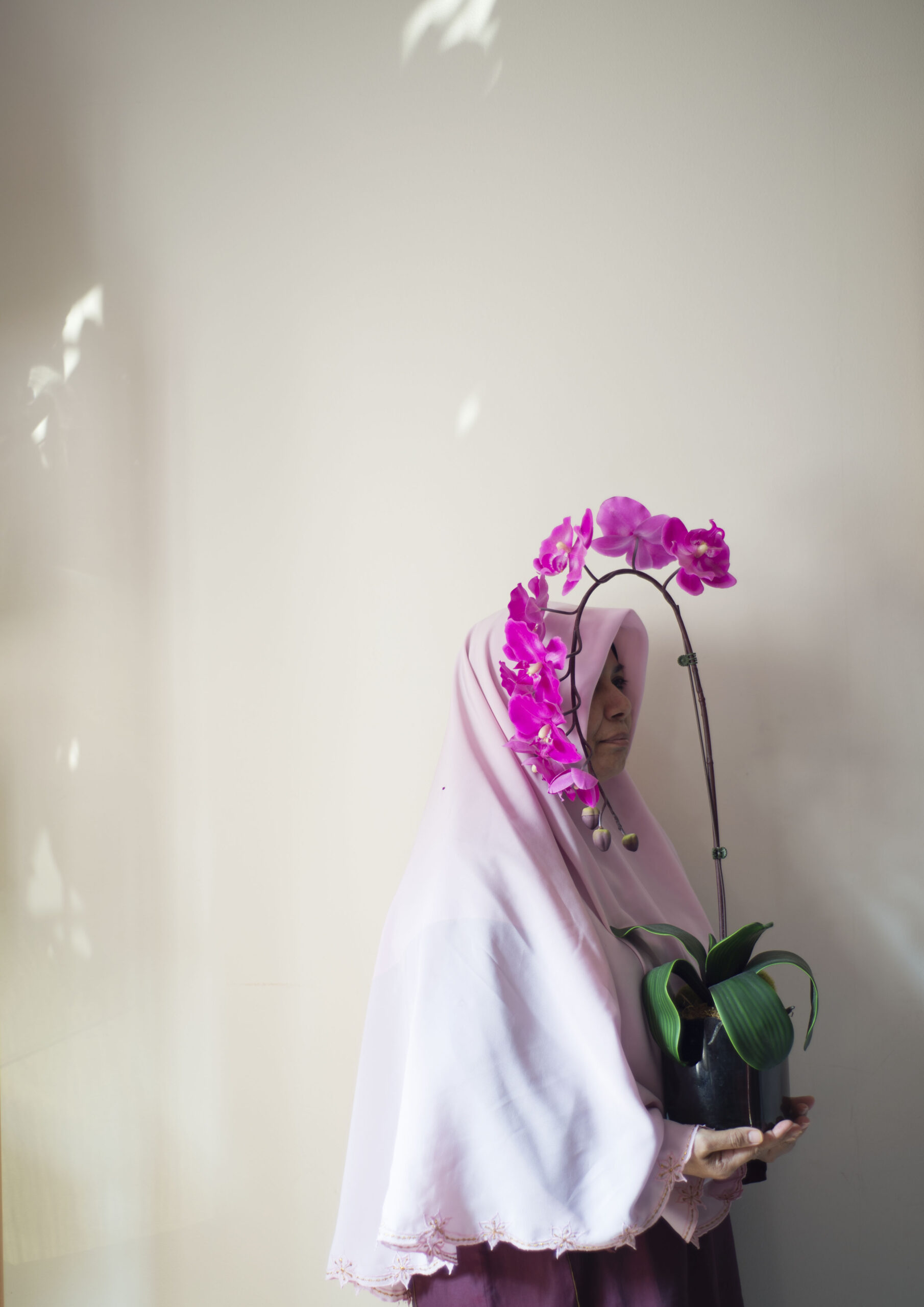
    Of late, the term ‘hijab’ has been used pervasively across different contexts of discussion, from that of religion, ‘Islamization’, the symbolic, in movements and representation, and especially in relation to the discussion of women, ‘Muslim women’. The latter is a most contested term as it is often relegated a single identity of a highly visualesque nature: that the ‘Muslim woman’ is a body seen donning a hijab, shawls of black or colors draped over the head and chest. The ‘hijab-ed’ body becomes a visual and ideological representation of the ‘Muslim woman’ – one largely shaped by an outsider perspective as opposed to stemming from self-definition – and inevitably so, used as discourse on issues concerning women and Islam. This sparks an imagination of ‘Muslim women’ as communities of the ‘hijabi’, defined solely by the visibility of the hijab, and in antithesis to it, the ‘non-hijabi’ or other. The dichotomous existence of these two imagined communities map them as visual opposites, and assumes a largely single narrative for each, one that focuses solely on the issue of hijab as symbolic identifier and definer, disregarding and nullifying all other possible narrative threads that make up ‘Muslim women’.

    The Hijab as Visualesque

    I believe that one of the reasons why it is so convenient to map the hijab onto the body of the Muslim woman is because of its highly visual nature. Google ‘hijab’ under ‘Images’ and you will be greeted with shawls of varying colors and styles, and the smiling faces of the women who don them. These are images from fashion blogs and vlogs posted by the users, alongside images posted by everyday Muslim women doing everyday activities. These women are often identified as the ‘Liberal Muslims’ or the ‘Moderate Muslims’ who integrate well with (secular) society. They have also evolved to become icons of ‘modest fashion’, a growing market in the fashion industry.

    Now, Google ‘Muslim woman’ and the images gathered will portray a distinctly different visual spread. Aside from some burst of colors and faces, the images mostly show women clad in black, donning a face veil or purdah – with their exoticized eyes – seen more as black silhouettes rather than selves. It is often these visuals that spark outcries of ‘Muslim women as oppressed’, living within a rigid system that forces them to cover up. I do recognize that this is sadly a reality in several contexts, but it is also important to note that these contexts are born out of highly patriarchal mindsets that sow the roots of discrimination into institutionalized Islam. It is thus unfortunate that the black hijab is visually equated to symbolize oppression when there are Muslim women who wear it willingly in other societies.

    Looking through these images of ‘Muslim woman’, you will also see the ‘random’ ‘non-hijabi’ woman, a stark reminder that the category of ‘Muslim woman’ cannot be visually pigeonholed, as it often is. But what is made evident is that the Muslim woman is a highly visible body and its visualesque nature is identified primarily by the hijab. The effect of this is twofold: that we, as a society, begin to identify the hijab as equated to a certain definition of Islam and what it means to be a ‘Muslim woman’, and secondly, that the hijab becomes a (symbolic) marker of how society (at large) views and expects a ‘Muslim woman’ to look like, and what they experience. This means that we begin to govern the Muslim women’s body into fitting a certain visual expectation, which inevitably transforms into symbolic and ideological constructs. In doing so, we visually create archetypes of the ‘hijabi’ and her other – she who doesn’t wear the hijab – as binary identities within the Muslim women community, each defining and at the same time, isolating the other. What is also unfortunate is that the other is sometimes left out in this imagination of the ‘Muslim woman’ or ‘hijabi community’ for her visual lack of a hijab, rendering not only her experiences excluded, but her identity, invisible.

    The Hijabi and her Other

    As someone who dons the hijab, perhaps I can firstly speak from the vantage point of a ‘hijabi’, a term I have never attributed to myself for I find it redundant, categorical, and frankly, rather hipster. But for the sake of this discussion, I temporarily will. I personally believe that there is no such thing as a ‘hijabi community’. As above-mentioned, it is an imagined construct rooted in the visibility of the Muslim woman’s body and the visualesque nature of the hijab. She is ascribed certain qualities or characteristics, which are built on assumptions and stereotypes of her identity as ‘Muslim woman’. And somehow, she is often lumped together with her other ‘hijabi’ sisters, imagined to belong and identifying only with those like her, and in the process, othering those who aren’t.

    The women I meet in my Islamic Studies class all don the hijab but our conversations do not revolve around this juxtaposition of hijabi and other. Our conversations cover a large spectrum of topics, from that of Islamic studies to politics, social issues, everyday life and yes, the hijab. However, our conversations on the latter would usually be along the lines of, “Oh your hijab is nice! Where did you get it from?” or “How did you manage to pin it up this way?” or “What? It took you less than a minute to put this one! Oh, it’s stitched up and ready to wear! Where can I get one?” Our conversations have never revolved around ‘non-hijabis’ as the ideological or visual other for there never was a need for such a conversation, which in itself speaks volumes. This is because, it is a discussion that is only provoked when we are pit against our supposed other, and this provocation is one that comes from the ‘outside’ via questions such as, “Why do you wear hijab, but she doesn’t?”

    The above is a question that has spurred many discussions, especially alongside different interpretations of the Quran. Whilst it is necessary as part of larger Islamic discourse, it becoming a repeated point of argument is highly redundant, especially when it is predicated on the need to justify one person’s choices, by criticizing or judging the choices and experiences of the other. It entrenches the visual and ideological presence of the hijab as being a single identifier of the Muslim woman, and assumes that her narrative and lived experience revolves solely around it, whilst disregarding or underplaying the experiences of the Muslim women without hijab, as well as other aspects of their lives as Muslims and well, human beings. Therefore, this convenient dichotomy of the hijabi and her other brings about a rather skewed discourse in relation to women in Islam as it automatically robs agency from the Muslim woman, relegating her to the realms of visual objectification and the overly-symbolized.

    Hijab as Visual Symbol

    Symbols are a marvelous thing. But it is important to remember that they are constructed and are embedded meaning and power by those who can afford to do so: those with access to words to describe, explain, elaborate, and sometimes, exaggerate and exploit. Symbols also exist as highly visual and at times, do not really care for an ‘authentic’ representation of reality, which can be both beautiful and dangerous. And this is perhaps why the hijab has become a most symbolic entity, encompassing all the traits above. Its visual nature alongside a strong dichotomized other allows for it to be crafted as a perceived symbol and narrative of what makes a ‘Muslim woman’ or what is ‘Islam’, a view that both outsiders and Muslim women themselves adopt, a view that can be beautiful, but mostly dangerous.

    To some Muslim women, donning the hijab is perceived as symbolic of Islam, in that, it is not just a piece of cloth for it reflects their belief and desire to be seen as practicing their religion as Muslim women. This is why there are women who don their hijab despite circumstances. But this is also perhaps why it is possible to find some hijabis enforcing judgment on the others without hijab, as being non-practicing. On the other hand, to some Muslim women, there is no need to don the hijab because of its symbolic nature – it is just a piece of cloth – as what becomes more important are the core beliefs underlying it, rooted in spirituality. Some of them also perhaps use this as a means of judging those in hijab as being ‘extreme’ or non-inclusive. I address this not as a judgment of Muslim women, but because I do recognize that the dichotomies are created and disseminated not just by the ‘outside’ world, but also within the Muslim women community itself. We have bought into this visualized dichotomy of the hijab as identity and sometimes repeatedly use it as a symbol of labeling the ‘Muslim woman’. And this is perhaps the most dangerous, as this notion of the hijab as symbolic of Islam is deeply entrenched in societies where women are forced to bodily and symbolically perform their Islam-ness, by being forced to cover up. In this case, donning the hijab is not just seen as symbolic of being Muslim, but in more drastic terms, to not cover up is symbolic of being un-Islamic, and can incur a huge penalty, from punishments, to death. This is also evident in societies where Islamophobia persists, subjecting hijabis to constant fear or real threats and danger by those who see them as symbolic of ‘Islamophobic Islam’. The hijab as symbolic can thus be very dangerous.

    On the flipside, if these different interpretations of the hijab as symbolic churn varied narratives, intentions, and lived experiences within the Muslim women community, what does it then mean for the ‘outsider’? How do the rest of society begin to relate to and interact with the hijab as a symbol? This is possibly what movements like World Hijab Day and donning the hijab as acts of solidarity with Muslim woman is grounded on: the imagining of a ‘Muslim woman’ as solely being hijabi and thus, the rush to don the hijab as the only symbolic method of standing in solidarity with them. On one hand, such movements and acts can be perceived as having no real connection to what it actually means to be a Muslim woman because of its symbolic nature; also highly visualized and only representing a specific visible group. This is perhaps a most direct and convenient reading of such movements. It is however done to the point that we begin to undermine or undervalue the symbolic act of the non-Muslim women who perhaps are attempting to understand not just what it means to be a Muslim woman, but more so, what it means to be a highly visible Muslim woman, especially in societies when it is becoming harder to do so. I personally do not see it as a problem. In fact, I feel that it comes from a place of love as, although problematic, it recognizes what the symbol means for some, and attempts to stand alongside it. In that instance, it is about reaching out to be a part of the Muslim women community, as an act of inclusivity, a symbol most beautiful.

    On a final note, I believe that in order to fully understand the ‘Muslim woman’ entails a need to firstly recognize that she is beyond the symbolic, the dichotomies, and the visualized form she is made to embody. This is a most arduous task, even for the Muslim woman herself. The need to rethink this category of ‘Muslim women’ and their lived experiences requires a decentralization of the hijab as sole definer, departing from the visual and symbolic as yardsticks of measure to orchestrate and ostracize who, what, and how we experience and understand Muslim women in the context of today. Whose narratives and representations are we subscribing to? Whose authorship and agency defines the self? How can we begin to narrate and understand their lived experiences beyond the hijab? How do we begin to move away from the hijab as visual and symbol? Would that perhaps change the way we begin seeing and understanding the hijab? Is it possible to understand and perceive of Muslim woman beyond the presence or absence on her body? Women are constantly tied in a tango: between putting on and taking off, absence and presence. Perhaps if all these are critically re-evaluated, we might be released from our restricted notions of who and what make up ‘Muslim women’.

    __

    image credit:  Hijab/Her (2013). nuruL H. 

  • Moving Beyond Homogenizing the Hijab: Part 1

    Moving Beyond Homogenizing the Hijab: Part 1

    By Diana Rahim

    It seems like we never stop talking about the Hijab. Asra Nomani and Hala Arafa unearthed a storm of anger and debate recently with their op-ed in the Washington Post which went down bitterly for understandable reasons. Although well-meaning, they also came across as condescending and reductive, not particularly acceptable in a climate where Muslim women are condescended to enough from Islamophobes and misogynistic Muslim men without receiving it from fellow Muslim women as well.

    Of the storm of opinions that have bubbled up, predictably many have pushed people into diatribes. Few responses have captured the problem with the op-Ed, its responses, and the nuances that ought to be considered aside perhaps from this response, this one from Muslim feminists and these especially lucid thoughts by Sarah Eltantawi

    *

    Nomani and Arafa’s op-Ed infantilize and trivialize Muslim women who choose to wear the hijab, reducing the meaning of the veil to merely a signifier of a patriarchal expression of Islam that seeks to control female sexuality, and therefore dismissing any consideration for the personal reasons why women choose to veil (or unveil). They also make an alarmingly brash claim that the Wear a Hijab day (or World Hijab Day) movement “spreads an ideology of political Islam, called “Islamism,”” Yet a look at the aims of the movement show nothing to do with politics, and arguably nothing to do even with religion, but everything to do with confronting difference and fostering greater understanding and tolerance in an environment where Muslim women face discrimination due to their visibility when wearing the hijab. The movement can be closer categorized as sociological than Islamic, and saying that it promotes a strain of Islam as conservative and alarming as Islamism seems like an absurd leap.

    They are not wrong to point out that the hijab can and does feel oppressive for certain women, especially women who are coerced or forced into wearing it. To flat out reject the fact that the hijab has been connoted with oppression by women who were forced to wear it is to be wilfully blind. They are also not wrong to point out the semantics of the word hijab, and in fact I would agree with demanding a deeper understanding of the term ‘hijab’ as per written in the Qur’an and to point out misinterpretations, especially since Muslim jurists, dominantly male, have for centuries formulated discriminatory laws against women based on their own misogynistic interpretations of certain verses. Asma Barlas’s “Believing Women” in Islam does an especially good job at uncovering this.

    But educate every single woman about the semantics of the term (how infantilizing it is to think that women wear the hijab because they don’t know better) and you still won’t be given a world where all women will either be veiled or un-veiled nor a world where the choice to don the hijab would primarily be premised on theology. In fact, there are plenty of Muslim women who may agree that the Hijab is not in fact mandatory, but still continue to wear it anyway, simply because there are a host of other reasons that influence their choices.

    In this article listing the personal reasons why some women don the hijab, Shahzia Rahman stated that she started wearing the hijab in order to assert her identity as a Muslim and help counter negative stereotypes. Maria Ahmed continued wearing hers despite some unsettling experiences because she wanted to be an example to her children to “stay strong, remember who they are, know in their hearts that they’re not doing anything wrong.” None of these reasons are theological, but rather one rooted on identity. These are just two examples. There are hundreds of millions of Muslim women in the world, there is no way anyone can homogenize ‘hijabis’ as a category nor can anyone homogenize the reasons for veiling.

    To reduce the meaning of the hijab to merely the theological is to view it primarily through the lens of religion, a classically orientalist approach, one already used in many disappointing studies on Muslim women. Such an approach neglects to acknowledge Muslim women as complex beings defined by more than just the one factor that is their religion. Within our own context, Humairah Zainal had explicated how framing the Hijab debate in Singapore as a religious and racial issue ignores the fact that “women face multiple forms of discrimination at work with respect to the hijab.” There is a need, when talking about the hijab, to seriously understand that it is a discourse that can’t be framed solely through religion. Any discussion that does not understand this is doomed to fail.

    One is also hard-pressed not to notice the neo-imperialistic tendency to modernization theory in their letter where the veiled and the un-veiled are correlated with progress (modernity) and backwardness (tradition) respectively. They correlate a movement that believes the hijab to be a marker of modesty and dignity to be one that is already codified in places like “Saudi Arabia, Taliban Afghanistan and the Islamic State,” possibly the worst, most regressive places a Muslim woman could end up in. To call this hyperbolic would be an understatement. One would think there are worse things you could do to be related to the Taliban and ISIS than to say that you wear the hijab due to reasons of modesty and dignity.

    In the end, though Nomani and Arafa may be valid in requesting a problematization in associating the hijab with modesty, or in requesting an honest and in-depth look to what hijab truly means qur’anically, they ultimately deny Muslim women the agency to assert their own meanings for wearing the hijab. To decide unilaterally that to wear the hijab is to perpetuate an ideology of Islamism is to dismiss the multifaceted meanings the hijab has accrued and the personal reasons women have for choosing to wear it. They call themselves ‘mainstream Muslim women’ although it is clear that their understanding of the term ‘hijab’ is far from mainstream. Then there is also the question of mainstream in which context? The ‘mainstream’ Muslim woman varies vastly all over the world.

    *

    For women’s clothing to be so hotly debated is nothing new. The female body and female clothing has always been a site of contestation in power struggles, ideological or otherwise. Anglo missionaries who came to India in the 19th century worked together with British colonialists to urge women in the Nadar caste to wear more ‘modest’ clothes under a moral pretext — the female body becoming the site where the power of colonialism is exercised. The burqa was turned into a symbol of moral justification by western liberal-feminists for the imperialism and war in Afghanistan (something Afghan women’s rights activists have criticized). While in certain places the hijab can be seen as oppressive, in others it becomes a symbol on the re-assertion of indigenous identity in the face of western imperialism. Even within these places one can’t make such homogenous claims.

    In the end, the hijab is just a piece of cloth. The fact that it can mean vastly different things to different people throughout different times means that anything assumed about the cloth reveals more about the person making such assumptions than it does about the cloth itself.

    __

    image credit:  Hijab/Her (2013). nuruL H. 
  • The Pain of Sex

    By anonymous

    For the past few years, I have struggled with pain associated with vaginal intercourse. I visited doctors but none could provide me with the answers I was looking for. “Have more sex, it’ll open up…it is supposed to hurt…try different angles.” The advice was never helpful and only reinforced my worry that there was something wrong with me. I was unable to find help or an escape, but I wasn’t necessarily looking for one. I was content not having my vaginal issues resolved because I wasn’t in a hurry to have children. I was able to enjoy other sexual activities and had a patient and loving partner. I knew I would have to figure it out eventually and waited until I had the emotional and financial capacity to dig deeper for the answers I was looking for.

    A few weeks ago I visited a new doctor. She had me hold a mirror as she took a look down there and pointed out the problem. “Now sit still, does that hurt? Hmm have you ever touched yourself before, you are pretty fidgety. Oh there it is – I see what the problem is. Can you see that – you have two tiny holes instead of one big one.” A septate hymen. Clear and visible to me and the doctor – a nostril in my vagina.

    As the doctor typed on her computer, I sat uncomfortably still trying to process what she was saying. “We’ll need to see what’s going on through an MRI and given how difficult it is for you to be touched, we’ll have to knock you out for the procedure.” I nodded in agreement. There was no way in hell I wanted to be awake for this.

    My doctor recommended me for physical therapy. The physical therapist took me in at around 8:20am. She had me walk, sit, lay down, move around until the big reveal moment when she herself poked around. I was watching her face as she observed my pelvic muscles and knew in an instant that this was complicated. I asked her what was wrong and to just tell me what she thinks honestly. “Honestly, my patients with just a septate hymen do not react like this. My patients with vaginismus do. Go through with the surgery and then talk to your doctor. We may have to bring you back for regular sessions. In the meantime, here’s a list of exercises I want you to do twice a day.” I thanked her and walked out.

    As the weeks passed, I visited the hospital for various appointments. Each time I got back to my car, I sat in silence taking deep breathes, then drove to work in tears while jamming to Adele on blast to get all my emotions out of my system. You see, you can’t talk vag in the office. Sure, you can talk about how you caught a cold, or need to get a root canal – that’s all work appropriate. But to bring up your vag problems is awkward to discuss with anyone really.

    Being that I’ve been married for a few years, I often get asked if I want to have children or if I am planning to have kids soon. You can plan all you want, but the reality is that nothing is in your hands. Even after all the treatment, surgeries, therapy and healing – Will I be able to have kids? Will I be able to experience vaginal intercourse without the pain? Only Allah knows. All I know is that this is fucking hard and I can only try my best. I am exhausted and emotionally drained and want it all to be over. I want to not have to worry about missing work for my medical appointments or budget a portion of my salary for medical expenses. I want to not have to hold back tears whenever anyone asks me if I like kids. I want to let myself be vulnerable with the ones I love and not have to show that I have everything under control. I can’t wait for the day when I can finally be excited about the possibility of being pregnant. About the possibility of painless sex! And surprise my patient partner with the news of our own little one. I want a lot of things in life. But I’ll make do with what I have for right now. My story, this space to share it and your duaas, iA.

  • Hijab Pressure

    From a few life experiences, I have deduced the following:

    Ways to encourage doning the hijab that work:

    1. Tell the person gently to don it for the sake of Allah.
    2. Explain the benefits.
    3. Share your personal struggles with the hijab and how you overcame it.
    4. Allow freedom of choice.
    5. Encourage; never force beliefs down her throat.

    Now, ways to encourage doning the hijab that do not work:

    1. Using fear and guilt-tripping. (i.e. Guaranteeing that she will drag her mother to hell for every strand of hair she shows to men; and that she will be hanged by the strands of her hair in hell.)
    2. Coercion. (i.e. Telling her – despite her having confided her predicaments to you – the reason she feels a gaping hole in her soul and the reason she is going astray is because she doesn’t cover enough from the gaze of perverted men.)
    3. Making her promise to cover up by a specific day of your choosing.
    4. Degradation. (i.e. Incessantly announcing to your children that she is going to veil herself, without even consulting her first.)
    5. Being rude and discriminatory. (i.e. Slut-shaming and warning your sons not to choose a non-hijabi like her for a spouse.)

    Let me tell you… I like being veiled. I love keeping up with the multitude of hijab trends, taught by hijabi Youtubers. I do quite enjoy how suddenly approachable Muslim women are to me, greeting me with warm smiles and salaams when they spot me in a hijab. I’m happy that now hijabis have greater representation due to the hijab going mainstream.

    However I really despise the culture which promotes that only women who are “modestly covered” are worthy of respect, whereas non-hijabis like me deserve to be treated with degradation and disregard. But what really hurts the most is when someone you (once) look[ed] up to thinks you’re not entitled to make your own choices.

    Till today, the Qur’anic verse that reverberates with the beating of my heart is the one my mom has always repeated to me: “There is no compulsion in the religion” [2:256]. That is a simple fact.

  • The Transient Path

    By Mabel

    Background story: I’m a Chinese and have yet to convert, but am on my way to learning about Islam and embracing it. This article was just a mini-epiphany experienced after a tough day.

    Today I sit in front of my notebook determined to write, because there is no other way I can adequately express this emotional journey I’ve been on.

    I’ve always been adventurous and rebellious in a way. I conform to societal norms (most of the time), yet there is this tiny part of me that enjoys doing something deviant. Doing something deviant like getting a tattoo. Doing something deviant like dyeing my hair. Doing something deviant like getting piercings. Doing things that leave people in awe from the unpredictability of my actions. I’m a good kid and a bad kid.

    This is why I find it hard to reconcile Islam with my identity. I’ve been told to keep my body pure. I’ve been told to be disciplined. I’ve been told to be demure, to be constrained with my words and my actions. With the way I dress. With the food I eat. But why? Why should I? I know I’m a good person; that’s all it takes for me to lead a meaningful life, no?

    Yet today I’ve also realised that it’s not about all this, not on the level that I’ve always been seeing it. It’s not about what I can or cannot do. It’s not about how people see me. Instead, it’s about how I can tame my heart and mind beyond these needs, these yearnings for expression of self or attention; of egocentrism. Beyond a focus on ‘me’, these needs are…nothing.

    Cliche as it may sound, it was really about finding this inner peace. The discipline Islam teaches is to help us to let go. Let go of this need for expression, this self-centered egocentrism, and to focus on living a simple and pure life. To see beyond the focus on the self, and the need for people to see us. Only with such a heart and mind divorced from worldly attachments will we be in the best state to pray for His blessings for others and ourselves.

    All this dawned upon me when I stopped to ask myself why I couldn’t pray for others around me when they were going through such hard times. The helplessness overwhelmed me. Why is it that I can’t pray, because I have a tattoo? Why is it that I can’t pray, because I have yet to convert to a halal diet? Why is it that I can’t pray, because I’m not a disciplined, ‘pure’ Muslim? Then I realised that these things didn’t really matter. It was was simply because my mind wasn’t free of these worldly attachments, and hence my mind and heart wouldn’t be suited for prayers with the purest of intentions.

    And so, ‘be in this life as if you were a stranger, or a traveller on a path…’ because life is simply a transient path, that will eventually pass with the natural cycle of life and death.

  • Ask Before Touching

    *Content Note: Post discusses rape and marital rape

    It is common practice to ask before touching something that is not yours. The same rule applies to bodies. A husband does not own his wife or her body and must ask before touching it. She is the sole owner of her body and has the right to decide who can touch it, how, when and for how long.

    This concept seems to have been lost on not only some Islamist groups such as Hizbut Tahrir in Malaysia, but some Muslim people in general who do not believe that marital rape exists in Islam. Rape is rape. Whether it is between strangers, friends, a dating couple or a married couple – the action of forcing a person have sex with them without their consent (or forced consent due to emotional coercion) is rape.

    As a Muslim woman, I believe the rights granted to me by my religion are just and fair. I, therefore, have a vested interest in proving marital rape is forbidden in Islam because if it weren’t, then what does that mean about the worth of my sexual agency in a marriage? My passion to educate women about their sexual and reproductive rights became much more important to me several months back, when I conducted a workshop for Muslim women in Singapore.

    One of the aunties approached me after my talk and asked “Can I really say no if he wants to have sex? Won’t the angels curse at me if I say no?” My heart broke as she went on to explain to me how she would ask her husband every night before going to bed if he wanted anything from her sexually, but she was rarely in the mood and was asking merely out of obligation as his wife. The conversation raised many questions about physical intimacy, sexual rights and consent in the context of Muslim marriages. The assumption in the room was that by signing the Islamic marriage contract, a woman has legally consented to engaging in sexual activity with her partner any time he demanded it. In the case of the aunty, she consented, even when she did not want to have sex, out of fear of a spiritual punishment. The question then remains- is this willful and informed consent? Making sense of this situation requires us to take a closer look at interpretations of religious texts and judgements about the expectation of women to have sex with their husbands.

    First, there are certain hadiths one can refer to that are used to justify the requirement for women to say yes to her husband’s sexual requests. In Sahih Muslim, The Book of Marriage (Kitab al-Nikah), 3368, Abu Huraira (may Allah pleased with him) reported Allah’s Messenger (may peace be upon him) as saying:

    When a man invites his wife to his bed and she does not come, and he (the husband) spends the sight being angry with her, the angels curse her until morning.];

    Secondly, there are influential figures such as Ustaz Abdul Hakim Othman of HTM, who believe and openly decree that marriage legalises a Muslim to have sexual relations with a woman. “Your body is to be used by your husband, to put it crudely. When you marry a woman, there’s no need to get consent [for sex], no need at all,” he said.

    It is easy to see how these messages can be read negatively by both men and women. For men, they may believe their wives should submit to their sexual requests. For women, they may believe that it is their religious obligation as wives to say yes.

    There are, however, alternative understandings of Islam that support a woman’s right to consent to all forms of sexual activity within a marriage. Dr. Ahmad Farouk Musa of the Islamic Renaissance Front is one such individual who is speaking out against the patriarchal interpretations of Islam. He is quoted in MalayMail Online having said “Any imposition without her consent is basically an assault on her rights as an independent human being. If this imposition without consent is termed marital rape, then marital rape it is.”

    Shaykh Muhammad Adeyinka Mendes during a lecture for Sacred Path of Love explicitly denounced marital rape and also noted that the hadith about angels cursing women was in reference to women who use sex as a tool to manipulate and control their husbands.

    After finding less than satisfying interpretations of the angels cursing hadith online, I consulted with local Indonesian scholar Dr. Nur Rofiah who explained how the hadith can not be understood in a vaccuum. It should be understood as a part of a collection of verses from the Quran and other hadiths that discuss marital relations. In the Quran, you have a verse that notes husbands and wives being garments of each other – this indicates an equal relationship between them. She went on to explain that the hadith about the angels cursing women refers to instances where the husband is inviting the wife politely but the wife refuses arrogantly to have sex with him. Marriage allows men and women to have sex with each other but forbids cruel treatment and consent should be obtained actively and not assumed.

    Another shaykha from the US provided me with a similar explanation of the hadith:

    “It is her legal right to refuse and accept any physical relationship. If she uses her right abusively ( to manipulate him and use his sexual needs as a tool against him to get what she wants or out of a desire to punish him) the husband still has no right to force her. Rather, the hadith admonishes her and warns her of her punishment with Allah and His angels. If a woman is tired or sick or just doesn’t want to engage in relations  and she is not using her refusal as a means to hurt her husband, there is no negative spiritual consequence to her refusal. Such a woman would refuse in a kind way (as opposed to abusive) and whether her husband understands or not, is not on her once she has communicated to him with ihsan. The hadith is meant for women who cheapen the marital bond and relations to a weapon they can use against their husbands. Even then, the hadith reminds them that they may have the worldly right to refuse in an abusive way, but they don’t have the ethical right.”

    Her explanation presents a far more nuanced understanding of the hadith, as opposed to the literal reading that people are so keen to adopt, and therein lies the key difference.

    In understanding any religious obligation, we are often confronted with numerous conflicting passages of the Quran and hadith, all of which are rooted in very specific contexts. We must constantly challenge ourselves to think the best of our religion and question interpretations of religious texts that promote injustice. If there is ever a situation where an individual is being physically, emotionally or spiritually harmed in the name of Islam, we need to not just brush it off as “those aren’t Muslims who say that” but work to understand their perspective and offer positive alternative perspectives. When in doubt – refer back to the character of the Prophet (S) and the core teachings of Islam that simply put, ask us all to do good in this world. In my Islam, emotional blackmail, coercion and rape are not part of those teachings.

    Note: This article has been edited on 30 April at 4:21pm by the author.

  • The Gift of Listening

    By: Diana Rahim
    [Transcript of speech given on International Women’s Day 2015 in Hong Lim Park]

    Imagine the 1960s. Everything around you is heavy with the scent of tropical heat and greenery. Somewhere in the village my grandmother directs men to carry the furniture from the house into the truck that would drive their possessions to the family’s new home. My grandfather came home from work to this scene. He wasn’t informed. He had not wanted to move but my grandmother had planned it anyway. Dumbfounded, all he could do was follow.

    In my mother’s stories about my grandmother, there is rarely talk about how the women of the time were beaten down by society or their husbands. How they were forced into marriages with men twice their age they barely knew. Instead, she always spoke with awe about these moments of assertion from her mother. How she yelled at her husband when she found him incompetent or how she singlehandedly planned their move when he refused to leave the village during a dangerous racial riot. My grandmother was always in my mind an image of peacefulness. She was gentle, but she was also a woman who knew how to find power in whatever spaces left for her, collect them, and wield it when necessary. Especially when it came to protecting her loved ones. She learned from her mother.

    My great-grandmother was a fiercer woman. At her time, she divorced her husband who refused to get another job that would sustain her and the kids. She wasn’t afraid of stigma. At 40, she lost her 12 year old son, marking a significant spiritual turning point in her life. She turned her pain into something beautiful. Throughout her life she was stubborn in her willingness to love and forgive even the people who pained her most. There were times when this seemed a weakness, simply because she looked so pitifully frail and broken when she cried. She allowed herself to be openly vulnerable. Yet, she also had a fiery temper and blistering sarcasm. She contained multitudes. She wasn’t afraid to be all of them. I know now how brave she was to show to the world her gaping wounds.

    Whenever I applauded their moments of speaking up to their husbands or taking charge of a situation, my mother would always be quick to add that women at their time were still treated badly. The only reason why these moments were compelling was precisely because they were subversive. Because they weren’t treated as equals. One musn’t mistake the replication of power, silencing or putting down another person, as empowerment, even if women are the ones doing it. In fact, if women are doing it to other women, it is a real problem.
    The struggle for women’s equality is diverse. Ideally the multiple struggles by everyone they happen side by side, in solidarity. But in reality there is a hierarchy happening because there are factors that position women differently. Race, class, sexuality, where you live. Etc.

    For example, I can’t speak women’s issues without also talking about my race. Growing up malay, I knew too many girls who did not feel fair enough for beauty. I knew girls with whitening creams in their pockets, aspiring to fairness that they saw in their chinese classmates. In the context of the Muslim community, the only women’s issue that seems important enough to be discussed all the time is modesty or the hijab or whether you’re a “real muslim” or a “practising muslim” if you don’t dress accordingly. It’s not that these things aren’t important, but it’s telling that these are what are talked about most rather than domestic violence, marital rape or single mums.

    It’s important to think about this in the context of Singapore. Whose voices are shouted over and whose are prioritized? Whose experiences are triviliazed or forgotten? Is our ‘empowerment’ built on the suffering of other women? Like the archetypal strong, businesswoman who is a paragon of female power but has a domestic worker she pays below minimum wage and doesn’t bother to talk to. Do we listen enough to the other women in our lives, the ones who do not speak? Do we give them space to speak? This was why I wanted to talk about my late grandmother and great-grandmother instead of myself.

    There is so much we can learn when we are willing to listen to the women around us. My grandmother and great-grandmother for example taught me how power needen’t be something violent or assertive. It was also the willingness to be vulnerable in a world that punished it. Theirs was a soft kind of power, and I hope they passed it to me by blood.

  • How Sufism Healed My Islam

    My love for sufism is well-known amongst my friends. But my love for it transcends beyond the customary nod to the poetry of Rumi, stories of Rabia Basri or knowing the distinction between the different Sufi orders. I think what really compelled me towards sufism and the way it communicates Islam, is that the language used, the metaphors, everything, seems more “feminine”. I feel more at home with the language of Sufism. Sufism is built on stories of radical empathy, compassion and forgiveness. It’s built on radical inclusiveness, extending welcome to people of all faiths into the house of God and your own heart.

    This may be hard for muslim men to understand, but the messages and practices propagated by institutional Islam today, or at least here in Singapore, feels patriarchal. A fair number of them, in fact, are patriarchal. If from young I am only allowed to inhabit the space behind the male or behind a screen and I am told in madrasah that the good wife is one that supplements her husband’s every whim and desire — then you get a very clear and consistent reminder every day that your presence in this culture is secondary. I have struggled in my faith because of this feeling. I remember sitting in Madrasah one day and listening to my ustazah give an example of the ideal muslim wife. In the story she told, this wife sat waiting for her husband at the door, a whip in hand for her husband to punish her if he was dissatisfied with her work in the home.

    It is an extreme example, and yet this extreme example was taught in class to impressionable children like me. I could only imagine what sort of ideas it gave to the boys in the classroom. Watered-down versions of that extreme example is communicated in stories, advices and social pressures to the muslim woman every day. It did not seem right to me. I know other female muslims who also faced the same struggle for the same reasons. For those who simply could not accept and live the narrative of this ideal, subservient muslim woman, it is a struggle. At times, she is viewed as a lesser Muslim for refusing to accept this narrative.

    I had only really gotten out of the struggle when I came across sufism. There was this beautiful, tender, giving side to the teachings of Islam that I hadn’t seen stressed in my years in Madrasah(s)! Growing up, what was emphasized was teaching and demanding obedience through fear of consequences, fear of hell, fear of God. But they never really stressed as much to us faithfulness for the love of God, the love of other human beings and for the very joy of these actions in themselves. Sure, they taught us to do good, but it was always pre-empted with the idea that we do good because we don’t want to go to hell. We do good because we do not want to anger God. In Sufism however, and I believe in Islam itself, doing good is to be done because it is good in itself. It’s not conditional. You do good because it makes you a better person, and therefore grow more attuned to God. It did not seem right to me that this whole beautiful side to Islamic teachings (not so much Sufism but the stress on a more loving, giving, ethos as opposed to demanding obedience through fear) was swathed by the more scary, fear-inducing image I and many people I knew grew up with.

    And it is not right. Because if we look to the way our prophet treated his wives, the way he shared the workload, the way he abolished laws and customs detrimental to women, the way women and men prayed side by side in mosques during his time without difference, then what’s happening right now is an aberration. I have never doubted that Islam is egalitarian and treats women with respect. But Islamic culture, the way the faith has been interpreted by humans for centuries, is a different matter. Of course it is. When you see that a majority of scholars who issue fatwas and other matters are males. How could they possibly understand things like menstruation, pregnancy, abortion, and other things that are specific to the female experience? Yet they get to speak authoritatively on such matters.

    This, amongst many reasons, is why I’m a reformist. Because God should never feel alien to a woman as she is growing up. She shouldn’t feel guilty for asking questions. She shouldn’t feel like she is taking up too much space when the love of God is supposed to be limitless. She shouldn’t be told that she is dirty and that her presence is sin. She should have an equal say in matters that concern her. What I have always loved about Islam is that it is a religion devoid of mediators. Yet how many times has it been felt that the male muslim is somehow closer to God. How can it not? They’ve reserved the front seats.