Category: Blog Series

  • Editor’s Letter: Monolithic

    Editor’s Letter: Monolithic

    by Diana Rahim

    It is not surprising that the term ‘Monolithic’ can have negative connotations. It brings to mind an understanding that is reductive, and absolute. A sweeping, generalised way of perceiving a reality that is much more complex and nuanced.

    Not all Muslims are Arabs after all, or even from the same denomination, or necessarily share the same cultural practices. Not all women have the innate quality of being gentle or nurturing nor are men necessarily tough and pre-disposed to supposedly more ‘analytical’ thinking. Malays are not essentially lazy. Any kind of essentialism; any kind of belief that a person by virtue of belonging to a certain subgroup is innately anything is bound to be not only unscientific and untrue, but indicative of a serious lack of understanding. It could also be an indication of a refusal to understand, since present evidence is always available to debunk myopic, flimsy stereotypes.

    *

    The trouble with insisting on a singular, or monolithic, understanding or interpretation, is that it is almost always accompanied by an admonishment or even a hostility to diversity. We often hear it, for example, when some perceive the immense tradition and diversity of Islam in a simplistic and reductive way. They might call you a terrorist. They might call Islam a barbaric, patriarchal religion that endorses stoning and head-chopping. But of course we’re thinking, which Islam? The Islam of ISIS? The Islam revealed in patriarchal 7th century Arabia? The Islam that had gay and intersex custodians in Mecca? The Islam of the Nusantara (the Malay world)? The Islam of the Uyghurs?

    But Muslims too, despite being subjected to Islamophobia, can be guilty of believing, or demanding that Islam is a Monolithic tradition. A monolithic mode of understanding or belief in Islam can lead not only to a loss of diversity, but also cause damage for interfaith, and especially intra-faith relations.

    Since we’re on the topic then, let’s consider the issue of Monolithic perception when it comes to Islam. As a monotheistic religion, the centrality of the concept of Tawhid (oneness) may lead one to think that there can only be a single ‘true’ way. That in order for us to be as authentic as possible, it necessitates a ‘sameness’ or a single prescribed way of worshipping, or living, as a Muslim. This might explain why some Muslims even find themselves influenced by a creeping Arabisation, stemming from the perception that adopting the lifestyle, language or even the garb of a foreign community would make one closer to “true” Islamic practice. 

    Simply said, the urge may be strong to perceive and understand Islam as monolithic, leading one to shun everything that does not fit the narrow and restrictive view that is seen as the only legitimate way. But such a view simply cannot hold for a religious tradition spanning over 1400 years and 1.8 billion adherents. Any kind of obsession for a ‘purist’ form of ideology is a red flag for dogmatic thinking. It also leads to a disinterest in communities or people who do not practice the same way as you do, since they are not considered ‘legitimate’ and therefore not worth knowing. This may be as benign as ignorance, but even as hostile as outright rejection and demonisation.

    For example, if you are Sunni, which most Singaporean Muslims are, think of how much you actually know about your fellow Muslims from the Shi’a sect. What little Sunni Muslims know of the Shi’a sect is often from untrue stereotypes that insinuate, or directly accuse them of being ‘orang sesat’ (deviant). The image of Shi’ism is often crassly reduced, for example, to an image of a group self-flagellating themselves during ashura (a practice, which by the way, is condemned and outlawed by the highest Shi’a religious authorities).

    Rarely do Shi’a-hating Muslims get over the fear of difference, the fear of seeing a group that practices Islam in a way that seems so different (regardless of whether it is really so different), to actually find out and read a basic article that explains Shi’ism. But then, people rarely respond rationally to irrational fears that have, more often than not, been socially conditioned through the language and imagery employed by the dominant community. It would feel easier after all, if all Muslims were to follow the same path that you believe is the ‘right’ one.

    Recently, a letter called for MUIS to debunk Sunni-Shia fallacies, citing the fact that a fatwa supported by 500 Muslim scholars that accepts Shi’as within the fold of Islam. But if such a strong statement of the validity of Shi’ism is not enough, one wonders if the endorsement by a religious body is enough too. It may seem natural, in Singapore, to appeal to the authorities when it comes to a problem rooted in group differences. But perhaps it would be more powerful if we could envision another way. The option is always open to debunk those fallacies ourselves. To do the work on the ground of reaching out, sharing stories, information, and debunking stereotypes. Hopefully, that’s what we can do in our small way with the upcoming blog posts. And let’s keep the momentum when it comes to sharing marginalised voices, supporting them, and giving them visibility and space

    *

    There is this prevalent belief and almost instinctive conviction that peace is to be found in ‘unity’ or ‘sameness’. That a feel-good idea of ‘unity’ where conflict is not visible is the ideal situation we want in society. But these are just kinder, vague, and camouflaged ways of desiring for some kind of hegemony, and hegemony almost always comes with an abuse of power. In order to enforce the dominance of one social group, or one dominant framework instead of another, others are necessarily subdued, whether through coercion or through direct violence. In other words, Monolithism is enforced.

    There is a tendency towards a kind of universalistic ethics when it comes to our conception of peace. We can be so discomforted by diversity that we think that an imposed hegemonic order that breeds monolithic views is one that is preferable. But dominant consensus is not necessarily indicative of peace, especially if such a consensus was enforced instead of being arrived at together. Such an order, if it is peaceful for us, almost always means that it is harmful and painful for others. True peace is perhaps a situation where we are unafraid of disagreement.

    For this reason, if our understanding of something, whether it is religion, ideology, or a group of people, is monolithic, it is often a cue that our understanding has been the result of power dynamics. To insist that a group of people can be reduced to a single story or image is an act of dehumanisation, and it is often a group with power that has the ability to dehumanise. To recognise that we might be given an impoverished, reductive view is thus a cue for us to seek more truthful, nuanced answers that will restore humanity to our society and relationships with different communities.

    The reality of our world — our communities, our countries, our religion, our gender, the experience of being part of any sub-group or identity — are often complex things that are difficult to reduce to a single image, word, or even a sentence. No person who understands this would feel comfortable to be made representative of a whole community. Yet those who insist on monolithic understandings, ways of seeing, and being, often do that for whole groups of people, beliefs, and experiences. It is perhaps time to consider that peace is perhaps not to be found in pressure to conformity and sameness, but instead in the acceptance of the diversity that is natural to the human experience.

    Perhaps we are not pure white light, we are the full spectrum of colour. There’s beauty in that too.

    __

    illustration by Wan Xiang Lee
  • Where are you, God?

    Where are you, God?

    by Zarifah Anuar

    It’s 3am and my alarm goes off. I don’t jolt awake, because I’ve been awake for the past 30 minutes or so. There is a special kind of silence at this time of the night. You’re very aware of how alone you are — everyone in the house is asleep; outside, your neighbours’ windows are void of lights; you strain your ears to hear the usual scrape of tires on the road, but it is rare. You are alone.

    It’s almost 4am when I manage to drag myself out of bed to the bathroom. Running water always sounds too loud, too sharp, at this time. I watch it run, delaying the inevitable. When I finally stick my hands in and start my ablutions I immediately shiver. It’s cold, but I’ve been told that we shouldn’t use warm water — the cold should wake us up and freshen us.

    I do not feel fresh.

    My telekung and prayer mat lie waiting in their usual spots — one in the cupboard and the other folded in front of the wall. I pull out my telekung, slip it on, then unfold my prayer mat. I stand on it, wriggling my toes on its soft, velvety surface, making sure that my skirt covers the bottoms of my feet and my top covers every strand of hair. Only when I’m convinced that everything is covered do I stare down at the top of the prayer mat and recite in my heart: I am starting my optional night prayers.

    I was told that these prayers are the most sacred, and that those who do them will be rewarded any and all of their wishes, which is why only the most loyal and needy of His servants will be able to find this special night: Laylatul Qadar. You can’t cheat by praying every night of Ramadan; but you can do the optional terawih prayers instead. There are clues, though, and only those who seek it will be able to find it. You never truly know if you’ve found it, because the clues are so subtle: it is on the last ten days of Ramadan, the day of Laylatul Qadar will be filled with calm weather, peace and tranquility, and the night even more so.

    I’ve been seeking it every Ramadan since I was 16. I’m never sure if I’ve found it, and I’ve never asked my parents either; it just seemed like something that would be deeply personal. I was sure that my parents sought it out too, and we would make casual conversation of it afterwards, but never talked about whether we prayed and what we prayed for.

    If you couldn’t wait for Ramadan to ask God for something, you could also do the same prayers any time of the year, though they wouldn’t be as potent as Laylatul Qadar. I did them sometimes, but they feel especially lonely. At least during Ramadan you could comfort yourself with the fact that so many others would also be chasing Laylatul Qadar, but outside of it lies a deeper silence and a deeper sense of isolation.

    There is a special kind of desperation in these prayers. The night makes it especially lonely and silent, making the troubles I felt feel all-consuming. Sometimes I felt like I was the only person on earth kneeling before my Creator.

    It would feel like I’m just following my body through the motions of prayer: raising my arms in takbiratul ihram, bending my back in rukuk, going down onto my knees for the sujud, sitting up in the iktidal before pushing myself to my feet before doing it all over again.

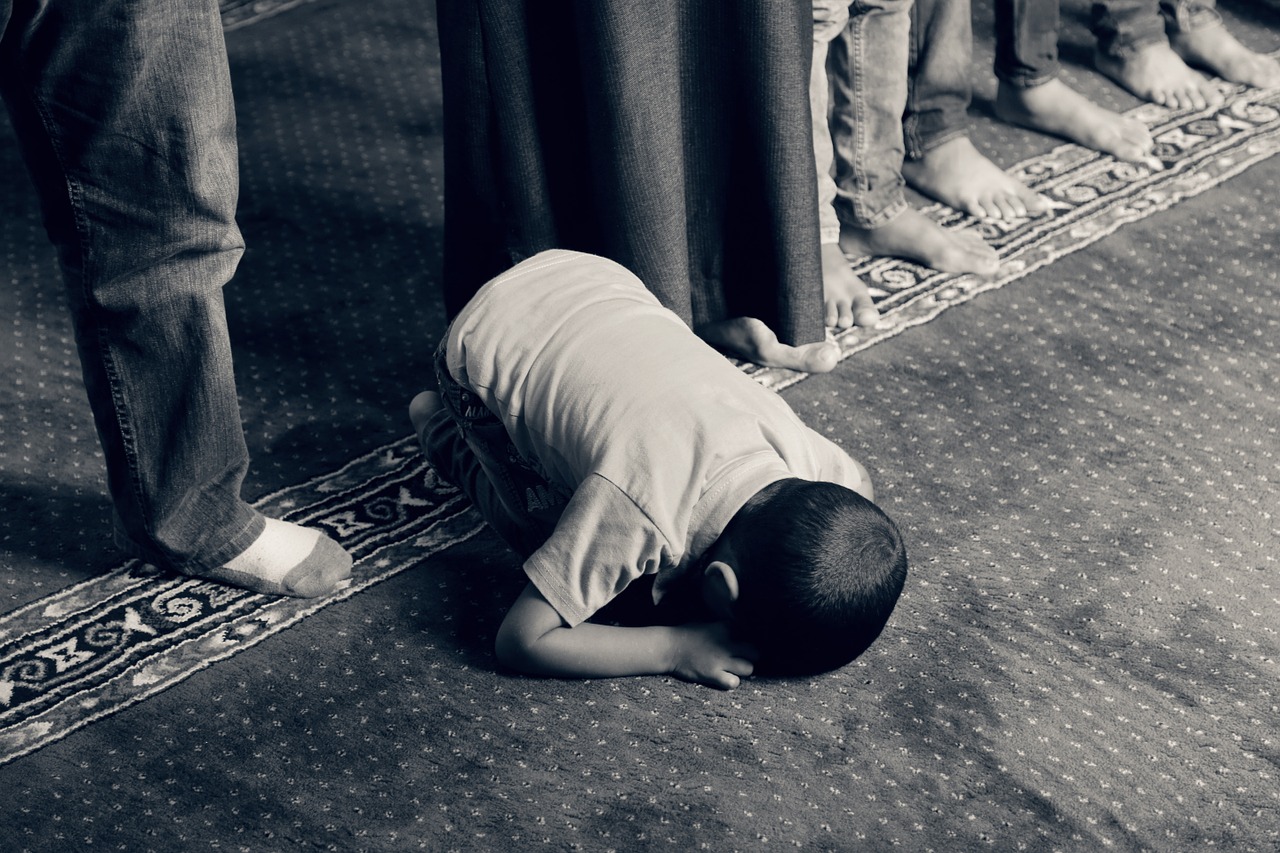
    I would cry in sujud: a figure on her knees, clothed head to toe in loose white cloth forehead pressed to the prayer mat. Your tears don’t slide down your cheeks when you’re in sujud. If you cry enough they’ll drop like rain onto the prayer mat. Sometimes you’d feel like you can’t breathe, choking on your own desperation. I would stay so long in sujud that my head would feel light and I would feel nauseous and faint, and that would be when I’d force myself to sit up and finish my prayer with salam.

    After that I’d sit on the prayer mat, doing zikir through my tears until they’d stop and all I’d be left with is the overwhelming weight of emptiness and loneliness. I’d stare at the splotches of tears I’d left on the prayer mat after that, until I could pull away and head back to bed.

    I’d wake up a few hours later, tired to my bones and lonelier than ever, wondering why I didn’t just sleep through the night, because it’s been years and years since I started doing these prayers, and I am no less calm, no less heard. My problems get bigger and bigger, and I’d feel smaller and lonelier. I’d try not to actively think the one thought in my mind: where are You, God? Where were You last night, and where are You now? How many more of these prayers do I have to do before I get to feel You here with me?

  • “You’re Not Like Other Malays”

    “You’re Not Like Other Malays”

    by Firqin Sumartono

    When I was in university discussing available scholarships for graduate school with a friend, I suggested that she look within her community for available scholarships, since that was what I was doing. She replied and looked at me as if I understood what she was implying, “Chinese scholarships are so competitive! Everyone’s so smart.”

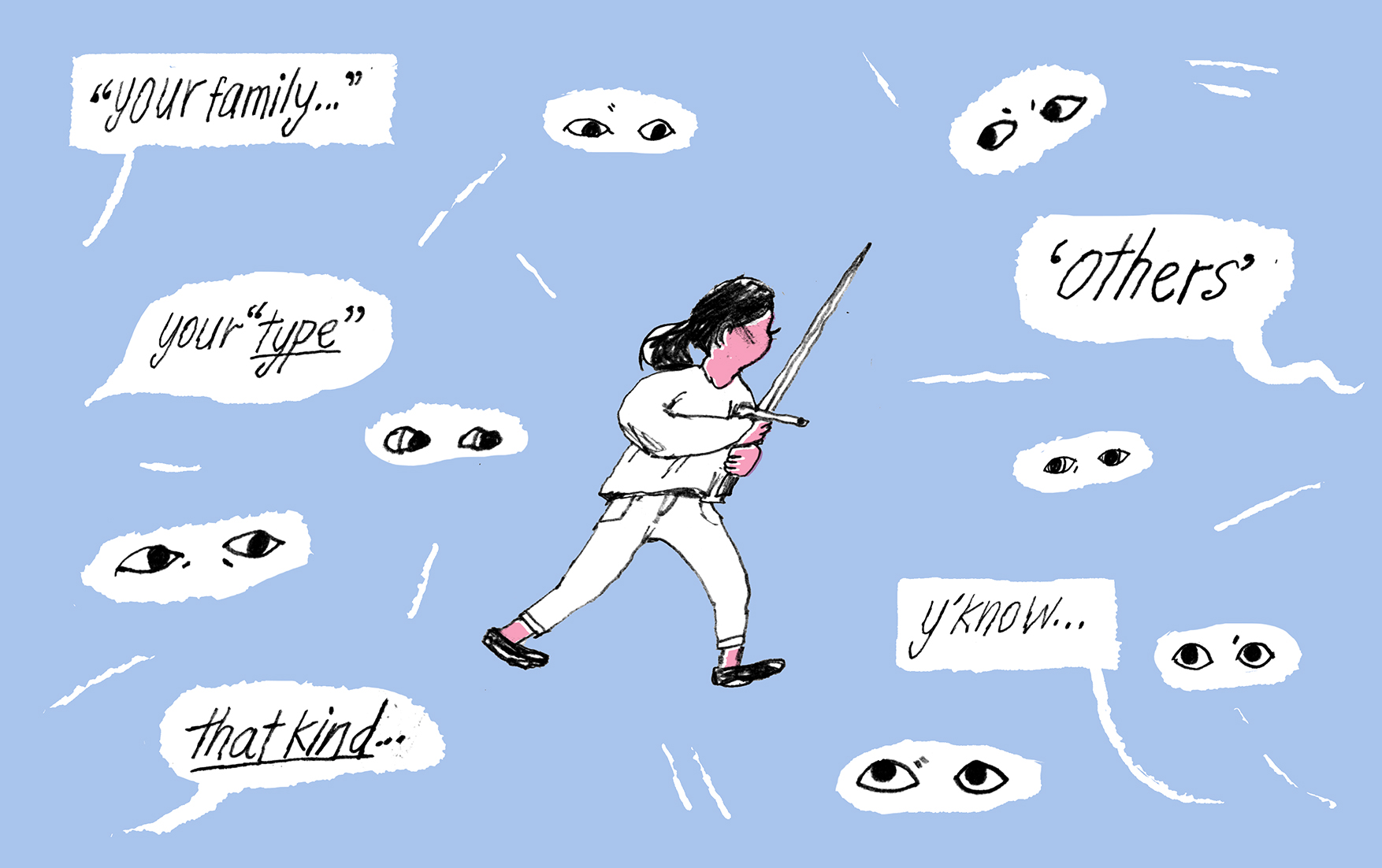
    On another occasion, over dinner, a friend asked me to introduce my male friends to her, and I said “Well, I don’t think they’re your type.” To which she responded, “I don’t have a type anymore… I just don’t want… y’know… Malays.” She looked at me, with that knowing look, almost smug, expecting me to understand or agree to what she said.

    This is just the tip of the iceberg, I have more where that came from. Maybe the other time when a friend said “your family is not like other Malay families”. What exactly is this “other” Malay families? I call my aunts and uncles Waks, Ciks, whathaveyou. My family has Nasi Lemak or Lontong for breakfast on the weekends, we crave for sambal belacan everytime we’re overseas, we wear baju kurungs every Hari Raya, and my mom stores fishes in those ice-cream tubs in the freezer. We consider ourselves a Malay family and I am your typical Malay girl.

    What was interesting was the blitheness of their remarks, and how it was said with a complete lack of shame. Maybe, they do not see me as a Malay person. Even if they do, they assume I share the same racist views about my own community with them. Hence, I get stuck with all these “knowing looks”, and “y’knows”. No, I don’t know. No, I do not know scholarships available in the Malay community are “easy” to get (I would be on one, if it was). No, I do not know why you wouldn’t want to date a Malay boy. And no, I do not know what you mean when you said the ‘other’ Malay families.

    I used to let these microaggressive comments slide. I tell myself, that they’re good and well-meaning people who utter these statements without any ill intent. Maybe, they just don’t know they can’t say these things? But when it happens all the time, it seems like they are the ones who are starting to see stereotypes as truths.

    Microaggressions is sometimes mischaracterized as an “obsession with the creation of victims” or a minority being a little too sensitive. Some might argue that there are other pertinent issues to tackle, in the larger scheme of things and that focusing on the slight microaggression experienced is frivolous. But microaggressions are not borne out of a vacuum. They are prejudicial beliefs that play on the stereotypes of a community. These generalizations only serve to crudely rationalize and blame the minorities for their marginal socio-economic and educational status in society. Microaggressions also expose the implicit biases we hold. Implicit biases do not only result in hurt feelings, they have real consequences from discriminatory hiring practices to social policies that marginalizes minorities.

    These days, I don’t make excuses for microaggressions any longer. I try my best to call them out ‘nicely’. But anyone who has ever been in this position would know that you have to pick your battles. Sometimes, or most of the times, you have to let that comment slide. Because you don’t want to be labelled as that “sensitive” minority. It’s a dilemma, I know.

    But we need to call out microaggressions, they perpetuate negative stereotypes and the prevailing culturalist views that Malays are not hardworking enough, motivated, industrious, creative, and other unflattering attributes. These negative perceptions of the community only serve to make us question our identity and weaken our self-esteem.

    Like most Malay Singaporeans, we constantly live under the burden of these negative stereotypes and have to shoulder that unspoken responsibility to show that we are not what our stereotypes make us out to be. In our heart of hearts, we believe these stereotypes do not define who we are as an individual or a community. Unfortunately, some community leaders have accepted these culturalist views, blaming the community for having a personality defect of being lazy without recognizing that there is structural discrimination in place.

    Calling out microaggressions curbs the continuation of negative stereotypes which only hinder ourselves from progressing as a community. It can help us progress to become a more inclusive, empathetic society, where we are sensitive, kind and understanding towards the different cultures, and experiences of others.

    _

    Firqin Sumartono is a linguistics graduate and currently works in research. Her ongoing study looks at the evolving speech patterns of the Singapore’s Malay community. She loves reading non-fiction books but can’t stand fiction unless it’s about murders. 

    Illustration by Wan Xiang Lee

  • I am Woman

    I am Woman

    by ASMY

    I sat in class that day, staring down at the skirt of my baju kurung cum school uniform, hovering above my black shoes.

    “What am I doing here anymore?” I’m seventeen in the first year of Pre-University at a Madrasah in the A-levels stream. Ever since I was 7 I have always dreamed of being a Pre-U student, furthering my Islamic education in Malaysia or Brunei, before coming back to be an ustazah: typical, I know. But it was the simplest route to simple money and coming from a financial background that wasn’t too bright, it was the best paying job I was exposed to. I really thought I could and I would, until I was denied the opportunity.

    Earlier that week I was telling – more like reminding – my family about the beauty of Brunei and how I could get sponsored to study there: it was basically a free ticket to all my dreams and in two years I was going be there. Then my Father stopped me.

    “Who told you you could go study overseas? Islam doesn’t allow women to travel without a Mahram”

    Oh my God.

    I have teleported to Pakistan.

    “Women are not capable of looking after themselves!”

    Throughout his preaching I had to bite my tongue because when the stubborn man thinks that his idea of Islam is right he ain’t about to change it even if Jesus came back down and slapped him in the face.

    Skip to Eid, I remember my aunt who was recounting to the time when she was in my exact position 50 years ago. She had told my father’s father, her father, that she wanted to further her studies. My Grandad told her:

    “No matter how far you study, at the end of the day, a woman goes back to the kitchen.”

    And my aunt told me this in a matter-of-fact tone as if indirectly telling me that I’m not a good lady for wanting to further my studies in Islam simply because I was a woman.

    I’m literally in Pakistan right now.

    I decided to confide in my brother to see if he can work his magic that came along with his male gender to convince my dad to let me go, since apparently guys are more trustworthy than any woman. My brother said:

    “Well they aren’t wrong, you know. You are a girl and your job is to be dutiful to your husband. You need to get married so your guy can take care of you.”

    I cannot believe the IGNORANCE.

    But well, I can’t expect a man who dropped out of school at 15 to be a delivery boy to appreciate education.

    Maybe this casual misogyny is a trait all men in my family will inevitably inherit. I wonder if they know that their narrow-mindedness will be the ground on which a toxic world will continue to tread on. That if they successfully applied it to all women in the world, over 50% of the world would just be some ‘dumb hoes’.

    Or maybe that’s the plan: for women to remain inferior so that men can feel a sense of authority and superiority over us. I mean, they need SOMETHING to protect their ever so fragile masculinity. Or maybe I’m just an angsty, uneducated feminist who jumps to conclusions.

    See, it’s a vicious cycle: women are oppressed and they don’t get education. They remain uneducated, are looked down upon, and are further oppressed. Rinse, lather, repeat.

    But thanks to these not-so-micro aggressions, I realised that I have the ability to do much more than just be another Ustazah (not that it’s bad, it just shouldn’t be a choice as a result of force).

    I want to be a social worker (and maybe a part-time sex educator). So I aimed higher: I wish to get into NUS and major in Social Work so I can help underprivileged people, mainly women, by being a link to financial and emotional avenues that can support them so they can achieve the great things they were destined for.

    So are microaggressions bad? Definitely. But they say stars can’t shine without darkness. And they don’t call me Shams (The Sun) for nothing. I will be the biggest star God has destined for me to be. And then, microaggressions can kiss my bisexual Muslim Lady butt goodbye.

    __

    ASMY is an 18 year old student, currently trying to squeeze her way through A-Levels and Misogyny so that she can get education, and hopefully one day, help the world. ☀️

    Illustration by Wan Xiang Lee

  • Activewear and Niqab

    Activewear and Niqab

    by Zarifah Anuar

    The bus stop isn’t very crowded, but the number of bodies in the space is enough to make the humid air even more annoying to bear. I find a relatively spacious spot next to a woman wearing a niqab, and start fanning myself with my shirt. I give it no thought at first, but soon I begin to hear repeated tsks coming from my left.

    The Realisation hits me — the one where I’m suddenly hyper aware of what I’m wearing, from the tips of my dyed hair, to the bra straps peeking out of the collar of my oversized t-shirt, to the tight yoga pants that show the shape of my calves and ankles. It is a stark contrast to her modest floor-length jubah and niqab that cover her all over, save for her eyes and hands.

    She tsks again, and I can see that she’s not looking at her phone, or into the distance, but at me. She’s definitely clicking her tongue in disapproval of my revealing outfit.

    But is she, really? We’ve been waiting for the bus for a good five minutes, in this humid, windless weather. This situation alone is bound to make anyone, niqab-wearing or not, Muslim or not, tsk repeatedly.

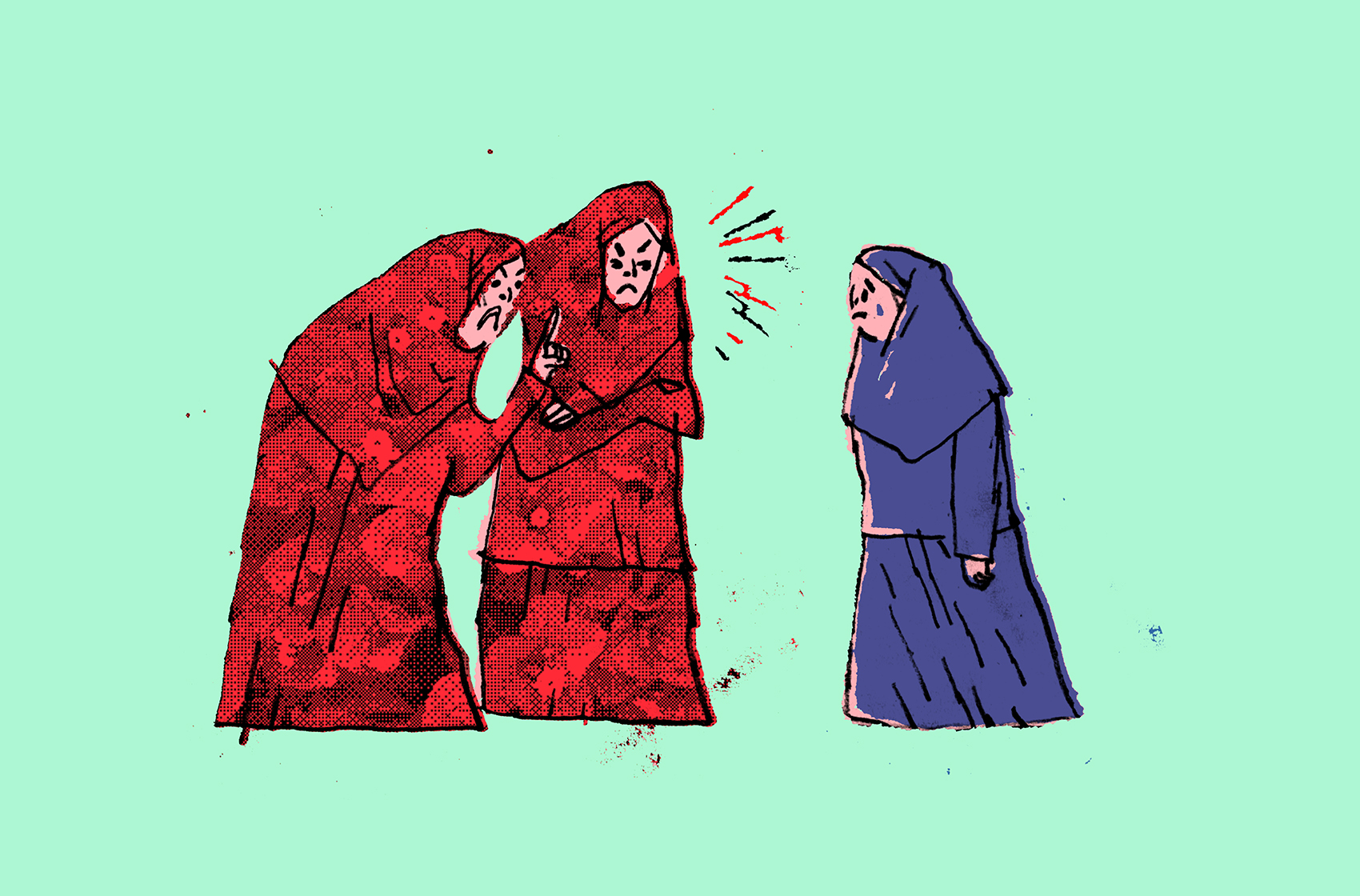
    But then again, The Realisation was not formed from nothing. It was sown from the seeds of Sunday madrasah and intrusive questions from relatives during puberty like “so big already, why not wearing tudung?”; germinated with the warmth of comments such as “you look so much prettier in a tudung” during religious events and funerals; watered with teguran from my grandmother that a tudung would complete my metamorphosis into an adult Muslimah; and finally, nourished by rants from a boss about how she doesn’t get why women don’t wear a tudung when it is clearly compulsory in the Quran.

    I carry this with me, the belief that I am not right for not covering, that my left shoulder is marked with sins from exposing my skin. That not only is God disgusted with me, but other Muslims are too.

    Mass media doesn’t help much either, as it fills itself with images of women in tudung: telling us that this the only way a Malay/Muslim woman is supposed to exist. Social media is rampant with posts policing womens’ dress: in some cases, simply wearing a tudung is not enough. A woman must also wear long sleeves, loose pants, and/or a long top or dress that in no way shows the shape of her body.

    And, at the same time, she should also not wear too much black, or cover her face, because that may give the impression that she is too extreme in her practice of Islam, that she perhaps may be separatist, a radical conservative, or even worse, a terrorist sympathiser.

    So, how exactly is a Malay/Muslim woman supposed to dress? With these parameters I will be judged for not covering, but the woman in niqab at the bus stop will be judged for covering too much.

    We obsess with Malay/Muslim women’s’ skin under the guise of religion, that we forget that the Prophet told his companion to lower his gaze instead of correcting a woman’s dress:

    “Al-Fadl bin ‘Abbas rode behind the Prophet as his companion rider on the back portion of his she camel on the Day of Nahr (slaughtering of sacrifice, 10th Dhul-Hijja) and Al-Fadl was a handsome man. The Prophet stopped to give the people verdicts. In the meantime, a beautiful woman From the tribe of Khath’am came, asking the verdict of Allah’s Apostle. Al-Fadl started looking at her as her beauty attracted him. The Prophet looked behind while Al-Fadl was looking at her; so the Prophet held out his hand backwards and caught the chin of Al-Fadl and turned his face (to the owner sides in order that he should not gaze at her).” [Sahih Bukhari, Volume 8 / Book 74 / Hadith Number 247]

    and God said in the Quran:

    O you who have believed, avoid much [negative] assumption. Indeed, some assumption is sin. And do not spy or backbite each other. Would one of you like to eat the flesh of his brother when dead? You would detest it. And fear Allah ; indeed, Allah is Accepting of repentance and Merciful. [49:12, trans. Sahih International]

    Faith is an extremely personal thing. It is a woman’s choice to cover, to not cover, and also how much she wishes to cover. To judge and attempt to correct that, no matter how pure or well-meaning the intentions are, would be to disregard the fact that a woman has full autonomy over her own body and her own actions.

    My decision not to wear the tudung is a fully conscious one, and one that will not be changed by comments family, friends, and complete strangers. Should I ever decide to don the tudung in the future, it too will be an extremely personal choice. And it will also be no-one’s business but mine.

    ___

    When she is not busy being angry at injustice Zarifah spends her time writing, volunteering at a feminist organisation, eating too much sugar, petting cats, and playing various Pokemon games.

    Illustration by Wan Xiang Lee


  • Kuralgal

    Kuralgal

    Kuralgal
    by Nadyanna Majeed

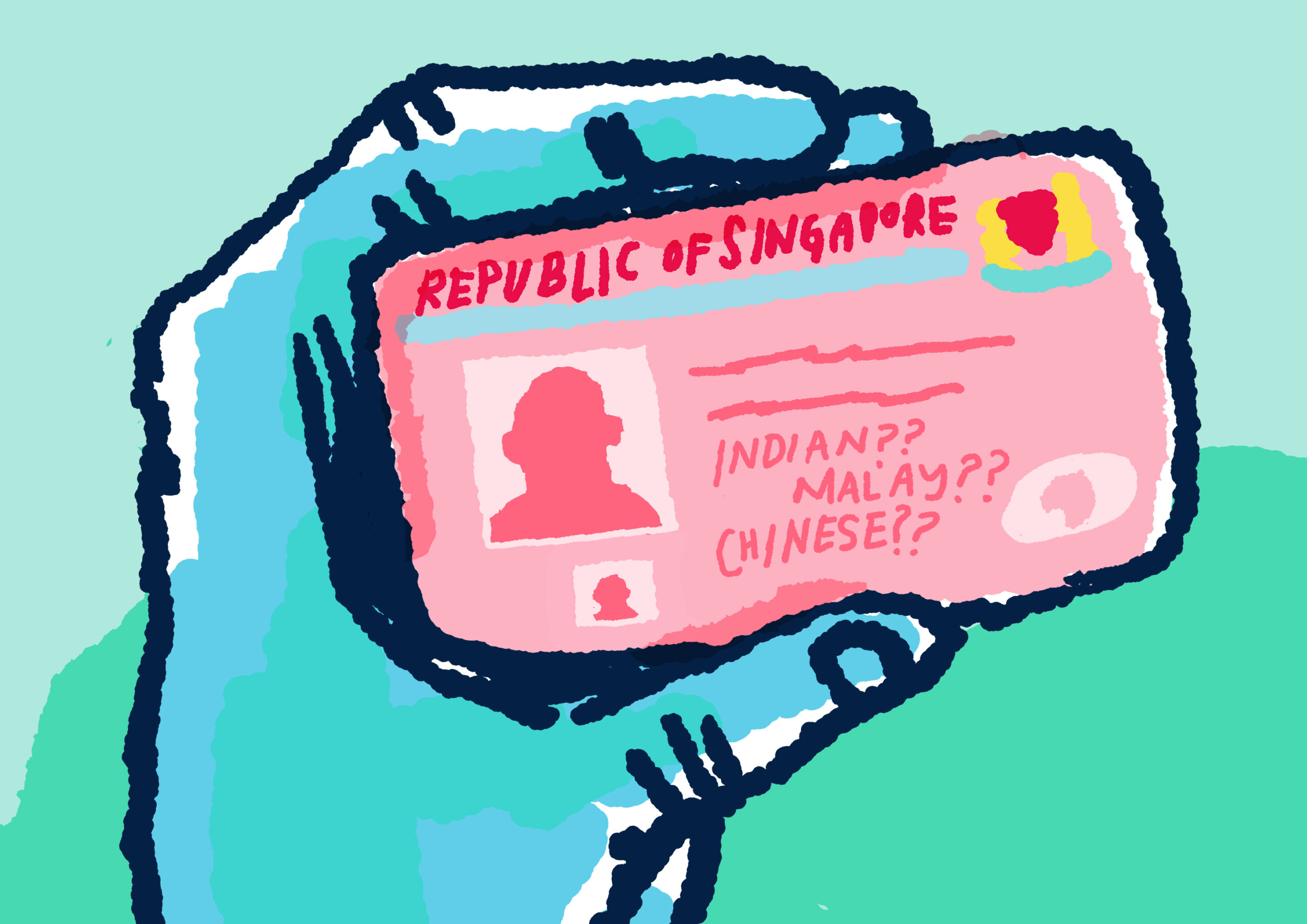
    “Half Indian, half Chinese,
    how come Muslim?”

    “Your IC what race?”
    Indian, following grandfather.

    “Mother tongue what then?”
    Malay. “Huh?! Why?!”

    The questions never end,
    even from myself.

    老师,早安。
    Selamat hari, Cikgu.

    Why can’t I complete
    that last one-third?

    “Indian cannot speak Tamil?
    How can liddat?”

    “Take Malay because easy,
    that’s why right?”

    “HUH YOU MUSLIM AH??
    Don’t look like!!”

    “Oh half Chinese? No
    wonder so smart.”

    Incensed, I ignore implications
    and go home.

    Ramadan comes and goes;
    Raya starts soon.

    “Wear sari for Raya,”
    my mother says.

    “Selamat Hari Raya Puasa,”
    greets the Chindian.

    Chinoiserie and curry creates
    the atmosphere here.

    I’m always so torn
    between three communities.

    __

    1. Is there a reason why you have chosen the poetic form of the Kural for this particular poem?


    The Kural is an important form of classical Tamil language poetry and is very short (exactly two lines) and exact (four words in the first line and three words in the second line) in its form. Being of Tamil descent myself, I found it apt to write about my heritage using a Tamil form of poetry.

    I also found that the rigidity of the form reflects how, for many people, the relationship between race and religion is rigid (“You’re Muslim? So you must be Malay ah?”). Being forced to fit each encounter in only seven words also corresponds to how people of mixed heritage often feel forced to fit into certain ‘boxes’ or categories (Malay-Muslim, Indian-Hindu, etc) by the people around them.

    2. Your poem reveals how Singaporeans often view race and religion in a simplistic way. Where do you think such parochial views come from?
     
    This simplistic view stems from many different factors influencing us as we grow up, but perhaps the most concrete example (and one which I remember very clearly) would be from Singapore’s moral education textbooks and lessons. Often, once the topic of racial/religious harmony is broached, it’s presented as Ali the Malay celebrating Hari Raya and explaining the need to fast to his non-Malay friends (because he must be Muslim), while Bala the Indian explains why he doesn’t eat beef (because he must be Hindu), etc.
    As children, we absorb and internalise everything and these assumptions we make are difficult to break if we don’t grow up being exposed to those who break these (although possibly statistically true) stereotypes.

    3. You mention how the scrutinisation of your identity comes not just from without, but from within. Are the questions you ask yourself different from the ones that are asked by others, and if so, what is the difference?
     
    The questions that others ask are usually quite superficial and neutral, and are in relation to stereotypes common in Singapore, like “Huh you Indian then why Muslim?”

    Occasionally, there’s a comment that’s much more problematic, like “You have Chinese blood, no wonder you get good grades!” These comments obviously reveal some kind of negative sentiment towards another group when people express relief that I’m not part of that group.

    As for myself, the scrutiny often comes in the form of contemplating whether I truly belong to any community. In school, I was never part of the Malay-Muslim community who would often go visiting together during Hari Raya, or break their fast together during Ramadan. I’ve also met people who have refused to acknowledge my Chinese heritage, instead insisting that I must be Malay or Indian (or Malay-Indian). So I often ask myself, what does it take for someone to be part of a community? Is it just enough for me to identify as part of it, or do other people get to decide what I am?

    4. How has the perpetual interrogations on your identity shaped the way you understand race and religion?
     
    To me, race and religion have never been linked. As a child, I saw so many different combinations that I could never put people into boxes. However, I’m now much more aware of the perceptions that other people may hold, whether positive, neutral or negative.

    I’m also more conscious now that there are always people who will refuse to acknowledge you as part of their own community (be it racial or religious or both) because you don’t look like them, or you don’t eat what they eat, or you don’t fulfil some other arbitrary criterion that varies from person to person. What you consider yourself to be may not tie in with what others perceive you to be.

    It’s not really a “best of both worlds” situation; you can be of a certain race and religion but if they don’t fall neatly into place with what others expect, you’ll often find it difficult to belong.

    _

    Nadyanna Majeed is a young Singaporean poet of mixed Chinese and Indian descent who also speaks Malay, much to the confusion of others. Having been immersed in Literature during her time at Victoria Junior College, she started writing poetry at the age of 17 and has continued since then. 
    Illustration by Wan Xiang Lee
  • Affording Ignorance

    Affording Ignorance

    by Atifa Othman

    The words of someone’s father once slammed me in my face like a truck when he assumed I was leeching his son’s money and influencing him to do drugs.

    He wasn’t the only parent to think that of me. I recently stirred problems because of the exact same assumptions by someone else’s mother.

    It was nothing much, though. In fact, it was hilarious. Or, at least, that’s what people want to normalise as the ideal response to microaggressions.

    The thing about microaggressions is that compared to a literal truck hitting you in your face, it’s characterised by evasiveness. None of the parents who were concerned about me tainting their children’s lives displayed overt racism. They didn’t say to my face, “My son’s going to be a druggie because you’re Malay”, or “You’re going to make my child broke because you’re Malay and you need money.” The anger in me only manifested after sour faces, lacking conversations and the all too familiar grudges began to make sense.

    Those two incidents almost step over the line to qualify as overt racism, of course. But the truth is, the various casual microaggressions I’ve faced are not very different in their significance.

    One casual microaggression I get a lot is the cringeworthy “You don’t look and behave like normal Malays”. I believe that I look visibly Malay mainly because of my skin tone, but from experience I have been mistaken for other races due to other features. My eyes, compared to most Malays, are small and almond shaped, and depending on where I am and who I’m speaking to, my voice does not carry a Malay accent. I’ve also been told I have a European facial structure, whatever that means.

    Because of this, I take up a complicated position as a Malay-Muslim girl. I’m sometimes seen as “obviously Malay” by some in a negative tone, or “not very Malay” by others in a positive tone. And the pressing question I’ve always had in response to these comments is: Why is one seen as better than the other?

    I grew up around an extended family that dotes on the beauty of fair skin and Arabic or Caucasian features, so it shames me to admit that I once hated my brown skin and button nose due to the social experiences I had. For a while in my younger days, I’d casually comment on how the darkness of people’s skin determines whether they’re good-looking or not. I even remember putting on makeup three shades too light for my skin when I was fourteen because I was ashamed of being dark— I’m grateful I came to my senses and decided to stop looking like a chocolate donut with an overdose of powdered sugar.

    What people don’t understand about microaggressions is that condoning their normalisation reflects ignorance towards issues affecting marginalised individuals.

    Even within the Malay-Muslim community, prejudices exist. There are Malay-Muslim men I’ve met who have openly said they don’t want to marry dark-skinned girls or Indian-Muslim girls. I’ve heard of Malay parents who forbid their daughters from marrying a man with low qualifications. Countless married Malay women I know have told me that before their wedding day, they were advised to stay away from the sun so they don’t end up looking dark on their special occasion.

    In general, the Malay-Muslim community itself looks down on Malays who are poor, dark or uneducated— the three infamous traits that form the core of most casual microaggressions and racist jokes by non-Malays.

    The ability to ignore the weight of microaggressions ties in with privilege. With my positionality in the Singaporean society, I can afford to ignore casual microaggressions like “You dress nicely for a Malay” or “You seem rich for a Malay”, because I live in a condominium and can spend a satisfactory amount of money on myself at present. But I won’t.

    I once struggled through a period of living on $200 a month for all expenditures, and I am aware that even this does not compare to how much individuals who come from impoverished families in Singapore can spend. I had to constantly borrow money from my non-Malay friends who preferred eating at more lavish restaurants during my polytechnic years and return the money to them at a later timing. It was always hard to say no because I didn’t want to feel ashamed about not actually being “very classy for a Malay” like some of my Chinese classmates casually told me. My family’s financial situation gradually became better over the years, but I tried to provide for myself during my university years so I wouldn’t have to burden my family. Compared to most of my other peers, I experienced what it was like to work part-time while studying at a tertiary level.

    I possess more privilege than some Malay people in certain aspects, yet I’ve also had my struggles and know that microaggressions reflect a reality that only certain people can afford to ignore. It’s easy to say that microaggressions don’t actually exist, or show disinterest in them because they supposedly don’t compare to “actual” prejudice. It’s easy to think that accepting a Malay person as a friend because they’re “not very Malay” is fine if you’re a Chinese person or a fair-skinned Malay who passes as racially ambiguous. It’s easy to make casual jokes about how a Malay man driving a BMW is a thief if you’re an educated Malay man with a high financial income. People forget that one’s positionality correlates with their ability to distance themselves from prejudice, and that prejudice can also manifest in covert ways. No matter what your stance on prejudice and racism is, refusing to listen to a marginalised person’s discomfort towards microaggressions means that you, as a person with more privilege than them, are denying them of their voice.

    Saying something that casually degrades a marginalised person may not be the same as calling them a racial slur. But the fact is that microaggressions can seep into social experiences such as assumptions about job interview candidates, and expectations of a woman’s hypersexuality based on her race. Microaggressions may not be immediately offensive, but they exemplify how certain sayings carrying a hint of prejudice have been socialised as appropriate by those who can afford ignorance.

    __

    Atifa is an NTU student reading a Master of Arts. She is particularly interested in adorable animals, nuances, intersectional feminism and gender and sexuality studies.

    Illustration by Wan Xiang Lee


  • A Muslim Woman’s Guide to the Workplace

    A Muslim Woman’s Guide to the Workplace

    (This story is one of many in the book Perempuan: Muslim Women Speak Out. Click the link to buy a copy!)

    by Raudah binte Abdul Rashid
    ___

    Be understanding of the cultures and practises of others

    Bonding session with senior management and the food served had pork. 

    Me: Oh ok. Ya, I wasn’t hungry anyway.

    ——

    Colleagues having a work-related discussion in Mandarin

    Colleague: Raudah, what do you think?

    Me: Oh, my opinion matters? I thought this conversation was for Chinese speaking people only. Don’t disturb me because unlike the rest of you, I’m actually doing work now.

    ——

    Colleagues walking around the office speaking loudly in Mandarin, discussing a work-related issue.

    Colleague: Raudah, what do you think?

    Me: I don’t understand Mandarin; can you repeat the whole conversation in English?

    ——

    Colleague: Raudah, you should learn mandarin.

    Me: You should learn respect and diversity; you know our company’s core values. I wonder what HR will say when I tell them this.

    Embrace the ‘language’ barrier

    Me: What is with the people who always speak Mandarin? I can’t stand it! I’m gonna raise it with the management.

    Other brown colleague: Don’t bother. They won’t change. It’s always been like that.

    Me: But it shouldn’t. It’s not right. 

    ——

    Me to 2ndboss: Some of the staff frequently speak Mandarin. I have to remind them to speak English.

    2ndBoss: It’s because you’re too quiet, dear.

    Me: That’s not good enough! HR hired everyone in English right?! English should the only language used in the office.

    ——

    Me: How come you are not comfortable speaking English?

    Colleague: I’m not used to it lah.

    Me: What the heck? You’re born and schooled in Singapore. So your entire life, you have had little or no interaction with people of different skin tones isit?

    Colleague: …

    Dress professionally

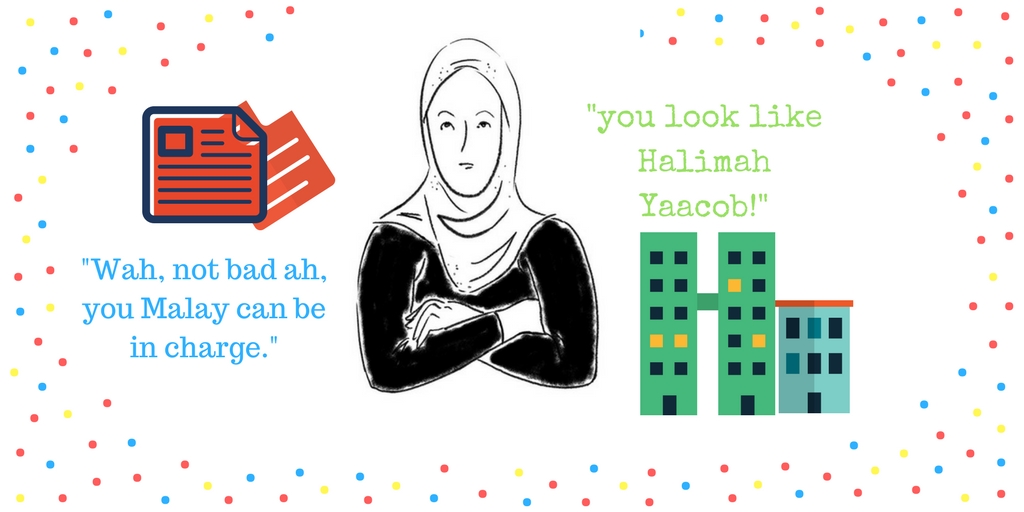
    Colleague: Eh you wear like this very nice! You look like Halimah Yaacob.

    Me: OMG REALLY! Omg yes! Halimah and I are BFFs and we go shopping for clothes every weekend.

    Colleague: …??? …

    Me: What? Just because I wear formal attire izzit? You’re supposed to wear formal attire to work wat. So if a brown woman is dressed formally, she looks like Halimah izzit? You stupid ah?

    Colleague: Oh…

    P.S. Halimah gurl, we going shoe shopping this weekend. 

    Later on during the day, I showed her a photo of an MP: Chinese, female, straight hair

    Me: Eh Carol, you know her or not? She also Chinese and she got straight hair, just like you.

    ——

    A new Muslim colleague joins the division but is having difficulty coping with the workload. The only thing we have in common is that we both don the hijab.

    Colleague: So, how is Nuraishah? Are you two getting along well?

    Me: We have nothing in common. There is no common ground to get along on. 

    Colleague: I thought Malay who wear this one (gestures to my hijab) all can get along one.

    ——-

    So (another) new Muslim colleague joins the division and she too wears the hijab.

    Colleague: Hey, you two look the same!

    Me: That’s rude! There’s only me and her – there are sooooo many more of you, Chinese straight hair – I don’t tell you “you all look the same”

    ——

    Colleague: Why you wear all black? You minah izzit? (Hahahaha)

    Me: Oh if you wear all black, it’s fashionable. When I wear black, I’m a minah.   

    Never forget that you will always represent your ‘race’, religion, culture. 

    Colleague: Raudah, where is my rendang?

    Me: huh?

    Colleague: Rendang for Hari Raya

    Me: What the heck? You’re a woman too, why don’t you cook? Huh?

    Colleague: I Chinese mah

    Me: Oh so, just because I’m brown, I’m expected to know my way around the kitchen izzit! I have more work (I have a bigger portfolio than her) than you. You should have more free time to cook for your husband and baby.   

    —–

    Colleague: Eh Raudah, you Indian? But you Malay right. Your name not Indian-Muslim.

    Me: <sighs>

    ——

    Colleague: Eh Raudah, you Indian?! But your face is not Indian. Eh you Malay right?

    Me: How are you still alive?

    ——

    Colleague: Eh you got make the kuih or not or make cake?

    Me: Nope.

    Colleague: Huh! You never make kuih or cake for Raya?

    Me: Carol, I have twice your workload and I’m busier than you. No, I do not have time to make or bake. You should have the time right? 

    ——

    Service Provider: Eh, nothing personal. I don’t think you are a good fit for the work because our clients are mostly Chinese.

    Me: Hmmm noted, but I do not serve as your additional headcount. I am here to help the team with the work and navigating the sector. I’m not your staff; I’m your programme manager.

    ——

    Community partner: Wah, not bad ah, you Malay can be in charge.

    Me: Ya, not all Malays are stupid and lazy.

    Community partner: Ya, good, good.

    ——

    Standing at the void deck, facing the car park whilst I wait for the other party to arrive for a home visit.

    Member of public: Eh, you saman ah?!

    Me: ….huh?

    Member of public: You saman ah?

    Me: Which one your car?

    ——

    Person (about to shake my hand) “This is a rare moment for me”.

    Me: “Yes, we Muslim women are made of the finest pearls.”

    ——

    These are actual conversations I have had with my colleagues. I penned them down to share the challenges and additional barriers faced by ethnic minority women in today’s workforce.

    My parting advice: Grow your own voice! Do not expect society or anyone else to make space for your thoughts, ideas and opinions if you do not make space for them. Seeds of self-awareness and social confidence need to be planted to ensure we have a generation of women who are more than just women; and who view other women as more. 

    __ 

    Raudah is a plus-size Indian-Muslim single woman who mostly wears black or dark-coloured hijabs because she gets food stains on them. Dreams of garnering an army of social workers to change the world and advocate for social justice and equity for all.  

  • Editor’s Letter: Microaggressions

    Editor’s Letter: Microaggressions

    I can’t remember when was the last time I heard a racial or gendered slur or was told that the religion I grew up with is a cesspit full of terrorists. All of these things have happened, but somehow I was able to let them go and move on. I mean, whatever right? Can’t dwell forever. I can’t stick around and worry about comments from the ignorant. Got a life to live. Etc, etc. 

    The incidents that do linger however, are ones where the act is done with such casual ease that I am left confused as to what happened and how to respond. Till today I always remember a friend who told a racist joke about how a bench can support a family better than a Malay man could. I wish I could laugh (you might secretly find it funny, I get it), but I didn’t have enough distance. It hit too close to home. I thought of my father who  worked tirelessly to provide for the family. I resented that the reality of his struggle would be dissolved into such a disrespectful, demeaning racial caricature. I felt conflicted because I knew if I expressed anything other than a good-natured laugh or smile, I would be disturbing the peace. I would be a buzzkill.

    When obvious bigotry occurs, you know that you are entitled to your anger. You know that you are justified in feeling upset and calling the other person out. I think when you are assured that your anger or discomfort is valid, you are allowed to go through the whole process of feeling before being able to let go of the incident. But with microaggressions, that process is blocked, because you might struggle to validate your own anger/feeling of upset or call the person out. Simply letting it go becomes difficult.

    The subtle, prejudicial behaviours and remarks that are said casually under the guise of a joke, an offhanded comment, a behaviour that hints at rejection — are those the ones that really hurt us in the end?

    *

    First coined by Dr. Chester Pierce, the concept of microaggressions was thrown into mainstream discourse after the publication of an article by a research team headed by Dr. Derald Wing Sue studying racial microaggressions in the United States. Since then, the term has popularly been used to describe the everyday instances of subtle discrimination faced by historically marginalised groups. The term faces a lot of what the people who go through it do — invalidation. Microaggressions are seemingly harmless and is therefore expected to be graciously forgiven, ignored, or laughed off by its recipients. A lot people actually do, because pointing them out can lead to an awkward, or even hostile situations that would be too stressful to go through each time it happens.

    The difficulty with microaggressions is primarily the fact that they are not overt displays of discrimination, leaving you confused and undecided on whether to confront the perpetrator (not made easier with the risk of being called ‘oversensitive’). Was what they said actually offensive? Am I right to feel offended? These are questions worth asking, of course. There are, in the age of social media, moments when slights not worth serious intellectual consideration can spiral out of control. But even that strong retributive sense of anger did not come out of nowhere. It is an expression of an accumulation of heavily repressed frustrations.

    The inability to address and validate the incident for ourselves can be distressing especially since they can happen a lot. Some quick examples: A Malay person who does well academically is told that they are “not like other Malays”. A woman who wears the hijab is told she looks “conservative” and “unprofessional”. A Muslim boy who is asked to role-play a ‘terrorist’ during a class. These are all examples drawn from the experiences of my friends.

    *

    For skeptics of microaggressions, these incidents are trivial and one-off. They are not seen as incidents that are part of a larger problem. But microaggressions are manifestations, no matter how small, of an ultimately damaging value system that marginalises a community. That is why it can be difficult for us to brush it off though they seem negligible. For a moment, the minority’s difference is not only brought into attention, but it is casually degraded and ridiculed. The person’s difference, usually superficially accepted or tolerated in everyday life, is sharpened into a point and used to hurt them. When faced with this point you are expected to be gracious. To express even minor indignation is to risk hurting the other’s feelings, which makes you appear intolerant and difficult, even though they are the ones who sharpened your difference against you in the first place.

    Of course, people are not ill-intentioned a lot of the time. A joke is just a joke to someone who does not experience the marginalisation they are laughing about. We know very well they might be good people, but at the end of the day the impact of what has happened is something that stays regardless of intent. The prejudicial way of thinking is affirmed instead of challenged. And then we are told to let it go.

    We expect bigotry and discrimination to be obvious and overt. We expect its perpetrators to be blatantly cruel. But the truth is that we are all swimming in the sea of an unfair system that socially devalues marginalised groups. It has been part of our socialisation. We have all at one point or another said something ignorant or hurtful, a lot of times unaware that it was offensive. That’s okay! Nobody is expected to be perfect. But as decent people living together in a diverse society, it shouldn’t be so difficult to apologise and to understand why our actions or words are offensive, even if we might think it trivial.

    I think we are capable of entertaining the possibility of a more complicated world beyond narrow inherited prejudicial attitudes and stereotypes. We are capable of a more nuanced way of handling things instead of just going “it’s nothing” or “it’s not big deal” or “don’t be so sensitive”.

    *

    In a study published by Dr. Alvin Alvarez, it was found that ignoring everyday racism is more distressing for one’s mental health. In explaining the findings of his study, he said:

    “When people deny or trivialize racist encounters, they can actually make themselves feel worse, amplifying the distress caused by the incident. […] These are incidents that may seem innocent and small, but cumulatively they can have a powerful impact on an individual’s mental health,”

    If to keep silent, to brush it off, is the thing that brings us the most distress; if keeping silent or lacking affirmation is what makes microaggressions so tricky to deal with, then we have to affirm ourselves and each other. For this reason, I am proud of the people who are willing to share their stories with us this month. We will speak. We will express our discomfort, and our displeasure. We will do it because the reality of what happened is not up for debate. It happened! We deserve to have our pain acknowledged. Holding people accountable is the first step to challenging prejudicial attitudes instead of letting it get re-affirmed again and again.

    Microaggressions is not something as simple as hurt feelings. It is ultimately about the normalisation of oppressive beliefs and the perpetuation of discrimination.

    Why should prejudicial, stereotypical notions of the marginalised be something that is normalised? We deserve a better ‘normal’. We’re definitely capable of it, so perhaps let’s normalise speaking up. Let’s normalise a better, kinder way of engaging with each other. Let’s normalise better jokes too, because honestly? Those same old (racist, sexist, islamophobic, etc) jokes aren’t even that funny.

    -Diana Rahim

    (illustration by Lee Wan Xiang)

  • Malaysian Dramas: Put A Ring On It

    Malaysian Dramas: Put A Ring On It

    By Ham

    It’s barely ten minutes past seven and I’ve already lost my appetite. It’s taking all of my willpower not to throw my dinner plate at the screen. My mother is seated across from me, passively taking in the sight.

    The female lead argues in a half-assed manner, “If you can’t respect me as a woman, then respect me as your fiancée.”

    I stab my piece of chicken. I want the leading lady to stand up for herself. Tell the man that if he can’t respect her opinions and trust her judgment, he can always leave. I want her to know that respect should be given to all, regardless of marital status.

    “I’m going to be your husband so if I say we’re going for a honeymoon, we are going.”

    I’ve murdered my chicken. My mother says nothing but the annoyance flickering in her eyes is evident. It’s a scene we know too well, both on and off screen. How many times have we heard that excuse used to normalise coercing a woman into submission, even if she had very valid reasons for protesting in the first place? The belief that the husband’s word is law is often taken literally and in isolation, forgetting that Islam also decrees compassion, respect and mercy towards the wife as well.

    The local channel imports Malaysian dramas with suspiciously gooey titles like ‘Rindu Awak 200%’ and ‘Dia Semanis Honey’. The shows are given close to half of the prime time slots from 7pm onwards. Such shows espouse marriage as the solution for a variety of problems ranging from the fear of tarnishing a family’s reputation to preventing pre-marital sex between young couples. This is justified with religious quotes on how marriage is noble in the eyes of God. Marriage becomes the endgame, ignoring the fact that a ring on the fourth finger doesn’t work like a fairy godmother’s wand. You cannot just slip on a wedding ring and expect to be instantly swept up in some earth-shattering love that solves any crisis while gaining absolute understanding of not just your spouse but his/her family as well. If that’s the case, we can easily attain world peace just by wearing rings.

    There are only so many times a person can roll their eyes. Instead of merely doing eye exercises during dinner time, I’ve also created a list to count how many common tropes a show can squeeze in before I massacre my dinner:

    • Is it based on a novel aimed at young readers? Check.
    • Does it have a title that revolves around love or defines a woman based on her relationship with a man? Yes, check.
    • Does it strictly involve heterosexual romance? Check. God forbid anything else.
    • Are good, chaste girls represented by their tudungs matched with nude or pale makeup while their scheming female counterparts are dressed in tight dresses with bold lip colours? Check because good girls shouldn’t stand out and fashionable women were simply asking for all the bad things that happen to them.
    • Is there a fair-skinned heroine who prays regularly? Check. There’s no such thing as a dark-skinned heroine because only fairness is beautiful and virtuous.
    • Does the girl give up her dreams to stay home and take care of the family? Check again.
    • Is the heroine forced, due to circumstances or by the people around her, to marry someone she barely knows? Definitely check.
    • Is her husband the son of a datuk or a rich businessman? Check. There’s no fantasy greater than money.
    • Does the show remind the audience that the husband is practically god-like in a marriage and his word is law? Do I need to say more? Check!

    A typical Malaysian drama would have more than half of the items on the list. It’s a bonus if the show actually checks off everything.

    It’s dangerous to think that these are just harmless entertainment. They are being widely disseminated during prime time on a free-to-air channel. Not only do they have a wide-reach, but the devastating and misogynistic messages they send out have very real life consequences.

    I’m not accusing the shows of lacking anything praiseworthy. On the contrary, it’s heartening to see more females represented as aiming for or already achieving tertiary education and building careers. Increasingly, female characters are more certain of what they want in life and a future partner (even though they always succumb to marrying the guy in the end). They are also less afraid to voice their opinions.

    However, the fact that such shows tend to present themselves as family-friendly stories that extol positive virtues aligned with Islamic teachings disturbs me. These characters are presented as the ideal: beautiful, rich, pious and a whole lot of drama. However, there’s absolutely nothing friendly or Islamic about coerced marriages or the way the wives are treated. To promote love blossoming after marriage to someone you just met isn’t just naïve, it is potentially dangerous. After all, in most cases, the woman has to move out of her house where she is separated from her family or immediate support system while being subjected to the whims and fancy of her new husband and unfamiliar in-laws. What if her husband is abusive? In the popular ‘Hati Perempuan’, a husband publicly admonishes his wife for wanting to take morning-after pills (note: she hasn’t taken any yet). He refuses to listen to her reasons while calling her dishonest and branding her as a disappointment. To add salt to the wound, he uses religious quotes to justify this emotional blackmail. In the end, the wife accepts the blame, going so far as to apologise to her in-laws. There is nothing romantic about emotional abuse. More often than not, in real life, this can lead to other kinds of abuses and the victim is trapped in a vicious cycle. Victim-blaming is dangerous and helps no one.

    Many years ago, I watched a show where the new bride stayed up for three consecutive nights to avoid consummating her marriage to a stranger. By the fourth night, she collapses from exhaustion and her husband rapes her. Yes, rape. Any sex with an unwilling individual or one who is unable to consent is rape regardless of the context. Yet this is presented as acceptable, even kind on the part of the husband because he is gentle when he tells her in the morning that she needs to shower.  To have sex with his unwilling wife is regarded as his right. Despite having been violated, the bride is supposed to willingly accept that they are now officially husband and wife. It is worrisome to know that these shows are endorsing such abuse and normalising violence against women.

    For real-life victims, such scenes don’t just trigger fear, they re-inflict trauma. It is unbearable to watch flippant depictions of assault because such portrayals trivialise their experiences. Worse, this can be damaging to their well-being as women are implicitly taught to accept the abuse in silence.

    Throw in as many tudung wearing characters or prayer scenes as you want. Such visual symbols do not and cannot hide the fact that such stories are reprehensible on many levels. Women shouldn’t be emotionally blackmailed into marriage. It is no fault of theirs if a groom has cold feet on his wedding day. It is unjust to expect a woman to bear the burden of the man’s cowardice or find a solution. Neither is marriage a solution to anything. Why do we keep equating marriage with ultimate happiness in life? Why are we constantly taught to blame women? More importantly, why are wives portrayed as less than human without control over their lives or bodies? Why do we teach men that it is romantic to take charge by dismissing and belittling their wives? That they can make up for all the abuse with a bouquet of roses? A wife is a partner who has rights, not a slave chained to the kitchen stove. Prophet Muhammad encouraged manumission of slaves and his first wife, Khaddijah, was a successful businesswoman. He respected his wives and even consulted his second wife, Umm Salama, in the treaty of Hudaybiyya.

    I get it. Many Malaysian dramas are selling a fantasy. The whole idea of stumbling into the arms of a handsome stranger on the street who turns out to be a rich Datuk keen on marrying you is the equivalent of a modern fairytale. But what if that fairytale discriminates against women under the guise of Islam? I’d rather wear a magic ring on my finger.

    Photo credit: Indra Gunawan