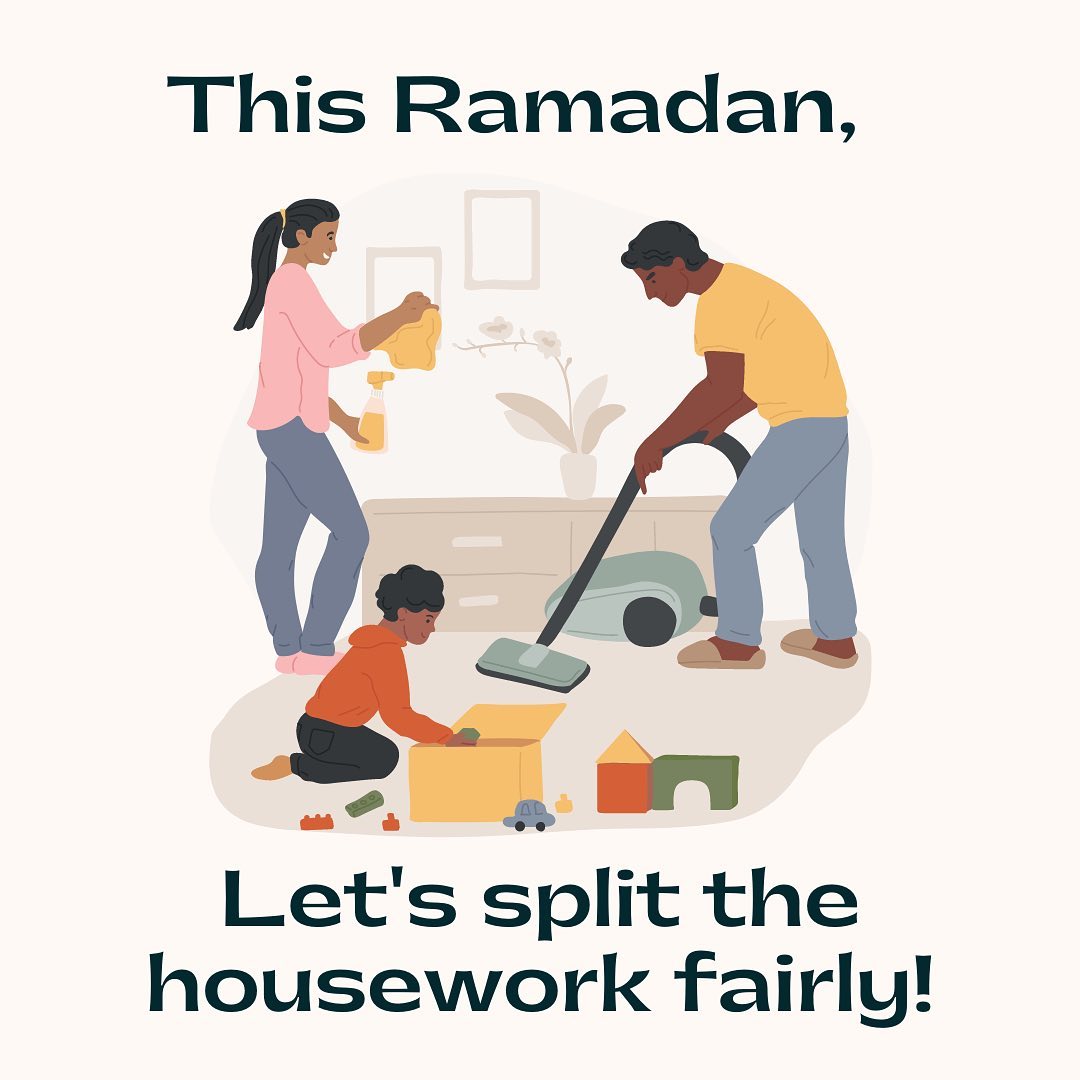
Ramadan can be an intense month, and there tends to be more to do. From preparing meals, cleaning up, preparing for Eid, increasing acts of ibadah and charity…all while fasting. Many mothers are the first to wake up for Sahur, and the last to rest for the day.
The increase in domestic chores and labour in Ramadan are primarily borned by women. This disparity can result in unwanted outcomes. Women may find themselves exhausted, with less time to perform acts of ibadah they want. It can even create tension and resentment in the household.
To ensure that the observance of Ramadan is accessible to all:
- We can discuss how chores can be shared and made more manageable
- Remember that every family is different. Some women may find it fair, or even prefer to do the bulk of the chores, while other, while others would appreciate more help (especially in bigger families and/or if they do not have domestic helpers)
And it’s not just about the physical chores, but also the mental load! The invisible, internal labour of planning, anticipating your family’s needs, overseeing tasks and more. It can look like:
- Planning what to prepare for Sahur and Iftar every single day
- Remembering to set the alarms and wake the family members for Sahur
- Constantly taking stock of the chores and caregiving duties left to be done
We can help to ease the mental load by:
- Observing and being proactive: We don’t have to wait to be told to do the dishes, take out the thrash, clean up after ourselves, etc.
- Taking charge of our own schedules (including setting your own alarms to wake up for Sahur!)
- Taking stock and helping to replenish groceries and toiletries in the home
- Offer recipe ideas for iftar (better still, to help with preparations if you can)!
Helping with the chores is sunnah.
In a well-documented hadith, Aisha (R.A.), was asked “What did the Prophet use to do in his house?” She replied, “He used to keep himself busy serving his family and when it was time for prayer he would go for it” (Sahih al-Bukhari)
Aisha (R.A.) was also reported to have said “He (The Prophet S.A.W.) did what one of you would do in his house. He mended sandals and patched garments and sewed.” (Al-Adab Al-Mufrad)
Doing the household chores and caring for family with loving intention is also ibadah, an act of worship. Maintaining a clean home and ensuring that our loved ones are eating well creates an environment where they can experience Ramadan with more ease.
Sharing the labour of household chores not only eases the load for caregivers, it also abides by the call to ensure fairness and tranquility in the home.
Ramadan Kareem!