Category: Filial Piety

  • Familial Priorities

    Familial Priorities

    by Zarifah Anuar

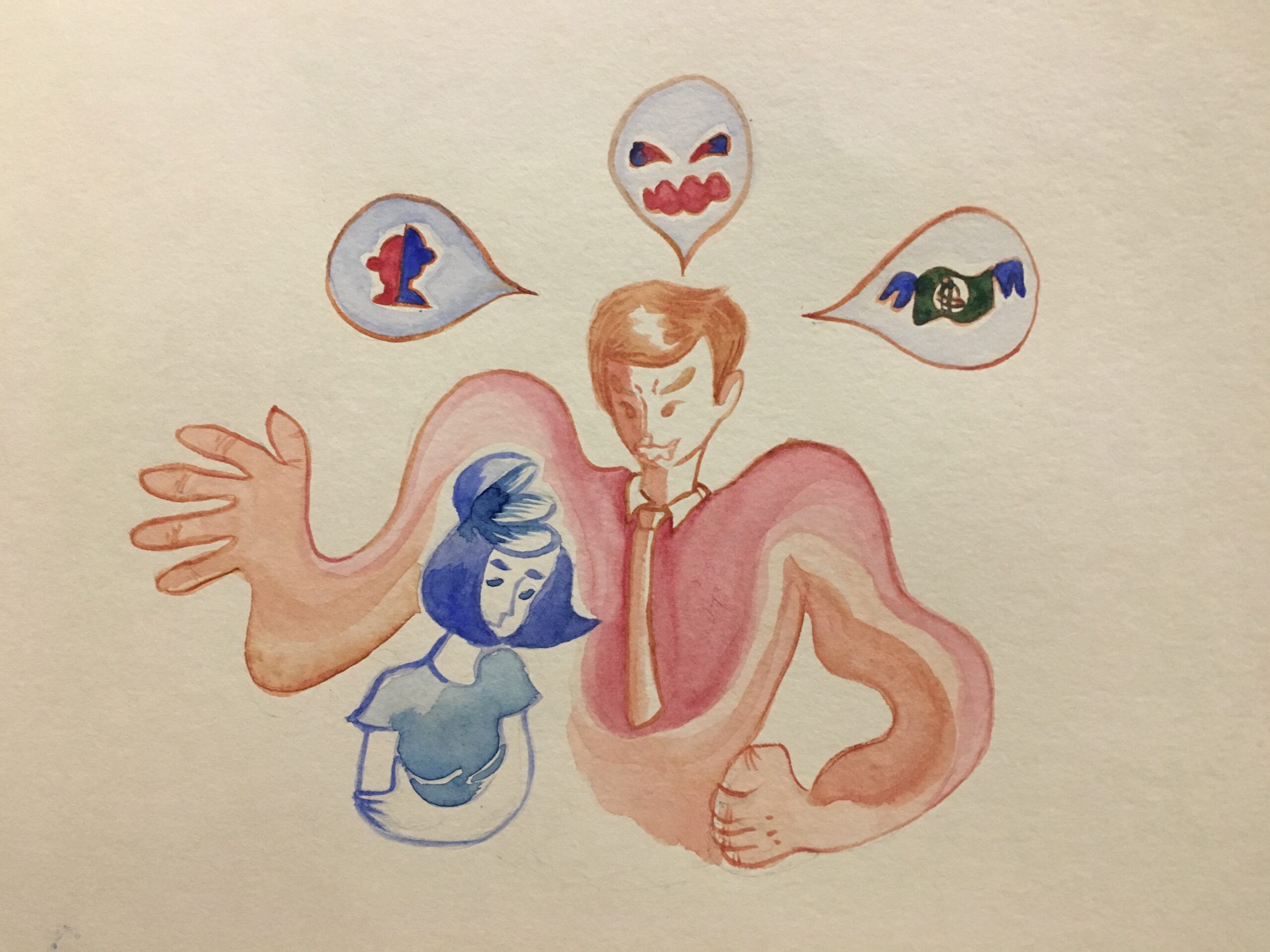
    I fight a lot with my parents. I think that’s inevitable when you’re an opinionated young adult whose views are a direct contrast to those of your conservative parents, but the most recent argument topic was quite strange to me. It was about time and planning.

    I’m a planner. I have a bullet journal where I schedule everything — work, meetups with friends, family obligations, even my own me time. I like organising my week and knowing what’s in store for me in the days to come.

    My parents are different. They’re not quite spontaneous, not quite planners. They know what they have in the future and sort of just file it away until the day approaches.

    Which leads to clashes that look a little bit like this:

    “Kakak, are you free tomorrow?” my dad would say on a Friday night.

    “No, why?” I would ask, though I know well what it is.

    “Can you ikut [follow] your aunt pergi Johor ambik Atuk?” He would say. He would not sound sheepish, because this would not be the first time. Or the third. Or the fifth. I have lost count the number of times he has asked me if I’m free the next morning to do a four hour drive up to Segamat to fetch my grandfather.

    “I can’t, I’m not free,” I would repeat. I would be trying to stay calm, but I really can’t. “Why didn’t you tell me earlier? She always schedules these way ahead what.”

    “Yeah, I’m just asking,” my dad would retort.

    “You know if you were to ask me, like, on Monday, I would set aside Saturday for this,” I would reply.

    “It’s okay, you’re always so busy. Got friends to meet with,” he or my mother would say, and I wouldn’t miss the sarcasm in their voice.

    “Not always. You know I will always set aside time for family.”

    “No, you will always set aside time for your friends,” either one of them would reply — the ultimate killer line, and it would hurt.

    It hurts because I try my best to put family above everything else, but it gets really hard to do so when I’ve already made plans ahead with friends, and it would be ridiculous to cancel them every time my parents want me to do something for the family — which is, well, every other week.

    Perhaps it’s some kind of generation gap — when my parents were twenty-five they were already married, and life revolved around their families and work, in that order. At twenty-five my life revolves around my work, family, friends, and my hobbies, though the order gets kind of jumbled sometimes.

    There is this expectation that family should hold the same level of importance for me as it did for them. In many ways this is still true, because I was a caretaker for my grandparents when they were in the hospital. I still do take leave to care for them when necessary. When asked, I also try to be involved in whatever big event that’s getting my extended family excited — be it a wedding or a birthday.

    Is that not enough? Perhaps the older generation expects initiative where I can only give participation. And to me, my participation is an expression of my filial piety and love for my family, but to them it equates to family being less important. Less of a priority.

    In today’s society where women are expected to play a myriad of roles and hold an assortment of responsibilities, I find myself lost in what is important, and to whom it is important. To me, family is important, and so is a career and nurturing meaningful friendships. To my parents and grandparents, it would be more meaningful if I were to put the energy I spend on my friends into finding a suitable candidate for marriage.

    Unsurprisingly, the burden of caregiving seems to fall more on women even as more opportunities are opened up to them. We don’t hold our sons up to the same standards we hold our daughters up to, even as we allow our daughters to pursue careers and interests beyond the home and family.

    As a daughter, the definition of filial piety is caregiving: to my grandparents, my parents, and my brother, coupled with the looming shadow of marriage constantly hovering over me. When I say that I’m not looking for marriage and I don’t intend to bear children, I’m constantly told that I will change my mind, that it is in my nature, as a woman, to desire companionship and offspring.

    Even the concept of marriage and childbearing in our community is seen as something that is not personal, but a journey that the family takes together. You don’t just marry your partner; you marry into their entire family as well. Similarly, you’re not just carrying your child, but also your parents’ and in-laws’ grandchild.

    With this mindset it’s easy to assume that every woman’s life should follow a certain template, especially with the exciting expectations that come along with certain milestones such as marriage and pregnancy. Even with the myriad of opportunities available to women now, filial piety in the form of caregiving, marriage, and bearing the next generation still seem to be expectations that are highly valued by the family and community.

    Some time back I shared with my grandmother that one of my second cousins was getting married. She was overjoyed, saying, “Alhamdulillah, untung mak bapak dia, sekarang dorang boleh relax, dia boleh jaga.”

    It left me confused. Won’t getting married mean that she would have even less time to care for her own parents, because now she would also have to care for her in-laws and husband as well? And once she has children, won’t that increase her caregiving burden even more? Why is marriage seen as something necessary for a woman to go through in order to ‘level up’ and be an even better caregiver?

    One of my role models growing up, and to this day, is my aunt. She isn’t married, but has an amazing career and is the main caretaker of my grandparents — all of which I aspire to be when I am older. She recently shared that the reason why she didn’t feel particularly burdened by expectations of marriage was that her mother never imposed such expectations onto her.

    Perhaps, that is what we as women need from each other — freedom of burdensome expectations, and validation of our own desires and aspirations. When I look at my aunt all I see is an ideal portrait of my future, when in another’s eyes it would be pity. But why? She is an independent, successful, filial, religious woman. So why would lacking a husband and a child make her seem less to others?

    _

    Zarifah Anuar is a writer, graphic designer, educator, and a volunteer with AWARE and Gender Equality is our Culture. She also co-runs Penawar, a support group for women with religious trauma.

    Illustration by Ishibashi Chiharu
  • The Price of Love

    The Price of Love

    by Zubaida Ali

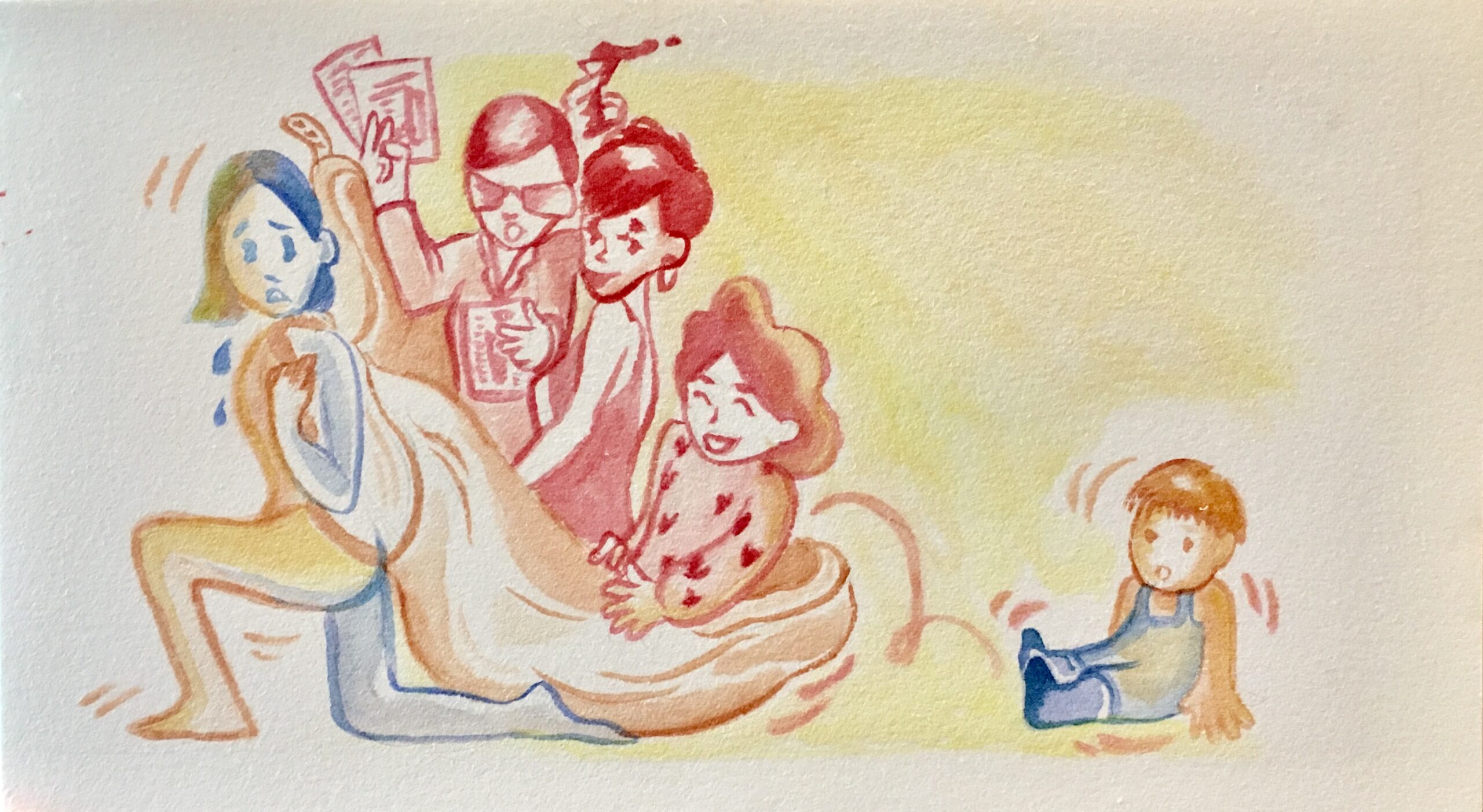
    My son has found his one true love at the age of 28. She is a delightful young university graduate, who is the perfect match for him. There is talk of marriage and the traditional ‘masuk meminang’ event that has become part of our Malay culture. With it, is the inevitable discussion of the hantaran that is the amount that we, the groom’s side is willing to set as the dowry for her. Her family decided that $10,000 is a good sum that goes with the prevailing market rate as she is, after all, a graduate. As the mother of the groom I find the concept of ‘paying’ for a daughter-in-law disturbing and against my values of equality and feminism. While the young woman in the center of this is inclined to agree with these values, she is caught in the filial piety she has for her parents. She will not broach the subject of breaking away from such norms.

    What is the dowry meant for anyway? To compensate for the expenses that the parents have invested in the person we are marrying into our family? To give the couple a positive head start in life? If that is the case, then the couple should get to keep the hantaran but that is unheard of. Usually the hantaran goes into a black abyss and is pocketed by the bride’s parents. Apart from the hantaran or dowry, there is the mahar or maskahwin, in the form of a piece of gold, like a ring or chain, as a symbol of their marriage. This is sunnah, just like what the Prophet has encouraged Ibn Ali to give to his daughter Fatima before marrying her. And finally the wedding expenses itself, that the wedding couple is supposed to bear. Since the bride has only recently graduated and is jobless, the task of coming up with the wedding expenses falls on the groom, a bill that comes up to $40,000 for a typical Malay void deck wedding.

    So far this is what the costs look like:

    Wedding expenses

    Dowry/Hantaran: $10,000
    Mahar/Maskahwin: $2,000 (est.)
    Wedding expenses: $40,000
    Mak Andam (makeup artist) and costumes: $5,000

    Total: $57,000

    This does not include the romantic honeymoon that the soon-to-be-wedded pair would like to go to after their wedding ceremony, another bill that could come up to $5,000. Neither does it include the token sum to the kadhi for performing the nikah ceremony. Gifts in the form of money to the ‘pengapit’, groomsmen or wedding party before getting on the pelamin or wedding dias and so on.

    A financial output of between $50,000 to $60,000, three times the cost of a degree education is what it needs just to get married in Singapore.

    Of course, the couple need not go through such financial hoops to get married. A simple nikah ceremony in a mosque with a modest reception for family members, with a mahar of a few recitations of the Al Quran will do too. However, the family my son is marrying to, is one steeped in local Malay culture and “it is what we are used to” has been set up front during the wedding negotiations attended by delegations of aunts and uncles from both sides.

    My heart goes out to the young people from our society today faced with these challenges in order to start a family. This pressure is worrying and has the element of ‘keeping up with the Joneses’ that has become prevalent in our culture today. It is time for members of our society to speak out against such trends and emphasise what really matters — the overall readiness and wellbeing of couples intending to set off on this marital journey together and the support that the community could give. Now that will be a wedding gift worth giving.

    __

    Zubaida Ali is a community worker, mother of four grown up children and activist on social issues. She occasionally writes on relevant issues pertaining to the Muslim community.

    Illustration by Ishibashi Chiharu
  • Never Enough

    Never Enough

    by A

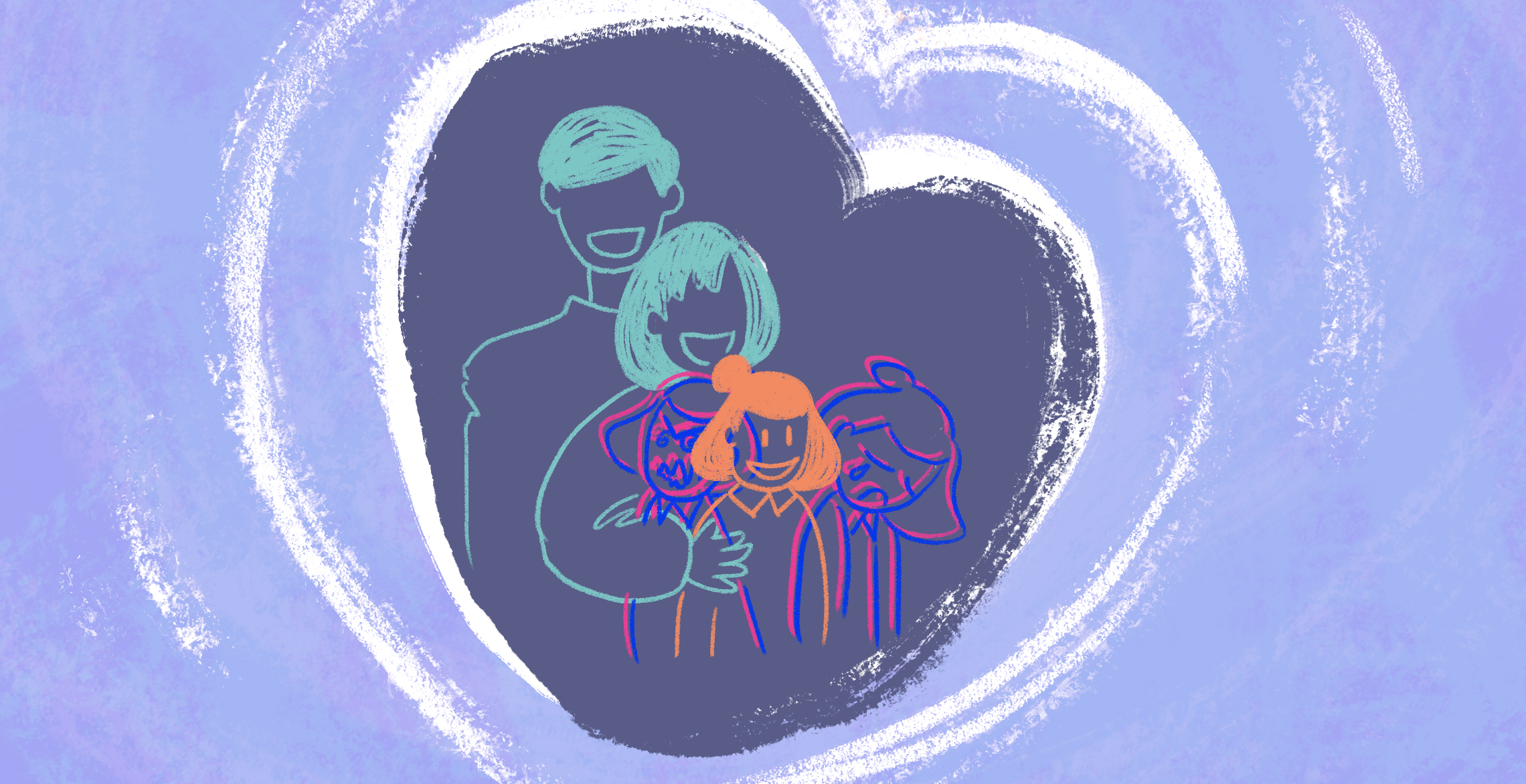
    The first time I told myself I wasn’t enough, I was 10 years old. It was my birthday.

    It all started out so simply. My family went out to celebrate my birthday at the cinema. We were going to watch Transformers: Revenge of the Fallen at around 2pm, so we decided to grab some lunch at Swensen’s beforehand. I’m not entirely sure what happened next, but what I do remember was that in the middle of the movie, my father got up and never came back. Everyone assumed he went for a quick bathroom break, but when the movie ended he was nowhere to be found, and we went into a frenzy. We searched all over the mall but to no avail; eventually we headed home only to find that he had been there the whole time.

    I recall receiving the scolding of a lifetime from him that night. Apparently, he had called for me the night before and I had not answered, so he decided to do the same to me so I would understand how he felt. In hindsight, that was probably not the best way for a grown man to teach his daughter a valuable life lesson since it further reinforced the idea that everything was my fault. 

    When I was younger, my father was always in a bad mood. My mother used to say that he was just tired and grouchy – that’s just how he always is. She was probably trying to protect me from his wrath, but you can never fully protect the curious fool that tries to find out the truth. We rarely saw him during the day because that was when he would come back from work, exhausted and in dire need of rest. He was only awake at night so I would try to bond with him then. I did everything I could to make him happy; I consistently got good grades, researched on his topics of interest just so I could talk to him, I made sure to do all my chores, tried my hardest to include him in family activities but alas, things don’t always work out the way you want them to. Despite my efforts, I was still the target of his anger and my sister was still favored over me. It was almost as if my efforts were not enough, as if I wasn’t enough. 

    As time went by, things only got worse. He started getting angry over the smallest things, going into a blind rage over matters that others consider insignificant. Sometimes he would threaten me or my sister; usually they were not carried out, but on the rare occasions they were, the whole house would go still. It didn’t matter if he was just taking away our allowance or our internet privileges, the look in his eyes said it all:

    “If you do this again, it’ll be worse.”

    I vividly remember an incident that changed my life. I don’t exactly remember what I did or what happened, but I know this – it was the first time my father had gotten extremely close to slapping me but stopped short. Sure, my parents may have caned me as a form of discipline; but slapping is an entirely different matter. I had never seen my father so furious. I was sure that this would be the end of the line for me. I’ll never forget his words – “You’re lucky I don’t slap you.”

    Since that day, I began walking on eggshells around him for fear that he might do something even worse than just slapping me. Little did I know that this was merely the beginning of my living hell.

    Now, if you can imagine how I was constantly treated by my father based on the above anecdotes; you’re in for a treat. When I was diagnosed with rapid cycling bipolar disorder, my father was less than thrilled at the idea that his over-achieving shining star was suddenly broken. He was in constant denial up until my suicide attempt, where he just broke down and told me that he just couldn’t believe I was broken. Due to his words, I stopped taking my medication not long after seeking treatment to prove to him that I didn’t need chemicals to be normal; that I could fix myself. Obviously that backfired horribly. Instead, I was publicly humiliated by him in a parking lot and in the heat of the moment he uttered “I regret getting your mother pregnant with you.”

    It shattered me to hear that. My mother once told me that when I was born, my father was the happiest man on the planet. To hear him say those words felt like someone ripped my heart in two. I imagined him smiling and laughing as he picked me up and held me in his arms, and that mental picture just didn’t fit with the man standing in front of me. My father wouldn’t hurt me, he couldn’t. And yet he did. I wanted to cry in that instance but I did my best to hold back because I didn’t want to appear any weaker than I already was in front of him.

    He went on and on about how I didn’t deserve to feel the way I do because others have it harder, and did I know how much of a financial burden I was? How ashamed he was of me for being mentally ill? To put it simply, he basically said I was worthless and he never wanted me. Now, people struggling with mental health issues shouldn’t be dealing with others hurling abuse their way when they are already fighting a war being waged in their own head. I can’t stress enough how important it is for people like me to be surrounded by an understanding support system. I think if my father reacted differently to my diagnosis, it would have saved him a lot of money and spared me a lot of time and pain.

    Later on, I learned from my mother why my father is the way he is. When he was younger, my grandfather used to favor him over the rest of his siblings and my grandmother was jealous of him. She thought that he was stealing her husband’s affections so she mistreated him in any way she could. Right now, my father is behaving in the exact same way my grandmother did when he was my age. Additionally, according to my grandmother, she was also mistreated by her stepmother when she was young. This is a vicious cycle in my family that has to end somewhere. I hope that I’m the last victim because no one deserves to feel this way about themselves, I hope my child gets a better father than I did. Truth be told, there’s a part of me deep down that understands and empathizes with what my grandmother and father went through. However, this doesn’t negate their hurtful actions towards others, including me.

    As a result of my experiences, I have developed an unhealthy co-dependency with my father. I value his opinions of me highly and derive almost all of my validation from him. On top of that, there isn’t any emotional boundary whatsoever between the two of us; so I feel every single one of his emotions and I worry about his problems when I’m not supposed to. I enable him to remove all responsibility from himself and put it on me which is terrible, might I add.

    Having said all this, my father isn’t actually a terrible man. In fact, I think he’s doing what most parents are; he’s just doing the best he can with what little he has. Not everyday is a nightmare for me. Sometimes he treats me like the little girl he’s always wanted and other times he’s downright mean. As a result, I never really know whether to love or hate him. I constantly feel conflicted about my feelings towards him but I am still what most would consider an obedient daughter.

    On the other hand, both my mother and sister exist outside of the obedient box that a lot of Malays tend to put women in. My mother has always been very outspoken and when she got married, she never really mellowed out so when my father started mistreating me; she immediately confronted him about it. She’s not one to bend over backwards just to please her husband because she believes that a woman’s worth comes from herself, not from anyone else. She was always there to encourage me to pursue my interests, no matter how unconventional they were. It didn’t matter to her whether or not her husband approved of her actions, as long as we were comfortable and happy.

    Despite dealing with mental health issues herself, she always made time to talk to me, especially if it had anything to do with my father and for that, I couldn’t be more grateful to have her in my life. She told me that the reason why she believed me every single time I came running to her was because she wholeheartedly believed that children were a trust from God, they were meant to be taken care of.

    Although my mother maintained a great relationship with her children, her marriage isn’t exactly what you would see in fairytales. Growing up, I saw a lot of arguing between my parents and there were many a time where I thought they were going to get a divorce. I also noticed that unlike other people’s parents, mine didn’t actually interact. It was almost like they were actively trying to avoid each other, yet they still live in the same house and sleep in the same bed. Just as my father was unsupportive of me, he also didn’t support my mother in her times of crisis and as such; she wasn’t surprised at all when he did the same to me. Seeing my parents’ marriage fall apart right before my eyes is probably the reason why I have a hard time trusting anyone, because I know that the people closest to you are the ones who are capable of hurting you the most.

    I used to believe I was alone in my pain until I confided in a few individuals and realized that this behavior among parents, especially fathers, is more common than we realize. I have a theory regarding this. Most boys are raised believing in the lies of toxic masculinity. They grow up being told that having feelings beside anger is wrong and the only way to show affection is through aggression. Eventually when they have a family of their own, they become dysfunctional parents because they don’t know how to love their children safely. Too often, we see this type of behavior excused in Malay dramas because ”he’s your father, no matter what you have to forgive him.” Yes, he may still be my father and yes, I still have to treat him with respect, but nowhere does it state that I have to forgive his wrongdoings immediately. Let me grieve over the father I never had and heal and forgive at my own pace.

    Nowadays, I cope mainly by going to therapy and figuring out my own identity separate from my father. I am still filled with fear and dread whenever I have to interact with him or members of his family, but I just put on a big smile and power through no matter how drained I am. However, I try to limit talking to him because I’ve learned that you have to love some people from afar and that’s okay. Maybe one day things will be different, but until then I’ll continue with life and continue praying that he’ll have a change of heart.

    _

    A is an ever curious 17 year old student living with rapid cycling bipolar disorder. Her zealousness in life and love for all things pink are the first things people see; but peel that back and you will find creativity and empathy hidden inside. Her only wish is to better the world, one way or another.
    Illustration by Ishibashi Chiharu
  • When Being Filial to One Means Neglecting Another

    When Being Filial to One Means Neglecting Another

    by Alia
    _

    I have been thinking about this for a long time. If he died, would I know? If I died, would he forgive me? Where would God place me as I walk the crowded fields of judgement day? Would I be seen as a filial daughter? Or the opposite; someone who has abandoned her parent? Where would Allah place someone like me; an adult child of divorced parents, forced to pick a side?

    My parents’ marriage could be chronicled in a Sam Smith’s record album. Love, anger, betrayal and disappointment marked their matrimony. My mother catered to my father’s every waking need. She would have his work clothes pressed, hung and ready to wear, squeeze a slick of toothpaste on his toothbrush before he takes his morning bath, and prepare his tea and breakfast in the best china every morning without fail. Before he came home, she would hurriedly slather lipstick onto her frail lips, transform her tired eyes to resemble Cleopatra’s and encase her body in shimmering droplets of scented attar. She was the ultimate Muslim Stepford wife, a woman of Jannah. She challenged him emotionally, intellectually and most probably physically. No woman can ever replace her, it seemed. No woman can ever top her. But for my father, there was. 

    The affair started soon after I was born. Secret phone calls, late night ‘meetings’; all of us were suspicious. But our suspicion was always kept locked in the inner recesses of our minds. We did not want to find the keys, ever. However, through the years, those keys kept appearing, as if pulled by the unbelievable magnetism of the lock. And one night, they found their way home and everything unravelled; my mother and I overheard my father telling the other woman how he loved her more than my mother. An indescribable pain crippled my body as I saw my mother slumped into a heap of anguish. That was the last straw, for her and for us, her daughters. She was going to get a divorce. 

    Evidently in the months that followed, our allegiance lied with our mother. My mum’s heart was fractured to pieces, bit by bit, over a period of more than 25 years. It was time for my sister and I to be her support system. How could we not? She had supported us throughout our lives. She had been our greatest cheerleader. She sacrificed for us, emotionally and financially, so that we could become strong, independent women, in her words, so that we would not suffer the same fate as her. Now, as women, we could not reconcile with what our father did to our mother.

    So, my sister and I removed all traces of our father from our lives – pictures, gifts, his phone number. We did not want to be associated with him in any way or form so we even dropped our ‘binte’ in any documents or correspondences we were a part of. He was the Voldemort of our family, the one who must not be named. His name had been tainted, saying it felt disgusting. If our memories of him could have been erased from our minds, we would have done it.

    However, as the initial storm that weathered our hearts died down, it began to be replaced with a surge of guilt and longing. Those feelings crept up and lingered like a tick sucking all sense of peace in the essence of my being. I missed my father. He was the one who sparked my passion in politics simply by making the evening news a nightly family routine and having Time and Newsweek magazines a coffee table staple. But it was because of this passion instilled in me that my heart flamed in anger for the injustices that he had committed towards my mother. How could I ever reconcile with that? 

    Then one Hari Raya morning, I received a text from him. My heart beat fast as I saw the familiar number and read the contents; it was awkward, honest and vulnerable. He said he loved me and missed me; words that had never been uttered when we were a whole family. He wanted to meet me and lay eyes on his grandchildren for the first time. And so, I relented. But another surge of guilt engulfed me. I felt like I was betraying my mother. She would be crushed if she ever found out that I met my father and therefore it had to be a clandestine affair. So, I set for my father and I to meet somewhere where there was no possibility of her bumping into us. I rejected his calls whenever I was in her presence only to reply hurriedly to him via text. I also quickly deleted our worded conversations on the phone lest my mum discovered it. My father had dragged me into what had broken his marriage, our family apart in the first place: an illicit relationship filled with secrets, lies and guilt. 

    Just as he got caught then, so was I now. My mother’s eyes were a sea of disappointment as she asked, sotto voce, as if she wanted me not to hear, not wanting it to be true, if I had met my father. I was not going to make this a sickening moment of Deja vu for her by lying and so I told her the truth; yes, I met him. A torrent of questions came, asking me for reassurance that I still loved her, that what she did was right, that I was on her side. As she searched my eyes for approval, I found a profound sense of betrayal in hers. I could not do it again. I could not hurt her. So, I stopped all contact with my father. 

    What is a daughter in my position supposed to do? It is rather ironic to think about it now; from when I was young the notion of piety has always been inculcated in me. From seeing my parents take care of my sick grandmother to being reminded how only ‘bad’ children sent their elderly parents to the homes I visited as part of my school community project, it was ingrained in me that it was the child’s duty to mind over her parents when they are old. A bad child abandons her parent.  Now, I have little to no contact with my father, I have abandoned him. But, isn’t it also a sin for me to hurt my mother? Paradise, as I was constantly reminded, is under her feet. To hurt her would be egregious. Besides, I do not want to crush her already fragile heart. But what about my father, then? How terrible am I that my children are oblivious to the existence of their grandfather? What if he got sick? What if he is in financial difficulties? Will the other woman still be there for him? I have not done my duty as a good daughter and I might not be able to get a chance to do so. Will I even know when he dies? Will he forgive me? Will God forgive me? How will Allah judge me in Akhirah, when being filial to one means neglecting the other?

    _

    Aila (pseudonym) spends most of her time exploring the outdoors with her active kids. Kahlil Gibran’s poem, ‘On Children’, acts as a guide on how she wants to be a mother. She also loves watching Hallmark movies in December.


    illustration by Ishibashi Chiharu

  • Editor’s Letter: Filial Piety

    Editor’s Letter: Filial Piety

    by Diana Rahim

    Thinking about the topic of filial piety and all that it connotes, my mind had gone immediately to a poem by Kahlil Gibran called “On Children.” It was one of those unforgettable poems that struck an essential point of contention in parent-children relationships, the rawest nerve. The one that told parents that their children are not theirs to own and control; that their children are not really theirs at all. It was one of those poems that expressed this point tenderly, as good poetry often can: They are the sons and daughters of Life’s longing for itself. / They come through you but not from you, / And though they are with you yet they belong not to you.”

    Filial Piety is a familiar concept in Asian societies. We grew up acknowledging it as a value valourized in our communities, bearing noble connotations popularly conceived to be rooted in love and respect for one’s parents, and thankfulness for the difficulties and sacrifices that comes with parenthood. On the other hand, it also perpetuates itself through a rhetoric of guilt, prides an almost uncritical deference to one’s parents, and enforces a hierarchical order based on power relations — features that might not take too kindly in family dynamics that are less than ideal.

    The problem of filial piety is not so much that the idea of loving and respecting one’s parents is bad – of course this can be a good thing. And listening to your parents is especially a good idea as a young child for basic reasons of survival and safety. When your parent tells you not to touch the hot pan, or to cross the road when the red man is lit, it’s really not wise to be a rebel. But of course life will present you with far more complicated situations. Reality is not so simple, and when it comes to a concept that ipso facto defers to parents an almost reverential stature, where you are taught to respect them simply because of their status of being a parent, it doesn’t take too much thinking to realise that this is not something that can handle the complications that are natural to human relationships.

    The concept of filial piety is an idealization of the parental role. The idealization of anything is often already a trigger for trouble. For a start, idealization is a kind of reductionism. One that upholds itself through too simple an exaplanation or understanding of what the experience of parenting, and the expectations required of children should be.

    When the parents you have are not the kind of parents that ought to be idealised; if they are abusive or unhealthily controlling; if they have brought you emotional and psychic pain, how do you then cope with the concurrent message drilled by the expectation of filial piety that you have to defer to their authority, and that they are people you ought to respect, and love? If they were any other person, these might not be people you would respect at all. The discussion on how the language of love can be used to enforce certain problematic ideas and ideals in my last letter may be of value here.

    The submissions that came in for our call-out are almost heartbreaking in the way the writers try to negotiate this crisis. So much must have been done in their minds to try to reconcile the pain caused by their fathers, along with the expectation to forgive such transgressions, and on top of that, even to continue to respect and love them.

    I would argue that the concept of filial piety, though it may appear to come from a place that valourises love between child and parent, is in fact a concept that inhibits a more true and loving relationship. It is entirely normal for parents to be human and blunder. They will most certainly hurt their children, as our own experiences with our parents have shown us. This doesn’t necessarily make them bad, but an inability to work on those wrongs, to continue to hurt their child because they are unable to see the hurt caused by their actions, and their lack of incentive to be introspective about their own behaviours because a concept of deference confers them a kind of power to always be in the right, will only result in a more strained relationship. Being a parent is not an inherently so honourable a job that it can confer you almost uncritical power over another human being.

    The control that a parent has over a child is not benign. And perhaps the concept of filial piety is so strong because it goes hand in hand with socialization. It is part of a function of ideology. What kind of ideology this is is perhaps a whole other argument. But for a start, filial piety communicates an “acceptable” and “ideal” kind of relationship between child and parent – it communicates what is considered a “good” family unit. And as we know, the notion of “family values” is not apolitical. The family is often the site where ideology is transferred through socialization since they are the first point of contact for the children as they grow up. The ideal family unit is often emphasised through a country’s legislation, its messages, and the way it distributes its resources. Are we comfortable with this kind of ideology that prioritizes one form of family? Are we willing to look into why a certain kind of parent-child relationship is valourised?

    Concurrently, the way the family is ordered can sometimes give us a clue into how the state is then ordered, after all, it is the state that has a hand in enforcing and encouraging the kind of family unit that it prefers. So is it any surprise then that our own state is often accused of being paternalistic, as treating their citizens like children?

    In your dreams, what would the ideal parent-child relationship look like? Perhaps for many of you, your relationship with your parents may have been ideal, even through difficulties. This question is perhaps not quite a question you can relate to. But even then, try to think of what kind of relationship would be one that fosters genuine connection and respect, that does not burden either parents or children with expectations that struggle to commensurate with reality, and that can equip people with the ability to do the difficult emotional work of growing with each other as individuals, instead of reaching for an outdated, conservative concept that would immediately confer one party with respect and authority.

    __

    illustration by Ishibashi Chiharu