Category: Questions

  • Who Are You?

    Who Are You?

    by Soorma Bhopali

    __

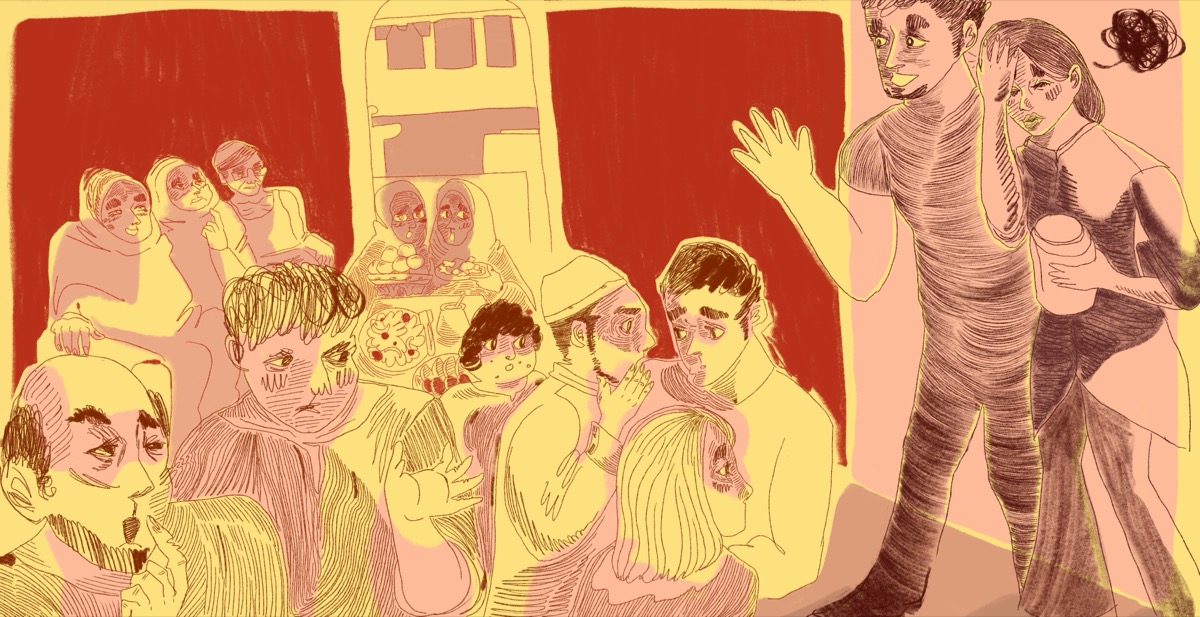
    “What are you?” “What is your race?” These are questions that are thrown at me frequently, the latter of which was only asked recently at a small family get-together. I was stunned to be asked such a personal question in front of people I had just met that day. As a sensitive introvert, I took the question as a personal affront. Nevertheless, I took it in my stride and answered the offensive individual, all while the rest of the people who were gathered around looked at me with what I would like to believe was purely engrossed anticipation.

    I got asked the same question twice that evening. The same question that was asked in the earlier part of the gathering was by a newcomer to the family, who whispered to someone else, “What is her race?” As a newcomer, I understood her wanting to know more about me. The second individual who had asked me the same question was my husband’s relative, whom, despite the fact that my husband and I have been enjoying marital bliss for more than ten years, still had questions about my lineage. And it wasn’t just them. At family functions and gatherings on my husband’s side, there are whispers of (in a language foreign to me), “What is her race?” Although I do not blame them for their curiosity, such questions speak volume for the need of society (especially those from the older generation) to place individuals in pre-defined boxes based on the CMIO categories.

    Perhaps I should sweep my frustrations aside and start from the beginning. I am, dare I say, a blessedly unique individual of mixed heritage. I have Peranakan Chinese and Pakistani ancestry on my maternal side and Indian heritage on my paternal side. For the most part of my formative years, up until I was in my 30s, I grew up confused and having an identity crisis for never being able to fit in the CMIO mould in school and in Singapore. According to the typical Singaporean who would try their best to place me in a box, I am too fair to be Indian. Since I look Malay, I must also be one, and thus will be spoken to in Malay. Since I celebrate Hari Raya, I must be Malay and to quote the aunty who recently cut my hair verbatim, “If you are Muslim, you cannot be Indian, so you must be Malay lor.” Thank you for explaining to me who I am aunty.  Trying to explain my unique diverse heritage to a random local of the majority race group here has become such a cumbersome undertaking that I have resorted to simply saying I am Chindian. However, this response will invite more questions such as, “Oh, so you speak Chinese?” I had the exact conversation two weeks ago and when I replied in the negative, the conversation pretty much stopped there. It seems like no matter how much I try to explain my mixed ancestry, it only opens up a myriad of questions that are themselves so confusing that it is easy to just say, “I am Indian.”

    However, this is not entirely true. I do not feel purely Indian. At home, we do not converse in any traditional Indian language, unless we want to gossip about you in your presence! We also do not eat typical Indian food every day. Being Singaporeans first and foremost, we eat a variety of food that come from the different cultures in Singapore. My grandmother, aunts and mother all enjoy unhealthy bowls of glutinous chee cheong fun for breakfast. Apart from the usual biryani, we also feast on sambal sotong and lontong at Eid/Hari Raya gatherings.

    On the other hand, thosai and prata are the best comfort food on lazy days. When we crave for something to munch on at tea time, there is always sugee cake, ang ku kueh, char kuey rojak or Indian rojak to pick from. Nonetheless, I have to say it feels the worst when my ‘own’ —fellow Indian-Muslims—doubt my ethnicity just because I cannot speak Hindi well, having studied Malay in school. It is hurtful to hear comments like, “So your Mother Tongue is Malay lah!” as if doubting my ‘Indian-ness’. To be clear, I have nothing against the Malay Language (I scored A1 in Malay Literature in junior college, thank you very much!) but I strongly resent reductive comments about my identity and lineage just because I cannot speak the language of my forefathers well and I do not fit the mould of what a typical Indian or Chinese individual should be (i.e. being able to converse in Indian or Chinese languages/dialects). 

    You see, when my ancestors migrated to Singapore from India, they naturally needed an anchor, a community to belong to. Being a minority community of Indian Muslim traders, it was easy for them to integrate and assimilate into society if they belonged to a certain group. Since the majority of Muslims in Singapore are Malays, moving into Malay kampongs and living amongst the Malays made pretty good sense especially since they were trying to make a living in a foreign land. Being Muslims, they thus had something in common with the Malay community here. Although my forefathers wore their ethnic clothes, they were still also able to converse well in their adopted Malay Language and get along well with their Malay neighbours and friends. This would explain why, while most of my older relatives were able to speak their Mother Tongue, the younger generation either have pretty much lost their ability to do so or speak broken Hindi or Urdu. We may understand what is being said, but we may not be able to reply fluently, because we were never formally taught. However, this varies across the different families here. I do know of third- and fourth-generation Indian Singaporeans who are still able to converse in their original Mother Tongue thanks to classes and family exposure.

    On the other end of the spectrum, there are Malays who assume I am Malay. When I reply in English to the questions they ask in Malay, they assume I am consumed by my arrogance and do not want to converse with them in a common language. How do I explain to the nasi padang aunty, “Pardon me aunty, but having grown up in a household where English is predominantly spoken, and having being brought up by my late grandmother who spoke Hokkien and the Peranakan patois, talking in Malay just does not come naturally to me.” This is especially true after I was made fun of for my funny Malay pronunciation in primary school by a schoolmate.

    Needless to say, my growing up years were filled with poignant questions like, “Who am I? Why don’t I fit the mould? Where do I come from? Am I really an arrogant person because I cannot connect with people based on a common language?” Imagine grappling with such an identity crisis for almost thirty years of my life. Imagine grappling with such questions as a teenager, the phase in my life when I deeply needed to belong somewhere. Transitioning into adulthood wasn’t easy either. At company dinners, Muslim staff members are usually grouped together in one or two tables since we have the same dietary requirements. Why? Why is the group I am allowed to eat and socialise with limited to the people who share my religion? Why do we as adults allow society to limit how and who we socialise with based on what we are allowed / not allowed to consume? Needless to say, company dinners are usually four hours of boredom for me because I am always separated and seated far away from my close colleagues who all do not share my religion and dietary requirement.

    The ignorance of society does quite a number to one’s self – esteem especially when you are growing up with so many questions and concepts that are beyond your comprehension. Now, after more than thirty years of existence, I am finally grasping and embracing my unique identity and I finally understand why I feel the way I feel. It is okay to not fit in anywhere because of social circumstances that are beyond my control. On the other hand, for the sake of our future generation, society should stop trying to fit us in pre-defined boxes. We are all special and unique individuals with a myriad of stories to tell. Just ticking the Chinese, Malay, Indian, Others box is over simplistic and does not do any justice to what a distinctive and beautiful individual each and every one of us
    is. It does not do justice to the story that each of us has to tell. It definitely does not do justice to the stories of our forefathers.

    __

    Soorma Bhopali is an educator of young children. She enjoys her roles of being a daughter, sister, wife and aunt. In her free time, she enjoys eating cupcakes and dreaming of unicorns.

    Illustration by Ishibashi Chiharu
  • A Veiled Question I Get Asked Often

    A Veiled Question I Get Asked Often

    By Zubaida Ali

    One question that I get asked now and again is “Are you Malay?”, and in case I missed the meaning of that, the person asking clarifies “you don’t look like a Malay.” Although seemingly innocent and often dismissed as one of the peculiarities of a multi-cultural society, this statement is loaded with meaning.

    What the other person means is: If you are Malay (and presumably Muslim), why are you not wearing the tudung or hijab? The representation of the Malay woman has evolved to include the hijab as one of the visual cues to typecast her cultural identity, but is one that is untrue for me. In other parts of the world, Muslim women are unable to choose what they can wear for this very reason.

    Muslim women in Singapore have the freedom to choose how they present themselves in the public sphere. On whether that freedom is curtailed somewhat by policies is something that is contentious. In my opinion, if a Muslim woman chooses to wear the hijab and still wants to work as a nurse in a state-run hospital, a Speaker of Parliament or a retail assistant at Cotton On, she should be able to because her cultural identity should not deprive her of making such choices. Just as my choice not to cover my hair should not deprive me of the opportunities I choose to pursue either.

    Unfortunately, the hijab discourse is loaded with other weighty influences and interpretations. The question about a Muslim woman’s choice with regards to her attire can and should only be answered by her. Will society accept that and let her exercise her right to decide? That is the most important question to ask.

    Read the other posts here: Questions blog series

  • Hello, I Do Not Have All the Answers

    Hello, I Do Not Have All the Answers

    a.k.a. Do I Look Like a Walking Information Counter?

    By Nur Diyana

    When I decided that I wanted to wear the tudung, I imagined that my father would be furious. He was. To this day, I romanticise the premise of my decision to rebel against him. That, however, is not the standard textbook answer that people generally expect when they ask me why I choose to cover my head. Isn’t it a religious obligation? They’d ask. They also tend to open with a “did you come from a strict family?” or “were you forced to wear this?” Some are just not convinced and/or satisfied with a “this is my choice and preference” response. Not too sure whether it has anything to do with the uneasiness of knowing that women can and do have choices and preferences. ¯\_(ツ)_/¯.

    I also assumed people would leave me alone. I had foolishly thought I would fade into the background and be invisible in my black ensemble (which I wear almost like a uniform). Boy, was I wrong. Apparently, the simple cloth that I drape religiously over my head before I leave the house comes attached with some sort of device which emits a “please, ask me questions about my beliefs, faith, practices, fashion choices and hygiene” signal. Why are you wearing the scarf? Why are you always in black – are you supposed to only wear dark colours? Why aren’t you wearing more prints? What do you do with the food scraps trapped under your nails from eating with your hand?

    Being treated like a walking encyclopedia on Islam is also the occupational hazard of dressing the way I choose to. I may be more visibly Muslim but I am not necessarily trained in Islamic theology or jurisprudence. I cannot help you with questions pertaining to that. (By the way, being more visibly Muslim does not make me better or more pious). At times, I am expected to know anything and everything about Malays and Muslims and am somehow transformed into a representative and spokesperson for the (non-monolithic and very heterogeneous) community against my will. Why do some Muslim women not wear the scarf? Why do Malays/Muslims marry young?Why do they have many children?Well, why don’t you ask them instead? I am not in their shoes. I have no idea what their experiences are like. I cannot speak for them.

    I hate to have to break this to you but I need you to know that I do not have all the answers. What I do have and can offer are my thoughts and opinions as an individual whose perspective is shaped by her multiple social identities – Malay, Muslim, Singaporean, woman and many others. And these thoughts and opinions may not be what you want to hear.

    Read the other posts here: Questions blog series

  • The Why and Why Not of Being an Indian Muslim Woman

    The Why and Why Not of Being an Indian Muslim Woman

    By Nurul Huda

    When I was a girl of age 7, understanding only a fraction of what it meant to be a woman, I attended primary school, dizzy with the possibility of learning and socializing, eager to meet other girls I could call friend. But, I was rather quiet and shy back then, and so, I did more of the learning to compensate for the lack of socializing. Cliques were formed, memos about how to act, to talk, to be were shared and I found myself missing out on a lot of them. We were lined up according to our heights in school and as I was one the shorter girls, I found myself at the front of the line, every time. The cool kids were at the back. I could never turn around to look at them, and they never saw me. Until one day, one girl did. She pointed at my arm and asked, how come you’re so dark and have hair on your hands? The other Malay girls don’t have so much hair? I didn’t answer. Just felt the red of shame and anger. Why was I so dark and why did I have hair on my arms? I went home and quietly stole my father’s shaver from the high shelves in the toilet and started shaving. Slowly and quietly shaving that shame and anger from my arm, until my mother walked into my room and yelled at me. I went to school the next day, with only one arm shaved.

    When I was a teenager of age 15, now more aware of my body, the gaze, the expectations, I strategically planned to amp up my outgoing persona in the hopes that nobody would notice or focus on my physical being. I joined the band, became Head Librarian, and even got elected to be part of the Student Council. All these I thought were achievements, when on hindsight now realize that these were actually considered to be dorky activities. Nevertheless, I had made some friends and even though it was tough being a teenager, I felt more confident of myself and actively participated in school. It happened after one of those Civics and Moral Education classes, which we used to have back then, where we were taught about the different religions and races in Singapore and how everyone and everything was nicely classified into four categories: the Chinese were Taoist; the Malays were Muslims; the Indians, Hindus; and the Others, possibly Christians. After the class, as we were headed down for recess, a friend asked, if you are Indian it means that you’re Hindu right? How come you say you’re Muslim? Then you must be Malay, right? A simple ‘no’ wasn’t enough. I was subjected to question after question about my beliefs, my name, and my skin color. A classmate pulled my hand up right next to the hand of another Indian girl and compared us. They were convinced I was Indian, and didn’t believe that I was Muslim. I kept protesting, again and again, until I too, stopped.

    When I was a woman of age 22, I started my Honors year and was in university, thrilled at my decision to major in Anthropology/Sociology, fascinated by the ways in which it had torn down all those norms I had constantly found myself thrown into battles with, especially when it came to issues of ‘race’, Religion, and Gender. I was Chief Editor of the campus paper and was constantly meeting different groups of people as part of Uni life! And as it was the first time I no longer had to use a school uniform, I was able to visibly wear my religion. Donning a tudong or what is now socially known as hijab became proof that even though I was ethnically Indian, I was still Muslim and Singaporean. I didn’t have to explain as much, and it was also possible that people just assumed that I was Malay. Either way, I felt safer. However, something else erupted. How come you can speak good English? Usually women who wear the tudong don’t wear such ‘modern’ clothes (jeans) like do you. You’re very modern! Oh, you’re the Chief Editor? That’s an accomplishment. The Chief Editors are never Malays. (The previous Chief Editor was also Malay). If you’re Indian, how come your skin not black? Wah, you go to University? Are you Malaysian? No? Singaporean Malay can go University? Wah! Angry Brown Tudong Girl. That was me in university. It was then that I adopted sarcasm, a useful tool that incorporated my love for the language and facial expressions like the side smile. It was a constant tango of questions and retaliation until I became tired of retaliating. But the questions didn’t.

    When I was a woman of age 25, I was placed on the shelves of marriage, an object with an expiry date pre-determined by my Indian-Muslim community. At that same time, I was in the midst of pursuing my Masters degree, a decision that many in my community felt was a fatal one. Why study so much? Later no guy would want to marry you. This is why you’re single, no man wants a woman more educated than him! Why did your mother let you study so much? Later hard to find a guy. The burden of overachievement, especially in a woman. I found their remarks and questions condescending, both to me and the supposedly unambitious and insecure Muslim men in our community. But I thought that at least the questions had evolved from previous shallower ones. I thought too soon. You’re a bit dark, so must wear lighter make-up to brighten your skin tone. Why don’t you use make-up? You’re fat and dark, how to attract a guy like this? My body was an object on the shelves, with an expiry date of possibly 3 years to go, but, there were many faults and defects, and the possible buyers weren’t happy about it.

    Now I am a woman of age 32 and am an educator in the most part of my profession. And in these situations, there are no questions. Nobody questions me about my identity, religion, marriageability, skin color/tone, why I could speak English eloquently, or my education. This is possibly because I am the one in a position of power, teaching or facilitating classes with a ‘presumed authority’ that does the questioning, not the other way around. In fact, I often find myself questioning those who question others, using it as perfect teaching points in the classroom. In some respect, the classroom became my brave space. Beyond it however, it was still a battleground as I was now bombarded with a whole slew of new questions, questions I had never gotten before. Are you a Singaporean? You look like a foreigner. Are you Arab? Is it hot under the hijab? Why isn’t your hijab black? Why are you so modern? Why are you so conservative? Are you Muslim-muslim? There are times when I would offer a response, a teaching moment possibly triggered by my role as educator, but at other times, it was a short ‘yes’ or ‘no’ followed by a physical removal of myself from said location, especially if the question was more of an angry demand. And then, there are times when there were no questions. This could mean either of two things: that we have begun to be more accepting of difference and diversity or that there’s already have an assumed answer, whether real or misinformed. I have hope that it is the former. There are times however when I do wish I was questioned so that I could explain and inform, if needed, for now I had the words and courage to respond without letting it affect me. For now, I am braver. One thing I constantly learn throughout my years of being questioned is that, the questions are a greater reflection of the person, community, or society asking it, than it was a reflection of my being. And in that respect, I too shouldn’t question myself.

    Read the other posts here: Questions blog series

  • My Life is Not Mine – Intruding on young women’s personal lives

    My Life is Not Mine – Intruding on young women’s personal lives

    By Zarifah Anuar

    I’m not too fond of Hari Raya. I guess quite a lot of good things come out from it – great food, an excuse to bring out all my gorgeous baju kurungs, money from distant relatives who think I’m still schooling – but there are also so many things to dread, like the questions I get asked.

    One of the questions I get asked is regarding the hijab, which is worn for a variety of (very personal) reasons. My grandmothers wonder aloud when I will grow up and put it on. Distant relatives compare me to their pious daughters. Many scrunch their noses at my dyed hair. My nine-year-old cousin asks me when I will wear the hijab, because I am “less beautiful in the eyes of God” without it.

    My relationship status also comes under scrutiny. Ever since I hit my late teens I have been bombarded with questions about my dating life and if I have met someone. When the answer was no, prayers were offered so that I would be able to find my soulmate. My paternal grandmother has, in the past three Rayas, clasped my hands in hers and told me, with teary eyes, that she would like to see me married before she dies. My aunt and my parents plan my wedding without me, and suggestions about how my wedding should go are tossed around in front of me.

    Our community seems to put quite a large personal investment into our young women and their personal lives. So many choices that should be considered to be deeply personal are perceived by our families to be anything but.

    In our community, women are not seen as independent people with their own unique goals and aspirations beyond family, God and marriage. There is an increasing emphasis on how feminine icons of piety such as the hijab and marriage should be something that all Malay-Muslim women should aim towards. However, Malay-Muslim women are not a homogenous demographic, but one that consists of vastly different individuals.

    I want many things for myself. A career that draws on my strengths and passions, holidays spent exploring the world, sustaining close and fulfilling relationships with dear friends, and a place I can call my own. None of these seem to tick the boxes of family, God or marriage in my family’s eyes.

    Our community seems to have a mistaken sense of responsibility towards young Malay-Muslim women. It is thought that if an elder does not tegur, or advise, a young women perceived to be rebellious, she may go astray, and it will be partly the elder’s fault. This ends up manifesting in the form of intrusive questions and the bombardment of expectations upon young Malay-Muslim women that sometimes are directly against their own goals. This intrusivity and sense of entitlement in young women’s lives is dangerous, for it continues the patriarchal belief that women do not own their bodies and lives.

    As I have mentioned in a previous post, the perception that women do not own their bodies and lives, that it all ultimately belongs to God – is patriarchal in nature and has absolutely no basis in the Prophet’s teachings or the Quran itself. This is undoubtedly a result of the lack of respect patriarchy has of women’s bodies, and is a mindset that we need to unlearn.

    Fortunately, this is easy to do. All it takes is to understand that young women are people with very unique goals and ambitions of their own. Sometimes it may include a strong sense of filial piety or a desire to find a life partner, other times it may include a strong desire to be closer to God. Ultimately, it is her own personal choice, and above everything else, it is something we should learn to respect.

    Read the other posts here: Questions blog series

  • Social Media Intrusion: The Empathy Myth

    Social Media Intrusion: The Empathy Myth

    By Nurul Fadiah Johari

    Over the past few years since becoming more active on social media sites like Facebook and Twitter, I started noticing a few trends. People seem to “know” about your private life without having to ask you about your day, and people form various prejudgments about you without even having met you. The sudden attention from long-lost acquaintances or distant relatives can be unnerving. To cope, I learnt to draw boundaries and to carve out safe online spaces for myself. Social media, like any other public space, also necessitates its own boundary-drawing and etiquette. However, unfortunately for many of us, it is still quite unclear where these boundaries are. And women bear the brunt of intense moral policing and scrutiny on social media.

    I noticed recently that social media can be highly intrusive. Social media only displays images about someone’s life; it is not a window to someone’s reality. I also learnt that social media can easily amplify one’s preconceived judgments about another person. Getting access to information about another person’s life online does not necessarily reduce the level of prejudice that one may have towards the other. In fact, it may build up on the pre-existing prejudices, because of the nature of social media. More often than not, it brings about stalker-like tendencies among people, thus leading to presumptuous and at times, moralizing behaviour.

    Social media, despite it being used as a means of documenting information, is ephemeral and fragmented. Therefore, “knowing “certain information about someone’s life does not automatically equate to genuine concern and empathy. Social media, via one’s newsfeed and timeline, merely provides snippets of information about one’s life. It cannot simply be a substitute to a decent human conversation. And that, I think is gradually becoming lost to us, despite the many channels through which we can communicate.

    I have had my own fair share of social media prejudgments and intrusion, which is why I feel the need to broach this subject matter. I have been outspoken recently on my Facebook about my traumatic experiences from a mental illness. The subject of mental illness is sadly still a stigma to many, and to hear a former patient speak out against mainstream psychiatry and medication is quite an unchartered territory to many. Soon after my Facebook post, a relative asked me if it was true that I had once been hospitalized for a mental illness. When I replied in the affirmative, the said person started saying certain things that to me, sounded quite like a stereotypical and simplistic understanding of what I had been through. Said person even presumed that I had been silent during family gatherings because “I didn’t want to talk to them”, rather than asking me if I had been alright in the first place. It seems like my speaking out about my experiences is just another ‘story’ or ‘curiosity’ to another, rather than an invitation to greater empathy.

    Another instance was when someone tried several times to get me to attend some talks by an Islamic preacher whom I did not favour. The person presumed that because of my views and writings on feminism, I needed to attend such talks, which outrightly dismisses and simplistically demonizes feminism. When I tried to strike a normal “How have you been”, said person did not reply. It is evident that the intent was simply to preach against my apparently wayward feminist ways, rather than to maintain a decent connection.

    I look back at these instances in humour. And I admit I myself mustn’t be presumptuous about their “intrusion”. Nonetheless, in an age where people can simply conjure stories about another based on the limited impressions that they get on social media, perhaps we cannot emphasize enough the ever-importance of the basic “How are you?” question.

    Read the other posts here: Questions blog series

  • Questions Muslim Women Get Asked

    Questions Muslim Women Get Asked

    March is International Women’s month and to celebrate this we will be running a 5-part blog series on “Questions Muslim Women Get Asked”. Muslim women in Singapore face a barrage of questions and comments everyday from the people around them, especially from members of the community. This blog series will share the experiences and thoughts of women and how they manoeuvre and manage these invasions of their privacy.

    1. Social Media Intrusion: The Empathy Myth
    2. My Life is Not Mine – Intruding on Young Women’s Personal Lives
    3. The Why and Why Not of Being an Indian Muslim Woman
    4. Hello, I Do Not Have All the Answers
    5. A Veiled Question I Get Asked Often