Category: Poetry

  • Same Beginning, Same End

    Same Beginning, Same End

    by Wan Siti Zulaikha

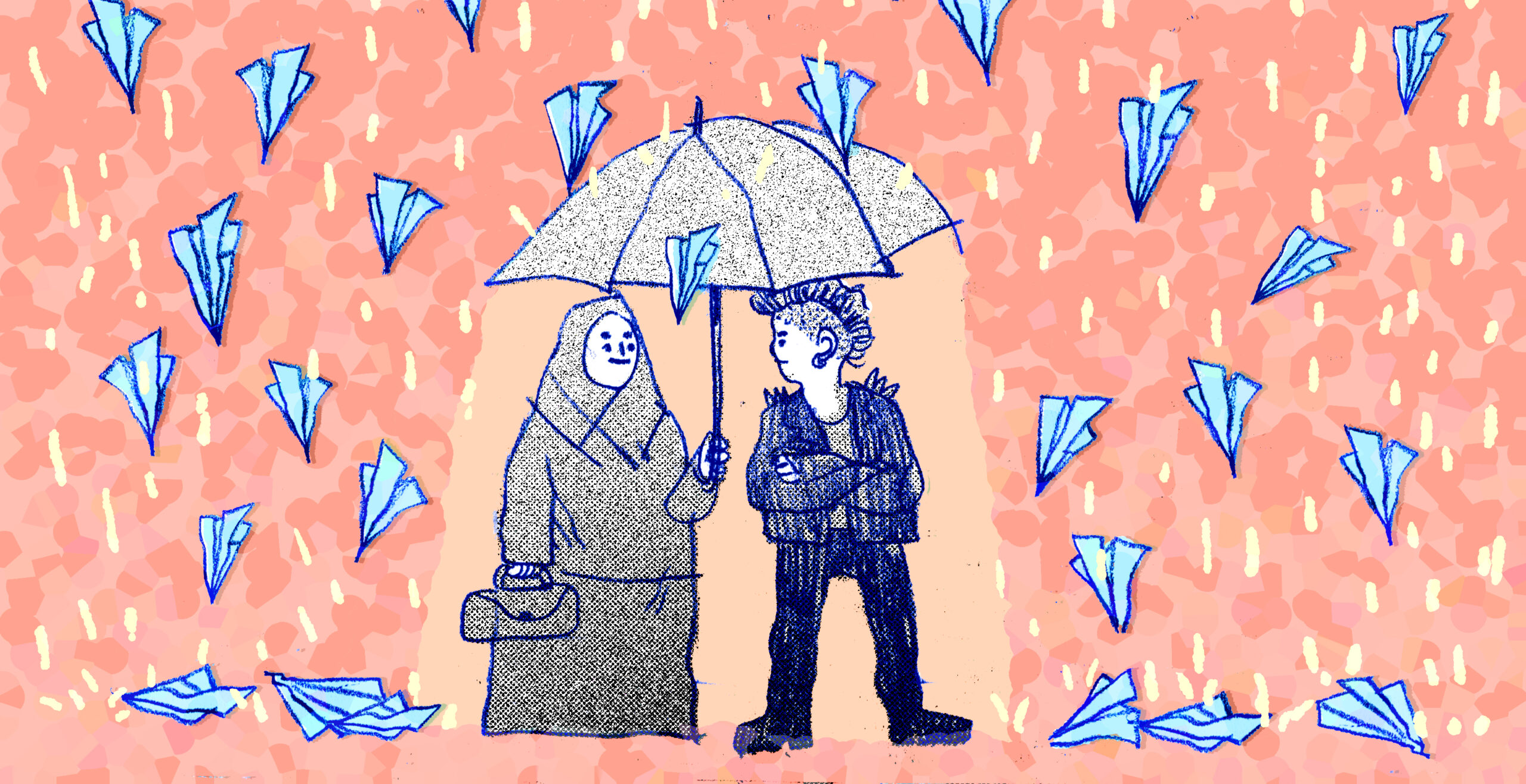
    Paper cranes
    Your words feel like rain
    Between tiny showers and heavy downpours
    Looming thunderstorms
    Invisible signs

    Drenched
    Same element recycled over and over again
    Be ready
    Bring your umbrellas out to play
    Shield yourself from all the criticisms and hate

    Same paper
    different planes
    I see the flipside of disdain
    God protects me like a cloak
    Rain as blessing, not shame
    Cleanse the Earth
    from pollutants we create

    Same rain
    Different planes
    I see God’s view
    I accept pain with grace

    As adults, we see things in black and white. We tend to be set with the way of thinking we have grown up with. When a Malay boy is asked to spot a difference between him and his Chinese best friend, he may not even mention the colour of his skin. He will talk beyond physical characteristics, to mention what he knows about his best friend, perhaps something like “Sam does not like sports as much as me”. If adults were asked the same question, it is not unlikely that we would explicitly or implicitly make comments related to faith and skin.

    Children are painted into the human beings we shape them to be. Just as the Prophet was to his people, the way we model our children is a reflection of our behaviour. When we tell our children not to mix with someone from a different race, our children will learn to create boundaries that they never planned on having. Mother used to tell me that I shouldn’t share my bottle with anyone, especially the Chinese, because I would be drinking with saliva that has babi (pig) on it. Mother would not let me lend my baju raya (malay traditional clothes) for racial harmony day because Mother didn’t want non-Muslim sweat in her dirty laundry.

    When the line is drawn between Muslims and non- Muslims, it stifles and strains the relationship. Muslims become exclusive to those who “believe,” and inevitably exclude those who do not.

    When I was young, I was taught that I was forbidden to be or mix around with gay people. Yet it did not stop me from feeling sad for my close friend who had confided and came out to me, when the news of her sexuality spread like wildfire. Even though she was a Muslim, her usual friends ostracized her and my Mother told me to stay away from her. I didn’t. If everyone excludes the one who’s different, who’s going to stay and listen to understand?

    I have always thought — how does it feel like to be on the other side of the fence? It took me a taxi ride with a Chinese uncle in his 60s to give me a new perspective. We were having a conversation on the weather when he jumped straight into a recount of an incident he had.

    “Malay cannot touch my hand? Yesterday a Malay auntie scolded me when I accidentally touched her hand to return her taxi change. Also, I am very scared to enter Malay house. Cause I eat non-halal food.”

    I paused for a moment to think and spent the next fifteen minutes explaining to the uncle on why the auntie may have gotten angry. Perhaps she had taken her ablutions (I explained what ablution means) and she would have to retake it if she touched his hand. Even though many people associate being a Malay as being a Muslim, how we handle ourselves still remains important. Sometimes what we do changes or affirms what people think of our religion.

    Dividing people as Muslims and non-Muslims can be problematic if it causes us to treat others differently. How can we show others what a beautiful religion Islam is if we alienate them? Change has to happen to build a harmonious society. The Prophet and his companions were able to build a harmonious society without treating those of a different faith as a separate part of the community.

    At the end of the day, everyone is on the same path, with the same beginning of birth and the same end of death. We all know when and where our life began. We are aware of how the present presents itself. But the future remains unknown till time catches us. It remains unknown to us, but known to the One who has the right to judge, unlike humans. Until then, we’ll seek to understand those who are struggling to understand the religion we try to preach. You’ll never know if the person you looked down on yesterday for sinning could be among the first thousand to enter the gates of Paradise we all want to enter.

    But alas, I don’t know anyone who isn’t struggling with their faith.

    _

    Wan Siti Zulaikha currently works as a freelance trainer with a vision to empower confident and resilient youths. She enjoys writing, and sees words as a powerful tool in sparking conversations on social and community issues people may be shy to speak about – all with the intention that readers would see and understand the human race from a vantage point of love and mercy.

    Illustration by Wan Xiang Lee
  • Kuralgal

    Kuralgal

    Kuralgal
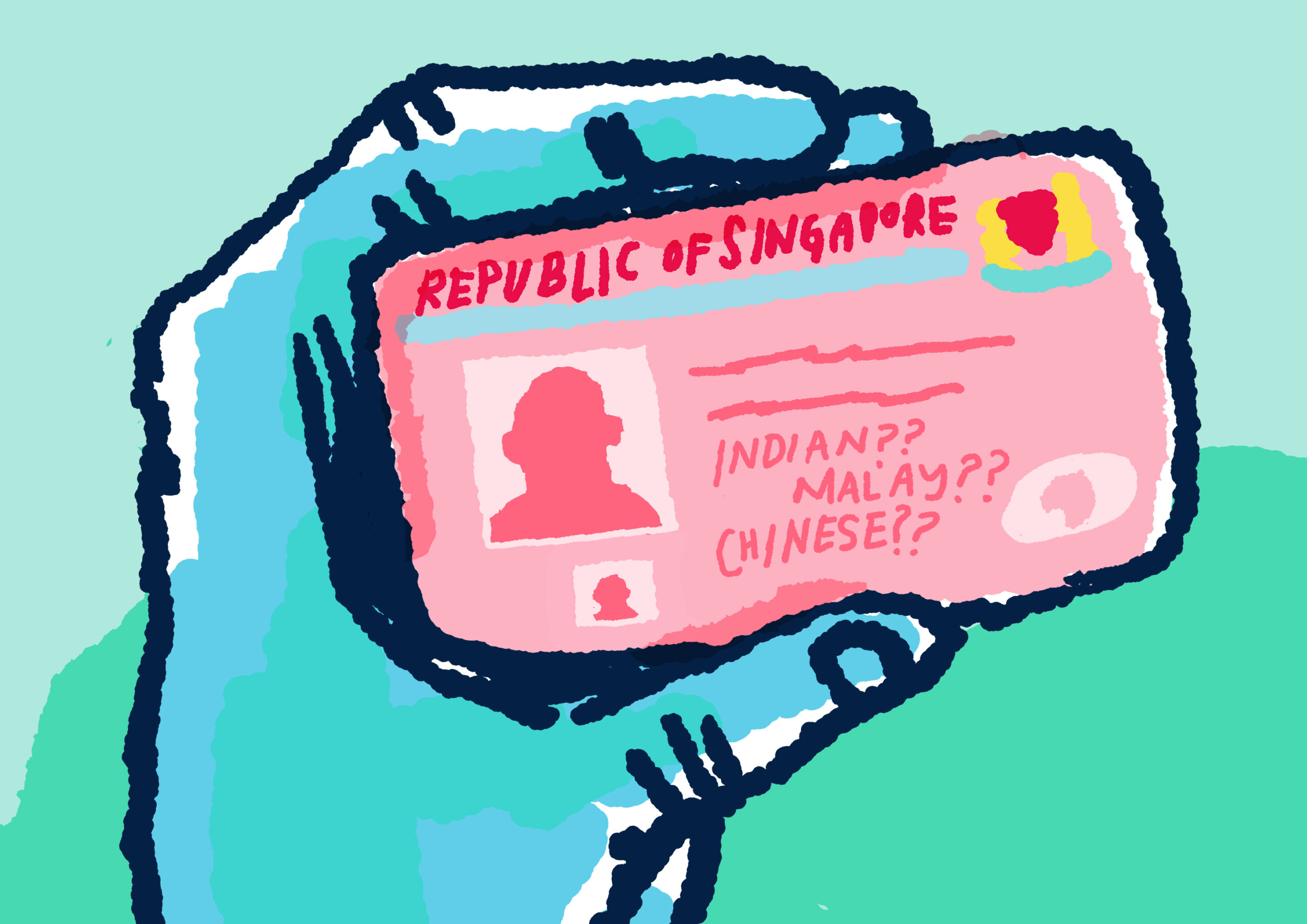
    by Nadyanna Majeed

    “Half Indian, half Chinese,
    how come Muslim?”

    “Your IC what race?”
    Indian, following grandfather.

    “Mother tongue what then?”
    Malay. “Huh?! Why?!”

    The questions never end,
    even from myself.

    老师,早安。
    Selamat hari, Cikgu.

    Why can’t I complete
    that last one-third?

    “Indian cannot speak Tamil?
    How can liddat?”

    “Take Malay because easy,
    that’s why right?”

    “HUH YOU MUSLIM AH??
    Don’t look like!!”

    “Oh half Chinese? No
    wonder so smart.”

    Incensed, I ignore implications
    and go home.

    Ramadan comes and goes;
    Raya starts soon.

    “Wear sari for Raya,”
    my mother says.

    “Selamat Hari Raya Puasa,”
    greets the Chindian.

    Chinoiserie and curry creates
    the atmosphere here.

    I’m always so torn
    between three communities.

    __

    1. Is there a reason why you have chosen the poetic form of the Kural for this particular poem?


    The Kural is an important form of classical Tamil language poetry and is very short (exactly two lines) and exact (four words in the first line and three words in the second line) in its form. Being of Tamil descent myself, I found it apt to write about my heritage using a Tamil form of poetry.

    I also found that the rigidity of the form reflects how, for many people, the relationship between race and religion is rigid (“You’re Muslim? So you must be Malay ah?”). Being forced to fit each encounter in only seven words also corresponds to how people of mixed heritage often feel forced to fit into certain ‘boxes’ or categories (Malay-Muslim, Indian-Hindu, etc) by the people around them.

    2. Your poem reveals how Singaporeans often view race and religion in a simplistic way. Where do you think such parochial views come from?
     
    This simplistic view stems from many different factors influencing us as we grow up, but perhaps the most concrete example (and one which I remember very clearly) would be from Singapore’s moral education textbooks and lessons. Often, once the topic of racial/religious harmony is broached, it’s presented as Ali the Malay celebrating Hari Raya and explaining the need to fast to his non-Malay friends (because he must be Muslim), while Bala the Indian explains why he doesn’t eat beef (because he must be Hindu), etc.
    As children, we absorb and internalise everything and these assumptions we make are difficult to break if we don’t grow up being exposed to those who break these (although possibly statistically true) stereotypes.

    3. You mention how the scrutinisation of your identity comes not just from without, but from within. Are the questions you ask yourself different from the ones that are asked by others, and if so, what is the difference?
     
    The questions that others ask are usually quite superficial and neutral, and are in relation to stereotypes common in Singapore, like “Huh you Indian then why Muslim?”

    Occasionally, there’s a comment that’s much more problematic, like “You have Chinese blood, no wonder you get good grades!” These comments obviously reveal some kind of negative sentiment towards another group when people express relief that I’m not part of that group.

    As for myself, the scrutiny often comes in the form of contemplating whether I truly belong to any community. In school, I was never part of the Malay-Muslim community who would often go visiting together during Hari Raya, or break their fast together during Ramadan. I’ve also met people who have refused to acknowledge my Chinese heritage, instead insisting that I must be Malay or Indian (or Malay-Indian). So I often ask myself, what does it take for someone to be part of a community? Is it just enough for me to identify as part of it, or do other people get to decide what I am?

    4. How has the perpetual interrogations on your identity shaped the way you understand race and religion?
     
    To me, race and religion have never been linked. As a child, I saw so many different combinations that I could never put people into boxes. However, I’m now much more aware of the perceptions that other people may hold, whether positive, neutral or negative.

    I’m also more conscious now that there are always people who will refuse to acknowledge you as part of their own community (be it racial or religious or both) because you don’t look like them, or you don’t eat what they eat, or you don’t fulfil some other arbitrary criterion that varies from person to person. What you consider yourself to be may not tie in with what others perceive you to be.

    It’s not really a “best of both worlds” situation; you can be of a certain race and religion but if they don’t fall neatly into place with what others expect, you’ll often find it difficult to belong.

    _

    Nadyanna Majeed is a young Singaporean poet of mixed Chinese and Indian descent who also speaks Malay, much to the confusion of others. Having been immersed in Literature during her time at Victoria Junior College, she started writing poetry at the age of 17 and has continued since then. 
    Illustration by Wan Xiang Lee
  • How to throw a party in a hijab

    How to throw a party in a hijab

    By anonymous

    I. The Period Party

    The Muslim equivalent of the legal drinking age
    is when a woman has her period for the first time.
    It is when you become truly human, Woman
    so when I first had my period:

    I heard that God started a countdown.
    I heard there was a party involved.
    I heard that there was a giant holy pinnata labeled “religious adulthood”
    and that God got really wasted and struck one of those
    high-striker machines at carnivals and a pinging sound
    erupted through the heavens and he won top score
    and he pointed to the biggest yellow minion plushie and said
    “I want that one” and I heard that my face was pinned
    onto Lucifer’s dartboard
    and he started a holy war against me;
    and all the angels started chanting my name
    to the tune of Tom Jones’ She’s A Lady.
    because I was a lady.

    Basically it’s kind of a big deal.

    I had to start wearing sanitary pads. Like a lady.
    I had to start wearing my heart on my sleeve.
    I had to start wearing sleeves, the scholars told me,
    cover up, start with your skin, you are mostly skin.

    2. A Sinister Party

    When you first have your period,
    your sins would unravel, decode themselves,
    they learn to walk on their own,
    they run away from your childhood leash
    and when you’re not looking
    they fuck other sins behind the bushes
    and make little baby sins that grow up
    and form a sin army. (A sinarmy.)

    My sins learnt new words by the time they were two.
    Started talking back to me,
    laughing at how silly I look, a jumble of contradictions
    that don’t match, this living, breathing quilt,
    shreds of old rags and blankets that made up my body.
    They said things like “You are accountable for us now,
    all your shedding blood
    means that you are losing the weight of stars inside you.”

    So I counted my sins like they were stars.

    I counted the square inches of skin I exposed to each lick of hell fire.

    I counted the undignified desires that knocked on my door
    and barged into my bedroom and demand to be pleasured.

    I counted the number of times I masturbated in a day
    (Once before Zohor and twice after Isyak)
    and I made promises into my pillow
    that I wouldn’t do it anymore.

    I broke holy promises daily. I lied to God.
    I knew if I kept it up, I would get blacklisted from heaven.

    4. A Pity Party

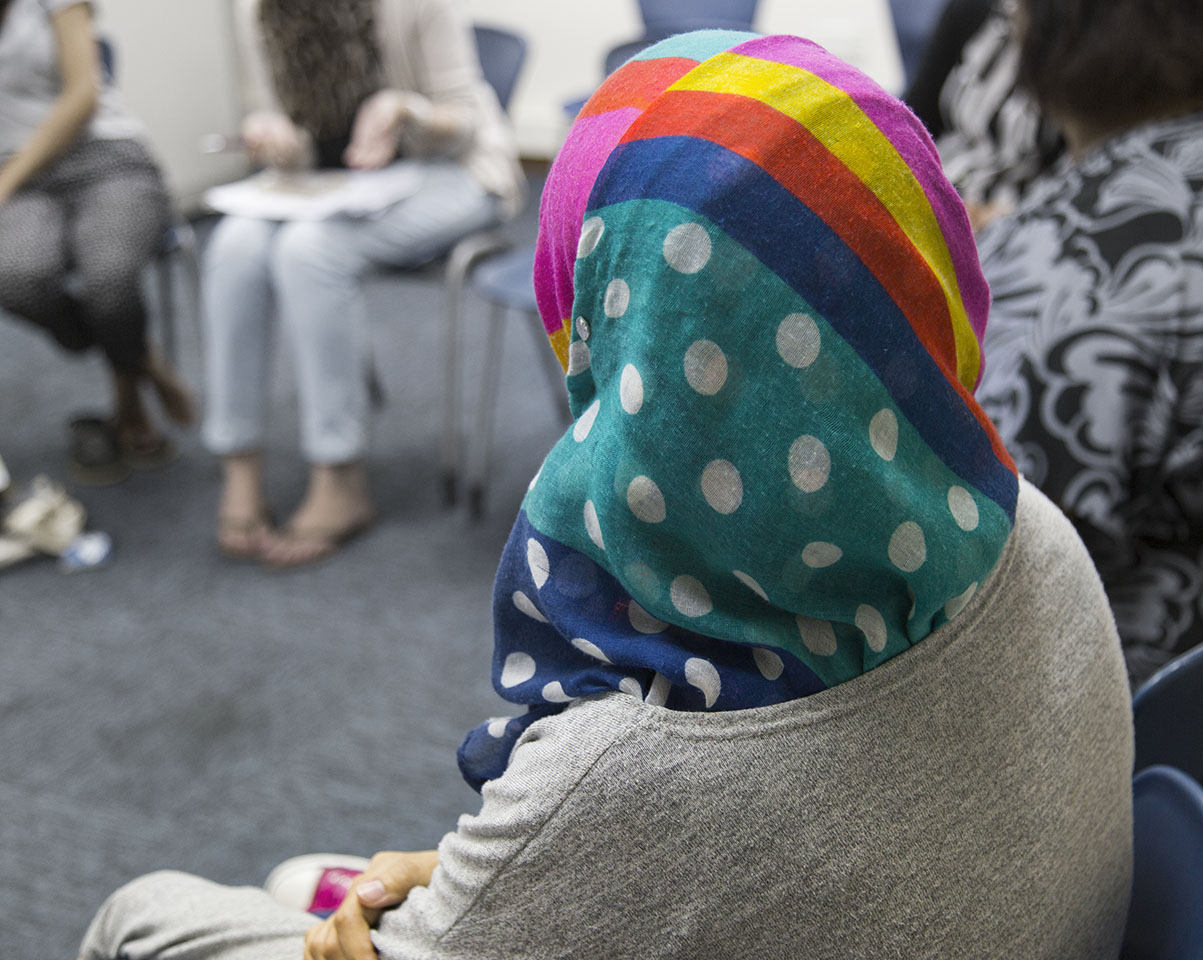
    So I shroud myself in several pastel shades of cloth
    around my head determined to be the complete portrait of woman
    And I listened to punk rock that told me to liberate, fuck it all,
    the system is sick, fight against the man, you are bigger than what you’ve been told.
    I prayed five times a day, Alhamdulillahirabbil ‘alamin
    kissed the prayer rug like it was a lover,
    like I couldn’t rely on anything less than godly.
    And I started bookmarking my favourite porn fan fiction
    so I knew where to flip straight to for a mid-afternoon quickie.
    And I started reading the Quran, dragged through each syllable
    and inflection as if I understood every throaty word.
    And I started saying “Fuck” more, flipping off more, and subscribing
    to concepts that once seemed culturally absurd like…..evolution.

    5. The Microaggressive Party

    “Aren’t you hot in that?
    “Why don’t you take it off?”
    “Ohhhh you look so pretty without it!”
    “Are you like, religious?”
    “Oh if we give you the job you can’t, you know, wear that thing…”
    “What are your thoughts on sex?”
    “What are your thoughts on boyfriends?”
    “What are your thoughts on men?”
    “Do you wear that thing at home?”
    “Do you ever, like, party?”
    “What are your thoughts on masturbation?”
    “Eh, minah tudung!”
    “Were you forced to wear it?”
    “Why aren’t you speaking Malay?”

    6. The Rock Show

    The first rock show I went to, I was trampled mid-way,
    after throwing myself into the moshpit, sweaty,
    covered in hormones, and too much cloth.
    There was silent confusion by the presence of a hijabi
    in their overnight queue, I could hear them thinking,
    WHY WOULD YOU WEAR THAT THING
    ON YOUR HEAD IF YOU LISTEN TO HARDCOREEEE MUUUUUSIC?
    It’s not hardcore, bruv, it’s just My Chemical Romance, calm yourselves.
    Because this scarf is cool and fancy in black around your neck
    next to studs and badges of Metallica and Skinny Puppy,
    but primitive around my head.

    Then it hit me. That this was no mere cloth,
    this thing, folded and pinned in the right way, brings with it
    too much: stitched within its seams is
    the silence of cerebral gears of strangers spinning, trying to reconcile
    my presence with my environment, trying to understand what kind
    of woman I really am without having said a word to me
    because I had a quilt of untold stories draped around my head,
    I was always a mismatch,
    I always belonged somewhere else.

    (What was I doing at the party?
    With other normal people who are dressed for it?
    What was I doing trying to be a newscaster or a radio deejay?
    Nobody wants to see my kind on their TV screens.
    What was I doing writing oral sex scenes secretly in my notebook,
    reading them back and touching myself after prayer so I didn’t have to wash the sins
    from my body because my body was magnet for dirty,
    and I’m supposed to be clean
    What was I doing in the comic book store,
    shouldn’t I be at home reading about Lucifer and his diabolical plan
    to ruin my life – shouldn’t I be speaking in an ethnic language,
    am I even allowed to walk by a bar,
    If I see a bottle of alcohol, will I start melting in horror
    Shouldn’t I get a job somewhere else,
    I don’t know where, but somewhere else they can’t see me
    because people are not ready to be greeted by those
    who look nothing like them.)

    7. How to party in anything

    It’s been two years since I lost God.
    But I found women,
    and I found men who stood by us.
    And I found those in between who
    were forced to pick one way or the other.
    And I found love and sex and hope and fire.
    And I found poetry and I found
    rock and roll.

    And for a long time I thought
    that I never found these things
    until I stripped back to my skin.
    But we are not contradictions worn on our bodies.
    We are not balancing acts,
    we are ruined and wrong and right
    at the same time,
    we are the crucifix dildos and the
    punk anarchist imaam,
    we are carnival high-striker machines
    and yellow minion plushies,
    The photograph on Lucifer’s dartboard is our selfie.

    We can coexist with ourselves
    without battle. We can stop justifying our existence
    and our tongues and the things we do to our bodies,
    because we are not conflicts meant to be solved.
    We are more than threads.
    We are more than the lines that we tread.
    We are finding our own angels
    and we are throwing parties so loud that
    God herself would want to gatecrash,
    get drunk and steal our vodka-cranberries.
    Because that’s how you throw a party.

  • The Disease of Womanhood.

    Exiting the bathroom stall
    Sweat drips from forehead
    absorbed by cotton hijab
    Red drops drip from skin
    absorbed by cotton pads
    I lift my jumper and check my butt in the mirror
    Leggings stained with spots
    The marker of my womanhood
    It is here.

    I scurry outside
    to the sea of white and blue
    Clenching my tummy tightly
    I whisper in her ear
    “do you have Tylenol?”
    Access granted.
    She slips me pills from her pocket
    They were always there.

    The ringing of the bell
    summons our quarantine
    Locked up in a cell during the afternoon prayers
    Aliyah stands guard
    A male passes our door
    She sends us a signal
    and we duck in shame
    We were never there.

    Avoiding exposure of our disease
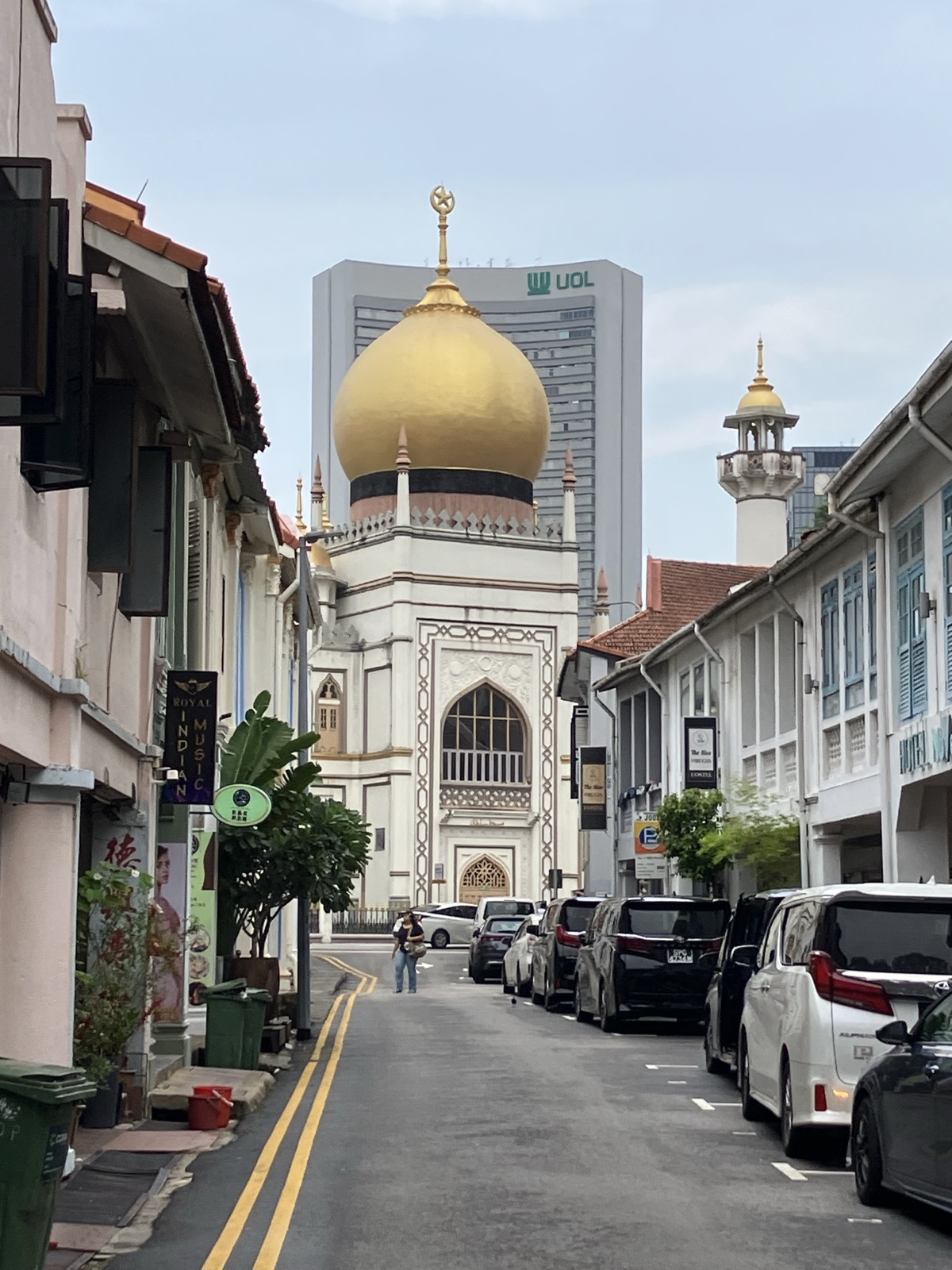
    we run to the entrance of the mosque
    but careful not to make noise
    Just as the Imam finishes praying
    we slip back into the women’s section
    We were always there.

    Mariam falls behind and gets caught in the act
    She runs into a male classmate
    The stares are awkward.
    They both know it but won’t say it
    The distress of being an adolescent
    lingers in the air
    They both sit in their desks fiddling thumbs
    When the rest of us reach the class, Omar calls over the boys
    Huddles, whispers, points, giggles
    She’s been exposed
    A woman is here.

  • Exodus 3:14 or Decolonizing the Multi-Racial Body

    By Diana Rahim

    My body is the world because –
    You won’t let me be myself.
    History won’t let me be myself.
    Cultures won’t let me be myself.

    My skin holds down blood
    that does not know which ocean to return to.
    Creases on my skin demarcate borders
    between countries.

    When I shift my bones,
    continents groan in movement.

    My grandmother placed China on my cheeks
    My grandfather placed Pakistan on my nose.
    I have India in my eyes and
    Indonesia on my tongue.

    The borders between countries compete for meaning.
    I am a hundred civil wars at once when you ask –

    “What are you?”

    I was whole before you forced these borders on my body.
    Other my limbs and tell them they have lost
    their mother country.
    You forced your language on my ancestors, now
    I speak with the colonialists’ tongue.
    Sanskrit ripped from my language.

    My great-grandmother died with the last ‘Khan’ in her name.

    Isn’t it funny how we broke God, made “him”
    a man; white, distant, fearful, before we said –

    “We were created in God’s image“.

    Why do we break God
    to fit him in the ego of the man.
    Why do break the body and force it
    to choose a name. A country.
    There is space enough here for refugees.

    My body is the world
    You will not colonize me.
    Anglocize my deity.
    Create difference so you can feel special.

    My blood will break the borders
    you’ve drawn on me.
    Reclaim every sign you’ve bastardized
    as submission.

    My body is the world
    and I carry it whole.
    Ask me again who I am and I will no longer
    carry wars on my skin.

    Ask me again and
    I will dare to say that
    “I am who I am”


  • Coming Undone.

    Coming Undone.

    By Zubaida Ali

    My head is so wrapped up with silken lies
    As I walk this flimsy path of truths and untruths

    Will Allah love me more just because I cover my hair?
    Will Ibu, Ayah, all look up to me?

    I get burdened with so much guilt
    just because of this piece of fabric a mere two feet long

    My conscience pin-pricked with so many questions
    Who am I doing this for?

    As the lies unfurl
    I do not know where my true self begins
    and ends


  • The Difficulties of Praying in A Mosque for a Muslim Woman

    The Difficulties of Praying in A Mosque for a Muslim Woman

    By Filzah
    Because I’m a Muslim Girl
    I pray behind a wall
    I pray behind curtains
    I pray behind men
    Because I’m a Muslim Girl
    I don’t go to the mosque on Fridays
    I don’t go to the mosque on my period
    My presence is not necessary
    So I shall go home.