Category: Monolithic

  • Dari lensa minoriti Syiah di Singapura

    Dari lensa minoriti Syiah di Singapura

    Topik perbezaan sekte atau sektarianisme bukanlah sebuah topik yang baru saya ketahui. Saya dilahirkan dalam keluarga yang mengikuti tradisi Melayu dan juga agama Islam bermazhab Syiah di Singapura. Sebelum perkahwinan mereka, ibu bapa saya mengikut ajaran Sunni tetapi apabila mereka lebih dewasa, mereka beralih memeluk Mazhab Jaafari, iaitu mazhab dominan dalam fahaman Syiah. Walaupun kami bermazhab Syiah, ibu bapa saya telah menghantar saya ke sebuah madrasah yang beraliran Sunni untuk menerima pendidikan agama, selain daripada kelas-kelas mingguan yang berfahaman Syiah.

    Dari sudut pandangan seorang anak kecil, perbezaan sektarian itu hanya terhad kepada sekatan pemakanan, seperti mengelak daripada memakan kerang, sotong dan ketam. Saya mempunyai seorang teman rapat yang bermazhab Sunni yang akan mempertahankan saya apabila saya dipersoal tentang mengapa saya tidak makan semua itu. Pada usia 10 tahun, saya pernah berkongsi dengan seorang rakan sekolah yang berbangsa Cina bahawa terdapat dua aliran dominan dalam Islam. Tetapi, seorang rakan Muslim telah merespon dengan mengatakan bahawa itu salah dan sektarianisme dalam Islam itu sememangnya tidak wujud. Ini merupakan titik permulaan kesedaran saya bahawa pemahaman tentang perbezaan aliran atau mazhab di kalangan umat Islam di Singapura itu sangat dangkal. Saya juga mula peka terhadap ketegangan antara mazhab menerusi prejudis yang dialami oleh teman-teman Syiah saya apabila mereka bersembahyang di masjid. Secara ringkas, identiti saya sebagai seorang minoriti dalam masyarakat Islam tempatan telah memberikan saya kelebihan dalam menyedari lebih awal tentang isu perbezaan mazhab ini.

    Semasa menuntut di maktab rendah, isu perbezaan mazhab sering muncul apabila kami berbincang hal-ehwal politik yang pada masa itu. Guru Kertas Am ( General Paper ) saya pernah mengajukan soalan ini – “Berapa banyakkah aliran yang ada dalam Islam?” Saya amat berbangga untuk menjawab soalan ini walaupun identiti saya sebagai seorang Syiah pada masa itu masih tersembunyi dari pengetahuan orang lain. Saya juga mula berhadapan dengan beberapa stereotaip dominan yang berkaitan dengan mazhab Syiah – iaitu mereka sesat dan sudah terkeluar dari Islam. Apa yang menarik bagi saya ialah walaupun saya berasa sedih apabila berhadapan dengan stereotaip-stereotaip itu, ia bukan perkara yang mengejutkan. Bahkan ada juga sesetengah pengikut Syiah yang menerima dan mengakui sentimen-sentimen negatif sedemikian, seolah-olah cemuhan dan kata-kata hina itu sebahagian daripada kepercayaan Syiah.

    Semakin usia saya meningkat, stereotaip-stereotaip tersebut menjadi lebih ketara. Seorang penceramah Syiah terkenal yang bernama Hajj Hassanain Rajabali telah dijemput untuk menyampaikan ceramah di NUS. Bagi saya, ceramah yang diberikan itu berkenaan topik yang universal dan tidak terkait dengan mana-mana mazhab pun dalam Islam. Walau bagaimanapun, ternyatalah ada rasa cemas dan sangsi di kalangan mahasiswa tentang ceramah itu. Saya juga diberikan amaran daripada seorang mahasiswa yang tidak mengetahui akan identiti Syiah saya supaya jangan menghadiri ceramah itu kerana saya mungkin boleh terpengaruh secara negatif daripada penceramahnya. Sewaktu saya bergaul dengan mahasiswa-mahasiswa Muslim di universiti, pengalaman saya dalam berasimilasi dengan mereka membuat saya berasa cemas. Mungkin saya tidak banyak mengasimilasi semasa zaman remaja saya, tetapi di universiti saya sering mengikuti solat berjemaah, majlis iftar dan ceramah-ceramah yang dianjurkan oleh Persatuan Mahasiswa Islam NUS. Melalui program-program ini, saya menjadi lebih sedar tentang identiti saya sebagai seorang minoriti Syiah. Ketika saya bersembahyang dengan meletakkan tangan di bawah, atau ketika saya membuat alasan untuk berbuka puasa lebih lambat sedikit selepas azan, saya sering tertanya-tanya dengan rasa bimbang sekiranya saya kelihatan ganjil di kalangan teman-teman Sunni.

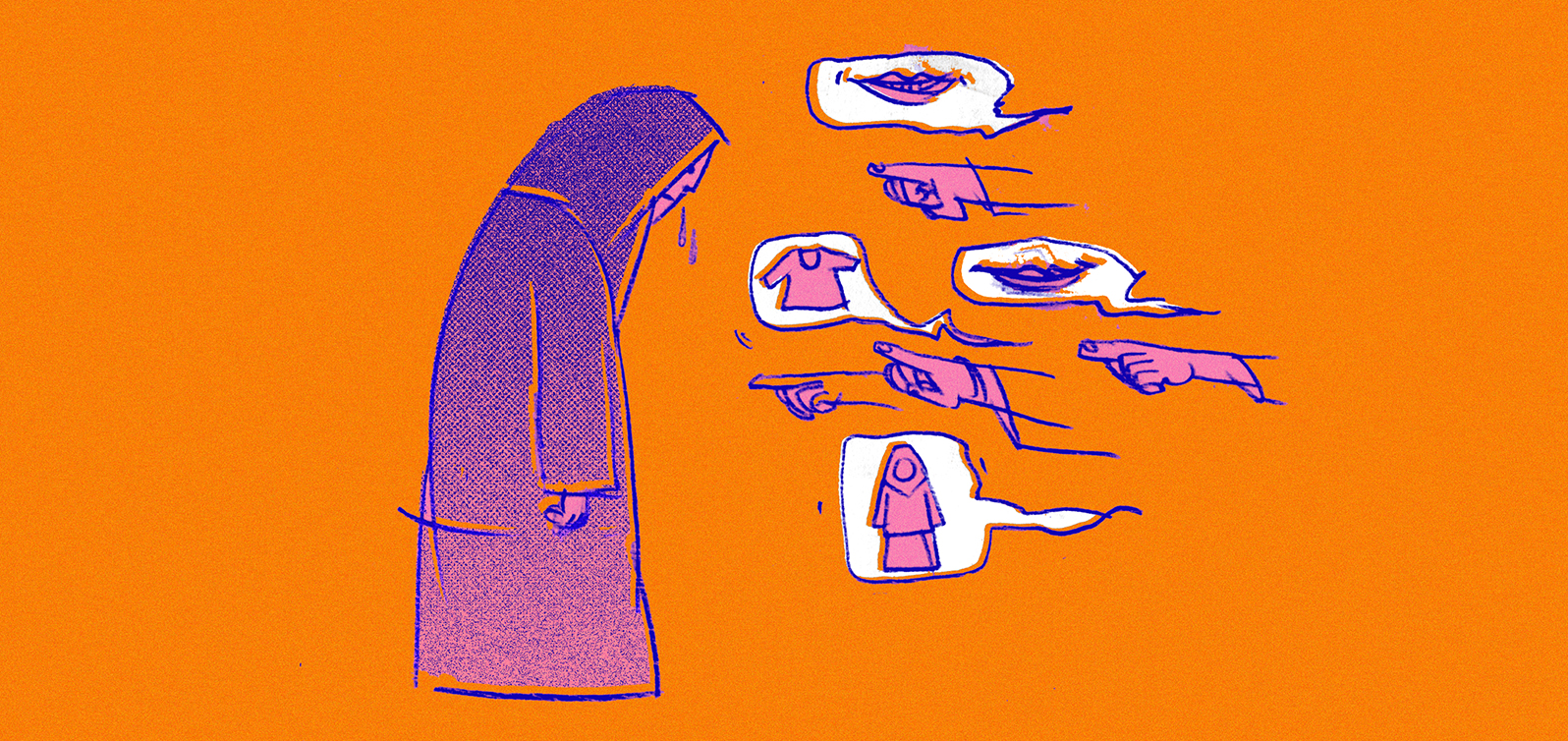
    Walaupun ia merupakan sebuah kebimbangan pada awalnya, lama-kelamaan, kewujudan bersama dan asimilasi menjadi mudah bagi saya. Maklumlah, tiada apa tentang diri saya yang mencerminkan dengan jelas identiti Syiah saya itu. Bukannya saya memakai chador/cadar seperti wanita Iran dan saya pun tidak membawa batu turbah itu ke mana-mana. Saya adalah seorang wanita Melayu Islam di Singapura pada dasarnya, yang lebih kurang menyerupai dan berpakaian seperti yang lain. Saya pasti bahawa saya telah berasimilasi dengan baik sehinggakan saya sendiri mendapati diri saya menerima penghinaan terhadap umat Syiah, seolah-olah kebanyakan umat Islam di Singapura itu mengikut mazhab Sunni. Tanggapan sama-rata sedemikian membuat saya merasa seperti orang s py dari umat Syiah.

    Ketika berusia 23 tahun, setelah saya mengalami sebuah krisis eksistensi (existential crisis) , saya membuat keputusan untuk berkongsi dengan beberapa orang teman rapat saya tentang kepercayaan Syiah saya. Sewaktu membuat perkongsian ini, saya ditanyakan kembali tentang mazhab apa yang mereka ikuti. Mereka, yang biasanya mengikut mazhab Sunni Syafii, sendiri tidak tahu akan fahaman masing-masing. Ini membuktikan pandangan saya bahawa umat Islam di sini memandang Islam sebagai sebuah agama yang monolitik, atau dipukul sama-rata sahaja. Keputusan untuk memberitahu mereka itu sangat membebaskan dan merupakan titik perubahan yang paling penting dalam kehidupan saya. Keimanan, identiti dan kerohanian merupakan aspek-aspek yang paling penting dan asas bagi diri saya. Saya memutuskan bahawa selagi saya menyembunyikan tentang kepercayaan saya, selagi itulah saya akan menghakis jati diri saya.

    Justeru, saya memulakan perjalanan untuk mengenali balik diri saya, agama dan identiti saya. Saya mempunyai banyak persoalan mengenai keimanan saya, pertamanya sebagai seorang Muslim dan kemudiannya sebagai seorang Syiah. Fikiran saya berkecamuk dengan persoalan-persoalan tentang peristiwa-peristiwa dalam sejarah Islam sebelum dan sesudah kewafatan Rasulullah, ke personaliti sejarah terutamanya keluarga Rasulullah dan para sahabatnya, serta persoalan pemisahan agama dari politik dan budaya. Saya mencari dan membaca buku-buku tentang perbezaan antara mazhab Syiah dan Sunni, dan menyelidiki tentang isu-isu yang kontroversial. Saya mengajukan pelbagai soalan kepada ibu bapa saya dan orang-orang yang arif dalam agama. Saya membaca lagi tentang tragedi Karbala dan peristiwa Ghadeer Khum dan cuba memahami makna di sebalik amalan-amalan yang dilakukan dalam tradisi Syiah. Ini mungkin sebuah pengalaman yang mengelirukan, tetapi melalui pemeriksaan semula tradisi saya sendiri dan perbandingannya dengan tradisi Sunni, saya diberikan perspektif yang lebih luas yang memantapkan kepercayaan saya sebagai seorang Syiah. Walaupun pada mulanya ia kelihatan seperti kekeliruan, proses ini akhirnya membuat saya mencintai kepelbagaian yang ada dalam agama Islam.

    Sejak itu, walaupun ia mungkin agak sukar dan mengelirukan, saya benar-benar percaya dan memahami bahawa adanya kebaikan dalam menjadi seorang minoriti. Tentu sekali ada banyak pengalaman sebagai minoriti yang tidak semestinya positif – peminggiran, diskriminasi, prejudis dan kurang didengari dan difahami oleh orang lain. Walau bagaimanapun, status sebagai minoriti itu seharusnya mendorong seseorang untuk terus menimba ilmu dan mendalamkan pemahaman, terutamanya apabila seseorang minoriti itu sering tidak difahami dan terpaksa berdepan dengan pelbagai pertanyaan, khabar angin, tuduhan dan label-label yang negatif. Ini akan menjadi sebuah kekuatan bagi seseorang minoriti itu sekiranya dia berdepan dengan perbezaan dan kepelbagaian secara konstruktif, malah mampu melawan prejudis-prejudis tersebut.

    Dengan menjadi telus dan terbuka tentang kepercayaan Syiah saya, saya juga telah berpeluang untuk menjalinkan persahabatan baru dan mengenali individu-individu yang ingin mengetahui lebih banyak tentang mazhab Syiah dan kepelbagaian dalam Islam. Melalui perkongsian dan penglibatan saya, saya juga membantu untuk meningkatkan kesedaran kepada mereka yang tidak menyedari tentang sektarianisme dalam Islam. Saya menyedari bahawa sekiranya saya kurang berkecimpung dalam masyarakat, ini merupakan ketidakadilan terhadap semangat kepelbagaian yang selama ini wujud dalam tradisi agama Islam. Penyebaran stereotaip boleh disebabkan daripada kedua-dua pihak – daripada mereka yang menyebarkannya, dan juga mereka yang tidak mencabarnya atau memperbetulkannya apabila perlu. Sikap eksklusif dan keterasingan dalam komuniti juga merupakan faktor-faktor utama terjadinya fenomena tersebut, oleh kerana idea-idea akan kekal statik dan tidak berubah. Ini malah menghambat kemajuan dan membuat keretakan yang sudah wujud dalam masyarakat menjadi lebih ketara.

    Pengalaman saya berdialog dengan orang-orang yang berbeza fahaman mengajar saya bahawa kita boleh bertindak secara positif dalam isu kepelbagaian. Ia merupakan sebuah kekuatan apabila kita mencari tali perhubungan yang mengeratkan kita untuk membina sebuah masyarakat yang inklusif. Perjalanan hidup memberikan saya banyak pengalaman manis apabila menyaksikan keikhlasan teman-teman dari berbagai latar belakang saling mempelajari antara satu sama lain. Pemahaman yang mendalam hanya dapat dicapai dengan adanya sikap hormat-menghormati dan terbuka.

    Di samping perbezaan kita yang menentukan keunikan diri kita, saya berharap kita tidak akan lupa bahawa kita semua adalah manusia yang mempunyai berbagai aspirasi dan cita-cita, dan menginginkan perkara yang sama – kebebasan dalam kewujudan kita. Salah sebuah nukilan kegemaran saya yang disebutkan oleh Imam Ali (a.s.) benar-benar mencerminkan ini dengan indah – “Manusia merangkumi dua jenis. Mereka sama ada saudara-saudara anda dalam keimanan, atau saudara-saudara anda dalam kemanusiaan.” Pesanan ini telah membimbing saya selama ini bahawa tanpa mengira sesiapa yang saya temui, mereka sama juga seperti saya. Saya berharap untuk menyebarkan mesej ini, terutama sekali dalam keadaan masyarakat dan politik hari ini yang didorong oleh pemikiran absolutis dan ekstremis. Terdapat spektrum yang berwarna-warni dalam agama Islam dan kita harus bergerak seiring dengan kepelbagaian, meyakininya dan justeru meraih manfaat daripadanya.

    __

    Seorang profesional dalam perkhidmatan sosial, Sukayna A. menganggap dirinya sebagai seorang penimba ilmu tentang kehidupan. Dia minat membaca tentang hal-hal berkenaan dengan agama dan masyarakat, kerohanian, isu-isu sosial dan psikologi. Dia berharap untuk memupuk semangat keterbukaan terhadap kepelbagaian dalam masyarakat, terutama terhadap golongan minoriti dan terpinggir.

    Ilustrasi oleh Wan Xiang Lee.
  • Unpacking the Last Malay Woman

    Unpacking the Last Malay Woman

    By Nurul Fadiah Johari

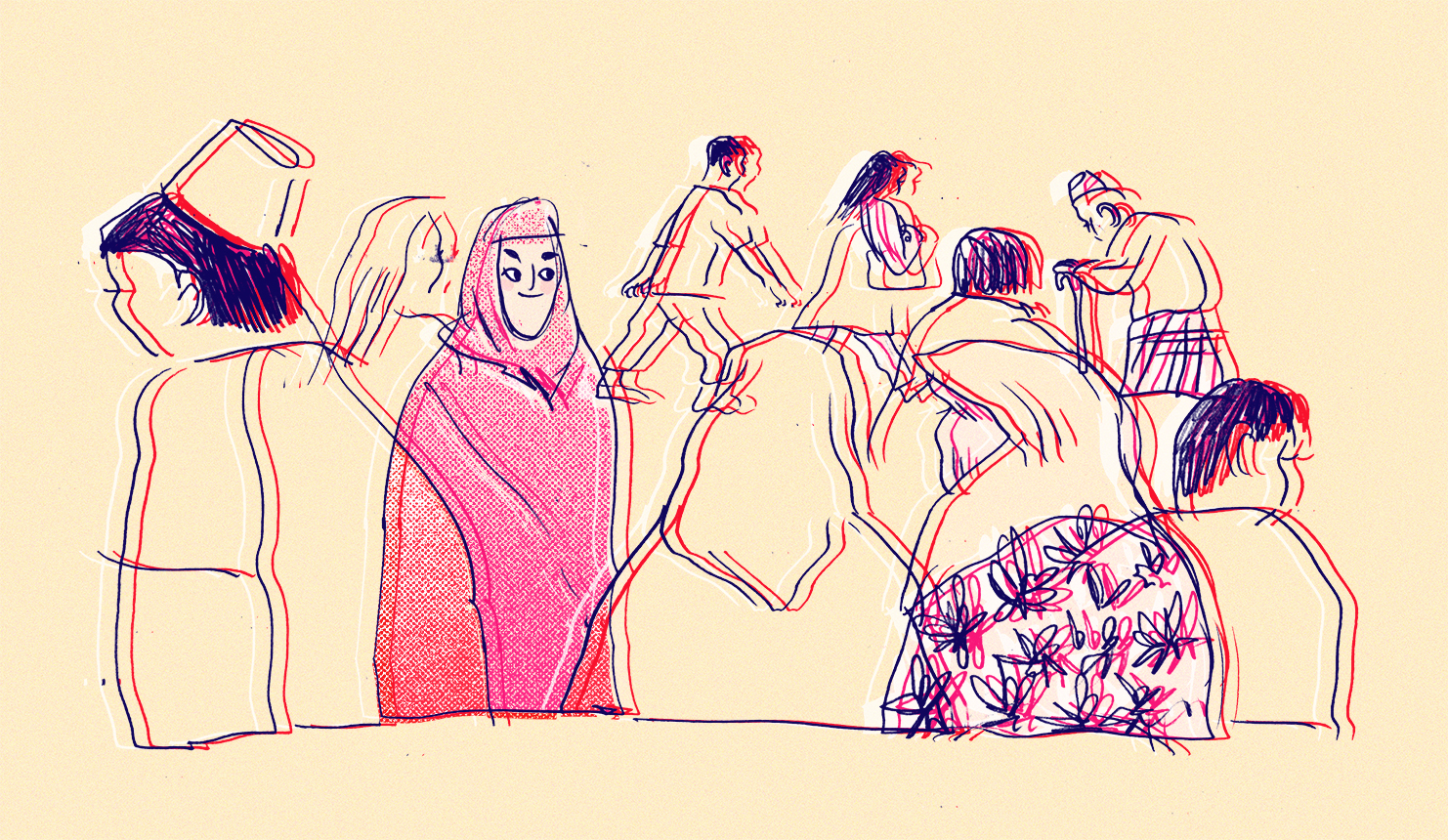
    It is pretty common to hear the term “perempuan Melayu terakhir” in popular usage and every day parlance. One who is modern yet rooted to Malay traditions, one who is open-minded yet behaves demurely and dresses modestly, and so on. There is a film by that same title, which describes the female protagonist as a Malay woman who chose to engage in traditional Malay arts in rural Terengganu, despite her urban upbringing. The local Malay daily, Berita Harian, published an article in 2013 entitled “Enam Cara Jadi Perempuan Melayu Terakhir” (6 Ways to be the Last Malay Woman), giving tips to Malay women on how to achieve that ideal. We see images of a poised woman who smiles coyly – not laughing heartily, but just a slight smile to indicate her pleasure. She does not express too much of a personality, but enough to let people know that she is pleasant and unthreatening. She is composed and devoid of negativity, for she is an ideal – transcending the binaries of east and west, modern and traditional, religious and secular.

    The term “akhir” which means “last” or “final” seems to suggest a nostalgic yearning for a past lost, where women were somehow simpler and more pleasant. Women today lack the gentle and mild-mannered courtesy that women of the past used to have, some would say. It is a quest for authenticity, the quest to find the remaining Malay woman who is true to her Malay roots and unfazed by the demands of modernity, Westernization and all other elements foreign to the Malay culture. She is the last one, amidst all others, to stay rooted and not compromising on her authentic Malay femininity. As such, she stands out as being able to achieve “the best of both worlds”.

    This idea, to me, not only seems like a fantasy, but is also inherently ideological and problematic. Yet, it is rare to find people challenging this notion. This idea fundamentally reflects societal expectations of women and the privileging of certain aspects of femininity that are seen as authentically Malay. It is based on a selection of romanticized images of demureness, as well as the emphasis on purity and modesty — sexually, emotionally and materially. The ideal Malay woman is not only chaste, but also holds back when it comes to asserting her full personality and expressing her deeper and sometimes, darker desires. She is thus made into an image, or a representation of certain concerns and anxieties in society. The bigger questions that we thus need to ask are: who projects these ideals or images and for what reasons?

    Monolithic ideals of femininity: “The last Malay woman”

    Any idea in society becomes monolithic when it goes unchallenged and supported by the status quo. Monolithic notions of femininity in the Malay society reflect the deeply embedded patriarchal order which casts judgment and imposes certain standards upon women. Our ideal notions of femininity are thus not neutral, since they privilege traits of submissiveness and docility in women, which protect the patriarchal values and structures in society. The last Malay woman, as an idea, perpetuates the very same notion that a woman is not complex, and does not have her own historical and political agency. She does not assert her own values and aspirations, but is subjected to the aspirations of others, especially those who have the power to shape her according to their wishes. She is made into a simplistic representation of how a good Malay woman should be, based on clear-cut binaries, and is thus lacking in her full agency as a person. She does not speak for herself in these images, and sometimes internalizes and perpetuates this fantasy.

    The fetishization of submissive and docile traits in a woman, above all else, is a tool of power and disciplining of women. A woman is judged for laughing too loudly in public, for that is unbecoming of a good woman. She is shamed for dressing in a way that does not conform to certain dress codes, and it is often women who bear the brunt of bodily and sexual shaming. In other words, she has to hold back. She has to tamper her public presence with reservation, often reduced to physical modesty. She cannot assert her bodily and sexual agency, for that would upset and threaten the patriarchal order. She is only allowed to be sexual within the legalistic confines of a marriage, and perform exceedingly well at that, because her sexuality is ultimately tied to the approval of her husband.

    The last Malay woman as the embodiment of social anxieties over rapid social change

    In the projection of the last Malay woman, the Malay woman is made into a bastion of culture and morality. The essentialist and unchanging notions of the Malay woman, while encapsulating the best of both worlds, straddling comfortably between the dichotomies of east and west, modern and traditional, rural and urban – are very much tied to essentialized notions of what it means to be Malay. The notion of Malayness and authenticity is thus put into question. At the same time, we do not have the same idea of “the last Malay man” being trumpeted constantly in popular culture and everyday parlance. The man is able to change with the times, being modern and economically contributing. The woman, on the other hand, while also modern and economically contributing, is at the same time still “traditional” and somehow unchanging. As such, the last Malay woman should be able to reap the benefits of modernity, but without its excesses, and in a way that is unthreatening to the existing patriarchal order.

    The gentle and smiling face of the last Malay woman becomes a source of familiarity amidst the anxieties of rapid social change. Because she remains steadfast to “authentic” Malay values and is unchanging, she becomes a balm to the pain and collective shame from colonialism. The desire for authenticity is a post-colonial reaction, especially by middle-class Malays who have been disconnected from rural communities, and experienced upward social mobility and rapid modernization. The Malay woman thus becomes a bastion from such anxieties. The binary that the projection of the last Malay woman seeks to overcome is based on ideas perpetuated by the colonizers about how the colonized Other is unchanging, simple and traditional. So the modern Malay, while having adopted Western institutions and cultural forms, still remains authentic by being inwardly traditional and conservative. Such ideas still go unchallenged and are often retained and perpetuated by the political and cultural elites, most of whom are male.

    Neither first nor last: The many facets of a Malay woman

    We have to thus go back to the question of who imposes certain ideals in society and for what purposes. What sort of ideals are we casting upon Malay women? What constitutes as traditions, and what constitutes as an ideal? As argued earlier, the idea of the last Malay woman is a kind of ideal that does not threaten or disrupt the social order – where a woman is constantly smiling and does not express her discontentment. She works hard, but for her family. She beautifies herself, but also modestly. It is always a matter of tampering her presence by making her hold back her full personhood.

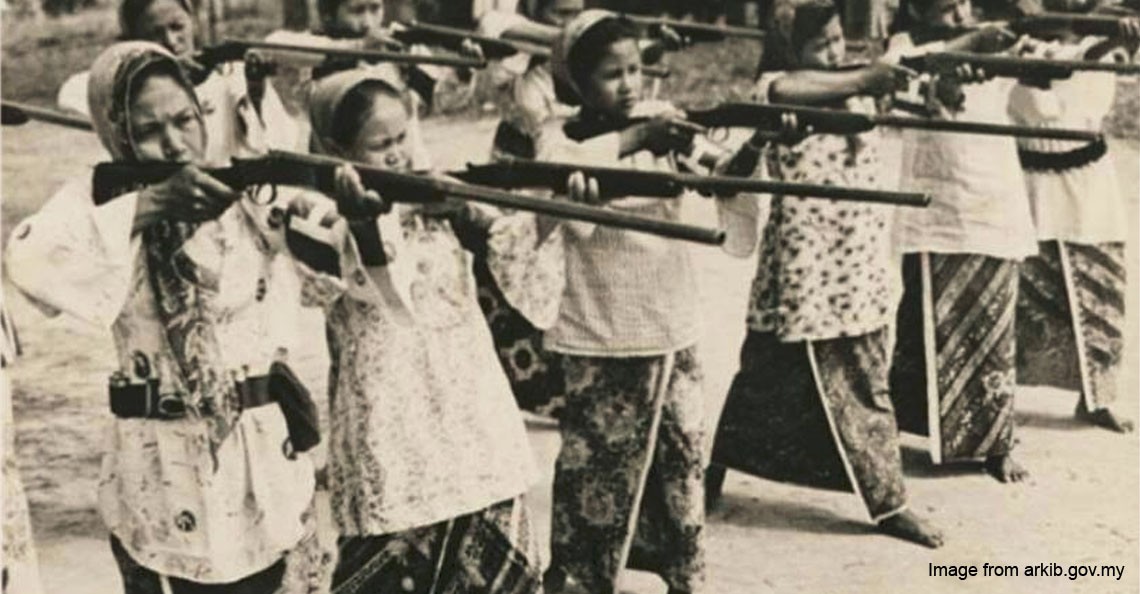
    But what about women who do not fit into the mould? What about those who asserted themselves publicly? What about those who struggled for the dignity of their community and nation? Who gets selected to fit this ideal? What about women like Shamsiah Fakeh and others who took arms to fight for independence of the nation and women’s emancipation? Would these women fall into the image of the last Malay woman? Some of them even trained to use rifles while wearing baju kurung. If we look at Malay literature, we also see diversity in the portrayals of various types of female protagonists. Faridah Hanom, in Hikayat Faridah Hanom for instance, is a modern woman who asserts her desires for independence to choose her own partner and calling in life.

    And why last? Why not first? Why not become the harbingers of a new era or mode of being? Malay women are also active agents in carving out our histories, and are not passive beings, unlike what some would like to believe. We have been engaging, participating and resisting against various forms of cultural, patriarchal and imperialist impositions. Such histories and narratives thus need to be made to the fore. And perhaps, what we seek is not to be the first or the last, but to transcend such a simplistic and monolithic understanding of how we ought to be.

    __

    Illustration by Wan Xiang Lee

    Nurul Fadiah is currently a research assistant with the Social Service Research Centre in NUS. She recently graduated with an MA degree in Malay Studies. She also volunteers actively under AWARE’s Gender Equality is our Culture (GEC) programme, which aims to promote gender-equitable interpretations of religion and culture within the local Muslim community. She started a support group for women who grew up in Muslim households called Penawar, which addresses problems of trauma based on religion, through problems such as patriarchal religious interpretation, religious coercion and body shaming/moral policing, sexuality issues and mental illness.


  • A Woman’s Guide to Happiness

    A Woman’s Guide to Happiness

    by Mariam Ahmad

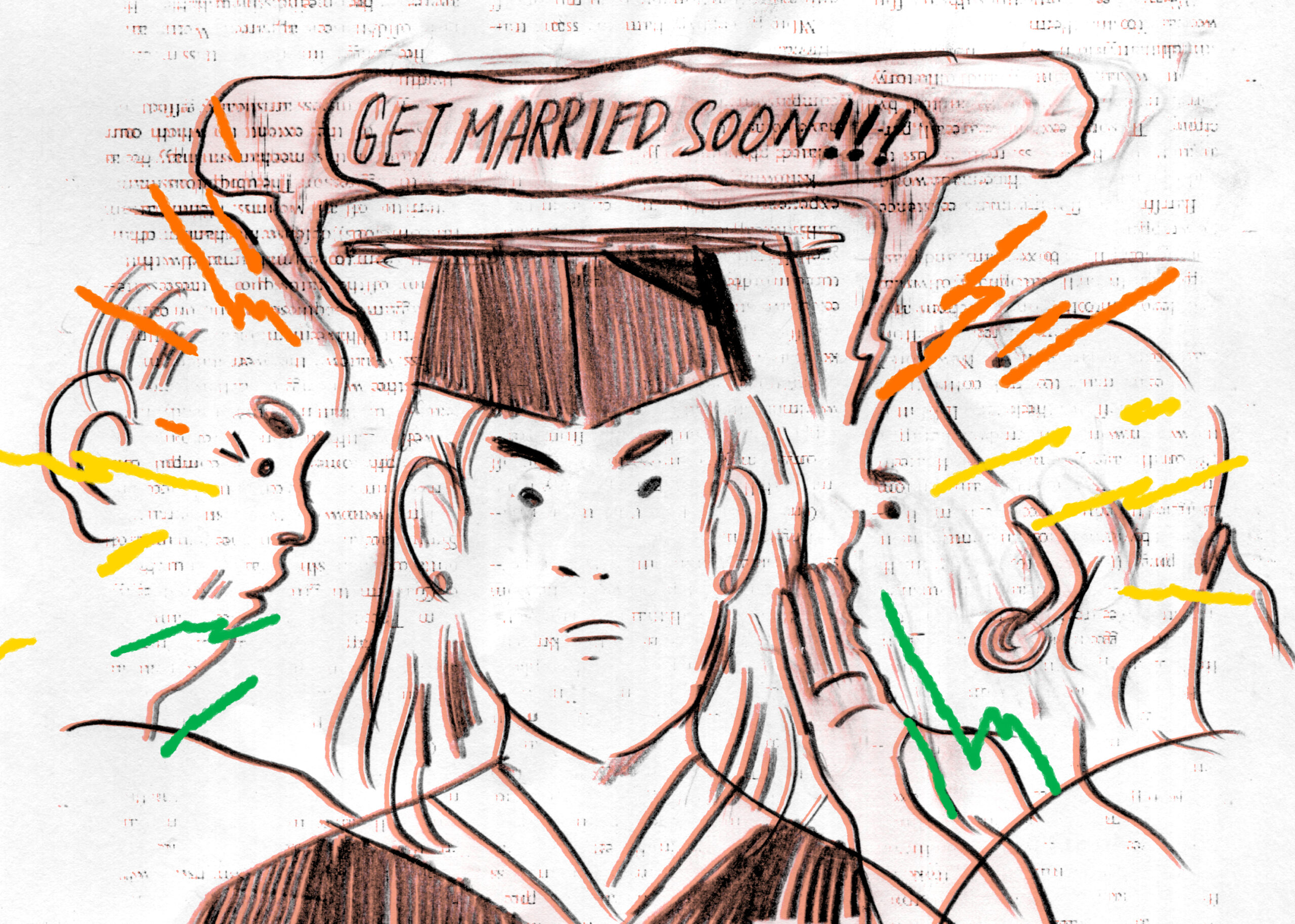
    Growing up, I was told that there are few things worse than being a spinster. In hindsight, what this statement really means is that my happiness is dependent on a man, and my worth lies in my ability to please him.

    Throughout the years, this damaging and grossly incorrect belief has permeated multiple aspects of my life, including areas that are not usually associated with love and marriage. Instead of finding out how my internships were going and what I was learning on the job, I would be greeted with questions on men in the office, and more importantly, whether they were single.  When I was accepted into the university of my dreams, a family friend pulled my mother aside and whispered to her, with grave concern, how no one would want to marry me. I think she believed that my degree would intimidate the entire species of men.

    Aside from being emotionally exhausting, the notion that women can only truly be happy when married eclipses our achievements, triumphs, agency, and independence. It erases our personal definitions of joy and success, and it reduces our full and complete selves into an existence in relation to men.

    If indeed, the measure of a woman’s happiness is her romantic relationship, there is nothing more dreadful or miserable than being alone. As I went on to graduate school, the women in my family reminded me that I should consider getting married after obtaining my Master’s Degree. After all, they would say, you wouldn’t want to be left on the shelf.

    The narrative surrounding unmarried women, on this metaphorical spinster shelf, is fraught with disdain and anti-feminist sentiments. Unmarried women are often described, in books, films and everyday interactions, as odd, aggressive, and difficult women. Their seemingly complex personalities both a cause and effect of their inability to settle down. Depicting spinsterhood as a personal failure is baseless and dangerous- it suggests that to be a woman is to be with a man.

    What I find deeply unsettling about these beliefs (apart from the beliefs themselves) is the fact that they are passed down across generations of women, including my own. I do not know if perpetuating these convictions was a result of internalised misogyny or an act of love. Perhaps, I was taught these lessons because it was the only way the women who came before me survived. But things have changed and so must we.

    As my younger sister begins to navigate the realm of boys and heartbreak, I worry about the conflicting notions of womanhood she has heard over the years. I disagree with what I have been taught and am explicit in my objection. I remind her that her love for cats, science, and pizza is enough. Her happiness should never be contingent on a boy. Her success is defined on her own terms and not in relation to her romantic life, and she should never feel obliged to like a boy just because he liked her first. Even though women are made to believe otherwise, there is more to life than men.

    After all that has been said and done, I must admit that I am in a relationship and I am happy. But I was a happy and whole person before I met my partner. While it is wonderful to have a constant source of support and comfort, my relationship is not my sole source of contentment. It is almost disheartening that in this day and age, I still feel the need to assert that women can exist, survive, and thrive without being in a relationship. If a man happens to come along, he should complement not complete our (already colourful, meaningful, and complex) lives.

    __

    Mariam Ahmad is a writer and researcher. She holds a Master’s Degree in Psychology and is passionate about women’s issues, children’s rights, Islam, race, and culture. She has written on a range of topics including the hijab (which she proudly and defiantly wears), identity, social media, and womanhood.

    Illustration by Wan Xiang Lee

  • From the Lens of a Shi’a Minority in Singapore

    From the Lens of a Shi’a Minority in Singapore

    by Sukayna A

    The topic of sectarian differences is no stranger to me. I was born into a Shia Malay-Muslim Singaporean family. My parents were Sunnis prior to their marriage, but along the way transitioned into the Jaafari Mazhab (within the Shii’ sect). Even as Shiites, my parents had sent me to a Sunni madrasah for my kindergarten education on top of the weekly Shia religious classes. From the perspective of a young girl, sectarian differences were limited to simply diet restrictions, such as avoiding seafood with shells, squids and crab. I forged an alliance, a close friend, who would defend me when I get incredulous questions on why I could not eat these things. At the age of 10, I remembered sharing with a Chinese schoolmate that there are two sects within Islam. Another Muslim schoolmate told me that I was wrong and that there was no such thing. That marked the beginning of my realising the lack of awareness on sectarian differences amongst the majority of Muslims in Singapore. It was also through looks thrown to my Shia friends praying in a mosque, that I sensed animosity from the other side. Simply put, being a minority Muslim has given me that edge in developing an earlier awareness of sectarian differences.

    When I was in Junior College, the issue of sectarian differences tended to surface when we discussed the political events unfurling at the time. My General Paper teacher had posed this question – “How many sects are there in Islam?”  It was a question I was proud to have an answer to, although my Shia faith at that age was pretty much concealed from the public’s eye. I also started to be confronted with the major stereotype attached to Shiism – that the Shias are sesat (deviants) and have taken the off-beaten path from Islam. Interestingly, while I was sad to hear this, it was not shocking for me. Even Shias themselves have internalised such negative sentiments, as if bearing such stereotypes and negative presumptions were part of the package of the Shia faith.

    As I got older, the stereotypes became more pronounced. In NUS, a prominent Shia speaker, Hajj Hassanain Rajabali, was invited to deliver a lecture on a topic, which I believe was universal and sect-free. However, there was fear mongering amongst the students and unbeknownst to them of my Shia identity, I too was warned not to attend his lecture as I may be “brainwashed”. As I mingled more with the Muslims in campus, the initial stages of assimilation could be anxiety-inducing. Perhaps I have not always assimilated that much in my teenage years, but in NUS, I joined congregational prayers, iftar sessions and lectures organised by the Muslim Society. It was through these events that I became more self-conscious about my own identity. While I prayed with my hands by my side, unfolded beneath my telekong and made excuses to break my fast at a later time, I often wondered with anxiety, if I stood out like a sore thumb in a sea of Sunni Muslims. 

    While it was anxiety-inducing at first, co-existence, and in turn, assimilation, becomes a natural part of my life pretty quickly. For one, nothing about me strikingly reflects my Shia identity. I certainly do not don the chador like the Iranian women nor do I carry my turbah in my hands everywhere I go. I am essentially a Malay-Muslim Singaporean, who more or less, resembles and dresses like my other female Malay-Muslim counterparts. I must have been assimilating rather well since I find myself from time to time, at the receiving end of Shia-slamming speech by people who assumed I was Sunni. Such assumed homogeneity in the Malay-Muslim landscape in Singapore certainly made me feel like a Shia spy.

    At the age of 23, after experiencing some kind of existential crisis, I decided to come out as a Shia Muslim to some of my close friends. During this process, it was interesting that I was asked in return, what sect they belong to, further reiterating my earlier point about the assumed “homogeneous Islam” within Singapore. This act of coming out even to a mild degree was liberating and served as a major turning point in my life. Faith, identity, and spirituality are the most integral and fundamental aspects of my being. I decided that the more I restricted myself from talking about my faith to my closest circles, the more it would compromise my authenticity.

    So I embarked on a journey of discovering, seeking and unraveling my self, my religion, and my identity. I was laden with existential questions concerning my faith; as a Muslim first, and then as a Shia Muslim. My mind was turbulent with questions ranging from the historical events in Islam before and after the death of the Prophet (peace be upon him), to historical personalities – the Prophet’s family and his companions – to the process of untangling religion from politics and culture. I delved into Shia and Sunni books and dived into controversial discourses. I posed questions to my parents and the learned people around me. I read again about the tragedy of Karbala and the event of Ghadeer Khum and attempted to understand the significance of certain rituals. It was a period of confusion, but it is only through this re-examination of my own traditions vis-a-vis the Sunni traditions, un-learning and re-learning, that I was given a broader perspective which further solidified my faith. What looked like confusion at first, came out to be a deep love and acceptance for diversity within the religion of Islam. 

    Henceforth, while it may be confusing and trying, I truly do see the benefits of being a minority Muslim. Perhaps the notions of being a minority may not necessarily be pleasant — marginalisation, discrimination, prejudice and being unheard comes along with the experience. However, the position of a minority pushes one to be equipped with some level of knowledge, especially when a minority is misunderstood and is constantly faced with questions, rumours, accusations and labels. Depending on how one responds to them, one of the benefits that can emerge from this process is a person who develops a deeper understanding of differences and diversity.

    Being transparent and open about my Shia faith also opens doors towards forging new friendships and engaging with like-minded individuals who are curious to know more about Shii’sm and the diversity within Islam. Through my sharing and engagement, I am also helping to create awareness to those who are not quite aware about sectarianism. I realised that by remaining in my own cocoon, I am doing injustice to the spirit of diversity which has all along, been deeply interwoven into the fabric of the Muslim community. The perpetuation of stereotypes are the result of both parties — the ones who spread them, and the ones who do not challenge or correct them when necessary. Exclusivity and insularity within communities are also the major suspects, for ideas would remain static and unchanging, which hinders progress and deepens existing rifts.

    Hence, this journey of meeting kindred souls in dialogue instils hope in me that we can respond better to diversity and sectarianism within Islam (which also transcends Sunni vs. Shia discourses). Beauty is finding what binds us together in spite of differences and holding on to them to build inclusive communities. This journey of building bridges brings me to a place of compassion and warmth as I witness Muslims from various backgrounds, shades, and sizes, reaching out to each other with sincere enthusiasm to learn more about one another. It is only through mutual respect and openness that deeper understanding can be achieved.

    Beyond our differences, which are indispensable in giving each of us uniqueness, may we not forget that we are firstly human beings who have aspirations and goals, and want the same things — the freedom to exist and the freedom to be. One of my favourite quotes by Imam Ali (a.s.) truly echoes this beautifully – “People are of two kinds. They are either your brothers in faith, or your equals in humanity”. This has guided me this far, in holding firmly that regardless of who the other may be, they are on the same plane as me. I hope to spread this message in light of today’s climate that is motivated by absolutist and extremist thinking. There are colourful spectrums which exist within the religion of Islam and we should move hand-in-hand with diversity, and learn to embrace and even benefit from it.

    __

    A professional in the social services by day, Sukayna A. considers herself to be a student of life everyday. Her reading interests encompass religion and society, spirituality, social issues, psychology and poetry. A seeker, a purposeful wanderer, a foodie and a lover of nature. She hopes to promote open mindedness towards differences and especially to the marginalised groups and the minorities.

    Illustration by Wan Xiang Lee.

  • Same Beginning, Same End

    Same Beginning, Same End

    by Wan Siti Zulaikha

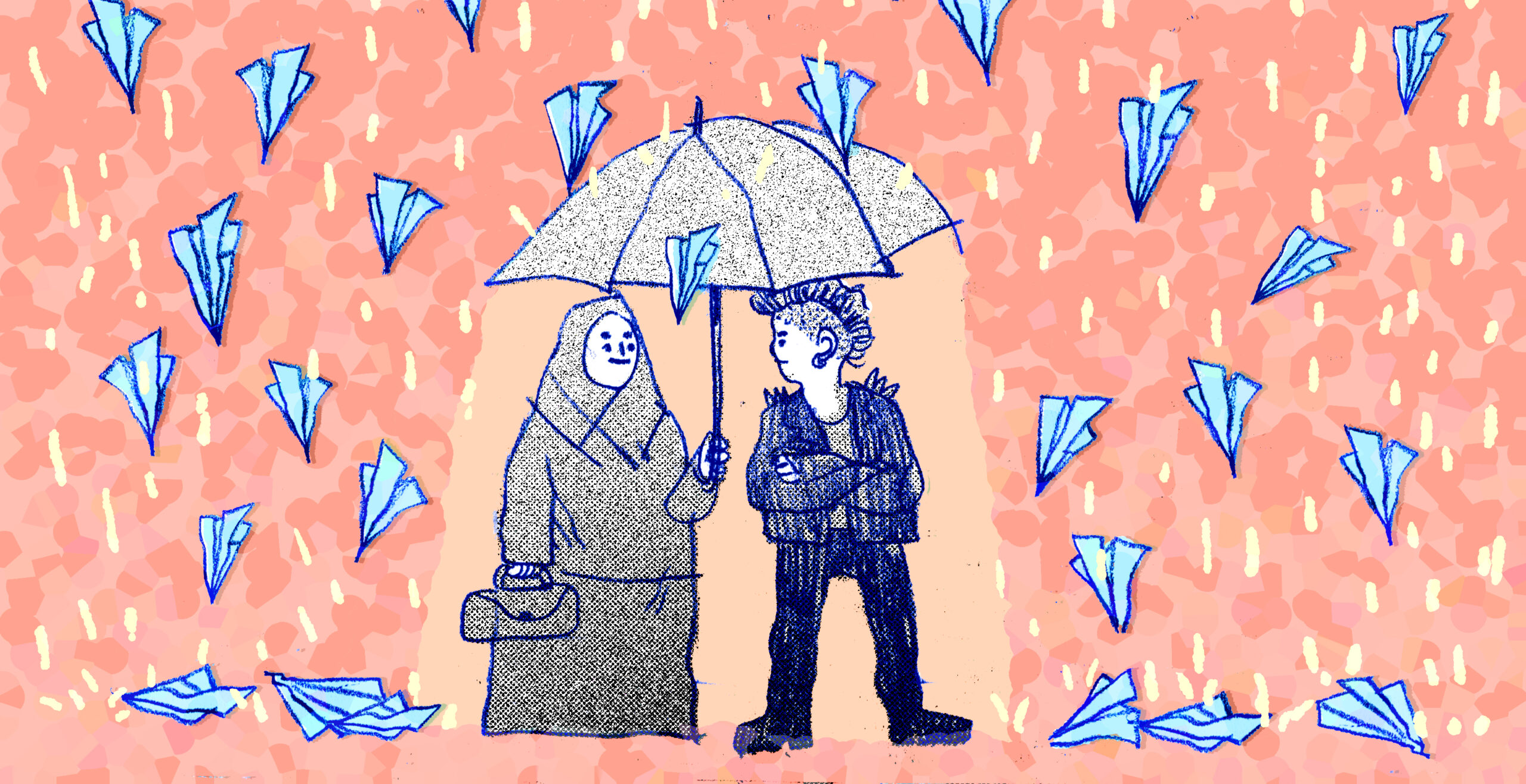
    Paper cranes
    Your words feel like rain
    Between tiny showers and heavy downpours
    Looming thunderstorms
    Invisible signs

    Drenched
    Same element recycled over and over again
    Be ready
    Bring your umbrellas out to play
    Shield yourself from all the criticisms and hate

    Same paper
    different planes
    I see the flipside of disdain
    God protects me like a cloak
    Rain as blessing, not shame
    Cleanse the Earth
    from pollutants we create

    Same rain
    Different planes
    I see God’s view
    I accept pain with grace

    As adults, we see things in black and white. We tend to be set with the way of thinking we have grown up with. When a Malay boy is asked to spot a difference between him and his Chinese best friend, he may not even mention the colour of his skin. He will talk beyond physical characteristics, to mention what he knows about his best friend, perhaps something like “Sam does not like sports as much as me”. If adults were asked the same question, it is not unlikely that we would explicitly or implicitly make comments related to faith and skin.

    Children are painted into the human beings we shape them to be. Just as the Prophet was to his people, the way we model our children is a reflection of our behaviour. When we tell our children not to mix with someone from a different race, our children will learn to create boundaries that they never planned on having. Mother used to tell me that I shouldn’t share my bottle with anyone, especially the Chinese, because I would be drinking with saliva that has babi (pig) on it. Mother would not let me lend my baju raya (malay traditional clothes) for racial harmony day because Mother didn’t want non-Muslim sweat in her dirty laundry.

    When the line is drawn between Muslims and non- Muslims, it stifles and strains the relationship. Muslims become exclusive to those who “believe,” and inevitably exclude those who do not.

    When I was young, I was taught that I was forbidden to be or mix around with gay people. Yet it did not stop me from feeling sad for my close friend who had confided and came out to me, when the news of her sexuality spread like wildfire. Even though she was a Muslim, her usual friends ostracized her and my Mother told me to stay away from her. I didn’t. If everyone excludes the one who’s different, who’s going to stay and listen to understand?

    I have always thought — how does it feel like to be on the other side of the fence? It took me a taxi ride with a Chinese uncle in his 60s to give me a new perspective. We were having a conversation on the weather when he jumped straight into a recount of an incident he had.

    “Malay cannot touch my hand? Yesterday a Malay auntie scolded me when I accidentally touched her hand to return her taxi change. Also, I am very scared to enter Malay house. Cause I eat non-halal food.”

    I paused for a moment to think and spent the next fifteen minutes explaining to the uncle on why the auntie may have gotten angry. Perhaps she had taken her ablutions (I explained what ablution means) and she would have to retake it if she touched his hand. Even though many people associate being a Malay as being a Muslim, how we handle ourselves still remains important. Sometimes what we do changes or affirms what people think of our religion.

    Dividing people as Muslims and non-Muslims can be problematic if it causes us to treat others differently. How can we show others what a beautiful religion Islam is if we alienate them? Change has to happen to build a harmonious society. The Prophet and his companions were able to build a harmonious society without treating those of a different faith as a separate part of the community.

    At the end of the day, everyone is on the same path, with the same beginning of birth and the same end of death. We all know when and where our life began. We are aware of how the present presents itself. But the future remains unknown till time catches us. It remains unknown to us, but known to the One who has the right to judge, unlike humans. Until then, we’ll seek to understand those who are struggling to understand the religion we try to preach. You’ll never know if the person you looked down on yesterday for sinning could be among the first thousand to enter the gates of Paradise we all want to enter.

    But alas, I don’t know anyone who isn’t struggling with their faith.

    _

    Wan Siti Zulaikha currently works as a freelance trainer with a vision to empower confident and resilient youths. She enjoys writing, and sees words as a powerful tool in sparking conversations on social and community issues people may be shy to speak about – all with the intention that readers would see and understand the human race from a vantage point of love and mercy.

    Illustration by Wan Xiang Lee

  • Editor’s Letter: Monolithic

    Editor’s Letter: Monolithic

    by Diana Rahim

    It is not surprising that the term ‘Monolithic’ can have negative connotations. It brings to mind an understanding that is reductive, and absolute. A sweeping, generalised way of perceiving a reality that is much more complex and nuanced.

    Not all Muslims are Arabs after all, or even from the same denomination, or necessarily share the same cultural practices. Not all women have the innate quality of being gentle or nurturing nor are men necessarily tough and pre-disposed to supposedly more ‘analytical’ thinking. Malays are not essentially lazy. Any kind of essentialism; any kind of belief that a person by virtue of belonging to a certain subgroup is innately anything is bound to be not only unscientific and untrue, but indicative of a serious lack of understanding. It could also be an indication of a refusal to understand, since present evidence is always available to debunk myopic, flimsy stereotypes.

    *

    The trouble with insisting on a singular, or monolithic, understanding or interpretation, is that it is almost always accompanied by an admonishment or even a hostility to diversity. We often hear it, for example, when some perceive the immense tradition and diversity of Islam in a simplistic and reductive way. They might call you a terrorist. They might call Islam a barbaric, patriarchal religion that endorses stoning and head-chopping. But of course we’re thinking, which Islam? The Islam of ISIS? The Islam revealed in patriarchal 7th century Arabia? The Islam that had gay and intersex custodians in Mecca? The Islam of the Nusantara (the Malay world)? The Islam of the Uyghurs?

    But Muslims too, despite being subjected to Islamophobia, can be guilty of believing, or demanding that Islam is a Monolithic tradition. A monolithic mode of understanding or belief in Islam can lead not only to a loss of diversity, but also cause damage for interfaith, and especially intra-faith relations.

    Since we’re on the topic then, let’s consider the issue of Monolithic perception when it comes to Islam. As a monotheistic religion, the centrality of the concept of Tawhid (oneness) may lead one to think that there can only be a single ‘true’ way. That in order for us to be as authentic as possible, it necessitates a ‘sameness’ or a single prescribed way of worshipping, or living, as a Muslim. This might explain why some Muslims even find themselves influenced by a creeping Arabisation, stemming from the perception that adopting the lifestyle, language or even the garb of a foreign community would make one closer to “true” Islamic practice. 

    Simply said, the urge may be strong to perceive and understand Islam as monolithic, leading one to shun everything that does not fit the narrow and restrictive view that is seen as the only legitimate way. But such a view simply cannot hold for a religious tradition spanning over 1400 years and 1.8 billion adherents. Any kind of obsession for a ‘purist’ form of ideology is a red flag for dogmatic thinking. It also leads to a disinterest in communities or people who do not practice the same way as you do, since they are not considered ‘legitimate’ and therefore not worth knowing. This may be as benign as ignorance, but even as hostile as outright rejection and demonisation.

    For example, if you are Sunni, which most Singaporean Muslims are, think of how much you actually know about your fellow Muslims from the Shi’a sect. What little Sunni Muslims know of the Shi’a sect is often from untrue stereotypes that insinuate, or directly accuse them of being ‘orang sesat’ (deviant). The image of Shi’ism is often crassly reduced, for example, to an image of a group self-flagellating themselves during ashura (a practice, which by the way, is condemned and outlawed by the highest Shi’a religious authorities).

    Rarely do Shi’a-hating Muslims get over the fear of difference, the fear of seeing a group that practices Islam in a way that seems so different (regardless of whether it is really so different), to actually find out and read a basic article that explains Shi’ism. But then, people rarely respond rationally to irrational fears that have, more often than not, been socially conditioned through the language and imagery employed by the dominant community. It would feel easier after all, if all Muslims were to follow the same path that you believe is the ‘right’ one.

    Recently, a letter called for MUIS to debunk Sunni-Shia fallacies, citing the fact that a fatwa supported by 500 Muslim scholars that accepts Shi’as within the fold of Islam. But if such a strong statement of the validity of Shi’ism is not enough, one wonders if the endorsement by a religious body is enough too. It may seem natural, in Singapore, to appeal to the authorities when it comes to a problem rooted in group differences. But perhaps it would be more powerful if we could envision another way. The option is always open to debunk those fallacies ourselves. To do the work on the ground of reaching out, sharing stories, information, and debunking stereotypes. Hopefully, that’s what we can do in our small way with the upcoming blog posts. And let’s keep the momentum when it comes to sharing marginalised voices, supporting them, and giving them visibility and space

    *

    There is this prevalent belief and almost instinctive conviction that peace is to be found in ‘unity’ or ‘sameness’. That a feel-good idea of ‘unity’ where conflict is not visible is the ideal situation we want in society. But these are just kinder, vague, and camouflaged ways of desiring for some kind of hegemony, and hegemony almost always comes with an abuse of power. In order to enforce the dominance of one social group, or one dominant framework instead of another, others are necessarily subdued, whether through coercion or through direct violence. In other words, Monolithism is enforced.

    There is a tendency towards a kind of universalistic ethics when it comes to our conception of peace. We can be so discomforted by diversity that we think that an imposed hegemonic order that breeds monolithic views is one that is preferable. But dominant consensus is not necessarily indicative of peace, especially if such a consensus was enforced instead of being arrived at together. Such an order, if it is peaceful for us, almost always means that it is harmful and painful for others. True peace is perhaps a situation where we are unafraid of disagreement.

    For this reason, if our understanding of something, whether it is religion, ideology, or a group of people, is monolithic, it is often a cue that our understanding has been the result of power dynamics. To insist that a group of people can be reduced to a single story or image is an act of dehumanisation, and it is often a group with power that has the ability to dehumanise. To recognise that we might be given an impoverished, reductive view is thus a cue for us to seek more truthful, nuanced answers that will restore humanity to our society and relationships with different communities.

    The reality of our world — our communities, our countries, our religion, our gender, the experience of being part of any sub-group or identity — are often complex things that are difficult to reduce to a single image, word, or even a sentence. No person who understands this would feel comfortable to be made representative of a whole community. Yet those who insist on monolithic understandings, ways of seeing, and being, often do that for whole groups of people, beliefs, and experiences. It is perhaps time to consider that peace is perhaps not to be found in pressure to conformity and sameness, but instead in the acceptance of the diversity that is natural to the human experience.

    Perhaps we are not pure white light, we are the full spectrum of colour. There’s beauty in that too.

    __

    illustration by Wan Xiang Lee

  • Malay Ideas on Women

    Malay Ideas on Women

    I recently attended a talk about Malay Ideas on Women. One of the participants raised a particularly interesting point. She mentioned the popularity of Malay novels nowadays and the ideas on Malay women that they promote. 

    This got me thinking. Malay novels are insanely popular. In the public libraries, you have to place a reservation on the more popular titles because they just fly off the shelves! Novels like Ombak Rindu and Ayat-ayat Cinta even have dramas and movies based on them. This is all well and good for the Malay literature and media industry, however this is also troubling because the portrayal of Malay women in these novels, dramas and movies is still the stereotypical image of a traditionally “good” Muslim woman – someone who is submissive, listens to her husband, wears the hijab etc. Characters that do not fit this stereotype are usually typecasted as the mean girl who wrecks everything. They usually die at the end or lose everything or are never to be heard of again. Although there are very colourful characters in the novels, the character which usually emerges as winner is the one that fits the stereotype of a “good” Muslim woman. 

    I’m happy that Malay novels written by Malay Muslim women are gaining popularity but I wish that there is a more varied narrative and more diverse characters that emerge as the winners in the books.