Category: Mental Health

  • Dua Kalimah Syahadah

    Dua Kalimah Syahadah

    by Irie
    _

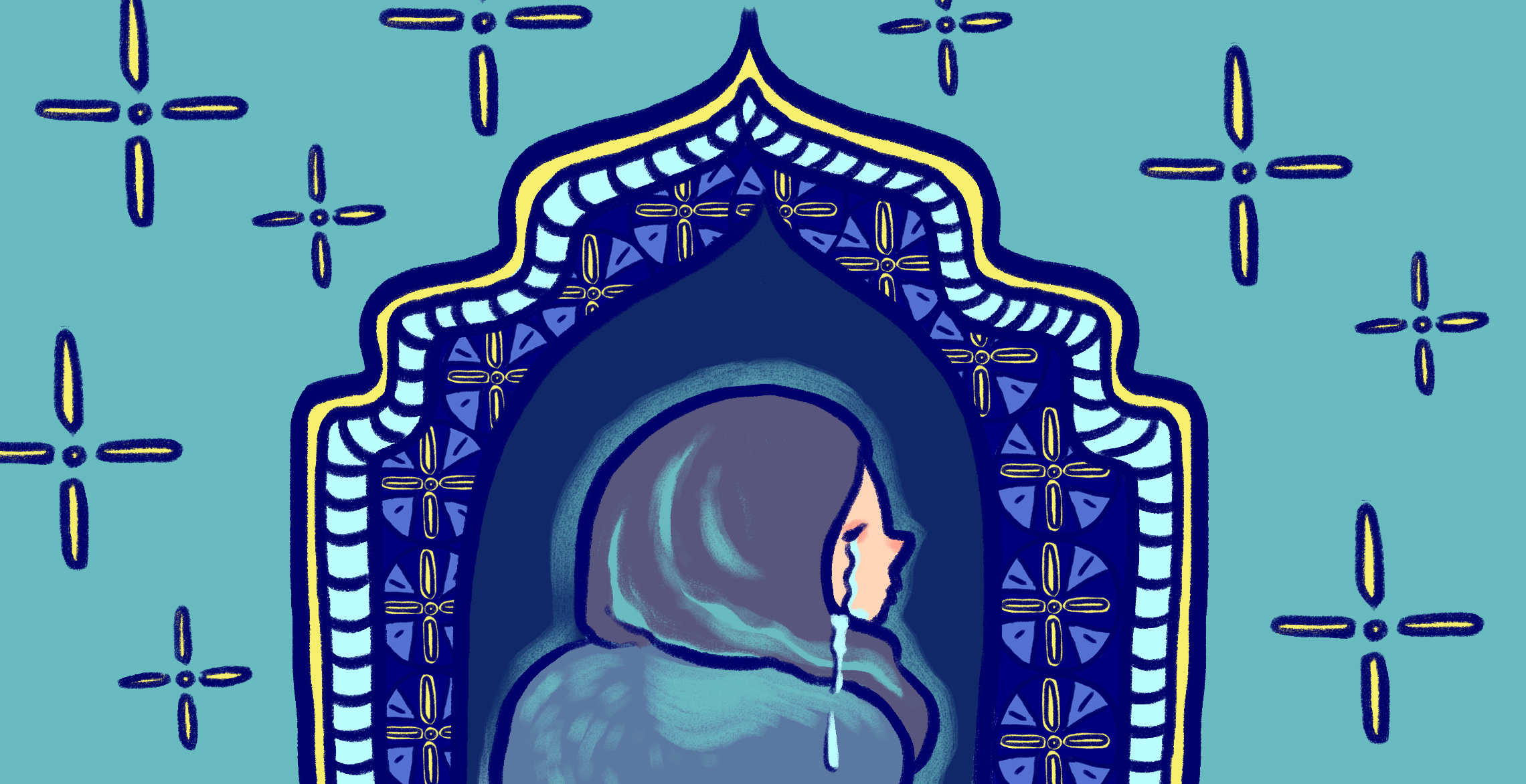
    i have been crying about dying
    and not-dying, all at the same time,
    keenly aware my consciousness will not be liberated:
    left to float in space. left to float in the void.
    left to float on and on, long after this mortal body
    and the mortal body after that and the mortal body after that
    and ten thousand mortal bodies after that
    i am condemned to existence.
    Allah sits on his throne, and laughs.

    I want to ask, who created You? how did You begin to exist?
    was there silence
    and then a sonic boom? i am trying to imagine these things, a sequence
    of events i will probably never be able to comprehend,
    and possibly this all might be sacrilegious,
    but all teachers i have ever had have taught
    me to go to the root of the problem.


    so why are there no answers? why are questions forbidden?
    why is Allah a dude? like, come on, divinity is male?
    they duct-tape my mouth then duct-tape me to the corner
    of the madrasah classroom. out of sight out of mind out of
    any hope for salvation, and I think about how no one prayed for the devil.
    who does he get to turn to, then? who do we get to turn to?
    I ask my friends who wear the tudung, how do you choose to sin?
    what do you tell yourselves, when you take the tudung off
    and kneel for another?
    I want to sincerely love god but I also want to sin
    and why are those things not allowed?
    am I a good Muslim if I’m only a good person?
    am I a good person if I’m a good Muslim? can I be a good person
    and not be a good Muslim?

    why am I trying so hard? if I say bismillah before I down some soju
    does that count? what threshold of depression is acceptable
    before I can rely on vices to cope? which is the bigger sin,
    suicide or fucking? this dunya is too short and the afterlife and
    how I will burn for all of this is too long, I know, but I just want to cease.
    if You won’t even let me stop being conscious, can I please
    just do that myself? blur out the edges a little, and not think
    about how even if I do kill myself I am just confining myself to
    a non-corporeal existence I am still fucking alive I am still fucking
    conscious I am still fucking depressed-

    if I do get to syurga, how does that work? do You take the bad chemicals away?
    do I start producing dopamine? or serotonin? or is the happiness that I am promised
    there
    all an illusion? I’m not sure I want to go to heaven if that’s the case.
    I just- I just want to understand, but no one else does.
    the ustaz keeps silent. the ustazah smiles and squirms and suggests
    that some things cannot be known. my dad for all his
    religious radio channels on the way to work will only tell me
    that if I pray I am safe. but what if I am not safe? who gets to be safe?
    who the hell are You to decide for any of us?
    like okay sure, You created us, whatever, I didn’t ask for it.
    what about like, Oprah? she does so much charity and doesn’t pray
    five times a day. how’s that fair? she’s going to hell? how about my friends
    who left Islam? or those who were never in it, but spend all their free time
    volunteering with children with autism and doing yoga and
    searching for enlightenment in ways that don’t consist of
    dua kalima syahadah?

    Allah sits on his throne, and laughs.
    I am condemned to existence,
    have been condemned since ten thousand mortal bodies ago.
    so I cry about dying, and not-dying, all at the same time:
    my consciousness will not be liberated.

    *

    As hostile as this piece seems, religion has been a double-edged sword for me. It did offer me the guidance, the solace I needed, when I was much younger and struggling with depression alone: but it has also been refined as a tool of abuse as I got older.  

    What I found, kneeling on my prayer mat, was nothing like what other people said or practiced or used against me. And when I was finally driven to drink, because my other vices were no longer enough to keep me sane, I couldn’t understand how this could be understood as sin. Anything that kept sobriety away from me, anything that made sure I didn’t have to be depressed or numb or suicidal, was a mercy, was the only mercy. My parents’ words about alcohol no longer made sense, as did many things, because nothing was black-and-white like the religion they had painted for me. This made so many things difficult, and continues to do so. But I like to think that as much as I suffer and shun God at times, Allah knows best, and will bring me mercy in whatever way. So “Allah sits on his throne, and laughs” even as I paint him cruelly.

    _

    Teh cino advocate, intersectional feminist, and burgeoning poet; Irie has a lot of questions she tries to explore in the work they do. They believe in creation as resistance, and hope to one day achieve an understanding of the world, whether through Allah or not.

    Illustration by Ishibashi Chiharu

  • Fear of the Afterlife & Panic Attacks

    Fear of the Afterlife & Panic Attacks

    By Naj
    __

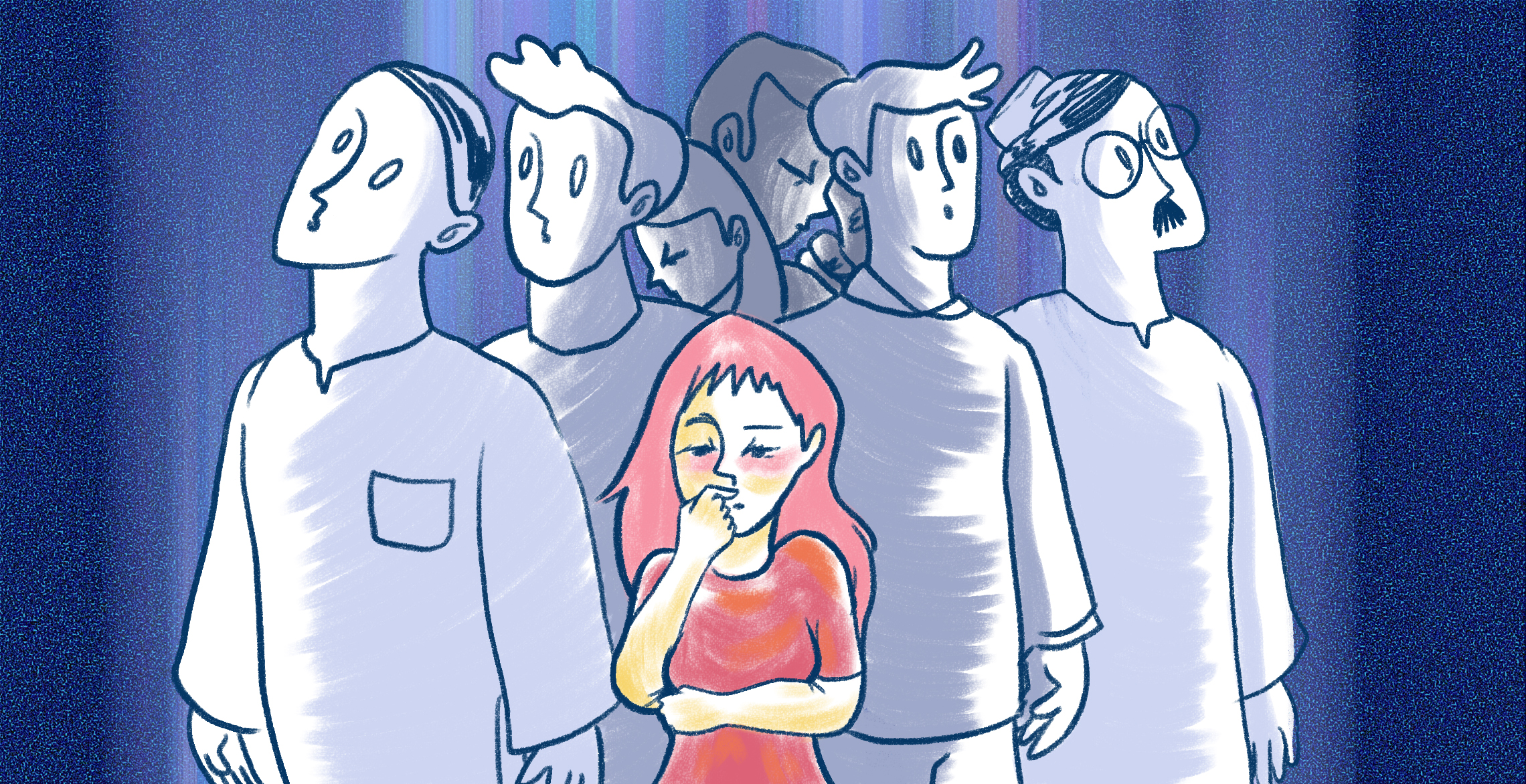
    I always feared the afterlife.

    So when I experienced my first onset of hard-hitting panic attacks, I thought that I was going to die and be thrown into that world I feared the most.

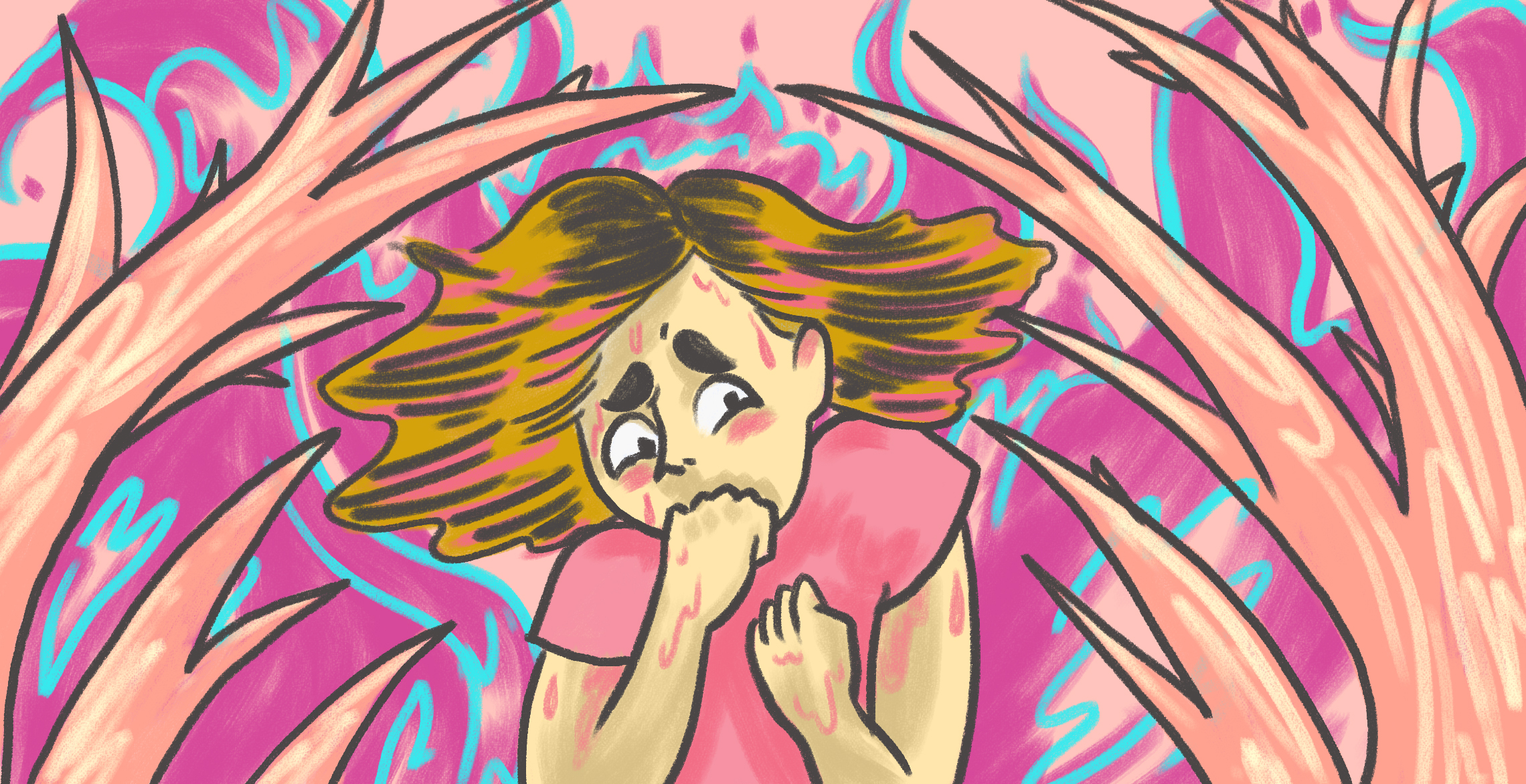
    My first panic attack struck when I was 16. I was spacing out in Malay class when I caught a brief glimpse of what looked like a white figure at the side of the classroom. Before I knew it, I experienced a painful throb in my heart. It felt like my heart was producing one final beat before ceasing to beat completely. In came the heart palpitations, the breathlessness, and that sense of impending doom which made me think I was encountering a heart attack, and inevitably, death. The thought made me spiral into a full blown panic attack.  

    I spent the rest of the day trying to calm myself down, but my heart continued palpitating, my hands and my feet were cold, and I couldn’t breathe properly. On the way back from school that day, I received a phone call from my mum. My maternal atuk (grandfather) just passed away.

    I was summoned to nenek’s (grandmother’s) house right after. Most of my close relatives were already gathered, and I approached atuk who laid on the bed, life robbed from him. I can’t believe he passed away so suddenly. Everywhere, people were crying, people were reciting the surah yasin, and people were praying that God wouldn’t take away their lives prematurely. As the topic of mortality plagued the air, I wondered: was I next?

    My family slept at nenek’s house that night and my panic attacks did not stop. As I laid on the mattress, I was wondering if the malaikat maut (angel of death) was lurking around, waiting to take my life next. I was fairly certain he was. I wondered if the malaikat was actually the white figure I saw during Malay class. I finally managed to fall asleep, only to dream that the malaikat maut taking away my life. I couldn’t sleep afterwards.

    The next day I watched as atuk was lowered into his grave. I didn’t wish that he’d rest in peace. I wished that he would be free from the siksaan kubor (punishments of the grave). While everyone left, I was reluctant to step away. Apparently, after the last person took seven steps away from the grave, the siksaan kubor would commence.

    I remembered what we were taught in religious class. The first thing that would happen when you were lowered in the grave, was that the two malaikats, Mungkar and Nakir, would flank you on either sides. They would then question you: “who is your God?”; “who is your prophet?” It sounds simple, except you wouldn’t be able to answer those questions yourself verbally. Only your body would be able to do the answering for you. Whether you were able to answer them or not was reliant on the amount of prayers you did in your life. If you couldn’t answer, a variety of punishments would commence. Some include being engulfed in fire, being wrapped in metallic chains causing one to bleed, and having a rock dropped upon you, crushing your skull. These punishments would continue on until the day of reckoning or judgment day.

    Judgment day (which was the stage before heaven and hell) had its own set of punishments, and the list is truly extensive. They mostly involve people being resurrected in less than favorable forms, such as having fire in the pits of the stomach, having your head in the place of your genitals, among others. All of this precedes going to hell.

    The afterlife is truly sadistic and punitive. This made it tough for me to get out of my rut. For the days that followed, I had recurrent insomnia and anxiety. I tried to tell my parents everything that was going on but they were dismissive – my mum told me to “stop saying such nonsensical things” while my dad told me “these were the whispers of Syaitan.” When I told my mum I really feared for my life, she finally relented to having me checked.

    After the doctor checked my heart rate and blood pressure, he sighed and said “there’s nothing wrong with you.” I was relieved but it was followed by him saying “If you’re going to come here again, I’ll have to send you to the psychiatrist.” While he was dismissive, I was relieved to know there was nothing wrong with me. My mum however, took the doctor’s dismissiveness badly. She was angry that she had me checked for nothing. She told me “not to complain anymore and that I should stop thinking the worst.” After that, I began adopting a dismissive attitude towards my illness. While I got slightly better after the doctor’s affirmation, the problems were simmering underneath.  

    A few months after, my dad talked about a relative of his who passed away from heart failure. That was when my mum began reading up on it and spun a cautionary tale about how it happens even without prior warning, and that it can happen to anyone at any age. Hearing this was unbearable for me and I shut myself off in my room to be away from it. I couldn’t listen to any reminder of death, especially if it was related to a heart condition. That day, my anxiety began skyrocketing again.

    While being dismissive towards my anxiety worked for a few months, this time, it didn’t. This time I felt I was going out of control. However, when my parents invited me to solat jemaah (pray together) with them, I was finally able to center my mind on something else besides my anxiety. The mindless and meditative nature of prayer somehow eased my mind. At that point of time, everything clicked. Was this it? Was I meant to find solace in prayer? Was this the whole point of me getting a panic attack? Did God give me an anxiety problem to teach me to become more religious? I thought yes, it must be. And I was euphoric upon this realization.

    Doing prayer was just the antidote I needed for my anxiety. It feels good to pray. You feel you’re securing more points for the afterlife, and it gives you the assurance that you will be safe there. I felt good knowing I was doing all the much needed preparations to die. In this way, dying wouldn’t be so bad. If I were to die, I would die with my mind at ease, knowing I was sufficiently prepared for the afterlife.

    From then on, I became religious. I didn’t miss a single prayer and for once, I had no qualms wearing the hijab, something which I’ve absolutely hated for the longest time. I really felt God’s mercy, and I reveled in his love. This illness was actually the loving push he gave to steer me on the righteous path. And I was very thankful.

    My dad saw an improvement in my piety and he was really happy to see this change. He told me he was relieved that his efforts bore fruit – at least one of his children was pious for once. He told me that he was happy that I “dah tak tinggalkan solat” (no longer missed my prayers) unlike my brother. My dad hoped that my brother would soon see the light. I would just laugh uncomfortably.

    A few years later, when my paternal grandma was nearing her last breath, my dad was distraught. He was not only grieving the loss of a mother who had grown distant from him but he was worried about what her afterlife would entail. Because she hadn’t been praying, he really worried about whether she would be safe in the afterlife. He began performing prayers on her behalf. It was a sweet gesture which was not exactly altruistic. In the past, my dad would often remind my bedridden grandma to be closer to the religion and God. My grandma would ignore him, all she wanted in that state was to be given love and not a timely reminder about her own death. On a separate day, my dad told my mum he was afraid that he was going to be accountable for my grandma’s irreligiosity in the afterlife. My mum gave him hell for that.

    I was fairly certain then that part of my anxiety came from my father. The religion he was taught instilled fear in the minds of everyone. In their minds, God was a punitive being. If you contract any sort of illness, it is God’s way of telling you that you need to change your ways. If you miss one prayer session, you would be subjected to a 1,000 years in hell. If you didn’t contribute to Zakat, you’d be resurrected on the day of judgment with your stomach full of snakes. My dad knew every punishment for every sin like the back of his hand.

    I realized how pervasive the problem was when I went to my grandma’s tahlil, and the main prayer was something along of the lines of “O god, please do not let us die in an irreligious state”, “O god, please protect us from hellfire”, “O god, please free us from the punishments in the afterlife”. These weren’t the usual mindless recitations, as some people would tear up and wail when they said these things. They truly meant it.

    Because of this I began wondering how many others shared the same anxieties I had regarding death. Like me, most people turn to religion as a sort of shield to grant them safety in the afterlife. And many were performing rituals not out of love for the faith but out of fear for the afterlife and the punitive God. I never understood the appeal of religiosity and rituals until only then. And I still find this whole notion strange.

    It doesn’t help anyone. It doesn’t allow you to have a healthy understanding of death. It doesn’t allow you to have a healthy understanding of religion. It also doesn’t allow you to have a healthy mind. Nor a healthy body.

    And as for me, my mental illness story didn’t end in a happily ever after once I found religion again. Religion didn’t heal my mental illness. It was for a short while, a placebo for it, but more importantly, the cause for my illness.

    Recently, I read an article about religious trauma syndrome (RTS) and I realized that it aligned with my experiences. RTS is a result experiencing an authoritarian mode of religion—one which instills fear to deter you from doing “sinful” things. You are always in danger of sinning and eternal punishment. It has the ability to impair your cognitive ability by seeding self-doubt and it even causes severe emotional distress for others. Sufferers of RTS are usually indoctrinated with these beliefs in childhood. And because the phobia indoctrination in childhood is so powerful, the fear of the afterlife may last a lifetime.

    The thing with RTS is that it is often misunderstood, and many therapists cannot identify or understand it unless they went through an authoritarian mode of religion themselves. I remember talking to my counsellor about my fear of the afterlife and how it caused my anxiety. For the first time, he didn’t have a solution. He then proceeded to make me do awareness exercises.

    I was later referred to a psychiatrist who diagnosed me as having a panic disorder, characterized by my frequent panic attacks and my fear of dying. My physiological symptoms ceased after my psychologist told me that panic attacks do not lead to heart attacks and that people don’t die from an anxiety problem. However, what therapy wasn’t able to do was solve the root of my anxiety and allay the fears I had of the afterlife.

    Due to this, my fear of the afterlife will always be here to stay.

    _

    Naj is a 25 year-old who doesn’t know what she wants to do in life. She struggles between wanting to be a writer, illustrator or pastry chef. She previously had a stint at writing for a TV drama but now she’s jobless.

    Illustration by Ishibashi Chiharu

  • ‘Siapa nak jaga mak?’ A Narrative on The Mental Health Toll of Caregiving

    ‘Siapa nak jaga mak?’ A Narrative on The Mental Health Toll of Caregiving

    by Raudah Abdul Rashid
    __

    ‘Siapa nak jaga mak?’

    When Mak fell down again at night and had to be rushed to the hospital. I stayed overnight to take care of Mak and to make sure she was comfortable. No one asked me to. It was implied that I, as the only daughter should take care of Mak. It was common sense for anyone. It was the natural order of things for everyone else.      


    ‘Siapa nak jaga mak?’

    The doctor said Mak has dementia. Dementia? How could that be? Mak has always been a strong woman. She raised all 7 of us when Bapak passed away. She worked odd jobs cleaning people’s homes so we could get a decent level of schooling.

    On top of her dementia, mak also has other conditions. She has diabetes and high blood pressure. I, too, have diabetes and high blood pressure.


    ‘Siapa nak jaga mak?’  

    Everyone who comes over to visit brings food, fruits and gives money. Everyone asks how Mak is doing. No one ever asks me how I’m doing.

    I’m exhausted. I need a break. I need to be away from Mak.  I want to go back to work.
    I want to be with my friends at work.

    I want to have my life back. 


    ‘Siapa nak jaga mak?’

    Caring for Mak is exhausting. People think caring for an old person is easy.  They think most old people just sit there. They do not see the amount of time it takes to get her to bathe or to get her to eat. Taking care of my mother is more than a full-time job.  

    Furthermore, Mak has dementia. She forgets.  She forgets whether she has eaten and accuses me of starving her. She forgets that she has bathed and tells people I do not take care of her. She forgets that she has not taken her medication and accuses me of trying to kill her faster by over-medicating her. She tells everyone who comes to visit that I do not take care of her.

    Some people understand that it is the dementia, but most don’t. They go around telling stories. I know, I can see it in their eyes when they look at me. When they come over to ‘check’ on her, they make snide remarks and look at me from the corner of their eyes.

    I know the look.     


    ‘Siapa nak jaga mak?’  

    The people who come to check on mother tell me that I can get help to take care of her. They share the different schemes and services available for persons with dementia. They tell me about a day care centre that she can attend.

    They do not understand. I do not want other people to take care of her. I need to take care of mak. I have to take care of mak.

    It is my duty.


    ‘Siapa nak jaga mak?’

    What will people say if I place mak in a day care centre?

    What kind of anak perempuan (daughter) would I be if I cannot take care of my own mother; my mother who had seven children and was able to raise them single-handedly?

    During a religious class I attended when I was young, I remember the ustaz saying that ‘syurga di bawah tapak kaki ibu’. It means that your mother is the key to your entrance to Jannah. Who doesn’t want to go to Jannah?    


    ‘Siapa nak jaga mak?’  

    It is a role that is imposed on me.

    A role that is assumed on me.

    A role amongst all the other roles that are assumed and imposed on me.


    ‘Siapa nak jaga mak?’

    At the expense of myself. At the expense of my life.

    No one prepares you for caregiving. It is assumed that you would know how to care. Did your mother not care for you? Does anyone teach you how to care for an elderly?

    How do I ask for help?


    ‘Siapa nak jaga mak?’

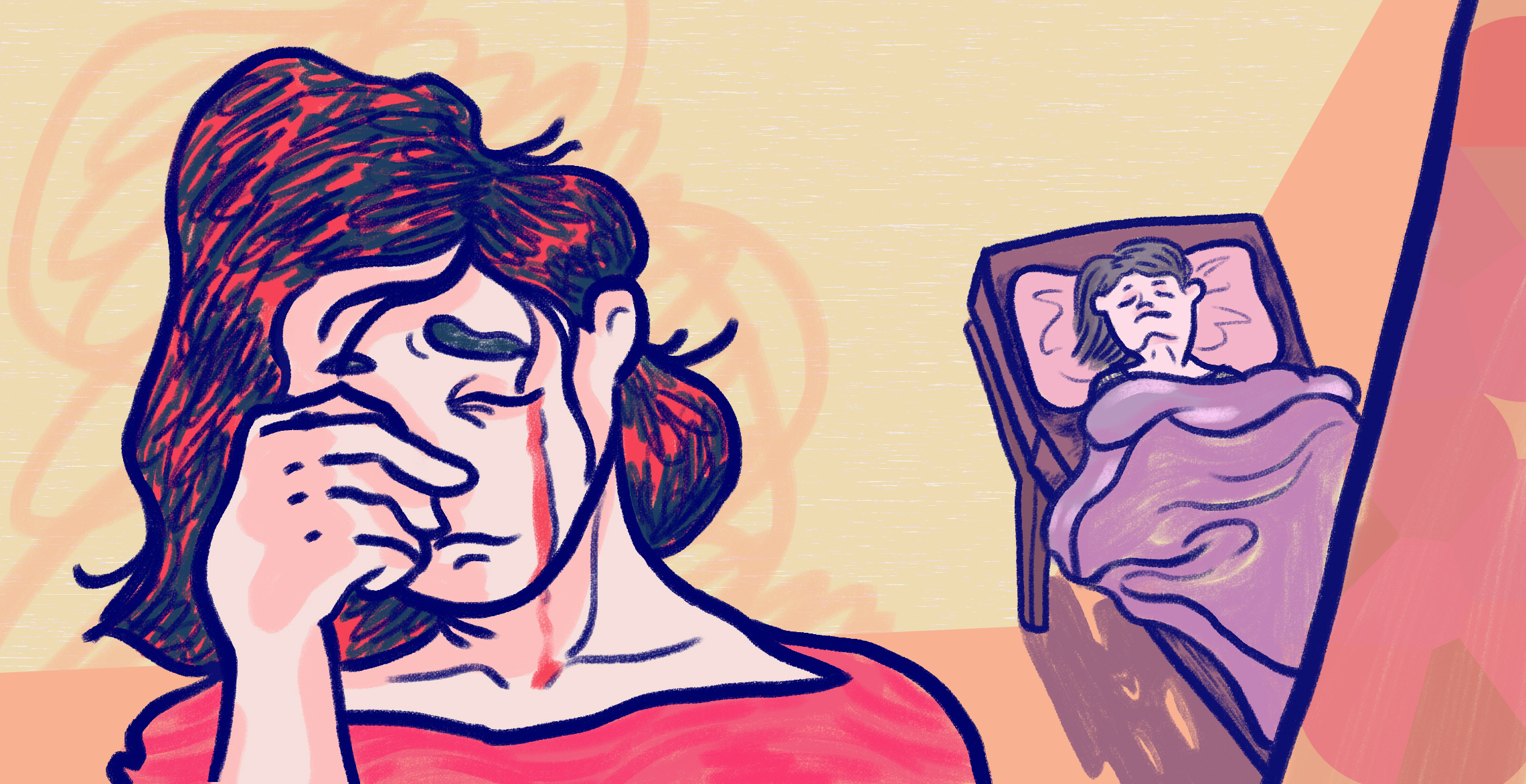
    No one tells you this but caregiving is a lonely journey. It’s only me and Mak. Every day, all day.

    I can feel myself losing it.


    ‘Siapa nak jaga mak?’

    I need help. I’m drowning. I don’t know how to do this anymore.

    I can feel myself spiralling downwards.

    If I don’t seek help soon, I might hurt myself.

    I might hurt Mak.


    ‘Siapa nak jaga mak?’

    Mas dah tak boleh jaga mak lagi

    Bukan Mas tak nak, Mas tak boleh lagi

    Mas nak jadi gila jaga Mak.

    (I can’t take care of you anymore Mak

    It’s not that I don’t want to. I can’t.

    I’m going crazy Mak.)


    ‘Siapa nak jaga mak?’


    *

    This story is about Masturah, a single daughter who quits her fulltime job to provide care for her mother with deteriorating physical health and also dementia. The role of the caregiving is often unseen and unaccounted for. Caregiving can be a very lonely journey and is an assumed role that is undisputedly taken by the daughters in the household.

    The story details how the strain of caregiving eventually affects Masturah’s mental health with her presenting with mental strain and helplessness. Trainings and support services available may not reach out to all, especially in the Muslim community where caregiving is seen as a blessing and not a role that is taken on. The caregiver may not seek help and external care services may be shunned due to the belief that caregiving is a ‘family matter.’ The strain and loneliness of caregiving might lead to deterioration in the caregiver’s mental and emotional state. May we learn to take better care of each other and especially ourselves. May we show love and kindness to those noble souls who care for others.

    __

    Raudah is a plus-size Indian-Muslim single woman who mostly wears black or dark-coloured hijabs because she gets food stains on them. Dreams of garnering an army of social workers to change the world and advocate for social justice and equity for all.  

    Illustration by Ishibashi Chiharu

  • When the Lost get Found

    When the Lost get Found

    by A

    When I was 11, I remember coming up to my mother one day and telling her that something was wrong with me. To this day, I can still recall the exact words I said: “I think I’m missing a few wires in my brain.”

    Growing up, I was a very eccentric child. I did and said things that parents and kids alike would find incredibly strange. In fact, many people have asked my mother why she allowed me to behave the way I did. My mother was a firm believer of letting a child grow into their own person and honestly, because of the way I was brought up I am very comfortable with all my quirks and peculiarities. However, that isn’t to say that I didn’t have moments where I didn’t struggle as a kid. Due to my eccentricity, I was more often than not outcasted, bullied, or teased, and that definitely took a toll on my self-confidence.

    Later on, I discovered that I was naturally-gifted. I excelled in practically everything I did academically. It was in that moment when I realised I had something going and I could actually use it as the foundation for something more concrete. So that’s what I did, I spent the majority of my childhood constructing a persona for myself. It was more of a calculated dance, really, because everything depended on the situation I was in and the people I was surrounded with. I would then play up different parts of my personality to garner the attention of those around me. It sounds really weird now, but back then my self-worth came from the praises of grown-ups and jealousy of friends. I thrived off of that.

    For a while, everything was fine up until I turned 11 when I began to experience bouts of extreme sadness for no reason whatsoever. As any reasonable 11 year old did, I turned to the ever reliable Google for the answer to my woes. However, I was met with nothing but pages and pages of articles claiming that the only logical explanation for that kind of extreme sadness is God’s wrath and displeasure. Mind you, these weren’t just Islamic articles but rather something common across all faiths.

    To be very honest with you, my heart instantly shattered into a million pieces when my eyes scanned the screen. Almost overnight, I made hijrah and tried to become a completely different person. I stopped listening to music, only ever consumed Islamic media and wore longer, loose clothing in the hopes that God would somehow forgive me for my sins. Of course this didn’t work, and as time went by the sadness got worse; it was beginning to engulf me in its eternal darkness and it felt like no matter how hard I screamed or cried in prayer, God just didn’t hear me.

    When I turned 13, that was when everything changed. By this point of time, I had given up on the whole ‘pray the sad away’ thing. I was fully aware, thanks to a different corner of the internet, that I probably had depression which explained the agony that plagued me daily. However, a new person was going to enter the picture and this person would be the catalyst to what I now call a friend: bipolar disorder. I’m not going to go into details but I will tell you this–the amount of pain I have suffered under that person is indescribable. I remember praying for death every single day before I left for school because I couldn’t bear the thought of seeing them again. Anyway, their interference in my life set off an unforgettable chain of events.

    In total, I have attempted suicide about 4 times now. The first time I did so was in the month of Ramadhan when I was 13. I remember being on my period then and it was around 8 or 9 pm when I decided I wanted to die. My entire family had gone out for Tarawih prayers at the mosque as we live nearby one but because I was on my period I was left behind. I remember clearly having the debate in my head of “do I really want to die or do I just want to make the pain end?” I even tried calling the suicide hotline as well as some friends to try and talk me out of it.

    My best friend (bless her heart) picked up the phone and listened to me through my tears. At the end of it all she apologised because she wasn’t well-equipped to deal with a situation like this and told me to please ask for help from the proper channels. Instead of listening to her like I should have, I chose to follow through with my plan because I felt like I had nothing to live for. My period, to me represented my relationship with God being severed; like God didn’t want anything more to do with me and when my best friend “turned me away” I took that as a sign that I was not wanted anymore. When I woke up the next morning nauseous but very much alive, I was devastated. I had one job and I still couldn’t do it right. I felt like the most pathetic person alive.

    Not too long after that incident, I developed severe social anxiety. It was almost impossible for me to leave the house without having a panic attack because I was afraid people would find out about the depression I had been hiding all this while. At this point, my family was sure something was wrong with me but I wouldn’t say a word regarding the matter. In fact, during this period I only communicated by shaking or nodding my head. I did not make eye contact at all for 2 whole months. It was only after confiding to a close family friend that I finally got the help I so desperately needed.

    Navigating Singapore’s healthcare system is not easy and neither is it cheap, believe me I have seen the bills. It took me a year to finally see a psychiatrist and even then, it was because my mother begged the head nurse at the polyclinic to cut corners for us because my condition was worsening by the day. I consider myself incredibly lucky to be able to afford and have access to medication and therapy because without them, I absolutely wouldn’t be able to function like the person I am today. I am aware that medication and therapy may not be everybody’s cup of tea but if you are given the opportunity, give them a try; it may actually work. If it doesn’t there are lots of other therapies that you can try, try to find what suits you.

    For me personally, religion has played an incredibly huge role in my recovery. Religion is what gives me hope, it’s what motivates me to get out of bed every day and I think the main reason for that is because I grew up in a madrasah environment surrounded by Quranic verses and various Prophetic sayings. Ever since I was young, I’ve always found comfort and refuge in the Quran. Instead of singing us lullabies to get us to sleep, my mother would put in a Quran CD into our radio and let us listen to that all night long. As a result, I’ve grown attached to the Quran and see it as an inanimate companion. Now that I am much older, my desire to know and understand the Quran as well as its contents have served to show me that there is more to life than my illness.

    When I was 16, I remember that Ramadhan was the most torturous of all the months because it served to remind me of my first suicide attempt. Contrary to popular belief, suicidal people aren’t proud of their actions. What they do is purely to make the pain stop plain and simple. They don’t do it for attention nor do they do it to garner the sympathy of others, because let’s be honest–our society is anything but sympathetic towards us. On top of that, I was also facing the stress of O levels and all of this did nothing but turn me into an emotional wreck. Throughout the entire month, I was crying constantly.

    When I wasn’t crying I was having panic attacks. You can ask my family if you don’t believe me. I would try my hardest to fast because I still wanted to carry out my duties as a servant of God, but there were days where I just couldn’t get out of bed for Sahur. I would follow my family to the mosque every night for Tarawih prayers and without fail, I would always cry my little heart out in prostration. Even reading the Quran which I loved to do so dearly became a challenge for me as I would just burst into tears randomly. Despite all of this, I was the most suicidal I’ve ever been, which explained why my family made me follow them every night to the mosque for they didn’t want another repeat attempt. I fought tooth and nail just to hang onto my religion and ibadah because they were the only things I had left.

    Something I discovered during that treacherous time was this gem in Surah Maryam verse 23: (And the pains of childbirth drove her to the trunk of a palm tree. She said, “Oh, I wish I had died before this and was in oblivion, forgotten.”) This is the first time in the entire Quran where suicide is mentioned in a positive light. Now, if you can’t see the positive light yet hang on, let me now point you to the verse following it: (But he called her from below her, “Do not grieve; your Lord has provided beneath you a stream”). Take a moment to think about the fact that one of the greatest women to walk the Earth—Maryam—felt suicidal after giving birth to her son. A prophet at that. When I first read that verse, I sobbed like there was no tomorrow because it felt like God was talking to me directly and that He validated my pain, anger and sorrow. My illness is real and I am not a bad Muslim for being mentally ill. Then the verse following it, was a reminder that at the end there was a reward for those who are patient with the adversities they are afflicted with.

    I know that I’m still young and I have a long way to go before I can go around telling people that I’ve tamed the beast within me, but I hope that my experience can help other people especially those who are younger and still trying to come to terms with their diagnosis. In fact, I actually have a lot of hopes with this piece but at the very least I hope your takeaway is that mental illness is a very complex issue and cannot be pin-pointed to just one factor but rather, is a result of multiple factors.

    Much love to all the readers and my well-wishes to the dreamers.
    _

    A is an ever curious 17 year old student living with rapid cycling bipolar disorder. Her zealousness in life and love for all things pink are the first things people see; but peel that back and you will find creativity and empathy hidden inside. Her only wish is to better the world, one way or another.

    Illustration by Ishibashi Chiharu

  • What NOT to Say to a Muslim Struggling with Their Mental Health

    What NOT to Say to a Muslim Struggling with Their Mental Health

    by Nurul Afiqah
    __

    It’s ironic how difficult it can be to find comfort among religious people when religion itself is supposed to be a source of comfort. Mentally ill people seeking support from among their friends and family in the Muslim community are often met with ignorance wrapped in well-meaning, faith-inspired advice.

    I reached out to my Twitter followers with the question,

    “What are some unhelpful things Muslims have said to you regarding your mental illness.”

    The responses I received are arranged into themes. I have tried to explain why these responses are unhelpful.


    1. Minimising the problem

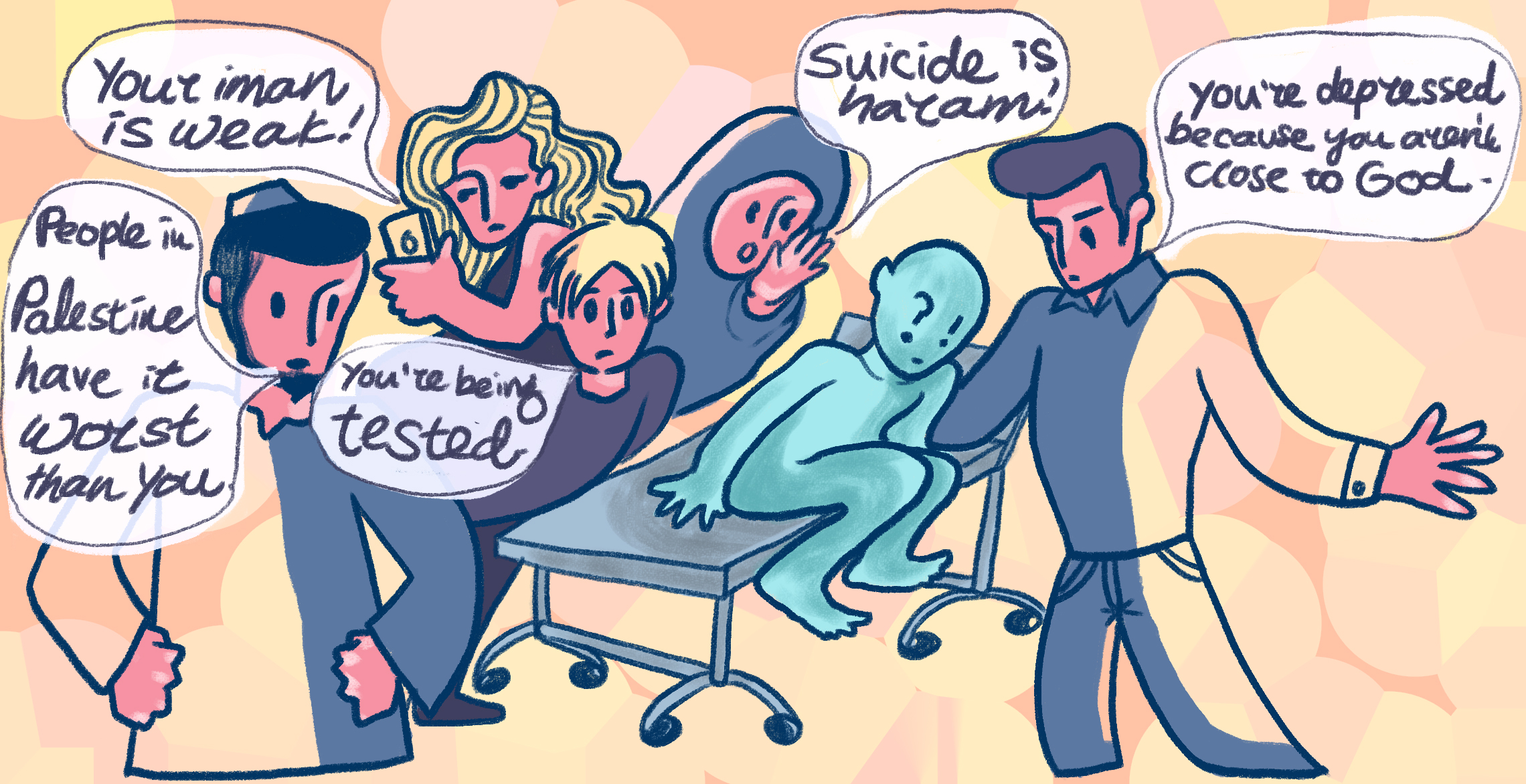
    “You know, people in Palestine and other Muslim countries have it worse than you. If you think your problems are bad, remember that others are having it worse.”

    “If you were a little more grateful for what you’ve been blessed with, you wouldn’t be so sad.”

    When a problem is deeply affecting a person, insisting that that problem is small can be very invalidating. Just because you, or someone you know, was able to cope well with a similar problem doesn’t mean that everyone else will be able to. Personal truths are not universal truths. Accept that people’s life experiences will vary greatly.

    Writing off mental illness as a problem of ingratitude is also unhelpful. Mentally ill people are often grateful for the various blessings in their lives. They still feel depressed or anxious despite this gratitude. It is important to note that gratitude boosts mental wellness in a neurotypical person but often may not have the same effect for a mentally ill person.

    Moreover, many mentally ill people feel guilty for being mentally ill. Calling a mentally ill person ungrateful only strengthens their guilt. Avoid guilt-tripping as it sets back their recovery process.


    2. Implying causal relationship between mental health and religiousity

    “You’re depressed because you aren’t close to God. Only in God will you find peace.”

    “You are depressed/have anxiety because you don’t pray. If you pray, insya’Allah your situation will be better.”

    “Cleanse yourself with wudhu.”

    “This is what happens when you don’t pray 5 times a day.”

    “You should read the Quran to deal with all mental illness.”

    “You are too caught up with the world’s affairs.”

    If mental wellness was directly proportional with religiosity then no religious person would struggle with their mental health. However, the reality is that many religious people struggle too. Similar to how religiosity does not protect one from physical illnesses, it does not protect you from mental illness.

    Correlating mental wellness with religiosity is also a kind of victim-blaming. It is as if the mentally ill person is to blame for their own mental illness. Rest assured, nobody wants more for the mental illness to be well-managed than the person struggling with it themselves. Often, existing coping mechanisms have already been exhausted and they have already sought all the help accessible to them. Their mental illness persists because mental illness is complex. No single coping mechanism is sufficient to manage a complex illness. Simply increasing one’s prayer will not help.


    3. Attacking existing support network of mentally ill people

    “You have this and that mental disorder because you don’t associate yourself with the right people thus it affects your mindset (negativity).”

    Encourage the healthy relationships that a mentally ill person has. Mentally ill people are prone to socially isolating themselves when their mental health is low, even from people close to them. Suggesting that a mentally ill person should distance themselves from their existing healthy support systems is detrimental to their recovery. Do not take a person’s mental illness as an opportunity to express disapproval of healthy relationships that you personally dislike.


    4. Insistence that there is a greater purpose/meaning to the suffering of the mentally ill

    “You’re being tested.”

    “God knows you are strong enough to face this.”

    To insist that someone is strong when they feel vulnerable can feel very invalidating. When someone is allowing themselves to express their vulnerability, grant them the safety to do so. Do not impose ideas of strength unto them.


    5. Equating mental illness with supernatural disturbance

    “Your body is infested with jinns!”

    “You don’t pray and read the Quran and now jinn have disturbed you.”

    “Depression is just shaitaan.”

    As mental illness is invisible, it is tempting to attribute it to the Unseen world of jinns and shaitaan. This is not only untrue but unhelpful. A supernatural problem might require a supernatural solution. However, mental illness is a complex problem influenced by many factors of the Seen world. As such, many methods in managing mental illness lie in the Seen world. Self-care, seeking professional help, and strengthening social support systems. These are just a few of many reliable options in the Seen world that mentally ill people can seek to help manage their illness. A person who truly cares about the recovery of their mentally ill friend or family would help them access these Seen world options first.

    (Though mental illness is not caused by jinn disturbance, I feel the need to address the tendency for Muslims to correlate jinn disturbance with religious deficiency. It is a concept mentally ill Muslims often have to contend with. Jinn disturbance is not due to a lack of religiosity. Many of our Prophets have been disturbed by jinn. Implying that mentally ill Muslims are simply disturbed by jinn because they are not religious enough often hurts their relationship with God and may serve to distance them from God instead of bringing them closer to God.)


    6. Demonising people with suicidal thoughts

    “Don’t you know suicide is haram.”

    “If you feel like you want to die it means your iman is weak. You should never feel that way.”

    “How can you say that? You will go to Hell.”

    People who are suicidal have reached the point where they are desperate to end their suffering. Due to the stigma surrounding mental illness it takes a lot of courage and trust for someone to open up about having suicidal thoughts. The last thing they want is to be shut down and made to feel heretical for having suicidal thoughts that are beyond their control. Being demonized for having suicidal thoughts can also make one feel alienated from God.


    7. Discouraging mentally ill person from seeking treatment

    “Taking antidepressants can cause problems in the future when you have kids.”

    “Allah never said to go to the doctor for things like this.”

    There is nothing in the Quran that discourages treatment for illness, be it mental or physical illness. Additionally, God the Most Merciful exhorts us to relieve others of their suffering. Seeing a psychiatrist, counsellor and taking medications can be a great help in managing mental illness. We as Muslims should encourage the mentally ill to seek treatment, not discourage them.

    (Literature linking fertility issues with antidepressant usage remains sparse. It is unclear as to whether reduced fertility in women taking antidepressants is due the effects of the antidepressants themselves or due to the underlying depression.)

    In conclusion, anyone with a body can become physically ill. Similarly, anyone with a mind can struggle with their mental health. Let’s do better for the mentally ill in our community by creating more safe spaces for them that allow them to feel validated and supported in their experiences.

    I would like to thank @anywalien @communstani @elly_ana_ @failedsakura @Fatihah_24 @richteacookie @River_Niles @xemnenas and several others, who would rather remain anonymous, for responding to my Twitter question. This article would not have been possible without their valuable input.

    __

    Nurul Afiqah is passionate about social justice issues, in particular, local interfaith and inter-racial issues. She is strongly introverted and enjoys Kpop and duck content in her spare time.


    Illustration by Ishibashi Chiharu

  • Editor’s Letter: Mental Health

    Editor’s Letter: Mental Health

    by Diana Rahim

    It’s hard being a person. Nobody truly tells you this, nor are we really encouraged to look into this fact deeply. As a society, we are uncomfortable with confronting sadness and despair, and would rather concentrate on a superficial, easy-to-understand pursuit of happiness. We are taught to meet our basic material needs, to obsess over our educational and career paths, and to succeed in our society. Far less emphasis is placed on meeting our very important psychological and emotional needs, and in fostering the kind of habits that are emotionally healthy not just for us, but in our reactions to others as well. Very often, even basic emotional responses and sensitivity is stigmatized. Just think of common, dismissive phrases one often hears – “Don’t be so sensitive,” “You’re being oversensitive,” “Why can’t you take a joke?”

    In truth, I truly believe that to see someone express emotion, sensitivity and vulnerability threatens the stability that some people have taken pains to sustain to cope with living in world that can be insensitive and indifferent.

    In describing what I feel to be the deep undercurrent of despair that I think lies within so many of us, especially younger ones, I often mention the fact that every school I have been to has had a suicide. I say this because the epidemic of mental health crisis, depression, and unbearable anxiety, is rooted very much in the way modern (especially capitalist) societies are organized and how people are treated, and it is experienced as early as childhood in the schooling system.

    It is there where we experience the pressure of group dynamics, the shame of classism, the neoliberal demand to succeed as individuals and to have our worth defined solely by our ability to be successfully productive. It is there where we learn that in order to feel respected and valued by those in authority, we have to live according to their rules no matter how painful, unnatural (or even unnecessary) such rules can be. And of course, some people are less aligned to the enforced standard than others, and such people are considered wayward and face more stresses.

    I have to mention the fact of a person’s identity in relation to power because it is undeniably connected to the issue of mental health. While it is true that mental health issues affect people of any class, racial, or gender background, people from marginalized groups are disproportionately affected by mental health problems.

    A recent study by the Institute of Mental Health (IMH) for example revealed that women in Singapore are more prone to depression than men, a pattern that is consistent in other countries (men however have higher rates of completed suicides). Women in the younger age group – between 18-34 years old — are more than twice as likely than men to suffer from major depressive disorder. Queer children (and certainly this very likely leads into adulthood) report staggeringly high rates of abuse and discrimination that in turn leads to mental health issues and even places them at high risk of suicide. There have been studies that also tracked Islamophobia to lead to long-term mental health issues (Islamophobia is also a gendered issue, with women who are visibly Muslim facing the brunt of hate crime attacks).

    Behind these statistics lie real social causes and explanations. Gendered issues shore up when mental health professionals explain women’s higher rates of depression. Experiences of discrimination for LGBTQ+ youth also unsurprisingly figure into higher risks of suicide. The point is that alleviating the inequalities in our systems, and seriously working towards a society that is less discriminatory is not only an issue of justice, but of public health.

    It also means that it is unwise to individualize someone’s mental health struggle as simply a personal problem or just an issue of chemical imbalance. It’s an easy cop-out of interrogating deeper, more systematic issues at play. Those who struggle are often victim-blamed for their own condition, being told that they are at fault for their own suffering. But a lot of times, this is simply not true.

    One of the most moving pieces I’ve read recently on pursuing a more holistic approach to understanding mental health problems was by Johann Hari. I will share the following quote from his article “Is everything you think you know about depression wrong” on The Guardian, though the whole piece is worth reading in full (please do!):

    “In its official statement for World Health Day in 2017, the United Nations reviewed the best evidence and concluded that “the dominant biomedical narrative of depression” is based on “biased and selective use of research outcomes” that “must be abandoned”. We need to move from “focusing on ‘chemical imbalances’”, they said, to focusing more on “power imbalances”.

    After I learned all this, and what it means for us all, I started to long for the power to go back in time and speak to my teenage self on the day he was told a story about his depression that was going to send him off in the wrong direction for so many years. I wanted to tell him: “This pain you are feeling is not a pathology. It’s not crazy. It is a signal that your natural psychological needs are not being met. It is a form of grief – for yourself, and for the culture you live in going so wrong. I know how much it hurts. I know how deeply it cuts you. But you need to listen to this signal. We all need to listen to the people around us sending out this signal. It is telling you what is going wrong. It is telling you that you need to be connected in so many deep and stirring ways that you aren’t yet – but you can be, one day.”

    If you are depressed and anxious, you are not a machine with malfunctioning parts. You are a human being with unmet needs. The only real way out of our epidemic of despair is for all of us, together, to begin to meet those human needs – for deep connection, to the things that really matter in life.”

    People are often unkind or unable to better empathise with those who struggle with their mental health because they reductively view it as a personal affliction. But if we can see that the epidemic of suffering today is a natural psychological response, our brain’s way of telling us we can’t cope with such a world, then we could perhaps see that more can and should be done to make our society a more bearable and healthier place. One where discrimination is acknowledged and tackled. Where people won’t have to be driven to high levels of stress due to low wages. Where living a decent life is an affordable thing to have instead of considered a privilege. Where school systems are better refined to respect a child’s creativity and autonomy instead of stifling or resenting it. Personal worth has to not be tied to personal productivity, which in our times is leading to more mental distress and isolation.

    It is not just stigma that has to be unlearned, but better responses to suffering that has to be learned. We need to actively learn how to respond when someone has an anxiety or panic attack. How to respond to someone who is depressed or who is having a psychotic episode. And just as importantly, we also need to learn how to take care of ourselves if we act as caregivers or support systems to loved ones.

    *

    Those who struggle with their mental health almost always additionally suffer from the ignorance of those who shame it. And just as mental health struggles can stem from very specific experiences pertaining to our identities and the subsequent challenges it brings, the stigmas faced can be very specific too.

    As Muslim women in this society, the conversation on mental health revolves around some big specific issues. In the submissions that will be published in this series, we can see how the language and framework of religion unfortunately can and has been used to invalidate or diminish a person’s suffering. There is often no theological basis to such dismissals (“you should pray more!” “Depression is shaitan”) but simply a more specific way to express the discomfort that people have when dealing with someone who is struggling with their mental health.

    The common invalidating and shaming responses that a Muslim woman receives can often be cloaked in the garb of the faith. For this reason, we must pay attention to the language or behaviour that is often employed against those who suffer.

    Perhaps it is because mental illness is an invisible affliction that reveals no bleeding wounds. A sickness that ails the mind. Perhaps its non-corporeal nature renders it susceptible to being invalidated through the lens of spirituality and religion. Historically, we do know that those who suffer from mental illness have even been thought to be possessed, spiritually afflicted, or beset by bad spirits.

    Of course, it is unsurprising that for people who organise their lives around their faith, a religious explanation is sought after in explaining mental trauma. It’s not that the lens of religion and spirituality cannot be used at all in trying to figure out a way to deal with mental health struggles and trauma. In fact, there is some acknowledgement here perhaps that mental illness is something that requires more than just a medical explanation and solution (it has to include, as aforementioned, one’s own personal history and experiences).

    The problem is that the tendency to simplistic and damaging methods or explanations (like possession) fail to truly and holistically understand the individual’s condition. The problem is that it can result in further trauma, impeding the person’s healing.

    Perhaps mental illness can be seen in some way as a kind of spiritual affliction, but not the kind that denotes possession or being haunted by bad spirits. Psychotherapist Michael Cornwall describes the experience of going through madness as a ‘transformative journey’; an extreme emotional state that occurs often due to the immense stresses and despair of alienating modern existence.

    Grief and confusion can be so profound that it destabilises us and cause great existential shifts that insists on being endured. The profoundness of these experiences are seen as ‘spiritual’ for some because it feels personally transformative. Such a reading would demand a solution that is far more acknowledging of this complex reality and addresses it, instead of simply thinking of the illness as a possession.

    Understanding this, there could be a way that religion and spirituality can be specifically used to the benefit of someone who wants such an approach in their healing process. For example, Stefania Pandoifo provided a more informed way of including Islam into the understanding and treatment of patients. Through researching history and patients in Morocco, she shows how there is a space for the relevance of contemporary Islamic cures for madness.

    *

    So many times, we know that to struggle with your mental health as a Muslim includes battling against accusations that you are spiritually weak, or that you have somehow invited this despair upon yourself through a lack of prayer, or a lack of faith. Of course this has no empirical basis, but such a conviction is not based on reason. It stems from a lack of understanding and ignorance about the reality of mental health issues and what living with it is like. To be depressed is not simply to be ‘very sad’ and to suffer from anxiety cannot simply be healed by surrendering to the will of God, especially since your anxiety can make it impossible to do that in the first place.

    The Islamic faith is replete with stories of prophets and sahabahs struggling with great despair in their lives. There were no words to pathologise any (if any) of their conditions at the time, but we would never deign to call these revered figures weak-willed or lacking in faith as they mourned the loss of wives, friends, family, or as they went through great sorrow, great pain, and the horrors of war (how many of them probably suffered from PTSD!).

    In fact the courage of our prophets in being able to overcome great sorrow and tribulations have always been an inspiring example to emulate.

    Religion can be part of the healing or coping process when it comes to struggling with one’s mental health, or supporting someone who is. But perhaps we should look towards these stories that affirm and validate the reality and difficulty of suffering instead of using the same, tiring religiously-laced platitudes that shame and invalidate someone’s suffering.

    Due to the exposure to so much damaging and invalidating attitudes, it is not uncommon for those who have suffered or who continue to suffer with mental health issues to have a difficult, even hostile, relationship with the faith. To be shuffled from one spiritual doctor to the next without your consent (this happened to a friend of mine) is a kind indirect violence that leaves you feeling powerless. To be consistently told that you are not pious enough by those around you when you were in need of love and validation can leave you insecure and coping with immense guilt.

    Often times, the employment of religion in the shaming and invalidation of your experience can leave you associating the faith with the trauma of your condition. It is understandable if the religion then is associated with pain to you.

    It is okay to have this difficult relationship, and you don’t have to feel guilty. The fact is, of course, it was employed wrongfully by people who prioritised judgement over truly understanding and giving you the care that you needed. Your piousness has no bearing over the reality of your mental illness. Unfortunately, unlike humans, mental illness does not discriminate amongst the religious or non-religious.

     It is not uncommon for you to have to completely re-evaluate your relationship with the faith during and after your journey with your mental health struggle. For some, their understanding and relationship of the faith deepened as it provided a support system that those around them failed to provide. For others, their relationship with the faith has been too damaged by the invalidation and pain that has been associated with it. None of this wrong. The only true thing is the reality of your experience.  

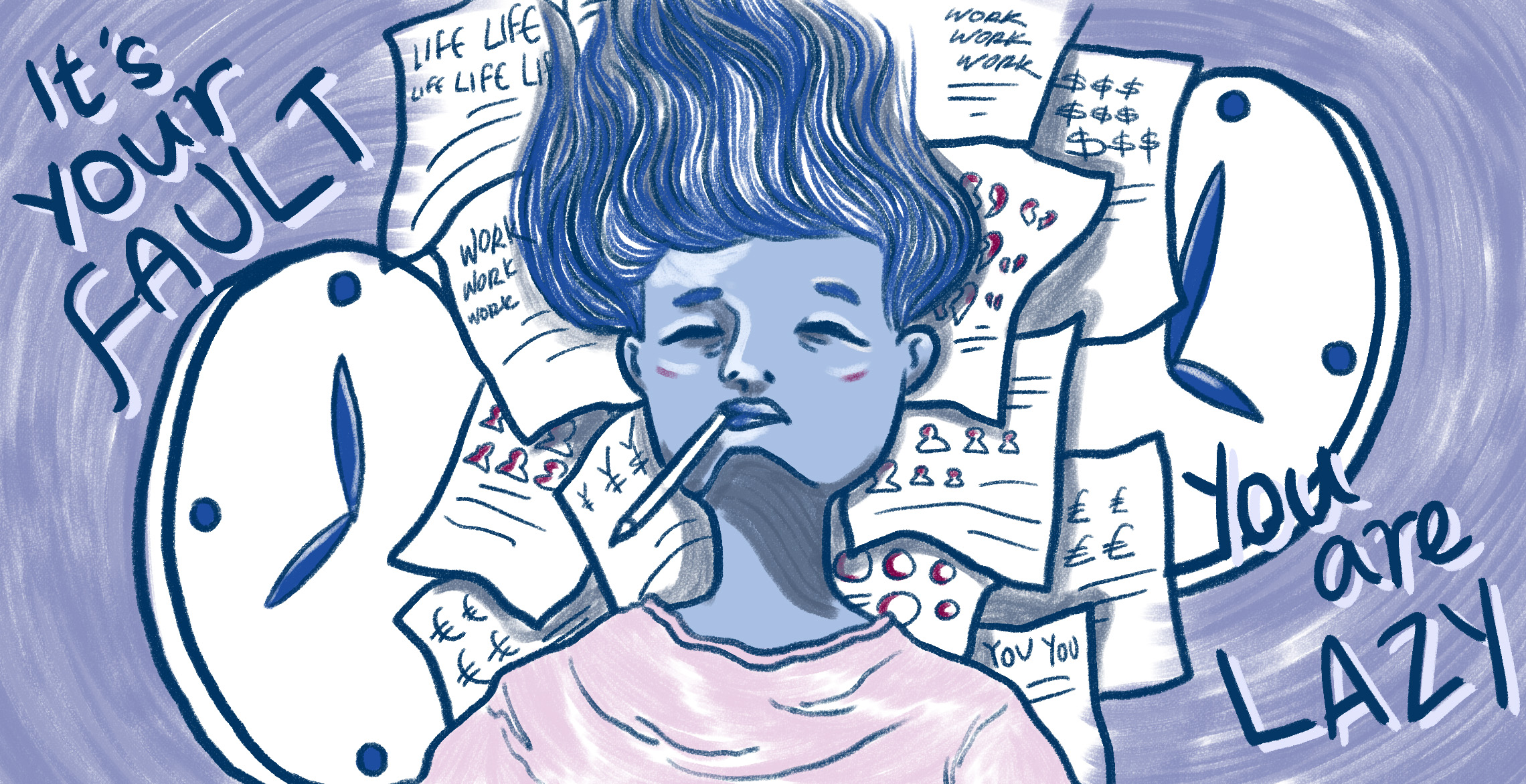
    If you are struggling with your mental health, I want you to know that your suffering is real, that your feelings are real, and that I know you are trying your best to survive. You are not selfish or lazy. There is no shame in your struggle, and I hope that you are taking healthy steps to recovery. There is a place for you in this world, and you are capable of helping and providing love and understanding for others too. You are not alone, though it might feel like that so completely. We are often isolated enough in this world. Though it may be hard, identify those who care about you in affirming and healthy ways, and don’t be afraid to reach out.

    May we take better care of each other, and may our good intentions, especially when laced with the language of religion, be full of love, not judgement.