Category: Marriage

  • For Love or Duty

    For Love or Duty

    by A Lady

    Marriage has never been on the books for me. My parents thought it unnecessary, hindering, and dooming. They firmly believe that humanity is fast approaching qiyamah (Day of Resurrection), and the time where true believers will no longer exist on the face of this Earth. No one qualifies to be our partners, so neither I nor my siblings are to get married. This notion is especially critical in my case for the fact that I am a woman and, as such, far more susceptible to being led down a deviant path. After all, in Islam, men are tasked to lead and hell is supposedly populated by far more women than men. A belief stemmed from inauthentic, weak, but unfortunately popular hadiths

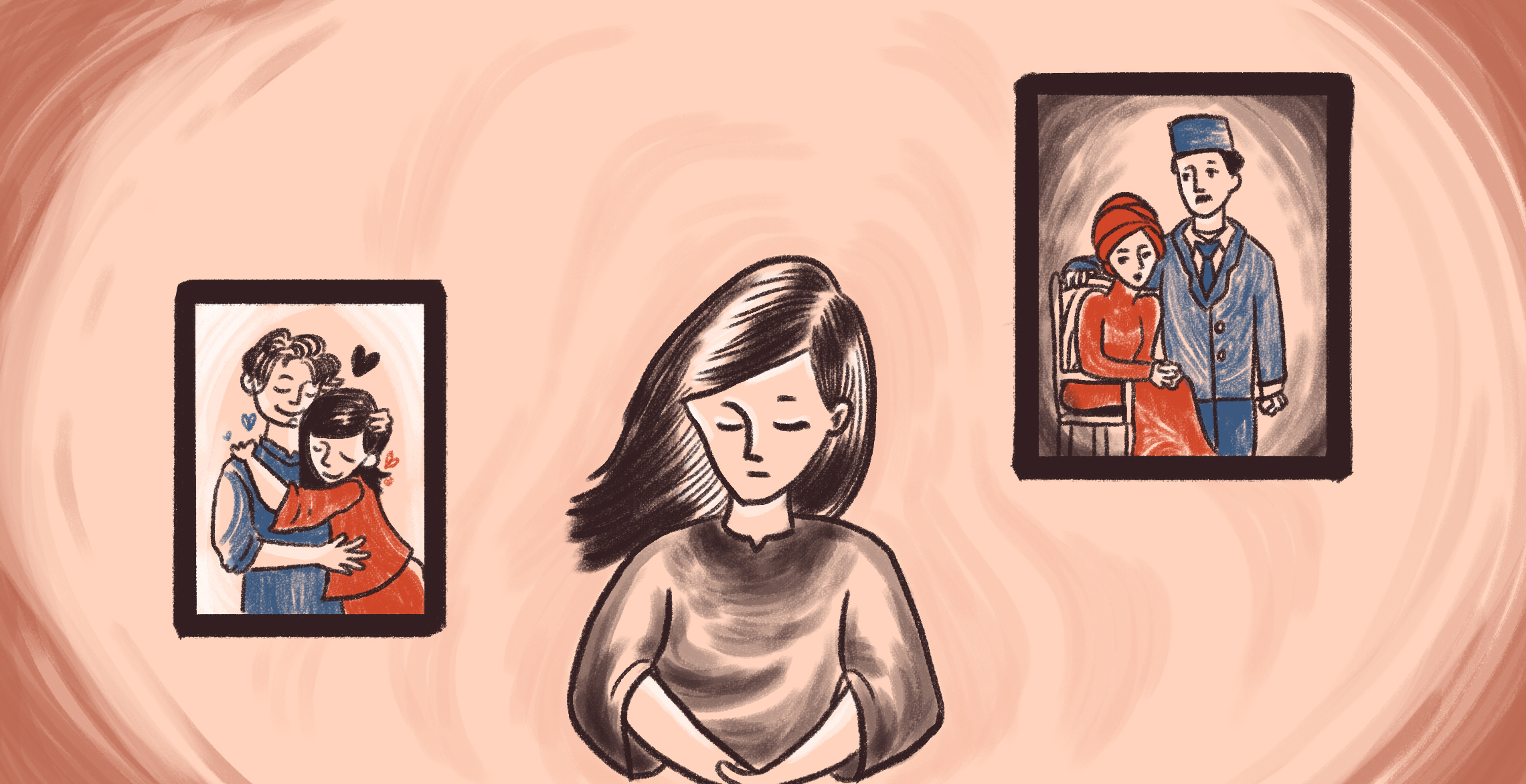
    Generally, I accepted my parents’ rule, resigned to the plans that they have for me, which is to take on all the responsibilities of the home, finances, and care-taking. I would manage their household and buy them a house using my name. Of course, I would have no real authority, much like a secretary who has all the information and know-how on her fingertips but who works in service to a powerful though ignorant superior. This was the future I consciously worked towards, always trying to find balance between being able to earn enough for them in a field that I could at least enjoy. I never once fathomed that I would want anything else. Until I met my wonderful boyfriend, to whom I am now engaged.

    He is my best friend and the love of my life, who is not only proud of my qualifications and achievements, but also encourages me to reach my potential and pursue my dreams. If he had not persuaded me, I would never have sent my writing out. I learned to step outside my comfort zone, see the life I have to live and make good of. So when he went down on one knee and proposed, I accepted, all stinky from moving day, dressed in this crummy T-shirt and sweatpants ensemble that I have been wearing for about a week.

    However, getting married will be a tremendously difficult undertaking for me. Perhaps it will be even a bigger challenge than the two biggest challenge in my life: weaning off coffee (never) and quitting video games to become a more responsible adult (never, never).

    See, he is Chinese and a non-Muslim. Even if he was Muslim, it would not have been any better. My family are Quranists, therefore religious minorities and some of the most marginalised (outright “outlawed”) within the Muslim community. For them, adherence to the hadith, or prophetic traditions, especially without critical and contextual inquiry is a no-go. For my parents, the limits of the human imagination need to be taken into account in the reading and interpretation of the Quran. The religious education I received differed greatly from my peers: namely, I have never once stepped foot in religious class (and frankly the idea of doing so is about as comfortable as a wedgie) and I have never heard an imam, ustaz or ustazah speak. Religious education constituted of listening to readings of the Quran and a lot of discussion work where my siblings and I would have to think about what a passage in the Quran is likely referring to in the context of the time, and what the message might be in today’s. On top of that, 7.30 to 8.30 pm was dedicated to silent reading and we had weekly trips to the library where we would have to borrow at least two non-fiction books to supplement our unorthodox religious education.

    After decades lacking in acceptance by the larger community, my parents have become highly reclusive and private, and harbour a lot of distrust towards religious institutions and their faithful. I have always wished that my parents were “normal”—lampu kelap-kelip, Sunni-Muslim, mosque-going, imam-respecting, just-follow-law normal. I hated tip-toeing around my other Muslim friends, hated the questions they asked like, “Why you never go to class nagji? Why your family never fast?” Later, explaining my family’s orientation becomes such a chore that I wish I can just tell people we worship pet rocks named Hurbert, Plefter and Margo and sacrifice kelp on their altars from time to time. I hated feeling that I was intrinsically different from the other Malay/Muslim kids. It is only in adulthood, having gone through a robust education in the ways of reading and having met and forged friendships with a diverse and progressive group of individuals, that I grew to understand how my parents came to be who they are and where they are coming from ideologically. To give credit where it’s due, I would not become the woman I am today without them.

    Going back to the issue of marriage, as I mentioned before, due to their religious orientation, my parents do not want me to get married, and they have guarded that view with the ferocity of a dragon guarding its hoard of gold. So the resistance I face in marrying the man I love and who loves me tremendously is further enforced by his race and religious beliefs, which does not sit well with a firmly entrenched dichotomy of ‘We’ and ‘Everyone Else’.

    Things at home got rough, and this is with everyone agreeing that my father, prone to physical violence, should be the last, if ever, to know. My brother, who I have been very close to growing up, called me a selfish disappointment for what he viewed as my plan to abandon my duties as a daughter and leave him with full care of my aging parents.

    Religion has, of course—(Muslims cannot so much as sneeze without invoking religion)—been dragged into the argument to dissuade me from marriage like a hefty cow hung with gold and money and the souls of a thousand tortured infants. Being with a man of religion, who possesses great fortitude and conviction, is the foremost important thing for a Muslim woman because, no matter how good a person she may be, she is only as good a Muslimah as her husband is a ‘Muslim-man’.

    I imagine this must be the scenario at the gates of heaven:

    Archangel Keeper:

    (Consulting their systems): “Good record! Almost perfect, but sorry, we can’t let you through. Because your husband contemplated on the nature of God within the post-structuralist framework of the signified-signifier relationship. Next!”

    Given my family’s orientation, conversion and faithful attendance in religious classes won’t do either because then they view that he would learn the “wrong” kind of Islam. We can’t win. Love, it seems, can’t win.

    There is a quote in A Game of Thrones, which goes:

    “Love is the bane of honour, the death of duty. What is honour compared to a woman’s love? What is duty against the feel of a newborn son in your arms…or the memory of a brother’s smile? Wind and words. Wind and words.” (Thrones, 1997)

    I have a duty to my family, or rather to my mother, who, for almost all of her married life has endured abuse and lived in poverty. She was the sole breadwinner throughout my student life—working a factory job and other part-time jobs to feed her family when her unstable husband would not. She made sure we ate, while she subsisted on just a few biscuits every day. She was there for all of our achievements; she was even there when I went for the university entry interview that would kick-start my journey towards writing and critical, progressive thinking. She is unwell now, and in need of medical attention from time to time. I cannot abandon her because I am the strongest member of the family next to her.

    Yet, at the same time in my heart of hearts I know that I want to be with his man, who has guided me towards even greater strength, growth and self-acceptance. In a world of noise, he is my island of quiet; aid after a siege and home after strange and difficult journeys.

    I grew to feel guilty about wanting a life with someone I love. I would always feel these gnawing sense of guilt, anger and shame each time I am happy about anything, be it winning an award, getting ice-cream or having a whale of a time with my fiancée. Especially when I am having a whale of a time with my fiancée. And I tended to respond by creating this filthy home of unhappiness and self-criticism, and each time I even allowed myself to be happy, I would crawl back into it and told myself I need to do more to atone.

    It got to a point where days just seem to meld into each other and everything felt like its harbouring some fiendish. I got myself into a cycle of staying late in the office to avoid going home, and then getting home so exhausted that I would collapse into bed, still in my office attire and with the lights blazing. Yet, I would be waking up almost every hour, my thoughts keyed to thinking about how I should do more for my family and how I deserve much, much less than what I have right now. I was already a light sleeper but days with little sleep was becoming too much of a norm. Everything everyone does for me must come with a catch in my mind; every ounce of kindness shown to me needed to be repaid ten-fold. All life is a transaction with me needing to pay 200% interest rates.

    My declining state of mental health placed a great deal of strain on my relationship with my fiancée. I was manic and he was driven to fatigue with the questions and the breakdowns. It was a heartbreaking day when he suggested for me to seek help. Doing so was probably one of the best decisions in my life, another being my decision to pack up and move out of my family home into a rented bedroom in a sublet apartment. I tell people that I moved because I had the only room in my old place and wanted my brothers to have a room of their own. This is true as I have been toying with the idea for years now without ever having the courage to take the steps for myself. However, I also did so for myself.

    I am happier now; fiercer, sharper. I am reading and writing a lot more. It is a quiet little space that I have made my own. Even though the move was wrought with stress and fear, the decision to do so was right. My relationships with my family and fiancée has gotten much better.

    However, the question of marriage still remains. It hangs in the air each time I am visiting my family and it is asked by those who know us all the time: “When’s the big day?”

    How does one respond to that when the status is as cryptic as the “It’s Complicated” Facebook relationship status?

    Right now, we don’t know if there is going to be a big day but we do know that we want a future with each other (and a cat or two) in it. That in itself can be enough to start with and I hope God will understand.

    It is a delicate balance between duty and love, and I foresee that it would be so years down the road from now. It seems like the most righteous of stories show heroines and heroes choosing duty over love. Our society practically view that as a virtue. Efficiency in and dedication to work is much lauded over time spent with family and loved ones. However, I believe that one can one still do one’s duty with honour while loving and caring for those who are important. Just so long as one chooses.

    __

    Illustration by Ishibashi Chiharu
  • Till Death Do Them Part?

    Till Death Do Them Part?

    by Nur Hafiza
    _

    I want to introduce the concept of divorce to my grandmother.

    I suppose she had a happy, lovely marriage at the beginning. She left her family to be with him. Despite being more educated than he, she stayed at home to care for their four children while he worked endless hours to bring home money for the family. She cooked and cleaned for him, and even to this day, I have never seen my grandfather do so much as wash his plate after his meal.

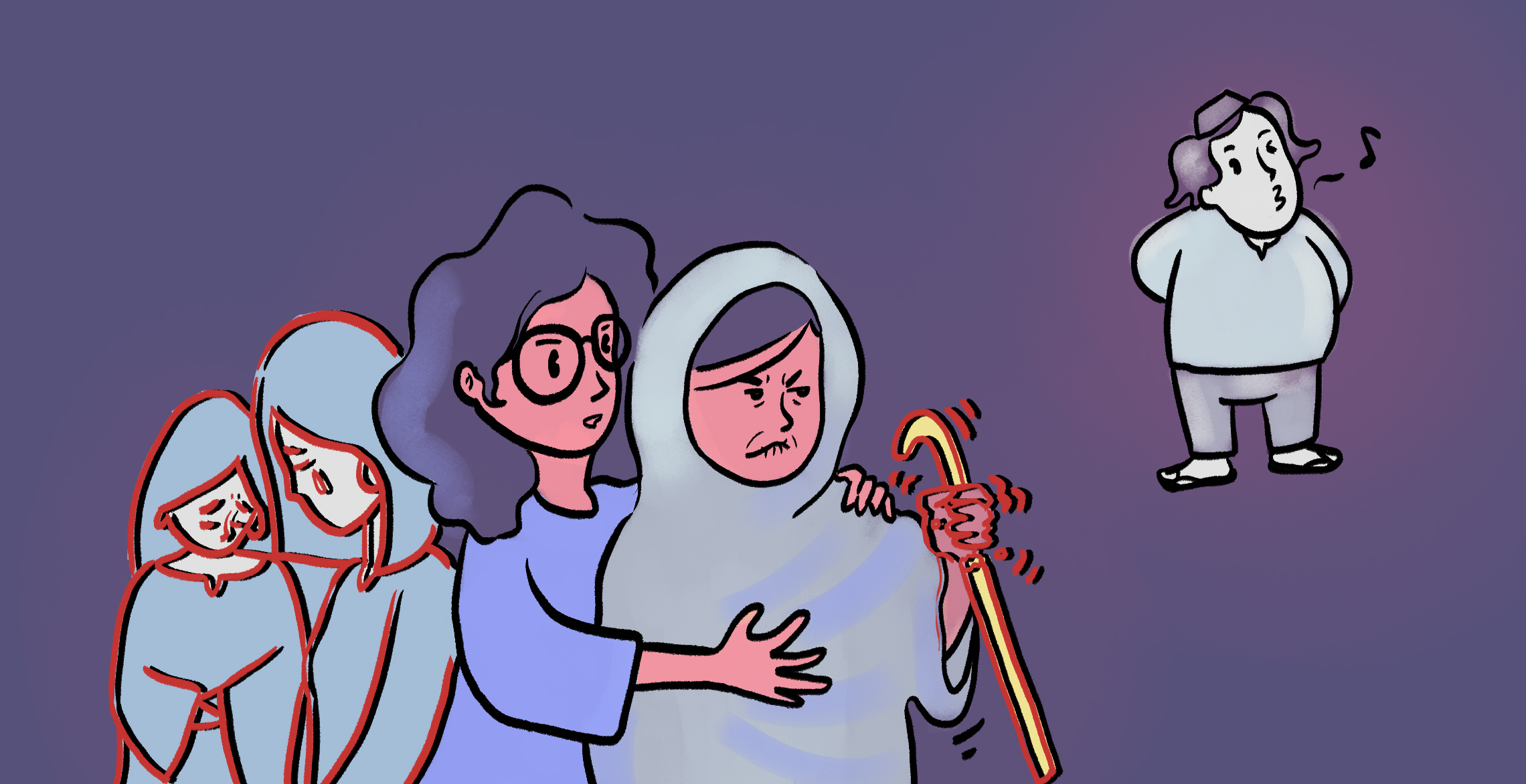
    It sounds like such a beautiful romantic sacrifice when I lay it out like this, but then you see what lies below the surface: A woman who gave up her family and a possible career for a man who wouldn’t even clean up after himself. A man who molested two of their grandchildren, and then vehemently denied it. Years of unpaid physical and emotional labour have taken a toll on my grandmother, and after the sheer pain of the news of the abuse, she is done.

    She complains about my grandfather every single day. A rattle in the kitchen? Kau dengar tu? Dia dah lapar dah tu, tengah cari makan, padahal baru tadi makan roti. (Did you hear that? That person is already hungry and finding food when he just ate bread a while ago.)

    She refers to him only in the vague, genderless third person dia, not the more affectionate atuk or abah (grandfather or father). I can’t remember the last time she referred to him as anything but dia.

    She complains constantly about him. Whenever I meet her, or when my mum calls her on the phone it’s what she mostly talks about. Dia memang macam gitu, suruh makan ubat tak nak, suruh sembahyang dia tidur pulak. Buat lupa-lupa, cakap nenek tak bilang dia. Padahal berapa kali nenek dah cakap. (That person is like that, asked him to eat medicine he doesn’t want, asked him to pray he sleeps instead. Pretends he forgot, and accuses me for not telling him even though I’ve told him so many times.)

    Coming from a conservative Muslim family, I guess it’s expected that such a terrible and shameful news such as a grandfather molesting his own grandchildren is swept under the rug and forced to be forgotten. My cousins were incredibly brave to speak out, and I am endlessly proud of them and will continue to support them through whatever they wish to do to find closure, but of course the rest of my family doesn’t feel that way.

    My grandmother too, once told me to please lay this issue to rest, because it was causing her so much pain and stress. I can’t remember what I told her in reply, but after many one-sided conversations on her part, she finally admitted to me that such a disgusting act is definitely something that my grandfather is capable of.

    It was after that admission that the endless, constant complaints started coming in. Atuk and abah became dia in her eyes. He ceased to be her grandchildren’s grandfather and her children’s father; he was just ‘that person’ who she had to spend all her time with.

    So, I want to introduce the concept of divorce to her.

    But what’s stopping me from doing so? And what will stop her? In this community where divorce is seen as a failure of the woman to hold down a man, where divorce is blamed on the woman for being selfish and for not thinking of her children. Even when her children have grown and her grandchildren are even starting to get married and have their own families, I’m sure they would find a way to blame her for tearing them apart, instead of congratulating her for wanting to find her own peace away from someone who constantly upsets her.

    Even beyond blame, there seems to be an ingrained belief that women need a man in order to be complete. Some of it stems from society — patriarchy and the traditional Western belief that the female is the inferior and incomplete man — but most of it is also from the community’s definition of Quranic concepts such as Qiwamah: that men are protectors, leaders, and providers for women.

    In this perspective, divorce to a woman is a huge loss, since she will be incomplete, unprotected, vulnerable, lost, without her leader of a husband.

    Or will she?

    While divorce for many women may not be an option due to economic and financial restraints, my grandmother has her own life savings from a small business she continues to run, and her children are well-off enough to support both parents separately. She hasn’t had to financially rely on her husband for a long time.

    In fact, if anything, it is he who has been heavily relying on her, and who will ultimately lose the most from the divorce. He would, for the first time in his life, have to cook his own food and clean his own plates and clothes and living spaces. Her burden instead, would be halved. Or more than, since he clearly causes her so much constant frustration.

    I personally find comfort in the fact that men have an average life expectancy that is five years less than women, which means that hopefully my grandmother will have at least five healthy, stress-free years away from her frustrating, shameful, disgusting human specimen for a husband. She’s very healthy — years of discipline with her health and food does that — while he is a mess of health problems, so I’m sure she’ll have her peace sooner rather than later.

    __

    Nur Hafiza is passionate about gender justice in Islam. When she is not busy trying to make the Muslim community a healthier place she enjoys binge watching Korean variety shows.

    Illustration by Ishibashi Chiharu

  • When Religion is a Deal Breaker

    When Religion is a Deal Breaker

    by Firqin Sumartono

    __

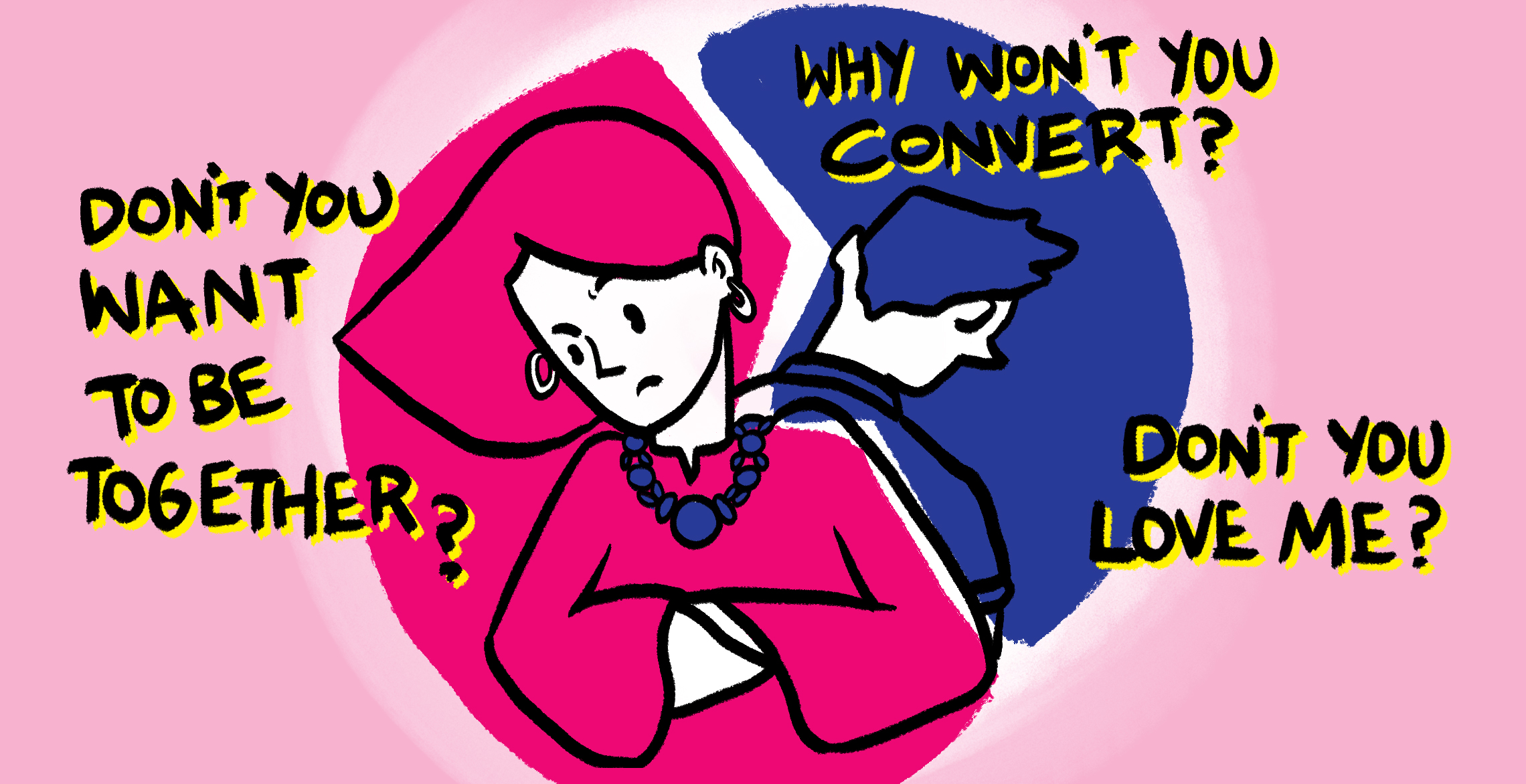
    “Say, if we do get married, do I have to convert?” he asks.

    “Yeah, I guess.” Was my non-committal response.

    “But I don’t believe in it though.”

    “But – what would my friends and family think? People may judge!”

    “I understand but I don’t believe in the religion, or any for that matter.”

    “But- but- what would – If we want to spend our lives together, you would take this into consideration. It would be much easier!”

    “Is this not something we can work on?”

    “I… don’t know… No… I don’t think so…This is what my religion says.”

    “Firqin, it seems like your love will never be unconditional. It will only be on the condition that I convert into Islam…” he said, defeated.

    I fell for a person when I was 22. Naïve, young and a slightly practicing Muslim, I still held on to the idea that when I get married, me and my partner would form the heteronormative, traditional family. I imagined my future self to go back to the “righteous” path, where I would eventually be what a pious Muslim woman is supposed to be. My imagined marriage will be filled with good, pure love and healthy Muslim babies. My husband would be Muslim, not necessarily from the same ethnicity, but definitely a Muslim man. It would be blissful, perfect, easy, and filled with love.

    But Max was not Muslim – celebrating Christmas was the extent of his religiosity.

    At 22, I saw religion through a binary lens and I’m not sure how it came to be that way. Perhaps it was the rule-based doctrine I was fed during religious school. Perhaps it was the polarizing dichotomies (pahala and dosa, haram and halal, heaven and hell) ingrained in me that made me view the world as black and white. Or perhaps it was just blind obedience.

    I had an overly simplified view of what Islam is, how it is practiced, and I was incredibly ignorant to the dynamic and diverse history the religion once had. When it came to my future and marriage, I was certain: my partner had to be Muslim. The culmination of stories I heard over the years did not help. Stories of Muslims and non-Muslims would always end in tragedy. The Malay-Muslim person gets ostracized from their family and their new partner would never be accepted, or there would just be a lot of family members crying. Although I knew that Muslim men are free to marry women from other Abrahamic faiths while Muslim women are not allowed to marry outside their faith, this was not something I questioned, though it did not sit well with me. Marrying a Muslim was normalized to become law. I did not question the law.

    The Malay dramas were not helpful either. Successful romantic relationships were always based on the idea that both partners were working towards loving God or becoming an orthodox, conservative Muslim. There were no narratives that showed inter-religious marriages built on mutual respect, co-existence, partnership and commitment. If there were stories of inter-racial and inter-religious relationships, someone would end up converting into Islam. Hence, the idea of an inter-religious marriage seemed unfathomable and almost blasphemous to me.

    Wisdom came to me only through time and after similar heartbreaking experiences. Max was right — my love was conditional. I was not able to love my partner for the person that they are, the values that they hold, or the principles that they uphold. How I understood religion became an obstacle that impeded my ability to fully experience love beyond my own community, culture and religion. I could never give love freely and love unconditionally without the dark cloud of conversion looming over my head.

    My obsession with the minutiae of religion and how I would be judged by my community, family and friends consumed me. I was blinded to the clear reality that Max was a kind-hearted and loving soul. When I slipped into moments of doubt, he would patiently listen to my inane worries and irrational meltdowns. I was oblivious to the emotional stress I dragged him through and was not sensitive to how intense and difficult it might be for him to constantly have this dangling over our relationship. Yet, through all our arguments and difficult days, he would stay, despite knowing that his partner refused to love him unconditionally with the type of love he truly deserved.

    We later went our separate ways due to other reasons, but I still think of how much I selfishly bullied Max into my religion. I was extremely unfair to him, and blinded to all his good deeds just because he was not Muslim. On hindsight, he did not come between me and how I practiced my religion. Throughout our relationship, he had never threatened to remove me from my faith. If anything, he tried his best to provide me with a safe space to practice it. He respected that I was religious, yet I am ashamed to say he was not afforded the same respect from me.

    *

    It was when I freed myself from the restrictions of what I thought was expected of me that I was free to love without worry. Life is temporary and death inevitable. So I decided to let go of my obsession with religion, and choose to love hard since I cannot love for long. I thought of how I would not have liked it if Max imposed his beliefs on me. I let go of my asinine fear that my future children would not grow up Muslim. Who’s to say I would even be able to have children?  Who’s to say they would stay as Muslims even if they were brought up as one anyway? Also, what good would it be if they grew up Muslims but didn’t have values or a moral compass? I was worrying about things beyond my control.

    As for my irrational worry about how others in my community would perceive me if I married a non-muslim? I did not think it to be too healthy to live my life dictated by the expectations of others. Furthermore, as a 27-year-old woman, they should respect my autonomy to choose whoever I think is best for me to build a marriage with.

    This issue does not only affect inter-religious couples in the Malay community. It manifests differently in different relationships. It extends to intra-faith couples where they face external pressure from their family and peers to find someone not only of the same religion, but of the same sect. Even within the same religion and denomination, religion can still be a deal breaker if one partner thinks the other is not religious enough because of their lifestyle, sartorial choices, or thoughts. When I hear stories like these, I know I am not alone in my struggles.

    Our community’s obsession with the monolithic practice of Islam and how it should play a significant role in our romantic life and partnerships restricts our ability to develop deeper connections with others. It becomes an impediment that has rendered us incapable to cherish others for their true character and worth. If we continue to impose this, and allow it to rule how we love those around us, we might just be on the losing end as we unconsciously build an insular community made up of the same people and mentality. Making religion a deal breaker places an expiration date on the relationship. It forces individuals to rush into the religion, when this is the single journey that requires the most time and patience. Sharing the same religion is not a testament to how much you love someone, nor is it the only path to a marriage filled with respect, love and peace.

    It took years and a conscious effort on my part to get rid of my idealized vision of the future. I had to reprogram the way I approached relationships. It was also the realization that true love is understanding and respecting my partner’s boundaries, what he believes in, what he is comfortable with, and celebrating his freedom to live the way he wishes. Love cannot exist when we do not accept our partner’s boundaries, values, different upbringing and personal faith. Love cannot exist when we disrespect our partner’s convictions and spirit by forcing them to accept ours. We cannot expect them to honor ours, when we cannot honor theirs.

    Now, I can safely say that religion is no longer my deal breaker. Although I do understand that it is a core part of someone’s identity and human experience, it is ultimately a personal pursuit that the individual has to take. It is not something anyone has the right to impose onto their partner. In Islam, we’re required to explore and challenge injustices—and the imposition of religion is an injustice that I recognize, because I am neither giving the other person equal treatment nor respect. Today, I look for patience, compassion, respect and kindness in relationships – the same kind Max had shown me. If we happen to share the same religion, good. If we don’t, it won’t matter to me.
    __

    Firqin Sumartono spends her days analysing speech sounds and conversations in a laboratory. She spends her nights reading nonfiction books that she reviews on her Instagram. Max and Firqin still keep in contact and remain friends.

    Illustration by Ishibashi Chiharu

  • Marriage Is Beautiful, but Only If It Is Done Right

    Marriage Is Beautiful, but Only If It Is Done Right

    Marriage Is Beautiful, but Only If It Is Done Rightby Qis Hakim

    _

    It’s mystifying how Muslim men have succeeded in governing one-sided marital laws for so many generations. Women have conformed to this norm as a way life they have been brought up in. I respect their choices, and I’m in no way complying. We need to pause and take a step (maybe a couple of hundred steps) back, re-learn without prejudices and implement Islamic rulings unbiasedly.

    In its deepest core, I believe Islam is perfect. Hence, it is frustrating when the “Islam” taught to the two people in marriage are two different versions. It’s like they are on different wavelengths despite sharing the same faith. For example, in most conservative families, women are taught to carry household responsibilities which includes managing the children, preparing food, cleaning & laundry, on top of abiding to their husband’s needs, while men are easily considered sufficient if he’s financially abled.

    I would consider my family conservative in many ways, but women in our family don’t all end up as housewives, and it is not a problem. In fact, we strive in education and for the career we dream of. Some men in our family makes lesser contributions in household chores but they make sure their wives get helpers. It’s a clash of ideologies I’ve personally experienced when I was married to a man who believes employing a maid reflects the wife’s inefficiencies, and a woman is not to have an independent career but be placed under the authority of her husband. My father, on the contrary, views achievements in the worldly life to be in parallel with spiritual attainment. So, he made sure that I was provided with sufficient secular and religious education with the hope that I can make a life for myself, and strive for success even bigger than his own.

    Regardless of upbringing and cultural backgrounds, when two people agree to join in a union, they deserve a fresh start in molding the life they share in mutuality. The best thing about marriage in Islam is that we have complete liberty in how to run the marriage as long as it does not go against the laws of Islam, NOT the virtue of culture. Sadly, most men choose to disregard a woman’s paradigm if it suggest changes to the cultivated patriarchal ideals they take comfort in. It’s so strongly held that even working women are still expected to single-handedly carry out household duties and this is very common in our society.

    Let’s not forget that when our Prophet Muhammad s.a.w. married Khadijah a.s., she was a successful business woman, and she was not obligated to drop everything and stay at home following their marriage. She continued her career as it was. Islam highly praises women who choose to devote their life as a housewife, no problem there. But the point here is that a woman reserves the right to decide what she wants to do in her life, as long as it does not breach Islamic rules. So, a marriage is where a man and a woman should come into a serious discussion on how they would manage their life together, consider each of their career paths, and other obligations. Their roles and responsibilities should not be hindered by societal expectations, but agreed upon a mutual agreement, with tolerance and harmonious contribution.

    It is essential for women to be enlightened of their rights not only so that they can have a contented, happy life as a wife, but also as deterrence to abuses in marriage that are so common, that they don’t even realize it. I’ve seen husbands who are not even financially providing for the family, and yet sit still when his wife cooks and clean. There are men who preach about how highly a husband is ranked in Islam, but fails to be good Muslim role model themselves. We have men believing that financial provision is fulfilling his duties with no regards to his wife’s emotional needs. All graciousness to the women patiently endures marital challenges, but men need to stop taking advantage of a woman’s perseverance.

    We have constructed women to duteously accustom themselves to social expectations even if it means forgoing her own needs and personal aspirations. Women are expected to quit her studies or her job once she gets married or have children. There are women not even provided with basic education simply because they are not seen as worth investing in since they will be “working in the kitchen” at the end of the day anyway. This is illogical considering how much women have contributed in various industries, and even in the advancement of technologies. Just like men, women should be given the chance to flourish in what they aspire to be.

    What is even more heartbreaking is to see women bearing oppressive circumstances that goes against the teachings of Islam for the sake of “saving the marriage”. It is not uncommon for women to remain in marriage with sealed lips while their husband is unfaithful. It’s no longer surprising to know a physically abusive husband who has a wife serving him dinner every evening. Women succumb to unhappy marriages for fear of becoming a ‘divorcee’, a tainted label only applicable for women.  These are the results of keeping women ill-informed and letting the man exert his “veto power” in the name of Islam. Marriage is a beautiful unification between two souls, but only if it’s done right.

    _

    Qis hakim is an inspiring entrepreneur and a firm Muslim believer. She was married for love’s sake to a man of a different race, and has since gone through the highs and lows of cultural clashes in a mixed marriage. An emotional & sentimental woman, a passionate jewelry designer, she plans to succeed in both her career and family with her own bare hands.

    Illustration by Ishibashi Chiharu

  • My Marriage Healed Me From Toxic Parenting

    My Marriage Healed Me From Toxic Parenting

    by Sya Taha
    __

    When people ask me how I got married, I say, half-laughing, that my father proposed to the man that is now my husband. I hide behind humour because it is sinister and painful to know that my father is not equal parts benevolently patriarchal and protective (as people would interpret his actions to be), but a man who feels the need to choose his daughter’s partner because she’s too smart/dumb/frivolous to do it herself.

    My father, thinking of his reputation and social standing, wanted me married off as soon as it was possible. Being the middle child with an older sister with a disability (who was thus exempt from many heteronormative norms) and a younger brother, I was the only child that seemed to have any chance of getting married (“before they die” being a psychological tactic they often passed off as an argument).

    In this case, seven years ago, they wanted me to get married, at the age of 25, to the first man I was interested enough to bring home to meet them. My previous relationship with a wonderful, smart, funny, family-oriented Muslim only added urgency to see me married, because the person in question happened to be a woman.

    In comparison, my husband seemed the perfect catch. Not only was he the first man my parents knew of, his Whiteness seemed like an unbelievable bonus that trumped other factors. My father had spoken to me before, with high esteem, of a friend’s daughter who married a White European Convert, and how having their wedding at a mosque proved how Islamic the White European Convert could be. My father would have been pickier with a Malay Muslim man: he would have to be moderately rich, work a professional job, be highly educated (at least the same or more than me), no previous sexual partners or spouses, and deeply and visibly religious.

    Deeply awash with relief upon meeting my husband who had not even completed his legal conversion to Islam, my father uncharacteristically decided to throw the religious factor out the window. One deeply uncomfortable evening when my husband was visiting Singapore on vacation, my father sat us all down and proposed “something small, like the exchanging of rings”. Never mind that ring exchange is a highly charged social ritual symbolising commitment. The point was that he needed total control over my life decisions.

    As a young woman who did not understand then that my father was a narcissist and that our relationship had been toxic for decades, I gave in. Which daughter, indoctrinated with strongly Confucian and Islamic values of filial piety and obedience to parents, wouldn’t want to make her parents happy? Since their love was conditional, I would try my hardest to meet those conditions. If they wanted me to marry someone I had known for only 10 months, I would.

    I was not forced. I could still choose (putting aside debates about agency for now). I thought that engagement would not have much social benefit, as I would still be morally policed from my parents and extended family. I chose marriage instead. I knew my husband would never force me to do anything, and yet I could still conveniently say “My husband says I should ___”.

    A few years later, my brother told me that my father thought I had been co-habiting with my husband while overseas. My father forgot the countless Skype calls from my own apartment, which I shared with an Indonesian girl. The urgency to see me married made even more sense as I remembered one of his ‘parables’.

    I dread car rides with my father because over the years these have been moments for him to impart his wisdom through long monologues which include stories of other people, refashioned as modern-day parables. Once he recounted to me, with much sympathy, the story of his cousin who lived with his Malay-New Zealander children in Australia. Furious upon finding out that his daughter was co-habiting with her White boyfriend, the cousin said, “If I find out where they’re living, I’ll burn the house down.” I assumed my father felt the same way.

    Looking back, I’m not proud of the reasons why I got married. I wanted to make my parents happy without thinking of the costs to me. I didn’t have a regular income, so I depended on my husband for income, a resident’s visa and a work permit to stay in his country. I don’t know if I would have managed to stay in his country for the five years I eventually did, on my own merit. I wanted to have sex with a man, without that very real Muslim sex guilt. He was my first male sexual partner, and while I discovered many things about my sexuality with him, monogamy doesn’t work for everybody. Looking back, I don’t know if I would have even decided that marriage was the right thing for me at 25.

    Nevertheless, now that we have children, I appreciate the legal benefits of marriage the most. I see it as an institution with certain benefits that I have the privilege of enjoying. As a legal family unit with ‘powerful’ passports, we are mobile and can have the choice of living in different countries. I also get to enjoy the social standing of being married: I use my husband’s surname strategically or get him to speak on my behalf in certain situations, and I see a major difference in how the situation is resolved sometimes. Opportunistic? Certainly.

    But these benefits are secondary. The best thing about my marriage is the self-awareness and clarity that I have obtained about how my parents see me, my relationship with my parents, and their relationship with each other. My mother sees the married me as an extension of herself, encouraging me to behave the submissive Stepford way that she did: she advises me to make coffee for my husband, cook what he likes, iron his clothes. “Ugh. It should never even be like this! You make coffee for me, I make coffee for you, because marriage is like that,” was his reaction. My husband finds it ridiculous, abhorrent and wants that I do none of these things out of obligation.

    My father once said to him, “If Sya starts to nag at you, just take a break.” He saw the married me as also an extension of his wife, my mother. He doesn’t know the consequences of his own advice but I do. I was four years old, and I saw my father with a packed duffel bag and a fishing rod. “I’m going out,” he said to me. I walked into the kitchen and there was my mother. “Bapak kau selalu macam gini! Asyik hilang [Your father is always like this. Always running away],” she said, wiping tears away. My sister and I were left behind to mother our mother, something we would keep doing for decades.

    My husband taught me how to communicate healthily. In the first year of our relationship, I used to write him e-mails when I was upset. As my parents punished us for expressing negative feelings, I had never learned to communicate anger, disappointment or jealousy growing up. In situations of conflict, I shut down completely. My parents had never modelled healthy communication to us, so the hardest things for me were expressing my negative feelings, showing empathy for someone feeling sad or angry, and apologising.

    For my husband, these things come naturally and by making a huge effort to change the way I react to these situations, I am also rewiring my brain and changing how I parent my son. It becomes easier each time to express my own fear or sorrow, help my son identify and show empathy for his negative emotions, and apologise when I make a mistake or when I have a bad day.

    I asked my husband what kind of Malay man he thinks I could have married. He had no answer, saying that there was no way of knowing how our lives can turn out if we change just one variable. (Though I think most likely I would be single or single again.) But this I am sure of: if I had married someone who grew up in a similar environment as me, I would have unthinkingly passed on my parenting wounds to my children.

    That is what I am most grateful for: choosing to be and stay with someone who helps me break the cycle of toxic parenting I received as a child. I want to continue parenting my son in different and better ways. Because my husband loves me, I am healed from my childhood wounds. Because my husband loves me, I am challenged to be better for my children.

    __

    Sya Taha is a feminist writer exploring the media representation of Muslim women through race, disability and other intersectionalities. She has an MA in Development Studies from the International Institute of Social Studies, specialising in Women, Gender and Development. She co-runs Crit Talk, a discussion space of taboos for Muslims.

    Illustration by Ishibashi Chiharu

  • Editor’s Letter: Marriage

    Editor’s Letter: Marriage

    by Diana Rahim
    _

    My mum loves to point out the actor Khairudin Saharom every time he appears on TV. Each time she’ll not-so-subtly say something like “Isn’t he handsome? And he’s smart too, you know…” She even found his Instagram account and suggested that I follow him and leave a comment on a picture of his cats; the first step that will eventually lead to a burgeoning romance. Usually I jokingly reply that if she finds him such a catch, she can marry him herself. It’s hilarious, it’s irritating, and to me, it represents how one of the biggest concerns out there for a mother is that her daughter get married.

    The propaganda targeted at young girls to aspire to marriage has failed to work on me. Marriage, to me, is not necessarily romantic. It is unrealistically idealised especially to young girls and women. Two people who love each other committing to a life together? Of course that can be wonderful. But the institution of marriage itself, tied to the state and its resources, riddled with legalities that leave women vulnerable to abuses, and all the difficulties tied to it? Not so much. Make no mistake, heterosexual marriages are still far from egalitarian.

    In fact, the heterosexual marriage has always been such a contested topic precisely because it is the site where many women directly face gendered violence and discontent. Early feminists have even described it as a kind of “legal prostitution”; an economic transaction where the sexual access to her body is exchanged for financial stability. These days, women are thankfully more empowered to seek financial independence, which provides them with more options for a stable life other than marrying a man and limits the possibility of financial control and abuse.

    *

    It’s time to demystify the cult of marriage – the fact is that statistically, single women are more likely to be happier than married women. Married women tend to be unhappier than their partners, and are more likely to be the ones who initiate divorce. And honestly, is it surprising? The problem, of course, is not marriage per se. The problems were already there, it’s just that marriage can exacerbate the problem.

    Consider the Popular Malay Drama. In these toxic popular dramas, women with superhuman patience endure crass, controlling, unkind men, and then end up being married to them, presumably to endure that behaviour for life. The stories may change, but the dynamic remains the same. The woman is expected to be subordinate, patient, and suffer forbearance even as the husband exhibits the emotional maturity of a troubled child. This is what women are told are the virtues of an honourable wife. I can only hope that not too many women internalise this call to withstand emotional and even physical abuse for the sake of “love.” Why is this romanticised?

    What these dramas do reveal, however, aside from the ideal qualities a woman should have if she is to be marriageable, is the fact that women shoulder the bulk of emotional labour in a marriage. Women also shoulder most of the undervalued, unpaid work of maintaining a house, therefore working more hours than their partners, and are more likely to make personal and career-related sacrifices for the family.

    I need to think no further than of my own mother, who while she was pregnant with me worked as a nurse, went home to continue working on the chores, and even after I was born continued to shoulder the bulk of the household labours. The support she received from my father was minimal, and she was so exhausted and weakened that when she was pregnant with my sister, she realised that she had to quit her job in order to cope. This left her financially dependent on my father.

    If I were to look around, I do not see many encouraging, loving marriages. Yet our female relatives in dissatisfying marriages often have no issue encouraging us to get married.. there is something sad about it. Of course, I understand that they would want us to have a better marriage than they ever did. It’s probably why they would often bring a list of qualities we ought to value in a partner (“the love of God” being one of the most highly prized). Sometimes I wonder if they list qualities lacking in their own husbands.

    *

    I feel that it is important too to bring up the topic of marital rape.

    One of the most fervent criticisms of marriage is the vulnerability women face in the bedroom. Marital rape is often dismissed, or even excused under the belief that it is a wife’s “duty” to have sex with her husband. Such harmful beliefs risk breeding a sense of entitlement in men and a complete disregard for the sexual rights of the wife.

    As of now, marital rape is not a chargeable offence in Singapore, and many women do not bring it up. How often does this crime (which isn’t acknowledged legally as a crime) occur? In an article by Melissa Zhu detailing marital rape in Singapore, a counselling supervisor estimated that he sees “an average of five married couples a year where one partner had forced sexual intercourse on the other.” No legal intervention was done or thought possible in all of these cases.

    The issue of marital rape is one of the many ways in which the institution of marriage reveals the disproportionate amount of power and leeway that is given to the husband for gendered violence and abuses. It reveals how society has failed women when something as criminal as rape is not even considered a crime and rarely punished.

    The problem is, I suppose, that marriage is never simply about love. It has only been about love in recent modernity. For much of history, so many marriages were loveless, were based on political or familial convenience, and occurred while the female was still a child. Both of my grandmothers were child brides, as many women of their generation were. Even today, in countries where there are laws that make child marriages illegal, 7.5 million girls are married illegally below the minimum age. For so long, marriage was simply another way that women’s autonomy and sexuality were controlled.

    Change is not going to happen so soon, and they’re certainly not going to happen without some serious contestations of ideas. It will take some serious work to fully shake off the serious problems attached to the institution of marriage.

    Maybe I sound too critical, maybe marriage is about love; if fortifying love is what we truly care about, then I welcome the conversations we should have about how we can have a more respectful, loving relationship where both parties feel valued, and supported. Conversations on how we can ensure that abuses are not tolerated. Marriage courses would teach mutual respect and dignity within the context of a marriage and not perpetuate harmful beliefs on the “duties” of women. There would be some serious discussions on why polygamy is still allowed in Singapore despite the fact that it is a set back for women’s rights, and are barely done for noble reasons. (In a study by Sisters in Islam, 70% of men admitted they did it due to sexual attraction and 87% of children in polygamous marriages report negative and emotional psychological impact due to the experience.)

    Look at any truly loving and respectful couple and you can see how a marriage is not necessarily a problem. Not if your partner is a kind person who won’t subject you to abuses. The problem is if the protections are not there and leave you vulnerable if your partner turns out to be pretty terrible. The problem is if we have yet to unlearn harmful social, gendered conditioning that gets in the way of a truly fulfilling experience of love.

    I mentioned earlier that it’s time to demystify the cult of marriage. But when I say this I don’t mean to say that marriage is ipso facto terrible. That would be missing the point. It’s more about the larger problem revolving around the control of girls and women, the obsession over their sexuality, the great apathy to their gendered violence and discrimination that marriage can particularly exacerbate. The wool needs to be pulled from our eyes so that we don’t fall for the popular, unrealistic, and idealised narratives of marriage as a noble, wonderful goal to aspire to that will bring us happiness when the reality is so different.

    Continuing to perpetuate false expectations and idealised narratives on marriage, and refusing to have difficult conversations about its problems, will only leave more women unprepared for the challenges that may arise. It will deprive them of the knowledge of steps they can take should they face any serious issues. And to be honest, they are still a lot of serious issues tied to the institution of marriage. So let’s talk, and hopefully, this will let us see clearer. Bring your husband along too.