Category: IPV

  • Apa salahku?: Unpacking Narratives around Domestic Violence in the Malay-Muslim Community (Part 2)

    Apa salahku?: Unpacking Narratives around Domestic Violence in the Malay-Muslim Community (Part 2)

    by NH Rahman
    __

    This article is part 2 of a 2-part series that critically examines how the problem of domestic violence within the Malay/Muslim population is imagined. Read part 1 and if interested, the Full thesis including full citation list.

    Content Warning: This post discusses domestic violence and institutional understandings and responses to domestic violence. This includes mentions of victim-blaming, retraumatisation and procedures utilised by social services and the criminal justice system.


    How we think we can solve a problem tells us a lot about what we think a problem is. In the same vein, examining policy ‘solutions’ to domestic violence (DV) can be helpful, prying open what we’ve collectively imagined the problem of DV in Singapore is, particularly for within the Malay/Muslim population in Singapore. 

    I used an analytical method called WPR (What’s the problem represented to be?) approach to dive into an analysis of policy texts and solutions we hear commonly espoused to ‘solve’ or ‘prevent’ DV. I will use the term ‘problematisations’ here, which are basically the ways that a problem has been understood—though of course, it is not necessarily what the problem actually is. From there, we can also explore the silences within these problematisations of DV, and see where they fall short in factoring in the political, social and economic realities of the Malay/Muslim population.

    “Counselling for anger/conflict management”

    Family, couple’s and individual counselling is regularly offered as a policy solution to addressing DV. Some of my interview participants spoke about counselling as a solution that works to emotionally regulate men who abuse and as a remedy that can potentially stop abusive behaviours, while others spoke about the restorative effect of counselling for marriages. 

    A few participants discussed how men’s abusive tendencies could come from ‘anger management’ issues, lack of psychoeducation on men’s roles as husbands, and men not knowing that DV is not a good solution to their problems or ‘conflicts’. Similarly, outreach efforts by MSF to “detect signs” of DV discussed the “importance of…the ability of individuals to manage conflict”.

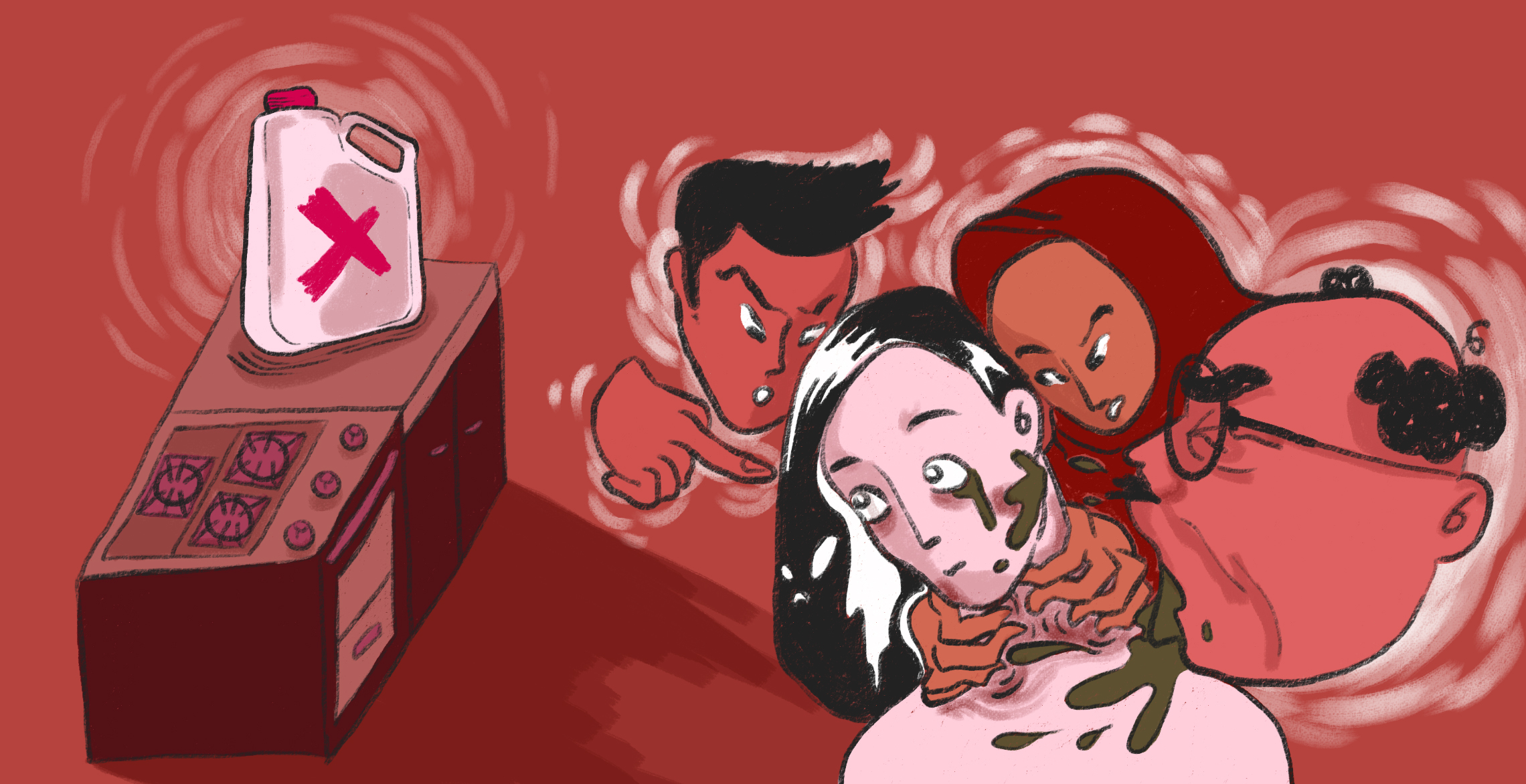
    I believe anger and conflict management as a solution to end or stop DV problematises individual psychopathological issues within DV. As a natural continuation of this problematisation, DV then ends up being reduced in our collective understanding. It is wrongly or reductively represented as, perhaps, a problem of male anger, of conflicting parenting styles, of family conflicts and tension, of couples’ quarrelling and disagreements, of poor communication, financial insecurity, or even the result of retaliation from women experiencing DV.  
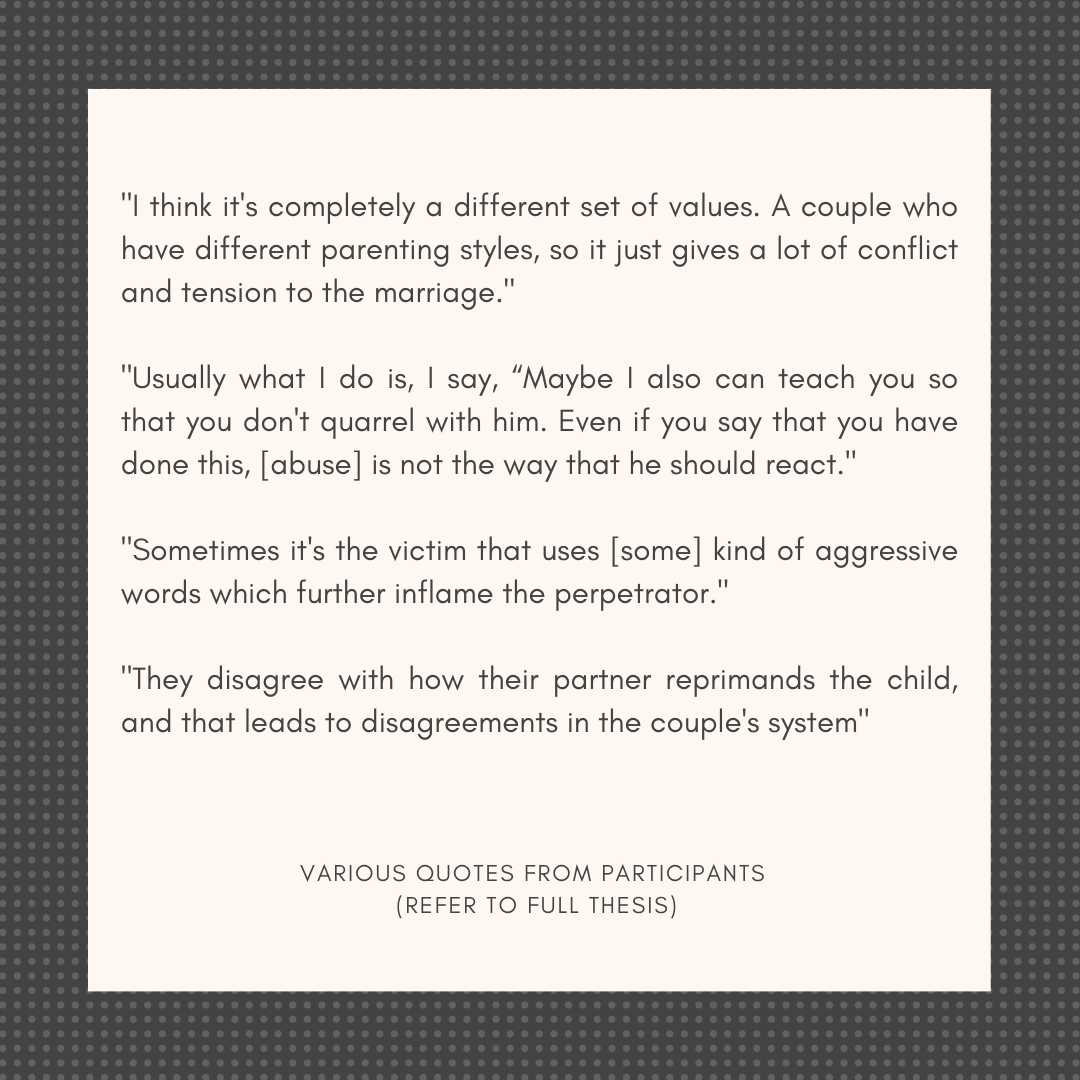
    While these examples could also be excused as a matter of conversation style or simplicity in participants’ choice of words, if taken at face value, these problematisations inadvertently flatten the power imbalance in abuse. They also paradoxically presuppose how DV is a problem of lack of control or power over one’s emotions, rather than the deliberate use of often patriarchal power and control over others. 

    In the MSF video campaign, Break the Silence (BTS) (2016), DV can be seen—through marks and bruises on the body—or heard—through pained screaming, angry yelling, verbal harassment or otherwise vocal forms of resistance and expression.  

    This is an unsurprising yet unfortunate outcome in our discourse around DV, given how policy documents, including social service websites, do little to name patriarchal power and control as a major root of DV. When these forces are not extensively or visibly addressed or identified, patriarchal violence is then also presented simply as learnt behaviour that individual men pick up. When policy solutions represent DV as something abusers do to address a problem, they may inadvertently place the blame on those experiencing DV, by assuming that an issue that causes a violent or controlling response is something people who are abused can ‘solve’ one way or another.

    Furthermore, what this ends up doing is neutralising the power imbalances in gender roles which do not resort to violent and controlling behaviour. The subservience of women, girls and children that does not correlate directly with DV is made unproblematic, or inevitable, as a result of the silence. It represents DV as a problem that individual, ‘angry’ men use to exert power and control (an imagination we need to recognise is subject to racist stereotypes of brown or Muslim men as well), and in the absence of acknowledging patriarchal power relations in our systems of organisation, assumes patriarchy as otherwise a benevolent force.

    “Raising awareness” 

    [youtube https://www.youtube.com/watch?v=ZiH5zXPvdPk&w=560&h=315] 

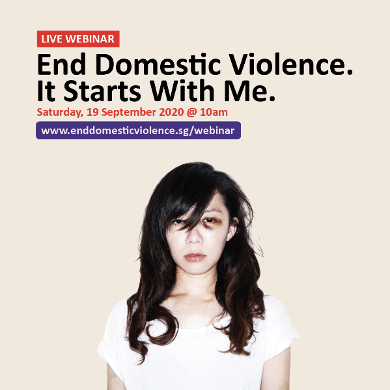
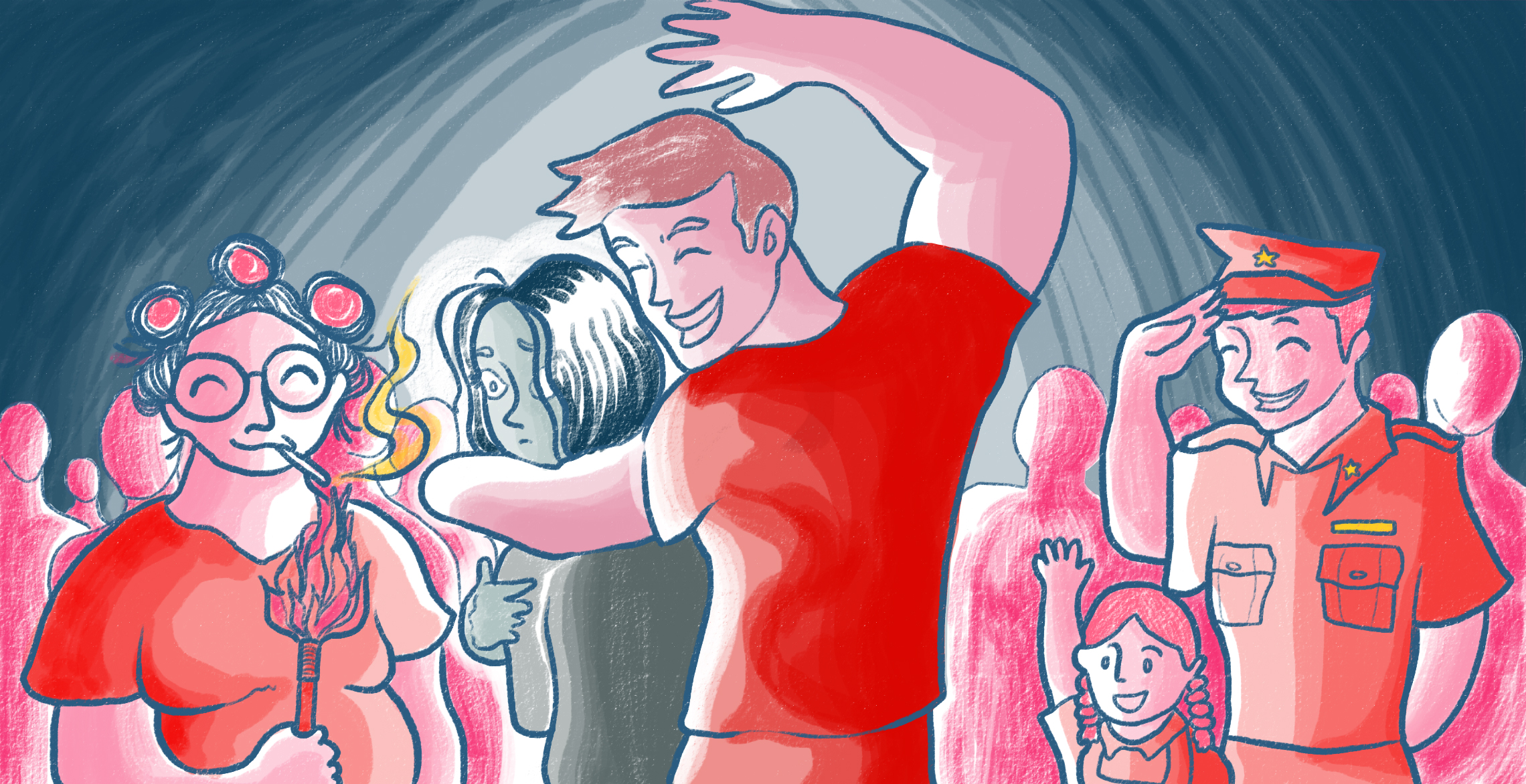
    End Domestic Violence, a more recent anti-violence campaign, addresses how non-physical and non-verbal forms of DV are equally crucial to address (official website is currently down). However, representations used in ads for the campaign still prioritise representing the physical aspects of DV. 
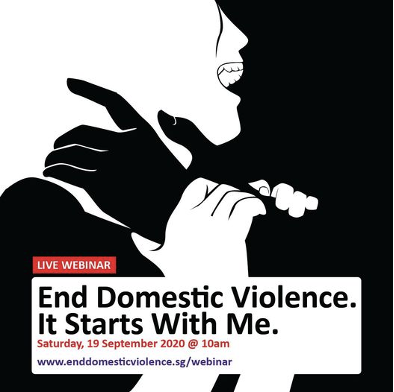
    Beyond these campaigns the spotlight on physical violence is often seen in the headlines, images and illustrations of mainstream media reports on DV.
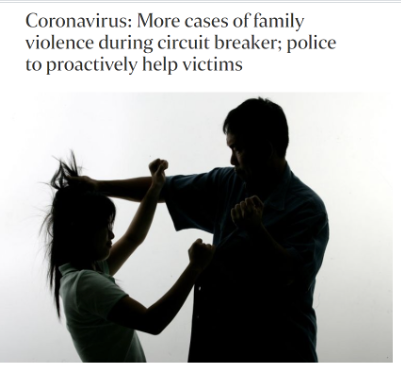
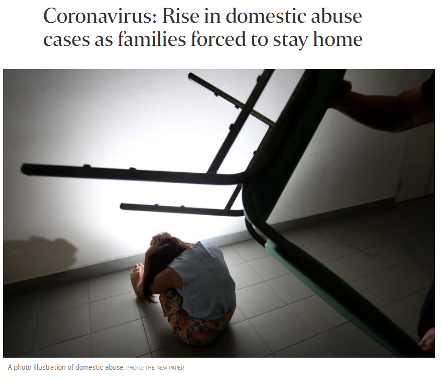
    MSF’s educational resources and social service websites such as PAVE’s briefly mention the non-physical and non-verbal aspects of DV, but much of the representation privileges support information for those whose experiences centre on physical violence: get a medical examination, apply for PPO and go to a crisis shelter, with “counselling” being the typical exception. This is consistent with how shelter policies admit mostly women who have gone through physical violence, and the difficulty of PPO applications for psychological or emotional abuse. The language of DV as ‘incidents’ is often used, imagining violence as emotional eruptions that can be tangibly pinned down as events.

    These problematisations ignore the elements of power and control, the relational pattern of DV, and even the psychological or emotional aspects of DV, which are harder to single out. Coercive control, which does not necessarily have to “resort” to physical abuse or verbal denigration, is then left unproblematic. There is also overwhelming silence about the ideological forces that uphold DV, particularly patriarchal violence. 

    Moreover, the Break the Silence video series represent victims of violence as overwhelmingly silent or passive, as people who do not seek help, and thus need to be empowered enough to reach out. This imagination mutes the ways that women do resist: using personal strategies such as prayer, seeking support from friends and religious leaders, going through laborious processes with social services and the legal remedies, and attempting to be financially secure.  

    With this collective representation of DV, the problem then becomes focused on “an individual level of analysis”, viewing DV “as a problem that resides within individuals” (Salazar and Cook, 2002, p. 418). Ultimately the pattern of how DV operates as a social and structural problem, and the landscape that it happens in, is erased.

    “Equipping bystanders” through public education

    In the Break the Silence campaign, bystander intervention is, quite literally, the final scene in narratives about DV. Videos end dramatically with people interrupting violence, and we are left to assume that the intervention went successfully to end the violence once and for all. 

    The process of the intervention, the considerations that women make, and the way State systems are able to support women are unquestioned. These representations portray DV as something that will continue unless bystanders interrupt it (placing the responsibility on romanticised ideas of ‘community’), and will immediately halt or de-escalate when there is bystander involvement (which reveals a belief that all interventions are good interventions).

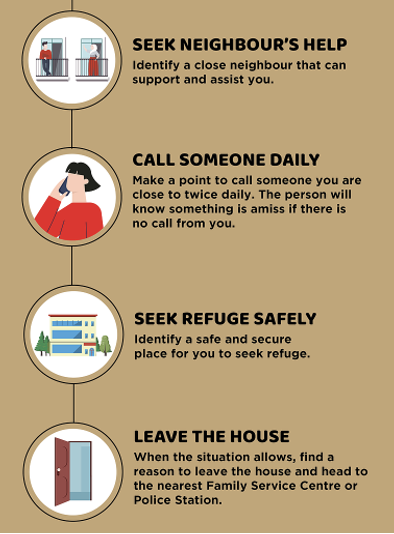
    Similar to Break the Silence’s campaign angle, much of End Domestic Violence’s focus is on the actions that those experiencing DV can do to minimise the impact of violence in their homes, and bystanders can do to support them. 
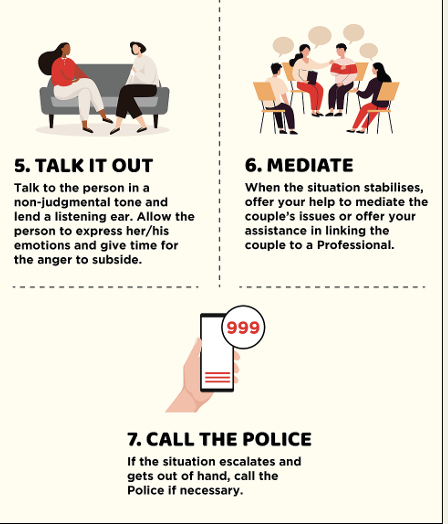
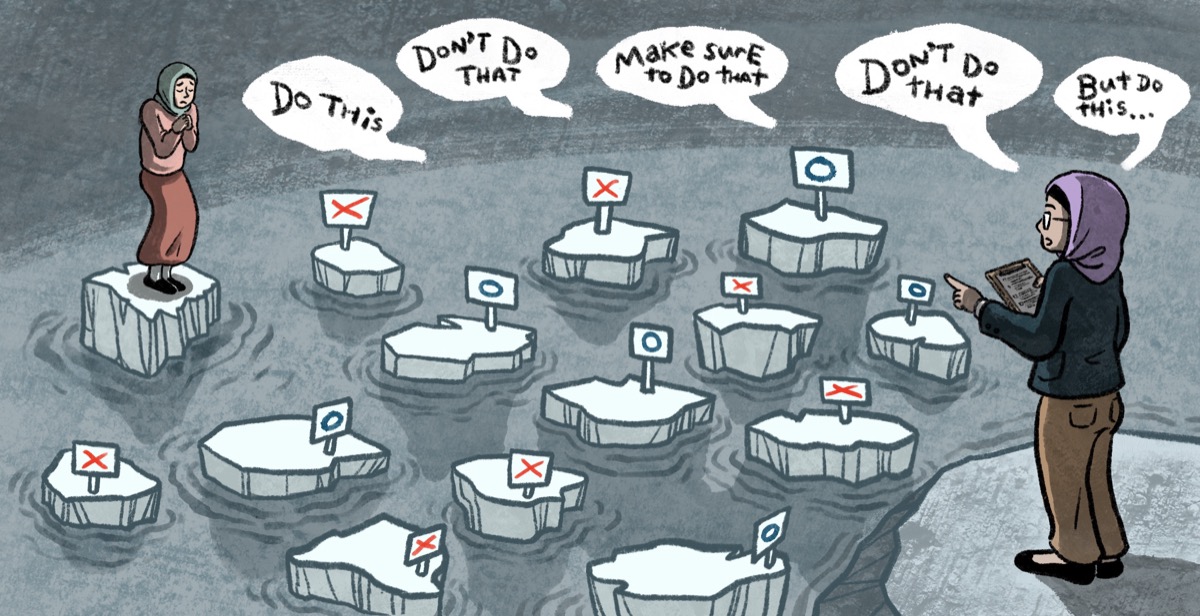
    Although more nuanced than Break the Silence, the representation still emerges in simple lists of superficial dos and don’ts, revolving once again around noticing physical and verbal signs. The solutions are similarly limited to “calling the police”, listening and empathising, and accompanying people to the police or family service centre.

    What these approaches do is assume that bystanders already have the information, skills, principles and ethical values required to end DV. But mediation efforts veer towards maintaining the status quo, typically for the purposes of restoration or reconciliation. Given the dominant discourse and policies that support patriarchal, nuclear families, is it reasonable to expect communities, particularly under-resourced and politically weakened communities, to mediate a couple’s ‘issues’ without reproducing values that cause further harm to women? It is also dangerous to view physical intervention as a catch-all solution that will always lead to de-escalation, especially considering how women have reported that family intervention can cause abuse to, in fact, escalate.

    Amidst all this, there is silence in the way the State and services continue to enact indirect violence and oppression on families as they attempt to wean themselves out of abusive relationships. It is however painfully consistent with the State’s principle of family—and sometimes community—as the first line of social protection, rather than the State, and the privatisation of the problem and solutions of DV. This way, the State maintains its role as advisory, with an end-goal of keeping the patriarchal family unit together.

    Religious and cultural counter-education

    Over the years, substantive effort has been put into countering common misinterpretations of religious texts that seemingly justify DV, including through targeted campaigning and asatizah training initiatives. Often, including in my interviews, misinterpretations of religious texts is identified as one “source” of patriarchal violence against women, presupposing that religious values (however distorted) in and of themselves may be what causes men to use violence. 

    The privileging of the role of Malay-Muslim “culture” or religion is also seen represented in training programmes organised by government institutions. One NCSS training titled “Understanding and Working with Malay-Muslim Clients” works to focus on the “multi-faceted nature of Malay-Muslim culture, in allowing social work practitioners to attain in-depth awareness and understanding when working with Malay-Muslim clients”. 

    Based on the policy text alone, the problem representations demonstrate at least two assumptions: that differences with working with Malay/Muslim clients are largely cultural and religious (rather than in relation to other intersections such as socioeconomic oppression and marginality through ongoing coloniality that the Malay population face) and that religious, rather than structural, reframing is necessary for “change” to arise.

    This has the effect of essentialising culture and religion, and risks over-privileging cultural reasonings to social and political problems that emerge as a result of historical and oppressive forces that are far greater than the individual Malay/Muslim ‘client’.

    Thus, it is reasonable to see how culture and religion appear to be reduced to a set of attitudes, beliefs, misconceptions and dispositions that individual ‘perpetrators’, ‘victims’ and the ‘society’ hold, unlinked to the State structural conditions. This also works to represent wayward religious and cultural values within an ethnically minoritised population as major causes of DV, adding to a caricature of the Malay/Muslim “Other”.

    “Legal and criminal justice remedies”

    Common problematisations of DV assumes that its solutions lie in the shape and borders of the legal system: DV is presupposed as something that will be remedied or reduced according to whether laws change, and whether individuals are aware of their rights to police reports, PPOs and Magistrate’s complaints.

    Take the speech made in September 2020 by Minister for Law K. Shanmugam, where he announced the process of a White Paper on gender equality. The speech uses the language of “mindset change” and education, but there was also a description of violence being a violation of “fundamental values”. While this appears to be a promising expansion of the State’s problematisation of DV, there is little self-reflexivity involved: ‘fundamental values’ is described as something that must be instilled, with State leadership, instead of something the State needs to inject into their own structures. 

    In his problematisation, expanding the role of the criminal justice system—through stiffer laws and harsher penalties—is a given. It represents the State’s punishments as proportionate to the amount of harm caused by DV, imagining that penalties can actually end DV.

    Unfortunately, the silence in this problematisation is in the role of the State in enacting further structural violence on vulnerable families (e.g. through economic consequences on weakened, minoritised communities) and the emotional and material costs of seeking support from a legal system. 

    Criminal justice remedies sit uncomfortably given the reality of ethnic minority oppression within its system. There is no denying the intersection of class and race, and my interviews show how it operates within abusive households too.

    In DV cases, State violence and re-victimisation occur also through victim-blaming officers and professional first-responders, inadequate support from social services, lack of holistic, long-term support for those experiencing DV, the economic oppression that Malay and ethnic minority families struggle against, and the material effects on their wellbeing, health and livelihoods. Reliance on these remedies bolsters the racism, patriarchy and homophobia coursing through criminal justice systems, and promotes an individualistic approach to ending DV. As a result, we are left grasping at straws when trying to imagine community accountability strategies that transform social and community support systems.

    Conclusion

    Despite State campaigns and statements that on the surface articulate the belief that family violence is “not a private matter”, Singapore’s social policy solutions are still privatised. The State is positioned as a solution, with rational, advisory powers to fix DV, and distinctly separate from the problem itself. Our social policies represent DV within the Malay/Muslim population as a result of collective or cultural deficiency. 

    This is in spite of how representations of DV by participants and in first-hand accounts, instead, show that the problem is an echo of wider structural violence—the rippling effects of colonisation, authoritarianism, patriarchy and neoliberal capitalism. The tragic poetry of this can be observed in the details:

    Malay/Muslim women’s freedom of religion and faith practices are limited by men who coercively control them, and wield conservative interpretations of religious texts—an echo of how the State relies on patriarchal leadership and a paternalistic approach to govern the ‘othered’ Muslim population. 

    Malay/Muslim women’s freedom of movement is curbed by those abusing them, while the government’s social policies, social sector and criminal justice system supervise and police their only options for safety. 

    Women face violations in their autonomy in private and public spheres for instance, through clothing regulations: by men who determine what they wear, and a government that has justified prohibitions of the tudung in many job sectors. 

    Women articulate DV as violence that results from “disobeying” their husbands, espoused by religious leaders, while the State similarly legitimises “nushuz” in law, sanctions violence through messages within pre-marriage courses, doles out carceral punishments and regularly uses corporal violence against its own transgressors. 

    Devastatingly, our current system leaves in its wake an Indigenous population that bears the weight of a turbulent relationship with the State. Malay/Muslim women experiencing DV continue to seek trust and connection and resistance within their own politically weakened community, represented by a conservative leadership.

    Instead of simply creating DV policies and programmes, we must radically re-imagine and change the structures in our society, including how the “domestic violence industry” (Koyama, 2006) of NGOs and social services has co-created current problematisations of DV. 

    Ultimately, we need vigorous interrogation of taken-for-granted solutions to domestic violence, and to reimagine what long-term eradication and recovery can look like. Policy workers, politicians and advocates alike need to always reflexively ask themselves “what is the problem represented to be?” in any policy proposal, so that abused women are never taught to absorb the effects of their current lack of inquiry by, instead, asking themselves, “Apa salahku?” – what’s the problem with me?

    The solution to DV lies in the decolonisation efforts that can dismantle the violence of colonial structures. To end DV, the Singapore State has to critically confront its history and present, by recognising how it inherits mechanisms of control and stratification that the former colonial government employed, which has resulted in the marginalisation of the Indigenous Malay population.

    [Full thesis with a complete reference list can be found here]

    __

    Nabilah is a researcher, writer, and artist based in Te Whanganui-a-Tara (Wellington). Currently, she is doing research on how Asian migrants participate in Treaty of Waitangi justice efforts and movements in Aotearoa New Zealand. She makes art at nebula.art89.

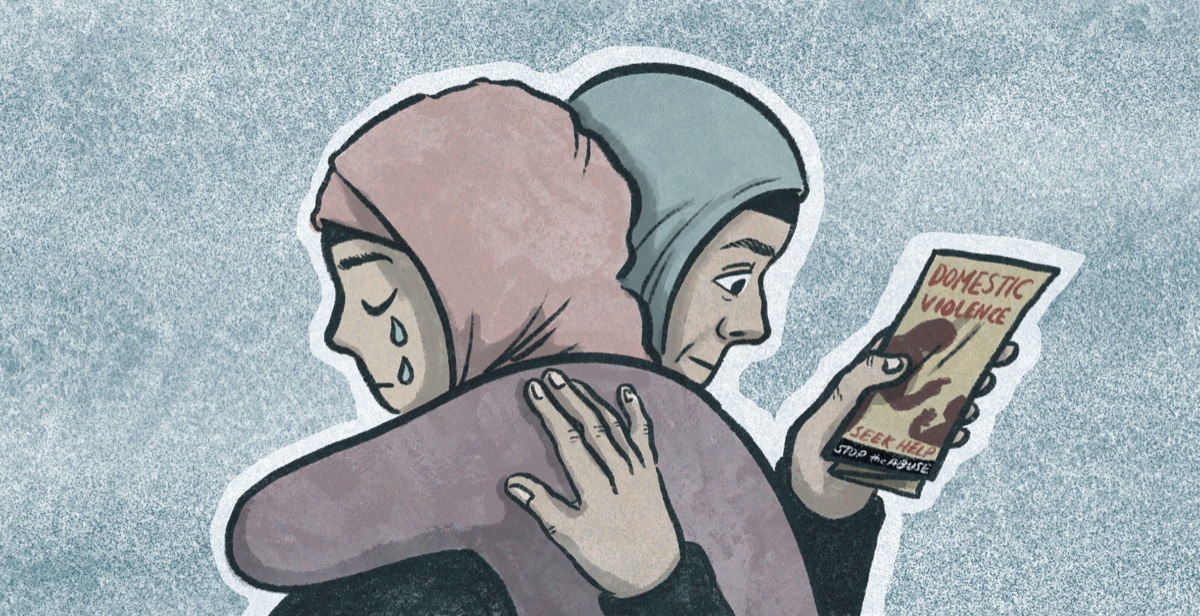
    Illustration by Elisa Tanaka
  • Apa salahku?: Unpacking Narratives around Domestic Violence in the Malay-Muslim Community (Part 1)

    Apa salahku?: Unpacking Narratives around Domestic Violence in the Malay-Muslim Community (Part 1)

    by NH Rahman
    __

    This article is part 1 of a 2-part series that critically examines how the problem of domestic violence within the Malay/Muslim population is imagined. Please read part 2 when it is released! [Part 1 of 2]

    Content Warning: This post discusses domestic violence and institutional understandings and responses to domestic violence. This includes mentions of victim-blaming, retraumatisation and procedures utilised by social services and the criminal justice system.


    Almost a decade ago, I handed my mother brochures for an anti-violence campaign I was involved in. “Mama, tengok (look), these are the workshops I’ve been helping to run. Nak ikut (Want to join in)?”. She glanced at it. Perhaps the word ‘empowering individuals’ was on the brochure, perhaps it was how I sold the message. Either way, her response was, “Kenapa? Apa salah ngan Mama? (Why? What’s the problem with me?)”.

    I remember being struck by this, but its gravity did not hit me fully until much later. Her reaction makes sense. The solution you are continually offered shapes the limits of how you imagine the problem. 

    Conventional studies accept policies as neutral, rational solutions to social problems. But policies – everything from community campaigns to laws – have the power to influence and shape definitions, frameworks and representations. If the solution to end domestic violence (DV) is empowerment, the problem suggested is  that you are too disempowered. You are framed as the problem.

    This is part one of a two-part series summarising my study on DV policies in Singapore. I used an approach called ”What’s the problem represented to be?” to explore how the problem of DV within the Malay/Muslim population has been imagined (and its limitations). I interviewed professionals who work with families going through DV, and, later, analysed policy texts. Throughout, I argue that Malay/Muslim women’s experiences of DV are shaped not simplistically by what has been imagined as the problem (often assumed to be violence related almost solely to “cultural” or religious beliefs, practices, customs or laws). Instead, I argue that it is manipulated by capitalist, patriarchal, authoritarian and colonial governance that violates and restricts safety and health, through housing, welfare and social service policies that, together, uniquely affect the Indigenous population. 

    Examining the environmental and historical context

    Domestic violence cannot be fully understood without looking at the greater environment it sits within. We need to consider not only Malay/Muslims’ racial, religious and economic positions in Singapore, but also the Singapore State’s governance. More significantly (and often ignored in the discussion of DV), we need to recognise Malay indigeneity, the intergenerational repercussions of historical colonisation and the ongoing colonialism that continues to shape our experiences in the country.

    Having said that, there are many who consider colonialism a thing of the past, something Singapore left behind when we became an independent republic. But while colonisation can be seen as an event or a period (like the period of British colonisation that Singapore went through), colonialism in contrast, has been defined as a process or a movement that endures “beyond the life-span of the colonial situation”. The impact of both colonisation and colonialism on Indigenous populations’ social, political and health outcomes have been well-documented internationally. Indigenous peoples had—and in many cases continue to have—their land dispossessed and their traditional social, welfare, healthcare and political structures eroded. Colonisation expanded capitalist systems and Indigenous populations in many colonised states were economically disenfranchised and forced into low-waged labour. 

    As Indigenous people of Singapore, Malays were similarly affected by colonisation, which brought to our shores a racial pecking order that relegated Malays to the bottom rungs of economic growth. The racist myth of the inferior or “lazy” native persists in modern Singapore’s political discourse, eugenicist policies, and cultural memory, tracing its genealogy back to a colonial depiction of Malays. But coloniality is not just about the endurance of stereotypical beliefs, or even belief systems. It cements its dominating power in structures and institutions, such as our legal, healthcare and social organisation systems. Today, it maintains Malay marginality in economic, political and educational realms, manifesting in poorer health outcomes and driven by policies such as the Ethnic Integration Programme, that minoritise Malays, and splinter and reduce their electoral force (Rahim, 1998). 

    How can we understand the links between colonialism and experiences of domestic violence? There are many ways to approach this complex relationship and many Indigenous researchers have offered us maps to trace the connections. For instance, it is often said that for women to leave violent relationships, there has to be environmental or material conditions that make leaving a possibility. We often hear of how women who experience violence in the home do not have strong social systems to support them, and to help remove themselves, whether temporarily or permanently, from violent situations. But colonialism changed these conditions for Indigenous people dramatically. Researchers have argued that, by weakening Indigenous peoples’ relationships with their land, neighbours, and families, colonialism caused a loss of autonomy and disrupted the ability to practice self-determination, thus disintegrating the systems of accountability necessary to end DV. 

    I wrote my study in Aotearoa New Zealand, a settler colony where the British Crown continues to dominate, with devastating consequences on the Indigenous Māori population. One Māori researcher (Cavino, 2017) wrote about intergenerational sexual violence and whānau (Indigenous extended family), exploring how the process of colonisation in Aotearoa New Zealand had changed Māori traditional systems of organisation and, thus, social control. The whānau was transformed “from a public collectivity of inter-related family members raising children and caring for the elderly in concert—to a private family: a mother, a father, and children contained within four walls”. In other words, the erosion of traditional family structures into private, nuclear families also disintegrated traditional ways of accountability and recovery. To summarise, I quote directly from her paper where she succinctly and powerfully described this relationship between colonialism and DV:

    While there are obvious differences between Singapore and Aotearoa that should not be flattened, there are also many connections. Although my study’s framework did not allow for a detailed examination of DV experiences, it began with the recognition that coloniality is very much present in Singapore’s governance, and that, in turn, creates assumptions about what the problem of and solutions to DV are within the Malay/Muslim community.  

    My findings

    I interviewed people who worked with DV survivors because I wanted to learn about how they understood the “problem of DV”. Their representations of DV were then mapped against the environmental context DV sits within, which I laid out above. Below are the major themes that were identified in my analysis.

    Patriarchal violence, religious authoritarianism and the State


    In all my interviews, participants named how gender roles are fundamental to women’s experiences of DV. DV was discussed in terms of expectations of women’s subservience, a male head of household, and as a gendered phenomenon. Discussions on obedience to the male head of household sometimes use the legal term ‘nushuz’ (Administration of Muslim Law Act). 

    But in Singapore, deference to (male) authority is not limited to the household. The State, too, upholds elitist and hierarchical social structures, using the refrain of pragmatism, meritocracy, and traditional ‘Asian values’ to defend patriarchal authoritarianism (E. Tan, 2008). An everyday example can be seen in Singapore’s “head of household” policy concept. We also see this in draconian legislation, which has been used to crush dissent and political criticism (Jaipragas, 2019), and the continued use of corporal punishment, which disproportionately affect minorities and legitimises State violence. 

    In my interviews, one participant shared how egalitarian interpretations of Islamic text (where gender justice is concerned, this may include ideas like Islamic feminism), face resistance from the community because there is widespread acceptance of traditional gender roles. But we also need to explore this lack of acceptance within the context of the State’s restrictive laws and policies surrounding race and religion, which act as a “coercive instrument” that “castrate(s)…alternatives in civil society” (K. Tan, 2017, p.68). The presence of MUIS, a largely conservative statutory board which relies on predominantly male leadership (Jamil, 2016), may also act as a barrier in the expansion of religious discourse into more progressive arenas. It is not unreasonable to see the trickle effects of coercive State control resulting in the inability for progressive religious ideas to gain traction and thus, both directly and indirectly endorsing religious and patriarchal authoritarianism.

    Housing and income in a patriarchal and capitalist economy 

    Economic and housing insecurity are major barriers to safety for women facing DV. With Malay/Muslim couples being overrepresented in divorce statistics in Singapore, the population may be disproportionately affected by economic and housing policies (“Marital Status, Marriages and Divorces”, 2020). Single parents face rampant housing discrimination and there are no known housing or financial assistance policies that specifically support those experiencing DV. 

    Neoliberal policies, which centre self-reliant individuals, sometimes with families as the “first line of support” (Jagdish, 2018a) is at work here, valuing “individual initiative, enterprise and responsibility” (Ishkanian, 2014, p.334), and encouraging individuals to be self-sufficient. In other words, even though the State’s social services are touted as a major intervening and preventative instrument in the eradication of DV, State support and housing, in reality, only comes in as a last resort.

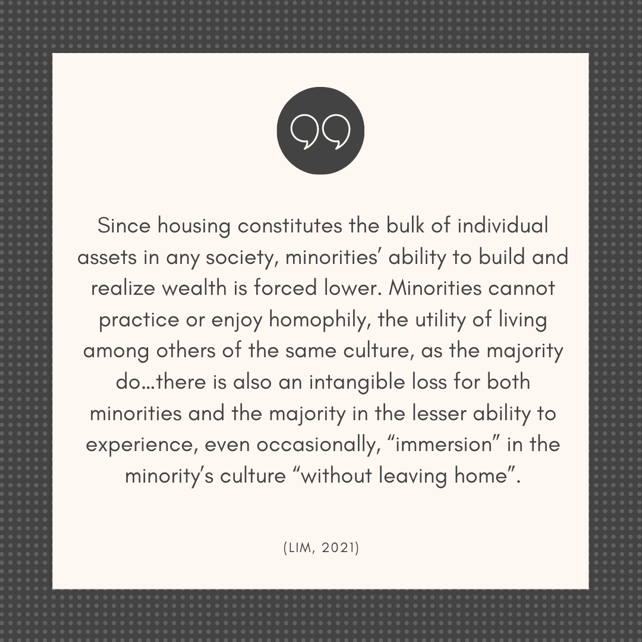
    Moreover, the role of EIP (“Ethnic Integration Policy”, n.d.) must be recognised for what it is: an imposition of racial quotas on ethnically minoritised population to maintain a Chinese majority.  Ethnic minorities have fewer opportunities than the Chinese population to have their application for housing in their preferred estate accepted (“Written Answer”, 2021). EIP also has a ripple effect on the day-to-day lives of ethnic minorities (Lim, 2021).

    Text

Description automatically generated

    The choice of women to stay in abusive marriages becomes a reasonable strategy in a society where safety, housing, livelihood, and overall welfare are not public goods, but relies on private capital from nuclear patriarchal families.  

    Resistance 

    Friends, family & religious community

    Participants discussed women’s social support systems which are inadequately equipped to support them. I am reminded of the links Indigenous scholars have made between colonisation, fractured communities and weaker systems of accountability. Poor social support does not simply happen because of stigma surrounding “broken marriages”, but also material constraints. Under-resourced, weakened, materially poorer, ethnically minoritised communities are more deeply and directly affected by divorce. It is not unreasonable to recognise family and friends’ unhelpful advice for women to work through abusive relationships as a response, whether overtly or subconsciously, to material constraints that are a result of neoliberal policies. 

    Moreover, women who reach out to religious leaders are often given unsupportive advice, prioritizing ‘patience’ and ‘endurance’. Some participants felt that public education by MUIS has not been adequate, that it does not trickle down to asatizah’s teachings/advice, and that MUIS should take on a more decisive role in challenging patriarchal family structures. However, we need to first acknowledge that MUIS itself functions within a patriarchal and authoritarian State. An expansion of MUIS’ powers would simply mean an expansion of the paternalistic reaches of the State.

    Police, PPOs and criminal justice system 

    In my interviews, participants discussed the lack of powers and sensitivity that the police have in terms of DV intervention, and the limitations of a Personal Protection Order (PPO). However, any push to rely on a stronger, supposedly more empathetic or progressive system of police, prosecutors, courts and punishments – a.k.a. “carceral feminism” – assumes that violence is a problem of individuals’ behaviour, and that the problem to fix is within those individuals (Kim, 2019; Sweet, 2016). It ignores the systemic nature of DV, and silences the State as a perpetrator of violence. Furthermore, criminal justice punishments disproportionately impact ethnically minoritised groups (Ganapathy & Lian, 2016) and this demands a more complex undertaking of the problem with policing. 

    Yet, despite these realities, few participants spoke about barriers or discrimination Malay/Muslim women face when making police reports, accessing PPOs and criminal justice remedies. One said, “I’ve never seen outright discrimination because someone is from the Muslim community.” But “discrimination” cannot only be simplistically recognised as overtly unfair or unequal treatment against particular groups. To recognise systemic discrimination, one has to be conscious of the existing and historical social stratification of society. Malay/Muslims are “Othered” in ways that are normalised, as well, including through the legitimisation of discrimination against Muslim workers who wear the tudung, the framing of it as an issue of Muslims who do not make an effort to “compromise and integrate themselves” (J. Tan, 2014), and the narratives of the ‘disloyal’ and potentially dangerous Malay/Muslim citizen in nationalist discourse (W.M. Tan, 2020). This “Othering” changes the shape of both policing, and the ability to see the police as a source of support or help. 

    Social services & shelters

    Text

Description automatically generated

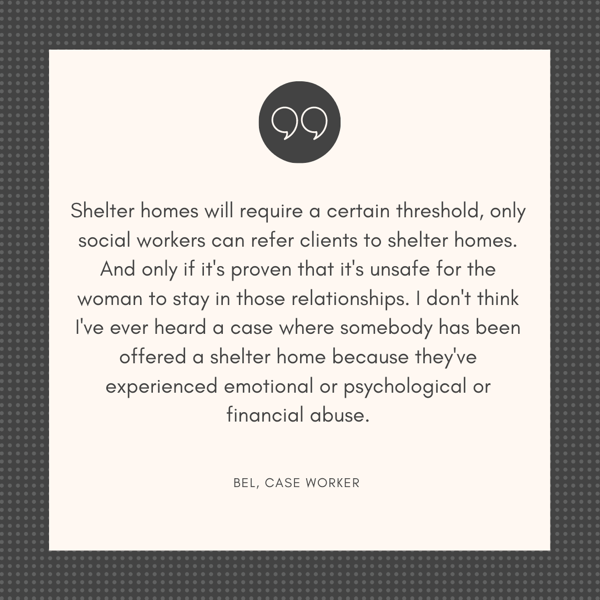
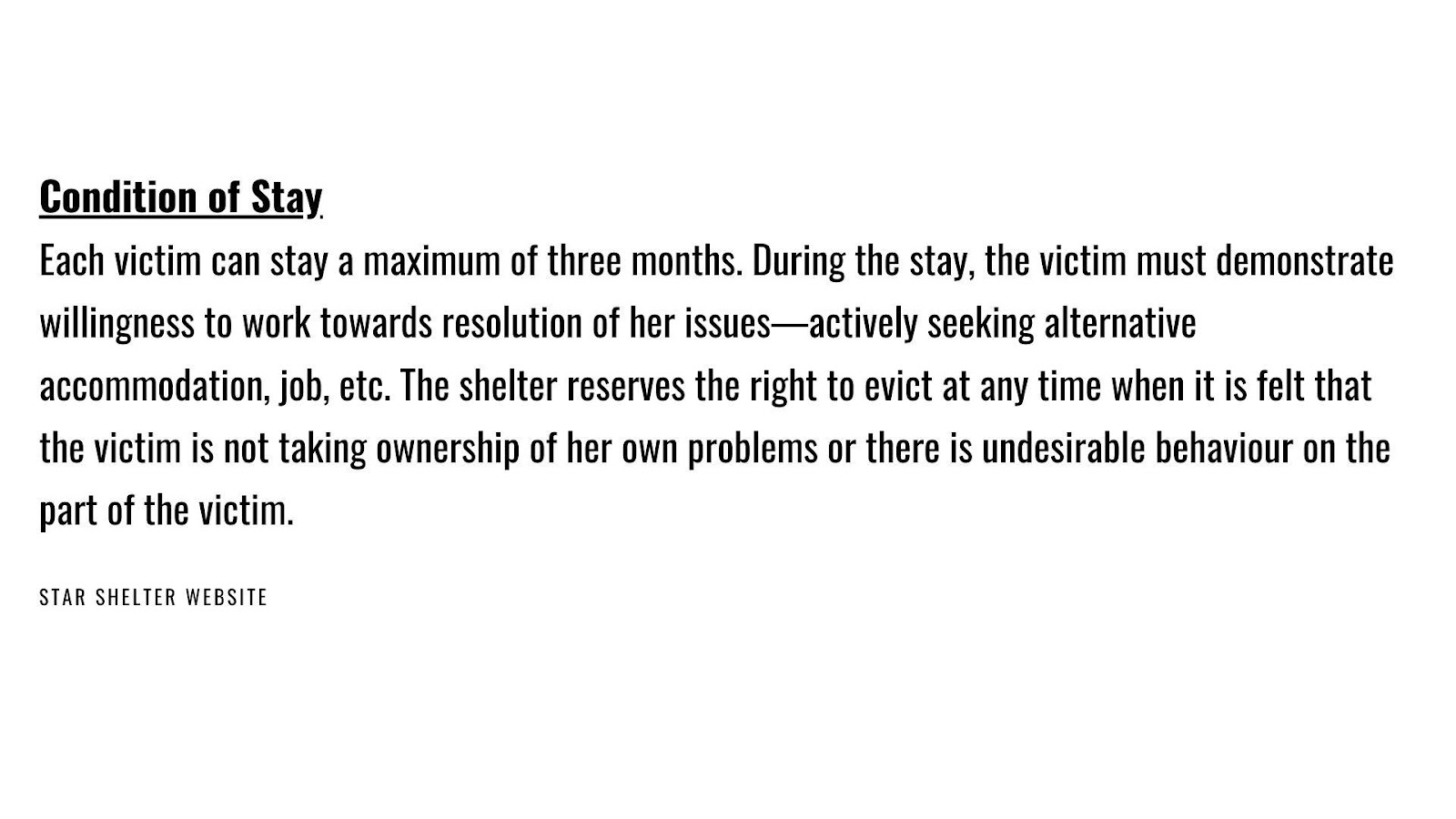
    Women more often than not have to have been physically harmed recently before crisis shelters become an option, given that admission policies do not account for experiences of coercive control. Crisis shelters function only to support women who are not “at risk” of physical or mental illnesses, and excludes disabled people, showing a shocking lack of care for the impact that violence has on women’s bodies and lives. 

    One participant spoke about how some women may fear institutionalisation, based on a case where a DV victim was once, in her youth, institutionalised through a juvenile home. This is consistent with research which criticises shelter systems for being modelled after prison systems: women are monitored, policed and isolated, mimicking abusive patterns of control that further remove women from their communities.

    Graphical user interface, text, application, letter

Description automatically generated

    (Star Shelter, 2020)

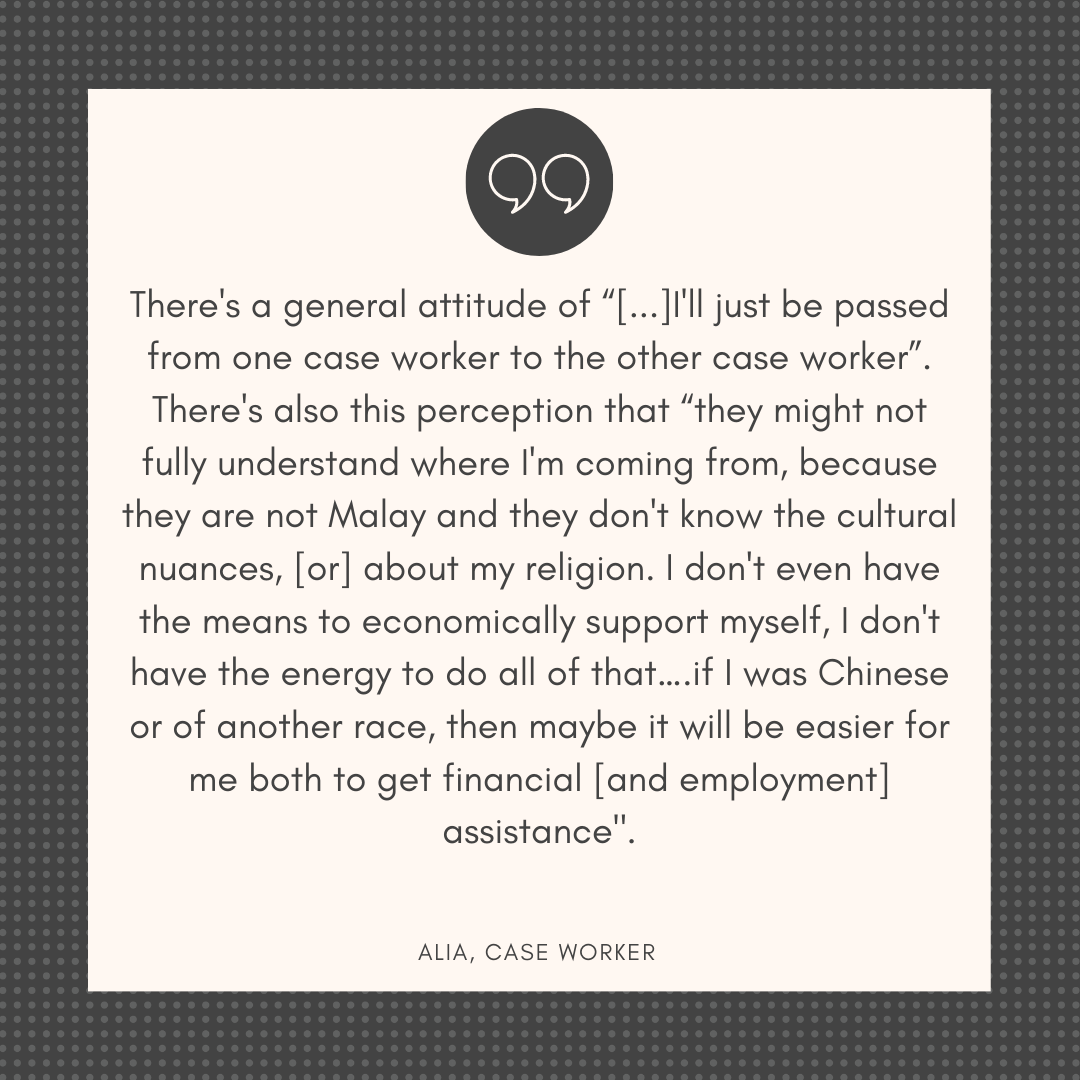
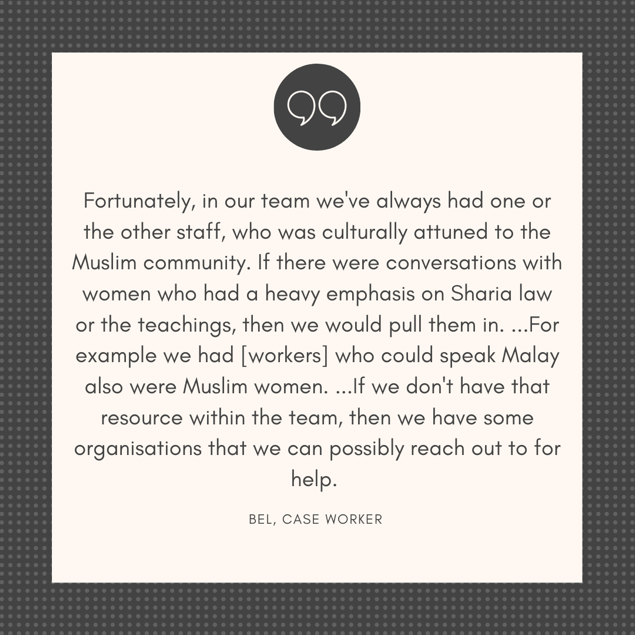
    Keeping women safe from violent relationships should not rely on social and organisational methods of monitoring and controlling women’s lives, as it reproduces paternalistic forces of subjugation. Participants also spoke directly about the struggles that Muslim women face in the social service system as religious and racial minorities. 

    Text

Description automatically generated

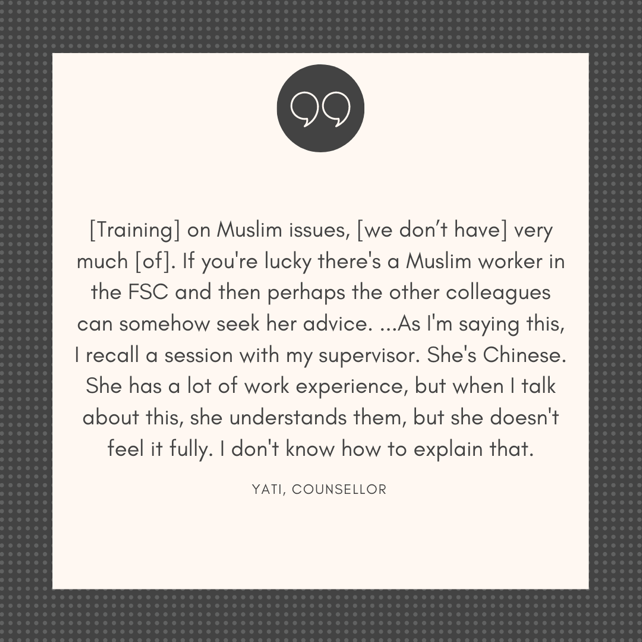
    Yet very few participants who work in service settings shared any relevant “cultural competence” training they have received. Most had to rely on their own immersion into the culture or religion. Knowledge of culture and Muslim personal law are “othered” to minority workers, rather than something inherently woven into working with DV survivors. 

    Text

Description automatically generated
    Text, letter

Description automatically generated

    When something is assumed to be “unique” to the Malay/Muslim population, it tends to be contextualised within spiritual abuse, Islamic law or conservative Quranic interpretations. Not enough is discussed about the Malay/Muslim population’s unique social, political and economic marginality. The imagined “sameness” of violent experiences across all ethnic/religious demographics flattens Malay/Muslim women’s realities. This has a damaging effect on the options women are given and in the trust that minoritised groups have of social services. Rather than demanding that women be accountable to institutions that monitor their behaviour, we have to ask: how are our social services accountable to minoritised communities?

    *

    The patriarchal and authoritarian State paternalistically governs the options for women going through DV, seen through neoliberal housing, welfare and social service policies. Women are presented with two broad options: either work through abusive relationships through State mediation or leave violent relationships but face structural and material consequences. This has a particularly damaging effect on Malay/Muslims whose social, economic and political outcomes are negatively shaped by colonisation and continued colonialism. In the second part of this series, I turn to policy texts, to interrogate how the State has imagined the problem of DV, based on what it offers up as “solutions”.

    [Full thesis with a complete reference list can be found here]

    __


    Nabilah is a researcher, writer, and artist based in Te Whanganui-a-Tara (Wellington). Currently, she is doing research on how Asian migrants participate in Treaty of Waitangi justice efforts and movements in Aotearoa New Zealand. She makes art at nebula.art89.


    Illustration by Elisa Tanaka

  • A Story of How She Died

    A Story of How She Died

    by Raudah Abdul Rashid
    _

    [content warning for partner abuse and violence]

    Her name was *Siti Ainun.

    This is a story of how she died.

    Siti was a 20-year old woman who learnt from a young age to be independent, to rely on herself. As a quiet child growing up amongst siblings and step-siblings, Siti longed for her own space to be herself. Growing up in rental housing was harsh for any child. Her mother did little parenting and had no time for her or any of the children. She did not know her biological father or any of the step-fathers who come and leave after a few years.

    No one stayed yet everyone stayed.

    The family resided in the rental housing from the time Siti was born till the age of 14 when she ran away from home.

    No one looked for Siti.

    Not her mother, not her siblings or step-siblings, not her school teachers. No one.

    Siti worked odd jobs and stayed over at friends’ homes most of the time.

    At the age of 17, she met someone, Noorman. Noorman was older, kind and understanding. He listened to her and paid attention when she talks.   

    Over time, the couple drifted apart.

    In August 2016, Noorman landed in prison for petty theft.

    Siti, now aged 20, was looking to settle down with a man who can provide. She longed for a place to call home.

    In 2016, she meet Zulkifri. Zulkifri was everything Siti had hoped for. He had a house of his own, albeit also a rental unit but it was bigger and he was also saving money for a BTO flat. He had a steady job. He had a good grasp of religion and was willing to overlook her past and her mistakes. Zulkifri also took care of his mother, who doted on Siti like a mother should.

    Siti was in love. For the first time, she felt loved, she felt like she belonged and that someone cared for her. Zulkifri would often guide her in religious matters and told her to pray to overcome her sins.

    Siti loved him and wanted to please him. She wanted to make him happy always.

    But she never seemed to be able to please Zulkifri. He was always angry and raised his hand at her. She was always making mistakes and forgetting things. She made Zulkifri angry, a lot.

    Zulkifri hits her. Siti was sure he didn’t mean to as she herself was clumsy and stupid. She deserved to be hit and slapped and punched and kicked.       

    On the day of her death, Zulkifri had continuously hit Siti with a belt and clothes hangers over a period of two hours. After the continuous beating, Siti started convulsing before eventually succumbing to the injuries.

    Zulkifri then placed a white towel over Siti’s body and head. He placed a Quran on top of her. Zulkifri and his mother then left Singapore and left Siti’s body in the flat to decompose.     

    On 23 August 2017, Zulkifri was charged to two years and 3 months imprisonment for voluntarily causing hurt. As the decomposition was too severe, the cause of death of *Siti Ainun could not be determined.

    There was no missing person report for *Siti Ainun. No Facebook appeals to find her.    

    Her name was Nur Syirin Hamzah.

    This was how she lived.

    —–

    [*Parts of this story is fictional. However, the parts on Syirin’s death were reported in the news retrieved online: https://www.todayonline.com/singapore/woman-dies-after-savage%20beating-man-jailed-two-years ]

    My first reaction upon reading this story was utter shock and disbelief. Nur Syirin Hamzah was a victim of gender violence, social class and religious ignorance. What further fuelled the shock and disbelief was the short sentence given to the perpetrator of the violence.  

    The violence and rage directed towards Nur Syirin was tremendous. The fact that she seemingly held on to Zulkifri during the beatings made me wonder about her understanding and world view of interpersonal relationships; her world view of love and her understanding of how she viewed herself as part of society.       

    I often times wondered about the mother of Zulkifri. She stood by and allowed the abuse to happen. Perhaps, she herself has been a victim of abuse. Perhaps she herself was being abused and victimised by Zulkifri’s temper and anger; a trait he perhaps learnt from his father or from male ‘role models’ in his life or the lack of them. I wondered about Zulkifri too. He was previously convicted for causing hurt by dangerous weapons or means, housebreaking and sexual offences. I wonder if he himself was a victim of circumstances.    

    I was shocked at the lack of media and public interest on the story. There was no outright rage and fury or appeals made for Nur Syirin Hamzah. In an era of social networks and connectivity, no one looked for her.  There was no missing persons report on Nur Syirin Hamzah. I longed to see a picture of Nur Syirin Hamzah. I prowled through facebook pages, online searches to get more information on what her life was like. Till date, there has not been a photo of Nur Syirin in any news media. The media portrayed her death as minimalistic; as if her death did not matter, as if her life did not matter; a faceless victim of gendered violence.   

    Violence towards others is not an innate trait that passes through generations; it is a learned behaviour comprising of multiple factors such as poor emotion regulation, poor communication, temperament and other factors. These factors coupled with social inequality, poor religious understanding on the role of women made Nur Syirin Hamzah another faceless victim in gendered-based violence.       

    __

    Raudah is a plus-size Indian-Muslim single woman who mostly wears black or dark-coloured hijabs because she gets food stains on them. Dreams of garnering an army of social workers to change the world and advocate for social justice and equity for all.  

    Illustration by Ishibashi Chiharu

  • My Mother was Abused by my Father, but Everyone Around Allowed it to Happen

    My Mother was Abused by my Father, but Everyone Around Allowed it to Happen

    By Ayla Suraya
    __

    (Content Warning for Partner Violence and descriptions of abuse)

    My mother’s experience of Intimate Partner Violence (IPV) or domestic violence has definitely had an impact on me. Growing up, my mother would share problems that she should have confided in her spouse or a therapist and my parents’ marriage was the first model of relationship that I knew.

    I will write about her marriage from my perspective as her child. That being said, I will write under a pen name to protect the identities of those I write about, especially the victims and survivors of domestic violence.


    Spiritual abuse

    When I was young, she shared an experience that I would identify as spiritual abuse. “Aku haramkan kau keluar dari rumah!” — my father forbade my mother from going out, even if it was to shop for groceries. Later, she felt her knees gave way. She truly believed his curse worked.

    She felt guilty for going against my father’s word and it doesn’t help that society has instilled fear and guilt in Muslim wives for “disobedience,” They are told to always listen to their husbands, even when it goes against their better judgement. If it that were true, it was unjust of God to let that happen to my mother. Why are experiences of violence against women merely a test? Why do we insist victims of violence will get their salvation in their hereafter, but not now?

    It is frustrating to me how society uses religion as a blanket excuse and tool to “comfort” victims. It isn’t comforting. You are on the abuser’s side when you disregard the violence.


    The miscarriage

    My mother had two miscarriages before she had me. My parents had been married for at least five years then. My father accused her of killing them so that he couldn’t have his first child. He claimed that she doesn’t care since she had two children from her previous marriage.

    She recounted her feelings of extreme guilt after the miscarriages. She saw the hospital nurses write “abortion” on the medical records. I explained to her that technically, the procedure to remove the dead fetus from the womb is abortion, but the cause of the fetus’ death is still miscarriage. It is still an accident. The stigma on abortion didn’t make it easier on my mother.

    Unrelated to the miscarriage, my mother visited the doctor after they got physical during an argument, more than 20 years ago. Her doctor advised her not to egg him on since traditionally, men have greater physical strength. Perhaps, her doctor meant well. However, he still victim-blamed my mother. His words have stuck to her when physical fights happen now with my brother and me. It further debilitates her from taking action. Medical professionals need better sensitivity training to deal with victims of violence if they haven’t already.


    The sex tape

    All of us got Personal Protection Orders (PPOs) a few years ago. My mother should’ve gotten it for all of us from the get-go. We found his sex tape when I was 15 – solid proof he was cheating on my mother.

    My mother barged into my room, panicking. We watched the sex tape together till bile rose in my throat. My mother apologised but she desperately needed a witness. There were no other adults in the house, except for her and my father, the cheater. I had a plan: download the video into my laptop and drop the evidence at Sharia court. She can finally divorce him. Perfect exit strategy!

    But my mother was scatterbrained. Guilt overcame her for snooping into his stuff. She couldn’t believe she found incriminating evidence.

    So, she didn’t follow my plan. She couldn’t think straight and my patience wore thin. My father was awakened by my outburst. He was drunk. They argued. He hurled a standing fan at her and missed. I was in my room with the doors locked. I jotted down what I heard. Everything happened so fast.

    Immediately, my mother called the police on him. She ratted him out for the sex tape, but the police were useless without a PPO. My father then blamed my mother for not “giving it” to him. He was at fault. He betrayed us all. Yet he had the audacity to play the victim card.

    The sex tape divorce plan never worked out. My mother figured requesting for a maintenance order was better. But my father haggled with the judge. He doesn’t have a criminal record. So, we didn’t get much.


    Systemic failures

    My father and our family were referred to PAVE for counselling. Our social worker went through the concept of the cycle of violence. She warned that though he may be in a ‘honeymoon phase’ (meaning: he calmed down), doesn’t mean the volcano is dormant and is not preparing for another eruption.

    She explained how abusers have a distorted sense of right and wrong. Ask them: why do you hit your wife? Why not go one step further and kill her? and you’d be surprised at how they’d react to such a question. These abusers reasoned it would be too much; I’m not that cruel. Abusers don’t always see themselves or their actions as abusive. They would justify how their abuse can still be “ethical”. That is exactly how my father is and how he justified his actions to the police. 

    The systemic support ended there. I don’t remember an active follow up to check in on whether he had truly changed. Perhaps there isn’t enough manpower to rehabilitate abusers. The system disappoints me again.


    Another marriage on rocks

    My sister admitted she filed for divorce to demonstrate to our mother that they can both liberate themselves from their toxic marriages. She was willing to go above and beyond to become a springboard for our mother’s divorce. She believed what was holding out mother back was her post-traumatic stress disorder (PTSD) from being divorced by her first husband, my sister’s father.

    But it isn’t easy to get our mother to move on. She is traumatized from being divorced without prior notice, being cheated on, and barely has any stable income as a homemaker.

    She is convinced that my younger brother and I will spiral downwards just like our older half-siblings should a divorce happen. She is only staying put for the “financial safety net,” because a few hundred dollars does make a difference in running a household and supporting us for our survival.

    My mother plans for a divorce once my younger brother and I are rich enough to get her a lawyer so that she doesn’t have to bear the humiliation of going to court a second time. She is still very traumatized by her first divorce.


    Abuse tactics

    My father threatened to hit me last year. I quickly shut him up by threatening to record his threats on video and hand it over to the police. He now knows that I won’t hesitate to take him down, so the abuse trickles down to my younger brother. I think my brother still has a soft spot for him. Perhaps he feels sorry for our father, because of how cold and hostile I am. My father gets my younger brother’s hopes up and promises to change, but he doesn’t.

    My brother slut-shames his mistresses when they argue. It feels as though he is still coddling our father. If he stops “delegating” the blame, our father will definitely get the message that he doesn’t buy into his nonsense anymore. Because then, he’d be forcing our father to take full responsibility for his choices.

    Because my mother was divorced, my father sees him marrying my mother as “selamatkan kau dari jadi janda” – saving her from the embarrassment of being a divorced widow. Therefore, he feels entitled to her and to degrade her.

    A pattern of abuse I noticed in my father is how he picks fights after midnight up till 6am. That’s when everyone is home and he can show off his “power”. In that time period, the neighbours can hear him play the victim: how he is supposedly disrespected as the man of the household. 

    My father is strategic in his abuse. I don’t believe that every instance of his abuse is done out of blind anger. He does stop to consider if something can be used against him.


    Teens D.E.A.D.

    I told my ustazah at 15 that I stopped believing in marriage. She asked why — Well, my father cheated on my mother. She said that it was no excuse to denounce the sanctity of marriage. She was someone I trusted and respected. For a while, I tried reconciling with the idea. But whether I was 15 or 22, I still feel the same way.


    Questions:

    Why is god on my father’s side? Why does my own community not care about their women being abused? Why don’t they support vulnerable women who want a way out?

    Why did my ustazah place a greater importance on the acceptance from the prophet in the hereafter more than my feelings of hurt and heartbreak? Why do religious leaders endorse spousal violence on state newspapers, not caring that they are putting our lives in danger?

    Why does the justice system make it so difficult and tedious for victims and their families to demand help? Why do they pretend to care but stab us in the back by allowing our abusers bail? With a PPO! Who were you to decide that wasn’t our best shot at a way out?

    Where were you when we cried out for help?


    The Impact

    My anger is justified. I don’t buy into the idea of abuse happens for a reason or people experience abuse because it will make them stronger and wiser. No. Abuse happens because abusers are messed up. It is unfortunate that some people experience abuse.

    I had a rough childhood. I had difficulty expressing myself. I skipped school because I felt like I couldn’t face the world. I felt my entire physical-self was transparent when people glanced at me as though they could see through my problems. Because I wasn’t fluent in English, I was viewed as unintelligent and adults found it easier to invalidate my experiences and feelings. None thought to help me get support to deal with whatever issues I had trouble communicating. That has contributed significantly to my self-esteem issues.

    After the ordeal, I packed our bags and dragged my brother with me to stay over our sister’s for a week. If my mother had to deal with my father on her own, so be it. I can only protect myself and my brother. I can do that much as a 15-year-old child.  

    It was refreshing to just focus on myself and one child sibling. My mother can deal with her adult feelings and issues on her own. I was so overdependent on my mother, emotionally, I would be lying if I said that I didn’t have any qualms or guilt about leaving home. It was liberating yet the most selfish thing I’ve done. We weren’t coming home till she deals with her humiliation of going to court and applied for our PPOs.

    That was also the period when my brother and I cried together and shared our fears. We contemplated what home meant to us. We bonded over shared history.

    One Raya, sometime after the PPO ordeal, I told my mother I have forgiven her for not protecting us. She seemed very confused. I became distraught that she didn’t want to admit she was also abusive, though passively. She sees herself as the victim in all situations. That confrontation was not something she had expected.  

    I held it together by focusing on school and did well for myself. But the year I sat for my O’ levels was the year I finally spiralled downwards. I stopped journaling. I stopped going to therapy in school. I stopped dealing with my feelings. I was tired.   

    Now, at 22 years old, I have a love-hate relationship with my mother. She thought that by staying put, she was protecting us. I thought she was being selfish and only wanted to protect herself. But the truth is, she wasn’t even protecting herself.

    Now that I volunteer for an NGO championing women’s rights, she gets quiet whenever I mention it. I think she feels somewhat attacked because it relates back to our experiences of domestic violence. It is very hard to bounce back from something like this.

    I don’t want to end this off on a depressing note. I don’t consider myself to be a victim anymore, but a survivor despite living under the same roof with my abusers. Certain factors have helped me survive and empower myself, such as education, financial safety nets from extended family, affiliations to certain organisations and the opportunities I receive.

    But also, I can’t guarantee that if you follow a certain path, for instance, that you can dig your way out of abuse. You can’t blame the victims for their experiences of abuse and their current state.

    Empowering victims means the justice system needs to put them first, and not their abusers. Religious communities need to stop using religion against victims. Don’t tell them to “jaga aib suami” and guilt trip them into staying, endangering their lives and the children. When abuse happens at home, it’s not just an individual’s problem. It’s everyone’s.

    __

    If you or someone you know is facing partner/domestic violence don’t hesitate to call the Women’s Helpline at 1800 777 5555 (Mon – Fri, 10am – 6pm, excluding PH). If you are facing any kind of sexual violence, call the Sexual Assault Care Centre (SACC) hotline at 6779 0282 (Mon – Fri, 10am – 6pm, excluding PH) or email sacc@aware.org.sg.

    Women’s Care Centre (WCC) Women’s Helpline
    – Phone: 1800 777 5555 (Mon – Fri, 10am – 6pm, excluding PH)
    – Text Chat and Call Back (by appointment only): Clients can book an appointment through their website before accessing this service.

    Some organizations you can turn to:
    Centre for Promoting Alternatives to Violence (PAVE)
    Blk 211 Ang Mo Kio Avenue 3, #01-1446
    Tel: 6555 0390
    Email: admin@pave.org.sg
    Website: http://www.pave.org.sg/

    TRANS Centre
    SAFE Programme (Stop Abuse in Families)
    Address: Blk 411 Bedok North Avenue 2,
    #01-106, Singapore 460411
    Telephone: 6449 0762
    Email: transbd@trans.org.sg
    Website: http://www.transcentre.org.sg/

    Syariah Court of Singapore
    Address: Family Link@ Lengkok Bahru,
    8 Lengkok Bahru #03-01,
    Singapore 159052
    Telephone: 63548371, Monday to Friday, 8:30 am – 5:30 pm
    Website: www.syariahcourt.gov.sg

    A PPO can be applied for at:

    Centre for Promoting Alternatives to Violence (PAVE)
    Blk 211 Ang Mo Kio Avenue 3, #01-1446
    Tel: 6555 0390

    TRANS SAFE Centre
    Blk 410 Bedok North Avenue 2, #01-58
    Tel: 6449 9088

    Care Corner Project StART
    Blk 7A Commonwealth Ave, 01-672
    Tel: 64761482

    _

    Ayla Suraya just graduated from school and she is unsure of what is next. When she is not talking to herself, she watches videos of cute korean cats and kids trying out different food.

    Illustration by Ishibashi Chiharu

  • Domestic Abuse for People of Faith

    Domestic Abuse for People of Faith

    by Aliyyah Zubair
    __

    (Content Warning for Partner Violence and descriptions of abuse)

    An abusive marriage/situation sucks, no matter with who and how it happens. But as believers, there’s that added dimension of our faith and spirituality that can make things that little bit more tricky. I cannot count the number of times warning bells set off in my head and instead of seeking for professional help, I turned to the praying mat instead.

    I’m not saying it didn’t help. I’m very sure my prayers were answered in the way only God knows and provided great relief amidst the madness. I am so lucky my teacher detected the signs of abuse, otherwise, God knows how long I would have gone on deteriorating without realising it.

    Things Muslim Victims of Abuse Tell Themselves

    I fully understand how people, especially people of faith, might stay in abusive marriages. I, for one, kept telling myself “This world is temporary and even if I suffer for the next 70 years of my life, that is nothing compared to an ETERNITY with my Lord who loves me and will make it all worth it.”

    Or “God can change ANY situation. Supplication is the weapon of a believer.” So pray I did, harder and longer when things got bad. When I moved back in with my ex I told myself not to look out for signs that things were getting better or worse, because my ex could change in an instant, any instant, so I should continue praying and wait for that moment to come…..whenever it did.

    I placed that responsibility fully on God – You are the One capable of miracles. You are the One I’m depending on (#tawakkaldonewrong). I truly thought that it was a proof of the strength/weakness of MY faith in God, instead of putting the blame where it belonged: my abusive ex-husband and making sure he was doing good on his promises of reform.

    Another constant in my head was “marriage is half of faith” and that your spouse in this life was chosen by God. So many times I ‘comforted’ myself by saying that our marriage couldn’t have been a mistake. How could it be since God chose him for me? Surely no believer wants to question God’s Decisions. I want to hug all the women who are in such marriages and who (like I did for a time) believe that God chose that for them, that this life really is meant for suffering, that people can get away with anything while using religion to prop their flimsy masks, that they deserve what they’re getting. That’s the most heartbreaking of all.

    We all have sinned, and ask for God’s forgiveness constantly. I told myself that if what I’m going through is a way to purge myself of sins, then surely it’s a generous trade-off? I’d take punishment in this life any day, you know what I mean?

    But that’s not who God is, or what God intends. I don’t want to speak for Him obviously, but abuse has to be called out and really properly dealt with in our faith communities. I really did get lucky, but so many people out there are just silently accepting this and the society lets them believe that they deserve it.

    There’s a lot of reasons why victim-blaming is pervasive and abusers are defended but I’m not going to go into that. I will talk about why it’s so difficult for people of faith to talk about it or acknowledge it instead.

    Abusers Can Be Religious Too, It’s True

    My husband never missed his prayers. Every Ramadan since I knew him, he’d take leave from work for the last 10 days of Ramadan to increase his worship. I saw how he gave charity every single day. We had a box near the door to our home and he’d put in his change or other amounts every day before he left for work and we’d empty it when it was full and give it to a mosque or charity. He read the Qur’an well, attended Islamic events regularly and was basically, for most people, an outstanding Muslim.

    These were the very reasons I didn’t want to seek help. I honestly believed that his prayers, charity, devotion to God would cure him of his cruelty and abuse. Because I NEEDED to believe that MY prayers and MY charity and MY devotion to God would also have an effect on my spiritual heart.

    I understand when people don’t believe me if I told them he was an abuser. Because for the longest time, I couldn’t either.

    When things were bad, I didn’t tell anyone because “spouses are a garment for each other” and if I “covered the aib/shortcomings of your brother, God will cover your aib/shortcomings in the Hereafter”.

    There are layers upon layers of religious justification that a victim of abuse has to uncover. When word got out that I had moved out, he started spreading rumours that I was having an affair and asking for a divorce. Well-intentioned, pious old ladies I had known for years from our community whispered to me “God hates divorce. I love you and don’t want you to not get to smell Paradise.”

    I didn’t know where to even start. Should I tell her that within a few months of marriage, my ex-husband initiated sex when I was dead asleep and I woke up to a handwritten note by him saying “I hope the angels weren’t cursing you last night”? How does one even verbalize the kind of shock and horror I felt?

    Once, we were on holiday with my family and he wanted sex but I pleaded with him to either let me give him a handjob or wait for the next day because we had been out all day and I was tired, plus it was the middle of winter (2 degrees Celsius). I was unwell and really didn’t want to take a shower at 3am before fajr (plus we were staying at a family friend’s house and not at a hotel). His response: “Okay sure. But don’t blame me if I have wet dreams of all these beautiful white chicks.”

    I didn’t know it then but these were threats (once using angels to back him no less!) and it ensured that I never fell asleep before he did, never refused him sex even if I was tired or unwell thereafter.

    Emotional Abuse Is As Traumatic As Physical Abuse

    Many times, as fearful as I was, I really wanted him to hit me. It would be far easier to turn up at a police station or go to my parents with a bruise than to tell them he was a bully. Even though it got physical at the very end, for years, he never laid his hands on me.

    When I tried to get my in-laws to speak to him, they said “You know he’s always been difficult. We can’t talk to him because it will make things worse. You guys are married now and need to find a way to work things out.”

    I then approached my sister-in-law. She was intelligent, mature and always seemed to have a cool head. “If there was someone who could help me, it would be her,” I thought. There is no one way to talk about emotional abuse because it is a whole pattern of behaviours. Which one should I choose? I didn’t know but told her of several incidents of him cutting me emotionally or using subtle threats to get his way and she said, “Look, I know he’s difficult but those are nothing. Don’t be so dramatic.”

    When I finally spoke to a counsellor, she said mine was a textbook case of abuse. How is it so clear to one person and “nothing” to another? Because it’s so hard to pinpoint when there’s no blood and cuts to show for it.

    In case you wanted more real-life examples from my life,

    1. My ex constantly talked about how I deserved a better job. After a while, I decided to quit my job and find something better. He said “You should take 1-2 months off, you deserve the break.” Great! Which wife wouldn’t want to take a break from work and since my husband suggested it, even better! After I quit, he said it was nice having me home and he enjoyed our time together. Aww, that’s really sweet. He kept delaying me from taking another job, making excuses on the day of interviews so I would miss them. He was working shift hours then and said if I took an office-hour job, we’d spend less time together. Wanting to be a good wife who’s available to her husband, I tried to find jobs I could do from home. Notice how he never demanded I quit my job. He just kept repeating stuff and leading me to make decisions aligned with what he wanted, disguised as something “for my own good.”

    2. Gaslighting and manipulation are an abuser’s greatest weapons. They speak in opposites, confounding the victims and leaving us constantly trying to figure them out and do the right thing. I have always been skinny. I enjoy food as much as the next person but was blessed with a great metabolism. When we were married, he would sometimes praise my body. Other times he would say “You look like an Afghan prisoner of war.” Wanting to be desirable to my husband, I would eat more. When I was enjoying a meal, he’d say “Why are you eating so much? You eat like a fat man.” I never gained weight when I was married to him. In fact, I lost weight because I was stressed all the time.

    3. I, like most people, valued honest feedback from my nearest and dearest. “Believers are a mirror to each other” and I was pro-active about my self-development, especially spiritually. I would sometimes ask my husband how I could be a better person. I wanted so much to not just be good enough for him, but for God. Once, when I asked him this (we had been fighting quite a bit but this was during a ‘good’, calm period), he looked at me with a straight face and said, “You know this hadith? Prophet Muhammad said, “The signs of a hypocrite are three: when he speaks he lies, when he gives a promise he breaks it, and when he is trusted he is treacherous.” You know you are a munafiq right?” I had never been more broken in my life.

    I have so much more examples but we have a word count.

    Pro Tip: Don’t Blame the Victim

    When I first spoke out about my ex’s abuse, the most common reactions were:

    • “But what did you do that made him do it? Surely you must have done something.”
    • “Maybe you didn’t use the right words.”
    • “Maybe you should have waited till he was well-fed and well-rested before bringing up anything”
    • “But did you make du’a for him?”

    What did I do? I never provoked him to receive such treatment. And I sure as hell did not ask him to call me a munafiq when I asked for sincere advice. Even if I did do something that angered him, he has a choice on how to deal with that anger. He could do 1001 things that is NOT abuse.

    The second most painful, insulting thing that people said to me:

    • “I would never allow him to do/say that to me.”
    • “You never told him not to do/say that.”
    • “If it was me, I would have slapped him. You’re too soft. You didn’t draw boundaries.”

    I didn’t ask for the person I love to call me any of the degrading terms he used on me. One does not expect someone who loves you to say such things. When you receive it, you are in too much shock. After I had read about emotional and verbal abuse, I would reply with something like: “Don’t call me stupid. I’m not stupid.” Instead of apologizing and retracting as one would expect, he listed down the reasons why I was indeed stupid, only hurting me even more than if I had ignored it. It is not my fault that my ex is incapable of talking like normal adults.

    The most difficult thing about victim-blaming is that you’re only saying what victims are already thinking all the time. I constantly wondered what I could have done better, what words to use, what not to do to provoke him. I already believed I am stupid, ugly and lucky to have married my ex and am sinful to God. I already have a mental list ready on why this fight is my fault and why I was wrong to not have anticipated or stopped it.

    I know my weaknesses and my ex regularly reminds me of them under the guise of “needing to stay humble” and “not letting our ego rule us”.

    It took my counsellor telling me repeatedly it isn’t my fault before I would believe her. (And I still have days when I wonder “Maybe I wasn’t patient enough”, “Maybe I really am difficult to love”, “Maybe I really am stupid & ugly & lucky to have married him”.) And when outsiders echo my self-blame and doubts, you are only undoing her work, and it takes me another week or month to tell myself that abuse was his choice and not something I deserved.

    No one deserves to be abused, and I’m still telling myself that, 4 years since the divorce.

    _

    Aliyyah is a survivor of domestic violence who currently does peer support for other Muslim women experiencing abuse in their marriage, or those going through a divorce. She hopes to do a Masters in Counselling one day.

    Illustration by Ishibashi Chiharu

  • Life as a Child of Intimate Partner Violence

    Life as a Child of Intimate Partner Violence

    By Leila

    (Content Warning for Partner Violence and descriptions of abuse)

    When I scroll through social media and see friends dedicating a post to their parents celebrating their 25th or 30th wedding anniversary, I can’t help but wonder how that would feel like. Neither can I relate to girls saying they hope to end up married to someone who loves their mother as much as their father does.

    My childhood memories mainly consist of two things. Firstly, me growing up hoping that my mother gets a divorce from my father. And secondly, me knowing that I never want to end up married to a man like him.

    In fact, hidden somewhere in my closet is a copy of a half-filled divorce application that my mother never seemed to complete.

    The beginning of my childhood was not too bad, though I don’t remember much about it. I think I have unconsciously blocked some of the memories out, and what I do remember are less than pleasant. But I do remember things being relatively normal. I grew up working class and we couldn’t afford our own home until I started school. That changed when my father landed another job that paid him better, and our family went through upward mobility. We could afford short trips to Malaysia. We could afford to eat out.

    Things were looking better – or so I thought.

    He was always on his laptop and like any child, whenever he wasn’t around, I thought he was working. And so did my mother and brothers. And then came that fateful day. I came back home from school one day and my mother looked restless and helpless. I remember placing my backpack on the floor, and together with my eight-year-old brother asked her what was wrong. Even as a young girl, I knew it wasn’t something small – I had never seen my mother that upset.

    “Your father has a mistress!” my mother blurted out. Eleven-year-old me couldn’t fully grasp the idea of what a mistress was, but I could understand what was going on. I assumed my mother was at her wit’s end and emotionally unstable when she found out. She started to tell me everything. How my father forgot his phone when he left the house and how her intuition moved her to check his phone. It was then she found his text messages to a woman he met online. It didn’t make things better when we found out he had been financially supporting his mistress.

    It was no surprise that their marriage was on the rocks since the revelation. All I remembered after was the hours of shouting and fighting. Initially, my brothers and I would attempt to stop them from fighting but it would be of no use. My father was usually a silent man. He barely spoke much to anyone but when he raised his voice I would get scared. I could remember the terrified look on my mother’s face as he shouted at her. I saw him raising his hand but I ran away and hid in my room to avoid seeing what happened next. His temper would flare up at the smallest of things and my mother, unfortunately, had to take the brunt of it.

    I dreaded going home since then. I hated going home because the nights would be filled with the shouting from my parents – mostly my father and the crying of my mother. Once, I remembered the fight was so bad that my mother took my brothers and me to the airport in the middle of the night, where we stayed overnight. I remembered looking at the aeroplanes that were ready to take flight and wishing I could just jump on board one with my mother and brothers, and go far away from where my father was.

    It wasn’t just the affair that took a toll on my mother. There were no visible bruises that I could see on my mother’s body. But I knew that the abuse my father had inflicted was not always physical, but constant emotional and mental abuse. My mother, who was once bubbly and happy, was crying her eyes out every night as my dad would lash out and shout at her. He would call her names and ironically, call her a useless wife. She became quiet and withdrew herself from people. It was obvious she wasn’t happy and that broke my heart the most. Things became worse when she started falling ill and was hospitalised. I overheard her phone conversation with my aunt about my father being angry that she wasn’t able to fulfil his ‘sexual desires’ due to her failing health. Being forced to have intercourse with my father was taking a toll on her body as well.

    When I was slightly older, she would come to me and asked if I would be fine if she seeks a divorce. I would tell her over and over that her children would support her if that was what she wanted. By then, I barely spoke much to my father and for me, it didn’t matter anymore if he was around or not. She never went through with it, however, probably due to the fact that she was not financially stable and didn’t want us to grow up without a father around.

    Over time, while I empathised with my mother and what she was going through, I also guiltily started resenting my mother for staying with him. I could never understand her at that time. Wasn’t it clear that staying in the marriage was causing more harm to her children?

    Religion became a solace for her. I watched as my mother turned to religion for comfort. She began to seek comfort in the Quran, in religious classes and I had never seen her pray as much before. As I grew older, I realised how turning to religion as a coping mechanism could also get problematic. Religious preachers would preach about how wives would end up in hell for not being ‘good’ wives. Sure, there were one or two occasions when the preacher would ‘advise’ husbands not to beat their wives, but most of the preaching would revolve around being a good wife, and how a wife would never end up in heaven if her husband was not happy with her. There was a lot of religious manipulation and guilt enforced on the woman, a lot of narration preached blamed women for failed marriages, yet very few gave support for those trying to escape abusive marriages.

    It was painful to watch as my mother internalise this, probably trying to find a solution to her problems without realising how much damage such ideologies was causing her. She was praying her problems away – and it seemed as if her prayers were answered when my father ‘realised his mistakes’ and turned to religion himself and started to repent, but that was only the start of more emotional and mental abuse.

    My father started to be home more often. I saw him praying more and my mother seemed to be happy that her husband was changing. I, on the other hand, was not as convinced. I was, and still, don’t know what was the turning point for him and my brothers and I were expected to live normally. There was no talk about what happened over the few years as if nothing happened at all.

    Saturday mornings consisted of our parents dragging us to the mosque for sermons. This only lasted for a while before it stopped. And while I was happy not to have to wake up early in the morning to hear religious lectures, I noticed my father growing to be more conservative. He began to exert control over my mother and me. The most obvious that made me notice the change in his behaviour was when he began forbidding my mother from wearing any colour but black. My mother was donned often in black abayas with a long hijab, even during festive occasions such as Hari Raya. I could only imagine how she felt, watching her sister dressed in colourful baju kurungs while she was trapped in the demands of her husband. This only stopped two years ago when I started working and buying her colourful baju kurungs with my own money.

    While his coercive and controlling behaviour might have mellowed since then, it was obvious the years of such abuse had taken its toll on everyone in the family. My father and I don’t talk as much, he’s still very conservative in his thinking and together with the years of resentment of his actions that I have kept inside, we get into fights more often than have a civil conversation.

    But what was obvious was how it affected my personal relationships. I feared to be in relationships and when I did get into them, it was never healthy. My first relationship was with someone four years older. We were in public when he first slapped me. And just like my father, he was manipulative as well as mentally and emotionally abusive. It didn’t take me long to get out of the relationship, but it made me realise as much as I knew I didn’t want to end up with a man like my father, never having confronted what had happened growing up, I was struggling to understand what a healthy relationship was like. I often felt like I had to put on a front when it came to dating. I could never be honest with the guys I’ve met. My last relationship was with someone who came from an affluent and prestigious family, I could never be honest with my experience growing up with my own family, and that was unhealthy on its own. In fact, my relationship with him was in a way unhealthy in some aspects—I was blamed for moving on despite being broken up with. Luckily by then, I knew it was unhealthy and I decided to cut ties for the sake of my mental well-being.

    Being a child of intimate partner violence, I had to learn on my own what a healthy relationship should be like. I’m now in my mid-twenties and I can say that while I’m still learning, I am much more sure of what a relationship free of toxic behaviour should be like. While I am slowly accepting that my relationship with my father will never be mended, I can work on building happier and healthier relationships, whether platonically or romantically, with other people. I’m now able to check for toxic behaviours in other people and in myself as well.

    Healing will take time but until then, I am lucky to say that I have a strong support network of wonderful people I call friends.

    _

    Leila is pursuing her Masters degree in NUS and produces documentaries occasionally. A proud mum of three cats, she is also involved in intra-faith and women’s right spaces in her free time.

    Illustration by Ishibashi Chiharu

  • “No Mother Would Leave Her Own Children Unless It Was past Every Point of Desperation.”

    “No Mother Would Leave Her Own Children Unless It Was past Every Point of Desperation.”

    by Sue
    _

    (content warning: partner violence & marital rape)

    When people think of domestic abuse, they usually think of its most explicit manifestations. It’s physical. It’s loud. There’s glass breaking, slaps landing, and eyes turning blue from a bruise. It is, in a word, dramatic. The kind we see in TV dramas, movies, and depictions of domestic abuse in most media forms.

    But for my grandaunt, domestic abuse was the sight and smell of kerosene, the disappearance of jewellery, the violence of words, and, the excruciating turning of each day. It was being so desperate that she left her own children in the dead of night.

    My grandaunt is past 50 years old now, but she was young once, and was young during a time when to be unmarried in your mid-twenties was considered a mark of shame. Her mother, my great-grandmother, was worried when her daughter was still unmarried though she was approaching 30 years old. She thus match-made her daughter with the friend of a neighbour’s son (yes, take a minute to figure that out) from a previous kampung. Perhaps the fact that nobody even really knew this man should have been the first red flag, but it wasn’t.

    They met a couple of times and they were quickly engaged. The first red flag occurred during the engagement: He specifically asked my aunt for gold jewellery as part of the betrothal gifts. Something within her was (rightfully) uncomfortable with a man who felt no qualms asking for precious items while they were just little more than strangers and still unmarried. She was so uncomfortable, in fact, that she did not want to proceed with the engagement. But my great-grandmother, still compliant to the pressures of societal shame, felt embarrassed to stop proceedings– to “putus tunang.” So the first red flag was buried, and they proceeded with the marriage.

    My grandaunt was a simple person. She needed time to learn anything new, and she had always been close to her mother. She was unprepared to live so abruptly as a wife and a daughter-in-law with a completely new family. She had been sheltered and doted on as the youngest daughter of my great-grandmother for a long time. Her father died when she was 6 months old and she grew up without a man in the house. Now suddenly she was placed in a household where she was a wife and the presence of men demanded that she behave according to strict gendered expectations. She was out of her depth. She was clueless.

    For one, she did not know how to cook at all. The in-laws felt that they had been cheated. They had not known this fact about her, assuming that the food cooked during the engagement was by her, when it was in fact cooked by my great-grandmother. They were unhappy when they saw her whiling hours away in front of the television. One would say that perhaps my grandaunt should have known better than to have behaved “inappropriately” in her new home, but regardless of her behaviour, she did not deserve what would happen during those years of marriage.

    Unhappy with her and feeling “cheated” that they had gotten her as a new family member, she began to endure emotional abuse. From both her husband and her in-laws, my grandaunt began to weather daily insults that were meant to hack away at her self-esteem. She was seen as unintelligent, useless, and she was reminded of it. They would make snide remarks about her, or make cruel jokes and laugh at her expense. She was called stupid, crazy, useless. She began to feel excruciating anxiety living in that house and having to please her husband and his family.

    The irony of insulting her was that her husband was not even close to a perfect man himself. At the time, he had two jobs: a full-time job as well as driving a taxi part-time. Yet, he was still riddled with debts due to loans he had taken with loan sharks. Nobody knows why he had those loans. At one point he and his family forced my grandaunt to put her name as a guarantor on the form, holding her hand to force her to sign it. We don’t know what that form was for but she suspected that it was from loan sharks, thereby putting her at great risk. He began taking her jewellery, pawning them in order to get money.

    Bereft of her valuable items, he then began borrowing money from my great-grandmother. My great-grandmother, pained by the distress her daughter was going through, always gave in to giving her son-in-law the money. She was not rich at all, she was in fact, quite poor. But it was her hope that in giving him what he wanted, he and his family might begin to treat her daughter better. But of course, abusive people do not function that way. They feel little difficulty in taking without giving while making you feel guilty at the same time. They feel entitled to whatever they demand of you. Even while they are subjecting you to degrading treatment and giving little love, they would somehow manipulate your sense of guilt, lack of self-esteem or any vulnerability, to convince you that you are at fault. My great-grandmother lost thousands to her son-in-law, and she never got those thousands of dollars back. My grandaunt continued to be abused.

    Every day was torturous for my grandaunt in that household. Her eyes would water, her heart was never at peace, and she would frequently talk to herself. She was constantly having imaginary conversations where she was able to express fully what she could never express in real life to the cruel people, foremostly her husband, who had broken her to a point of near powerlessness. Once, in retelling her trauma, she mentioned how she had looked at a bottle of kerosene and seriously considered drinking it to end her life.

    My grandaunt had two children with her husband, but the presence of children did little to soften the heart of her husband or her in-laws. In their view, she was viewed as an inadequate mother. They had not considered that their persistent abuse of her had contributed to her instability. In an especially cruel moment, she recounted how after the requisite amount of period had passed, before the pantang had finished, he wanted to have sex. She did not want to, but he went ahead. Today we would have no qualms calling that marital rape, especially when it happened during a moment when the body is trying to heal after the great physical trauma of childbirth.

    The night she left, she waited for the family to be asleep. She left the house in the dead of night in her nightgown, carrying nothing with her. She flagged a taxi and told the driver that she had no money, but would give him her ring as payment for the fare. She arrived at her mother’s home in her nightgown, her hair crazed, and her hands empty. Nobody gets to that point without having suffered tremendously. I don’t believe any mother would leave her own children unless it was past every point of desperation.

    She was encouraged by her family to file a police report, so she did. With the statement that was recorded at the police station about the abuse that she went through, she was able to file for divorce. Thankfully, the Shariah court was understanding of her distress. Though her husband (like many abusers and manipulators) claimed to love her and tried to employ loving language to justify not wanting to divorce her, the Shariah court persistently asked him to explain further when all evidence was against him. With the help of a good lawyer, she was able to get him to pronounce the talak (a repudiation from the man that automatically results in divorce) and get a divorce.

    When she stood in court to speak, she said how she honestly did not care about losing all her gold. She could have given away all her gold if it meant helping her husband. She did not mind being poorer in her possessions if it had meant that she was in a loving relationship and had a happy family. But instead, she received emotional torture from him and his family. That was what hurt her most.

    My grandaunt had been emotionally and psychologically depleted by the marriage. She did not win custody of her children, who remained with her ex-husband and his family. Growing up, I would sometimes see her sitting on the couch, and her two children would be sitting on the next couch, their body language awkward. This sight grew rarer as time passed, until it stopped happening at all. It is likely that they have only really known their mother as someone unstable when they were younger, and in their older age, as an estranged woman. They would have received their own stories from their father and his family about their mother. They might think that she did not care about them, knowing only that she had left them one night while they were asleep.

    One of the final parts of abuse is the narrative that is held up after the person escapes. Having lost control over the person over whom they have exercised power, controlling the narrative of what happened is the last piece of power the abuser gets to have. It is unfair and painful, and sadly, you would often do better to not retaliate. The passing of time and people’s own experience of your being is what will decide their impression of you in the end.

    My grandaunt spent long painful years in her marriage, but thankfully she managed to leave. Thankfully, she had a home she could escape to. Thankfully she had a support system who helped her lodge a report and take it to court. Thankfully the Shariah court was able to help mete out justice and she was able to have that closure. One can only begin to imagine how trapped and torturous the situation would be for a person who does not have anywhere to run to or anybody who would believe her. This is why the response to domestic abuse cases, not just from institutions but from the victim’s personal networks, are so important

    My grandaunt’s life has not been the same since. She never re-married, and she no longer sees her children. In an alternate reality, she might have drunk that kerosene to end her life, or perhaps the taxi driver would not agree to drive her, or the legal systems in place might not have supported her. Such a possibility is chilling to even imagine, but it certainly is a reality for some women even at this moment. Or perhaps in an alternate reality, her being unmarried would not have been so shameful as to have had her married off to a man who would eventually bring her so much emotional torture. We depend on so much in this life, both in terms of the people in our personal lives, and the systems in place that we trust to help us when we are vulnerable.

    My grandaunt would never want another woman to go through what she did, and to be able to leave such a situation as she was able to. I hope in sharing in her story, people would be more empathetic of the struggle of those who go through emotional and psychological abuse, which can be so damaging, though it may not seem as “dramatic” as physical abuse. It is just as real, and the pain just as lasting.

    __

    Sue is now past her mid-twenties and passionate about issues of gender justice and equality. She believes that Islam is inherently egalitarian and hopes those interpretations would one day prevail.

    Illustration by Ishibashi Chiharu

  • Editor’s Letter: Intimate Partner Violence (IPV) & Domestic Abuse

    Editor’s Letter: Intimate Partner Violence (IPV) & Domestic Abuse

    by Diana Rahim
    _

    (Content Warning for Partner Violence and descriptions of abuse)

    Reading the submissions for the call-out on Intimate Partner Violence (IPV) has been the most affecting experience for me so far in editing Beyond The Hijab. The stories shared are heartbreaking, not just because of what these women have experienced, but how their suffering was treated by those around them. These are women who have seen or experienced partner violence and had to contend with the added trauma of being dismissed, of seeking help and not receiving it, and at times even being disappointed by legal institutions and the police.

    It really goes to show how the problem of IPV is one that extends beyond the individual. It is not just the abuser who is guilty and implicated. It is also the people around the victim, the society they are in, and the institutions that were supposed to help them that are guilty and implicated as well. These external factors have a part to play in how the victim’s suffering is perceived, whether it’s taken seriously, if they feel safe speaking up, and if they manage to get the help they need.

    It is often difficult to even admit that you are in an abusive situation in the first place, and victim-blaming only adds to the suffering. Love should never feel full of fear, humiliation, and pain. Abuse can come in more than just its physical form, but also in the form of emotional and psychological abuse, financial abuse, spiritual abuse, sexual abuse (currently there marital rape immunity in Singapore law), verbal abuse, isolation and intimidation, amongst others.

    This article provides a breakdown of the different types of abuse and how to detect them. This graph by Project Sakinah gives a visual aid to understanding the cycle of abuse and this exhaustive list of signs will provide you with an understanding of what domestic violence looks like.

    It is also important that we learn how to adequately respond to victims of domestic abuse as well, take the time to read this article breaking down how you can support and listen to them. These 12 steps are also incredibly helpful to keep in mind in case you know a loved one has an abusive partner.

    *

    The Problem of Perception

    There’s an older female relative that comes immediately to my mind when I think of domestic abuse. She has been through so much, too much, in her marriage. The last I saw her during Raya visiting, she was characteristically herself: loud, energetic, and opinionated.

    My female relative’s vocal, opinionated nature was something her husband often could not withstand, and my mother often told me that he would beat her when she expressed disagreement. He would beat her in public. He would even beat her in front of her own mother. Those decades ago, people were often reluctant to interfere even when they saw abuse happening in broad daylight. They viewed it as a personal matter. Her mother did not say anything because she felt she could not interfere with her son-in-law’s authority. She did not report to the police because it was tacitly understood that when it comes to family matters, the police were unhelpful or reluctant to intervene.

    Once, after being physically punched, she went to the shariah court with a bruised eye to file a complaint. She was hoping they could talk to her husband. It did not happen and nothing changed. She is now 70 years old, and still married to the man. He has since taken on another wife.

    There are several things to note in the experience of this female relative of mine. Firstly, if one were to hear her story, one might be surprised to see that she is not a “perfect victim”—one who is visibly battered, traumatised, and fragile. She was loud. She spoke back. The truth is a lot of victims of abuse do not fit under the narrow conceptualisation of the “perfect victim.” Any person can be vulnerable to partner violence. We are, after all, talking about an intimate partnership.

    There is often the trouble of perception in the problem of partner violence. Not only do victims sometimes not appear as “real victims” but abusers sometimes do not clearly seem like abusers. In the submissions, the women sometimes talk about how their abusers were seen as exemplary to the other people in their lives. They did good deeds and were kind in other situations. Perhaps it is a problem of how we are unable to view humans as complex beings who can sometimes still do terrible things in private even if they perform what they know are socially-respected behaviours in public.

    This problem of perception is a serious thing because it is what often leaves the victim with the trauma of being suspected and even disbelieved. It gives abusers the benefit of doubt. Remember that just as anybody can be vulnerable to partner violence, abusers do not come in a single profile too.

    Secondly, victims of IPV or domestic abuse often suffer in silence, but with her, the violence was visible to those around her. Her mother saw her get beaten. Members of the public saw her get beaten. She went to the shariah court. At each of these points, someone could have intervened, but most did not. And even institutions that were in place that we would assume could help, were not trusted. The police are notorious with victims of assault and abuse for not taking their pain seriously, and for being reluctant to interfere.

    One might say that institutional changes are needed, and certainly, they help. Back when she first married for many years of her marriage, the family violence bill in 1995 (which was rejected by the parliament) and the amendments to the women’s charter which took effect in May 1997 had yet to take place. The bill and the amendments were both the efforts of Nominated Member of Parliament at the time, Dr Kanwaljit Soin. Before these amendments took place, it was incredibly difficult for abuse victims to turn to legal institutions to make a case.

    I personally think it would have been great if the bill was passed. The bill suggested wider powers to the police to arrest abusers and follow up with responsibilities to the victim such as securing medical attention, safe accommodation, and helping to retrieve her belongings from her home. The bill, however, was debated with a measure of fear by a state that is besotted with “family values.” Narayanan Ganapathy had noted in his book Policing Marital Violence in Singapore (Brill, 2008):

    “It is not in the interest of a patriarchal and paternalistic State to effect wide-sweeping structural changes that may contribute to a rewriting of gendered power relations that exist in contemporary Singapore society. While the State, through the organisation of the police and the criminal justice system, must and be prepared to offer protection to victims of violence—the majority of whom are women—the State’s primary concern is to safeguard the institution of the family that would reflect and normalise women’s subordinate status within the hetero-patriarchal family. Even ‘radical’ initiatives such as the ‘facilitated complaint and referral system’ is essentially designed to relocate both the offender and the victim to the family after undergoing a period of rehabilitative counselling.
    […]
    Reforms introduced in such a political climate remain tokenistic and divisive, without addressing the fundamental bases of gendered social relations of power that generate violence towards women in the first place, and the rank-and-file police’s contribution to the exclusion of marital violence from the ranks of ‘real crimes’”

    Today, the first step a victim can take is to file a Personal Protection Order (PPO) against the abuser. Without the PPO, a lot of the cases would remain categorised as a family dispute, which leaves no possibility of legal intervention.

    Institutional changes help, but whether it is practiced on the ground can be a different story. If there is no parallel improvement and advocacy for a change in the way women are regarded and treated, change can only be painfully slow. Narayanan Ganapathy had noted in his book, in fact, that the institutional changes do not match with how police officers react to domestic abuse cases on the ground. The fundamental issue of how women’s pain is regarded, of her subordinate status in society, remains unchallenged. As long as this remains unchallenged, domestic abuse will still be considered as not a “real crime” by police officers. If the prevalent idea on marriage is not challenged, then the manipulative rhetoric for women to try their best not to “break up” the family will also remain unchallenged.

    *

    An Islamic antidote to abuse

    In looking at the problem of IPV, we need to see the ideological bed upon which the violence rests. For Muslim women in Singapore, it is not just the cultural and ideological mores of Singaporean society that has to be taken into account, but also religious culture.

    Salma Elkadi Abugideiri, a therapist and founding board member of a domestic violence national organization for the Muslim community called Peaceful Families Project shared in an interview that a lot of domestic violence is backed by “traditional customs that you may find in some parts of the Muslim world that have no connection to the Qur’an.”

    He goes on to say abuse has been denounced in the Qur’an many times, but somehow the topic remains taboo and rarely touched upon by imams in their sermons. He also noted that:

    “Culturally, it can be shameful for a woman to leave her family, to live by herself or to initiate a divorce . . . Whereas from the religious perspective, the shame is on the person who is oppressive and divorce is not a sin—it’s actually a peaceful alternative to a marriage that’s not working, even if it’s not abusive. That’s something that a lot of Muslim women don’t know.”

    Muslim women might face spiritual dilemmas when they go through domestic violence and are thinking of how to react or leave the situation. There is often guilt associated with divorce and religious communities might stigmatise a woman who initiates one.

    Spiritual abuse is also an added dimension they may experience from men who might justify their behaviour and intimidate their wives, believing that their superiority is supported by the religion. One of the coming submissions for this series will detail how the writer’s father, who had cheated on his wife, somehow still managed to maintain his sense of superiority and exercised control through spiritual abuse.

    Spiritual abuse in Muslim communities in the context of a marriage is sadly often backed by the belief that the man as the leader of the household has the authority to enforce his own will on his wife. The wife may feel guilt in “transgressing” or “disobeying” her husband even though by all objective standards he is the one transgressing morally. In the submissions, I’ve noticed how the abusers weaponized Islam to their own advantage, utilising it as a tool to guilt their wives in order to get what they want.

    There are many verses in the Qur’an that call for marriage to be an equal, peaceful, loving partnership. Men and women are regarded as equal in eyes of Allah (Qur’an 49:13), that men are to tend to the needs of women without controlling, abusing, or hurting them (Qur’an 4:34) and that any verbal abuse is not tolerated (Qur’an 49:11). Yet somehow the abusers’ behaviour did not take any of these scriptures into account while they quoted other verses while abusing their wives, or used spirituality to control them. There’s a famous Christian saying that comes to mind — even the devil quoted scripture.

    Perhaps the most violent thing I found is how abusers even weaponise religion to justify marital rape. In almost all the submissions received for this call-out, the victims had experienced marital rape. This sexual violence is routinely dismissed not just by the harmful idea that the husband is entitled to sex by virtue of being a husband, regardless of the wife’s desire, but also by the fact our law currently does not view it as a criminal offence due to a partial immunity for marital rape. This immunity is currently being reviewed.

    The problem, personally, to me, is not in the religion. If a person is not abusive, they would not find ways to justify abuse through hadiths or cherry-picked verses in the first place. Ideas of male superiority in the context of a marriage, or of having to “obey” a husband are propagated without properly talking about how such a blanket rule makes women vulnerable in abusive situations, must actively be denounced by community leaders consistently. For some, hearing their suffering validated by institutions they trust means everything. It can be what gives them the confidence to know that if they decide to take action, they will be believed and supported. It must be discussed openly and it must be discussed without making women feel guilty or ashamed of their situation.

    So much of partner violence is perpetuated not just by individual actions, but by all the ideological, social, cultural, and institutional factors that still require challenging and work. Most victims of partner violence are women, and this fact attests to the fact that as long as a society is still guided under the harms of patriarchy, where women are still regarded as subordinate both by individuals and by systems, women will continue to suffer even in the most intimate situations. Having concurrent identities such as being Muslim also make the experience particularly different requiring different solutions.

    The world as it is now is certainly not perfect, and I don’t want to spend too much time despairing. We can do a lot to support victims of abuse even if they have been failed by others. It is important that we listen to them, and that they are able to speak their stories and to be able to inspire others who are currently suffering that there is a way out and that there is a future beyond the current trauma. I am very thankful for the writers who have contributed stories for this call-out, and I hope that whatever we learn in this series of posts will help at least one person, and push others to take partner violence more seriously.

    __

    If you or someone you know is facing partner/domestic violence don’t hesitate to call the Women’s Helpline at 1800 777 5555 (Mon – Fri, 10am – 6pm, excluding PH). If you are facing any kind of sexual violence, call the Sexual Assault Care Centre (SACC) hotline at 6779 0282 (Mon – Fri, 10am – 6pm, excluding PH) or email sacc@aware.org.sg.

    Women’s Care Centre (WCC) Women’s Helpline
    – Phone: 1800 777 5555 (Mon – Fri, 10am – 6pm, excluding PH)
    – Text Chat and Call Back (by appointment only): Clients can book an appointment through their website before accessing this service.

    Some organizations you can turn to:
    Centre for Promoting Alternatives to Violence (PAVE)
    Blk 211 Ang Mo Kio Avenue 3, #01-1446
    Tel: 6555 0390
    Email: admin@pave.org.sg
    Website: http://www.pave.org.sg/

    TRANS Centre
    SAFE Programme (Stop Abuse in Families)
    Address: Blk 411 Bedok North Avenue 2,
    #01-106, Singapore 460411
    Telephone: 6449 0762
    Email: transbd@trans.org.sg
    Website: http://www.transcentre.org.sg/

    Syariah Court of Singapore
    Address: Family Link@ Lengkok Bahru,
    8 Lengkok Bahru #03-01,
    Singapore 159052
    Telephone: 63548371, Monday to Friday, 8:30 am – 5:30 pm
    Website: www.syariahcourt.gov.sg

    A PPO can be applied for at:

    Centre for Promoting Alternatives to Violence (PAVE)
    Blk 211 Ang Mo Kio Avenue 3, #01-1446
    Tel: 6555 0390

    TRANS SAFE Centre
    Blk 410 Bedok North Avenue 2, #01-58
    Tel: 6449 9088

    Care Corner Project StART
    Blk 7A Commonwealth Ave, 01-672
    Tel: 64761482

    _

    Illustration by Ishibashi Chiharu

  • Ask Before Touching

    *Content Note: Post discusses rape and marital rape

    It is common practice to ask before touching something that is not yours. The same rule applies to bodies. A husband does not own his wife or her body and must ask before touching it. She is the sole owner of her body and has the right to decide who can touch it, how, when and for how long.

    This concept seems to have been lost on not only some Islamist groups such as Hizbut Tahrir in Malaysia, but some Muslim people in general who do not believe that marital rape exists in Islam. Rape is rape. Whether it is between strangers, friends, a dating couple or a married couple – the action of forcing a person have sex with them without their consent (or forced consent due to emotional coercion) is rape.

    As a Muslim woman, I believe the rights granted to me by my religion are just and fair. I, therefore, have a vested interest in proving marital rape is forbidden in Islam because if it weren’t, then what does that mean about the worth of my sexual agency in a marriage? My passion to educate women about their sexual and reproductive rights became much more important to me several months back, when I conducted a workshop for Muslim women in Singapore.

    One of the aunties approached me after my talk and asked “Can I really say no if he wants to have sex? Won’t the angels curse at me if I say no?” My heart broke as she went on to explain to me how she would ask her husband every night before going to bed if he wanted anything from her sexually, but she was rarely in the mood and was asking merely out of obligation as his wife. The conversation raised many questions about physical intimacy, sexual rights and consent in the context of Muslim marriages. The assumption in the room was that by signing the Islamic marriage contract, a woman has legally consented to engaging in sexual activity with her partner any time he demanded it. In the case of the aunty, she consented, even when she did not want to have sex, out of fear of a spiritual punishment. The question then remains- is this willful and informed consent? Making sense of this situation requires us to take a closer look at interpretations of religious texts and judgements about the expectation of women to have sex with their husbands.

    First, there are certain hadiths one can refer to that are used to justify the requirement for women to say yes to her husband’s sexual requests. In Sahih Muslim, The Book of Marriage (Kitab al-Nikah), 3368, Abu Huraira (may Allah pleased with him) reported Allah’s Messenger (may peace be upon him) as saying:

    When a man invites his wife to his bed and she does not come, and he (the husband) spends the sight being angry with her, the angels curse her until morning.];

    Secondly, there are influential figures such as Ustaz Abdul Hakim Othman of HTM, who believe and openly decree that marriage legalises a Muslim to have sexual relations with a woman. “Your body is to be used by your husband, to put it crudely. When you marry a woman, there’s no need to get consent [for sex], no need at all,” he said.

    It is easy to see how these messages can be read negatively by both men and women. For men, they may believe their wives should submit to their sexual requests. For women, they may believe that it is their religious obligation as wives to say yes.

    There are, however, alternative understandings of Islam that support a woman’s right to consent to all forms of sexual activity within a marriage. Dr. Ahmad Farouk Musa of the Islamic Renaissance Front is one such individual who is speaking out against the patriarchal interpretations of Islam. He is quoted in MalayMail Online having said “Any imposition without her consent is basically an assault on her rights as an independent human being. If this imposition without consent is termed marital rape, then marital rape it is.”

    Shaykh Muhammad Adeyinka Mendes during a lecture for Sacred Path of Love explicitly denounced marital rape and also noted that the hadith about angels cursing women was in reference to women who use sex as a tool to manipulate and control their husbands.

    After finding less than satisfying interpretations of the angels cursing hadith online, I consulted with local Indonesian scholar Dr. Nur Rofiah who explained how the hadith can not be understood in a vaccuum. It should be understood as a part of a collection of verses from the Quran and other hadiths that discuss marital relations. In the Quran, you have a verse that notes husbands and wives being garments of each other – this indicates an equal relationship between them. She went on to explain that the hadith about the angels cursing women refers to instances where the husband is inviting the wife politely but the wife refuses arrogantly to have sex with him. Marriage allows men and women to have sex with each other but forbids cruel treatment and consent should be obtained actively and not assumed.

    Another shaykha from the US provided me with a similar explanation of the hadith:

    “It is her legal right to refuse and accept any physical relationship. If she uses her right abusively ( to manipulate him and use his sexual needs as a tool against him to get what she wants or out of a desire to punish him) the husband still has no right to force her. Rather, the hadith admonishes her and warns her of her punishment with Allah and His angels. If a woman is tired or sick or just doesn’t want to engage in relations  and she is not using her refusal as a means to hurt her husband, there is no negative spiritual consequence to her refusal. Such a woman would refuse in a kind way (as opposed to abusive) and whether her husband understands or not, is not on her once she has communicated to him with ihsan. The hadith is meant for women who cheapen the marital bond and relations to a weapon they can use against their husbands. Even then, the hadith reminds them that they may have the worldly right to refuse in an abusive way, but they don’t have the ethical right.”

    Her explanation presents a far more nuanced understanding of the hadith, as opposed to the literal reading that people are so keen to adopt, and therein lies the key difference.

    In understanding any religious obligation, we are often confronted with numerous conflicting passages of the Quran and hadith, all of which are rooted in very specific contexts. We must constantly challenge ourselves to think the best of our religion and question interpretations of religious texts that promote injustice. If there is ever a situation where an individual is being physically, emotionally or spiritually harmed in the name of Islam, we need to not just brush it off as “those aren’t Muslims who say that” but work to understand their perspective and offer positive alternative perspectives. When in doubt – refer back to the character of the Prophet (S) and the core teachings of Islam that simply put, ask us all to do good in this world. In my Islam, emotional blackmail, coercion and rape are not part of those teachings.

    Note: This article has been edited on 30 April at 4:21pm by the author.