Category: Income Inequality

  • So Tired

    So Tired

    By Jade (as told to Filzah)

    __

    The conversation was in Malay and English. The conversation has been edited for readability and length. 


    F: Hi Jade, thank you for agreeing to speak to me. Our theme for this blog series is on income inequality. So let’s start with your work history first lah. When you did you start working?

    J: 15 years old, at a book printing factory, just to support my sibling. I went to Sec 1, but only half-way. Because I have to stop school first, my mother not around, my father cannot afford to care of us, so I have to take care of my siblings. 

    I liked my time at the book factory. I know how to handle the machine. If the book becomes stuck, everything I know how to do. Just don’t get your hand caught only lah. If get caught, finish. For overtime, I always raise my hand. OT is another 2 hours lah, to complete a full 12 hours of work. 

    I was working, working, and working. My mother never come home, my father working, so he also never come home. Poor thing my younger siblings. So I was thinking, am I obsessed with money or my family? I should be more obsessed about my family, right?

    But if I don’t work overtime, I will get marked. If you don’t work overtime, that means you don’t show that you are a good worker, they will give you a red mark. It would mean you are lazy and that you are not serious—immediately, bye bye. This is the same case in oil factories, computer factories… all the supervisors will get angry if you don’t OT. If supervisor ask if you want to OT, you must always raise your hand. In a week, at least 3 days you need to raise your hand. Also, if you come in late, they will dock $2 to $5 off your pay, if I’m not mistaken. Break time also have to be fast, come in late will also be very bad. 

    F: So from the age of 15, you started working at the factory. Then you continue working lah? Never stop?

    J: Yes. If I stop working also, I will immediately find a new job. 

    F: No rest?

    J: No. 15-16 years old, I find work that is 2-3 days a week, paid in cash money. When I was 17, I work as a cleaner. My salary is $750 only, cleaner at a primary school. Then I went into prison for public nuisance. After I come out, I work at the hospital as a hospital assistant. I’m the youngest ah. Everyone else are aunties, I’m the youngest. 

    F: Last time when you work, can you have savings?

    J: Last time cannot because even though prices were cheaper than now, my pay also cheap. Last time I work as cleaner, I bring home $750. My father owe a lot of money, my mother like to go in and out of prison, so I have to pay water bill, conservancy fees, the flat. I have siblings to feed. At work, when I’m hungry, the other cleaner aunty will treat me.

    Home – $100
    Water bill – $100
    Conservancy fees – $50
    Groceries – $300
    Give to mom – $200

    TOTAL: $750

    Last I work was in 2014, as a cleaner. $1,100. My husband also a cleaner, bring home $1,400.

    F: Your husband gets more?

    J: Yes

    F: Even though it’s the same hours?

    J: Same hours, because both of us work at the condo, same work. Because it’s the same right, a cleaner’s work. But he brings home $1,400, I bring home $1,100. The difference is that men carry the dustbin, but women don’t.

    F: Why can’t women carry the dustbin?

    J: Cos it’s heavy. The green dustbin. 

    F: But if women cannot carry the dustbin, they can do other things?

    J: Since I’ve been working here, it has always been like this.

    F: Do you think it should be equal? Equal pay?

    J: Of course. When we come home from work, we must cook some more, even more tired. If equal pay, it’ll be better. The cleaner aunty who works underneath this block gets $800, work from 8am to 12pm. The uncle cleaner gets $950. It’s just because of the dustbin. I asked for higher pay before. But they say wait lah, how many years, how many months. My husband also tried to ask as well. 

    F: So did he get a pay raise?

    J: $50. The government said that for cleaners, every year will increase pay. Where got? It is based on the company. Big company, see lah, who can increase or not. But if small company, like my husband’s one, you want to ask? Wait long long lah. 

    Just now I got a call for a job interview for food packing. I ask for part-time. I don’t care if it’s food or groceries packing, 3-4 days work, I don’t care so much lah. At least can cover milk, pampers, travel fare. My kids have a lot of appointments, I told them honestly during the interview. But they say, sorry we only have full-time. How will I send my kids to school, appointments, and cook? Everything is so chaotic. For women, finding work is very hard. Because I have a lot of appointments. Very stressful. 

    F: Why do you think it’s harder for women to find work?

    J: Because women need to take care of the children, their schooling, suddenly the child falls sick and appointments lah, mostly. Tomorrow I got two appointments already, 2-3pm. For my two kids, speech therapy. Each kid takes 45 minutes to 1 hour for the development check-up. They have slow development. Got a lot of doctor’s memo.

    This year my daughter had some difficulty. Every year she pass, but this year her Math and Science grades fell to 28 and 22. Oh my god! I exploded, so angry! I buy assessment book, watch her study. I don’t know what is wrong lah. She is also under speech therapy. Teacher complain and complain, but I tell the teacher: How? What to do? The father is not educated, the mother is okay-okay only. I just try my best, give her tuition from my sister and brother. But sometimes, I feel very weak also lah, because myself as a mother, I’m also not smart. It’s sad lah. 

    F: The last time you worked was in 2014. Why did you stop working?

    J: Because I became pregnant. I work until 6 months. Actually, I didn’t want to stop working. I thought I wanted to work until 8 months, then after that rest for a while, then go back to work. But cannot, my boss don’t allow, because pregnant. He scared wait got anything happen. 

    F: No maternity leave?

    J: There’s no such thing. I also wanted to know if there was a procedure if I became pregnant, if got maternity leave or not. They say you pregnant, we need to terminate you. Didn’t give maternity leave. Last time with my first child, I worked until almost give birth, still ok. But that was in factory, people didn’t see, my stomach still small. Like that lah. Have to do secretly. 

    F: Then during the 2 years you work there, did they give you a pay raise?

    J: No. They say is already enough for you to get like this. I bring home $1,100. They say my work is simple, one building only. 

    F: Condo?

    J: Yes. Only my husband get pay raise. Increase $50 lah, like I say just now. 

    F: That one must ask? If don’t ask, don’t get?

    J: Don’t get. Then the next time when my husband wanted to ask, he got admitted to hospital, got heart problem. I asked his boss for a light job for him. People with heart problem, don’t give them heavy work lah. I pity him also. That’s the only work he knows. But they don’t take him, giving an excuse that he got heart problem. Just say that you don’t want him anymore.

    That’s why I want to take a course, to help him. I was thinking he should just be a stay home dad. Because he is sick right, better just stay at home. But to the SSO, he still can work, so go and work. 

    F: Oh SSO say he still can work? How old is he?

    J: 60 years old this year. 

    F: Not retired?

    J: There is no retirement, unless our CPF have a lot of money or our savings is a lot. You see my father, 74 years old, just come out of the hospital for eye surgery, but he still want to work. 

    My husband work as cleaner, no education, get this kind of pay, then when we ask for help, the organisation say you are stable. Pay is $1,400. They think $1,400 is like $14,000. That’s the problem with this government. When they want to help, they always check that you have CPF or not, stable job or not. If you have stable job, they say you are financially stable, difficult for them to help you. 

    F: SSO didn’t help?

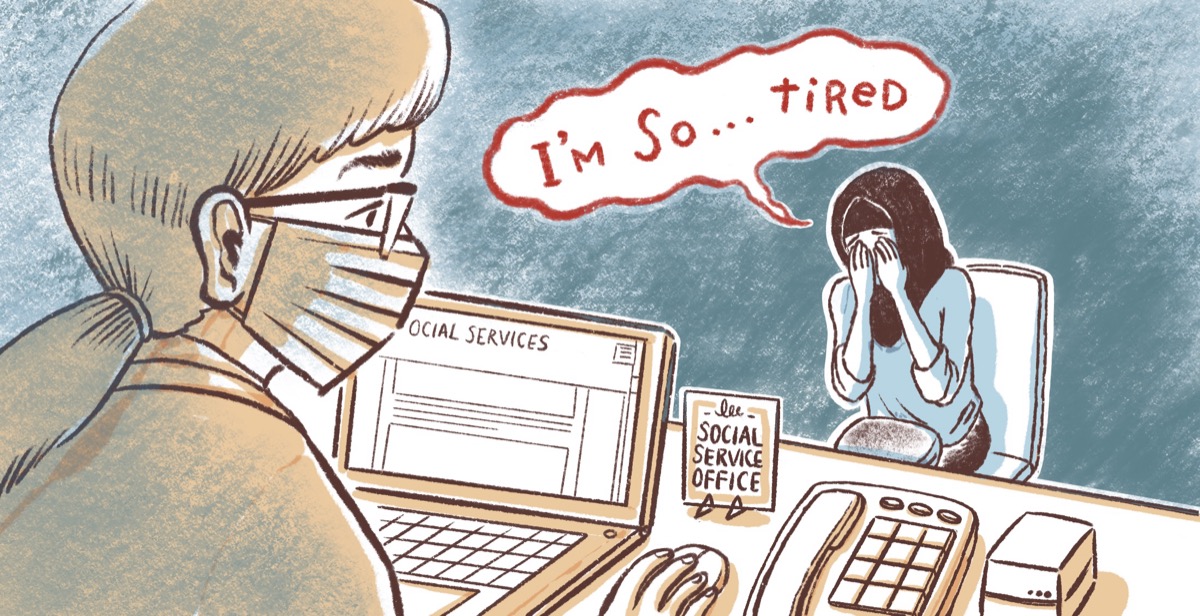
    J: SSO officer give $100. I want to cry! When change to a different officer, ok. Get $300, thank God. Then after that, back to the same officer, $100. I don’t know where to report, a lot of people don’t like that officer. So frustrated. I want to scold, I want to curse, but cannot, because I am asking for help. 

    They include the financial help that I get from other organisation as well. It’s unfair, seriously, they made me cry, shit.

    The problem is that they count everything but they don’t count how nowadays the expenses in Singapore are increasing. Only if got offer/promotion then I go and buy. Although, sometimes even when things are on offer it is still the same. Now you see, the price of fish and vegetables are going up due to COVID. Kids’ biscuits and snacks also go up.

    I cried. The SSO still didn’t help, I ask all the social workers, my FSC still say “Cannot lah this time for you”. Ok lah, I just keep quiet. I was in a bad mood, so frustrated and lost, you know. Until I had to visit my psychiatrist recently. 

    “What are you going to do… I’m helping, I give you a lot of memos. But this ComCare, why they cannot help you? This is the first time I hear like this.”

    “I don’t know what to do, doctor. I’m stressed. What should I do? I already tell them that my husband salary like this.”

    They don’t know that we here are suffering on a daily basis. We have to be positive but sometimes these organisations… all these organisations need to change, asking for help is so hard.

    F: You want to go to MP to ask about what?

    J: Ask about assistance and ComCare. I have complained about the SSO officer before. I said I would like to complain about this officer. I don’t know why she always give me $100, $200, I don’t understand. I already give 6-7 memos. Every time they ask me for the memos, I have to photocopy again and pay money again because have to photocopy at the shop. 

    F: What is the average income in Singapore?

    J: Oh, I think must be $2,000. Because now MOE say we can only help families with household income not more than $2,000-something. 

    F: Do you think we should have a minimum salary?

    J: Yes. How much we have to spend on each kid, our salary is not enough, seriously. 

    But the government is clever. I scared that if we want our salary to be $2,000 for cleaners, wait there is no more financial help. 

    For HDB, if our pay goes higher than $1,500, we need to pay rental fees between $350-$450. Now my rental is $61. Last time, I had a neighbour, a makcik. When her child started work, immediately their rental increased to $450. Because exceed $1,500. They just wanted to start a stable life, but they suffer because each month they need to pay cash $450. 

    That’s why a lot of people work odd job. If our pay increase, HDB will increase the rent. 

    F: How much do you think you need for your family?

    J: Let’s say our pay is $3,500. I think $3,500 is enough for my family, enough lah if I start working. But the problem is even for $3,500, we have to pay water bill, conservancy fees, expenses for 4 children, student care for 4 children, rainbow centre, doctor’s appointment some more. $3,000 gone already. Then what about future expenses. My kids don’t need to use handphone yet, but when they need to use handphone, then how? Now everything is online. 

    Will be enough lah, if HDB doesn’t increase the rental. We can save if HDB doesn’t increase the rental. This is the problem. Very hard to save. Give people who just started working some time to stabilise their family first.

    Last time my father work, $800. Then my sister started working, $1,200. The rent increased to $350 and they were asked to purchase a flat. Oh my god! That old man is already 70 years old, how to buy a flat? He was so angry! He stopped working. So the rental went back, now $61. 

    Difficult ah. I don’t know lah. I’m so tired of crying already. So tired. 

    ___

    Jade is a mother to 4 young children. She hopes to be able to work as a caregiver one day. 

    Filzah is a team member of Beyond the Hijab.

    Illustration by Elisa Tanaka
  • How The Poor Stay Poor

    How The Poor Stay Poor

    By Chahaya co-written with Mei.
    __

    In 2018, I met Chahaya through a mutual friend. Chahaya has always lived in financial precarity and the pandemic made things worse. Her husband had his hours cut and her children had to shift to online learning, which increased her electricity bills. Her family was thrown into debt again, unable to maintain their monthly payments for the renovation loan they took to fix their dilapidated flat. 

    The following is a compilation of email and face-to-face conversations touching on income inequality in Singapore we had over a month. 

    How were your family and friends affected by COVID-19? 

    The pandemic affected our overtime pay, which the bulk of our income comes from. After CPF deductions, we have to clock in extra hours to bring home a decent amount. Most times, we barely last till the next paycheck. The overtime pay was higher during the Circuit Breaker, but that was temporary.

    Could you talk a little about your work? Are you able to save from your salary?

    I have not been working full-time because of COVID. Engaging a babysitter is expensive, so I take care of my children. I work as a self-employed delivery attendant, which is irregular and unstable. I am unable to save a penny.

    Note: On top of working as a delivery attendant, Chahaya is also the caregiver for her ailing mother-in-law and father. 

    How much are babysitters? Private babysitters or student care centers?

    Home-based babysitters cost between $350-$500 per child. Student care fees cost between $200 – $400, monthly, per child. Although student care offers subsidies, the prices do not include the activities organized. Based on my previous experience, I still had to pay for activities such as enrichment classes or outings. There are also surcharges for school holidays whenever my children need to be at the center. All these costs accumulate and became a financial burden for me. 

    Do you know of available schemes that help you, and do they help?

    It helps temporarily but not in easing the daily necessities or monthly commitments. With the increase in utility, housing loans, and school materials, the amount is occasionally insufficient. I know of many schemes available and sought assistance from social welfare organizations and compare. To keep up with these assistance schemes, we have to keep reproducing documents related to reviews which sometimes are not helpful. It takes a lot of time to produce documents, submit applications, appeals and wait for the approval. Getting financial aid from the government is a tedious process. Sometimes, after all the effort, you get rejected with no further explanation. This is appalling and frustrating because they encourage you to reapply or appeal. 

    But it’s not only the tedious paperwork, you have to brave through the judgmental officers. Once, I overheard an officer make a passing remark, “Oh! Malay again?” Other times, when I explained how I was a single mother with no family support and unable to maintain a full-time job, they said “Wah! Malay only know how to make babies but don’t know how to work one ah!” and “why you Malays don’t know how to control one (having babies and such)?” I was totally ashamed and devastated at how they did not see my humanity. I blamed myself a lot and lost trust in government provided social aid. 

    Sometimes, I feel the process macam minta sedekah. They make you feel like you have to beg for help. This must sound ungrateful, isn’t it? But this is the truth. Do we need to be beggars just because we’re financially challenged? It’s not surprising that so many turn to crimes and loan sharks just to stay alive. Once, I was in such a desperate situation and could not get the help I needed, I resorted to shoplift for milk and diapers. In the conversation with the IO, it was a worrying trend to have parents being detained for the same reason. I was released on bail and with humanity by the Court.

    When I stayed in a transitional home by AWWA, I was asked why I turned down canned food rations given to me. My answer was: Are poor people supposed to only consume unhealthy canned food? Are we not deserving of fresh groceries which can be cheaper and healthier? What will happen to our children’s growth and health when they’re only consuming canned food? They couldn’t answer my questions because NGOs depend on donors, and I wonder if donors think of our wellbeing?

    How long, on average, is the wait time between application and approval?

    Average is 6 weeks, can be longer, and repetitive document submissions.

    It must be very anxiety-inducing and overwhelming to navigate the administrative process. Do you have anyone helping you or are you expected to do it yourself?

    I do all the administrative work myself. The work includes running to banks to get statements, CPF printouts, etc. 

    Note: Anyone who has ever had to wait for institutional approval for financial aid, travel, or work visas, know how anxiety-inducing the wait can be. On top of that, the language is often convoluted and confusing to understand, making the process even more daunting and exhausting than it already is.

    What are your concerns when job hunting? 

    Language. Currently, for the jobs I’m looking at, the trend mostly requires proficiency in Mandarin. Other skills and experience acquired from past work are not usually recognized unless we own certificates or have paper qualifications. 

    What obstacles did you meet while job hunting?

    Based on my job hunting experience, mothers faced the most challenges in securing a decent job. My commitment to work is questioned right from the beginning of the interview. The first thing some interviewers ask is how many kids I have and then they proceed to question my ability to commit or manage my time. But the biggest challenge is securing a job with a suitable location and working hours. Sometimes, I would secure a job, but the place and working hours are not compatible, considering I have children to care for. As a mother, I will have to plan ahead for child care arrangements. For example, what will happen if the child is sick or unable to go to child care? Who will take care of the children? Do I need to take leave? Can I take leave?

    But it’s not only at interviews. At the workplace, co-workers would ask me ridiculous questions like why Malays don’t want to practice birth control as though we purposely make babies, beg for financial assistance and live our life without working hard. When we are working 2-3 jobs to survive! Some employers also truly believe that Malays are lazy and troublemakers. Why would we do our best and work our hardest for employers like that? 

    What do you think of skills upgrading? 

    Skills upgrading is good, but I wonder how far these can help me get a suitable and stable job. My concern is how much skills upgrading certificates can help someone without the standard, accepted educational qualifications to secure employment. If I want to sign up for a course based on interests and obtain the required skills, I will need to pay high fees to enroll. 

    Although there are schemes that provide subsidies, I do not have the extra cash to pay the remainder of the cost. I saw most skills required me a top-up a few hundred dollars while the cheaper ones are mostly basic skills, which I would already have. That’s why it’s challenging for me to find relevant and affordable courses to upskill.

    How has your income increased over the past few years? 

    Not much of an increase. We still need to engage in extra jobs to afford other necessities. Our primary source of income is my husband’s full-time job. He brings home $1700-$1800 after overtime pay. 

    What are your thoughts on income inequality in Singapore? How does it make you feel?

    I’ve talked about inequality with my old social worker (I’m thankful for her patience in fighting this battle with me for 5 solid years). While many will say that we are fortunate to be born and bred in Singapore, few know of or acknowledge the poor. Singapore is good at hiding the existence of the poor. Not those living in slums – but those living in fear of settling monthly bills and getting cheap quality food every day. 

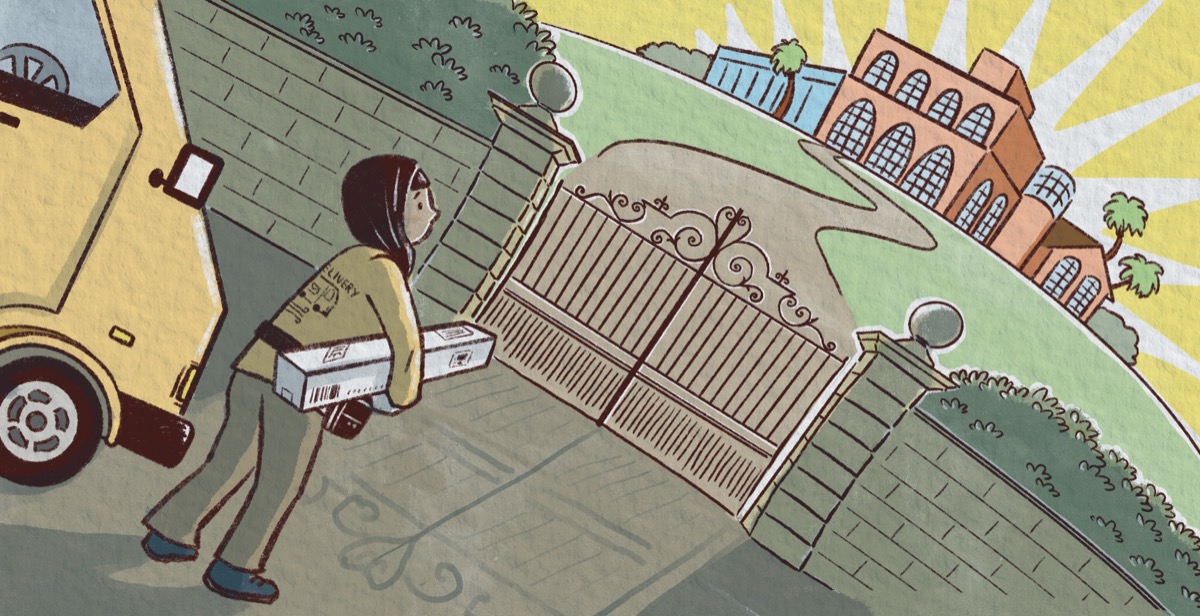
    My husband and I drive through landed properties to deliver items. So I see these multimillion-dollar houses and think to myself, where on earth do they accumulate so much wealth?! And wonder where the money come from… legal or illegal? Haha! I sometimes wonder what they gain from living a lavish lifestyle. Do they face the same stress as the poor? Like racing against time to get enough money to pay the bills and do they really enjoy the wealth without fear of losing it?

    How do I feel? Sometimes disgusted. I know there are humble rich people who contribute back to society. But, to me, buying million-dollar properties from other rich people is just investing amongst the rich, whereas charity organizations, social welfare, and NGOs have to find donors to fundraise for the needy and lower income communities. 

    As someone who was homeless before, wouldn’t it be better to contribute that money to build homes for the homeless? When my family and I were homeless, I approached MPs and relevant organizations to appeal to get housing. We were turned down almost immediately because we didn’t have the right documents, no CPF or marriage/divorce cert (unmarried, single mother). There was also no empathy from the judgmental officers, and I had to experience many humiliating situations. 

    Working in delivery and logistics, I encounter a lot of rich people. When delivering orders to their homes, some will demand to have their items brought into their homes even though that’s not our job. If we refuse, they will write in a complaint affecting our salary and our ability to get a raise. They find fault even if the reason is so minor. Once, my husband was suspended because he was not wearing the vest provided by the luxury brand. He felt deceived because the client seemed satisfied with his service and showed a positive attitude. 

    Hardworking workers work more than 10 hours a day and earn a meagre salary, but employers enjoy the profit. When in fact, workers risk a lot to help boost their business. Many employers delay salary pay-out, and this affects us. We need to keep up with bills and buy food. Late payment of bills will have penalties and incur interest. Will these rich people help? Definitely not. The rich will keep benefitting from investing in the rich. While the poor stay poor and have to keep working until the end of time.

    Income inequality is an injustice that can never end. The victims will always be the poor. 

    What kind of future do you imagine for your children? 

    My dream for my children is simple – live their life modestly. Wherever or whatever they wish to pursue, I would only want the best for them. I don’t want to set any high expectations. Life is already stressful; it will be worse in the future. 

    __

    Chahaya is a mother of five. Inspired to write her story and views on financial and social issues faced by many women like her, Chahaya hopes to share her experience and help others. Chahaya is also a participating member of Daughters of Tomorrow, seeking new learning platforms and opportunities to upgrade herself.

    Mei dreams of a world where no work is undervalued, and no one is exploited.

    Illustration by Elisa Tanaka

  • Whose Money Is It Anyway?

    Whose Money Is It Anyway?

    by Zubaida Ali

    __

    “You know you are getting all this for free right?”, said a medical social worker whose job was to assess and dispense government funds to Rahimah, her client.

    Never mind that Rahimah is wheelchair bound, suffers from organ failure, needs an external stoma bag in place of a kidney and is due for several surgeries just to stay alive. The implication is that since Rahimah is on the receiving end of state welfare, she shouldn’t have any preferences or make any requests. 

    We expect the weak, vulnerable and those in high-need, to have only feelings of gratitude for the help rendered, and that they are stripped of the basic right to choose, something we all take for granted every day. It is all so Dickension , calling to mind that one scene in Oliver Twist where dared to ask for more porridge, and the Superintendent yelled in his booming voice , “What! We clothed you and fed you and gave you a roof over your head, and you still dare to ask for seconds?” 

    We as a society tend to look approvingly at the amount of social service agencies in Singapore, staffed by thousands of social workers and government employees, disbursing millions of dollars in funds to those who need it. This can be the sick, frail elderly, people with disabilities, and families that have fallen on hard times and need time to get back on their feet. But how is this service rendered? Do we ever think the recipient of this help deserves to leave the social service office or Family Service Centre with their dignity and heart intact?

    What is our obligation to help those who cannot cope with the demanding challenges of being economically productive and even if they are, do not seem to be earning enough to support their families?

    It is our understanding that the funds allocated to help the community belongs to the people, to alleviate suffering and poverty. We appoint gatekeepers like social workers and social service officers to be good custodians of the funds but also allow those who need those funds through the door. We expect that they be treated with dignity and respect, the same as any other citizen, rich or poor. 

    My friend, Marie, reported to her social worker that she has earned $400 working part-time at a children’s enrichment center, after months of looking for work. When potential employers learnt that she was a single mother of several young children, the job interview whether by phone or in person will abruptly come to an end. Instead of congratulating Marie for trying to get back on track to support her family, the social worker immediately went to work to cut her financial assistance by $400. When I was in social service, my colleagues and I always advocated to social service workers to not be so quick to terminate or cut back on financial assistance, when someone finds employment. Starting a new job will always come with extra costs such as transport costs, lunch with colleagues and takeaway meals or snacks for the children, as mum has to rush home after work. Giving a period where she gains stability and confidence, will be helpful for the whole family going through this period of adjustment. In fact, sometimes, women fail during these first few months of balancing work, family responsibilities and even feelings of guilt and inadequacy that they quit their jobs so as not to disappoint their co-workers or family. 

    Sarah, a bright and articulate woman in her 30s has been to every job fair and taken as many courses and workshops that her Skillsfuture funding allows her to. Her dream is to work in admin, working in a nice office surrounded by office colleagues who welcomes her sunny and helpful disposition. After countless job interviews she is convinced that the job market does not want her due to her darker skin tone, and the fact that she does not speak Mandarin. She has a deep desire to contribute to the work force but are there any employers willing to give her the opportunity? Recently she went for a job interview at a government agency and was told she got the job. She was elated and told her children and friends of the good news. However, after a few weeks of hand wringing waiting, was told that the job scope has changed and the offer is withdrawn. She cried bitter tears, at yet another disappointment. 

    We talk of patience and resilience to women such as Marie, that the right opportunity will come along. One employer will see how special she is, and her anguish will be over. I say these comforting words, yet at the same time knowing that it is an uphill battle for someone who looks like Marie, and her caregiving challenges. 

    I wish things could be different. That instead of one-off Corporate Social Responsibility (CSR) events and feel good HR programmes, employers do extend a helping hand to the people who normally will not make the cut in their recruitment practice. That they recognize a workforce that has diversity of people of many backgrounds and income stratas, will make for a rich and interesting group dynamic. That such genuine company initiatives will be able to create depth of understanding and a lively working environment of leaning and learning from one another. 

    We have seen such forward-thinking employers, who reach out and seem to want to embrace the culture of inclusion and acceptance. We hope to see more, not only at the hiring stage but also at a deeper level, where a working culture of openness, fun, colourful and richness is present. 

    But to reach that level, one has to give someone like Marie a fighting chance to get through the door.

    __

    Zubaida Ali is a community worker and an activist on social issues concerning the rights of women and children. She occasionally writes on relevant issues pertaining to the Muslim community.

    Illustration by Elisa Tanaka

  • Editor’s Letter: Income Inequality

    Editor’s Letter: Income Inequality

    by Diana Rahim
    _

    When I started thinking about this letter,  I was still processing the announcement by Trade and Industry Minister Gan Kim Yong that food prices are expected to rise due to a rise in energy prices, supply chain bottlenecks and labour shortages. There has also been an increase in bus and train fares in Singapore for the first time in two years, a rise in rental costs, and an increase in electricity and gas tariffs. Now, Singaporeans are also told of a planned increase in the Goods and Services Tax (GST).

    Essentially, we have seen an increase in the price of food, rent, transportation, utilities at the same time there is a rise in retrenchment, a rise in the unemployment rate, a reported increase in food insecurity and demand for food aid and an overall greater experience of precarity amongst the low-income, who are hardest hit by the pandemic and its effects.

    Unfortunately, this isn’t a phenomenon secluded to Singapore. There has also been a global rise in food prices and we also know that the ultra-rich has gotten even richer. About a year ago, it was reported that the wealth of billionaires rose by $10.2 trillion during the pandemic. An article about the billionaire boom last year stated that nearly 700 individuals were made billionaires. Most damning though was this:

    As the virus spread, central banks injected US$9 trillion into economies worldwide, aiming to keep the world economy afloat. Much of that stimulus has gone into financial markets, and from there into the net worth of the ultra-rich. The total wealth of billionaires worldwide rose by US$5 trillion to US$13 trillion in 12 months, the most dramatic surge ever registered on the annual billionaire list compiled by Forbes magazine.

    Reading this, I thought: let there never again be the claim that the poor are over-dependent on welfare when the rich are raking in money meant to keep countries afloat, money that they don’t even need. In truth, the world is run, bent, and being destroyed to feed the wallets and egos of the rich. The poor are often judged and stigmatised for needing financial help, when in actual fact, most are not being paid the true value of the work they do and it is the rich that game the system to their advantage, through exploitation and wage theft.

    Even when the crisis hits individuals from every stratum, it is undoubtedly the poor who suffer the most profound losses and difficulties. Their incomes cuts are far higher, especially if they work in customer-facing industries, where there is no option to “work from home”. A report by Beyond Social Services found that the median household income of families they assisted dropped by 69% from $1,600 before the Covid-19 pandemic to $500 after.

    While we can share numbers and data to prove the existence of income inequality, it should not be forgotten that it is something that is materially, emotionally and psychologically felt. It means immense psychological stress day after day that keeps one’s mental state perpetually distressed. It means a lack of nutritious and adequate food that leads to health issues and a difficult relationship with food. It means that one’s self-esteem takes a battering, in the struggle to provide for one’s children the quality of life all parents wish for their children. It means a vulnerability to an array of negative coping mechanisms in order to bear the the pain and indignities of life.

    In the submissions of this series, we see infuriating and frustrating examples of how people must suffer dehumanising treatment and waste precious time and energy just to access the help that they so badly need. Financially vulnerable and exploited communities, what we call the ‘low-income’ community, are people who have been sacrificed in a system that requires a population to be underpaid and overexploited. They are then put through gruelling experiences and means-testing to access the funds they need to live a decent life. Financial and material struggle in Singapore is by no means rare, especially when we consider the fact that (as of 2020) around 52,000 Singaporeans earn less than S$1,300 a month.

    Workers go through a strange kind of affirmation in Singapore, and I suppose this is true for many other countries. They are offered gestures of support in the form of claps and cheers at sundown. They are publicly admired for their grit, endurance, and determination to make a living and support their families. But the moment they speak about their exploitation, or organise against employment abuses, this support seems to wither. Economically exploited workers seem to only be admired if they quietly endure their exploitation.

    To me, true concern and resistance against economic injustice means supporting workers when they advocate for their labour rights and resist against what keeps them exploited. I think of the bus uncles who bravely decided to file a lawsuit against their company for alleged unfair work practices such as long working hours and unpaid overtime. I think of the delivery riders who filled up a Meet-The-people session to express their frustration and anger when an e-scooter ban impacted their work overnight. I think of migrant workers who speak about the shameful conditions of their dormitories, unfair work practices and the dehumanisation they face in Singapore. I think of nurses sharing about the unforgiving conditions they are enduring as hospitals strain in the pandemic. I think of the people who contributed their experiences in this series, shedding light in the difficult navigation around bureaucracy and judgement as they simply want to access a more dignified life. Instead of talking about how these efforts are signs of ungratefulness, disobedience or excessive, maybe we should listen and support them. After all, the ones who knows best about the failures of a system are the ones who have been failed by it. In expressing their experiences, difficulties, and resisting against their exploitation, they stand for not just themselves but for all of us.

    As our country and many others around the globe are striving towards normalcy, the crisis of economic inequality that COVID-19 has revealed and deepened has remained. If you are able and willing to consider contributing to the following mutual aid efforts and organisations working to keep people fed and afloat:

    Migrant Mutual Aid
    East Side Mutual Aid
    Beyond Social Services
    Willing Hearts
    Food From the Heart
    Engineering Good


    __

    Illustration by Elisa Tanaka